Jump to ratings and reviews
Rate this book

The Graduate #1

The Graduate

Rate this book
The basis for Mike Nichols' acclaimed 1967 film starring Dustin Hoffman—and for successful stage productions in London and on Broadway—this classic novel about a naive college graduate adrift in the shifting social and sexual mores of the 1960s captures with hilarity and insight the alienation of youth and the disillusionment of an era.

When Benjamin Braddock graduates from a small Eastern college and moves home to his parents' house, everyone wants to know what he's going to do with his life. Embittered by the emptiness of his college education and indifferent to his grim prospects—grad school? a career in plastics?—Benjamin falls haplessly into an affair with Mrs. Robinson, the relentlessly seductive wife of his father's business partner. It's only when beautiful coed Elaine Robinson comes home to visit her parents that Benjamin, now smitten, thinks he might have found some kind of direction in his life. Unfortunately for Benjamin, Mrs. Robinson plays the role of protective mother as well as she does the one of mistress. A wondrously fierce and absurd battle of wills ensues, with love and idealism triumphing over the forces of corruption and conformity.

160 pages, Mass Market Paperback

First published January 1, 1963

300 people are currently reading
15560 people want to read

About the author

Charles Webb

40 books50 followers
Charles Webb (born in San Francisco, California) was the author of several novels, mainly known for his most famous work, The Graduate. The novel was eventually made into an enormously successful film.

Ratings & Reviews

What do you think?
Rate this book

Friends & Following

Create a free account to discover what your friends think of this book!

Community Reviews

5 stars
1,893 (15%)
4 stars
3,550 (29%)
3 stars
3,979 (33%)
2 stars
1,722 (14%)
1 star
737 (6%)
Displaying 1 - 30 of 1,175 reviews
Profile Image for Nataliya.
985 reviews16.1k followers
April 27, 2023
Rarely do I prefer film versions of a book over the book itself, but there's no contest here. Love or hate The Graduate - the cult 1960s film - you gotta agree it has heart, or at least that almost intangible something that burns it into memory.

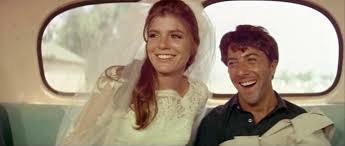
To me that something has always been the very ending of the film, that final scene that adds a new dimension to otherwise lovely but okay film - those last moments on the bus with Simon and Garfunkel's The Sound of Silence in the background, with close-up on the faces of Ben and Elaine, so exhilarated from their on-the-spur-of-the-moment decision - but, as the camera lingers, we see eventual slow fading of the happy grins and uncertainty setting in, and the slightly confused awkward apprehensive glances at each other - now what? - the scene that is the most perfect conclusion of any film ever, and subtle enough for generations of college students to misinterpret it.


Add to it amazing performances by Dustin Hoffman and Anne Bancroft, breathing life into what otherwise could have been wooden characters, and the rest of the lovely soundtrack by Simon and Garfunkel - and the cult film is born.

This heart, this humanity, this something is what Charles Webb's first novel The Graduate completely lacks, even though superficially it is not that different from the film based on it. The plot is the same - a bored and disillusioned affluent recent college graduate starts an affair with an older woman, then promptly falls in love with her dishrag-personality daughter, madly pursues the above mentioned daughter and breaks up her wedding to another affluent young man, all while unsure of his place in life in the 1960s. The scenes are the same as in the film, the dialogue very similar - but where the film soars, the book drowns like a brick.

You see, separated from the humanity brought to it by the amazing Hoffman and Bancroft performances, the book feels desolately empty and meaningless. It's seems to mostly consist of awkward circular dialogues that go on forever, full of filler with nothing actually being said, with people droning on an on meaninglessly, constantly asking each other, 'What?' The attempts at communication are empty because no one actually has anything to say - a smart literary move, perhaps, if used sparingly and to the point, but the overabundance of the non-communication quickly becomes tiring, irritating and shallow. By overemphasizing emptiness around Benjamin, the book becomes quite empty itself.
“Ben?” he said, opening his son’s door.
“I’ll be down later,” Benjamin said.
“Ben, the guests are all here,” his father said. “They’re all waiting.”
“I said I’ll be down later.”
Mr. Braddock closed the door behind him. “What is it,” he said.
Benjamin shook his head and walked to the window.
“What is it, Ben.”
“Nothing.”
“Then why don’t you come on down and see your guests.”
Benjamin didn’t answer.
“Ben?”
“Dad,” he said, turning around, “I have some things on my mind right now.”
“What things.”
“Just some things.”
“Well can’t you tell me what they are?”
“No.”
Nobody in this book listens to anyone else, especially Benjamin Braddock, the protagonist, a selfish privileged young college graduate who, after a life handed to him on the silver platter, has a case of ennui and is lucky enough to have parents rich enough to allow him to parasitically waste his life in the pathetic self-pity while openly despising everyone around him because, of course, everyone is inferior to his special snowflakeness. He refuses to understand anyone, refuses to have meaningful communication with anyone, places himself into the center of the Benjamin-centric universe, judges everyone except himself, sees no consequences for his actions, and, after deciding - arbitrarily, it seems - to fall in love, basically badgers the most vapid love interest ever to pay attention to him.

He is ridiculous in his pompous quasi-disillusioned snobbery, and very quickly progresses from annoying to simply just an ass.


The movie treats this scene as suffocated cry of a lonely soul. In the book, Ben Braddock is a bored and rude self-absorbed twit.

Throughout the story he sounds not like a talented almost-prodigy college graduate. No, he sounds like a perpetually pissed-off snappy overpampered fifteen-year-old teenager, angry for the sake of anger. Where film-Benjamin is confused and lost and humanly vulnerable, book-Benjamin is simply irritatingly full of himself.
Benjamin stood. “Now look!” he said, waving his arm through the air. “I have been a goddamn—a goddamn ivy-covered status symbol around here for four years. And I think I’m entitled to—
Entitled is precisely the word to describe Benjamin. Exactly right.
Written by a very young (24 years old!) privileged man from affluent Pasadena about a very young privileged man from affluent Pasadena, this book to me seems a perfect testament to the well-known fact that if you are a privileged young man, you can do whatever the hell you want and mope around for a while while being fashionably disillusioned because you know at the end of it your convenient life will be handed back to you on the same silver platter.

The book is devoid of any kind of internal monologue of characters, of any hints at their mental state, their motivations - nothing except for what's on the surface and what gets across in the empty endless dialogue. I can see how that could have been conceived as a literary device, but too much of it makes the book too shallow and empty and meaningless. At least in the film Hoffman and Bancroft's acting brought life to the characters, filling in what was unsaid with body language and facial expressions, thus creating something behind the actions of the characters. Devoid of this, the book does not provide an alternative - it simply provides nothing.


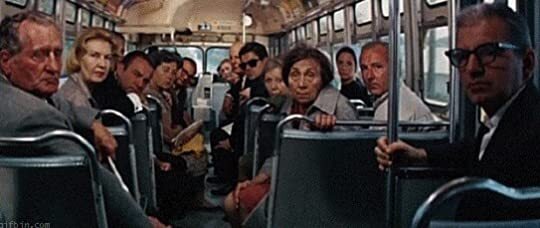
The expressions of the bus people at the end were probably exactly what my expression was by the end of this book.

And the ending - MY film ending that brings in subtlety and subverts so much of the film - no, of course it was not here. It would have been silly to expect subtlety from such a dull book. It ends just as flatly as it began, woodenly and purposelessly.
"Elaine was still trying to catch her breath. She turned her face to look at him. For several moments she sat looking at him, then she reached over and took his hand.
“Benjamin?” she said.
“What.”
The bus began to move."

So if you happened to find an old copy of the book The Graduate and, feeling nostalgic for college years, want to relive the experience, I recommend the following: get some nice wine, rent the film The Graduate with Dustin Hoffman and Anne Bancroft, and get comfy on the couch using the book The Graduate as a coaster for your wine glass.
Lovely evening guaranteed.

Half a star.
Profile Image for Mainon.
1,138 reviews46 followers
July 15, 2011
I am sure I can write a review in the style of this book. I read most of it on a subway and then on a bus. I stopped and stared at the words on the pages sometimes. Then I would talk to myself.

"Self, are you enjoying this book?"

"Why? Are you trying to seduce me?"

"I have no idea what you're talking about. I just want you to unzip my dress because I can't reach the zipper. But really, are you enjoying this book?"

"Not really. I mean it's interesting in the way that truly awful things are always interesting. But it must be better than I think because it's so famous. But no, I guess I'm not really enjoying it."

"What are you going to do about that?"

"Nothing."

"What do you mean nothing?"

"I mean nothing. I'm just going to sit here and keep reading."

"How can you do nothing? Why would you read a book you're not enjoying? What's wrong with you?"

"I just can, that's all."

"Well I don't see how you can. You need to do something. You should have a plan. A definite plan. I'm going to worry about you until you have a definite plan."

"If I come up with a definite plan to do something other than nothing, will you marry me?"

"Well I used to think you raped my mother and five minutes ago I never wanted to see you again. So I guess my answer is maybe."

"Great, let's go get our blood tests in the morning."

"Maybe. But I might have decided to marry someone else by then."


I almost gave it two stars because it was interesting in a very awkward way. But then I realized how much the above dialogue summed up the book for me. I had to take away the second star.
Profile Image for Orsodimondo.
2,457 reviews2,430 followers
March 11, 2022
EDUCAZIONE SENTIMENTALE


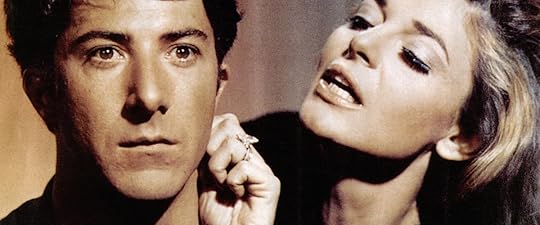
Dustin Hoffman, all’epoca quasi trentenne, aveva lavorato pressoché solo in televisione. Questa è la sua prima prova importante. Non se la lasciò sfuggire. Tuttora rimane una performance leggendaria.

In principio fu il film.
In USA apparve nel 1967, da noi solo l’anno dopo, l’11 settembre del 1968. Quale modo migliore per celebrare quell’anno?!
E quindi quest’anno sono 50 anni dall’uscita del film.


Anne Bancroft, 17 settembre 1931 – 6 giugno 2005. And here's to you, Mrs. Robinson, Jesus loves you more than you will know, wo wo wo…

In principio fu il film.
Con quell’attore mai visto prima, che aveva già trent’anni ma gli facevano fare il ragazzino, così basso che lo avrebbero scartato alla visita di leva, non bello, ma interpretando Benjamin diventò tutti noi.
Quella musica, quelle canzoni che non invecchiano mai, mettono ancora i brividi, adesso come allora.
Quei genitori così ‘genitori’, come noi percepivamo i nostri, una guerra mondiale di mezzo, più o meno una generazione a dividerci, ma in realtà ci separava ben oltre un secolo, noi figli non solo eravamo diversi, eravamo altro.
Non per niente, Benjamin diceva:
È come se partecipassi a un gioco con delle regole che per me non hanno senso. Perché le ha fatte la gente sbagliata. No, anzi, non le fa nessuno. Sembra che si facciano da sole.
Mrs Robinson, la donna matura, la zia dei sogni, essere presi per mano nella scoperta del sesso, imparare da chi oltre che ben più esperta, è anche bella da togliere il fiato (Anne Bancroft aveva solo sei anni più di Dustin Hoffman, ne aveva 36 e le facevano interpretare la quarantenne madre di tutte le milf). Laura Antonelli non esisteva ancora (“Malizia” è di sei anni dopo). Certo, avevamo Lisa Gastoni: ma “Grazie, zia” uscì nello stesso anno, e lo recuperai molto dopo, nei cineclub.


Ma fu anche la scoperta dell’amore, per completare la mia educazione sentimentale: Elaine era l’amore, il sentimento chiamato Amore, emozione a mille, per niente conturbante ma anche lei bella da perdere la testa, l’acqua e il sapone che non si dimenticano (due anni dopo Katharine Ross faceva perdere la testa e si divideva tra Robert Redford e Paul Newman, due leggende del cinema e della bellezza maschile, mica perdeva tempo la ragazza – il film era Butch Cassidy and the Sundance Kid).

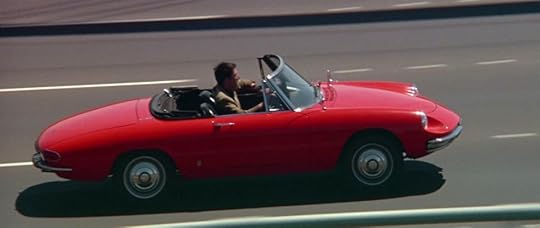
Poi, la macchina. Rossa come l’amore, la rabbia, la rivoluzione. Ed essendo un’Alfa Romeo sembrava che il film fosse diretto e dedicato a noi ragazzi italiani (io bambino).
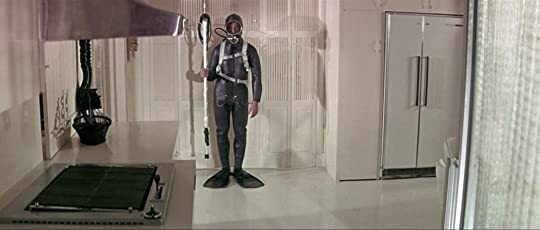
E le perle, le scene esilaranti: in tenuta da sub dentro la piscina di casa – dialoghi, così:
“Plastica.”, Benjamin risponde “Credo di non aver capito, signore.”, e il signore chiarisce il concetto così “Plastica, Ben. Il futuro è nella plastica.” – il receptionist dell’albergo interpretato da Buck Henry, sceneggiatore del film, e dopo, tra gli altri, di Catch 22 e Heaven Can Wait”….


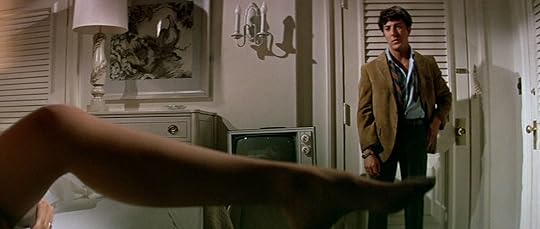
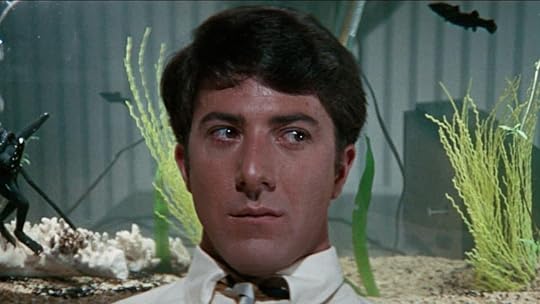
Una delle inquadrature più famose della storia del cinema.

Poi venne il libro.
Anche se di solito il libro nasce prima, e poi viene il film.
Nel mio caso, l’edizione nella collana Medusa della Mondadori, collana alla quale la mia educazione letteraria deve molto (Hemingway, Steinbeck, ma anche autori molto meno pietra miliare), in casa mia era un po’ come decenni dopo le edizioni di Repubblica in altre case.
Un giorno, anni dopo aver visto il film, ho scoperto che in casa avevamo il romanzo, e potevo leggerlo, nessuno me lo impediva…
L’ho letto, e certe pagine le ho rilette. Più volte…

description
L’educazione venne completata apprendendo che una coppia che voleva sposarsi doveva prima fare test e analisi mediche.

Ma nonostante la storia, e i dialoghi perfetti, e l’umorismo beffardo, nonostante la qualità letteraria, in principio fu il film, è venuto prima, è sceso più a fondo, è rimasto più a lungo.

PS
Charles Webb rimase ossessionato dal successo del film, non è mai riuscito a scenderci a patti. Vendette i diritti per 20 mila dollari, per sempre, prequel sequel remake inclusi. Così, quando nel 2007 pubblicò Home School, il seguito de Il laureato, la casa editrice Random House lo fece uscire solo e rigorosamente in Inghilterra per evitare che ne potesse essere fatto un film (?!).

description
L’Alfa Romeo Duetto, mito che si aggiunge a leggenda.
Profile Image for Georgia Scott.
Author 3 books324 followers
June 3, 2023
When Mel Brooks was asked what he considered his greatest achievement, he said: "Marrying Anne Bancroft." That's love. Even after her death, she draws his awe.
Nothing in the novel drew mine. Mrs Robinson only comes alive in the film.

Had the novel been written from her viewpoint, it could have been worthwhile. Mrs Robinson is a Madam Bovary and no less tragic. That's what Anne Bancroft achieves in the film. She gives life to the stick figure character in the book.

Funny that it took a comedian's loved wife to convey the sadness of an unloved woman.

Profile Image for Barry Pierce.
598 reviews8,927 followers
October 18, 2015
The 60s were great. I think. I wouldn’t know, I was born in 1996. A world where a middle-aged woman seduces a boy who is barely out of his teens and it becomes one of the most enjoyable and humourous books of the decade. I adored The Graduate. There’s something in the prose, something in the plot, something in the characters, something in the dry humour that just tick, tick, tick, ticked all of my boxes. I tried to stop reading, to take a break, but no, it wasn’t happening. I was so invested in this book that I nearly missed my stop on the bus. I’ll be thinking about this one for a while.
Profile Image for TK421.
593 reviews289 followers
March 12, 2013
In 1963 a young man by the name of Charles Webb published a book called THE GRADUATE, a story that was supposedly based on a true story. It was a sensation. Four years later, it became a hit movie starring Anne Bancroft, Dustin Hoffman, and Katherine Ross. Okay, we all know these facts. Let's leave the movie alone and just focus on the book.

The plot is simple: a disenchanted, recently graduated, well-to-do young man has an affair with an attractive, well-to-do, older woman whose husband just so happens to be business partners with the young man's father...don't forget that the young man also falls in love with the older (cougar) woman's daughter. Got that? Good. Because there really is not much else going on in the book.

And, to be honest, it was not the story that made me like this novel. No, it was the way in which it was told that made me like this novel. Charles Webb was 24(!) when he published this novel. This was his first foray into writing. Pretty impressive, even with all the flaws. You see, what attracts me to this story is how Webb created, and sustained, entire scenes by using dialogue. Sharp and ironic and sometimes haplessly mundane, these exchanges between the characters create scenes that evoke a sense of time and place. Additionally, the reader can really feel the isolation and alienation of all the characters through what they say...or, through what they don't say. (This often lead me to want to brain a character, especially Elaine. Where are your brains, woman?)

This book is a better, stronger version of what I think THE CATCHER IN THE RYE, written much earlier in 1951, was trying to be. I could be wrong, that happens. Regardless, Webb wrote a brilliant, sardonic, and ludicrously funny novel that illustrates a moment in time. The one flaw I see of the novel that is jarring to the reader is the ending. Perhaps Webb puttered out, stopped the story at a place that made sense to him. For me, there needed to be more. Not much, just enough that I knew where Ben and Elaine were headed on that bus.

HIGHLY RECOMMENDED
Profile Image for Lisa.
1,108 reviews3,290 followers
April 4, 2021
Well, yeah!

I don't really mind a boy who tries to break free from the brutal boredom of the American Conventional Dream. Actually, I find it quite interesting that he dares to see the meaninglessness of repeating empty patterns over and over again.

I don't mind the affair between him and Mrs Robinson either. After all, soothing the pain and filling the inner void with sex is way more healthy than doing it with endless booze, which seems to be the only other solution that their community can come up with.

Awkward silence inevitably followed by the fake-cheerful urge to get just a little bit more drunk:

"Have a short one?"

"Have a quick one?"

"Time for another one?"

What I found incredibly annoying, dull and frustrating though, was the ultimate placebo medication that the short novel steered towards: closing the circle of pain by rash marriage.

Heureka! Curing poisoning with poison? Well, let's just say, I can see the new vicious circle on the horizon already.

Why can't we be happier in each other's company? Because we try plan A over and over again, equally surprised each time that it doesn't work...

A depressing piece of literature, but still, there were moments of comedy relief!
Profile Image for Jeanette (Ms. Feisty).
2,179 reviews2,184 followers
October 14, 2009
"...koo-koo-ka-choo Miss-us Rob-in-son...dee dee dee dee doo doo doo doo doo...wo, wo, wo...

This book is pointless and inane, but I had to satisfy my curiosity. The best thing I can say about it is that it's short. I might have given it 2 stars if it actually had an ending. ANY kind of ending. But it does not. It just stops, like it's the end of a chapter and more is coming. Don't bother looking for more pages. It really IS over.

I've never seen the film, but I remember when I was a kid those movie posters of little Dusty H. were everywhere. And it was such a big deal that this young fool has an affair with a woman twice his age.
I am now somewhere in the same age range as Mrs. Robinson, so here's a little hint for you young guys who like older women:

Do NOT tell her, "I think you're the most attractive woman of all my parents' friends." :0 That's a seriously backhanded compliment which will be heard by the woman as, "You're pretty good lookin' for an old hag." Fool, Benjamin, fool.

The theme of the book had potential in a Richard Yates sort of way. Promising college kid has a blazing bright future, decides he doesn't want the American dream, and deliberately sets out to self-destruct. But in the end it doesn't deliver. The characters' motivations are never defined. (Why oh why would a girl like Elaine even consider a nut job like Benjamin?!) After awhile the whole thing just feels repetitive and annoying, but you keep reading in the hope that it's leading up to something important. Trust me, it's not.
Profile Image for Ken.
2,562 reviews1,375 followers
January 6, 2019
‘Mrs Robinson, you are trying to seduce me.’

Having really enjoyed the movie and this being one of the books in the ‘Rory Gilmore Reading Challenge’, it gave me two reasons to want to read it.

What surprised me most about the novel was how similar the dialogue between the characters seem to be from my strong memories of watching the film.
I could instantly hear Dustin Hoffman’s Benjamin Braddock jump straight from the page.

I don’t mind when movies and novels differ, though a straightforward adaptation shows how strong the writing was in the original text.
I really liked Webb’s punchy dialogue as all the characters come to life.

I should also mention how wonderfully flawed and interesting the character of Mrs Robinson is and helps drive the plot along.
In my mind the extreme actions that Benjamin takes in the later part of the story only happens after he’s encounters with Elaine’s mother.

I wasn’t aware that Webb wrote a sequel, I’m definitely curious to read that too...
Profile Image for Shovelmonkey1.
353 reviews963 followers
August 27, 2011
Probably best known as a film and for those famous lines "Mrs Robinson, are you trying to seduce me?"

So the first point of order in this review is this: if someone has to ask if you're trying to seduce them then it probably follows that you are doing a piss-poor job in the seduction department. Either that or your object of lust is particularly obtuse. In fact, much of this book and the bumbling inanities of the young Benjamin Braddock provide a clear selection of examples of how NOT to practise the art of seduction. A Graduate he may be... but not from the school of life or love.

1. Never ask the person if they are trying to seduce you. Forcing them to say, "Umm well yes, as it goes, I was trying to get in your pants" is a sure fire mood killer. AWK-WARD!

2. Folding your clothes prior to coitus. Nothing says control freak and lack of spontaneity better than a neatly folded pile of clothes on the bureau or chair.

3. Referring to sex as coitus. Watch Big Bang Theory and see why.

4. Telling your paramour that they're a drunk. If you stop them drinking it might make it harder to get them into bed in the first place (note here that I am not suggesting that drunkeness equals the word "yes".... EVER). Once that tipsy haze has gone, she'll see you for the buffoon you really are Benjamim Braddock, and clearly Mrs Robinson needs to be wearing the thickest beer goggles possible.

5. Describing the first encounter as climbing on top and beginning the affair. She is not Ben Nevis, or any sort of peak to be scaled. You are not planting a flag (insert appropriate pole joke here) and frankly this sentence implies that she has all the sexual allure of a bunk bed.

6. Chatting about your lovers child pre or post the bumping of the uglies, and musing on how you may go on a date with them at some point. OK, so the offspring in question is your own age but this is so not cool.

7. Ending the affair by politely thanking someone for their time and the instructive nature of your well-organised and sanitised couplings. You send polite letters about the instructive and educational nature of an event to your grandparents after they've sent you a nice jigsaw for Christmas. This is not the best way to leave your lover.

8. Referring to your now jilted paramour as "an older woman". Even if the age gap crosses the border into geological time scales, do not, under any circumstances draw attention to it in the format of the written word. This sort of thoughtless penmanship will never lead to anything good. Public humiliation, trial by peer and parent and a social meltdown will likely follow by way of revenge.

Ultimately this was a very easy read and Webb's stilted dialogue really pushes home that awful cringe factor of a world imploding and the fecklessness of unseasoned youth. But if you're entitled to a mid life crisis as popular culture would have us believe, then why shouldn't you be allowed to indulge in some splendid cusp of adulthood melt down. Failed to get out all your angst during your teenage years? Then follow the fine example set by young Benjamin Braddock and self-destruct on your 21st birthday instead. After all, if 40 is the new thirty doesn't that mean that 21 is the new, er.... 11? Oh, Mrs Robinson!
Profile Image for ~Sara~.
214 reviews32 followers
September 22, 2010
Meet Benjamin. He's 21 and just graduated college. No seriously, he's 21, not a fifteen year old delinquent from a broken family. The author tells us so even though he forgot to make him act like it. Benjamin is mad at the world for being so materialistic. "Get that silver spoon out of my mouth! I hate you, I hate you, I hate you all!. I hate Mrs. Robinson, but I'll sleep with her anyway, I hate my parents for loving and supporting my useless ass, and I hate Elaine for being forced to date her against my wishes. I know! I'll treat her like garbage and I'll never have to go out with her again! Oh, look. She cries when I treat her like shit. I love her and am going to marry her! Now if I stalk her enough and repeat the same things over and over, maybe she'll agree!"
I can understand why Benjamin wanted Elaine (he's crazy) but why would Elaine even give him the time of day let alone fall in love with him? She is one of the least fleshed out characters I've ever read. She has no personality and her wavering between sad and angry falls very flat. The only understandable character in the entire novel is Mrs. Robinson. Her actions and emotions actually made sense to me and she was the only part of this book that I found enjoyable to read.
Profile Image for MJ Nicholls.
2,274 reviews4,845 followers
April 4, 2013
Charles Webb is a possible candidate for the BURIED book club, if this book wasn’t still popular, and it isn’t really—the film and stage show and tea towel and thong range are popular, who reads the book nowadays? The novel is written so sparsely and simply it functions pretty much as a blueprint for Mike Nichols’s script—90% of the action is told in dialogue with occasional flat descriptive passages for the frantic parts. A neurotic boy wonder returns to the suburbs to deliberate on the predetermined future laid out before him, and sets about breaking every taboo imaginable under the sun, but mostly sleeping with an older woman and trying to marry her daughter simply because grown-ups told him not to. As a comedic novel, the dialogue does all the work—Webb’s prose lacks any especial humour—and most of the famous movie lines are here with the added bonus of having Dustin Hoffman’s voice in our heads as we read them. As to Webb’s credentials as a novelist, apart from a Graduate sequel and another book that was turned into a horrible movie (Hope Springs), the rest seems out of print and unloved.
Profile Image for Sarah.
759 reviews71 followers
March 29, 2017
It's probably pretty obvious that I didn't like this book. It was 260 pages of a book that was mostly dialogue so it should have taken 5 minutes to read, or three hours at most.

This is what really happened:
Reading
I need a nap
Reading
Nap for an hour
Reading
I want to buy some books
Reading
I don't really have any I want to buy
Rea...
What about some of those Martin Amis ones I've been drooling over?
Reading
I really need a new purse
Reading
Maybe I should do a reading challenge for postmodernism next year
Readi...
Or this year?
Re...
I need to research postmodernism
Reading, dammit
Re...ad...in.....g

The book ended up taking about twice as long to read it as it should have. It was totally absurd. I had several specific complaints, although I just didn't like the writing in general. As I said it's almost entirely dialogue. This included about 300 uses of the word "What?" I finally decided that at least all of those instances of single word lines was getting me through the book faster. Also, the character is a bully and an a**hole and he really needed someone to kick him in the balls so he'd shut the hell up. For the men who just flinched, I don't usually believe in ball kicking.

I never got the feel of any kind of a love story because he seemed to just be bullying the woman into agreeing to marry him, after stalking her exhaustively. He was really obnoxious and domineering. And frustrating.

The good news? I found a purse and ordered some books :)
Profile Image for Rossy.
368 reviews13 followers
December 29, 2015
This book was pointless!
The dialog was so boring... "Elaine""What""Nothing""What".... ugh, I'm not afraid to say that these characters made absolutely no sense. Ben and Elaine, I hope you really end up together and leave your poor parents alone.
Mrs. Robinson was not great, but she was the most interesting one and the one who acted with purpose. She was depressed and/or bored with her life, and an alcoholic. She reacted ~"as expected"~ when Ben went out with Elaine. I didn't like her husband or Ben's parents, but I guess they were ok, too, because I understand where their actions came from.
But Ben and Elaine, COME ON! Boring, bland, no personality AT ALL.
Profile Image for Noel Ward.
169 reviews20 followers
May 8, 2023
This book mostly consists of characters saying “what” all the time. But it’s not as dull as it sounds! Sometimes they say “what.” and other times they say “what!”. It’s all very exciting.
Profile Image for Tim Orfanos.
353 reviews41 followers
July 11, 2021
Το συγκεκριμένο βιβλίο του Webb (1963) δεν θέλει ιδιαίτερο πρόλογο μιας και μεταφέρθηκε στον κινηματογράφο το 1967 με τέτοια επιτυχία, ώστε να κάνει τον Ντάστιν Χόφμαν σταρ πρώτου μεγέθους βγάζοντάς τον από την αφάνεια.... και την ένδεια (όπως χαρακτηριστικά είχε δηλώσει και ο ίδιος). Πέρα από αυτό, πρόκειται για ένα μυθιστόρημα έντονα εμποτισμένο με το 'σοφιστικέ' πνεύμα του 'Νέου Κύματος' της δεκαετίας του '60, το οποίο καταφέρνει να καυτηριάσει, χωρίς να προσπαθεί να στηλιτεύσει, τα ταμπού και τα ήθη εκείνης της εποχής.

Θα συμφωνήσω ότι το σημαντικότερο όπλο του συγγραφέα είναι οι πολυάριθμοι και έξυπνα δοσμένοι διάλογοι, ειδικά, του κεντρικού ήρωα με τον πατέρα του, αλλά καί με την κα Ρόμπινσον, όπου το χιούμορ και ο ειλικρινής ρεαλισμός προτρέπουν το αναγνωστικό κοινό να συμπάσχει με το ευμετάβλητο στοιχείο της προσωπικότητας των ηρώων - δίνεται η αίσθηση ότι πρόκειται για θεατρικούς διαλόγους με εύστοχη δομή και μέτρο.

Τέλος, αξίζει να παρατηρήσω ότι ο χαρακτήρας, οι αντιδράσεις και οι απαντήσεις του Μπέντζαμιν μπορεί, το 2020 να ξενίσουν και να φανούν 'εντελώς από άλλη εποχή', ωστόσο, αν το σκεφτούμε καλά, θα παραδεχτούμε ότι, πολλές φορές, όλοι οι άνθρωποι κρύβουμε κάποιες από τις πτυχές της προσωπικότητάς του - απλά δεν θέλουμε να το παραδεχτούμε. Η κατάληξη της ιστορίας, μόνο, θα έλεγα ότι διαθέτει προβλεψιμότητα και κάποια 'συγγραφική βιασύνη'.

Άραγε ποιός δεν έχει αναρωτηθεί αν έχει χάσει στο βωμό της πρωτιάς και της επαγγελματικής σιγουριάς, άλλα βασικά κομμάτια της ζωής του? Το βιβλίο έχει κάποια απάντηση σε αυτό.

Βαθμολογία: 4,1/5 ή 8,2/10.
Profile Image for Smiley .
776 reviews18 followers
January 1, 2020
I think reading this novel in my early twenties was another experience as compared to watching the movie. Around four decades ago, my friends and I enjoyed the film (https://en.wikipedia.org/wiki/The_Gra...) starring (the great) Dustin Hoffman as Benjamin Braddock, Anne Bancroft as Mrs. Robinson, and Katharine Ross as her daughter Elaine as well as some fantastic, romantic and wistful songs by Simon and Garfunkel, for instance, 'The Sound of Silence', 'Scarborough Fair', 'Mrs. Robinson', etc.

During that time loosely called, 'The Period of Identity', in the midst of some Thai and foreign hippies in search of the meaning of life in the world, it was mysterious for us then. However, we thought then we needed to finish our studies and had our work to do first.

I think I'd find the copy kept somewhere and reread it soon.
Profile Image for Tonkica.
733 reviews147 followers
March 31, 2019
Lagano čitljivo, bazirano na dijalozima koji su izneseni u kratkim rečenicama. Zbunjenim, nebitnim, smotanim i besmislenim dijalozima. Odnosi između likova hladni i neuvjerljivi. Likovi "kratki" u pogledu života i životnih situacija. Čudno sve u svemu!
Film koji je polučio toliko dobrih komentara rađen na osnovi ovog teksta je nevjerojatna situacija. Ovo je jedna od onih knjiga koje su lošije od svoje ekranizacije.
Profile Image for Shirley Revill.
1,197 reviews286 followers
August 9, 2018
I read this book ages ago and also watched the film.
Now I have the lyrics of Simon and Garfunkel running through my head.

Here's to you Mrs Robinson
Jesus loves you more than you will know
Wo, Wo,Wo
God bless you, please,Mrs Robinson
Heaven holds a place for those who pray
Hey,Hey,Hey,Hey,Hey,Hey

Loved the song too. Pure nostalgia.
Profile Image for Barry Cunningham.
Author 1 book191 followers
June 17, 2017
I read this just after the film was a smash hit, it was OK, well written cute story of growing up.
Profile Image for Rosa.
536 reviews47 followers
March 23, 2018
Man, this book was weird! Sort of like Hemingway with an autistic protagonist. I guess it's supposed to be social commentary, about suburban Americans caring only about the way things look.
The first chapter was difficult to read, about Benjamin being so rude and awkward to the party guests. His first night with Mrs. Robinson was pretty funny, though. But since I already knew the plot (even though I haven't seen the movie yet), the twists lacked a punch. Also, you never find out quite why Ben is so disillusioned with college, or what he really did during his three-week escape.
Profile Image for Syndi.
3,710 reviews1,038 followers
December 23, 2024
Ok I know this book has so much buzz because it is very controversial. But for me, the main character is not really well develop. I can not understand the how the main character thought. I can not connect either with the character.

Not for me.
Profile Image for Carla Remy.
1,062 reviews117 followers
March 23, 2024
09/2020

From 1963
Quite a spare novel, more dialogue than description. I love the sudden, open ending. Just like the movie, yes. Luckily, the book is shortish, because I don't know how much I enjoyed reading about disaffected, depressed characters and their messed up love lives. I mean, if that's the only plot.
Profile Image for K.D. Absolutely.
1,820 reviews
May 4, 2009
This was an easy read for me. I was in college when I read this novel after seeing the equally successful film on TV rerun. I was able to relate few years after when I had a short affair with an officemate 15 years my senior. However, there was no Elaine that ended the short affair. We just got tired of each other. Looking back, I think I was somewhat influenced by this. Well, I was very young then so it was just part of growing up.
Profile Image for David Torres.
201 reviews
February 18, 2022
¡Este libro es un desastre!

Lo leí en una tarde sin internet, no porque sea especialmente adictivo, sino porque el 90% de su contenido son diálogos tipo:

-¿Quieres un trago?
- ¿Qué?
- Que si quieres un trago.
- Oh, está bien.


No exagero, de verdad así son. Si me pusiera a contar las veces que los personajes dicen "¿qué?" y fruncen el ceño, no acabaría nunca.
Personajes planos, situaciones sin ningún tipo de interés, nada de erotismo, drama o comedia. Nada.
Este es uno de esos curiosos casos en los que la película es mejor que el libro, y por mucho, pues la peli por el contrario sí que es divertida, dramática, sensual, mejor dicho, todo lo que este libro falla miserablemente en conseguir.
No voy a mentir, tampoco es aburrido, pero su problema radica en que no ofrece nada. Es plano y simplón; está escrito con las patas.
Su única utilidad es haber funcionado como "guión" para la película de 1967, en donde los actores le otorgan a los personajes toda la vida que no tienen aquí.
Ah, también es muy bueno para practicar lectura rápida.
Si pueden ver la peli, ampliamente recomendada; del libro por favor mantenerse lo más lejos posible.
Profile Image for Brittany McCann.
2,712 reviews608 followers
March 21, 2025
What the hell did I just read?

Holy wow, this was a super highway pileup car crash I couldn't look away from.

WTF was wrong with literally every single person in this book. An early foray into psych thrillers.

Charles Webb had a seriously twisted mind to write this.

Of the three, I can't tell if Benjamin, Elaine, or Mrs. Robinson was the most jacked up. It's easy to jump to Benjamin without speculation, but I think it might be Elaine.

4 Stars.
Profile Image for Chiara.
118 reviews189 followers
July 20, 2021
*Mrs. Robinson by Simon & Garfunkel playing in the background*

Beh che dire, penso che sia un cult, penso che dopo aver amato quel capolavoro del film non potevo non leggere il libro da cui era stato tratto. A essere sincera, non sapevo nemmeno che il film fosse basato su un romanzo, anzi l’ho scoperto a caso quando girando per la libreria Acqua Alta l’ho scovato sotto ad alcuni libri. E meno male che l’ho trovato, con i suoi dialoghi mi ha riportato alle sensazioni del film e mi sono lasciata accompagnare dalla colonna sonora dei Simon & Garfunkel.
Profile Image for Terry.
466 reviews94 followers
May 25, 2023
The Graduate’s author has a very spare style. Much of it is dialogue. There is very little descriptive prose. I can see why it was made into a movie because it is almost like reading a script. There are some few differences between the movie and the book, but the words spoken are very much as written in the book. If you are a fan of the movie, as I have been, you can very easily picture the players as you read — which for me was fun! Thumbs up for a book you can easily read in a few days or less.
3,538 reviews183 followers
August 10, 2025
I read this novel when I was fourteen, long before I saw the film, I thought it was going to be wonderful because it was the sort of 'dirty book' that was confiscated at my boarding school. What I remember most is a scene early in the novel, which didn't make it into the film, when Benjamin comes back from a stint fighting forest fires and complains about having to fight off 'queer Indians trying to rape him' as he fought fires. I thought that was nasty and unnecessary, I didn't know about homophobia back then (this was 1972) but I did know about queers and that I was one and the author was insulting queers and Native Americans (who weren't called that then).

I also thought Benjamin was a loser jerk, he had a car and a driving licence and all he was doing was mooching around at home not going out with the girl he fancied but sleeping with her mother which I thought was gross (I was 14 at the time! everyone over 21 was gross). Why didn't he go somewhere and do something?! It wasn't like the whole world was full of queer native Americans trying to rape you (which was an image that both frightened and attracted me - I was 14!). Why didn't he go out and do something - wasn't that the point of growing up?! Even I knew getting married straight of college without a job was stupid. Wasn't the point of having a girlfriend (said out loud) or a boyfriend (not even whispered but internally acknowledged) doing fun stuff with them? (I am not even going to try and explain how little I or my friends knew about sex).

Running off and getting married didn't seem like rebellion or a good idea and whose family went around stopping marriages or arranging marriages? What was this 15th century Verona?

So at 14 I thought the novel stupid, by the time I saw the film a few years later I thought it was stupid as well so that is my history of 'The Graduate' and its failure to impact on my life, except negatively.
Displaying 1 - 30 of 1,175 reviews

Can't find what you're looking for?

Get help and learn more about the design.