How is it that, half a century after Brown v. Board of Education, educational opportunities remain so unequal for black and white students, not to mention poor and wealthy ones? In his important new book, Five Miles Away, A World Apart, James E. Ryan answers this question by tracing the fortunes of two schools in Richmond, Virginia--one in the city and the other in the suburbs. Ryan shows how court rulings in the 1970s, limiting the scope of desegregation, laid the groundwork for the sharp disparities between urban and suburban public schools that persist to this day. The Supreme Court, in accord with the wishes of the Nixon administration, allowed the suburbs to lock nonresidents out of their school systems. City schools, whose student bodies were becoming increasingly poor and black, simply received more funding, a measure that has proven largely ineffective, while the independence (and superiority) of suburban schools remained sacrosanct. Weaving together court opinions, social science research, and compelling interviews with students, teachers, and principals, Ryan explains why all the major education reforms since the 1970s--including school finance litigation, school choice, and the No Child Left Behind Act--have failed to bridge the gap between urban and suburban schools and have unintentionally entrenched segregation by race and class. As long as that segregation continues, Ryan forcefully argues, so too will educational inequality. Ryan closes by suggesting innovative ways to promote school integration, which would take advantage of unprecedented demographic shifts and an embrace of diversity among young adults. Exhaustively researched and elegantly written by one of the nation's leading education law scholars, Five Miles Away, A World Apart ties together, like no other book, a half-century's worth of education law and politics into a coherent, if disturbing, whole. It will be of interest to anyone who has ever wondered why our schools are so unequal and whether there is anything to be done about it.
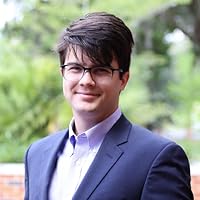
James E. Ryan is the eleventh dean of the Harvard Graduate School of Education. Before joining Harvard, he was the Matheson & Morgenthau Distinguished Professor at the University of Virginia Law School, where he founded the school’s Program in Law and Public Service. A former clerk for Chief Justice William H. Rehnquist, as well as a former rugby player, he has argued before the United States Supreme Court. He lives with his wife, Katie, in Lincoln, Massachusetts, with their four kids, two dogs, two cats, and nine chickens.
Jim was recently interviewed on CBS This Morning about his new book, "Wait, What?" A clip of the interview is available here: https://www.youtube.com/watch?v=HNR3i....
I read this book for class, and boy was it DENSE. It was cool to get to explore and discuss schools that I am directly familiar with; and further analyze the various issues impacting public schools nationwide. Ryan articulated so many different issues surrounding school finance litigation as well as integration that often get lost in translation at the policy level. Overall, great book; just definitely really tough to get through!
Dense, but excellent history of education trends and policy in America. It’s a few years out of date now (No Child Left Behind being not quite as prominent now) but immensely informative. If you want to know more about how our schools got to the state they are now, you’ll find it out here.
James E. Ryan crunches statistics from studies and compares the educational opportunities at two vastly different schools only 5 miles apart in central Virginia. Freeman High School (I have been there a multitude of times as a basketball ref and as a Homebound Teacher)is in western Henrico County and Thomas Jefferson High School (not only have I never been there, I don't even know its location) is in Richmond City.
Ryan uses the test scores and other factors to show a huge difference in the success of students in suburban school districts and city school districts.
Few would contradict the author's findings that schools are largely still segregated even though 50 years ago the Supreme Court ruled in Brown V Board of Education that separate is not equal. Not only do schools tend to segregate along racial lines, but they also separate socioeconomically.
Ryan does a good job of chronicling how school systems were and are able to skirt the requirement to integrate. The white flight from the city has left most city school systems with a very large percentage of minority students. Suburban schools have been able to bar nonresidents from attending their schools; Henrico County Schools are financed by the residents of that county and serve those people.
Generally speaking, most families (suburban and city) do not wish to put their children on a 45 minute bus trip twice each day. So few parents are lobbying for that option as a solution.
Ryan did cite the Chapter 220 plan in Milwaukee where magnet schools or schools with specialty centers where able to attract students to the city from different school systems, and some city kids went to surrounding systems--but the actual exchange of students was very limited. I do think this plan is a good idea that few could disagree with because students and their parents had to "volunteer" to participate and sit on the bus for an extended time.
Interestingly enough, Ryan found that city schools are funded more per pupil than suburban schools.
Ryan also found that when city students attended suburban schools they learned more and that the suburban students did not suffer any consequences. I would agree with that to some degree, but there must be a tipping point with the number of students in poverty where teachers are unable to teach as much because students (regardless of race) with lower abilities can not learn as quickly.
Ryan tried to find why city students do not learn as much as their suburban counterparts. But he did not dig too deep. It is obvious to me that (regardless of race) students with successful parents will generally be able to better motivate their kids than very young single moms that are drifting through life. While we can't legislate who and when people can have children, more can be done to encourage responsible behavior. People are too afraid to appear to be blaming the victim by speaking up and encouraging young people to get their education and a job before marriage and a family. It is especially important for celebrities and community leaders to speak up. And of course parents must raise their children responsibly instead of counting on the schools to raise them; parents need to get a backbone and resolve to do the right thing. Unfortunately teen parents rarely have the self discipline or understanding to raise responsible children. I believe young teen mothers should be encouraged to give their babies up for adoption.
As I read this book and thought through all of Ryan's ideas, and the difficulties of busing children to achieve socioeconomic integration, I kept coming back to the fact that even if they bused for kindergarten and up, it is still too late. Already at kindergarten the kids in poverty are behind the others. At a young age the disadvantaged would begin to feel frustration and resentment towards their suburban counterparts.
Overall I do not think busing will solve the problem. We have dug ourselves into a hole with so many parents unprepared to be parents; they can't even take care of themselves! Parents must sacrifice their time and effort (with the help of the community!) to raise responsible children.
Amazing at times. Kind of three different books here: 1) A legal analysis of actions to address segregation and unequal public schooling in America. Here it's a bit dry, but I'm sure it's thorough, accurate, and best I can tell, fair. A four star book in this regard. 2) A review of social science literature regarding the best ways to address our current reality of racially and socioeconomically segregated K-12 public school system. He pretty much rips apart all recent "efforts" here and does so based on all the data that is available, and he also notes that much of the data is iffy at best. Here the book is a phenomenal five star overview. Powerful. 3) A call to offer school choice that will best increase the chances of having poor black kids get an education in white suburban schools. Here the book is a lame one star fantasy. Maybe he's right in that this is the best way forward (tying up poor kids' chances in middle class schools, where middle class parents will NOT let their kids' schools fail), but I don't see middle America embracing Ryan's advice. He points out that the country and its suburbs are diversifying, so the opportunity may be there in the future. But for now, I was wholly unconvinced. I have not read many books on education, but I believe that even among those who care about education in America, this has to be a "must-read." I was also pleasantly surprised that Ryan, a law scholar at UVA, wrote was a fair book. Granted, in the end he came out on the side of a few approaches the right prefers, he really only seems to get their by default: it's the ONLY way that has a chance. Although he clerked for Rehnquist and the book was endorsed by some right-leaning sources, Ryan wrote a book that 20th century conservatives should cringe over (and more than a few cringes should be felt by the left). That doesn't make it good, but it was a nice surprise for me.
I generally liked this book. Other reviewers have done a nice job highlighting the best parts of Ryan’s book. I think he generally comes to solid conclusions on everything from school finance litigation to monolithic standardized testing regimes. I agree with his thesis (addressing inequities in education means more socioeconomically and racially diverse schools) but disagree with some of his remedies (particularly his section on “universal choice”).
Furthermore, there doesn’t seem to be much room in Ryan’s book for grassroots movements, teachers unions, or larger systemic reforms (how might, for example, a strong social democratic state that aims to reduce inequality overall impact our school system). Recent strikes, led by social justice-oriented unions like UTLA and CTU, have not just fought for more funding, but have broadened their demands to include healthcare and housing.
Lots of books on education policy and reform aim to tinker around the edges of what is considered “possible.” This tinkering allows policy makers and politicians to convince themselves that inequities in education are a result of a whole host of OTHER issues that we can “fix.” The reality is that inequities in education are a result of the inequality and stratification that characterizes ALL of American society. Ryan seems to realize this at times but his prescriptions are ultimately limited to schools specifically (with some discussion of housing policy thrown in). The question of what sort of policies and politics allow for the continuation and worsening of socioeconomic and racial inequality, unfortunately, never seems to enter into the picture.
UVA Law Professor James Ryan uses Richmond and nearby the suburban county of Henrico to give a legal history of a category of education law/policy: student assignment and school composition. A couple basic premises: (1) Many American schools are segregated along race and class and (2) socio-economically integrated integrated schools provide students a better education, better preparing them for the working world and civic participation. The former fact has prevented the latter ideal because white, middle class parents moved to suburbs and the courts and legislators subsedquently blocked efforts to combine the suburban and urban districts with busing (courts) or merger (legislature). [note: some states offer a counter example of combined urban-county districts, like NC]
Professor Ryan provides a detailed but readable account of integration and financing cases, and convincingly argues that there has been an overall arch to the story: middle class folks have protected their own, politicians have obliged and meagerly offered resources to poor schools, and most reforms today - accountability, standards, testing - do little to address the underlying problem of socio-economically segregated schools.
His solution, offered in the last chapter, is to embrace emerging trends of increased housing integration in the suburbs and inner-cities; and to open up universal choice within districts, including vouchers.
If one agrees with his premises, and I do, the book is well worth a read.
A really interesting historical look at school reform, particularly integration. He laid out the main events very clearly, and provided particularly interesting history on how school reform played out in Virginia, where urban and suburban schools came quite close to being united in one district by virtue of a court order. I also like the frame he used -- all the school reforms of the last 50 years have aimed to "spare the suburbs" and let them keep schools that suburbanites liked/that were minimally integrated/that were significantly better than other schools. I'm not sure how compelling his final answers are, though. He wants integration by race and socioeconomic status, and seems to hope for demographic change (particularly more minority students moving to the suburbs) to bring that about. He has other concepts of increased school choice that he does not flesh out too robustly. The recommendations are interesting, but the framing of the problem and the historical review is invaluable. A book I'll refer to for years, I suspect.
Hands down, this is one of my favorite books on educational policy. Ryan expertly documents our school districting system by examining all of the factors that contributed to it. Overwhelmingly he demonstrates how segregation shaped our current public school system and how metropolitan whites have done their best to continue segregation 50 years after Brown, whether it be in the form of legal segregation or through the modern school choice movement. Prior to Brown, school choice wasn't a national issue at all. It's only since middle-class white families have had to face integration that "school choice" ever became an issue, and the race implications of the movement is still demonstrable today.
In the end, Ryan's text reads almost like a race history of the public education system and segregation. He ends the book by providing suggestions as to how we could attempt to reintegrate schools today. While segregation has been technically "ended," integration was abandoned with the election of Reagan.
This book is shocking, well researched, and a must-read if you are interested in education policy. He focuses on the ciy of Richmond in Virginia, but many of its case studies are applicable in other cities in the US. This is a comprehensive study about how segregation continued to affect us today, and why. He offers well thought out solutions, mostly emphasizing diversity, which some may see as radical, but it is more empirically founded than saying that funding correlates with achievement. He touches on the No Child Left Behind Act, political perverse incentives (in standardized testing) and why middle income America is "saving the urban, sparing the suburban." This will make you think twice about the causes of poverty, and what the roles of schools can and should be.
This book juxtaposes Freeman High School in Henrico County, VA and Thomas Jefferson High School in the City of Richmond, VA. I graduated from Freeman, so this book has some personal resonance. Freeman is a school filled with college-track, high achieving kids. Thomas Jefferson, though only five miles away and just over the city/county line, serves kids with significantly less advantages and less chance of attending college.
This book is dense reading, but worth the time. It walks the reader through the various historical attempts to close the achievement gap between the lower and middle/upper socioeconomic classes - busing, school funding lawsuits, and now testing. If only the author could magically give us the answer to how we improve inner-city schools. cws
This book was informative, particularly the historical background it provides about the desegregation/integration school movement, much of which I didn't know. He also takes a brave stance on intra-district integration (city and suburbs) as a way to improve education - ultimately because there would be equitable funding and power distribution. However, it is a dense book, with like 1 pt font, so it took forever to read, which is part of the reason why I didn't give it more stars. Also, I don't know how realistic it is to fight for intra-district integration, given that there is absolutely no political will for it, while students languish in our failing public schools.
In the wake of the Democrats' losses in the recent election, education policy is emerging as a potential issue on which President Obama can find common ground with Republicans. The No Child Left Behind Act (NCLB) was President Bush’s signature example of bipartisan compromise, and in his first two years of office President Obama has already embraced centrist to conservative ideas—such as merit pay for teachers and non-unionized charter schools—that will appeal to the new conservative majority in Congress. Read more...
I really enjoyed this book, a very good primer on legal history regarding the continuing de facto segregation of public schools in the States. However, I doubt that someone could easily read this without an existing interest in the subject. Even with that interest it took my over a month (I think) to finish.
A must-read for anyone interested in K-12 education, the history of school segregation & integration in the U.S, or the future of American schools. It is very dense but fascinating nonetheless. School segregation still exists although it is no longer mandated — and it is hurting kids.