Journeys will take you to extraordinary places. From a changed Jerusalem to windmills which draw their own wind. From windswept British campsites to vast slave empires which have never been. MacLeod's breadth of vision in this collection is extraordinary, but what unites these stories is his abiding interest in humanity, and the way in which he combines the fantastically strange and with the memorably everyday. Expect widescreen wonder in Journeys, with many surprising truths, and some dazzling writing, along the way.
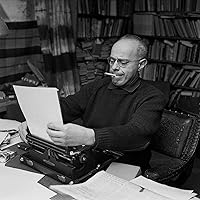
Despite a distinguished record as a novelist, which has recently won him both the Arthur C Clarke and John W Campbell Awards for his novel Song Of Time, Ian R MacLeod is probably still most widely known as one of the great writers of shorter fiction. He says that it's still his own abiding love in the genre, and, after more than twenty years of writing, the area where he feels you can take the biggest risks, have the most fun, and make the biggest (and most entertaining) mistakes. MacLeod lives in the riverside town of Bewdley in England with his wife Gillian, and divides his time between writing, teaching, and trying to write.
* "The Master Miller's Tale", first published in The Magazine of Fantasy and Science Fiction , May 2007 * "Taking Good Care of Myself", first published in Nature , May 2006 * "The English Mutiny", first published in Asimov's Science Fiction , October/November 2008 * "Topping off the Spire", first published as a pamphlet for Novacon, November 2008 * "Elementals", first published in Extraordinary Engines * "The Camping Wainwrights", first published in Postscripts , WInter 2008 * "The Hob Carpet", first published in Asimov's Science Fiction , June 2008 * "On the Sighting of Other Islands", first published in Celebration * "Second Journey of the Magus", first published online by Subterranean Online
Ian R. MacLeod is the acclaimed writer of challenging and innovative speculative and fantastic fiction. His most recent novel, Wake Up and Dream, won the Sidewise Award for Alternate History, while his previous works have won the Arthur C. Clarke Award, the John W. Campbell Memorial Award, and the World Fantasy Award, and have been translated into many languages. His short story, “Snodgrass,” was developed for television in the United Kingdom as part of the Sky Arts series Playhouse Presents. MacLeod grew up in the West Midlands region of England, studied law, and spent time working and dreaming in the civil service before moving on to teaching and house-husbandry. He lives with his wife in the riverside town of Bewdley.
All right, I have recovered from my temporary insanity and am now ready to get down to business. I have never before read anything by Ian R. MacLeod. I have a terrible and impoverishing addiction to purchasing titles from specialty publisher Subterranean Press, and during an all-too-common binge (this time it was Charles Stross titles), I saw this on offer, shrugged, said, "What the hell?" and added it to my cart.
I don't recall hearing much about Ian R. MacLeod either. His name is almost criminally similar to Ian McDonald, however, whose The Dervish House is my pick for this year's Hugo Award for Best Novel. Indeed, their names are so similar that I am afraid I will confuse these two authors. I assume that with a name like MacLeod, Ian R. must be immortal, and therefore I shall refer to him as "the Highlander" for the rest of this review. Wikipedia tells me that he was actually born in Birmingham and not the Scottish highlands, but I am too smart to fall for that small bit of trickery, Highlander.
Journeys is an anthology but not a slapdash one. At nine stories it feels short, but the stories themselves are quite long for short stories. And, for the most part, the stories are good. As someone who much prefers novel-length stories, I took a risk in introducing myself to the Highlander through an anthology. I would do it again though, because Journeys was an enjoyable, even magical experience.
Wikipedia also mentions that another of the Highlander's series is an alternate universe affair where the use of aether has preserved the trade guild structure in England and "has retarded technological progress". In hindsight, then, the common theme running through Journeys makes a lot of sense. Several of these stories are set in a similar (if not the same) universe, an alternate England where magic is much more in evidence. The first story, "The Master Miller's Tale", seems to take place near the beginning of the Industrial Revolution. Nathan watches steam-driven mills slowly supersede his traditional mill, which is held together by song spells. He gets mixed up in a group of Luddite-like terrorists who go around sabotaging steam-driven installations. For Nathan, there is also a personal component: the woman he had an adolescent crush on is now a champion of steam technology. Another story, "Elementals", is set a bit later, toward the Victorian end of the century. Its narrator is acquainted with an amateur scientist who is convinced he can harness elemental beings as an alternative energy source. The truth turns out to be much more complicated—and much more metaphysical.
Most of the stories in Journeys also involve the narrators losing themselves, physically or psychologically, and the above two stories are good examples. Nathan is so attached to his mill that it becomes difficult for him to realize his business is dying. Eventually he becomes obsessed with finding the windseller, a merchant who used to come by and sell bagged winds for him to release and use at his mill. Nathan's own obsessions offer a kind of opening for magic to enter him and consume him, and it's a similar story in "Elementals". The narrator learns that elementals are not tied to one element, that they are not the Other; rather, everything and everyone are elementals in a sense. Everything is powered by belief, his example being that it is more difficult to notice people who are down on their luck when you are at the same parties as them—they sort of fade into the background.
Not all of the stories in this collection fit comfortably into my framework. Two in particular—"The Camping Wainwrights" and "On the Sighting of Other Islands"—are quite different, and another, "Taking Care of Myself", is science fiction rather than fantasy but also deals with questions of identities. That being said, those first two stories certainly fit in with the title: the former is, surprisingly enough, about camping and family tribulations; the latter is told in a collective voice by the inhabitants of one island on a sea of moving islands. All of the stories in Journeys are weird in the sense that they are not quite grokkable the first time around—there are certain twists in the Highlander's narrative style that make the stories feel very original—but those two stories in particular among the weirdest.
I guess what I'm trying to say is that two of the intertwined motifs that seem most prevalent in Journeys—alternative worlds where magic has replaced or remains a rival to technological progress, as well as stories where the use of magic leads to a personal crisis of identity—appeal very much to me. So if the rest of the Highlander's work is like this, I look forward to reading more of it. Looks like this edition is sold out on the Subterranean Press website, so unless they print more or you can pick up a copy used, you'll have to be content with finding these stories elsewhere as you can. Alone, none of them really stand out, but together they form a very unified corpus of works. For a new reader like me, Journeys was a good introduction. Although I obviously can't say for sure, I suspect fans of the Highlander will find it familiar and comfortable.
Encouraged by author's short stories Home Time and The Chop Girl which I really liked I decided to give this work a try. I think what makes author's work interesting is the atmosphere which he can build with few poetic sentences. The stories themselves are more or less engaging and I found myself forgetting them as I progressed. Some of them were too short to build anything. I liked The Camping Wainwrights in particular as it was properly atmosphere-story balanced. The rest of them weren't so toned, for example - The Hob Carpet has more of a shocking value (it describes a scene in which newlywed couple is having sex on skins of skinned alive slaves) than is meant to impress as an approach on some Darwinist-racist-animal-cruelty problems of the modern world. Having read previous works, that dark, psychotic side of author's mind came unexpected and made me rethink my will to know further works of MacLeod.
I've read two collections of short stories by Ian R. MacLeod now. MacLeod is not particularly inventive in his narratives or his characters. He retreads many well-worn ideas. These ideas are elevated by his excellent writing. His prose is lush, and he is most successful at longer stories that allow him to stretch his legs. In those cases, he weaves interesting tales and has the ability to wrap you up into his worlds. My biggest complaints is that the point of views are generally very traditionally male, and sometimes MacLeod doesn't stick the landing. That being said, I would recommend Journeys. I enjoy spending time reading MacLeod, although for me Breathmoss and Other Exhalations was more successful.
The most successful stories here are "The Master Miller's Tale", "Topping off the Spire", "The Camping Wainwrights", "The Hob Carpet", and "The Second Journey of the Magus".
"The Master Miller's Tale" is a steampunk story about a miller who is resisting change to a more industrial society. He joins a radical movement and ends up destroying what he loves. There's magic in the story and the world is adjacent to ours. While the story is not particularly inventive, it is elevated by MacLeod's prose.
"The Camping Wainwrights" is kind of a horror story about a father who is obsessed with camping to the point of ignoring his family's discomfort. The story is told from his son's point of view, and the father's obsessiveness becomes a kind of horror. There may or may not be anything speculative in this story, which makes it a more interesting telling of living under a tyrant. Is that tyrant's strength supernatural or not? Does it matter to those living with him?
"The Hob Carpet" is about a society built on the back of slaves and follows a main character who takes the time to understand them. This is taken as blasphemous and he is held responsible by the leading religious order for an oncoming ice age. All too believable about religion being used to uphold and unjust system and punish those who question it. Along the way, there are some interesting ideas about our ability to be intimate/human when we are raised without human contact. (I wondered if the hob's are supposed to be stand-ins for neanderthals, as well).
"The Second Journey of the Magus" is maybe the most narratively interesting. At the end of his life, one of the three magi return to visit Jesus Christ. This is a very different Jesus than the one we know. He's waging a full out holy war with the help heaven and the angels. The Second Journy presents an interesting "what if?" The choice of the magus at the end of his life has far ranging ramifications. (Reminds me somewhat of the uncertain Jesus presented in The Last Temptation of Christ.)
The other stories in the collection don't really overcome their weaknesses. I thought "The English Mutiny" and "Elementals" both failed to stick the landing. There are some good ideas (and of course great writing), but they just didn't hold together for me. The other two stories are "Taking Good Care of Myself" and "On the Sighting of Other Islands", which are too short for MacLeod's style. They aren't really stories and seem to be impressions of possible stories.
Bardzo dobry zbiór opowiadań, okraszony rewelacyjną mini-powieścią - "spowiedź" kobiety przygotowującej się do odejścia na tle przemian kulturowych, społecznych, konfliktów światowych i wielkich katastrof naturalnych. Rzecz bardzo przejmująca, wręcz liryczna z nutką tajemniczości i kilkoma zaskakującymi momentami. Rzecz o tyle piękna, co interesująca. MacLeod jest dla mnie jednym z niewielu pisarzy, u których spokojne tempo narracji w żaden sposób nie razi, ani nie nuży - jego historie w jakiś magiczny sposób zagnieżdżają się w głowie, zmuszają do refleksji i niejednokrotnie wzruszają.
Z opowiadań zamieszczonych w zbiorze, na szczególną uwagę zasługują dwa: "Dywan z Hobów", historia ze czasów, które może już przeminęły, a może nadejdą - dość interesująca rozprawa z zagadnieniem prawa do dominacji jednych istot nad innymi, oraz "Druga podróż króla" - wariacja na temat Ewangelii, oparta na spekulacji, co by było, gdyby Jezus jednak zdecydował się zaprowadzić Królestwo Niebieskie siłą - konkluzje wyciągnięte przez autora dają sporo do myślenia.
...Journeys is my introduction to MacLeod's work and he strikes me as an author who is very comfortable with writing short stories. With the notable exception of Taking Good Care of Myself, the stories feel neither constrained by the word count or padded and especially the first is a problem one frequently encounters in short fiction. Although not all stories in the collection hit the bullseye, this story shows that a lot of the more exiting, experimental and innovative writing in genre fiction is still being don in the short form. MacLeod experiments to his heart's desire and more often than not, it pays off.