What is the difference between choking and panicking? Why are there dozens of varieties of mustard-but only one variety of ketchup? What do football players teach us about how to hire teachers? What does hair dye tell us about the history of the 20th century? In the past decade, Malcolm Gladwell has written three books that have radically changed how we understand our world and ourselves: The Tipping Point; Blink; and Outliers. Now, in What the Dog Saw, he brings together, for the first time, the best of his writing from TheNew Yorker over the same period. Here is the bittersweet tale of the inventor of the birth control pill, and the dazzling inventions of the pasta sauce pioneer Howard Moscowitz. Gladwell sits with Ron Popeil, the king of the American kitchen, as he sells rotisserie ovens, and divines the secrets of Cesar Millan, the "dog whisperer" who can calm savage animals with the touch of his hand. He explores intelligence tests and ethnic profiling and "hindsight bias" and why it was that everyone in Silicon Valley once tripped over themselves to hire the same college graduate. "Good writing," Gladwell says in his preface, "does not succeed or fail on the strength of its ability to persuade. It succeeds or fails on the strength of its ability to engage you, to make you think, to give you a glimpse into someone else's head." What the Dog Saw is yet another example of the buoyant spirit and unflagging curiosity that have made Malcolm Gladwell our most brilliant investigator of the hidden extraordinary.
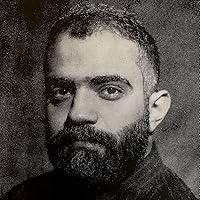
Malcolm Timothy Gladwell is a Canadian journalist, author, and public speaker. He has been a staff writer for The New Yorker since 1996. He has published seven books. He is also the host of the podcast Revisionist History and co-founder of the podcast company Pushkin Industries. Gladwell's writings often deal with the unexpected implications of research in the social sciences, such as sociology and psychology, and make frequent and extended use of academic work. Gladwell was appointed to the Order of Canada in 2011.
I really enjoy Malcolm Gladwell's writing and his exuberance in his stories. He does an amazing amount of research and is able to deliver it in a very smooth and in a form that is easy to digest for someone that doesn't have a lot of knowledge in that particular field. This was about the Space Shuttle Disaster, Enron and other predictions and ideas that have failed or have been proven to be wrong. Definitely worth a read and it was very fast and fun. I loved reading it on my kindle because I could make notes and bookmarks about bits of information that I felt were important or that I might want to refer back to at some point.
I love Malcolm’s work, the way he structures the book in short anecdotes, chapters , it gives us an ease of a free strainless reading and so many insights that add value to our day today chores, reading his books never gets mundane, there is always something to look forward to. You are not restricted to one topic, one country, important inferences from different esteemed classified works from across the globe, it expands our thought process and gives us a sense of interaction with the writer, I am turning out to be his big fan.
Malcolm Gladwell has an uncanny talent. Like a detective, he weaves compelling yarns, spinning together sources of information from psychologists, food testers, doctors, animal trainers, criminologists, and other experts to challenge common notions.
With journalistic brilliance honed by his years in the New Yorker, Gladwell proffered radical answers to challenge age-old notions in his latest bestselling volume What the Dog Saw and Other Adventures. A compilation of 19 essays on a wide range of topics – espionage, war, hair colour, kitchen appliances, homelessness and more – the volume blended pop psychology, sociology, management and current affairs in a highly readable prose. In Part One – Obsessives, Pioneers and Other Varieties of Minor Genius – Gladwell introduced you to a eclectic and eccentric cast of characters. Meet Ron Popeil, a master pitchman of the kitchen appliances variety, and Nassim Taleb, a financial trader with a philosophical bent who later wrote bestselling Black Swan.
In True Colors, Gladwell explained how advertising hair dye represented the prevailing socio-cultural conditions of women during the post war years, educated you on the nuances of good and bad dog behaviours in cover story What the Dog Saw, and proposed in John Rock’s Error that the birth control pill can possibly improve the health of the fairer gender.
Part Two – Theories, Predictions and Diagnoses – suggested various hypotheses dealing with matters such as military intelligence, industrial accidents, corporate failures and more. Humanity’s failure to see the right things are repeatedly highlighted in stories which explore the failure of Enron, the problem of homelessness, and the difference between panicking and choking. The fallibility of the Israeli military intelligence, as do the devastating September 11 attacks, are similarly tackled.
On a personal note, Gladwell raised in Something Borrowed the tricky problem of plagiarism. Here he displayed magnanimity by forgiving the creator of the hit broadway play Frozen in the name of creativity. The producer Bryony Lavery quoted liberally from his own work – an article on psychiatrist Dorothy Lewis in the New Yorker – without acknowledgement.
The Final Part on Personality, Character and Intelligence looked at the evaluations one makes about others, citing educators, job interviews, talents and criminals. Here, the author tried to debunk age-old techniques in assessing people and offered to shine a new light in this field.
In the chapter on The New Boy Network, for instance, Gladwell expounded on why human chemistry oriented HR interviews are flawed, preferring instead questions which probed how a job candidate would manage real life situations. The final story Troublemakers taught us that we shouldn’t merely adopt simple easy to implement solutions when the truth might be far more complex.
Overall, What the Dog Saw combined Gladwell’s intellectual wit with a compelling narrative par none. I found myself turning the pages rapidly, devouring every morsel aimed at making me feel cleverer about myself.
While some of his suppositions do seem to bear merit, one should adopt the author’s own cynicism and scepticism while reading his work. Embrace the volume as an entertaining mind tickling tour de force rather than the gospel truth, and you’ll be fine.
In "What the Dog Saw," Malcolm Gladwell takes me on an intriguing journey through a tapestry of topics, turning the seemingly mundane into something utterly captivating. This collection of essays, largely from his work with "The New Yorker," explores everything from ketchup to dog whispering, all while maintaining a keen focus on understanding human behavior. Gladwell's knack for storytelling, rich with anecdotes and research, makes even the most complex concepts not only accessible but thoroughly engaging. A must-read for anyone who enjoys viewing the world through a refreshingly inquisitive lens.
The chapter on choking vs panicking, which can be summarized by this quote: "We have to learn that sometimes a poor performance reflects not the innate ability of the performer but the complexion of the audience; and that sometimes a poor test score is the sign not of a poor student but of a good one". Personally touching!
Also, there is a very good insight about the story of the crash of the Challenger, which had no cause but emerged from NASA's culture.
I have read several books by this author and I enjoyed each of them. This time I listened as the author read the recorded book. It was an interesting hodgepodge of various topics and I highly recommend it to either read or listen to during your commute.
A compilation of Gladwell’s best articles for The New Yorker. Entertaining and filled with fascinating facts and the magic of his reasoning. Enjoyable and easily digested as each chapter is its own story (or two).
This is the second part of the collection of articles Malcolm Gladwell has chosen from his writings for The New Yorker. This part is about Obsessives, Pioneers and Other Varieties of Minor Geniuses. As Gladwell usually does, he tackles quirky subjects and discusses them to come up with conclusions that serves as gateways to larger meanings. In this part he talks about a variety of subject, such as homelessness,types of failiures, airplane crashes,having too much information, plagiarism and many other interesting subjects.
The subjects covered in this part are a bit more interesting than the first one. However, it still had the same problem of the first one.
This is a series of essays adopted from Galdwell's regular column. Includes some thought-provoking articles - specifically those around plagiarism and the difference between "choke" and "panic."
They're not necessarily viewpoints that you have to agree with, but, as Gladwell mentions in the introduction - his purpose is merely to engage. And that he does in this book.
Highlights: 1. What is clear in hindsight is rarely clear before the fact.
2. Stress wipes out short-term memory.
3. We have to learn that sometimes a poor performance reflects not the innate ability of the performer but the complexion of the audience; and that sometimes a poor test score is a sign not of a poor student but of a good one.