What do you think?
Rate this book


164 pages, Paperback
First published January 1, 1984
"It wasn't so much a messed-up childhood as no childhood at all...
"As time passes, the parent becomes the figure which the child in one respect accepts as dominant, which means that all through their lives they will accept dominant figures while at the same time trying to destroy this dominance in order to exist...
"Actually a child develops a dual need for dominance and destruction, which is to say that one becomes sadistic and masochistic at the same time."
"The compulsive recklessness had its roots in emotional deprivation during childhood.
"Fassbinder, in living the way he latterly did - overeating, overworking, drinking heavily, taking drugs and sleeping pills in outrageous quantities - was making a similar point about the relationship in his own life between childhood deprivation and the need to take risks...
"At the end of his life he was averaging about three hours's sleep a night, overeating, drinking two bottles of bourbon a day, as well as strong Bloody Marys, smoking marihuana or hashish on the set and taking powerful sleeping pills (Mandrax)...
"...he had launched non-stop assaults against his own physique, but never without the irrational hope that it could withstand them...
"...he had gone on to become a gambler playing against himself, for want of a better opponent.
"Generally he tended to ally himself with proletarian or criminal characters against the middle classes; the leather jacket he so often wore was a symbol of this rebellion, and he went on identifying education with the unenlightened schools he had detested and with his family's frigid attempts to discipline him.
"His importance as a film director depends on his ability to translate his neurosis into cinematic fiction...
"Film was a form of therapy in which he could project his identity into the glamorous men and women who spoke his dialogue and obeyed his instructions, but in overworking so drastically and indulging himself so recklessly, he was constantly appealing for help."
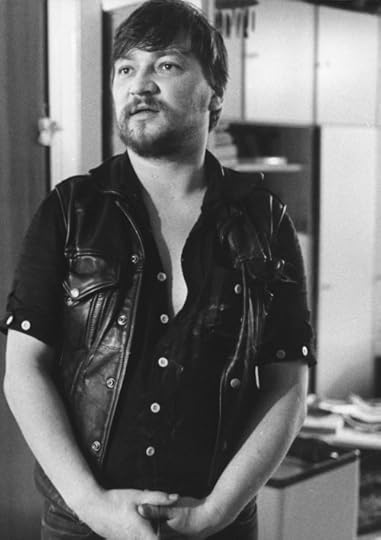
"He discovered that a combination of talent, determination, energy, aggressiveness and charm gave him the power to make a group of trained actors accept him as their leader."
"He alienated some actors with his rudeness...
"It was only occasionally that he indulged the whim of making attractive actors look less attractive, but he was regularly compulsive about testing how far he could make people go in their obedience to him...
"He drives people to the point of bringing something up from inside themselves, and he finishes with them when there's nothing left to suck out...
"Pressure was building up that would have, sooner or later, to be violently released...
"It was partly the unpredictability of his behaviour that made him so fascinating."
"What he did in private life to generate erotic tension was continuous with what he did on the studio floor - a theatre of cruelty in non-stop performance...
"One danger in merging his private life with his professional life was that he would feel justified in doing anything that would deepen the actor's dependence on him...
"Fassbinder willingly gives away far more about his private life...
"He seems to have disliked the convention of privacy as much as he disliked the kind of superficial considerateness that is guaranteed by bourgeois politeness."
"The statements he made about himself and the statements that are contained in anecdotes about him become inseparable from the statements made in the films. He understood that their reception would depend partly on his image, and one reason for behaving outrageously was that outrage would promote them. He needed the legend, but he sacrificed himself to it."
"To make many, many films, so that my life would become a film."