

What do you think?
California Studies in Critical Human Geography #2
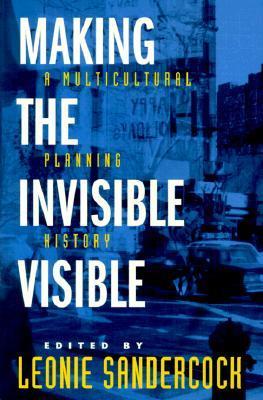
Making the Invisible Visible: A Multicultural Planning History (California Studies in Critical Human Geography)
The history of planning is much more, according to these authors, than the recorded progress of planning as a discipline and a profession. These essays counter the mainstream narrative of rational, scientific development with alternative histories that reveal hitherto invisible planning practices and agendas. While the official story of planning celebrates the state and its traditions of city building and regional development, these stories focus on previously unacknowledged actors and the noir side of planning.
Through a variety of critical lenses―feminist, postmodern, and postcolonial―the essays examine a broad range of histories relevant to the preservation and planning professions. Some contributors uncover indigenous planning traditions that have been erased from the African American and Native American traditions, for example. Other contributors explore new themes of gendered spaces and racist practices, of planning as an ordering tool, a kind of spatial police, of "bodies, cities, and social order" (influenced by Foucault, Lefebvre, and others), and of resistance.
This scrutiny of the class, race, gender, ethnic, or ideological biases of ideas and practices inherent in the notion of planning as a modernist social technology clearly points to the inadequacy of modernist planning histories. Making the Invisible Visible redefines planning as the regulation of the physicality, sociality, and spatiality of the city. Its histories provide the foundation of a new, alternative planning paradigm for the multicultural cities of the future.
Through a variety of critical lenses―feminist, postmodern, and postcolonial―the essays examine a broad range of histories relevant to the preservation and planning professions. Some contributors uncover indigenous planning traditions that have been erased from the African American and Native American traditions, for example. Other contributors explore new themes of gendered spaces and racist practices, of planning as an ordering tool, a kind of spatial police, of "bodies, cities, and social order" (influenced by Foucault, Lefebvre, and others), and of resistance.
This scrutiny of the class, race, gender, ethnic, or ideological biases of ideas and practices inherent in the notion of planning as a modernist social technology clearly points to the inadequacy of modernist planning histories. Making the Invisible Visible redefines planning as the regulation of the physicality, sociality, and spatiality of the city. Its histories provide the foundation of a new, alternative planning paradigm for the multicultural cities of the future.
- GenresUrban PlanningNonfiction
284 pages, Paperback
First published January 9, 1998
About the author
Leonie Sandercock
18 books6 followersLeonie Sandercock (born 1949) is an urban planner and academic focusing on community planning and multiculturalism. She has been teaching at the School of Community & Regional Planning at University of British Columbia, Vancouver, Canada, since 2001.
Ratings & Reviews
Friends & Following
Create a free account to discover what your friends think of this book!
Community Reviews
Displaying 1 - 2 of 2 reviews
September 24, 2012
Crap, some of the segments were written by then current students, and it showed.

August 8, 2016
Not in the canon of books on planning, but should be. A must read.
Displaying 1 - 2 of 2 reviews