Jump to ratings and reviews
Rate this book

Goldfields Trilogy #1

ROARING NINETIES

Rate this book
A story of friendship and love as gold fever swept the Western Australian goldfields in 1892.

420 pages, Hardcover

First published January 1, 1946

Loading...
Loading...

About the author

Katharine Susannah Prichard

40 books15 followers
Katharine Susannah Prichard was born in Levuka, Fiji in 1883, and spent her childhood in Launceston, Tasmania, before moving to Melbourne, where she won a scholarship to South Melbourne College. Her father, Tom Prichard, was editor of the Melbourne Sun newspaper. She worked as a governess and journalist in Victoria then travelled to England in 1908. Her first novel, The Pioneers (1915), won the Hodder & Stoughton All Empire Literature Prize. After her return to Australia, the romance Windlestraws and her first novel of a mining community, Black Opal were published.

Prichard moved with her husband, war hero Hugo "Jim" Throssell, VC, to Greenmount, Western Australia, in 1920 and lived at 11 Old York Road for much of the rest of her life. She wrote most of her novels and stories in a self-contained weatherboard workroom near the house. In her personal life she always referred to herself as Mrs Hugo Throssell. She had one son, Ric Throssell, later a diplomat and writer.

Ratings & Reviews

What do you think?
Rate this book

Friends & Following

Create a free account to discover what your friends think of this book!

Community Reviews

5 stars
2 (9%)
4 stars
7 (33%)
3 stars
10 (47%)
2 stars
2 (9%)
1 star
0 (0%)
Displaying 1 - 4 of 4 reviews
Profile Image for Ali.
1,825 reviews174 followers
December 30, 2016
Basically Communist Deadwood, and great fun it is too. This engaging epic of Australia's goldfields is written in straight-down-the-line socialist realism with a strong feminist tinge: the born upper class are twits, some redeemed by work, others not so much; good workers stand together and struggle, while some sell out and make the bosses' fortunes for them in the process. The workers manage well enough when they are able to organise themselves; but the relentless march of global capitalism erodes their lives, along with the sense of justice, equality and freedom. The feminism of Prichard feels surprisingly modern - the women work both harder and smarter, fend off sexual assault and those who want to put them on a pedestal. There is a brilliantly written sequence as three of the respectable women visit a brothel, it is a hilarious sequence skewering the idea that these groups of women never meet, but always respectful to the sex workers. There's a kinda odd cross-class-lines romance plot, which true to my possibly-pathological hatred of romance, annoyed me.
Prichard was far ahead of her fellow white writers in portraying Indigenous peoples as thinking, feeling people, with rights, and perspectives over the landscape that are different to the white settlers. She starts the novel with the casual torture by white explorers/prospectors of an Indigenous woman - who promptly gets her revenge - and she consistently weaves in perspective of dispossession. Unfortunately, this doesn't mean she isn't racist. The Aboriginal characters are frequently compared with animals, and Prichard seems to see as completely fair the decision by a local black woman to act as an unpaid servant to the protagonist in return for occasional food supplies for her people. It is even portrayed as an act of inexplicable loyalty and devotion. The Afghans appear only as shadowy others, subject to collective punishment by the white "matehood", who also, incidentally, protect those who massacre Indigenous people, even if they disapprove of the killings.
Prichard's view on this seems, so rarely compared with the rest of the book, to be uneasy. The discussions have a vague intellectual friction, with the downside of all this rampant "mateship" acknowledged, but not overly examined. This would contrast to the sexism of the matey crew, which is scrutinised and highlighted, making it clear how much more complicated life is for the women. I get the feeling that Prichard can't think herself into the shoes of the Indigenous women, despite the strength of the opening sequence. Instead, she retreats to glimpses, which raise shadows over the rest of the narrative. I can't say it is ineffective if you are looking, but it would be easy not to look. And that is possibly the whole history of Australian racism.
The book rollicks along quickly, telling history in that fun and yet highly educational way great historical fiction manages. I know a great deal more about alluvial mining, and the history of Australia's mining industry, than I could have imagined before. Fundamentally, this is a great holiday read. And It is easy with our ever-so-jaded-dystopian-fiction-only-please 21st century eyes to make fun of the passion and respect for working people and sheer hopefulness and fun of this book, but truthfully we could use of this genre, a genre which believes people can create good things together.
Profile Image for Lisa.
3,839 reviews492 followers
January 6, 2022
Katharine Susannah Prichard's tenth novel The Roaring Nineties is my first book for 2022, and what an interesting novel it turned out to be!  My first edition ex-Library copy has an interesting history of its own.  Mr and Mrs GJ Pearce of Maitland immortalised their ownership in careful copperplate on the flyleaf but there is also a Maitland Institute Library stamp, accession no. A5012 and a pencil note that it cost 11 shillings and sixpence.  This took me down an intriguing research rabbit-hole where I learned that The Maitland Institute, established in 1859, was one of hundreds of Mechanics Institutes set up to offer adult education to working-class men in Australia.

KSP (1893-1969) with her socialist leanings would have been pleased to know that this, her most important novel, was being read in such a milieu.  However, as I learned from a paper published by the Maitland Historical Society (with photos), by mid-20th century the public library movement had gained enough momentum for new public library legislation to be passed in all Australian states.  The NSW Public Library Act was passed in 1944 and in the ensuing decade, institute collections were taken over by the new public libraries.  If only Mr and Mrs GJ Pearce had noted their date of acquisition we could know whether KSP's masterpiece survived the initial weeding process and the tensions of the Cold War, or was culled later.

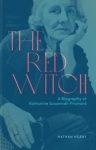
Nathan Hobby, whose bio The Red Witch is due for release soon from Miegunyah Press, tells us that KSP ...
... spent a decade on the trilogy, regarding it as her finest achievement, and was deeply hurt by the mixed reception she received from critics (especially for the third volume, Winged Seeds). (See Gold Fever: Katharine Susannah Prichard’s The Roaring Nineties at Nathan Hobby, a Biographer in Perth.)

But — much as I liked the novel — I am not surprised by that mixed reception, for two reasons:

Firstly. a reminder from Jean François Vernay, who, in A Brief Take of the Australian Novel, notes that KSP was nominated for the Nobel Prize in 1932, and then groups her work into three categories:


Iconoclastic novels containing risky heretical topics: (lustful desire (Working Bullocks, 1926); desire for an Indigenous partner (Coonardoo, 1929, see my review); and female eroticism (Intimate Strangers, 1937);
Neo-nationalist novels in the romantic tradition and concerned with the wealth that the continent had to offer its settler and indigenous populations: The Pioneers (1915, see my review); Black Opal (1921, see my review) and Moon of Desire (1941);
Politically inspired novels [which] can be read as a diatribe against corrupt capitalism: her trilogy about the mining industry in WA: The Roaring Nineties (1946); Golden Miles (1948) and Winged Seeds (1950).


I don't agree that The Roaring Nineties is a 'diatribe'.  It is forceful, but it's neither bitter nor abusive, and it's neither ironic nor satirical. It's Australian realism, and it's deeply humane. Acknowledging the disastrous impact of European settlement on the Indigenous people of the Goldfields, the novel shows the strengths and the weaknesses of individuals pioneering not just chaotic economic development but also an informal system of governance that was doomed to fail.  Because even in the 1890s, parts of any economy were global and the market for minerals in particular depended on foreign capital. Even so, I can see that some readers, especially those who don't like any kind of politics in their reading, might have been turned off by KSP's agenda.

I would have found it boring too, except for KSP's gift for characterisation.

Which brings me to a possible second cause of the 'mixed reception': the novel is framed around KSP's research which included listening to the reminiscences of two old-timers who in the novel KSP calls Dinny Quin and Sally Gough.  This is what gives the tale its authenticity, but it also means that the reader has to press on past a lot of Dinny's yarning about the early days of the WA Goldfields.  Seven chapters of this starts to wear a bit thin before the story livens up with the arrival of three women on the goldfields.  And then it's really interesting and had me captivated to the end, but I can see that some readers might abandon it prematurely.

The three arrivals are the attractive but shallow young bride Laura, who is the long term love of successful prospector Alf Brierly's life.  She enjoys a rise in social status when Alf becomes a mine manager, and becomes a petty snob who never understands how precarious Alf's position becomes when qualified engineers from overseas begin to replace experienced men who learned on the job. She reminded me of Rosamund Vincy in George Eliot's Middlemarchanother vain and shallow woman who thwarted her husband's efforts to rise in society while retaining the values of his origins.

To read the rest of my review please visit https://anzlitlovers.com/2022/01/06/t...
49 reviews4 followers
June 1, 2023
A good read for my purposes, but not incredible. The characters are very foggily sketched to move the story along and do whatever KSP wants them to do in the situation. Everything is told at a distance, rather than being experienced by the characters themselves, which could be an interesting style but just makes it feel quite bland and boring. I like the exploration of social themes and the portrayal of the landscape, but it's not her best work.
Profile Image for Oleh.
102 reviews1 follower
February 14, 2026
Мені б більше сподобалася ця історія про золотошукачів західної Австралії, якби вона не була такою затягнутою, а багато подій не передавалися відсторонено, ніби репортажі з газети чи розповіді бувальщини. Було буквально два-три місця, які могли закрутити сюжет, та й ті чомусь стосувалися моментів, коли жінки боялися втратити самовладання у присутності чоловіків.
Displaying 1 - 4 of 4 reviews