

What do you think?

Snegyrochka
V tvorchestve dramaturga vesennyaya skazka Snegurochka zanimaet osoboe mesto. Ostrovskij daet ne xarakternoe dlya svoego tvorchestva idillicheskoe opisanie strany berendeev. ZHizn berendeev radostna i bezmyatezhna. Ostrovskij opisyvaet ix prazdnestva, igry, plyaski, privlekaya dlya izobrazheniya bogatyj folklornyj material. V centre vesennej skazki - obraz idealnogo narodnogo carya Berendeya, zhivushhego dlya svoix poddannyx i goryacho imi lyubimogo.
72 pages, Hardcover
First published January 1, 1873
Ratings & Reviews
Friends & Following
Create a free account to discover what your friends think of this book!
Community Reviews
Displaying 1 - 7 of 7 reviews

December 27, 2017
A fairy tale ready to break your heart. Snegurchka, also known as the The Snow Maiden, is a Russian folk-tale about a girl, daughter of Frost and Spring, made of snow. As a character, she's so well established in Russian culture, that she's often depicted as the helper of Ded Moroz who brings children their presents during the New Year parties. Her own story is way more tragic, however.
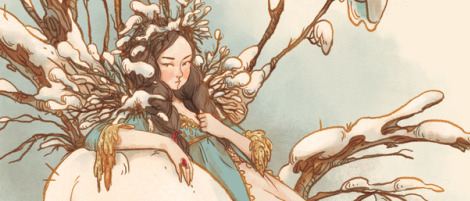
In this version of the story, which is a theatre play turned opera (first performed in the 19th century), the beautiful Snegurchka goes to live among humans, where she grows to like a boy named Lehl, yet as she is made of snow her heart doesn't know how to love. It becomes her biggest wish to experience that feeling, even knowing that the heat of love and coldness of snow don't go well together.
Ah, how sweet it is to live!
The sun shines radiantly
Among the branches, the silver birches Quiver when blows the breeze.
Ah, how sweet it is to live!
It's a tale about how it is better to live life to its fullest degree for a short time, than to merely exist without passion for an eternity. It is a strong and powerful message still relevant hundreds of years after its first retelling. The seasons play an important part in this story, too. In Eastern countries, where the winters grow cold and harsh, the arrival of Spring was always seen as an important event. With Father Frost and Mother Spring as characters, we see a personification of that battle come to life.
I read this in Russian and it's a bit of a shame that the story isn't better known in other countries and languages. For people interested in the culture and history, I would recommend the animated film version from the 50s as well, which allows a beautiful look into what children in the Soviet Union grew up with.
In this version of the story, which is a theatre play turned opera (first performed in the 19th century), the beautiful Snegurchka goes to live among humans, where she grows to like a boy named Lehl, yet as she is made of snow her heart doesn't know how to love. It becomes her biggest wish to experience that feeling, even knowing that the heat of love and coldness of snow don't go well together.
Ah, how sweet it is to live!
The sun shines radiantly
Among the branches, the silver birches Quiver when blows the breeze.
Ah, how sweet it is to live!
It's a tale about how it is better to live life to its fullest degree for a short time, than to merely exist without passion for an eternity. It is a strong and powerful message still relevant hundreds of years after its first retelling. The seasons play an important part in this story, too. In Eastern countries, where the winters grow cold and harsh, the arrival of Spring was always seen as an important event. With Father Frost and Mother Spring as characters, we see a personification of that battle come to life.
I read this in Russian and it's a bit of a shame that the story isn't better known in other countries and languages. For people interested in the culture and history, I would recommend the animated film version from the 50s as well, which allows a beautiful look into what children in the Soviet Union grew up with.

April 6, 2011
It`s strange how this play appeared to be so current to me.

November 11, 2025
Островского попросили написать пьесу-феерию. Ничего лучше, чем взяться за адаптацию им узнанного сюжета про Снегурку он не придумал. Но каким образом обставить сюжет о девушке, созданной из снега? Несмотря на природу своего происхождения, Снегурочке полагалось испытывать желания, свойственные человеку. Вполне очевидно, такие побуждения всегда становятся гибельными. Только кем являлась Снегурочка в действительности? Это образ из представлений славянских народов. Порождение ли она особенности восприятия неурожайных периодов, вызванных поздним наступлением весны, либо своеобразное осмысление застилавшей атмосферу вулканической пыли, особого значения не имеет. Главное требовалось понять, что Островский создал пятнадцатилетний период ослабления солнечной активности, вследствие чего людям приходилось испытывать страдания. Виновный такого будет найден — им окажется Снегурочка. И так как окончание зимы с давних пор связывают с необходимостью сжигания чучела, нечто подобное Александр решил воплотить в том числе и на театральной сцене.
Действие должно происходить давным-давно, где-нибудь в неизвестном месте. Там жили люди под властью мудрого правителя. Вне зависимости от этого, Островский поместил в сюжет силы гораздо высшие — непосредственно образы зимы и весны, в том числе их дочку — Снегурочку. Зима — это Мороз, мужское начало. Весна — начало женское. Возникает конфликт рационального и иррационального — должного быть и отчего бы не быть по-другому. Зима считает необходимым беречь Снегурочку, поскольку среди людей её настигнет кара Ярило-солнца. Весне кажется иначе — Снегурочка достаточно выросла, чтобы испытать так ею требуемое любовное чувство. Как часто в жизни случается — иррациональное торжествует над рациональным, невзирая на обязательно должные случиться последствия.
(c) Trounin
Действие должно происходить давным-давно, где-нибудь в неизвестном месте. Там жили люди под властью мудрого правителя. Вне зависимости от этого, Островский поместил в сюжет силы гораздо высшие — непосредственно образы зимы и весны, в том числе их дочку — Снегурочку. Зима — это Мороз, мужское начало. Весна — начало женское. Возникает конфликт рационального и иррационального — должного быть и отчего бы не быть по-другому. Зима считает необходимым беречь Снегурочку, поскольку среди людей её настигнет кара Ярило-солнца. Весне кажется иначе — Снегурочка достаточно выросла, чтобы испытать так ею требуемое любовное чувство. Как часто в жизни случается — иррациональное торжествует над рациональным, невзирая на обязательно должные случиться последствия.
(c) Trounin

May 11, 2018
what a lovely stuff

July 11, 2022
A beautiful fairytale

July 25, 2026
Muy bien para practicar finlandés

August 15, 2012
На самом-то деле Снегурочка — дочь Деда-Мороза и Весны!
Конец зиме пропели петухи,
Весна-Красна спускается на землю.
Полночный час настал, сторожку Леший
Отсторожил, — ныряй в дупло и спи!
(Проваливается в дупло)
Конец зиме пропели петухи,
Весна-Красна спускается на землю.
Полночный час настал, сторожку Леший
Отсторожил, — ныряй в дупло и спи!
(Проваливается в дупло)
Displaying 1 - 7 of 7 reviews