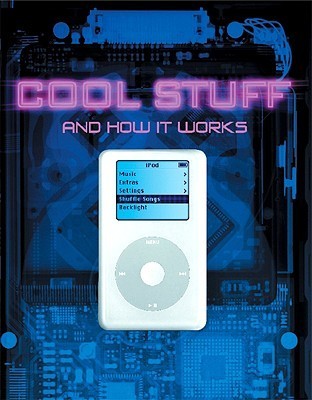
Uses computer-generated images to explain how many devices and processes of modern technology work, covering such topics as doppler radar, bionic limbs, MP3 players, space probes, smart cards, and robotic workers.
Chris Woodford writes popular science and technology books for adults and children. He studied Natural Sciences at Cambridge University. His books include the bestselling "Cool Stuff" series for Dorling Kindersley, and he also writes the popular science education website Explain that Stuff.
This book is a great way to get middle school students to not only learn more about the aspects of technology that they use throughout their daily lives, but to recognize the ways in which that technology impacts their lives and their own identities.
Because this text is written in easy-to-read language, and talks about a number of gadgets and new technology, middle school students will be interested to read this nonfiction text, as it will teach them new information about how to use many of the technologies that they have most likely already been exposed to at some time.
After reading this book with my class, I would ask students to think about their own technological identities. Because most students have some form of online presence, be it through the use of Facebook or some other medium, I would ask students to look at how their online identity is formed and evaluate how the use of technology has positively or negatively impacted their own sense of identity.
Questions for students may include the following: "How much time do you spend on Facebook? What photographs have you chosen for your page? What do you write about on your page, and why? What have you left off of your page, and why? How is your page different than your friends pages? What does your Facebook page say about you?" (Gallagher 73)
Though now quite dated, as expected for a book on rapidly changing technology, this is still an excellent nonfiction kids book for anyone interested on the insides of our favorite things. It's a great "How It's Made" kind of book, that really does a fantastic job dissecting the technology it covers in each chapter and making it both educational and smart while still refraining from being too much and going over a kid's head. I love this book for it's variety of the different kinds of technology as well. We see the classic iPod on the cover of course, but it also covers robot assistants, sophisticated tech used by IBM, and even language translators - all things a child may think of as science-fiction before reading this book. It's an excellent boon for aspiring engineers, inventors, techies, and repair-folk. An all around helpful tool while still fun and entertaining, this is a great book for any kid to have on their shelf.
Wow I've never read such an informative book. A book like this can really catch young eyes. It shows you a lot of things. Some things you didn't even knew existed. Its really fun to learn about science. Some of things in the book we use in our everyday life. its fun to see how many ways we can use everyday things in so many different ways. Also to learn whats on the inside of a phone. Science can inform but can be fun while informing. i just hope everyone would love this book the same way as i do. Another good thing about it is that you don't have to read it in order.
"Cool Stuff 2.0 and How It Works" is a colorful, fact-filled book that explains the science and technology behind everyday objects and futuristic inventions. The authors, Chris Woodford and Jon Woodcock, break down complex ideas into simple language, making it easy for anyone to understand how things work.
The book covers a huge variety of topics, from smoke detectors and high-tech toilets to maglev trains, supercomputers, and space probes. Each section is packed with diagrams and real-world examples, so you can see how the science applies to things you might use or see every day. The illustrations are excellent and help you visualize the concepts, even if you’re not a science expert.
There’s also a strong focus on environmental issues. For example, the chapters on recycling and bioplastics show how technology can help solve problems like waste and pollution. The book doesn’t just talk about gadgets, it explains the science behind them, like how hydroponics lets you grow plants without soil, or how fusion reactors might power the future.
Sometimes the book moves quickly from one topic to another, so if you want a deep dive into a single subject, you might find it a bit shallow. Some technical words are used, but most are explained in the glossary at the end. Still, younger readers might need help with a few terms.
Also, since the book was first published in 2007, a few technologies (like the XO laptop for developing countries or early e-books) feel a bit outdated now. However, most of the science is still relevant and interesting.
Floating Bed One of the most surprising inventions is the floating bed, which uses magnetic levitation to hover above the floor. The book explains that without guide ropes, the bed could actually flip over or shoot sideways, so it’s not quite ready for everyday use!
Artificial Retina The chapter on artificial retinas describes how scientists have developed implants that let blind people "see" crude shapes and movement. The technology uses a camera built into glasses, which sends images to a microchip in the eye. Over time, the brain learns to fill in missing details, improving vision.
Mars Rover In the "Explore" section, the book talks about the Mars rovers Spirit and Opportunity. It reveals that these robots have found evidence of ancient water on Mars, which is a big clue that the planet might once have supported life.
Kevlar Protection The "Protect" section describes how Kevlar is used in body armor and gloves. It’s five times stronger than steel, and the book shows how the crisscross structure of Kevlar spreads out the force of impacts, making it ideal for protection against bullets and knives.
Falkirk Wheel There’s a fascinating bit about the Falkirk Wheel in Scotland- a giant rotating boat lift that uses balance and gears to move boats between canals. The book explains that the lift needs no more power than a small car engine, thanks to its clever counterbalance system.
This book is perfect for curious readers of any age who want to understand the science behind the things we use every day. It’s great for browsing, and you’ll definitely learn something new on every page. If you like books that mix fun facts, science, and technology, this is a solid choice.
This book had a lot of categories of how things work, so you can't be like, "There's nothing that I actually want to know about." They were all fascinating to read and had cool pictures and backgrounds of each objects. Of course, what really matters is the actual learning. There were diagrams and understandable, but complex explanation of how things work. It makes your brain think about it and learn so many things in just two pages. With all the great art in the book and cool facts, this book will not dissapoint if you are interested in this genre of books.
A fascinating look inside the everyday gadgets of our lives. It's a DK book so you KNOW it has great pictures and illustrations go along with the explanations.
I would recommend this for anyone who is curious and it would make a great rainy day or long trip book for an inquisitive child of age 10+ (maybe even age 8+ if they're precocious).
This is a fairly interesting book, and easy read that you might keep in the bathroom for short look-ats. It gives you an explanation of the technology behind your favorite toys, like iPods and scanners, in layman's terms.
This book is absolute mind candy for kids curious about gizmos. The eye-catching graphic design reminds one of a video game magazine. Excellent and educational.