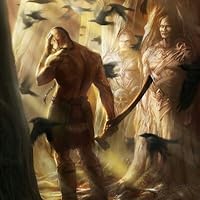
Midnight Sun is the companion volume to Gods in Darkness, and collects all of the Kane short stories and poetry. The Complete Stories of Kane. Table of Contents: Death Angel's Shadow (Poem) Undertow Two Suns Setting The Dark Muse Sing a Last Song of Valdese Misericorde Lynortis Reprise Raven's Eyrie In the Lair of Yslsl Reflections for the Winter of My Soul Cold Light Mirage The Other One The Gothic Touch Midnight Sun (Poem) Lacunae Deep in the Depths of the Acme Warehouse At First Just Ghostly The Treasure of Lynortis (Early version of "Lynotris Reprise") In the Wake of the Night (lost novel fragment) The Once and Future Kane (Non-fiction essay)
Contents:
· Death Angel’s Shadow · pm Midnight Sun #1 ’74 · Undertow · nv Whispers Aug ’77 · Two Suns Setting · nv Fantastic May ’76 · The Dark Muse · nv Midnight Sun #2 ’75 · Sing a Last Song of Valdese · ss Chacal Win ’76 · Misericorde · nv Sorcerer’s Apprentice #17 ’83 · Lynortis Reprise · nv Midnight Sun #1 ’74 · Raven’s Eyrie · na Chacal Spr ’77 · In the Lair of Yslsl · ss Midnight Sun #1 ’74 · Reflections for the Winter of My Soul · na Death Angel’s Shadow, Warner Books, 1973 · Cold Light · na Death Angel’s Shadow, Warner Books, 1973 · Mirage · nv Death Angel’s Shadow, Warner Books, 1973 · The Other One · ss Escape! Fll ’77 · The Gothic Touch · ss Elric: Tales of the White Wolf, ed. Edward E. Cramer, White Wolf, 1994 · Midnight Sun · pm Midnight Sun #1 ’74 · Lacunae · ss Cutting Edge, ed. Dennis Etchison, Garden City, NY: Doubleday, 1986 · Deep in the Depths of the Acme Warehouse · ss The King Is Dead, ed. Paul M. Sammon, Delta, 1994 · At First Just Ghostly · na Weird Tales Fll ’89 · The Treasure of Lynortis · na Kadath Fll ’84 · In the Wake of the Night · ex A Fantasy Reader, ed. Jeff Frane & Jack Rems, 1981 · The Once and Future Kane · ar REH: Lone Star Fictioneer #1 ’75
Karl Edward Wagner (12 December 1945 – 13 October 1994) was an American writer, editor and publisher of horror, science fiction, and heroic fantasy, who was born in Knoxville, Tennessee and originally trained as a psychiatrist. His disillusionment with the medical profession can be seen in the stories "The Fourth Seal" and "Into Whose Hands". He described his world view as nihilistic, anarchistic and absurdist, and claimed, not entirely seriously, to be related to "an opera composer named Richard". Wagner also admired the cinema of Sam Peckinpah, stating "I worship the film The Wild Bunch".
Karl Edward Wagner was many things: originally trained as a psychiatrist (a profession he ended up rejecting), a longtime editor of the influential Year's Best Horror and Fantasy series, a poet, a writer of dark horror, an alcoholic (it eventually killed him), and - perhaps most famously - the author of a series of odd stories and novels featuring the immortal Kane. this iconic character is widely considered to be the most successful of all the Conan-esque creations to follow in Conan's footsteps.
I'm reminded of the brilliant and troubled filmmaker Rainer Werner Fassbinder whenever I see a photo of Wagner:
Wagner writes his Kane stories using a dark but vibrant palette of throbbing colors. his pastiche of the classic Robert Howard style manages to stay true to the form while injecting his own brand of despair, various hallucinatory elements, and a deeply cynical outlook on life. these tales of 'adventure' often read as gripping horror stories (plus swords & sorcery, 'natch) that are informed by a very modern nihilism and a free-floating feeling of ambiguous menace.
Kane himself is none other than that infamous brother-slayer, Cain, cursed to immortality for his crimes by - as Wagner sees fit to describe - "a long dead god." it is interesting to see an author use a biblical character while completely rejecting the religion that created that character. it is even more interesting to see how that immortality plays out, story by story. events and places and people that Kane encounters in one story become historical tales told by people in other stories - no doubt with Kane silently smirking at the mistelling of those stories. ah, immortality. what a cross to bear!
Wagner cheats a little bit in these tales. at different points in his career, Kane is a Machiavellian courtier, a bloodthirsty warlord, a murderous sorcerer... his history is that of an immortal, capital-V Villain, one who causes kingdoms to fall and cities to be sacked and towns to be plundered, happily manipulating events for his own obscure goals, an infernal architect of countless plans that result in the deaths of countless people. he's not tragic or noble - he's a monster. the cheat comes in that we never actually see that particular Kane, those different villainous aspects - at least not in the stories collected in this compendium. instead the reader meets Kane between his notorious misdeeds and misadventures. we don't see the cruelty or the devious machinations; we see those presumably rare moments when Kane is on the run or is revisiting the scenes of his crimes or is just having a little side adventure that actually isn't hurting anyone. we see Kane when he is kind - when he protects the weak and rescues the innocent. an odd but usually very effective strategy. I came away from this book feeling pretty sympathetic to the character.
4-5 stars for the first seven stories. they amazed me! thrilling, often sinister tales that portray a compelling antihero and atmospheres full of sorrow & regret, or hot-blooded but misguided vengeance, or the threat of sexual violence, or intangible dangers, or all of that combined. "Undertow" cleverly uses parallel narratives to illustrate why Kane's girlfriend is someone we all should just avoid pursuing. the bittersweet "Two Setting Suns" details Kane's journey with a giant as his companion attempts to reinvigorate his dying race. "The Dark Muse" is very Clark Ashton Smith with its drug-taking poet and interdimensional threat and scary journey through the ruins of a dead city. the remaining stories of this first seven ("Raven's Eyrie" & "Misericorde" & "Sing a Last Song of Valdese" & "Lynortise Reprise") are all equally compelling.
2-3 stars for the stories that follow. I don't know what happened here. "Reflections for the Winter of My Soul" (that title!) and "Cold Light" have so much promise and do such an excellent job at creating an intriguing premise full of eerie atmosphere... but they are done in by the terrible anachronisms of the dialogue - it gets genuinely laughable at times - and the extreme overuse of exclamation points!!!!!!!!!!! "Mirage" and "The Other One" are not bad, but are also rather flimsy and unmemorable. the less said the better of the Kane-meets-Elric adventure "The Gothic Touch."
1 star for the three modern day stories of horror featuring Kane in his new guise: a drug-dealing man of extraordinary wealth engaged in a battle against the forces of evil. or just engaged in drug dealing. the modern elements are eye-rollingly awkward, with the exploitative use of 'alternate sexuality' feeling particularly forced. the protagonists are pathetic and irritating. also... an Elvis dildo, really? ugh. the experience of reading "Lacunae" & "Deep in the Depths of the Acme Warehouse" & "At First Just Ghostly" was repellent, to say the least.
I hate to end my review of such an interesting and idiosyncratic author on a sour note, so I'll repeat myself: those first seven stories were FANTASTIC. so good that they have helped me pretend that those other stories don't even exist. I am really looking forward to reading the three Kane novels, all thankfully set in archaic times.
also, I wrote this review while listening to Love & Rockets' 'Seventh Dream of Teenage Heaven'... and it was a strangely perfect musical accompaniment. Karl Edward Wagner's stories of Kane are definitely a smart and stylish goth teenager's version of sword & sorcery.
3,5 Kane tyran ,bohater ,barbarzyńca ,poeta badacz,człowiek który żyje setki lat przeklęty przez bogów. A oto i jego przygody,4 opowiadania .Lynortis raz jeszcze o najemnikach i o tych o których zapominamy na wojnie nie o zwycięzcach czy podległych,a o tych którzy przeżyli i stracili wszystko ,kalekach. Krwawnik, najdłuższe opowiadanie o wyprawie do upadłego miasta starożytnej obcej cywilizacji,a potem o manipulacjach i wielkiej wojnie. Mroczna muza co warto poświęcić dla natchnienia i dobrego wiersza. I ostatnie zachód dwóch słońc o ostatniej wyprawie bohaterskiego olbrzyma któremu towarzyszy kane. Cztery fajnie opowiadania które pokazują kane z różnych stron.
Short stories featuring a sorcerous barbarian who happens to have his origins near the beginning of the Bible. What's not to like?
The only drawback of my consumtion of the Kane novels and short stories is now there aren't any more. It's a shame Karl Edward Wagner died young. I'd trade all the Tolkien ripoff fantasy on the racks for a few more Kane stories.
Przeczytałem „Kane: Prometeusz Nikczemny” i muszę przyznać, że to solidny kawał staroszkolnej roboty. Jeśli ktoś szuka tutaj rewolucji w gatunku, to raczej jej nie znajdzie, ale jako „przyjemny dziadek” dark fantasy, ten zbiór sprawdza się doskonale. Karl Edward Wagner stworzył bohatera, który nie udaje świętego, i to jest w tej lekturze najbardziej przyjemne.
Kane to postać, którą polubiłem za jej pragmatyzm. To nie jest kolejny rycerz w lśniącej zbroi ani nawet tragiczny antybohater z przerysowanym sumieniem. To gość, który przeżył wieki i po prostu wie, jak działa świat. Moje wrażenia z lektury są dość jednostajne bo nieziemne od tomu 1, momentami mocno mroczne, przesiąknięte taką specyficzną, duszną atmosferą, którą rzadko spotyka się w nowszych publikacjach. Wagner pisze surowo, bez zbędnych upiększeń, co akurat bardzo mi odpowiadało.
Podobało mi się, jak autor miesza klasyczne sword & sorcery z elementami horroru. Czuć tu ducha Lovecrafta, ale podanego w bardziej brutalnej, fizycznej i ciekawszej formie. Nie czułem jednak wielkiego zachwytu to po prostu dobra rzemieślnicza praca. Niektóre opowiadania ciągnęły mi się nieco bardziej niż inne, ale Kane jako postać spaja to wszystko swoją cyniczną naturą. Jego nieśmiertelność nie jest tu supermocą, a raczej rodzajem nużącego obowiązku, co dodaje całości ciężkiego, melancholijnego klimatu. Dostałem dokładnie to, czego się spodziewałem: krew, mrok i bohatera, który nie mruga pierwszy. Porządna pozycja na półce, do której może wrócę, gdy znów nabiorę ochoty na coś prostego, surowego i mrocznego w starym stylu. Napewno musze odpocząć po kolejnej dawce Kane'a. 3.75/5
The companion to Gods in Darkness, or perhaps is it the other way around. I actually find these short stories even more compelling than the novels. By all means, read both, but if you cannot, read this.
As others have noted, it's shame we didn't have Wagner with us longer, the same as Robert E. Howard. Maybe these two burned too brightly. Of them both, I would say the Kane tales have far more philosophical 'meat' to them—not that that makes them any less rip-roaring when Wagner wants them to be.
This volume is packed with excellent sword & sorcery yarns in the tradition of Robert E. Howard and Michael Moorcock. The Kane short stories are even better than the novels (collected in another Night Shade Books companion volume).
I appreciated the inclusion of the modern-day horror Kane stories. They're quite different from the "barbarian fantasy" tales, and the transition from those to the Clive Barker-style stories was a bit abrupt, but Kane's presence just somehow works. Karl Edward Wagner's essay regarding the creation of Kane was also very enlightening. It's absolutely tragic that he didn't live to write dozens more stories.
Mais um da lista de leitura obrigatória do gênero da Espada e Magia: Gods in Darkness, a coleção dos três romances de Kane, a grande criação de Karl Edward Wagner! :)
Midnight Sun: The Complete Stories of Kane - Karl Edward Wagner | NITROLEITURAS #fantasia #espadaemagia | Nightshade Books, | 450, páginas | Lido de 18.08.17 a 21.08.17
SINOPSE
Midnight Sun é o volume que acompanha Gods in Darkness, e trás todas os contos e poesias de Kane, o guerreiro imortal, a criação máxima de Karl Edward Wagner.
Contos do Volume:
· Death Angel’s Shadow · pm Midnight Sun #1 ’74 · Undertow · nv Whispers Aug ’77 · Two Suns Setting · nv Fantastic May ’76 · The Dark Muse · nv Midnight Sun #2 ’75 · Sing a Last Song of Valdese · ss Chacal Win ’76 · Misericorde · nv Sorcerer’s Apprentice #17 ’83 · Lynortis Reprise · nv Midnight Sun #1 ’74 · Raven’s Eyrie · na Chacal Spr ’77 · In the Lair of Yslsl · ss Midnight Sun #1 ’74 · Reflections for the Winter of My Soul · na Death Angel’s Shadow, Warner Books, 1973 · Cold Light · na Death Angel’s Shadow, Warner Books, 1973 · Mirage · nv Death Angel’s Shadow, Warner Books, 1973 · The Other One · ss Escape! Fll ’77 · The Gothic Touch · ss Elric: Tales of the White Wolf, ed. Edward E. Cramer, White Wolf, 1994 · Midnight Sun · pm Midnight Sun #1 ’74 · Lacunae · ss Cutting Edge, ed. Dennis Etchison, Garden City, NY: Doubleday, 1986 · Deep in the Depths of the Acme Warehouse · ss The King Is Dead, ed. Paul M. Sammon, Delta, 1994 · At First Just Ghostly · na Weird Tales Fll ’89 · The Treasure of Lynortis · na Kadath Fll ’84 · In the Wake of the Night · ex A Fantasy Reader, ed. Jeff Frane & Jack Rems, 1981 · The Once and Future Kane · ar REH: Lone Star Fictioneer #1 ’75
Kane é um imortal, amaldiçoado para vagar pela Terra até ser destruído pela violência que ele próprio criou. Um guerreiro e um homem de estado: tão confortável nas salas sombrias da intriga cortesana como ele está nos campos de batalha sangrentos onde essas intrigas inevitavelmente se exercitam.
O personagem complexo e convincente de Kane, de Karl Edward Wagner, redefine os limites da fantasia heróica sendo considerado, junto com Elric de Michael Moorcock e Fafhrd e Gray Mouser de Fritz Leiber como um dos personagens mais idiossincráticos e convincentes do gênero de fantasia.
RESENHA
Os contos em MIDNIGHT SUN continuam a saga de Kane, com o guerreiro imortal de cabelos vermelhos, tão corpulento quanto Conan mas sábio nas artes mágicas tenebrosas à maneira de Elric, se metamorfoseando em um conspirador maquiavélico, um general sanguinolento, um feiticeiro assassino, hora um anti-herói, hora um vilão doidimais!
Mesmo mostrando diversos aspectos de vilania, a auto-crítica, o cinismo, o humor super-sombrio, somado com um senso de justiça bem pessoal e totalmente subjetivo, torna Kane um personagem fascinante, mesmo dentro de narrativas bem tradicionais de "espada e feitiçaria". Tradicionais tirando o tom niilista, no melhor estilo "o mal vence o mal" de ser!
Kane não é nobre nem trágico, ele é um monstro mesmo. Mente, trai, engana, luta por qualquer causa que lhe dê algum tipo de lucro, e é sempre subestimado por seus clientes, que imaginam serem mais malvados e cruéis do que ele!
O formato dos contos parece ter encaixado bem no estilo da escrita de Karl Edward Wagner, muitas das histórias tem grande impacto emocional e energia. Recomendadíssimo para quem curte as histórias do Conan originais do Robert E. Howard e as narrativas mais pancadarias do Michael Moorcock.
Vários contos são sensacionas. Meus favoritos são dois, o Reflections for the Winter of My Soul, em que Kane tem que resolver um mistério enquanto está isolado em um castelo no meio de uma nevasca, e o In the Wake of the Night, onde conhecemos a filha (!!!) de Kane!
É uma pena que Karl Edward Wagner tenha morrido tão cedo, com pouco mais de quarenta anos, e deixou apenas essas histórias de Kane. Mesmo assim sua influência no gênero da "espada e magia" contemporânea é tremenda! Se você curte Joe Abercrombie, Patrick Rothfuss, George R. R. Martin e quer algo mais "pulp", mais estilão Conan mesmo, dê uma conferida!
___________________________________________ Se você gostou, se inscreva no CANAL NITROBLOG no YOUTUBE! https://goo.gl/3ZNWbM
E conheça o meu CANAL de DICAS DIÁRIAS DE INGLÊS, o MELHORE SEU INGLÊS! https://goo.gl/ATUJc3
ASSOCIADOS AMAZON LINK: https://goo.gl/pP1CmY Compre livros na AMAZON e contribua com o NITROBLOG e o MELHORE SEU INGLÊS - Canais do Youtube!
CONTOS E LIVROS DE NEWTON NITRO Conheça meus Contos e Livros (Download Gratuito!) https://goo.gl/AXJIl4
Melhore Seu Inglês PODCAST no INTERNET ARCHIVE https://goo.gl/H4aB6U ____________________________________ Érika & Newton - Inglês por Skype Faça uma AULA EXPERIMENTAL GRATUITA! Também FAZEMOS TRADUÇÕES EM INGLÊS! Aulas TODOS OS DIAS, de 7 às 23 horas!
Kane is immortal , cursed to wander the world until he is destroyed by the violence he himself has created . A warrior and sorcerer, equally comfortable in the shadow filled the halls of courtly intrigue as on the bloody battlefield where those intrigues inevitably play themselves out. For the first time gather all the stories about his dark adventure into one volume.
"Law is the jailer of man's natural wish; Order, Cold letters of all that is free. Your civilasation has betrayed you at last - And so from man's servant you has became instead Mastser. My ancient enemy ... "
- Midnight Sun
Poor forgotten Karl Edward Wagner was probably the first fantasy author who really explored immortality and how it could effect a person. This former psychologist used Kane's adventures to ask questions about morality and darkness and evil actually exist. Kane has no morals because he lives in an amoral world that rewards the killer. All the friends he has, all he loves, everything disappears with time. What is there to hold on to?
Kane also investigating the death during their travels. As immortal as he ponders much on it and explore whether there may be an afterlife . Man does not live as long as he is by being stupid. He struggles ahead and looks for power but gets tired sometimes of the game he plays with his mad god. The friends he provides can be interesting and complex but usually stands Kane left alone on a pile of corpses.
While Kane novels are dark and epic as the stories are short nightmares. There is always a certain gothic elements and Wagner manages to give the stories a fluent rhythm with his austere prose. The action scenes and horror scenes flow easily together with philosophy and metaphysics.
Most stories are not very long but some bordered in the short novel territory. All the stories are brutal, bloody, sexual, so they have hardly lost its grim darkness over the years. Brilliant intro by Stephen Jones that we have much to thank for keeping so many fantasy stories alive for the present.
There is also a short story where Kane meets Elric of Melnibone in "The Gothic Touch". And in the last short stories formed almost a chronological narrative when Kane comes to our world! I envy you that face Kane for the first time , I must continue to spread these books to everyone I know .
Midnight Sun is a collection of ALL the short stories of Kane by Karl Edward Wagner.
Kane, the double of the Biblical Cain. Under Wagner's recreation, Kane is an immortal villain who, after rebelled against his creator and the murdering of his brother. Was cursed to live forever and wander the earth, until the day when the violence he first introduced into the world destroys him.
Kane, is definitely one of the most memorable characters in heroic fantasy. Under Wagner's pen, the character of Kane came alive, and the readers are invited to come along to witness the spectacles of dark, violent and grim adventures of Kane.
The stories in this book appear in the historical order of Kane's timeline. Most of the stories are marvelous, and if you enjoy sword and sorcery, dark fantasy, with a bit of horror elements, then look no further, Kane should be on your reading list.
This is a solid collection of earlier books about Kane, all short stories, but it also has 3 interesting short stories not in earlier books, with Kane set in modern times Earth. Which works, and is interesting. I hope I can find more . . .
Damn are these good! Wagner could not miss with the Kane shorts. Even the wacky ones taking place in the 1970-80's are at least fascinating, if not completely successful.
Perhaps the last great sword and sorcery writer. The short stories of Kane are marvels that track the arc of Wagner's career from fledgeling writer to skilled craftsman to decadent guy coming off the rails. Kane is violent and amoral in the Conan mode, but moreso, a skilled sorcerer as well as a swordsman. The stories gathered here from the first three books are classics of the genre. The latter stories are weird degenerations a little bit in the style of Lieber's last Fafhrd/Mouser stories-- some bizarre sexual content and sudden left turns thematically. But those are easy to read and ponder, or to simply ignore.
I read twice his essay at the end, The Once and Future Kane-- lots of good thinking about REH and Lovecraft and some interesting insight into being a Weird Tales/S&S reader in the 50s and 60s as well as the influence of the Gothic.
A pity that Wagner flamed out so young, but then again a tradition with the best writers in the genre, of which he was one.
I'm not sure if this was the exact book I read, but I remember ages ago a friend lending me a tattered book of Kane stories by Wagner. They were fun to read. Very visceral and satisfying in a "Let's kick some ass" kind of way.
it took a couple of years before I could get my hands on a affordable copy, ($150), and worth every penny. I have most of the stories in paperback, but a few have been only published in magazine format and are long lost. my Wagner collection is complete.
This guy is much better than Conan and all those. American Pulp Fiction at its finest. It helps that I knew (sadly now deceased) the author (friend of a friend)
Kane is a brutal, scarlet-maned barbarian that defied fate by murdering the god that created him. He’s an immortal bastard doomed to wander a bleak apocalyptic world full of criminals, demons and horrifying elder gods. Death stalks him everywhere he goes and he never knows a moment of peace. Armed with twin blades, forbidden sorcery and the dark heart of a mad warrior, Kane conquers and destroys anything that dares to stand in the way of him getting whatever he desires.
If Conan the Barbarian had an edgy goth big brother, his name would be Kane. Kane shares the hotblooded spirit, the lust for danger and conquest, the unparalleled skill for battle as Conan, but he kicks it up a few notches by being extremely intelligent, unlawful, immortal, cruel and possesses a knack for evil sorceries which Conan would definitely not be a fan of. The world he lives in also feels like a much more scary and bloody version of Hyboria. It’s pure gothic horror and lovecraftian nightmare territory. Fans of Dark Souls will feel right at home.
While the action, adventure and world is filled with tons of gritty fun, it manages to be quite creative and original compared to many other sword and sorcery series that begin to feel repetitive after running for too long. Kane constantly keeps things fresh by branching out into areas of exploration such as entire stories dedicated to discussing advanced literature, art, philosophy, history, race, religion, politics, nature, society, human morality and many other topics that stand out from the brutal cutthroat action sequences, bloodthirsty demons and chaotic sorcery the genre is typically known for. This gives the characters more depth and creates a melancholy yet immersive atmosphere that many other sword and sorcery books don’t often capture.
Every Kane tale is a stand-alone story and Kane himself transcends time which means you can read the series in any order you wish without feeling lost or uninformed. The series is a great blend of bloody awesome action, dark humor, philosophical musings and Moorcockian wizardry.
***
If you're looking for some dark ambient music for reading horror, dark fantasy and other books like this one, then be sure to check out my YouTube Channel called Nightmarish Compositions: https://www.youtube.com/channel/UCPPs...
I enjoyed reading some Kane novels and stories until I read the “Ravens Eyrie” which destroyed the entire series for me. Rape can be a part of a story set in a grimdark fantasy world, but how this is presented is absolutely crucial. Rape can be a part of a story in order to show the true horrors of war or as something done by a character in order to get the reader to understand exactly what a sadistic coward he is, unworthy of any sympathy whatsoever. If it is something that rape should never be presented as its “badass in the cool sense.” Darth Vader can blow up a planet full of people but can still be a “badass cool villain,” even though there is nothing cool about genocidal dictators in the real world. Rape, however, falls into the same category as child molestation, etc., an act only performed by someone that should have no other place in a story than that of the villain that you just want to see get punished. Kane is not presented in that way in this story by Wagner even though he has raped a woman, and it is just disgusting.
If Conan is the clean strike of a broadsword, Kane is the blade left in the wound. The character created by Karl Edward Wagner takes everything that Robert E. Howard ignited in sword and sorcery and drags it through grave soil. Where Howard’s barbarian often stands as a force of vitality against decadence, Kane is decay walking upright. He is ancient. Cursed. Murderer of his own brother in a mythic prehistory that echoes Cain and Abel, condemned to wander the earth unable to die. The first collection, often gathered under the title Darkness Weaves, and later novels like Bloodstone, do not present a hero in any comforting sense. Kane is tall, red haired, cold eyed. He is a warrior, a sorcerer, a strategist. He is brilliant. He is cruel. He is capable of loyalty and affection, but they are fleeting, subordinate to ambition and curiosity. Unlike Conan, who often rejects thrones until they fall into his lap, Kane actively seeks power. He engineers kingdoms, topples them, studies forbidden lore, and walks away from the wreckage with clinical detachment.
What Wagner does, coming from a horror background, is infuse sword and sorcery with existential rot. The worlds Kane moves through are not just dangerous. They are indifferent. Gods are distant or monstrous. Sorcery is not colorful spectacle but corruption. Violence is not simply kinetic release. It is consequence, often spiritual as much as physical. In “Reflections for the Winter of My Soul,” one of the defining Kane stories, he encounters a city where a scholar has found a way to peer into the future. What unfolds is less a swashbuckling escapade and more a meditation on futility. Knowledge does not save. It corrodes. Kane’s own immortality becomes less gift than burden. He remembers too much. He accumulates centuries like scar tissue.
In Bloodstone, Kane joins an expedition to retrieve a mysterious gem from a hostile island. On the surface, it resembles classic adventure. A dangerous quest. Clashing blades. Monstrous entities. But the tone is heavier. The crew fractures under paranoia and supernatural assault. The violence is sudden and unsentimental. When men die, they die badly. The titular bloodstone is not just treasure. It is a conduit to ancient, alien forces that dwarf human striving. Kane confronts it not as savior but as opportunist, willing to harness horror if it serves him. That is the crucial escalation from Conan. Howard’s barbarian may be ruthless, but he remains grounded in human appetite and instinct. Kane operates on a colder plane. He can be charismatic, even magnetic, yet you always feel the abyss behind his eyes. His growth as a character is paradoxical. Across stories, he gathers knowledge, influence, scars. He refines his strategies. Yet at the core he is static. He does not repent. He does not soften. The curse of immortality locks him into himself. Change happens around him. Civilizations rise and fall. Companions age and die. Kane persists.
For a young teen discovering these stories, the effect can be electric. The brutality is not filtered. Battles are vicious. Sorcerous experiments warp flesh and mind. Betrayals cut deep. There is a rawness that feels forbidden, as though you have stepped beyond the safer heroics of more conventional fantasy. The blood is darker. The nights longer. And yet it is not brutality for spectacle’s sake. Wagner’s horror roots ensure that violence has atmosphere. A battlefield may be described with ferocity, but it is the silence afterward that lingers. The sense that something older than humanity watches with mild interest. Kane often survives not because he is morally superior, but because he is willing to do what others will not. That realization can be unsettling, especially to a young reader used to cleaner moral arcs.
Themes of alienation run deep. Kane does not belong anywhere. He infiltrates mercenary bands, royal courts, occult cabals, but he remains apart. Immortality isolates him. His curse becomes a lens through which Wagner explores power without redemption. What happens when a man can pursue ambition without the check of mortality? The answer, repeatedly, is ruin. There is also an undercurrent of melancholy. Though Kane rarely indulges in self pity, there are moments when the weight of endless existence surfaces. He recalls lost lovers. Fallen comrades. Ancient betrayals. The reader senses that beneath the iron will lies a being trapped in consequence. That tension, between relentless forward motion and the impossibility of true escape, gives the stories depth beyond their carnage.
As a teen, loving Kane can feel like embracing the shadow side of fantasy. The stories crank everything up. More sorcery. More treachery. More visceral combat. They feel dangerous in a way that is intoxicating. As an adult, rereading them reveals the craftsmanship. Wagner’s prose is controlled, often elegant. His background in horror shapes pacing, allowing dread to pool before it spills. If Conan is the bright flame of barbaric vitality, Kane is the ember that refuses to go out, no matter how much ash accumulates. Both have their place in the lineage of sword and sorcery. But Kane stands as proof that the genre can carry philosophical weight and genuine terror alongside its steel.
For those of us who found these tales young, they remain charged with memory. Not just of epic violence and midnight reading sessions, but of the moment we realized fantasy could be cruel, thoughtful, and unflinching all at once. Kane does not ask to be admired. He endures. And in that endurance, he carves his own dark monument within the genre. Book 1 of these storied collections is epic, but like having a 'quality appetizer' or 'starter salad' before the steak - they're all brutally good, but the later are best.
Kane is what you'd get if you took Conan, with gigantic melancholies and gigantic mirth, and took out the gigantic mirth part. Kane and the world he inhabits is amoral, brooding, and gloomy. The language is like black velvet and bloodstained silver.
But there are parts that don't hold up so well. For the most part, Kane is the strongest, fastest, smartest man. There is no swordsman nor sorcerer better than him. Women are frequently only objects of desire for Kane. "The Gothic Touch" rubbed me the wrong way; featuring Moorcock's Elric and Moonglum, it seemed like their presence was only used to exalt Wagner's own Kane. If you're going to incorporate someone else's characters, I feel like you need to play by their rules.
While some of the later short stories in this collection don't keep the same quality, the vast majority of the Kane short stories really convey how much Wagner's style of wring is better suited for short stories than novel. Absolutely had a blast with this.