Jump to ratings and reviews
Rate this book

Library of Early Christology

Conversion the Old and the New in Religion from Alex

Rate this book

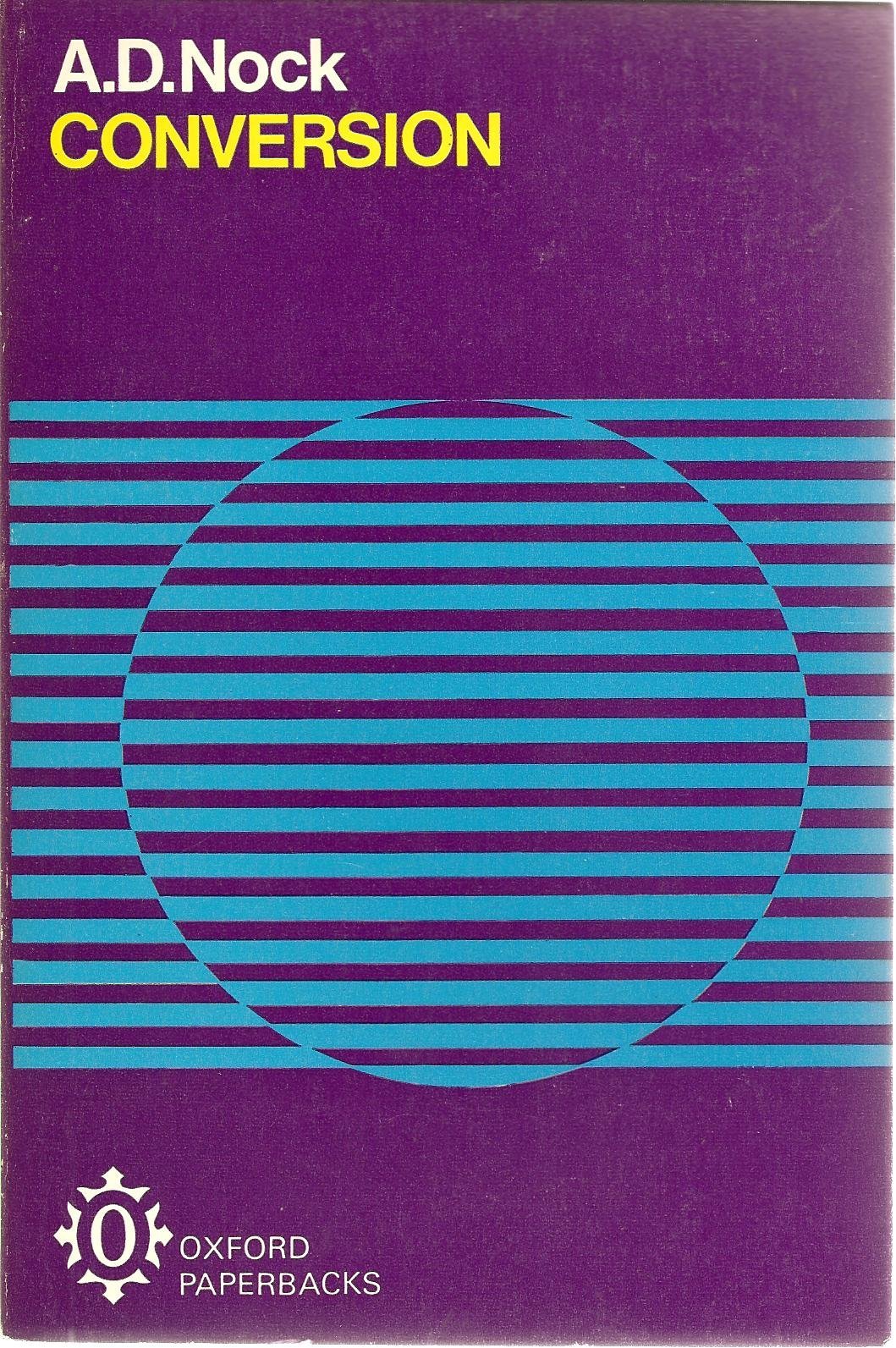
Originally published in 1933, Conversion is a seminal study of the psychology and circumstances of conversion from about 500 B.C.E. to about 400 A.D. A.D. Nock not only discusses early Christianity and its converts, but also examines non-Christian religions and philosophy, the means by which they attracted adherents, and the factors influencing and limiting their success. Christianity succeeded, he argues, in part because it acquired and adapted those parts of other philosophies and religions that had a popular appeal.

309 pages, Paperback

First published January 1, 1933

1 person is currently reading
82 people want to read

About the author

Arthur Darby Nock

25 books3 followers

Ratings & Reviews

What do you think?
Rate this book

Friends & Following

Create a free account to discover what your friends think of this book!

Community Reviews

5 stars
1 (5%)
4 stars
10 (52%)
3 stars
6 (31%)
2 stars
2 (10%)
1 star
0 (0%)
Displaying 1 - 3 of 3 reviews
Profile Image for Henry Sturcke.
Author 5 books32 followers
May 19, 2021
This book originated in a series of lectures that Nock, a Harvard professor, gave at Trinity, Cambridge, and in Boston. The first thing that struck me was the vast and assured command of classic literature not only on Nock’s part but presumed by him to be present in his listeners. I was thankful that I could quickly access Wikipedia to make up for my relative ignorance.
When Nock wrote, many researchers located the closest parallels with nascent Christianity in the mystery religions. Nock acknowledges some similarities but also stresses crucial differences. There was no recondite teaching reserved for the initiates. Even knowledge of how the central ceremony reserved to the baptized, the eucharist, was conducted was available to outsiders. Above all, Nock notes that initiation into a mystery was expensive. Only those with means need apply. What Christianity offered was available to rich and poor alike. As Nock writes: “It was left for Christianity to democratize mystery” (p. 57)
Two chapters interested me particularly. One dealt with conversion to philosophy. To Nock, this phenomenon was more comparable to conversion in the Christian sense than overtly religious responses. Concerning the latter, Nock makes the helpful distinction between conversion and adhesion. An ancient Roman could participate in a newly introduced form of worship without renouncing his previous cultic practice. As for philosophy, in contrast, its pursuit often involved the change both in worldview and in behavior associated in our minds with religious conversion. Nock underlines the point by showing examples of the vocabulary related to conversion in the New Testament—-metanoia is one example—in accounts of a turn to philosophy.
Even more interesting was the lengthy penultimate chapter, “The Teachings of Christianity as Viewed by a Pagan.” In this, Nock analyses those aspects of the Christian message that shared common ground with widely-held ideas and those that would have seemed unfamiliar and strange. As a result, Nock concludes that “the advance of Christianity stands out as a phenomenon which does not stand alone but has parallels which make its success not wholly incomprehensible” (p. 267).
Despite appearing nearly eighty years ago, I found this book worth reading.
Profile Image for Matt.
307 reviews12 followers
September 6, 2010
My main issues with this book were that most chapters were much longer than they needed to be, and tough to follow unless the reader is familiar with the primary source material being cited (which I largely was not, although even when I was, the writing style and content was pretty boring). I lot of the main points that were made could be summarized in a brief academic lecture - I know this as a fact because a Classics course I took in college summarized 90% of what was in this book in one class.

With that in mind, I did find discussions of the following points interesting:

- Typical experiences of "conversion" between different deities of the Greco-Roman gods usually didn't involve any sort of reevaluation of worldview / theological principles
- In contrast, converts to different Greek philosophers (Platonism, etc) often underwent much more comprehensive changes in worldview and theology
- Many post-Platonic Greek philosophers were regarded in a similar was as Christian priests came to be - ie: would be called in to a deathbed to read last rites, give blessings, etc
- The idea of martyrdom wasn't totally new to Christianity ("martyred" Greek philosophers, etc)
- Greek philosophers gave sermons advocating abstinence, temperance, etc similar to Christian leaders
Profile Image for Alessandro Nicolai.
304 reviews1 follower
August 5, 2025
Si vede che è scritto da uno studioso non italiano, libro tedioso che si perde in mille dettagli, non lineare e non srriva mai al dunque
Displaying 1 - 3 of 3 reviews

Can't find what you're looking for?

Get help and learn more about the design.