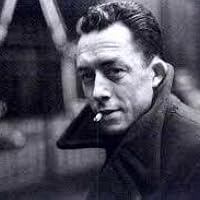
A única peça teatral de Ernest Hemingway, autor agraciado com o Nobel de Literatura, A quinta-coluna transporta o leitor aos horrores das batalhas da Guerra Civil espanhola. A insurreição militar das forças direitistas lideradas por Franco, determinando a origem da sangrenta e cruel Guerra Civil que arrasaria o país, mobilizou, portanto, fortemente o espírito e o coração de Hemingway. Para ele, o fascismo era a antítese de todas as qualidades marcantes do povo espanhol, e por isso se opôs aos insurgentes de todas as maneiras possíveis – incluindo quatro visitas às frentes de combate para lutar, de arma na mão, contra as tropas franquistas, e uma série de reportagens que produziu como correspondente de importantes jornais americanos. Foi durante uma dessas prolongadas viagens de observação e solidariedade que, debaixo de pesado bombardeio inimigo, surpreendentemente conseguiu tempo físico e mental para escrever em Madri, no Hotel Florida, o texto de A quinta-coluna.
Hemingway’s only play. It’s without any real plot with weak female characters unflatteringly betrayed. Set in Madrid during the Spanish Civil War with Philip Rawlngs a sort of secret agent world weary and cynical.
Supposedly Rawlings is trying to choose between the woman he loved or the fight he believes in. The play feels incomplete and needing more work with a clearer plot and less misogyny.
Apparently Hemingway's only full-length play, The Fifth Column was written during the Spanish Civil War (1936-39), which was in part a proxy war for other world powers and a preview of the world war to come. The main character is an American working for the Loyalist or Republican side against the fascists. The Lincoln Battalion is mentioned, which was formed of American volunteers who served alongside the Republican forces. Hemingway suggested that the "moral is that people who work for certain organizations have very little time for home life." The cover blurb states that the "hero is torn between the woman he loves and the ideological fight he believes in." While all that is certainly in the play, it seems Hemingway may have been more directly trying to get the War more attention, get it out in front of the public, and a play (or possible film) might've been a good way to do that quickly. It's also a bit of a shoot 'em up, as was his previous and almost contemporaneous novel, To Have and Have Not (1937). This short work seems a sketch that would've required more work and development. Most likely a capable and independent director would have had to do some rewriting (even Tennessee Williams' work was heavily rewritten by his directors). Mostly mediocre, with little plot or complexity, The Fifth Column seems embryonic and unfinished. Readable, but in the end unsatisfactory. I assume it's largely forgotten today by all but those reading their way through Hemingway's oeuvre (what a Scrabble word). My copy, similar to that shown, is "A Triad Panther Book" from Granada Publishing in 1978. It was 95p at the time, but $3.25 in Australia. [3★]
I read this to fulfill a category in a reading challenge I'm doing and chose this particular play because I recently learned what a "fifth column" is from some other book I read and thought it was interesting.
So far I've only read this and A Farewell to Arms by Hemingway but I don't really think his writing is for me. I found the dialogue, setting and themes to be very similar in both of this works (stop with the mud already...I get it—everything was "very muddy"). If it weren't for the different character's names, they could practically be different parts of the same story.
First of all, I'm no feminist, but the girls he writes are so mind-numbingly vapid and spineless that it's hard to forgive once, much less from two different works. His main female characters are just love-stricken morons that don't really love in the true sense and can't say anything but "Darling, this" and "Darling, that" and basically live to be embraced and then rejected by their current man of choice.
And then, the guys. Ugh. The guys are just cold, cynical, moody jerks. The guy in this play threw his lover's current guy out of a window, told her he loved her and wanted to spend the rest of his life with her at night and then took it all back in the day (again and again) until he finally leaves her for good (after kissing her against her will)...oh, and he has a side woman the whole time too that he equally makes miserable.
I get that he's trying to paint a picture of war and the mental/emotional turmoil that it causes for those involved and the distance/inability to attach that ensues for many of them, but good grief. His characters are just flat and totally unlikable/inhuman in a variety of ways.
There's really no plot to the play. You get dropped in to the characters' lives and taken back out during what might as well be a random period in their lives. That, in and of itself, doesn't bother me, but combined with everything else it just adds to the feeling of pointlessness. I don't find his writing that interesting, either.
I'm not completely done with Hemingway, but I'm not impressed so far. The edition that I have is combined with a bunch of his short stories (which I might be more willing to try). We got an antique copy in Michigan having learned that he spent almost 20 summers there and used northern Michigan as a setting in several of his works.
I'm interested to see if he explores more variety in his writing and am sure I'll be reading more of him, but probably not anytime real soon. I liked that I could read this play in one sitting and it was interesting to read his stage directions. I just didn't really like it that much overall.
Única peça teatral escrita pelo Hemingway, possui o ponto forte de tratar a história com tanta veracidade pois fora escrito durante a Guerra Civil Espanhola, enquanto o autor vivenciava o horror da guerra.
wasn't really my cup of tea and the ending was quite disappointing. But it's still Hemingway and I love his was of writing and the way he uses and describes his scenes in this book is just great.
La única obra de teatro que escribió Hemingway. Es sencilla y me ha resultado atrayente leerla por completismo, ya que es un autor que me gusta mucho y tenía curiosidad. Está ambientada en la Guerra Civil Española, en la que estuvo presente como corresponsal de guerra. En esta edición viene acompañada por 4 relatos cortos ambientados también en la Guerra Civil, en los que plasma vivencias personales, que me han resultado más interesantes que la obra principal, de ahí que le haya subido a las 4 ⭐️.
Mas breve reseña que caminar en tormentas para salir a cumplir misiones en el infierno de la guerra y ver a los ojos a la informacion no podes ignorar la complicidad diaria de estar en esa mierda hasta que metes la mano para destapar el avance o salida de todo el maldito sistema ke fear ... 🚬⚡⛈️🕶️
🍨🚬 Esta demas decir que seria si no entrar en la escena siguiente la mas tibieza mental de intuir en nadie entrando por una puerta .. 🚬⚡
Quick verdict: The Fifth Column is a sharp, funny novel that spends its best material too early. What worked: a first act full of great one-liners and a narrator who's allergic to small talk. What didn't: the back half runs out of jokes and leans on feelings it hasn't earned. Recommend for anyone who likes sarcasm with a pulse, skip for readers who need a strong finish.
It is a play with some good moments, some good bits of dialogue. Hemingway himself considered it a failure, and it has rarely been produced.
The main character, Rawlings, is Hemingway, talking the way he talked, looking the way he looked, behaving the way he behaved, only here imagining himself as a secret agent. This character is the only fully drawn character in the play. A few others hold promise, but remain unrealized. The female lead, Bridges, is made unsympathetic and unbelievable, and is actually an unflattering portrait of the great war correspondent Martha Gellhorn. The physical description is of Gellhorn, and she did buy a fur coat on the black market, but she was far from 'lazy and stupid' as Hemingway writes Bridges, but at least he adds she was brave and charming. Gellhorn was, in fact, brilliant, and far from lazy, and a much better journalist than Hemingway.
This play can be regarded as a rough early draft that the author gave up on and never bothered to work on again. I recommend it worth reading only for Hemingway completionists, or those studying playwriting and desirous of reading many good, bad, and mediocre plays, or those studying plays about the Spanish Civil War, or perhaps those pondering the difference between autobiographical journalism and autobiographical fiction.
I was hoping to gain some insights into the conditions during the Spanish Civil War since Hemingway had lived in Spain during that time, but they were sorely lacking. The play mainly dealt with the main character's relationships with women and people he met in the hotel bar, which made it somewhat trite and disappointing. Some were fifth columnists, but that aspect seemed secondary.
Other readers got more out of it. Here is a review by a teenage reader with some insights. The Fifth Column by Ernest Hemingway | Mission Viejo Library Teen Voice https://share.google/gfkFPbPU1gPiYnPxY
This just didn't move me. Sorry. It's a very tentative grade--for a while I was going to give it three stars, but it's not quite good enough. Would have worked better as a short story. I've read every one of Hemingway's short stories, I can vouch for that. With that said, it wouldn't have been one of his best ones, but still.