After the cowardly incompetence of two officers besmirches their name, Captain Richard Sharpe must redeem the regiment by capturing the most valued prize in the French Army-a golden Imperial Eagle, the standard touched by the hand of Napoleon himself. A masterful blend of fiction and historical detail.-Newsday A totally convincing picture of warfare, of hand-to-hand, sword-to-sword, bayonet-to-bayonet fighting.-Cleveland Plain Dealer
Cornwell was born in London in 1944. His father was a Canadian airman, and his mother, who was English, a member of the Women's Auxiliary Air Force. He was adopted and brought up in Essex by the Wiggins family, who were members of the Peculiar People, a strict Protestant sect who banned frivolity of all kinds and even medicine. After he left them, he changed his name to his birth mother's maiden name, Cornwell.
Cornwell was sent away to Monkton Combe School, attended the University of London, and after graduating, worked as a teacher. He attempted to enlist in the British armed services at least three times but was rejected on the grounds of myopia.
He then joined BBC's Nationwide and was promoted to become head of current affairs at BBC Northern Ireland. He then joined Thames Television as editor of Thames News. He relocated to the United States in 1980 after marrying an American. Unable to get a green card, he started writing novels, as this did not require a work permit.
As a child, Cornwell loved the novels of C.S. Forester, chronicling the adventures of fictional British naval officer Horatio Hornblower during the Napoleonic Wars, and was surprised to find there were no such novels following Lord Wellington's campaign on land. Motivated by the need to support himself in the U.S. through writing, Cornwell decided to write such a series. He named his chief protagonist Richard Sharpe, a rifleman involved in most major battles of the Peninsular War.
Cornwell wanted to start the series with the Siege of Badajoz but decided instead to start with a couple of "warm-up" novels. These were Sharpe's Eagle and Sharpe's Gold, both published in 1981. Sharpe's Eagle was picked up by a publisher, and Cornwell got a three-book deal. He went on to tell the story of Badajoz in his third Sharpe novel, Sharpe's Company, published in 1982.
Cornwell and wife Judy co-wrote a series of novels, published under the pseudonym "Susannah Kells". These were A Crowning Mercy, published in 1983, Fallen Angels in 1984, and Coat of Arms (aka The Aristocrats) in 1986. (Cornwell's strict Protestant upbringing informed the background of A Crowning Mercy, which took place during the English Civil War.) In 1987, he also published Redcoat, an American Revolutionary War novel set in Philadelphia during its 1777 occupation by the British.
After publishing eight books in his ongoing Sharpe series, Cornwell was approached by a production company interested in adapting them for television. The producers asked him to write a prequel to give them a starting point to the series. They also requested that the story feature a large role for Spanish characters to secure co-funding from Spain. The result was Sharpe’s Rifles, published in 1987, and a series of Sharpe television films staring Sean Bean.
A series of contemporary thrillers with sailing as a background and common themes followed: Wildtrack published in 1988, Sea Lord (aka Killer's Wake) in 1989, Crackdown in 1990, Stormchild in 1991, and Scoundrel, a political thriller, in 1992.
In June 2006, Cornwell was made an Officer of the Order of the British Empire in the Queen's 80th Birthday Honours List.
Cornwell's latest work, Azincourt, was released in the UK in October 2008. The protagonist is an archer who participates in the Battle of Agincourt, another devastating defeat suffered by the French in the Hundred Years War. However, Cornwell has stated that it will not be about Thomas of Hookton from The Grail Quest or any of his relatives.
A fascinating series about the Napoleonic Wars 🇫🇷 🇬🇧 🇪🇸 I believe I’ve read them all and that’s at least two dozen. The stories center around a British squad of rascally but likable characters who are known as “riflemen”. This is because their weapon, in an age of muskets, consisted of a firearm that had a “rifled” barrel, as opposed to the smooth bored musket, enabling a rifle to have far greater accuracy. My own regiment was, in fact, known as a Royal Rifles Regiment and I as a Rifleman. Our dress uniform was the same as those worn in these stories - it’s color a dark forest green, almost black - and our regimental drink was black rum laced with crème de menthe ⚔️ An enemy soldier in the 19th century, referring to my regiment, asked: “Who are those little black devils?” (due to the dark color of the uniform) The name stuck and became the logo of the regiment.
[Time to reread the series I think, at least the titles to do with the Napoleonic Wars, and that means starting with #6 Sharpe's Rifles: Richard Sharpe and the French Invasion of Galicia, January 1809]
Sharpe's Eagle is where so many of the familiar faces that recur throughout the series originally crop up. Most notably Sir Henry Simmerson...
(Simmerson as so aptly played by actor Michael Cochrane in the tv series.)
He's the snobbish, ineffectual British officer everyone loves to hate. With him arrives the utterly inexperienced South Essex regiment, which Sharpe is forced to batter into something like fighting shape or otherwise inevitably perish with them in the upcoming Battle of Talavera, an important conflict in Wellington's campaign against Napoleon. Simmerson brings with him a couple of shitty lieutenants, who become lethally entangled with Sharpe. (Another TV side note: One of the two lieutenants was played by actor Daniel Craig in one of his earlier roles. He plays a real prick here.)
However, it's Simmerson who will, in future books, become one of the biggest, continuous thorns in Sharpe's side. Seriously, you'll read this and think, "What a dick!"
In Sharpe's Eagle Bernard Cornwell is at his best. He puts his talents to good use, crafting an exciting, action-packed adventure set in a nicely detailed historical fiction that allows his rough and tumble character to flex his might and motivation as he fights his way through the ranks, battling not only Napoleon's forces, but also the worst knaves of the British army. It's all very heroic stuff that is surely over-the-top macho at times with ubiquitous love affairs per book so improbable as to be laughable. But hey, it's a rollicking good time nonetheless!
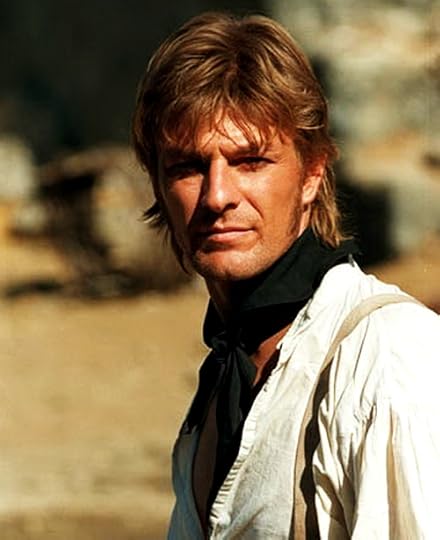
Read the books and go watch the tv series...it's got Ned Stark Sean Bean as Sharpe!
This exciting historical adventure is the 8th volume of the wonderful "Richard Sharpe" series, originally published in 1981 and the author's debut novel.
At the front of the book you'll find a well-drawn map of Portugal and Spain, as well as a quote from Samuel Johnson, while at the back you'll notice Historical Notes where the historical details concerning this story a very well documented.
Storytelling is great, all characters, real historical and fictional, come vividly to life in this tale about the British struggles against the French of Napoleon in the Peninsular War.
The story starts off in July 1809 and we find Lieutenant Richard Sharpe and the 95th Rifles, the Greenjackets, heading with the main army towards Talavera, to fight a famous battle there against the French.
At first Sharpe and his 95th Rifles will be included within the Regiment funded by Colonel Sir Henry Simmerson, but thanks to the Colonel's blunders and brutality, this Regiment will degraded and become the Regiment of Detachments, and finally at the Battle of Talavera the real fighting heroes and cunning cowards will come to the fore in all its elements during the slaughter for survival.
What is to follow is a very engaging and thrilling historical adventure, brought to us by the author in a very splendid manner.
Highly recommended, for this is an excellent addition to this fascinating series, and that's why I like to call this episode: "An Enjoyable Captured Eagle"!
"Орелът на Шарп" дава началото на поредицата за приключенията на този любим герой. Но като времеви отрязък, тя се нарежда осма подред. Има съвсем малко разминаване в историите от писаните по-късно, но предхождащи я, без да е нещо фатално.
Както сам казва и писателя в предговора, Шарп има много неприятели и изненадващо за мнозина, най-многобройни са тези от британската армия. Да не забравяме, че става въпрос за епоха, в която офицерите са купували назначението и повишенията си и за армия, в която процентът войници издигнали се от ниските ѝ чинове до офицери е пренебрежителено малък като число. Това усложнява неимоверно живота на Шарп и подобните му, но за това той има само един отговор - да е по-бърз, по-умен и по-брутален от така наречените и презиращи го дълбоко офицери "джентълмени".
Кампанията на Уелингтън срещу французите продължава и води към битката при Талавера (Испания), един много интересен епизод от Войните на полуострова (Peninsula wars). Шарп и неговите стрелци са на предна линия и вършат подвиг след подвиг. ;)
29th Regiment attacking the French at the Battle of Talavera on 28th July 1809 in the Peninsular War:
P.S. А сержант Харпър е представен като любител орнитолог - добре, че в последствие Корнуел се е отказал да го развива като персонаж в тази посока!!! :)
In his usual manner, Cornwell takes barely a chapter to sketch the key plot points: A desperate military situation; the aspects of and consequences of military discipline; the risks of romance; and, the deprivations of the common soldier. The Brits are now allied with the Spanish in resisting Napoleon’s determination to conquer the entire Iberian Peninsula.
The arc of Richard Sharpe’s career in the British Army embraces the Raj and the Napoleonic Wars. An orphan who runs away from an abusive childhood, he enlists as a teenager and, thus, begins a remarkable rise. Bernard Cornwell is at his best when he chronicles the experiences of an ordinary person in extraordinary circumstances. The Sharpe series is one of his earliest and best.
This is a straight-forward story of how Sharpe led the attempt to capture one of Napoleon’s “eagle” standards. The delight is in the details. 3.5
WARNING: This review claims that historical novels are like porn movies, and I discuss porn throughout. Please avoid this review if porn offends you.
Historical novels are a bit like porn for me. I am always faintly ashamed to be a fan, I generally hide my taste for them, but I get off on what they have to offer.
There are high-end historical novels, like Aubrey-Maturin (the one series I am proud to be a fan of) or Wolf Hall, that are sort of like Deep Throat and other the classic porn movies -- if you have to admit to your tastes, they are the ones that are easy to claim as your own. Then there are the historical romances, like The Thorn Birds, that are akin to the new era of Jenna Jameson's plastic-porn hi-jinks. And there's the truly bizarre historical fictions, like I Claudius, that feel like titillating fetish porn full of stockings and S&M. It's easy to understand their readership (and viewership) even if they're not to one's own taste.
Bernard Cornwell's Sharpe books, therefore, have their porn equivalent: the world of polished, pseudo-amateur, "dirty girl" driven porn. And I shamefacedly declare right now that I am a fan of both.
Sharpe's Eagle, my latest foray into the career of Richard Sharpe, is the installment that pushed this comparison into the front of my mind and doomed me to writing this review. I found myself hiding the cover of Sharpe's Eagle, folding the front cover over the back, while in a long Christmas shopping line. For some reason I didn't want anyone to see what I was reading. Maybe it's because I teach literature and I didn't want anyone to see me reading something lacking seriousness, maybe there's still some flirty, teenage boy part of me, the D&D geek from way back, that didn't want some pretty girl to catch me being a geek. I'm really not sure which it was, but whichever it was, I caught myself hiding Sharpe's Eagle and had to force myself to pry the front cover away from the back to display my silly shame to the world. And when I walked out of that store, it struck me that I always do the same thing when it comes to porn. I hide the few movies I own, and I don't really talk to anyone (except my wife and Ruzz) about the bits of porn that I like.
And once this idea occurred to me, I was surprised at the textual parallels that sprang up to solidify the concept in my mind. Sharpe's Eagle isn't the best written work. Its prose is occasionally sloppy, and it's inconsistently paced. It is violent, espousing questionable ethics while simultaneously taking its own distinct stance on some pretty important issues. And it is terribly fun to read. I was excited to reach the next battle or the next bit of intrigue, and I found myself instantly looking forward to the next installment. Not in any obsessive or overwhelming or unhealthy way, but fondly and warmly because...well...reading Sharpe is enjoyable, and who doesn't like enjoying themselves?
The same goes for my "polished, pseudo-amateur, 'dirty girl' driven porn" preference. It isn't the best filmed work. Its quality is occasionally sloppy, and it's inconsistently paced. It is hyper-sexual, espousing questionable ethics while simultaneously taking its own distinct stance on some pretty important issues (some of it really does, I'm not kidding). And it is terribly fun to watch. I am excited to reach the next scene or the next shift in position, and I find myself looking forward to the next viewing. Not in any obsessive or overwhelming or unhealthy way, but fondly and warmly because...well...watching porn is enjoyable, and who doesn't like enjoying themselves?
So there you have it. To me, the adventures of Richard Sharpe are historical novel porn. And whether I should be ashamed of my enjoyment or not, I will continue to read them, and now I will proudly display their covers no matter what line I'm standing in.
I think I'll keep my porn movies hidden away, though. I'm not sure I can put those out with the general video population just yet.
I enjoyed this book very much. The book is concerning the life of a Captain in the English army. He is fighting for his honor and for the Eagle of the French army. This is a very cuvetted color. He is trying to keep his rank by stealing the Eagle because he had lost his color to the French in a previous battle. I recommend this book highly. Enjoy and Be Blessed. Diamond
No disfrutaba tanto de leer novela histórica desde que leía los libros de Patrick O' Brian sobre el capitán Jack Aubrey. En Sharpe y el águila del imperio, Bernard Cornwell sabe meter de lleno al lector en las aventuras de éste fusilero del ejercito inglés,apoyándose en hechos históricos bien contrastados narra sin pausa la brutal y sangrienta campaña de Talavera de la Reina. Cornwell forja un " héroe" , un tanto alejado de los cánones habituales, no duda en tomarse la justicia por su mano y con el trauma constante de ser de una famila pobre no duda en desvalijar de sus pertenencias a los cadáveres que yacen en la batalla. El ritmo en la novela es rápido y ágil,sin agobiar con multitud de datos,centrándose solo en lo que narra,enseñando sin resultar pesado el como se componían y actuaban las diferentes secciones que componen el ejército inglés. Eso sí, como buen inglés, no duda en ponernos a los españoles como unos completos inútiles, pero sin caer en el insulto, luego en las últimas páginas del libro muestra mediante datos históricos que no es muy alejado de la realidad, porque siendo como fuimos, uno de los imperios más grandes que existió en la historia, si nos dejamos invadir así por los franceses, igual algo de razón tendrá....
Good entry in a amazingly entertaining series. The characters are true to form with Sharpe having his accustomed vailant allies like Lawford, Forrest, and Leroy. Against the contemptuous Simmerson, Gibbons, and Berry. Richard Sharpe succeeds despite a corrupt politcal structure of the 1800 century British army. With very satisfying results to American and modern in general readers. The love interest is a successful element in Eagle at least it's believable and in the spirit of the adventure style of the book. The Spanish army adds a new dimision because there so comically bad a war. And Sharpe, Harper and their green jackets are such veterans. Sharpe is more myth than man at this point, not very believable and less relatable than in previous entries. I am very glad I read the previous entries first especially Rifles and experienced his development. Otherwise I would be off put by the brutal directness of his character. As the series goes this is a must read. The point where Sharpe become a legend in the army. It's no longer remember when that Sargent saved Arthur Wellesley life in India. it's remember when Sharpe captured an french eagle. A very entertaining book if not intellectually stimulating. I toast Richard Sharpe and Benard Cornwell.
This concerns the Battle of Talavera, Spain in 1809. Hold onto your hat, Lt Richard Sharpe is about to become Captain R. Sharpe. Sharpe and his small company of riflemen have roaming the Spanish countryside looking for trouble. Cut of from their regiment, who are now back in England. With no way for Sharpe’s company to get to England the riflemen are seconded to The South Essex regiment. Lt Colonel Sir Henry Simmerson is in command and he is everything that Sharpe despises in a soldier. Simmerson has a Title, money and influence but that aside he is also supercilious and grossly incompetent. Simmerson opinion of Sharpe is dismissive. Sharpe is nothing but a gutter private posing as an officer. Much to Simmerson’s disbelief General Wellesley promotes Sharpe to the rank of Captain. Simmerson immediately writes a letter to his friends in parliament to have Sharpe’s Captaincy overturned. Sharpe is in no doubt that unless he can pull of a miracle he will loose his hard fought for promotion. The miracle Sharpe plans is the capture of a French Eagle.
The English with their Spanish allies are about to fight the French at Talavera. Vastly out numbered the English and Spanish also need a miracle if they are to have a victory this day.
Whilst Captain Richard Sharpe is hard pressed fighting the French he also needs eyes in the back of his head to see what Sir Henry Simmerson is up to.
I enjoyed this historical fiction book that taught me a few things about conditions in this era. History is more interesting when it's presented as a good story. I plan on continuing the series.
This one takes place in Spain in 1809, and deals with the Battle of Talavera. The British are pursuing the French, from Portugal, through Spain, and hopefully back to France.
Capt. Hogan, Lt. Sharpe and the Rifles have unfortunately been paired with the pompous, inept fool of an officer, Col. Henry Simmerson, and his twit of a sidekick Lt. Gibbons. Simmerson gets his thrills from flogging the soldiers every chance he gets. Gibbons is his Mini Me of a nephew. They don't know their butts from a hole in a ground when it comes to fighting. They owe their positions to their political connections back in England. After a disastrous fight with the French due to leadership incompetence, Wellesley hands the remainder of the South Essex battalion to now-Captain Sharpe.
Sharpe's conflict with Simmerson has repercussions further into the series. Come to think of it, the same goes for his butting heads with Gibbons. But Sharpe is not the type of character to take things lying down. He's very good at making enemies, bless his little insolent heart. That's part of his charm!
Първата издадена книга от поредицата за Шарп веднага повлича в перипетиите на лейтенанта, който в края на романа надява капитанските нашивки и пие с Уелингтън.
Ричард Шарп е именно причината да чета почти всяка книга от поредицата. Корнуел се прехласва твърде много по илюзорния блясък на войната, война, която сам не е виждал и дори подушвал. И да ме извинява много, но никакви документални проучвания или разговори с ветерани, които предпочитат да вадят на показ специално подбрани славно оптимистични моменти, не може да прикрие факта, че става дума чисто и просто за касапница. Ричард Шарп обаче, за разлика от Корнуел, го знае. И тъй като е тръгнал от такова деградиращо социални дъно, че армията е направо спасение, той честно, интелигентно, по своему почтено и доста твърдо си изгражда рефлекси за оцеляване без особена самоизмама. Но понеже у него има много повече, отколкото епохата би му позволила да реализира, той успява дори да завърже някои необичайни, но здрави приятелства и поне мъничко да подобри участта на малцина спътници.
В книгата е интересен именно конфликтът автор-герой. Автор, омагьосан от войната. И герой, оцеляваш ден след ден без особено много илюзии. С доза мрачен хумор.
И тъй като това е класически Корнуел, има и красива дама в беда, има и битки (които прескачах, защото просто и най-високият адреналин не може да превърне клането в обект на поезия), има и малко политика. И да, често врагът е именно до теб, а не зад някоя граница… Както много добре разбира и самият капитан Шарп.
4,5⭐️
П.П. Родният превод и издание на “Унискорп” са както винаги на ниво!
Sharpe's fighting in the peninsula, but as ever, his worst enemy is the British Army.
A know nothing, by the book martinet colonel brings in a troop, and makes things harder for everybody, as Sharpe and Co. try to get them into fighting shape. Meanwhile, his womanizing nephew is cutting a swathe through the ladies, but seems to want Sharpe's woman.
It all comes down to a big battle. Sharpe has to get an enemy company's sigil to stay a captain, and he'll do anything to keep his rank.
When I was in university, there was this bakery near the school that sold the most mouth-watering, toe-curling, delicious donuts (I still think they laced that stuff with something). They were addictive and I spent so much money buying them everyday. But something would happen, I’d forget about them or lose access, then one day I’d stumble my way back and find myself addicted again. (Sadly I graduated and have no easy access to them. Le sigh)
Reading this series feels just like that. These books are so weirdly addictive. Combine the lovable hero, non-stop action and the absolute masterful narration by Rupert Farley and you have a dangerous combination. I’m about to spend more money to get the next book in the series and I can’t wait!
I am reading the history of Richard Sharpe adventures in chronological, not publication order. This has a side effect of accentuating the uneven quality of some of the books, and the episodic nature of the saga, with some inconsistencies from one book to the next that do not bear too close a scrutiny.
Sharpe's Eagle is my eighth book, but one of the first to be published. Cornwell is in a class of his own when it comes to actual battle scenes, and I have no complaint about the episode of the Peninsular War described here : The Battle of Talavera. Clear exposition, edge of the seat pacing and detailed historical research made for an easy, fast and informative read.
I am however, underwhelmed by the fill in pages between the two main confrontations in here. The accent is on Richard Sharpe HEROISM , his uber-soldier qualifications and his always right decisions. There is a lack of subtlety and nuance that made me think this is a Steven Segal script rather than a Sharpe novel. Add a totally gratuitous romantic sidequest with a nubile and kinky Portuguese Lady who falls in love with our hero in about two paragraphs and a couple of villains worthy of italian opera librettos and you get one of the weakest books so far (for me) in the series.
But : this is an adventure epic with claymores and cavalry charges, larger than life heroes, loyal friends and dastardly adversaries. I shouldn't be grumpy about the relatively weak plot and cardboard characters, especially as I plan to continue reading the series.
The first of many books about Richard Sharpe, a soldier in the Napoleonic Wars who works his way from private in the ranks up to officer. Sharpe is a terrific character - violent, but likeable. I fall in love with him every time. Sean Bean plays him in a TV mini-series based on the books. Good series, but the books are better.
Great book if you are a fan of military history and battle scenes. This was the first published book in the Sharpe series, but as the author progressed it became #8 in the chronology of Sharpe's rise from an enlisted rifleman into the officer ranks.
The focus of the book is introducing and fleshing out the characters and the climax of the story arc i is the Battle of Talavera in the Penisular wars against the French forces of Napoleon. The battle scenes are vivid. As with all great characters Sharpe has his flaws but his sense of right and his uncanny tactical abilities ( or is it just luck) places him in the hero category. He has a few wonderful comrades to depend on and then there are the incompetents that make trying to stay alive for he and his men more difficult.
After hearing so much praise for this series (almost entirely on Library of Allenxandria’s Booktube channel, finally decided to start. Had also been interested in the series for years when I found out that Sean Bean played Sharpe in the ITV series (and referred to it in the Lord of the Rings movie – there’s an easter egg for you – Boromir saying ‘Still sharp!”).
I was initially unsure as to whether go with publication order (Eagle) or chronological order (Tiger). When in doubt, I almost always go publication order, and didn’t regret it. There were quite a few references to his exploits in India against Tipu Sultan (Sultan Tipoo in the book), before his direct involvement in the Napoleonic Wars against the French, which is the setting for this one. But, given the author had not even written those books at that point, anything relevant was clearly explained, and sufficient background was provided.
Sharpe, while more of a rogue than a knight, is still a hero nonetheless, and has that most important of attributes that a soldier needs – luck. He is also extremely intelligent on the battlefield (not always off it), and is loved by his fellow soldiers. He does make enemies quickly – for most of this book, at least, the English were just as much a threat to him as the French. Sharpe’s Eagle works well as a standalone, but he obviously has much bigger role to play in the battles to come.
Very highly recommended, for fans of historical fiction and war.
So here we are, the very first Cornwell novel and coincidentally the first Sharpe. I came to this series after it had been ostensibly completed and so I'm reading them in chronological order, which differs markedly from publication order. I'm kind of racking my brain trying to think of other series that has such a disparity like that and I'm at a loss. A situation like this is just rife with potential for weird inconsistencies in style and continuity, and they're definitely there but they haven't bothered me yet, resulting in another fun Sharpe. It's too bad it worked out like this, who wouldn't want to see a young Sean Bean in Sharpe's Tiger? Something tells me it just wouldn't work out if made today. Also, does anyone else have a totally different vision of book Sharpe? My brain Sharpe looks way scarier than Bean.
We join our hero in 1809. He's still partying hard in the Peninsular War and has been attached with his Rifles to the South Essex regiment led by Sir Henry Simmerson. Because this is a Sharpe novel and he's an officer, Simmerson is predictably a despicable moron douchebag. Unfortunately for him, despicable moron douchebags don't do too well in Cornwell novels and it's up to Sharpe to redeem the regiment's honor after a disastrous mistake on Simmerson's part. I don't think it's a spoiler to say that the way he goes about doing this is by planning to capture one of the legendary French Eagles. The stage is set and the British maneuver to battle with the French army at the Spanish town of Talavera. There's also a couple of scummy officers to deal with as usual.
It's certainly an impressive debut novel. Cornwell's style is firmly gelled and in place already. He's hardly florid but he does have great descriptive prose and an easy way of storytelling. Of course some of his shit still irritates me, like the vapid, lame-ass romance. This is not a kneejerk anti-romance reaction, either. Human beings fall in love and it's an unavoidable, huge part of life and can add great weight and depth to fiction. But Cornwell's romantic relationships in Sharpe are just weak, shallow and lack warmth. It doesn't help that the female characters in this series have been by and large a succession of pretty but truly faceless tertiary characters with a half-assed paragraph of background. I don't get it, the women in the Arthur books were wonderfully written. Who could forget Nimue, Morgan or Guinevere? But Cornwell insists on pushing this James Bond shit with Sharpe and it's dumb. (Side note: I love James Bond, but noone could argue it's not hilariously chauvinistic and that stuff should stay in those movies. I haven't read the books, but I've heard they're much the same if not worse.)
That rant over with, I loved Cornwell's telling of Sharpe's involvement in Talavera. This was a very big, scary battle and Cornwell devotes a good chunk of the novel to tell its story from beginning to bloody end. I'm not sure if it was intentional but I certainly came away admiring the French soldiers; I don't think any 21st-century mind can truly imagine the bowel-draining terror of marching into such a maelstrom of artillery and musket fire, yet these men did again and again. It's kind of weird, but the French probably come off the best in this book; the British are snooty, corrupt and stupid and the Spanish are utter cowards, even frightening themselves with their own useless musket volley. As with any of these books, you're gonna learn quite a bit about the history and setting and Cornwell makes sure to cite the several books he used for the writing of this novel, so there's even more reading for those who want more.
Another solid Sharpe book sped through in a blink! This was the debut book Cornwell published in 1981, and I was worried there would be a big dip in quality going so far back, but I'm happy to report from the front lines that it slots just fine into the middle of a great series.
This battle in Spain that provided the climax wasn't the most exciting of military actions, but Cornwell raised the stakes throughout the book with his fictional bastard of a Colonel Simmerson, who is just a classic Sharpe villain. The moment toward the beginning of the book when Simmerson Blood-boiling stuff!!
It seems like an inevitable aspect of every Sharpe book that there's a beautiful girl who catches Sharpe's interest, and this plotline was reaaaaaaally cringy in this one, handled so much more poorly than in his late 90s-early 2000s Sharpe books that I read before this, and this dates the book pretty badly unfortunately. Luckily it didn't receive too much page time, but I wish it had been cut.
Otherwise it was engaging and fun to listen to (the Farley audiobook version), and I'm deeply impressed by how he wrote all the characters so consistently doing it so far out of chronological order, since this seems like such a natural progression for everyone from the previous books that hadn't even been written yet.
My first Sharpe book -- really amazing -- best military adventure story ever!
I had heard about these Sharpe books for years, but I never really got interested in them until my good friend Deborah Hale mentioned them. SHARPE'S EAGLE really impressed me, even on audiobook!
The thing that surprised me the most was the way Cornwell is so open about the injustices of the British army. I grew up on Rudyard Kipling, and in his army stories there's a right-wing bias against any kind of social criticism or complaint. The amazing thing about Sharpe is that he has such a clear sense of injustice yet he continues to make his way in the army on his own terms.
Of course I just can't say enough about the battle scenes. The level of detail is amazing! I really like the way Cornwell can combine technical details about the weapons and tactics with the brutal realism of hand to hand combat.
Listening on audiobook was really an exciting experience. The reader on my edition really captures Sharpe's voice perfectly, along with the Irish accents of Hogan and Harper and the Scots of Lennox and the American accent of the Loyalist officer too. The only thing that annoyed me was the way he read the evil Colonel's voice like he was one of Dr. Who's DALEKS. And he read Josefina the Portuguese beauty as if she was Michael Jackson at an awards show!
But other than that this was an amazing experience. I'm really excited about Sharpe!
This is Bernard Cornwell's first Sharpe novel and I decided to read them in publication order, not "chronologically." I never read Cornwell's book before (I always wanted to) and maybe this isn't the right book to start with, but I wanted to read something easy and because I'm looking for something specific. And I think I found that. Well, I found "historical Jack Reacher!" And now, from time to time when I don’t feel like reading anything, I can enjoy this kind of historical fiction knowing that our hero will always win because he is the best in everything. As the title says, it's all about Sharpe. Sharpe. Sharpe. Sharpe. Cornwell wrote Sharpe’s name over 1,400 times in a 300 pages book. Do I need to add anything else? If you’re a fan of military history, you’re gonna love the military parts, I liked them too. But, everything else is poor. Oh, and ... Yes, I "heard" Sean Bean’s voice while reading Sharpe's dialogues. 2.5 stars.
I was a big fan of Sharpe as a young adult. This was the first book in the series when I started reading Cornwell and it has everything that I came to expect from the other titles. The historical details are fascinating and the action is amazing. The smoke from the battles comes off the pages.
Consider this as a gift for male teenagers who don't read that much. If it captures their imagination they will feel like their learning a little history and they will have many books to work through.
My goodness! The intensity of this book alone has me giving it five stars. I may have thought it had started off slow, but the stage had to be set for us to understand how bad things were going to get. The challenges Sharpe faces soon has his career in jeopardy. Though Sharpe has powerful connections, he must use his wits and a promise to a dead man, to overcome the treachery and political machinations of others.
“Sir Henry was already afraid and he had yet to see a single enemy, but first he had to get a subtle revenge on this Rifleman who had baffled him.” (quote from the book)
Incompetence and cruelty are never a good mix and when a brand-new Lieutenant Colonel of the South Essex arrives from England with his battalion, Sharpe garners new enemies.
“But there was something, some instinct as difficult to pin down as the grey shadows that receded in the dawn, that told him it would not be that easy.” (quote from the book)
Diplomacy and more incompetency play a large part in this book as well. Promises made are never fulfilled, and the deprivations the British soldiers endure is mind boggling. But the great loss of life and limb is horrific during the battle of Talavera between the British and their ally Spain against the forces of Napoleon.
Yes, this is fiction, but much historical detail is woven into this series. I honestly think these books should be required and/or suggested reading for high school students in learning European history. It could be used as a tool for not only the political manoeuvrings but the conditions of the times as well as realizing that the women and children always lose. I think history would come more alive for them, but it would also show, we have learned nothing.
Another great story featuring Richard Sharpe and his rag-tag band of Riflemen. Still in Spain, during the Napoleonic Wars, still trying to chase the French out of Spain. The Spanish forces are not very cooperative, all though they are tagging along on the trek trying to get to Madrid, they would rather be taking siesta or womanizing. Sharpe is still womanizing too, and once again has picked a woman way out of his station in life. The man just never learns.
I made a mistake and jumped over book 7 , so I am going to back and read that one next to see what I missed.
In Sharpe’s Eagle we follow Lieutenant Richard Sharpe. He's a soldier in the British army during the Napoleonic Wars. In this book Sharpe is in Portugal. His Riflemen are attached to the newly arrived South Essex Regiment. They are led by the arrogant, snobbish, and ineffectual Colonel Simmerson. An officer who purchased his commission. Sharp batters them into fighting shape for the upcoming Battle of Talavera. Simmerson brings with him two cowardly incompetent officers. Both fall foul of Sharpe in the end.
When Simmerson loses the regiment’s colours he blames Sharpe. Sharpe must think of a way to win back the regiment’s honor. His sole option is to steal one of the French Eagles, presented to each Regiment by Napoleon himself.
In Sharpe's Eagle Bernard Cornwell is at his best. This is a thrilling, action-packed adventure. It is set in a detailed historical time that allows Sharpe to fight his way through the ranks. Battling not only Napoleon's army, but also the worst of the British upper-class.
(this kept going around my head throughout the entire book)
SO. I'm reading this series in chronological order, and now I've reached the very first one written! There wasn't too much of a big schism of writing styles or plot or character, although it did strike me that some chapters were about 5 pages long, whereas the later books have much longer chapters.
As always, this was super chill to read. I usually bounce around between Patrick O'Brian and non-fic and Sharpe, and Sharpe always gives me stuff I don't have to think about too much. It's the equivalent for me of films I love which are all action and adventure and nothing deep. I loved some of the battle scenes in this. The crazy charge for the Eagle at the end, and the loss of the Eagle before, were typical Bernard Cornwell big set pieces with Sharpe right in the fray... Always where he should not have been.
The plot was great in this one. This is the closest you're going to get to Napoleonic Mission Impossible or something. The hunt for the Eagle was great, and gave Sharpe the kind of crazy, stupidly heroic task that he always seems to be doing.
The characters were fun in this too. This series always hits the same archetypes and tropes - like the stupid, cowardly aristocrat, who Simmerson was in the role of this time. Sometimes it veers towards being a bit pantomime but that's half of the fun. We had a back up villain cast of ugly step sisters to Simmerson's evil stepmother here too, in Berry and Gibbons. Who were pretty much the same man but hey ho.
There was an endless ream of lieutenants and other officers in this one, who I got a bit confused over, but I'm getting to grips with Sharpe's men now. I love Harper ngl.
And I know I always harp on about Bernard Cornwell's terrible female characters in this series, but I actually think the following books are an improvement on this very first one for that. I kind of want to minus a star rating just for a truly awful use of rape as a plotline and a motivator for Sharpe. I don't think we ever got to see how it affected Josefina? That's pretty much the equivalent of a really bad fridge - except the woman is not dead in this example, but sexually assaulted. Like, bruh. Really. Why do male authors do this.
However, on the good side, my absolute favourite, Lawford, was back!!! I nearly squealed when he arrived on the scene, and had quite a major role which I hope continues! Now *that* is the greatest love story in the Sharpe series, change my mind. Every time he appeared - 'he was exquisite', 'he was dressed fashionably', 'he was elegant', 'he was wearing silver and lace'.
No one can take this headcanon away from me. I'm sorry, Bernard, but I'm claiming him.
Anyway, I enjoyed it mostly, as I always say with this series. On to the next!
A new British regiment, the South Essex commanded by the inept Sir Henry Simmerson arrives from England. Together with Sharpe, Harper and the Rifle Company they set off on a simple mission to blow up a bridge. Unfortunately, a French cavalry troupe is spotted, and, much to Sharpe's confusion, Simmerson tries to catch it with foot soldiers... Sharpe's Confusion soon turns into disbelieve and then to dismay as he sees the cavalry troupe route a regiment ten times their number. Adding insult to injury the regimental colours are lost. Fortunately, this is the moment Sharpe becomes annoyed, saving the King's Colours and capturing a field gun that he turns onto the enemy, chasing away the cavalry and by the end of the book he kills a couple of thoroughly disagreeable British Officers, beds the woman (apparently all women of the time liked a bit of rough) and captures the first French Eagle. I'm sure he would have won the war that afternoon but it must have gotten dark, meaning there was drink to drink and women to ravage!
Without doubt, my favourite Sharpe novel yet.
This entire review has been hidden because of spoilers.




 ...sooooo dreeeeamy.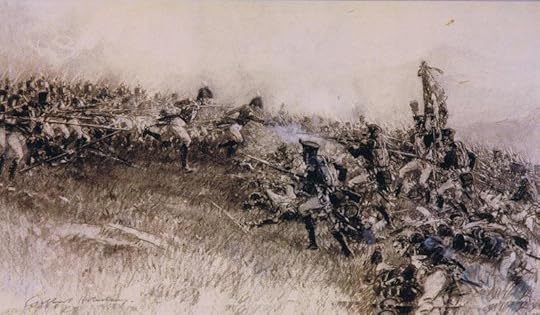
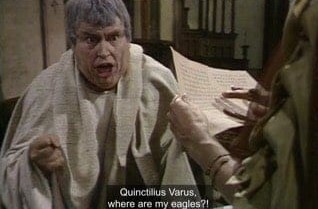
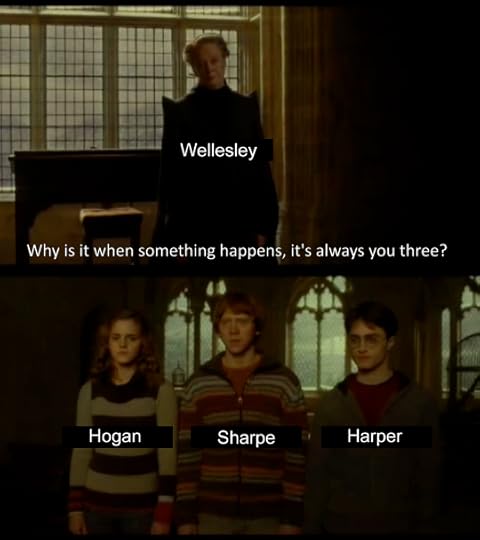


![Profile Image for [Name Redacted].](/_next/image?url=https%3A%2F%2Fi.gr-assets.com%2Fimages%2FS%2Fcompressed.photo.goodreads.com%2Fusers%2F1347082397i%2F287915._UY200_CR0%2C0%2C200%2C200_.jpg&w=128&q=75)


