

What do you think?
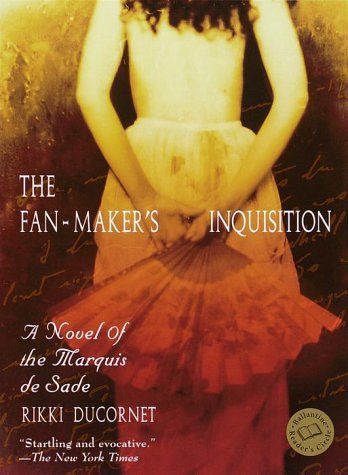
The Fan-Maker's Inquisition: A Novel of the Marquis de Sade
A young fan-maker, who is known throughout France for her sensual, sexually graphic creations, finds herself on trail for her collaboration with the infamous Marquis de Sade. Heads will roll unless the independent fan-maker, erotically cast in the shadow of de Sade, can justify her art and friendships to a court known for its rigid and prudish proprieties.
240 pages, Paperback
First published January 1, 1999
About the author
Rikki Ducornet
64 books268 followersRikki Ducornet (born Erika DeGre, April 19, 1943 in Canton, New York) is an American postmodernist, writer, poet, and artist.
Ducornet's father was a professor of sociology, and her mother hosted community-interest programs on radio and television. Ducornet grew up on the campus of Bard College in New York, earning a B.A. in Fine Arts from the same institution in 1964. While at Bard she met Robert Coover and Robert Kelly, two authors who shared Ducornet's fascination with metamorphosis and provided early models of how fiction might express this interest. In 1972 she moved to the Loire Valley in France with her then husband, Guy Ducornet. In 1988 she won a Bunting Institute fellowship at Radcliffe. In 1989 she moved back to North America after accepting a teaching position in the English Department at The University of Denver. In 2007, she replaced retired Dr. Ernest Gaines as Writer in Residence at the The University of Louisiana. In 2008, The American Academy of Arts and Letters conferred upon her one of the eight annual Academy Awards presented to writers.
Ducornet's father was a professor of sociology, and her mother hosted community-interest programs on radio and television. Ducornet grew up on the campus of Bard College in New York, earning a B.A. in Fine Arts from the same institution in 1964. While at Bard she met Robert Coover and Robert Kelly, two authors who shared Ducornet's fascination with metamorphosis and provided early models of how fiction might express this interest. In 1972 she moved to the Loire Valley in France with her then husband, Guy Ducornet. In 1988 she won a Bunting Institute fellowship at Radcliffe. In 1989 she moved back to North America after accepting a teaching position in the English Department at The University of Denver. In 2007, she replaced retired Dr. Ernest Gaines as Writer in Residence at the The University of Louisiana. In 2008, The American Academy of Arts and Letters conferred upon her one of the eight annual Academy Awards presented to writers.
Ratings & Reviews
Friends & Following
Create a free account to discover what your friends think of this book!
Community Reviews
Displaying 1 - 30 of 50 reviews

December 24, 2017
”In this state of rootless imagining, my mind seizes upon the most unexpected associations. Drops of fat suspended in my soup become the ocular devices of archons; a baneful spider stalking fleas exemplifies the pubic triangles of embalmed houris; a copple-crown turd warns of the Revolution’s collapse and the dawning of lethal systems of industry. Further to conjure anxiety I pretend that the lines of my palms are the river systems of dead planets; when that proves tedious, I examine the frayed threads of my sleeves. These suggest astrological signs indicating the day, month, and year of my release. Days pass, and the more I grapple with despair, the more stupefying are the systems I invent. To tell the truth, they are more irritating than entertaining! But then comes the thought that saves me from the perils of the insalubrious necromancy: I will dream a book!”
The Marquis de Sade is in prison.

It is the French Revolution, and people are losing their heads (when I say that, I’m not referring to people having moments of temporary insanity, but people actually getting their heads cut off) for being a member of the aristocracy or for being deemed indecent in some arbitrary form or fashion.
The Marquis de Sade has led a very public life of indecency and, in the process, has made many, many powerful enemies. He has one particular enemy, a writer named Restif, who will say anything to further the case for de Sade’s demise.
”Restif blames Sade, as do so many others---and I cannot stress this enough: as do so many others enfevered by Restif’s lies---for what he calls Sade’s ‘aberrant and violently disordered imagination.’
‘And Sade?’
Sade says: ‘My imagination is aberrant, perhaps: but it is mine.’”
The thing about Restif is that he is as big a perv as de Sade. He has no moral ground to stand on. In fact, the word retifism for shoe fetishism is named after him. He is a keyhole wanker and is always trying to slip into bed with his nubile daughter. In my opinion, de Sade was at least more honest about his “depravities.” He was a seducer, not a rapist.
De Sade is languishing in prison, but at least he is still languishing and not watching his head bounce on the cobblestone from some astral plane. He is very much alive...dreaming of books.
He is only alive because they have lost track of him. With a third of Paris behind bars, he is merely a straw in a haystack.

The Fan-Maker, an artist capable of creating exquisite detail on the hand fans of the wealthy, is on trial for her association with the Marquis de Sade. She makes fans depicting erotic scenes, not only for de Sade but also for many of the leading aristocratic ladies of the city. Her fans are in high demand because they are beautiful and naughty if you so desired. She is facing an inquisition that can only lead to one horrid conclusion. The burden of proof for seditious behavior by this “citizen government” is very low. To complicate matters, she has written a tract with de Sade, exposing the despicable behavior of the Spanish bishop Diego de Landa.
The fan-maker’s lover, a woman, has already gone to the guillotine. The inquisition could be seen as due process, but really it is about finding out more about de Sade’s sadistic practices and his known associates than it is about determining whether she is innocent or guilty. She is guilty by association, and how could any woman who produced such filthy art be anything but a deviant who needs to be exorcised from France?
”A fan is like the thighs of a woman: It opens and closes. A good fan opens with a flick of the wrist. It produces its own weather---a breeze not so strong as to muss the hair.”
Of course, I love the fact that she is an artist, an irreverent artist. One who isn’t afraid to expose the horrible behavior of a priest against an indigenous culture. A woman who isn’t afraid to seek her pleasure between the succulent thighs of a woman. What I like most about her is her insatiable need for books. Most of her discussions with de Sade revolve around books.
”My father was a scholar who, having lost the little he had, was forced to deal in rags and---as luck would have it---old books, which, after all, are often the best. So even if we ate gruel, we had books to read for the price of a little lamp oil, and that is how we spent our evenings. Father’s books were green with mold; they smelled of cat piss, they smelled of smoke, they were stained with wine, ink, and rain, or spotted with the frass of insects.”
Books must be saved from philistines more frequently than you know. When I worked in the book business, one of my jobs at one point was to go out to people’s homes to view collections, usually now owned by a person who did not amass the books in the first place. Usually that person was already molding in his grave, hopefully in a happier place rereading all the great books he had read throughout his life. I remember one place I went to where the books had been removed to a leaky shed, as the descendants of the book collector had wanted to tear out all the beautiful, mahogany bookshelves to make room for what? I couldn’t ascertain. The books had been in the shed for several months; monsoon season had come and gone, and this wonderful 19th and early 20th century collection was ruined. It was painful. The owners were very angry with me when I told them what the collection had been worth, but now had become worthless.
I may have twisted the knife more than I should have, but I was actually pissed off and feeling sad and sanctimonious in equal measure.
One happy conclusion to the French Revolution is that Maximilien Robespierre, the leader of the rabble who took over Paris, met his own end at the very same guillotine to which he had sent so many other people.

The lovely and talented Rikki Ducornet.
The Marquis de Sade might not have lived a beautiful life, but Rikki Ducornet has written a beautiful book about the intersection of a talented fan-maker and the depraved seducer and their unfortunate encounter with the French Revolution. Vive les libres!! and the people who cherish them.
If you wish to see more of my most recent book and movie reviews, visit http://www.jeffreykeeten.com
I also have a Facebook blogger page at:https://www.facebook.com/JeffreyKeeten
The Marquis de Sade is in prison.

It is the French Revolution, and people are losing their heads (when I say that, I’m not referring to people having moments of temporary insanity, but people actually getting their heads cut off) for being a member of the aristocracy or for being deemed indecent in some arbitrary form or fashion.
The Marquis de Sade has led a very public life of indecency and, in the process, has made many, many powerful enemies. He has one particular enemy, a writer named Restif, who will say anything to further the case for de Sade’s demise.
”Restif blames Sade, as do so many others---and I cannot stress this enough: as do so many others enfevered by Restif’s lies---for what he calls Sade’s ‘aberrant and violently disordered imagination.’
‘And Sade?’
Sade says: ‘My imagination is aberrant, perhaps: but it is mine.’”
The thing about Restif is that he is as big a perv as de Sade. He has no moral ground to stand on. In fact, the word retifism for shoe fetishism is named after him. He is a keyhole wanker and is always trying to slip into bed with his nubile daughter. In my opinion, de Sade was at least more honest about his “depravities.” He was a seducer, not a rapist.
De Sade is languishing in prison, but at least he is still languishing and not watching his head bounce on the cobblestone from some astral plane. He is very much alive...dreaming of books.
He is only alive because they have lost track of him. With a third of Paris behind bars, he is merely a straw in a haystack.

The Fan-Maker, an artist capable of creating exquisite detail on the hand fans of the wealthy, is on trial for her association with the Marquis de Sade. She makes fans depicting erotic scenes, not only for de Sade but also for many of the leading aristocratic ladies of the city. Her fans are in high demand because they are beautiful and naughty if you so desired. She is facing an inquisition that can only lead to one horrid conclusion. The burden of proof for seditious behavior by this “citizen government” is very low. To complicate matters, she has written a tract with de Sade, exposing the despicable behavior of the Spanish bishop Diego de Landa.
The fan-maker’s lover, a woman, has already gone to the guillotine. The inquisition could be seen as due process, but really it is about finding out more about de Sade’s sadistic practices and his known associates than it is about determining whether she is innocent or guilty. She is guilty by association, and how could any woman who produced such filthy art be anything but a deviant who needs to be exorcised from France?
”A fan is like the thighs of a woman: It opens and closes. A good fan opens with a flick of the wrist. It produces its own weather---a breeze not so strong as to muss the hair.”
Of course, I love the fact that she is an artist, an irreverent artist. One who isn’t afraid to expose the horrible behavior of a priest against an indigenous culture. A woman who isn’t afraid to seek her pleasure between the succulent thighs of a woman. What I like most about her is her insatiable need for books. Most of her discussions with de Sade revolve around books.
”My father was a scholar who, having lost the little he had, was forced to deal in rags and---as luck would have it---old books, which, after all, are often the best. So even if we ate gruel, we had books to read for the price of a little lamp oil, and that is how we spent our evenings. Father’s books were green with mold; they smelled of cat piss, they smelled of smoke, they were stained with wine, ink, and rain, or spotted with the frass of insects.”
Books must be saved from philistines more frequently than you know. When I worked in the book business, one of my jobs at one point was to go out to people’s homes to view collections, usually now owned by a person who did not amass the books in the first place. Usually that person was already molding in his grave, hopefully in a happier place rereading all the great books he had read throughout his life. I remember one place I went to where the books had been removed to a leaky shed, as the descendants of the book collector had wanted to tear out all the beautiful, mahogany bookshelves to make room for what? I couldn’t ascertain. The books had been in the shed for several months; monsoon season had come and gone, and this wonderful 19th and early 20th century collection was ruined. It was painful. The owners were very angry with me when I told them what the collection had been worth, but now had become worthless.
I may have twisted the knife more than I should have, but I was actually pissed off and feeling sad and sanctimonious in equal measure.
One happy conclusion to the French Revolution is that Maximilien Robespierre, the leader of the rabble who took over Paris, met his own end at the very same guillotine to which he had sent so many other people.

The lovely and talented Rikki Ducornet.
The Marquis de Sade might not have lived a beautiful life, but Rikki Ducornet has written a beautiful book about the intersection of a talented fan-maker and the depraved seducer and their unfortunate encounter with the French Revolution. Vive les libres!! and the people who cherish them.
If you wish to see more of my most recent book and movie reviews, visit http://www.jeffreykeeten.com
I also have a Facebook blogger page at:https://www.facebook.com/JeffreyKeeten

April 22, 2017
If you are a fan of the Marquis de Sade, this book may well be a treasure for your reading pleasure. I really enjoyed the historical fiction aspect of this story. Ms.Ducornet definitely did her research here.
The story is good and speaks of the times.
A beautiful fan maker, Gabrielle, has befriended Sade. She begins to sporadically visit him during a portion of his incarceration. Over time, in order to relieve Sade's boredom, together they endeavor to write a book chronicling Bishop Landa's time spent in South America. Partially because of the book they are writing, partially because of guilt by association and then partially because of her own sexual preferences, Gabrielle is accused of heresy.
The first part of this book is the transcription of Gabrielle's inquisition. Second part of the book are the letters between Gabrielle and Sade.
Rikki Ducornet's writing here is adult in nature so you may find the need to fan your self with her pages.
The story is good and speaks of the times.
A beautiful fan maker, Gabrielle, has befriended Sade. She begins to sporadically visit him during a portion of his incarceration. Over time, in order to relieve Sade's boredom, together they endeavor to write a book chronicling Bishop Landa's time spent in South America. Partially because of the book they are writing, partially because of guilt by association and then partially because of her own sexual preferences, Gabrielle is accused of heresy.
The first part of this book is the transcription of Gabrielle's inquisition. Second part of the book are the letters between Gabrielle and Sade.
Rikki Ducornet's writing here is adult in nature so you may find the need to fan your self with her pages.

August 1, 2014
For the past few weeks the subject of responsible use of freedom of expression and speech has dominated our public discourse. And this is not in the context of Charlie Hebdo. A group of Indian stand up comics had collaborated on a live 'roast' of two Bollywood actors (the very first of its kind in India) and posted the video on youtube - a performance peppered with sexual innuendos and a mind-boggling amount of profanity. The video went viral within minutes, inspired twitter hashtags, gave netizens a few good laughs, and 'offended' the usual suspects. A few days later, probably following the diktats issued by self-appointed guardians of Indian culture and values, the video was removed from youtube and criminal cases registered against the participants in this venture for 'obscenity'.
Miscreants who vandalize churches, demolish mosques, rape women or launch into vitriolic diatribes against a specific religious community are allowed to function within the legal framework of the state but citizens who take to the streets to protest against the aforementioned atrocities are either water-cannoned or arrested with astonishing swiftness. Now it seems stand up comics, who are trying to inject some novelty into our painfully predictable entertainment industry which churns out lame potboilers by the dozen month after month, have secured a spot for themselves in the list of 'enemies of the state'. Law enforcement has its priorities right.
Far fetched a parallel as it may seem, Rikki Ducornet's richly imaginative, Bohemian novel harps on the same double standards of moral policing. You can dismiss that glaring 'erotica' label (not that I have any problems with this tag), dive in without hesitation and let Ducornet overwhelm your senses with her gossamer fine prose and her evocation of a turbulent Paris during the years of the Revolution. If you are looking for titillation and descriptions of sadomasochistic practices ala Sade, then let me forewarn you, the transgressions alluded to in Sade's monologues are not as frightfully repulsive as one might expect them to be. The only erotic similies I came across are of the following kind -
The plot weaves its way in and out of an imaginary Gabrielle, a fan-maker famous for her pornographic etchings and illustrations, and her patron Sade's points of view, stringing together their correspondence through letters during the time both were incarcerated for heresy by the Comité de surveillance while also including a parallel, semi-fictional narrative of the Catholic Church's barbaric suppression of indigenous pagan practices of Mayan people in the Yucatan peninsula during the Spanish Inquisition. Aside from all this there are various fascinating tidbits on Sade's upbringing and stories within stories which are aimed at highlighting the importance of unfettered freedom of thought.
The portions containing Sade's letters have him refuting the allegations levelled against him by the Comité by claiming most of what was regarded blasphemous in his work was simply the product of his virile imagination and that no sex act was ever performed without consent. The Marquis alternately laments the loss of his friend and confidante, Gabrielle and her lesbian lover Olympe de Gouges (an actual feminist figure from the Revolution) both of whom were put to death by the Comité, and chastises the hypocrisy of the Revolution which was systematically destroying the ideals of a civilized society in the name of upholding them.
If you, like me, had not spared a thought for the infamous Parisian libertine till now then do pick up Ducornet's spirited defense of Sadeian ideology of unshackling one's life and art from hypocritical moral constraints. There's a good chance she may arouse your curiosity enough to want to take a peek into Sade's world of amoral creativity. In Gabrielle's own words -
Miscreants who vandalize churches, demolish mosques, rape women or launch into vitriolic diatribes against a specific religious community are allowed to function within the legal framework of the state but citizens who take to the streets to protest against the aforementioned atrocities are either water-cannoned or arrested with astonishing swiftness. Now it seems stand up comics, who are trying to inject some novelty into our painfully predictable entertainment industry which churns out lame potboilers by the dozen month after month, have secured a spot for themselves in the list of 'enemies of the state'. Law enforcement has its priorities right.
Far fetched a parallel as it may seem, Rikki Ducornet's richly imaginative, Bohemian novel harps on the same double standards of moral policing. You can dismiss that glaring 'erotica' label (not that I have any problems with this tag), dive in without hesitation and let Ducornet overwhelm your senses with her gossamer fine prose and her evocation of a turbulent Paris during the years of the Revolution. If you are looking for titillation and descriptions of sadomasochistic practices ala Sade, then let me forewarn you, the transgressions alluded to in Sade's monologues are not as frightfully repulsive as one might expect them to be. The only erotic similies I came across are of the following kind -
..although the apple was as wrinkled and bruised as the clitoris of an old whore...
The plot weaves its way in and out of an imaginary Gabrielle, a fan-maker famous for her pornographic etchings and illustrations, and her patron Sade's points of view, stringing together their correspondence through letters during the time both were incarcerated for heresy by the Comité de surveillance while also including a parallel, semi-fictional narrative of the Catholic Church's barbaric suppression of indigenous pagan practices of Mayan people in the Yucatan peninsula during the Spanish Inquisition. Aside from all this there are various fascinating tidbits on Sade's upbringing and stories within stories which are aimed at highlighting the importance of unfettered freedom of thought.
A book is a private thing, citizen; it belongs to the one who writes it and to the one who reads it. Like the mind itself, a book is a private space. Within that space, anything is possible. The greatest evil and the greatest good.
The portions containing Sade's letters have him refuting the allegations levelled against him by the Comité by claiming most of what was regarded blasphemous in his work was simply the product of his virile imagination and that no sex act was ever performed without consent. The Marquis alternately laments the loss of his friend and confidante, Gabrielle and her lesbian lover Olympe de Gouges (an actual feminist figure from the Revolution) both of whom were put to death by the Comité, and chastises the hypocrisy of the Revolution which was systematically destroying the ideals of a civilized society in the name of upholding them.
Once the Revolution has gorged on the citizens of France and returned to her den to sleep for a century or two, what will happen to the triumvirate she whelped: Liberty, Equality, Fraternity-that vast heresy! That near impossibility! That acute necessity!
If you, like me, had not spared a thought for the infamous Parisian libertine till now then do pick up Ducornet's spirited defense of Sadeian ideology of unshackling one's life and art from hypocritical moral constraints. There's a good chance she may arouse your curiosity enough to want to take a peek into Sade's world of amoral creativity. In Gabrielle's own words -
Sade offers a mirror. I dare you to have the courage to gaze into it.

February 26, 2013
Every review I’ve seen seems to mention the first chapter of this extremely unusual book and I’m certainly not going to disappoint the reader in that respect:
“A fan is like the thighs of a woman: It opens and closes. A good fan opens with a flick of the wrist. It produces its own weather – a breeze not so strong as to muss the hair.”
Rikki Ducornet’s resonant writing compels one to continually “read me, read me, read me”, combined with the sensual word flow throughout this book by exploring all possible emotions. A book that can violate the soul at one end of the spectrum and yet, on the other, provide a sense of sheer relief at knowing works like this exist today in our fast paced society with its mobile phones, iPads, tablets, etc. Who doesn’t want to slow down and read such an artistic work?
The pleasures and the meanings that arise from using these exquisitely painted fans are brought about by Gabrielle who makes them in her “atelier” in Paris; our heroine, who is living during the murderous times of the French Revolution at the end of the 18th century. A time when on 17 August 1792 the Commune formed a tribunal to try people accused of political crimes. “The first political prisoner was guillotined on 21 August.” There were so many unnecessary deaths, including innocent people, purely because they had the same names as supposedly guilty parties. The Countess du Barry’s own heinous crime was that of “having fucked a king!” Well one consolation for her, at least she was enjoying herself before her death.
It was a time when life counted for naught and regrettably so many people fell foul of the current laws. One of our most famous French aristocrats, the Marquis de Sade was unhappily resident in the infamous Bastille but he was there initially because of one of the twenty-two “letters de cachets” (a [French] letter bearing an official seal, signed by the king, and usually authorizing imprisonment without trial of a named person that had been served upon him during his life). One of the seals used for the noblesse. One even came from the Marquis de Sade’s own mother-in-law, Madame de Montreuil, who didn’t approve of his impropriety in relation to orgies, sadism, and other such niceties that were the order of the day with the upper classes. The Marquis had a temporary respite when freed from prison in working for the new Republic but he was soon arrested again “because of the subversive treatment of sexual detail in his books”. He remained in prison until his death.
Set against a backdrop of the French Revolution, the author goes on an incredible creative journey to give her own interpretation on how she perceived the Marquis de Sade and the book she wrote with him. This is also a book about the labyrinth of the mind and its many facets.
I used to believe that this aristocrat was one of the vilest creatures alive, and a sadist at that, which he was, of course. But in fact this well-written about man, who was confined for large periods of his life in lunatic asylums and the Bastille, I cannot believe was inherently evil. He acquired it. It certainly didn’t help being educated by Jesuits who were known to be violent to their charges. There was one particularly evil individual that de Sade recalls known as the “Broom” who took great pleasure in thrashing the students with whatever tool was available at the time.
His father also seemed to be a despicable person which must not have helped in de Sade’s upbringing:
“My buttocking father, warming his balls in a brothel, took it into his head that he needed a son to fortify his line, animate his eye, stimulate his heart and afford him pocket in his decrepitude. Thus, like Minerva, it was my fatal destiny to have been born of thought, to tumble from my father’s brain into his ear and from there onto the rump of a whore”.
Well that certainly wasn’t a pleasant introduction into his aristocratic world. As for his mother, she was no better it seems:
“While Mother was at mass, I tumbled from the priest’s thurible (i.e. a censer of metal, for burning incense, having various forms, held in the hand or suspended by chains; used especially at mass, vespers, and other solemn services) and into the cleft of her bosom.
The daily rounds of executions were also anathema to de Sade:
“He couldn’t bear hearing the noise from the executions, the guillotine doing its evil work, the roars of the crowds, the tumbrils bringing in the prisoners to be executed, the heads kept in baskets, stealing from the bodies...”
At Gabrielle’s subsequent trial, resulting from papers and a manuscript she has co-authored with the Marquis being found in her rooms, she is forced to read aloud from it with constant interruptions from the “citizens”. The court accuses Gabrielle of speaking in riddles, and they cannot appreciate how or why she is collaborating with de Sade and whatever she says to try and explain, there are shouts from the citizens:
“She deserves to lose her head.” Similar to “off with her head” in “Alice in Wonderland” but in that case, it’s the queen stating this.
How much access the author had to de Sade’s works is unknown to me but she’s brought this aristocrat alive. She has shown a caring individual later on in his life, a great literary author who wrote his best work when imprisoned, and she demonstrates through Gabrielle how this was portrayed when she writing a book with him of the 16th century about “the infamous Spanish missionary, Bishop Landa, accusing him of massacres and other hideous abuses against the native population of the New World.”
Gabrielle had been brought up with books by her father, even though they didn’t have much money:
“My father was a scholar who, having lost the little he had, was forced to deal in rags and – as luck would have it – old books, which, after all, are often the best…. Father’s books were green with mold, they smelled of cat piss, they smelled of smoke, they were stained with wine, ink, and rain, or spotted with the frass (damage) of insects.”
The “Fan-Maker's Inquisition” brings the period of the French Revolution alive, and also a man, de Sade, who was languishing in jail, quite convinced that he would never natural light again. To fill his days he began to write and through his friendship with our fan-maker, achieved a literary notoriety that is still alive, I’m pleased to say, today.
“But for the fact that I am no longer ready to die for the Revolution but only for mine, the description fits my mood exactly: parched and terrified. But here! I’ll sing a little drinking song to remind myself that things could be worse. I’m not dead yet after all, and there’s not a corpse in sight. Although the asses complain as the grave digger’s cart groans beneath the weight of the day’s accumulation of crimes, heads and bodies both are trundled off, and the cobbles – I see them now, shining in the moon – are washed with water.”
The admiration, and friendship with Gabrielle permeates throughout the book and it appears to be mutual. She was his lifeline.
But there are also two other women here, who particularly shine:
In the book about” Bishop Landa” based in Yucatan, Kukum’s widow is one of the tragic figures in this book when, following the death of her husband, she prepares to die:
“She burns incense to her husband’special gods: Itzamna – the god of writing – and old, old Pawathun. And she burns incense to the god of corn. For are not books like bread? Do they not nourish our spirits just as corn feeds our bodies”. It comforts her to know the books are near. She has some berries with her; these she eats slowly, one by one, because they are bitter. Then she lies down to die.”
Also another fascinating personality was: Olympe de Gouges. She was an “Amazon”, she was “black” and her personality sparkled; in addition she was” illiterate and a fanciful speller”.
Gabrielle remembers when she first came to her atelier:
“A black felt hat perched with provocation on her mane of black curls, a bewitching cast over one eye, her breasts balanced beneath her collarbones like bubbles of glass – she sweeps into the atelier on a winter’s afternoon. The year is 1789, and the Revolution holds such promise! In the background, La Fentine is speaking to a customer, and I am painting a border of grapes and vines.”
And Gabrielle’s thoughts of herself:
“I have been called a pornographer. It is true that I am…. I am no fop, nor am I a libertine. It is one thing to extol a virile sexuality and another to trumpet bum-fucking – as does a certain marquis, or murderer – as does a certain Olympe de Gouges. You see: I do not mince my words!”
What was left unfinished in this book was the ultimate fate of Gabrielle. I feel that more detail should have been given. Scribble subsequently advised me that Gabrielle had been beheaded.
This superbly written, sensual, and rather naughty book has had such an impact on me and due to my own modesty regrettably has forced me to omit some of the rather “saucy” sections. However, I only have one appropriate action to follow here – I applaud Rikki Ducornet for introducing me yet again, to her magical but elusive and mysterious world. Her imagination…. I leave it at that for you to decide whether you wish to read this unforgettable book.
As a final note - Now what does that do for your imagination? I know what it did for John’s…as it whetted his appetite. When I read the opening to him, he appeared to be dismissive but I saw whenever I picked up this book to read it, John was next to me peering at it. He had obviously been sneakily looking at it because he began to tell me what was going to happen next.
“A fan is like the thighs of a woman: It opens and closes. A good fan opens with a flick of the wrist. It produces its own weather – a breeze not so strong as to muss the hair.”
Rikki Ducornet’s resonant writing compels one to continually “read me, read me, read me”, combined with the sensual word flow throughout this book by exploring all possible emotions. A book that can violate the soul at one end of the spectrum and yet, on the other, provide a sense of sheer relief at knowing works like this exist today in our fast paced society with its mobile phones, iPads, tablets, etc. Who doesn’t want to slow down and read such an artistic work?
The pleasures and the meanings that arise from using these exquisitely painted fans are brought about by Gabrielle who makes them in her “atelier” in Paris; our heroine, who is living during the murderous times of the French Revolution at the end of the 18th century. A time when on 17 August 1792 the Commune formed a tribunal to try people accused of political crimes. “The first political prisoner was guillotined on 21 August.” There were so many unnecessary deaths, including innocent people, purely because they had the same names as supposedly guilty parties. The Countess du Barry’s own heinous crime was that of “having fucked a king!” Well one consolation for her, at least she was enjoying herself before her death.
It was a time when life counted for naught and regrettably so many people fell foul of the current laws. One of our most famous French aristocrats, the Marquis de Sade was unhappily resident in the infamous Bastille but he was there initially because of one of the twenty-two “letters de cachets” (a [French] letter bearing an official seal, signed by the king, and usually authorizing imprisonment without trial of a named person that had been served upon him during his life). One of the seals used for the noblesse. One even came from the Marquis de Sade’s own mother-in-law, Madame de Montreuil, who didn’t approve of his impropriety in relation to orgies, sadism, and other such niceties that were the order of the day with the upper classes. The Marquis had a temporary respite when freed from prison in working for the new Republic but he was soon arrested again “because of the subversive treatment of sexual detail in his books”. He remained in prison until his death.
Set against a backdrop of the French Revolution, the author goes on an incredible creative journey to give her own interpretation on how she perceived the Marquis de Sade and the book she wrote with him. This is also a book about the labyrinth of the mind and its many facets.
I used to believe that this aristocrat was one of the vilest creatures alive, and a sadist at that, which he was, of course. But in fact this well-written about man, who was confined for large periods of his life in lunatic asylums and the Bastille, I cannot believe was inherently evil. He acquired it. It certainly didn’t help being educated by Jesuits who were known to be violent to their charges. There was one particularly evil individual that de Sade recalls known as the “Broom” who took great pleasure in thrashing the students with whatever tool was available at the time.
His father also seemed to be a despicable person which must not have helped in de Sade’s upbringing:
“My buttocking father, warming his balls in a brothel, took it into his head that he needed a son to fortify his line, animate his eye, stimulate his heart and afford him pocket in his decrepitude. Thus, like Minerva, it was my fatal destiny to have been born of thought, to tumble from my father’s brain into his ear and from there onto the rump of a whore”.
Well that certainly wasn’t a pleasant introduction into his aristocratic world. As for his mother, she was no better it seems:
“While Mother was at mass, I tumbled from the priest’s thurible (i.e. a censer of metal, for burning incense, having various forms, held in the hand or suspended by chains; used especially at mass, vespers, and other solemn services) and into the cleft of her bosom.
The daily rounds of executions were also anathema to de Sade:
“He couldn’t bear hearing the noise from the executions, the guillotine doing its evil work, the roars of the crowds, the tumbrils bringing in the prisoners to be executed, the heads kept in baskets, stealing from the bodies...”
At Gabrielle’s subsequent trial, resulting from papers and a manuscript she has co-authored with the Marquis being found in her rooms, she is forced to read aloud from it with constant interruptions from the “citizens”. The court accuses Gabrielle of speaking in riddles, and they cannot appreciate how or why she is collaborating with de Sade and whatever she says to try and explain, there are shouts from the citizens:
“She deserves to lose her head.” Similar to “off with her head” in “Alice in Wonderland” but in that case, it’s the queen stating this.
How much access the author had to de Sade’s works is unknown to me but she’s brought this aristocrat alive. She has shown a caring individual later on in his life, a great literary author who wrote his best work when imprisoned, and she demonstrates through Gabrielle how this was portrayed when she writing a book with him of the 16th century about “the infamous Spanish missionary, Bishop Landa, accusing him of massacres and other hideous abuses against the native population of the New World.”
Gabrielle had been brought up with books by her father, even though they didn’t have much money:
“My father was a scholar who, having lost the little he had, was forced to deal in rags and – as luck would have it – old books, which, after all, are often the best…. Father’s books were green with mold, they smelled of cat piss, they smelled of smoke, they were stained with wine, ink, and rain, or spotted with the frass (damage) of insects.”
The “Fan-Maker's Inquisition” brings the period of the French Revolution alive, and also a man, de Sade, who was languishing in jail, quite convinced that he would never natural light again. To fill his days he began to write and through his friendship with our fan-maker, achieved a literary notoriety that is still alive, I’m pleased to say, today.
“But for the fact that I am no longer ready to die for the Revolution but only for mine, the description fits my mood exactly: parched and terrified. But here! I’ll sing a little drinking song to remind myself that things could be worse. I’m not dead yet after all, and there’s not a corpse in sight. Although the asses complain as the grave digger’s cart groans beneath the weight of the day’s accumulation of crimes, heads and bodies both are trundled off, and the cobbles – I see them now, shining in the moon – are washed with water.”
The admiration, and friendship with Gabrielle permeates throughout the book and it appears to be mutual. She was his lifeline.
But there are also two other women here, who particularly shine:
In the book about” Bishop Landa” based in Yucatan, Kukum’s widow is one of the tragic figures in this book when, following the death of her husband, she prepares to die:
“She burns incense to her husband’special gods: Itzamna – the god of writing – and old, old Pawathun. And she burns incense to the god of corn. For are not books like bread? Do they not nourish our spirits just as corn feeds our bodies”. It comforts her to know the books are near. She has some berries with her; these she eats slowly, one by one, because they are bitter. Then she lies down to die.”
Also another fascinating personality was: Olympe de Gouges. She was an “Amazon”, she was “black” and her personality sparkled; in addition she was” illiterate and a fanciful speller”.
Gabrielle remembers when she first came to her atelier:
“A black felt hat perched with provocation on her mane of black curls, a bewitching cast over one eye, her breasts balanced beneath her collarbones like bubbles of glass – she sweeps into the atelier on a winter’s afternoon. The year is 1789, and the Revolution holds such promise! In the background, La Fentine is speaking to a customer, and I am painting a border of grapes and vines.”
And Gabrielle’s thoughts of herself:
“I have been called a pornographer. It is true that I am…. I am no fop, nor am I a libertine. It is one thing to extol a virile sexuality and another to trumpet bum-fucking – as does a certain marquis, or murderer – as does a certain Olympe de Gouges. You see: I do not mince my words!”
What was left unfinished in this book was the ultimate fate of Gabrielle. I feel that more detail should have been given. Scribble subsequently advised me that Gabrielle had been beheaded.
This superbly written, sensual, and rather naughty book has had such an impact on me and due to my own modesty regrettably has forced me to omit some of the rather “saucy” sections. However, I only have one appropriate action to follow here – I applaud Rikki Ducornet for introducing me yet again, to her magical but elusive and mysterious world. Her imagination…. I leave it at that for you to decide whether you wish to read this unforgettable book.
As a final note - Now what does that do for your imagination? I know what it did for John’s…as it whetted his appetite. When I read the opening to him, he appeared to be dismissive but I saw whenever I picked up this book to read it, John was next to me peering at it. He had obviously been sneakily looking at it because he began to tell me what was going to happen next.

June 29, 2013
Readers of a Ducornet novel can expect many wondrous and terrific things: an abundance of sensual, grotesque, ravenous descriptions and lists, a cast-list of eccentrics, madmen, mischief-makers and seducers, a whirligig of tales-within-tales-within-frame-tales, all manner of delightfully erudite literary and philosophical arcana, and fantastical tangents that have the magical translucence of dreams and nightmares. All these elements are more or less present in The Fan-Maker’s Inquisition, as the titular fan-maker for the Marquis de Sade tells her story of wonderful amorality making all manner of devious trinkets and self-immolating fans for the mad scribe, who composes letters and stories to her until her execution, when he takes over the narrative from the confines of his own wayward psyche. A briefly brilliant novel reflecting on the rightness and wrongness of Sade’s moral repugnance, replete with all the typically poetic and lyrical Ducornettian prose elements listed above.

July 1, 2014
Prudish Inquisition Becomes Immersive Exquisition
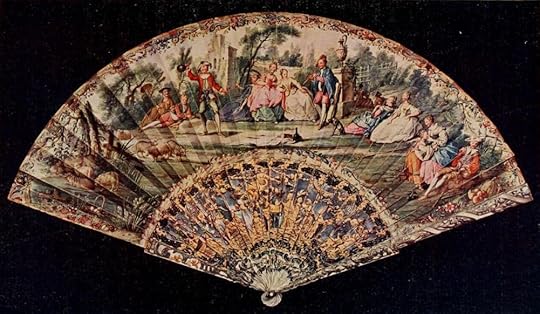
Rikki Ducornet opens this novella with testimony by Sade’s fan-maker, Gabrielle: "A fan is like the thighs of a woman. It opens and closes."
But it's also like a book or a mind. They too can be opened or closed. And the life of Sade was very much about one open mind opposed to many closed ones. This book is designed to open (if not blow) our minds and free our imaginations. Ducornet quotes Mallarme: "There is no explosion except a book."
Sade’s renowned cruelty or sadism is not the principal focus of the story. It actually humanizes Sade and two women who might have featured directly or indirectly in his life: Gabrielle, perhaps a fictional creation, who made erotically-illustrated fans for Sade to give to his whores and mistresses; and Olympe de Gouges, Gabrielle’s lesbian lover, as well as a real life playwright, political agitator and feminist (she wrote "Declaration of the Rights of Woman and the Female Citizen", only to be guillotined on 2 November 1793 for the crime of her sexuality).
The fictionalized Gabrielle doesn’t appear to have been one of Sade's lovers or debauchees. However, she was close enough to be interrogated by the Parisian Comit de Surveillance, the administrative vehicle for a repressive, almost puritanical, post-Revolutionary political and moral inquisition.
As part of her evidence, she must read from the letters that Sade sent to her, the expectation being that they will incriminate her. In the second half of the book, after she too seems to have suffered the fate of Olympe de Gouges, Sade becomes the narrator and reads from her letters to him.
Thus, Ducornet constructs an epistolary vision of this potentially triangular relationship. Whatever, it’s enough to immerse us in both Sade’s world and his imagination.
Whipping Up Fanatical Opposition
I benefitted from reading Simone de Beauvoir’s "Must We Burn Sade?" immediately beforehand. As a result, I was already familiar with some of the people and events alluded to.
Some of the language was so familiar that it was hard to tell whether Ducornet used Sade’s actual correspondence and writings, or whether she reconstructed it in his style. I’ll assume the latter, because I don’t want to burst the bubble she created.
Her writing is consistently lyrical and exquisite, without being purple. She conjures up a rich feast for the senses. The descriptions of meals are literally mouth-watering. The recipe for Sade’s post-whipping salve makes you want to replicate both the whipping and the cure (just to verify its efficacy)!
What emerges, as with Beauvoir’s essay, is a Sadeian world that wasn’t really as transgressive as his reputation would have us believe. After all, what's a little fellagellation between friends and accomplices?
He maintained that he only ever whipped mistresses or whores who consented to their whipping and to whipping him. He disputes that he cut a tramp with a knife and poured wax on her wounds. As good as his salve was at healing welts, it could not have healed cuts in the short time between their infliction and when the alleged crime was reported to the authorities.
As with many of his problems with the law, it seems that he was the victim of the jealous gossip of his rivals, including Nicolas-Edme Rétif (here referred to as Restif), a writer and pornographer who shared with Sade a mutual hatred (he even published a rebuff to Sade’s "Justine" called "Anti-Justine").
Fanning the Flames of Liberty
Both women in the novella end up victims of the Inquisition. Whatever Sade’s crimes, those committed by or on behalf of the State were worse, because they were institutionalised and they struck at the very life and heart of the imagination. The State and its lackeys perpetrated the Terror. They were the true monsters.
Ducornet balances these events that occur in the aftermath of the French Revolution with the contents of a polemical pamphlet, in which Sade (apparently with the help of Gabrielle) attacks Bishop Landa, the Spanish missionary who instigated a genocide of the Mayan people when they failed to convert to Catholicism during the time of the Spanish Inquisition in 1562.
In order to prevent the survivors from returning to their own religion, in order to close their minds, Landa burned all of their beautifully-illuminated holy books.
One man’s faith is another man’s heresy. One woman's fan offends a statesman's fanaticism. Every inquisition holds within it a potential holocaust. Something monstrous, not just wicked, this way comes. All of this in the name of a God whose existence was vehemently denied by Sade.
Ultimately, Ducornet asks that we understand in Sade, not just the libertine, but the libertarian. Like Gabrielle, the book fans the embers of a political, social, moral and sexual liberty that seems much more compatible with the times in which we live than Sade’s own:
"Let me explain. Sade had dared take the imagination's darkest path. I thought that if I could follow that path with my own mind, I would come to understand the forces that rage about us, the terror that, even in times of peace, is always a possibility. I knew that in order to read Sade, I would have to embark on a voyage, naked and alone, without the comfort of received ideas...I would have to learn a new way of reading."
Rikki Ducornet opens this novella with testimony by Sade’s fan-maker, Gabrielle: "A fan is like the thighs of a woman. It opens and closes."
But it's also like a book or a mind. They too can be opened or closed. And the life of Sade was very much about one open mind opposed to many closed ones. This book is designed to open (if not blow) our minds and free our imaginations. Ducornet quotes Mallarme: "There is no explosion except a book."
Sade’s renowned cruelty or sadism is not the principal focus of the story. It actually humanizes Sade and two women who might have featured directly or indirectly in his life: Gabrielle, perhaps a fictional creation, who made erotically-illustrated fans for Sade to give to his whores and mistresses; and Olympe de Gouges, Gabrielle’s lesbian lover, as well as a real life playwright, political agitator and feminist (she wrote "Declaration of the Rights of Woman and the Female Citizen", only to be guillotined on 2 November 1793 for the crime of her sexuality).
The fictionalized Gabrielle doesn’t appear to have been one of Sade's lovers or debauchees. However, she was close enough to be interrogated by the Parisian Comit de Surveillance, the administrative vehicle for a repressive, almost puritanical, post-Revolutionary political and moral inquisition.
As part of her evidence, she must read from the letters that Sade sent to her, the expectation being that they will incriminate her. In the second half of the book, after she too seems to have suffered the fate of Olympe de Gouges, Sade becomes the narrator and reads from her letters to him.
Thus, Ducornet constructs an epistolary vision of this potentially triangular relationship. Whatever, it’s enough to immerse us in both Sade’s world and his imagination.
Whipping Up Fanatical Opposition
I benefitted from reading Simone de Beauvoir’s "Must We Burn Sade?" immediately beforehand. As a result, I was already familiar with some of the people and events alluded to.
Some of the language was so familiar that it was hard to tell whether Ducornet used Sade’s actual correspondence and writings, or whether she reconstructed it in his style. I’ll assume the latter, because I don’t want to burst the bubble she created.
Her writing is consistently lyrical and exquisite, without being purple. She conjures up a rich feast for the senses. The descriptions of meals are literally mouth-watering. The recipe for Sade’s post-whipping salve makes you want to replicate both the whipping and the cure (just to verify its efficacy)!
What emerges, as with Beauvoir’s essay, is a Sadeian world that wasn’t really as transgressive as his reputation would have us believe. After all, what's a little fellagellation between friends and accomplices?
He maintained that he only ever whipped mistresses or whores who consented to their whipping and to whipping him. He disputes that he cut a tramp with a knife and poured wax on her wounds. As good as his salve was at healing welts, it could not have healed cuts in the short time between their infliction and when the alleged crime was reported to the authorities.
As with many of his problems with the law, it seems that he was the victim of the jealous gossip of his rivals, including Nicolas-Edme Rétif (here referred to as Restif), a writer and pornographer who shared with Sade a mutual hatred (he even published a rebuff to Sade’s "Justine" called "Anti-Justine").
Fanning the Flames of Liberty
Both women in the novella end up victims of the Inquisition. Whatever Sade’s crimes, those committed by or on behalf of the State were worse, because they were institutionalised and they struck at the very life and heart of the imagination. The State and its lackeys perpetrated the Terror. They were the true monsters.
Ducornet balances these events that occur in the aftermath of the French Revolution with the contents of a polemical pamphlet, in which Sade (apparently with the help of Gabrielle) attacks Bishop Landa, the Spanish missionary who instigated a genocide of the Mayan people when they failed to convert to Catholicism during the time of the Spanish Inquisition in 1562.
In order to prevent the survivors from returning to their own religion, in order to close their minds, Landa burned all of their beautifully-illuminated holy books.
One man’s faith is another man’s heresy. One woman's fan offends a statesman's fanaticism. Every inquisition holds within it a potential holocaust. Something monstrous, not just wicked, this way comes. All of this in the name of a God whose existence was vehemently denied by Sade.
Ultimately, Ducornet asks that we understand in Sade, not just the libertine, but the libertarian. Like Gabrielle, the book fans the embers of a political, social, moral and sexual liberty that seems much more compatible with the times in which we live than Sade’s own:
"Let me explain. Sade had dared take the imagination's darkest path. I thought that if I could follow that path with my own mind, I would come to understand the forces that rage about us, the terror that, even in times of peace, is always a possibility. I knew that in order to read Sade, I would have to embark on a voyage, naked and alone, without the comfort of received ideas...I would have to learn a new way of reading."

June 27, 2018
Marquis de Sade after the Revolution, in 1790, was elected to the National Convention, where he represented the most radical – or should I say sadistic – inclinations of the far left until he fell from grace and was incarcerated.
The Fan-Maker's Inquisition, an attempted stylization to François Rabelais and an endeavour of praise to Marquis de Sade fails and is nothing but the baroque trash…
And Rikki Ducornet is a demon of folly, it seems. The French Revolution was a sorrowful tragedy and not the trashy circus show like it is portrayed in the novel.
And Rikki Ducornet’s sort of postmodernism can’t rise much above elementary bladder and bowel habits: “I stink, therefore I am!”
What is less vicious, to write pornographic novels or to chop off heads?
The answer is obvious to everyone except those who chop off heads.
The Fan-Maker's Inquisition, an attempted stylization to François Rabelais and an endeavour of praise to Marquis de Sade fails and is nothing but the baroque trash…
The truth is this: The New World shimmers and bristles with demons. One oversees the beekeepers, another the bees, another the ballplayers, another the moon. There are the demons of travelers, the demons of tricksters, of merchants and government officials. Astrologers are protected by demons, as are fools, go-betweens, and thieves. Demons oversee garden parties, funerals, weddings, and copulation. The more the bishop drums them out, the more there are: demons of Excessive Anger and Excessive Love, demons of Sour Temper, Hair Loss, and Envy. Stupidity has a demon, as do Cupidity and Revenge. The penis is ruled by a demon, as are the vagina, the anus, and the eye. Some demons wear their noses like branches of coral, some blow smoke out of their skulls, some carry their heads in their hands, and some smoke cigars.
And Rikki Ducornet is a demon of folly, it seems. The French Revolution was a sorrowful tragedy and not the trashy circus show like it is portrayed in the novel.
And Rikki Ducornet’s sort of postmodernism can’t rise much above elementary bladder and bowel habits: “I stink, therefore I am!”
And if all my rights have been taken from me but one – the right to dream – I dream excessively. If they don’t like it, they will have to chop off my head!
“My pen is the key to a fantastic bordello, and once the gate is opened, it ejaculates a bloody ink. The virgin paper set to shriek evokes worlds heretofore unknown: eruptive, incorruptible, suffocating.”
What is less vicious, to write pornographic novels or to chop off heads?
The answer is obvious to everyone except those who chop off heads.
January 3, 2014
3.5/5
When I say Sade looms over my horizon, I do not imply such in the pubescent sense, or at least not fully. There's a reason why this man's highly contentious works have survived and even thrived, ideas proliferating with every page turned that span from religion to morality to psychology and all, of course, in the midst of copious amounts of fucking whose unorthodoxy still makes the 21st century 'desensitized' mind flinch. Sadism, anyone? There's also the matter of works both erotica and classic, a paradox if there ever was one that, for all the insipid mewlers and pukers running around the B&N racks these days, manage to persist. Almost as if there was something to be gained for reading them.
Perhaps I am hasty in passing judgment with nothing but a few bits and piece and this particular book having passed through my cranium, but. While I'm not going to go as far as saying Sade was a feminist (see The Sadeian Woman for that), if the juicier ideas of Ducornet's adhere to the lines of the original Marquis' thinking, I feel I'm going to like him. There's nothing I like more than a thinker who gives no shits for general principles that are not of their own making, and if Sade truly does turn the hypocrite convention that cries morality in one ear and whispers rape culture (along with so many other rage-inducing idiocies)in the other on its head and inside out, well. We may have something here.
I'm spending a lot of time building this person up, one who neither authored nor plays main fiddle for this work being reviewed, because for the first time I'm excited about reading Sade. Morbid curiosity and a 'bring it on' mentality are all very well, but Ducornet's words have made me also want to say:
'Luckless is that country in which the symbols of procreation are held in horror!' [de Bergerac] wrote, 'while the agents of destruction are revered!'I've said it in other reviews, and I'll say it again: erotica deserves to be treated seriously as a legitimate genre of literature, for the amelioration of both written word and resulting reality. Sade died two hundred years ago, and while I don't know about the rest of the world, I have four words for the gun-happy, sex-patriarchal US: grow the fuck up.
When I say Sade looms over my horizon, I do not imply such in the pubescent sense, or at least not fully. There's a reason why this man's highly contentious works have survived and even thrived, ideas proliferating with every page turned that span from religion to morality to psychology and all, of course, in the midst of copious amounts of fucking whose unorthodoxy still makes the 21st century 'desensitized' mind flinch. Sadism, anyone? There's also the matter of works both erotica and classic, a paradox if there ever was one that, for all the insipid mewlers and pukers running around the B&N racks these days, manage to persist. Almost as if there was something to be gained for reading them.
Perhaps I am hasty in passing judgment with nothing but a few bits and piece and this particular book having passed through my cranium, but. While I'm not going to go as far as saying Sade was a feminist (see The Sadeian Woman for that), if the juicier ideas of Ducornet's adhere to the lines of the original Marquis' thinking, I feel I'm going to like him. There's nothing I like more than a thinker who gives no shits for general principles that are not of their own making, and if Sade truly does turn the hypocrite convention that cries morality in one ear and whispers rape culture (along with so many other rage-inducing idiocies)in the other on its head and inside out, well. We may have something here.
I'm spending a lot of time building this person up, one who neither authored nor plays main fiddle for this work being reviewed, because for the first time I'm excited about reading Sade. Morbid curiosity and a 'bring it on' mentality are all very well, but Ducornet's words have made me also want to say:
They say he is evil incarnate and that his books are a plague, but I have survived the torment, the tedium, and the exhilaration of the reading that, to tell the truth, gives me the courage to live unfettered a vivid and moral life.Thank you, Ducornet, for spurring me on after years of meaning-to-read-but-never-managed. 2014's going to be fun.
Early in our friendship, Sade said I had the mind of a man. That was to say I was fearless, fearless of ideas, which, after all, are mere abstractions until put to use. I told him that I had the mind of a woman, adequately stimulated, adequately served.

January 15, 2015
"We admire Nature's variety and accept the flowers in their multiplicity of colors; indeed, if all flowers were white, we'd love them less. The world is richer for Nature's permutations, so why, tell me, do we not accept diversity within our own species?"
RD: The first time the fan-maker reads Sade, she is horrified and turns from him in disgust. But then she realizes that his vision of hell is a vision of the dangers that face us all. She decides that in order to survive, one must, she must "face the tiger." My own conviction is that if we dare confront Sade's possible universe within ourselves, we have a chance of survival. That if Sade had been read carefully, we might have been prepared for the possibility of holocaust and turned away in time.
A book for dreamers of freedom. A book for those who understand the imagination is the only sovereign kingdom. A book made for our witch-hunting epoch. A book the tragically hypocritical moralists preening among us will never comprehend, and turn away from, baffled and embarrassed, but only by their own secret spiteful shame, which they do not approach understanding. A book for wing-clipped spirits. Ducornet writes the most magnificent prose I've read in years, and the Fan-Maker is among the most gorgeously wrought books I've read in my adulthood. Necessary. Beautiful.
~~
RD: The first time the fan-maker reads Sade, she is horrified and turns from him in disgust. But then she realizes that his vision of hell is a vision of the dangers that face us all. She decides that in order to survive, one must, she must "face the tiger." My own conviction is that if we dare confront Sade's possible universe within ourselves, we have a chance of survival. That if Sade had been read carefully, we might have been prepared for the possibility of holocaust and turned away in time.
A book for dreamers of freedom. A book for those who understand the imagination is the only sovereign kingdom. A book made for our witch-hunting epoch. A book the tragically hypocritical moralists preening among us will never comprehend, and turn away from, baffled and embarrassed, but only by their own secret spiteful shame, which they do not approach understanding. A book for wing-clipped spirits. Ducornet writes the most magnificent prose I've read in years, and the Fan-Maker is among the most gorgeously wrought books I've read in my adulthood. Necessary. Beautiful.
~~

February 27, 2015
Here is what I wonder on my worst days: If the guillotine exemplifies Nature--perpetual, blind, deadly, inescapable-- and if Man is Her servant, and the Revolution too, then there is no hope. Then would I, and gladly, see the universe perish.
My humble gratitude extends to Samadrita. This was such a welcome detour. The Fan-Maker's Inquisition wrestles with moral hypocrisy. How sound that is in these uneven times. My best friend was recently interviewed on Al-Jazeera about the Charlie Hebdo tragedy. It was a very polite interview and I sat champing, hoping that mention would be made of satire from Sade to Godard. It didn't occur.
Ducornet's novel alternates between the caustic and the sumptuous and remains truly remarkable. The novel is a pastiche of sorts, encompassing court proceedings, personal letters, dreams and a fantastic book of the imagination.
My humble gratitude extends to Samadrita. This was such a welcome detour. The Fan-Maker's Inquisition wrestles with moral hypocrisy. How sound that is in these uneven times. My best friend was recently interviewed on Al-Jazeera about the Charlie Hebdo tragedy. It was a very polite interview and I sat champing, hoping that mention would be made of satire from Sade to Godard. It didn't occur.
Ducornet's novel alternates between the caustic and the sumptuous and remains truly remarkable. The novel is a pastiche of sorts, encompassing court proceedings, personal letters, dreams and a fantastic book of the imagination.

May 26, 2017
De Sade is locked away in a tower, part of a prison, and has been so for many years, will remain so. It seems that it is not Durconet creating him but he informing her and her writing, as he is corresponding with Gabrielle. She is a fan maker. Her’s is an exotic craft. Simply, she is herself, authentic and real. She remains so before the Committee where she is being tried for her correspondence with the imprisoned de Sade. This is an exchange which evolves into something affectionate, tender. The meeting of two minds carried by written words, two people who are unabashedly themselves and therefore must pay for it. She is there to express him and his passions suppressed at least of their outward manifestations by being locked away for years by the authorities. The suppression may equal the enlargement of the inner longings. He may be an authentic self but also might be bloated and spewing. In the end though the danger of imagination to staid and conforming life also stands before these men.
Amongst other paths and alleys this book seeks to investigate the line between the humanity of the experience of one’s inner passions and their expression. The book while vividly wondrous in the telling of itself may also underline the battle we all go through in facing our own passions, whatever they might be and how we carry out suppression in the court of our own making whether within our own consciousness or riding the waves of our unconscious.
This book carries so much of flames of varying candle width, searing with a magnificent beauty that I recommend it highly but cautiously. Well, no. Everyone should have it on their shelves, lift it out and hold it by its spine carefully opening the covers and slipping within.
Amongst other paths and alleys this book seeks to investigate the line between the humanity of the experience of one’s inner passions and their expression. The book while vividly wondrous in the telling of itself may also underline the battle we all go through in facing our own passions, whatever they might be and how we carry out suppression in the court of our own making whether within our own consciousness or riding the waves of our unconscious.
This book carries so much of flames of varying candle width, searing with a magnificent beauty that I recommend it highly but cautiously. Well, no. Everyone should have it on their shelves, lift it out and hold it by its spine carefully opening the covers and slipping within.

Read
November 19, 2013“Lady Rabelais” I once heard reported that it was said by someone who might know. It wasn’t Gazelle ; but, like how! it is most clearly, most certainly found in The Fan-Maker’s Inquisition. And let me say it like this, it would almost seem as though Ducornet is plagiarizing the old man ; which would be the highest compliment. In addition to a strong presence of the satirical Swift and the encyclopedia-ist Diderot, we find in the second portion of our diptych, the titular Marquis de Sade, who is, like Rabelais, nearly plagiarized in these pages ;; and what is so pleasing to this male-isticly=oriented reader is that our Lady Rabelais is not taking the bludgeon to this quartet of male=authorhood, I mean these four progenitors of fiction=simpliciter, but is speaking the Truth of this quartet which is libertine and liberatory and enlightenment and egalitarian and emancipatory (that’s five!) -- welcome to the sacred halls of the Abbey of Thélème -- even if those four old codgers didn’t know it at the time. I stick in this tired question of gender because there was that moment, but only a moment, when I said, Rikki, stop your damn preaching ; but then, four lines after having mumbled that complaint under my breath, my breath left me because, this wasn’t “preaching”, this was conjuring the text of de Sade ; the very thing her book is.
_____________
Often times people ask me, they ask me, “N.R.” ; “N.R.”, what do you mean by “Rabelasian”? Take as a fer-instance the following passage of pure pantagruelian pleasure, perhaps plagiarized ::
_____________
Often times people ask me, they ask me, “N.R.” ; “N.R.”, what do you mean by “Rabelasian”? Take as a fer-instance the following passage of pure pantagruelian pleasure, perhaps plagiarized ::
Sparkling clean, they return to their tasks with renewed purpose and vigor: quartering cows, skewering birds, scaling fish, glazing onions, threading cranberries, boiling jams, stirring tripe, stuffing geese, slicing pies, truffling goose liver, braising brains, tendering soufflés, jellying eggs, shucking oysters, pureeing chestnuts, larding sweetbreads, crumbling fried smelts, grinding coffee, building pyramids of little cheeses, filling puff pastry with cream, steaming artichokes, dressing asparagus, breading cutlets, making anchovy butter and frangipane and little savory croustades, gutting crabs preparing cuckoos and thrushes in pies and cucumbers in cream, icing pineapples, lining tarlet tins with pastry dough, larding saddle of hare.... He also asked me to draw for him a number of gastronomic maps.That is not “sensuous prose”, that’s pure pantagruelism. Not having read Rabelais is, in my never humble opinion, like not having read Shakespeare. Get on with it, good people.

July 1, 2013
Excellent - the wonderful reviews already here will tell you all you need to know. Suffice it to say, they are correct and this is a fantastic read.
For those of you who have, or are about to, read it - may I also suggest Angela Carter's Sadeian Women book as a companion piece (but a more academic one).
For those of you who have, or are about to, read it - may I also suggest Angela Carter's Sadeian Women book as a companion piece (but a more academic one).

December 31, 2012
It's worth ten stars. Don't wait around for my eventual review - ifwhenever. Just read it. I guarantee you it's the most fun you'll have on a Sadeday.

July 3, 2013
A Goodreads friend highly recommended Rikki Ducornet’s novel, The Fan-Maker’s Inquisition. Having never previously read Ducornet’s works, I find that she writes very luscious, provocative prose, which seems especially fitting as the subtitle of the book is A Novel of the Marquis de Sade. Partly, it’s a historical fiction novel based around a fan-maker (of scandalous fans, writings, friendships, & liasions) being tried during the Reign of Terror while also weaving a tale of an earlier reign of terror, that of Bishop Landa’s Inquisition & autos-da-fé of Mayans in the 1500s. Ducornet excels with her alternating transcripts of the court proceedings, personal letters, and various documents used to tell the overlapping stories. Her skillful hand exposes the irony, hypocrisy, and zealotry that drive humans to various extremes – acts from destroying different cultures, destroying individuals, destroying minds – whether done by groups or people on the outside or whether the decay begins from within. It takes an adroit author to create simultaneous plotlines that cover different time periods, while entwining the similar threads of the undoing of both men & civilizations. We certainly repeat the past, don’t we?
{Note: Some spoilers ahead…}
I especially liked Ducornet’s parallels between Bishop Landa’s destruction of Mayan books/knowledge & the Reign of Terror’s destruction of materials deemed inappropriate. Censorship & fanaticism are timeless topics & this book gave a somewhat lesser-known historical look at topics that still haunt us today. (Looking up Bishop Landa, I found irony in the fact that while he destroyed so much knowledge, he also was one of the most knowledgeable about Mayan learning & his notes & information are still being used today to help decipher the Mayan language.) These are not the only parallels that shine through the text; the topics may be rooted in the past yet are so relevant to each other as well as to today.
On a small side note, I enjoyed the fan-maker descriptions because fans had prominence in a different book (The Stockholm Octavo) I read earlier this year. And, the Marquis also figured in another historical fiction I read set during the French Revolution, Madame Tussaud: A Novel of the French Revolution. Certainly, the Marquis de Sade is a notorious figure, but after reading so much about the Reign of Terror, I imagine it must have been an incredible feat for anyone to stay sane during those times, especially if imprisoned for years, some of the time within seeing/hearing distance of the guillotine during its daily use surrounded by baying crowds.
{End of spoilers.}
Historical fiction that’s both exquisite & sharp, while pointing out issues that plague society today, especially if you’re concerned with freedom of speech/expression & censorship – what more can you ask for in a novel? The Fan-Maker’s Inquisition provides some savory fodder for discussions & pondering -- & perhaps the dream of learning & growing from our past. Highly recommended. 4.5 stars.
"What are books but tangible dreams? What is reading if it is not dreaming? The best books cause us to dream; the rest are not worth reading." – Rikki Ducornet, The Fan-Maker’s Inquisition
{Note: Some spoilers ahead…}
I especially liked Ducornet’s parallels between Bishop Landa’s destruction of Mayan books/knowledge & the Reign of Terror’s destruction of materials deemed inappropriate. Censorship & fanaticism are timeless topics & this book gave a somewhat lesser-known historical look at topics that still haunt us today. (Looking up Bishop Landa, I found irony in the fact that while he destroyed so much knowledge, he also was one of the most knowledgeable about Mayan learning & his notes & information are still being used today to help decipher the Mayan language.) These are not the only parallels that shine through the text; the topics may be rooted in the past yet are so relevant to each other as well as to today.
On a small side note, I enjoyed the fan-maker descriptions because fans had prominence in a different book (The Stockholm Octavo) I read earlier this year. And, the Marquis also figured in another historical fiction I read set during the French Revolution, Madame Tussaud: A Novel of the French Revolution. Certainly, the Marquis de Sade is a notorious figure, but after reading so much about the Reign of Terror, I imagine it must have been an incredible feat for anyone to stay sane during those times, especially if imprisoned for years, some of the time within seeing/hearing distance of the guillotine during its daily use surrounded by baying crowds.
{End of spoilers.}
Historical fiction that’s both exquisite & sharp, while pointing out issues that plague society today, especially if you’re concerned with freedom of speech/expression & censorship – what more can you ask for in a novel? The Fan-Maker’s Inquisition provides some savory fodder for discussions & pondering -- & perhaps the dream of learning & growing from our past. Highly recommended. 4.5 stars.
"What are books but tangible dreams? What is reading if it is not dreaming? The best books cause us to dream; the rest are not worth reading." – Rikki Ducornet, The Fan-Maker’s Inquisition

December 19, 2019
Verhörprotokolle, Briefe und Buchauszüge ergeben einen historischen Roman der ganz anderen Art, der in seiner Aussage sehr aktuell ist.
Der Marquis de Sade, seit Jahrzehnten eingekerkert, sieht von seinem Turmfenster aus die Guillotine und das tägliche Köpferollen unter der Schreckensherrschaft Robespierres im Namen der Revolution. Die Fächermacherin Gabrielle schreibt gemeinsam mit dem Marquis an einem Buch über den katholischen Bischof und Inquisitor Diego de Landa, der in Yucatan im Namen Gottes das Volk der Maya hinschlachtete und alle Zeugnisse ihrer Kultur im Feuer vernichtete.
Rikki Ducornet hat ein überbordend sinnliches, opulentes, rabelaissches Zeugnis gegen jegliche Form von Gewalt geschrieben und ein Plädoyer für die Freiheit der Rede und der Kunst. »Das gibt mir Hoffnung!« rief Olympe aus. »Denn auch ich habe nicht die geringste Spur von gutem Geschmack, auch ich weiß nichts von Regeln.«
Vor allem die ausdrucksstarke Sprache hat mir gefallen. Schade, dass Die Fächermacherin das einzige übersetzte Werk von Rikki Ducornet ist.
Der Marquis de Sade, seit Jahrzehnten eingekerkert, sieht von seinem Turmfenster aus die Guillotine und das tägliche Köpferollen unter der Schreckensherrschaft Robespierres im Namen der Revolution. Die Fächermacherin Gabrielle schreibt gemeinsam mit dem Marquis an einem Buch über den katholischen Bischof und Inquisitor Diego de Landa, der in Yucatan im Namen Gottes das Volk der Maya hinschlachtete und alle Zeugnisse ihrer Kultur im Feuer vernichtete.
Rikki Ducornet hat ein überbordend sinnliches, opulentes, rabelaissches Zeugnis gegen jegliche Form von Gewalt geschrieben und ein Plädoyer für die Freiheit der Rede und der Kunst. »Das gibt mir Hoffnung!« rief Olympe aus. »Denn auch ich habe nicht die geringste Spur von gutem Geschmack, auch ich weiß nichts von Regeln.«
Vor allem die ausdrucksstarke Sprache hat mir gefallen. Schade, dass Die Fächermacherin das einzige übersetzte Werk von Rikki Ducornet ist.

September 4, 2020
Sade's two rules for the Paris of his dreams:
1. All eccliastical categories must be resolutely pagan or satirical.
2. NOTHING WILL EVER RECUR.
My favorite of Sade's lines "Had I spent my life making enema nozzles instead of ejaculating and book-writing [so there IS a difference?], why, I'd be asleep in the arms of a loving wife.
Soon after that, the novel is over, leaving the choice of luxuriating in the afermath of a beautiful throwback to less fearful writing days (Ducornet writes beautifully and with apparent natural poetic instinct of blood, violence, sodomy, turds, and, most pleasantly, farts--providing a Sadian recipe for the couture of their odors), and asking questions that are likely to provide answers too facile to be fair to the book: like why the novel of inquisition in the Yucatan that Gabrielle, the fan maker, and Sade were writing together when she was arrested. My short answer is that it hardly matters what and where but that a hallucination in the Yucatan is acted upon--a sane and accurate Mayan mapmaker is killed and dissected and, shockingly, his body turns out to be normal, as the surgeon tells the inquisitor, laughing: "Not a flame, nor a frog; not even a cold wind"--and there you have the result. On the other side of the revolution being played out horrifically, you have another hallucination, Sade's, which I have alluded to, the rules of which are hilarious and humane, if impractical in that while some such as the month to honor Architecture, vanilla and the coffee bean are quite easily arranged, others simply are not--just a day devoted to the International Forums on Masturbation? And while a century to condemn Bad Faith, the notion of God's grace, the Guillotine, the Pillory, the hangman's noose, and English cookery makes great sense, it is unclear whether all the other dedicated days, weeks, centuries and so on, can overlap. If they can, the worst that can be said of the novel is that it is a call to a movement (and not just bowellery).
1. All eccliastical categories must be resolutely pagan or satirical.
2. NOTHING WILL EVER RECUR.
My favorite of Sade's lines "Had I spent my life making enema nozzles instead of ejaculating and book-writing [so there IS a difference?], why, I'd be asleep in the arms of a loving wife.
Soon after that, the novel is over, leaving the choice of luxuriating in the afermath of a beautiful throwback to less fearful writing days (Ducornet writes beautifully and with apparent natural poetic instinct of blood, violence, sodomy, turds, and, most pleasantly, farts--providing a Sadian recipe for the couture of their odors), and asking questions that are likely to provide answers too facile to be fair to the book: like why the novel of inquisition in the Yucatan that Gabrielle, the fan maker, and Sade were writing together when she was arrested. My short answer is that it hardly matters what and where but that a hallucination in the Yucatan is acted upon--a sane and accurate Mayan mapmaker is killed and dissected and, shockingly, his body turns out to be normal, as the surgeon tells the inquisitor, laughing: "Not a flame, nor a frog; not even a cold wind"--and there you have the result. On the other side of the revolution being played out horrifically, you have another hallucination, Sade's, which I have alluded to, the rules of which are hilarious and humane, if impractical in that while some such as the month to honor Architecture, vanilla and the coffee bean are quite easily arranged, others simply are not--just a day devoted to the International Forums on Masturbation? And while a century to condemn Bad Faith, the notion of God's grace, the Guillotine, the Pillory, the hangman's noose, and English cookery makes great sense, it is unclear whether all the other dedicated days, weeks, centuries and so on, can overlap. If they can, the worst that can be said of the novel is that it is a call to a movement (and not just bowellery).

January 15, 2015
From Anthony Vacca's award-winning review for The Stain:
"...a jaw-dropping foray into The Reign of Terror - those ten months of mass executions sandwiched within the ten years of the French Revolution - that told the heartbreaking story of a genuine and platonic friendship between the Marquis De Sade and a female fan-maker who specializes in erotic designs...dazzle[s] with pitch perfect sentences; dazzling narrative tricks; a panache for slithering between the erotic and the perverse; a vaudevillian command of voices; and, best of all, a bounding, tumbling, whirling love of language."
"...a jaw-dropping foray into The Reign of Terror - those ten months of mass executions sandwiched within the ten years of the French Revolution - that told the heartbreaking story of a genuine and platonic friendship between the Marquis De Sade and a female fan-maker who specializes in erotic designs...dazzle[s] with pitch perfect sentences; dazzling narrative tricks; a panache for slithering between the erotic and the perverse; a vaudevillian command of voices; and, best of all, a bounding, tumbling, whirling love of language."

December 17, 2010
Classic Ducornet: Sex, religion, history, tenderness and violence. And delicate pornographic fans—the kind you will need to fan your blushing face while reading this savagely beautiful tale of love and lust and intolerance.

April 25, 2017
A veritable orgasm of sensuous poetic prose, filthy and erudite, a most potent and heady of combinations. I am still shivering.

March 12, 2009
The main character in this book is an erotic fan maker, friend of the Marquis de Sade. She is accused of a crime and put on trail during the French Revolution. The trail and the Marquis memories of her tell her story.
Gazelle, by the same author, is vivid in its sensual imagery and reading it made me want to find things to smell and taste. The imagery in this book is more violent and sexual. It contains many observations on people, writing, and the role of books. One of my favorites is found on page 72: "A book is a private thing, citizen; it belongs to the one who writes it and to the one who reads it. Like the mind itself, a book is a private space. Within that space, anything is possible. The greatest evil and the greatest good." Ducornet is a master at creating exquisite private spaces to share with her readers.
Gazelle, by the same author, is vivid in its sensual imagery and reading it made me want to find things to smell and taste. The imagery in this book is more violent and sexual. It contains many observations on people, writing, and the role of books. One of my favorites is found on page 72: "A book is a private thing, citizen; it belongs to the one who writes it and to the one who reads it. Like the mind itself, a book is a private space. Within that space, anything is possible. The greatest evil and the greatest good." Ducornet is a master at creating exquisite private spaces to share with her readers.

July 30, 2008
it was imaginative and structurally interesting, but left me feeling unsatisfied
Read
April 5, 2024I found moments of this novel intriguing, entertaining, and amusing. Other bits, especially the Yucatan scenes, were "maturely enjoyed." It is, at least, an interesting approach to the historical foundation, as well as a tour-de-force of flights of fancy and 'scandalous' diction.

August 8, 2014
Lush prose, evocative imagery and provocative insets of the sensual promised a new perspective on de Sade, or at least some insights in a perspective not yet familiar. The narration is presented using letters and journals from de Sade and transcripts from the Fan Maker’s trial, with insets of hedonistic and sensual pleasures, mostly found in food and sex. Unfortunately, while all of the moments in and of themselves are beautifully presented, and the writing manages to bring the feel and flavor of the moment, the whole story is without a real plot.
As an exploration, readers are left to wonder if there is some joining point, or if the promise to ‘guide’ life in a way that is more passionate will appear. Unfortunately, I felt like a child outside the candy shop, able to see, appreciate and desire, but not having any real connection or hope to get the treats that are so luxuriant and just out of reach. .
The grounding with actual historical events, and the more humanized portrait of de Sade, with his memories, thoughts and ideas and the smattering of recipes, descriptions of fans, commentary on the politics of the day and even the attempts to expose the failures of colonialism all were wonderful, but never taken just ‘far’ enough to bring a real conclusion to any of the stories. I so wanted this to grab me and give me new perspective, but while the writing was beautiful and nearly rhythmic in construct, I found the story a simple collection of ideas and images, with little to nothing to grab on to
I received an eBook copy of the title from the publisher for purpose of honest review. I was not compensated for this review: all conclusions are my own responsibility.
As an exploration, readers are left to wonder if there is some joining point, or if the promise to ‘guide’ life in a way that is more passionate will appear. Unfortunately, I felt like a child outside the candy shop, able to see, appreciate and desire, but not having any real connection or hope to get the treats that are so luxuriant and just out of reach. .
The grounding with actual historical events, and the more humanized portrait of de Sade, with his memories, thoughts and ideas and the smattering of recipes, descriptions of fans, commentary on the politics of the day and even the attempts to expose the failures of colonialism all were wonderful, but never taken just ‘far’ enough to bring a real conclusion to any of the stories. I so wanted this to grab me and give me new perspective, but while the writing was beautiful and nearly rhythmic in construct, I found the story a simple collection of ideas and images, with little to nothing to grab on to
I received an eBook copy of the title from the publisher for purpose of honest review. I was not compensated for this review: all conclusions are my own responsibility.

February 3, 2016
Stylistically hard to get used to, but the actual story is compelling.
A female fan-maker in Revolutionary France befriends the ever-licentious Marquis de Sade, and makes fans with "provocative scenes" depicted on them. The whole story is told in an interrogation setting, when the fan-maker is on the stand in court testifying about her relationship with the Marquis.
A female fan-maker in Revolutionary France befriends the ever-licentious Marquis de Sade, and makes fans with "provocative scenes" depicted on them. The whole story is told in an interrogation setting, when the fan-maker is on the stand in court testifying about her relationship with the Marquis.

May 14, 2008
Unreadable. If you enjoy a simile, followed by a metaphor, topped with a run-on sentence then read this book. Otherwise, read anything else. I gave up after 60 pages of torture.

March 8, 2010
Tried really hard to get through this, but got really impatient after a few chapters. The prose was pretty but served no real purpose, except to aggravate the reader.

September 20, 2016
Ducornet's masterpiece (maybe) that has largely been erased from my memory banks by repeated bashing to the skull with a bowling pin administered by wife. All deserved.
I HAVE TO RE-READ THIS
I HAVE TO RE-READ THIS

August 12, 2024
Excepcional lectura en tiempos de la Revolución Francesa. Un canto al pensamiento libre, al libre estilo de vida, torpedeado por las constantes y violentas incomprensiones y maldades de los que se creen en poder de la verdad.
No es un libro de acción, es un libro de ideas, bañado de metaliteratura. Un libro de libros, arte, ideas y sentimientos donde Sade no es tan perverso, pero sí lascivo, inteligente, humano...
No es un libro de acción, es un libro de ideas, bañado de metaliteratura. Un libro de libros, arte, ideas y sentimientos donde Sade no es tan perverso, pero sí lascivo, inteligente, humano...

March 25, 2021
Another gem crowning the queen of literary enchantment. Spellbinding incarnations of verbal desire. Good and Beautiful.
Displaying 1 - 30 of 50 reviews