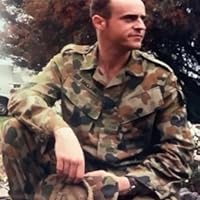
I received a target indication from one of the rear team members and observed movement coming from the left of the area of engagement. I then saw them, two enemy fighters moving to a new position. I must have let rip about twenty rounds and not one of the rounds hit them. I had missed completely! ''You shit shot,'' swearing at myself under my breath. My teeth were clenched and I was pissed off at my own incapability with a rifle, however, I realised I had a primarily role to play and that was as the Platoon JTAC. Havoc-06 is the call sign of former Australian Combat Controller, Troy Knight. As a Royal Australian Air Force Airfield Defence Guard, Troy had not found the military adventure he sought; combat operations. His thirst for overseas deployment saw him privately contract his services in Iraq and South East Asia, but when he got whiff that the Australian Defence Force was raising a new defence capability, he couldn't help but want to be part of it. The new Defence capability, termed the 'Special Tactics Project,' would see Troy undertaking the gruelling Commando Selection course and passing, making him one of Australia's first Combat Controllers attached to the Australian Army 2nd Commando Regiment. As a member of the Special Forces unit, Troy's lifelong dream of taking part in combat operations would come to fruition, but the reality of his dream would also play havoc on his life. Havoc-06 is the untold story of the Australian Combat Controller, but it is also Troy's personal story and one that will resonate with so many.
I wanted to love this book - the only book so far covering the relatively new RAAF role of CCT. Troy Knight is pretty obviously a natural story teller, and his tone and delivery are highly entertaining.
Unfortunately I think this book suffers a lack of an experience editors eye and advice. Timelines jump around with not many years being provided so it’s difficult to get your head around the chronology at times. Troy also feels as if he’s in a rush to get to the punchline/conclusion of his stories and doesn’t provide as much detail or background as the stories deserve.
I think this is especially true in regard to the chapter regarding his journey into the CCT role. Having served in an Army Special Operations unit, I understand the challenges of telling stories around operational security, however I think a clearer picture of the training process would have made for fascinating reading and could have been done without giving away any sensitive information.
That’s not to say the book isn’t a fun and entertaining read hence why I gave it 3 stars, but if I had to describe it in one phrase it would be “a missed opportunity”.
An interesting look at special operations from a different perspective. The only downside to this text is it is choppy and does not flow in any direct manner, informative all the same and worth the read.
Really enjoyable addition to the war story collection this time from the perspective of a RAAF ADG, and a PMC. Some really funny bits, and some really somber ones as well.