Jump to ratings and reviews
Rate this book

The Abyss of Human Illusion

Rate this book
“To the novel—everyone’s novel—Sorrentino brings honor, tradition, and relentless passion.”—Don DeLillo

“Sorrentino [is] a writer like no other. He’s learned, companionable, ribald, brave, mathematical, at once virtuosic and somehow without ego. Sorrentino’s books break free of the routine that inevitably accompanies traditional narrative and through a passionate renunciation shine with an unforgiving, yet cleansing, light.”—Jeffrey Eugenides

“For a compelling, hilarious, and ultimately compassionate rendering of life in mid-20th-century America, forget the conscientious subjectors and take Gilbert Sorrentino at his golden Word.”—Harry Mathews

“One of [Brooklyn]’s most intriguing and authentic homegrown talents, Sorrentino’s Bay Ridge deserves to be appreciated alongside Malamud’s Crown Heights, Arthur Miller’s Coney Island, Henry Miller’s and Betty Smith’s Williamsburg, Hamill’s and Auster’s Park Slope, and Lethem’s Boerum Hill.”—Bookforum

Titled after a line from Henry James, Gilbert Sorrentino’s final novel consists of fifty narrative set pieces full of savage humor and cathartic passion—an elegiac paean to the bleak world he so brilliantly captured in his long and storied career. Mirroring the inexplicable coincidences, encounters, and hallmarks of modern life, this novel revisits familiar characters—the aging artists, miserable couples, crackerjack salesmen, and drunken soldiers of previous books, placing them in familiar landscapes lost in time between the Depression era and some fraudulent bohemia of the present

.A luminary of American literature, Gilbert Sorrentino was a boyhood friend of Hubert Selby, Jr., a confidant of William Carlos Williams, a two-time PEN/Faulkner Award finalist, and the recipient of a Lannan Literary Lifetime Achievement Award. He taught at Stanford for many years before returning to his native Brooklyn and published over thirty books before his death in 2006.

151 pages, Paperback

First published February 1, 2010

7 people are currently reading
488 people want to read

About the author

Gilbert Sorrentino

45 books132 followers
Gilbert Sorrentino was one of the founders (1956, together with Hubert Selby Jr.) and the editor (1956-1960) of the literary magazine Neon, the editor for Kulchur (1961-1963), and an editor at Grove Press (1965-1970). Selby's Last Exit to Brooklyn (1964) and The Autobiography of Malcolm X are among his editorial projects. Later he took up positions at Sarah Lawrence College, Columbia University, the University of Scranton and the New School for Social Research in New York and then was a professor of English at Stanford University (1982-1999). The novelists Jeffrey Eugenides and Nicole Krauss were among his students, and his son, Christopher Sorrentino, is the author of the novels Sound on Sound and Trance.

Mulligan Stew is considered Sorrentino's masterpiece.

Obituary from The Guardian

Interview 2006

Ratings & Reviews

What do you think?
Rate this book

Friends & Following

Create a free account to discover what your friends think of this book!

Community Reviews

5 stars
36 (19%)
4 stars
77 (40%)
3 stars
66 (34%)
2 stars
9 (4%)
1 star
1 (<1%)
Displaying 1 - 30 of 37 reviews
Profile Image for MJ Nicholls.
2,278 reviews4,867 followers
February 19, 2018
A rapturous reread. Sorrentino ended his remarkable career as one of the finest/funniest (and underrated) innovative writers in existence with a trilogy of elegiac novels—Little Casino, A Strange Commonplace, and this posthumous wonder. Like the other two, TAoHI comprises a series of short vignettes taking an unsentimental and sympathetic peer into the sad, wretched leftovers of our empty, despairing lives, and is the bleakest of the three, lacking some of the turns into comic bitterness of the other two, and showcases Sorrentino’s tender spite at its most achingly tender, and achingly spiteful. It is hard to believe that a writer capable of such wrenching sadness was also a writer of the most hilarious and ribald comic novels (Mulligan Stew, Crystal Vision). Sorrentino was a writer of unlimited skill and talent, capable of working in multifarious fictional modes, inventing endless novel strategies for creating fresh structures and forms, and one of the finest proponents of the Joycean list. As I said in 2010: Forget the other bitches. Gilbert is immortal.
Profile Image for Ian "Marvin" Graye.
950 reviews2,789 followers
October 9, 2014
The Attack of the Killer Narratives

The fictitious author Sorritoni’s preferred mode of composition is attack.

Of course, because he uses the voice of the narrator (whether or not it is the first person), it’s impossible to tell whether any attack is that of Sorrentino (as opposed to Sorritoni or his narrator).

As a consequence (perhaps even as a part of a sequence of cons spread over his entire body of work), you can’t determine whether Sorrentino is actually opposed to his narrator or in mischievous accord.

Unable to attribute any perspective to the author, or to work out whether you love or hate him, readers can’t tell whether they have hoist Sorritoni on his own petard, or whether he has managed to do so himself.

Meanwhile, Sorrentino, were he still alive, would continue to grin or smirk at the readers’ dilemma from the comfort of his armchair.

Even when, as here, there is relatively little overt metafiction in play, Sorrentino is still up to some Post-Modern mischief (albeit from beyond the grave). His skill was that the mischief didn't need to be between the words or even on the page itself. He could still mess with our heads!

"Enough of This Bullshit!"

Sorritoni wrote "The Abyss of Human Illusion" when he was fixing to die. His emphysema had spread to the base of his brain. It must have been a painful and debilitating death.

Contrary to the words of one of his fictional detractors, death is not a groove, man! On his deathbed, he remarked, "Enough of this bullshit!"

Typically, it’s not clear whether he was referring to his fiction or life itself, or whether he was simply aiming for a memorable epitaph. Whatever, it’s not a bad one!

Initially, I thought Sorritoni’s bitterness might have softened with age and a sense of imminent, if not eminent, mortality.

I haven’t read "Mulligan Stew" yet (that’s next), but this definitely contains the most superior writing of the three works I’ve read so far. *

The sentences are beautifully composed. The vignettes (though not really short stories with a beginning, middle and end, or even a beginning and an end) walk on to the stage, say their set piece and walk off without overstaying their welcome.

Topping the Creative Class

For most of the book, I felt like I was reading a version of Raymond Carver, which I regard as the highest compliment I could pay to a writer of short fiction.

The main difference is that, while both came from working class backgrounds, Sorritoni gravitated towards the big-idea-ed academia, the literati and the merely arty (perhaps what Richard Florida would try ineptly to define as some new-fangled socioeconomic class called "the creative class").

Unlike society’s genuine oppressed, the Sorritoni crowd seem to be the victims of their own hand. Not since one novel by Evelyn Waugh (as opposed to Sorritoni's entire lifetime’s ouvre) have I witnessed such a collection of vile bodies and minds. These pretentious examples of the lumpen-bourgeoisie are self-pitying miserati of impossibly threadbare one-dimensionality.

I wondered whether Sorritoni would appreciate the comparison with Raymond Carver. Well, of course not:

"There is no sexuality in Raymond Carver's stories - or, I should say, his story."

What a delightfully bitter composite of astute critical judgment and vicious ad hominem attack!

Not even the Grim Reaper could tone down our Sorritoni!

My Best Friend's Wife

His type of male protagonist spends his life longing to make love to his friend’s wife, "whom he didn’t much care for, but, well, there she was, vapid and bored and available…waiting patiently to be insulted and demeaned."

It would take an act of gigantic and un-characteristic post-coital enthusiasm just to get up on his elbow and reach for a whiskey or a cigarette or to brush her mousy blonde hair.

As with so much of his fiction, his male characters live in fear of being cuckolded, while fearlessly cuckolding their best friends, whose fiction or verse is usually mediocre compared with their own.

It's hard to tell when Rabelaisian sexual exuberance becomes misogynistic.

Drone On

As has come to be expected, everybody (else) is a fool or a hambone. They’re all (let’s make a list!) shabby, contemptible, egocentric, shallow, selfish, cruel, banal, loathsome, anti-Semitic, nauseous, pitiful, stupid, insufferable, envious, abusive, imbecilic.

In retrospect, Sorritoni recognises that he enjoyed "the celebrations and joys, the razzamatazz, so to speak, of his youth and young manhood." At the time, he was a whiz, suffused with "monstrous illusions of his restless and iconoclastic genius."

Now, however, he has condemned himself to "the apathy and complaint of old age" and "this disquiet, this discomfort, this hidden and unacknowledged longing for oblivion."

He "wastes years of his life trapped in a wretched cliché" (of his own making). The moaning becomes a drone, the drone of existence (even as it is about to be snuffed out):

"Time to go and leave the world to the young, happily wallowing in the mess he’d left as a small part of their general inheritance."

On the Hip

Of course, the fault of the young, particularly its writers who manage to get published where he has failed to, is that they are "Hip and Engaged and Transgressive!"

Like all of his other enemies, they’re complicit in his "subversive marginalization."

They’re responsible for his "sense of disconnection, this topographical anomie, [that has] contributed to his emotional desuetude, his stunned vacancy…his neurotic and uxorious gloom."

Jeez, where did he find all of these words? How did he manage to return to the same fount in one book after another? Was there no other subject matter worthy of his pen?

It’s no surprise that only in the very end, as he faced off death, did it become clear to him that -

"The couple he had thought of with such dismissive contempt for so many years, had thought of him in the same way."

Henry James, Rejoice!

The epigram quoted from Henry James (the source of the novel's title) contrasts the shallow surface and twinkle of the sea with the deep abyss of human illusion.

We must thank Sorritoni for teaching us that the abyss of human illusion that is misanthropy invites reciprocity from its objects. He who discriminates finds himself discriminated against. He who comes, not to praise, but to bury Caesar will find himself buried in turn.

In the metafictional commentaries at the end of the collection, Sorritoni says of Henry James:

"No writer’s antennae have ever been as good at detecting well-mannered social and sexual sadism."

Well, one thing is for sure, Sorritoni himself (de Sade bastard son of his own illusions) did his best to emulate his idol.


* I should add that this book has been beautifully typeset (in Caslon font) and packaged by the small independent publisher, Coffee House Press:

http://coffeehousepress.org/


SOUNDTRACK:

Kings Of Leon - "Genius" (from the album "Youth And Young Manhood")

https://www.youtube.com/watch?v=b8jLl...


description
Profile Image for Daisy.
283 reviews100 followers
March 4, 2024
Clever in construct with each vignette getting longer by a set amount each time. Personally I didn’t care for the removed, cold prose but I did enjoy this,

”Somehow, he had thought that his old age would miraculously produce finer, subtler notions of – what ? – life? But he was no better, no cleverer, no more insightful than any shuffling old bastard in the street, absurdly bundled against the slightest breeze.”

And knowing that my review is no more insightful than said shuffling old bastard I shall leave it there.
Profile Image for Jonfaith.
2,151 reviews1,747 followers
March 6, 2013
There is a sustained sadness to these pieces. The tone varies slightly with the changing subjects, but the primary concern is one of disappointment and decay. Energy lags and bodies age. Lovers leave. Life rattles along oblivious, leading to inevitable considerations. That is the question.

Realization is often telling. We don't grow up to be artists. We don't change the world.

I did not groan during this reading. There were no clunkers, no cheap moments. This project is mature, not hurried. It may not be a culmination but it isn't an afterthought.
Profile Image for Vesna.
239 reviews169 followers
August 18, 2024
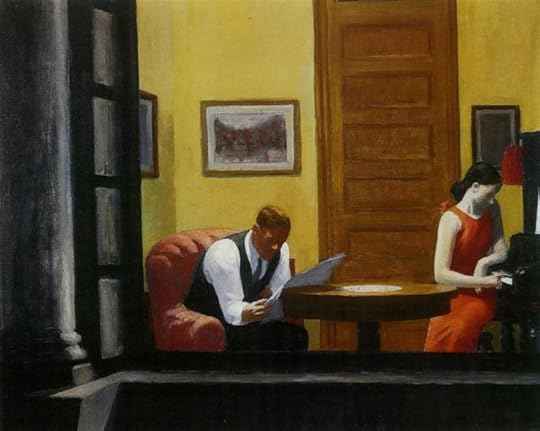
A collection of 50 brief pieces (vignettes, micro-stories, “sections” as his son names them in his Introduction) that Sorrentino wrote at the end of his life, published posthumously. He is considered an unconventional writer, but the writing here is Hopper-like with a veneer of realism. He’s also known for his humor and it can still be found here, especially when his brief commentaries (which he wrote for each story) are subversive to the main story.

BUT this is a dark, very dark book about people’s lives, their marriages, careers as writers or artists, alcoholism, alienated children… Permeated with betrayals, self-deceptions, failures, a sense of futility … the mirage of life. The epigraph from Henry James’ story “The Middle Years” that gave the title to the book is perfectly fitting. The single-page first story should be read twice - at the beginning and then at the end, when you realize how it said it all. Most stories take place in different parts of America, often Brooklyn or New York/Manhattan, during the Depression era, late 1940s or 1950s; there is an eerie sense that some of it is autobiographical.

The sections/stories are without titles, labeled only by numbers. The ones I loved the best:
1, 6, 8, 9, 20, 21,24, 25, 33, 36, 37, 39, 43*, 44, 45, 46, 48, 50
*autobiographical? if so, very sad self-reflections as a writer at the end of his life

“Hopper,
Edward Hopper, Room in New York (1932)
Profile Image for Rayroy.
213 reviews84 followers
November 25, 2013

He saw a bum outside the library, collecting cigarette butts of the ground into a bag, on his way to unhook his bike, his messenger bag full of books. Too many books to read, but what could he say, there were books at home he was still reading Gravity’s Rainbow, that he can’t commit to just one book at time, that reading just one at time, somehow make him feel more alone they he already is. Oh the time, the lack of time for reading, with work, biking, friends, fucking Netflix. One of the books in his bag he stared already “The Abyss of Human Illusion”, a slim collection of short narratives that are part of a bigger story, one he doesn’t grip completely, but damn if the writing isn’t lights out, to the point, flowing, and pessimistically funny.

It’s been hours since he eat anything, some cheap grap and go pizza he picked up between runs Downtown, now it’s time ride home and cook dinner, expect when gets home he makes a few peanut butter sandwiches and reads, stomach growling but it’s too late to cook, time to get sleep. A missed dinner and for what to finish a book he’s not sure he likes a lot. There are parts sure that leave him awestruck, but parts that are tiresome. Well it’s another book read at least, something that can make him forgot his stand still stance in life at the moment, that lost love, damn he misses her, those faraway lands yet to visit.


“…It was the neurotic and worried people between thirty-five and forty-five who thought that diet and exercise and meditation and the avoidance of cigarette smoke and excessive alcohol use (alcohol abuse!) would keep them from death; and that industrious and puritanical attention to their aging bodies would take them into their happy nineties, their euphoric hundreds, into a deathlessness as groggily sweet as a California chardonnay. Their bodies would repay then for their scrupulous care.”
Profile Image for David Katzman.
Author 3 books536 followers
February 9, 2011
An aptly named book. The Abyss of Human Illusion made me feel as if I were watching a pale naked body fall in slow motion onto a bed of nails.

Gilbert Sorrentino is an acclaimed experimental writer who combines elements of formal Modernist experimentation (ala James Joyce) with tropes of postmodern writing (ala John Barth). In this particular “novel” the Modernist construct takes the shape of precisely fifty “chapters,” each chapter a little longer than the previous one, the first chapter being half a page long while the final chapter being four and a half pages long.* There is no plot that connects the scenarios in each chapter, making them seem rather more like collected short stories than a novel, however, they are united by a common authorial voice, a theme, and a set of Endnotes written by Sorrentino. A light postmodern sensibility perks up occasionally when Sorrentino makes offhand comments that acknowledge the “author” of the work within the text as well as acknowledging the fictional quality of the characters he is writing about and the reader who is reading them. For example, he might refer to a character with a description such as, “She might be blonde or brunette, it doesn’t matter. Imagine what you wish.” His Endnotes are pomo as well because they comment on phrases within the chapters, sometimes adding new details about the characters as if they were “real” while undercutting that reality with a wink in his tone. And sometimes he comments on his own writing—“a rather clichéd phrase there.”

Despite the lack of through-line to these stories, they are certainly united thematically in that they all brutally skewer our human illusions and foibles. In fact, I would go so far to say that there is no joy in there, only emptiness—thus the abyss. He skewers the fictions we’ve crafted to attempt to define ourselves and the illusions of family ties, but the majority of the stories lay bare the deluded beliefs we carry about our lovers, husbands and wives or partners.

And make no mistake, this isn’t a light book that allows you to shrug off the illusions. Somewhere in here you are likely to feel a pang of recognition, an echo of an illusion in your own life. Sorrentino dangles his characters above that eponymous emotional abyss, shows us the sort of horror in their loneliness and the falsity of beliefs by which they’ve defined themselves. Although he does so in such brief snippets that they don’t quite gel as real people so much as representation of real people (which is what characters are anyway.) But he manages to provide enough detail that there is both distance and intimacy with these creations. And the intimacy is what makes this book so painful to read. Reading it was like seeing the body of my emotions shredded mercilessly.

You know how some books are described as presenting unlikeable or somehow despicable characters “with sympathy”? No such sentimentality here. The light shown on our illusions is cold. Even the author doesn’t escape his own contempt—there is an implication that writing is for naught. Yet of course he wrote this book, his last as a matter of fact.

The preface notes that Sorrentino finished the first draft of this book in 2005 when he was diagnosed with cancer, a very potent cancer that nearly incapacitated him. And yet he finished this book a few weeks before his death in May of 2006. Wow. The implications boggle the mind. He’d already published more than thirty books, so it’s not like he didn’t have a legacy. But I wonder, was it more important to him to finish this book than spend his last year with family? Did he love his family and did they love him? Undoubtedly, we do live with many illusions about ourselves, our friends, our lovers, husbands and wives, and our families. Does that mean love isn’t real? When it’s based on responding to an illusion? Does it matter? Isn’t our Self an illusion anyway? So our constructions of others in our minds are illusory, too. The “truth” comes in how much our beliefs might correspond to the actual behavior and (unknowable by us) inner thoughts of these others. Further, we are always changing so there is no consistent Self to “truly” love. Do I think love exists? Well, I do. It’s an emotional truth, but it’s important to acknowledge that it’s not a solid thing, and it certainly can be transitory. Destroyed by a change in others or ourselves. Destroyed by a revelation—“You are a different person than I thought you were.” So is it real? As real as any idea is, because it influences and shapes our behavior. So, where’s the love, Gilbert? Where’s the love?

* Side-note: There is one paragraph in my first novel where each sentences that follows the first is one word shorter than the previous. Little Easter Egg for you there, from an atheist Buddhist.
Profile Image for L.S. Popovich.
Author 2 books464 followers
December 29, 2019
A brief, final testament left by Sorrentino, and proof that his dotage was virile and discerning.
Broken into 50 scenes, these flask fictions (flash fictions) are reminiscent of Barthelme and even, fragments of Bolano.

Often humorous, this "novel" shines with deep human emotions, wry bathos - as the author himself describes it - and bawdy touches of loving fun. While not free of his habitual racial slurs, it is less scathing and indicting than the previous book of his I read, called Aberration of Starlight.

The presiding sentiment, I think, is the futility of living, of aging, and of growing sour. Clearly coming from his own perspective, he depicts writers in their final death throes (in the literary sense) and has the detached wit so clearly at the forefront of literary fiction in his time. Unlike the distasteful scenes you'll find in the previously mentioned work, he is no less honest here, but subtle and refined.

The defining characteristic of these vignettes is eloquence. In the short space of a couple pages, he encapsulates characters with precise details and charming nonchalance.

As I explore this author's work further, I doubt I will find another book as refreshing as this one in his revelrous oeuvre. But he is apparently full of surprises.
Profile Image for Aiden Heavilin.
Author 1 book74 followers
September 19, 2017
On government websites, you can read the final statements of convicted criminals about to be executed, and it is a very haunting, strange thing to read them. I had the same sensation reading this, Gilbert Sorrentino's final book, a collection of 50 vignettes each presenting a brief glimpse at the lives of ordinary people. I felt as if these short statements were rather like what might flash before the eyes of a man dying, a vision of time wasted and misdeeds done. The book seems to be written by some cosmic being writing down journal entries on those he was sent to watch over, preparing to deliver it to his master. This is what he saw fit to record.

Whether it was a good idea to start my reading of Sorrentino on his last novel, I'm not sure, however it was an intriguing dip into a style just as beautiful as it was bitter. I read it in one sitting, and came out feeling like I'd read a lengthy novel. There's a lot here to process.

The context provided by Christopher's introduction is necessary fully understand the thread that runs through all of these books; resignation, passivity, mortality. Sorrentino wrote this while dying, and throughout it, you can feel him struggling with the topics that must have been on his mind - futility, sadness.

To me, the most poignant of the sketches was number 24, about Vince, a man unable to appreciate anything that his friends and family do for him. I have always struggled with a desire to be 'right', a willingness to cast aside kindness when I feel that I am justified. I felt as if Sorrentino wrote this story just for me.

It had not always been thus, but what it had been, indeed, was crass and crude, no better than the current situation, which revealed his friends, his imaginary wife, his colleagues at work, anyone who had the least acquaintance with him, to be shallow and selfish. How wonderful it was to be right.


This is a deeply unhappy book, full of pathetic people, failed marriages, and sad people. It was a glimpse into, well, the abyss of human illusion.

I can't say I enjoyed reading this, but it was clearly the work of someone with deft control over narrative and the flow of information. I'll be reading more Sorrentino.
Profile Image for AC.
2,231 reviews
January 28, 2013
Sorrentino is a writer ("such as he is...") that people are going to (re)discover some day
Profile Image for Amy.
231 reviews109 followers
June 4, 2010
The Abyss of Human Illusion is aptly titled, given that Sorrentino develops so many of his narrative pieces with the focus on the illusions in everyday life: the assumptions we make, or the events we mentally rehearse for but never act out. This collection is fifty-some short vignettes, not quite a collection of short stories, but still packing just as much of a punch. Most are just two or three pages, and what he can accomplish in so few words is amazing.

This was my first Sorrentino collection, and it’s honest and pure without being depressing. Even the parts about depression were somehow unsinkable. A great deal of humor is within it, a sweet humor as well as snarky realism. For example, in one section, an elderly man pities his upstairs neighbor, another elderly man with a crippled foot. They have no connection, but the downstairs neighbor imagines an entire life for the poor man above, embellishing it with sad little details about war injuries and ungrateful children that allow him to ignore the terrible noise the upstairs man makes. Finally, unable to stand the noise much longer, he goes upstairs and finds a scantily clad woman at the door, who looks at him disdainfully, as he is an old man. Thus the noise is explained and the downstairs neighbor is chastened. Isn’t that how it goes?

Another man is set to review his friend’s published poetry collection, one of several in a successful artistic career. He can’t make himself get to it, and keeps putting it off. Finally, he has to admit it to himself what prevents him: the realization that his friend is “an arrogant, selfish, cruel, egocentric yet charming man of sociopathic bent, to put the very best face on it, changed, oh yes, transformed his public presence into one of a subtly nuanced and delicate humility, transformed his entire life and world into the very picture of the sensitive artist.” And the larger revelation? His friend was a terrible poet in the first place. Immediately you imagine that the reviewer would justify the poet’s corruption if only he had more talent!


Sorrentino makes some pokes at my beloved New Yorker magazine (I feel kind of guilty for enjoying it so much!). He makes more than a few allusions to famous people who lacked the talent to back up their legend, but I couldn’t place exactly who he meant (I’m sure they know!). He's uncanny at noting the little details that make each person tick. In fact, given the seemingly trivial details he explores, you’d assume the stories would be longer. But it’s the specificity of what he describes that allows you to immediately know what he means without pages of descriptions. An amazing gift, because none of the pieces feel short-changed or hurried; all are exactly right.

The introduction of this novel is also quite touching as it is written by Sorrentino’s son, explaining how his father completed the work despite his debilitating illness, just weeks before his death. I’m eager to see if Sorrentino’s other novels are this style, as it’s an addicting style of prose. Best of all, it's not so sophisticated that the reader feels ignorant (as frequently happens when I read some celebrated writers).
Profile Image for Matthew.
320 reviews7 followers
June 4, 2011
A beautifully written, somewhat autobiographical collection of loosely connected vignettes, anecdotes, character studies and sketches. Most of the characters are artists or writers of one type or another and live with varying degrees of self-delusion. There's the struggling author who is pleased when he learns of his wife's affair, knowing that if it leads to divorce he may get some of her money and still afford to not have a job. There's the poet turned translator turned academic professor, whose inflated sense of self-worth drives his every decision. And so on.

Each section is fairly short---I think the longest is 3 1/2 pages. Some by the end of the book are short little paragraphs, almost blinks that read like unfinished pieces. And they very well may be, with this being Sorrentino's last work.

I've read a number of his short stories over the years, but the only novel I've read before is Mulligan Stew. Not being familiar with all the pomo cultural references a lot of it went over my head. But this one is more accessible because the pieces are mostly about character and language. Wonderful just to soak in, I would have rated it higher if the pieces connected together a little more firmly. If nothing else, this makes me want to go back and read some of his other works.
Profile Image for James Murphy.
982 reviews26 followers
August 24, 2011
Gilbert Sorrentino's brilliant career produced several works in this vein of sardonic multiple perspectives which form a whole. Here he gives us fifty anecdotes from the point of view of fifty different characters--though some of them may mirror Sorrentino himself--which revolve around some of his primary themes: sex, divorce, Brooklyn, nostalgia, and failure. As the title, taken from Henry James, suggests, the overall tone of these mini-narratives is bleak. The 50 characters are exhausted by life, used up. They've looked their hard lives full in the face and been defeated by it. There are no more illusions.

Sorrentino died in 2006 before completing The Abyss of Human Illusion. This final form was organized and prepared for publication by his son Christopher. In "A Note to the Reader" he says he can detect no over-arcing structure or scheme to the novel. It is simply what it appears to be, 50 short sketches about the despair of those burnt-out and resigned to failure. Ironic, demanding, and original, this is classic Sorrentino.
Profile Image for Edita.
1,589 reviews596 followers
October 1, 2016
But since life is, essentially, and maddeningly, a series of mistakes, bad choices, various stupidities, accidents, and unbelievable coincidences, everything played itself out just as it should have; although a shift this way or that in this young man’s life, an evening at a friend’s house avoided, a day at the beach cut short because of rain—anything you can dream up, the more absurd the better—would have led to wholly different results, each one of which would have played itself out precisely the way it should have. There is no way to bargain with life, for life’s meaning is, simply, itself. Perhaps this is why one society after another relentlessly invents its gods and the byzantine complexities of the religions in which those gods are enclosed forever: somebody to talk to, to cajole, to beg and bribe. That nothing helps doesn’t matter, for, most importantly, the gods can be blamed. They “work in mysterious ways.”
Profile Image for Parth Jawale.
41 reviews16 followers
July 6, 2018
Immediately after finishing this book, I found myself reading Sorrentino's interview with John O'Brien.
JOB: At various times you have talked about “voice” in relation to both poetry and prose. Will you explain what you mean by “voice”? I will here assume that it is not, as I thought for a long time, merely or only the projection of the writer’s voice into the style.

Gilbert Sorrentino responds by pointing out how difficult it is to invent all the voices and capture the uniqueness in terms of their patterns, their grammar, their syntax. He adds, "Voice is a formal design, to use Williams’ term, just as formal as any other kind of narrative strategy that one might use. When I am writing, I put my ideas into a kind of voice that will color the narrative and mood of the work."


All the fifty vignettes here, each one longer than the last one by some seemingly identifiable principle are thematically linked, but are stylistically unique. It was posthumously published after being mildly edited by his son, Christopher Sorrentino - Gilbert wins here, getting his last word in on the absurdity of everyday living. The bitterness in his prose should not be mistaken for contempt, for he doesn't complain, wallow (or urge the reader to do so) or hate. He makes you look right in the eye of all that does not matter - and laughs with you. He creates stories with characters that he would perhaps find, were he to take his long evening walks and talk to people at the garden bench - failed writers, drunkards, cuckolds.

In another interview, he was asked what the main concern of a writer is. And GS responded by saying, "The main concern of a writer, if you mean a writer as artist, is to make art. He must have the luxury of being permitted to do this, just as the physicist is permitted to do physics and the surgeon to operate. An artist makes things. All else that he does, in his role as an artist, is incidental, accidental, or peripheral. If he worries about being an anachronism then he should quit writing and do something else."

He's right you know. He's always right.
Profile Image for Eugene.
Author 16 books300 followers
February 10, 2010
now we have the last, posthumously-published novel — THE ABYSS OF HUMAN ILLUSION — the hint of which was given in a piece published in the spring 07 issue of GOLDEN HANDCUFF REVIEW. that short piece openly announces its autobiography (so much that perhaps we’re obligated to question it) containing admissions like the below short excerpt.

what struck me as i read this last novel was sorrentino’s clear understanding that while he was here (and perhaps throughout his career) dealing with absolutely common, almost bathetic episodes of human misery, each familiar trope nonetheless is relieved (variably, here, certainly–but at times transcendentally) of its mundane moorings and wrestled into artifice.

to me, this transformation is something of great mystery. the furious ravings of a cuckold or drunk, nostalgia, even the confessions of desperate or envious or dying writers are made into something else: something somehow simultaneously witty, inexplicably sad, and determinedly fake. the latter out of a sense of integrity, the moral that art is not a transparent glass through which we can see reality, but an opaque, additional reality (to which, perhaps, we might compare our own).

from GOLDEN HANDCUFF REVIEW:

He wasn’t much good for anything else, and what he did know how to do — even when, he smiled ruefully — even when he knew how to do it, proved nothing, changed nothing, and spoke to about as many people as one could fit into a small movie theater.

And so he continued to do it, correcting and revising each newly made page with a feeling of weird neutrality, with a feeling that he was simply passing the time: this or solitaire — all right, this. Surely, the other old writers he still knew felt precisely this way. Did they? He surely wouldn’t ask such an impertinent question.

He had recently received a letter from a dear friend, who, it so turned out, died soon after. He took the letter from his files one morning, before he started what he now thought of as “work,” scare quotes flaring, and found in it what he was sure he had read. The friend had confessed to him that his last book was, indeed, his last book, that he had given up or lost — it made little difference — the ability and the desire to write another word…

He sat at his desk, and read the letter again. He wished, oh how he wished it wasn’t so, but he was choked with envy of his friend’s sterility: not to be able to write, not to want to write, to be, as they say, “written out,” or, more wonderfully, “burnt out” — lovely phrase! But it was a gift that had not been given him, and, he knew, despairing, that it would never be given him. He was doomed, damned, if you will, to write on, and on and on, blundering through the shadows of this pervasive twilight, until finally, perhaps, he would get said what could never be said.


http://www.eugenelim.com/2010/02/10/the-abyss-of-human-illusion-by-gilbert-sorrentino/
Profile Image for Old Man JP.
1,183 reviews77 followers
September 11, 2024
Sorrentino was an extraordinary writer! This is a collection of very short vignettes that at the first of the book were no more than a few paragraphs and progressively got longer as the book went on but still were never more than a couple of pages. The amazing thing was that, as short as they were, they were complete stories. The stories didn't have titles but a few of the better ones were:

A man is sitting at his kitchen table remembering a friend when he suddenly realized that this friend never actually existed.

An old very cantankerous man who is very ill and dying refuses to get into an ambulance and so the doctor decides to drive him to the hospital.

A man is reading a book of poetry written by a friend of his and becomes sickened by it and starts realizing what it revealed about his friend.

A man on his first day of work checking freight did not dress warmly enough for the frigid weather and as he was freezing he began thinking that his wife no longer loved him.

This book was, apparently, written as Sorrentino was dying and his son had to compile it for publication after his death but it is absolutely extraordinary.

Profile Image for Donald.
Author 1 book9 followers
April 21, 2011
Rambling incoherence disguised as post-modern vignettes, with a "quasi" commentary section at the end that's apparently supposed to be clever, but actually ends up being annoying and insulting to the reader (with additions such as, "The tree [mentioned in the vignette] was an ash, but it could have been a poplar or whatever you want.") Uh, no, mister writer, it's whatever you want the tree to be, not what I want it to be, since you're the one writing it.
Profile Image for Alex.
165 reviews67 followers
August 11, 2015
This is more like a 4.5, near-perfect but also missing something particular to books I entirely lose-my-shit over.
Profile Image for Ed Scherrer.
113 reviews6 followers
November 30, 2020
Sorrentino pilots the abyss in a tiny submarine that is cramped with his writing desk and heaping ash tray. His light pierces these sub-photic quarters and he captures the detritus of our expectations: broken marriages, failing artists, disoriented soldiers, everyone held in cold and naked suspension.

It's hard to pick just one excerpt that best reflects the book's title, a plum plucked from Henry James. The novel is made of fifty short narratives that get progressively longer, and perhaps deeper in their course. From the fiftieth:

"He spent two week’s after his wife’s departure drinking steadily, one might say stupidly; he drank until he passed out, began drinking again when his brain flickered awake, then drank until he passed out — this went on and on, and half-permitted him to think that he didn’t know what had happened to him: well, he didn’t. After he sobered up, he left Los Angeles, defeated and dulled, to return to New York on a Trailways bus so as to grind himself into his misery a little more, a little deeper; a man of perhaps fifty in the seat next to him performed fellatio on him in the dark early morning somewhere near Joliet, and he absurdly thought that he was getting even with his wife, the bitch. Someone liked him, even if it was this sad old cocksucker."
Profile Image for Kathleen Suess.
Author 1 book9 followers
December 7, 2022
I do recognize that Sorrentino is an admirable writer, but the overall tone of the short (very short) stories in this collection, was way too dark for me.

I know I should have had that realization when I bought the book, given the title, but I was intrigued.
Maybe it's because he points out the underbelly of life, the despair, the uncertainties that we all wish to forget and move on from.
Maybe I'm not deep enough to appreciate the profundities of his overall writing.
Whatever the reasons, I have to say that I read two thirds of the book and could go no farther.
That said, Sorrentino's writing is observational, filled with strong visuals, and interestingly multi-tiered characters.
Profile Image for Jon.
423 reviews20 followers
June 25, 2020
An abyss of human vignettes, just like the other novel by Sorrentino (the elder) I read, Steelwork. Although each small bite was a very fine morsel—some incredible even; Sorrentino wrote from another era, where people would sit in the kitchen, smoke, read the paper, and every so often glance out the window at the neighbor's rain soaked roof. But in the end all these little morsels were just an appetizer, and I'm afraid I was more in the mood for a full meal.
Profile Image for Shaqayeq.
25 reviews3 followers
May 17, 2021
کتاب یه مجموعه از داستان‌های کوتاهه از خیلی کوتاه به بلندتر که در نهایت به ��حمت به 3 صفحه میرسن. کیفیتشون از نظرم با طولانی‌تر شدنشون افزایش نسبی پیدا کرد. کتاب رو اصلاً دوست نداشتم. ایده‌ی زمینه ای خوبی پشتش داشت ولی بسیار لوث شده بود. مثل اینکه همون بی هدفی ای که میخواست در داستان ها متجلی بشه در نوع روایت خودشو نشون داده بود.
32 reviews
July 5, 2024
3.75 stars. Really interesting novel that breaks all the conventions for how novels should be written. I didn’t personally find a lot to connect to, but the prose is top-tier in my opinion and the format is interesting enough to keep one hooked.
117 reviews1 follower
June 16, 2019
It was kinda interesting, but not really my cup of tea.
Profile Image for David.
433 reviews13 followers
June 13, 2010
Quasi-autobiographical valedictory for this erudite, boundary-pushing, Brooklyn-dwelling novelist. In fifty vignettes of increasing length unfolds the life story of a variously successful writer. The short tales (dreams, memories, dreads) are not literally consistent, and yet they all tell the same story, in the way of good anthologies. A few of the obsessions that recur throughout the book: smoking, the making of lists, infidelity, Bay Ridge, the writer's struggle against banality and fears of mediocrity. Each of the 50 bits is annotated with undercutting notes at the back of the book; a typical entry: "A checker cab, one of the small, lost pleasures of New York life."
Profile Image for Andy Gagnon.
320 reviews2 followers
October 6, 2010
A book of literature that lives up to its praise. A series of somewhat related short chapters of a page or two. Each chapter is an amazingly dense character study, written in simple language. Funny, satirical, biting, honest, and enjoyable to read. Sorrentino is the master of the comma. If you read it, you'll know what I mean.
Profile Image for Gordon.
Author 9 books42 followers
February 9, 2011
The skill is obvious and immense, but I had a hard time connecting with Sorrentino's swan song, with its cold, detached narrators and their ever-present suspicion of cheating wives and deteriorating health and better times in the rearview. While the man could turn a clever phrase, cancer permeates the pages as we hurtle towards the abyss of its namesake.
Displaying 1 - 30 of 37 reviews

Can't find what you're looking for?

Get help and learn more about the design.