

What do you think?

De Amore: Comentario a El Banquete de Platón
Marsilio Ficino (Figline Valdarno 1443- Florencia, 1499) fue el principal ideólogo de la Florencia de Lorenzo el Magnífico. Médico, filósofo, astrólogo, sacerdote y músico, creó un nuevo pensamiento: el neoplatonismo florentino, transformando la historia de las ideas en el paso de la cultura medieval al pensamiento moderno. Sintetizador de la Antigüedad y del cristianismo del Medievo y figura central del Humanismo, anticipa algunos de los rasgos de esta nueva cosmovisión, como la libertad y las metáforas sobre la luz del sol que darán lugar al heliocentrismo. Su personal interpretación de Platón, a través de las traducciones de su obra, llegará hasta el siglo XVIII.
El De Amore marcó también el inicio del género de los tratados sobre el amor y la belleza, que se desarrollará durante el siglo XVI y se proyectará sobre la literatura del Siglo de Oro y más allá de España, en Latinoamérica. En el campo de las artes plásticas, sirvió de inspiración y base iconográfica para las obras de artistas renacentistas como Botticelli, Miguel Ángel, Rafael o Tiziano, a quienes dotará de una nueva identidad al anticipar la figura del genio saturniano. Su concepción de la noción de belleza como grazia perdurará hasta el Romanticismo. Sobre todo, relanza el idealismo como eje central para la Estética y la Teoría de las artes durante la Modernidad.
La edición original y esta nueva edición revisada han sido realizadas por Rocío de la Villa, profesora titular de Estética y Teoría de las Artes de la Universidad Autónoma de Madrid, tras su investigación en el Istituto di Studi sul Rinascimento en Florencia.
El De Amore marcó también el inicio del género de los tratados sobre el amor y la belleza, que se desarrollará durante el siglo XVI y se proyectará sobre la literatura del Siglo de Oro y más allá de España, en Latinoamérica. En el campo de las artes plásticas, sirvió de inspiración y base iconográfica para las obras de artistas renacentistas como Botticelli, Miguel Ángel, Rafael o Tiziano, a quienes dotará de una nueva identidad al anticipar la figura del genio saturniano. Su concepción de la noción de belleza como grazia perdurará hasta el Romanticismo. Sobre todo, relanza el idealismo como eje central para la Estética y la Teoría de las artes durante la Modernidad.
La edición original y esta nueva edición revisada han sido realizadas por Rocío de la Villa, profesora titular de Estética y Teoría de las Artes de la Universidad Autónoma de Madrid, tras su investigación en el Istituto di Studi sul Rinascimento en Florencia.
240 pages, Paperback
First published January 1, 1469
About the author
Marsilio Ficino
156 books82 followersMarsilio Ficino (Italian: [marˈsiːljo fiˈtʃiːno]; Latin name: Marsilius Ficinus; 19 October 1433 – 1 October 1499) was an Italian scholar and Catholic priest who was one of the most influential humanist philosophers of the early Italian Renaissance. He was also an astrologer, a reviver of Neoplatonism in touch with every major academic thinker and writer of his day and the first translator of Plato's complete extant works into Latin. His Florentine Academy, an attempt to revive Plato's Academy, had enormous influence on the direction and tenor of the Italian Renaissance and the development of European philosophy.
Ratings & Reviews
Friends & Following
Create a free account to discover what your friends think of this book!
Community Reviews
Displaying 1 - 13 of 13 reviews

December 20, 2017
It would appear that I lucked out in purchasing a pristine copy of this book for $8 at the local used bookstore. Thank you once again Expressions of Time, for all of my esoteric reading needs at a fraction of the cost!
As for the text itself, the title is quite deceptive, as it is more of a compendium or compilation of a smattering of Neo-Platonic ideas mixed in with classical physiology and a touch of astrology than a commentary on Plato's Symposium. Ficino attributes a lot of things to Plato that are definitely read into the text rather than read from out of it. Personally, I would prefer to read some Proclus, Plotinus, or Pseudo-Dionysius from the source rather than this renaissance appropriation, but it remains a worthwhile read, especially for those interested in Neo-Platonic thought, and its relations to Christianity.
A few issues that I have, which arrises through all Neo-Platonism and not simply Ficino alone, is the strict hierarchical division between the base and the divine, and the association of the latter with the intellect, the Idea, and thus with the static and eternal. Rather than viewing love as working through base union, or 'vulgar love' as it is called herein, in order to turn towards God through a higher love which works compeletely through the soul in seperation from the bodily matter, might not love as a means to the divine be nothing more than this physical union of base communion? For the intellect attains to nothing, to no union with the divine, through thought alone, through thought seperated from the blood and the heart, which flows between the two in the communing of erotic love. The reunion with the divine One is attained not in some eternal, psychic contemplation - it can be attained only ephemerally, in the moment of ecstatic passion wherein the divine is manifest as communal eventing - the union with the One occurs only through the infinite, rending dispersal and dissolution of the self through loving death. Thus is love "the eternal knot and link of the world" (68), embodied in the entwined bodies of the lovers lost in their divine play, between each other (one thinks, perhaps, of the image of the pumping sexual organs in Bataille's "Solar Anus," and how they manifest the forces of life and death that, intertwined and vaccilating, keep the earth turning upon its axis).
Perhaps the section of greatest interest is Chapter 8 of Speech II, "On simple and reciprocal love." In this section, Ficino speaks of love as dying to one's self, forgetting oneself in absolute recognition of the other (in a sort of inverse Hegelian movement). He continues by noting how the other reciprocally resurrects the loved one through their fixated and adoring thinking of the beloved other, and so the two save one another from death, calling each other forth Orphically, though inversely, through the desirous gaze. It is thus that they are held together in loving tension between one another, like Heraclitus' wrestlers, in the repose of a constant vibratory motion in the between. There is no stasis, no eternity, about the divine. It is transient through and through, passing and flowing - and it is thus that it is all the more divine.
Let us conclude with a citation from page 56, with what is perhaps one of the most resplendent effusions of love ever poured forth from the pen.
"And this again seems amazing. For after I have lost myself, if I recover myself through you, I have myself through you; if I have myself through you, I love you before and more than I have myself, and I am closer to you than to myself, since I approach myself in no other way than through you as an intermediary."
With its resonances of the young Hegel's thoughts on love, yet already so far beyond it, these words touch upon the untouchable that is the divine - the primacy of the other that is exigent and expressed through the ecstatic movement of love.
~
(This is inscribed here for her, whether or not she may ever know or acknowledge it.)
As for the text itself, the title is quite deceptive, as it is more of a compendium or compilation of a smattering of Neo-Platonic ideas mixed in with classical physiology and a touch of astrology than a commentary on Plato's Symposium. Ficino attributes a lot of things to Plato that are definitely read into the text rather than read from out of it. Personally, I would prefer to read some Proclus, Plotinus, or Pseudo-Dionysius from the source rather than this renaissance appropriation, but it remains a worthwhile read, especially for those interested in Neo-Platonic thought, and its relations to Christianity.
A few issues that I have, which arrises through all Neo-Platonism and not simply Ficino alone, is the strict hierarchical division between the base and the divine, and the association of the latter with the intellect, the Idea, and thus with the static and eternal. Rather than viewing love as working through base union, or 'vulgar love' as it is called herein, in order to turn towards God through a higher love which works compeletely through the soul in seperation from the bodily matter, might not love as a means to the divine be nothing more than this physical union of base communion? For the intellect attains to nothing, to no union with the divine, through thought alone, through thought seperated from the blood and the heart, which flows between the two in the communing of erotic love. The reunion with the divine One is attained not in some eternal, psychic contemplation - it can be attained only ephemerally, in the moment of ecstatic passion wherein the divine is manifest as communal eventing - the union with the One occurs only through the infinite, rending dispersal and dissolution of the self through loving death. Thus is love "the eternal knot and link of the world" (68), embodied in the entwined bodies of the lovers lost in their divine play, between each other (one thinks, perhaps, of the image of the pumping sexual organs in Bataille's "Solar Anus," and how they manifest the forces of life and death that, intertwined and vaccilating, keep the earth turning upon its axis).
Perhaps the section of greatest interest is Chapter 8 of Speech II, "On simple and reciprocal love." In this section, Ficino speaks of love as dying to one's self, forgetting oneself in absolute recognition of the other (in a sort of inverse Hegelian movement). He continues by noting how the other reciprocally resurrects the loved one through their fixated and adoring thinking of the beloved other, and so the two save one another from death, calling each other forth Orphically, though inversely, through the desirous gaze. It is thus that they are held together in loving tension between one another, like Heraclitus' wrestlers, in the repose of a constant vibratory motion in the between. There is no stasis, no eternity, about the divine. It is transient through and through, passing and flowing - and it is thus that it is all the more divine.
Let us conclude with a citation from page 56, with what is perhaps one of the most resplendent effusions of love ever poured forth from the pen.
"And this again seems amazing. For after I have lost myself, if I recover myself through you, I have myself through you; if I have myself through you, I love you before and more than I have myself, and I am closer to you than to myself, since I approach myself in no other way than through you as an intermediary."
With its resonances of the young Hegel's thoughts on love, yet already so far beyond it, these words touch upon the untouchable that is the divine - the primacy of the other that is exigent and expressed through the ecstatic movement of love.
~
(This is inscribed here for her, whether or not she may ever know or acknowledge it.)

November 3, 2019
madre mia menuda maravilla. increíble.

September 2, 2024
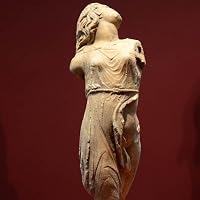
Christianized Neoplatonism. Love as a force that (i) God gives creation, (ii) binds mind, soul, & nature, (iii) attracts beings to one another, (iv) draws beings to God.
April 12, 2026
'Quel medesimo in me fai tu.'

February 15, 2026
A book of its time, so taking that with a grain of salt, it is rather fascinating! It’s so incredibly esoteric, though, and it’s not exactly a Friday night read. It’s great for studying how people were thinking/ feeling in antiquity and also Renaissance Italy. The spirituality lies in between the lines, if you get me. There’s a LOT of hidden meaning and symbolism between what is actually being said, sometimes nearly giving me a headache, but I’m glad I stuck with it. I found some really powerful passages in this.

November 12, 2025
The commentary itself is not as good as the surrounding material in my edition. Mette Heuch Berg gives us a great afterword, and Tore Frost a good introduction. There is also a article included by Aasmund Brynildsen that is a nice addition. Parts of the "De Amore" itself is great but it is understandable that all the planetary stuff, the numerology stuff, and even the mythology stuff has not held the passage of time. The concept itself is cool, a plationic reenaction of the original Symposiuim, every speech giving a commentary of the original speech. Some gold is here, but not everything is equally interesting - and in the whole it fell a bit flat. This is why the afterword was great to have, giving better context - as well as the footnotes, explaining all the figures alluded to.

July 20, 2024
Interesante obra neoplatónica. Desde el punto de vista de la historia de la literatura es útil para contextualizar las ideas que conducen a la poesía renacentista. No obstante, es muy repetitiva y se hace, no en pocas veces, cansina.

October 28, 2019
El amor es la magia más poderosa...
June 12, 2020
Maravilla de libro
Read
March 24, 2021Only read extracts**
‘What do they seek when they love reciprocally? They seek beauty. For love is the desire of enjoying beauty. But beauty is a certain splendour attracting the human soul to it’
‘What do they seek when they love reciprocally? They seek beauty. For love is the desire of enjoying beauty. But beauty is a certain splendour attracting the human soul to it’
Read
May 23, 2025Leído 48% del libro, hermoso, espero algún día poder finalizarlo

April 21, 2026
Es gracioso lo increiblemente influencial que fue en la cultura general occidental este libro.
Pero por dios que odio la prosa medieval.
Pero por dios que odio la prosa medieval.
Read
July 27, 2009Unfortunately, I cannot find this book for under $100.00.
Displaying 1 - 13 of 13 reviews