Newbery Medalist and New York Times bestselling author Lois Lowry transports readers to an Iron Age world through the suspenseful dual narrative of a boy and girl both battling to survive. In an utterly one-of-a-kind blend of fiction and history, a master storyteller explores the mystery and life of the 2,000-year-old Windeby bog body. Estrild is not like the other girls in her village; she wants to be a warrior. Varick, the orphan boy who helps her train in spite of his twisted back, also stands apart. In a world where differences are poorly tolerated, just how much danger are they in? Inspired by the true discovery of the 2,000-year-old Windeby bog body in Northern Germany, Newbery Medalist and master storyteller Lois Lowry transports readers to an Iron age world as she breathes life back into the Windeby child, left in the bog to drown with a woolen blindfold over its eyes. This suspenseful exploration of lives that might have been by a gifted, intellectually curious author is utterly one of a kind. Includes several arresting photos of archeological finds, including of the Windeby child.
Taken from Lowry's website: "I’ve always felt that I was fortunate to have been born the middle child of three. My older sister, Helen, was very much like our mother: gentle, family-oriented, eager to please. Little brother Jon was the only boy and had interests that he shared with Dad; together they were always working on electric trains and erector sets; and later, when Jon was older, they always seemed to have their heads under the raised hood of a car. That left me in-between, and exactly where I wanted most to be: on my own. I was a solitary child who lived in the world of books and my own vivid imagination.
Because my father was a career military officer - an Army dentist - I lived all over the world. I was born in Hawaii, moved from there to New York, spent the years of World War II in my mother’s hometown: Carlisle, Pennsylvania, and from there went to Tokyo when I was eleven. High school was back in New York City, but by the time I went to college (Brown University in Rhode Island), my family was living in Washington, D.C.
I married young. I had just turned nineteen - just finished my sophomore year in college - when I married a Naval officer and continued the odyssey that military life requires. California. Connecticut (a daughter born there). Florida (a son). South Carolina. Finally Cambridge, Massachusetts, when my husband left the service and entered Harvard Law School (another daughter; another son) and then to Maine - by now with four children under the age of five in tow. My children grew up in Maine. So did I. I returned to college at the University of Southern Maine, got my degree, went to graduate school, and finally began to write professionally, the thing I had dreamed of doing since those childhood years when I had endlessly scribbled stories and poems in notebooks.
After my marriage ended in 1977, when I was forty, I settled into the life I have lived ever since. Today I am back in Cambridge, Massachusetts, living and writing in a house dominated by a very shaggy Tibetan Terrier named Bandit. For a change of scenery Martin and I spend time in Maine, where we have an old (it was built in 1768!) farmhouse on top of a hill. In Maine I garden, feed birds, entertain friends, and read...
My books have varied in content and style. Yet it seems that all of them deal, essentially, with the same general theme: the importance of human connections. A Summer to Die, my first book, was a highly fictionalized retelling of the early death of my sister, and of the effect of such a loss on a family. Number the Stars, set in a different culture and era, tells the same story: that of the role that we humans play in the lives of our fellow beings.
The Giver - and Gathering Blue, and the newest in the trilogy: Messenger - take place against the background of very different cultures and times. Though all three are broader in scope than my earlier books, they nonetheless speak to the same concern: the vital need of people to be aware of their interdependence, not only with each other, but with the world and its environment.
My older son was a fighter pilot in the United States Air Force. His death in the cockpit of a warplane tore away a piece of my world. But it left me, too, with a wish to honor him by joining the many others trying to find a way to end conflict on this very fragile earth. I am a grandmother now. For my own grandchildren - and for all those of their generation - I try, through writing, to convey my passionate awareness that we live intertwined on this planet and that our future depends upon our caring more, and doing more, for one another."
Only somebody with the clout of Lois Lowry could pull this off, and only someone with the mad skillz of Lois Lowry could do it. This is part archaeology and part historical fiction, with commentary by the author, about the Windeby Child, a 2,000 year old "bog body" that was initially thought to be a thirteen-year-old girl, and then later judged to be a boy a couple of years old older.
Who was this young person? What was their life like? Why did they die like this? Lowry lays out the known facts, and then puts together a narrative for both the girl and the boy, in piece of fiction that reminded me of the stories of Britain by Mollie Hunter or Rosemary Sutcliiffe that I've always loved. The stories are sad (we know that, no matter what, this person died) but Lowry takes these fragments and makes a narrative that is vivid and lovely even as you know they are headed straight toward the end.
This one just didn't do it for me. Lowry deploys an unusual structure in this work, speaking as herself and about her own history for approximately 1/3 of the entire book. In these parts she primarily discusses her interest in the Windeby Girl (a German bog body) and her decision to write an imaginary history for the Windeby Girl and then, when it was discovered that the Windeby Girl was actually a Windeby Boy, a second imaginary history for that long dead young man. The rest of the work is divided into two stories about Estrild, a girl who wishes to be the first female warrior of her people, and Varick, a disabled orphan boy. In both stories Estrild and Varick know one another and live in the same community populated by the same people. Estrild's story is perhaps more interesting, although still inevitable and tragic, while Varick's story feels unpolished and haphazard.
More unsettling was the decision to continually use the only disabled character (and, it seems, the only disabled person in the entire community) as, essentially, a stepping stone for other characters. In Estrild's story, Varick's entire functional use in the story is to prepare Estrild for the upcoming new warrior ceremony and, later, . He is friendless beyond Estrild, whose relationship with Varick is largely transactional. In Varick's own story he acknowledges that Estrild is kind to him but is not really a friend. His story focuses almost entirely on how his study of nature enabled him to recognize how to assist his injured employer and then, his master saved, he suddenly and inexplicably sickens and dies. (Spoiler: ). Apparently Varick was only interesting when he could be of service to his able bodied community members. I was initially excited to see disabled representation in a historical novel for kids, but that "representation" ended up just using a disabled body to further the interests and plots of able-bodied people. This was, to say the least, disappointing.
Normally, I love Lois Lowry's work, ever since I read the Giver as a child. I was really excited to be approved for the e-ARC and began reading as soon as I could. While I enjoyed the book, I was left a little disappointed and confused.
Instead of telling Estrild (or Varick's story), she told different stories for each and added a lot of extra exposition. This divided the book into basically 6 sections- intro exposition about finding the Windeby Bog Girl, Estrild's story, continued exposition noting the change of Windeby Bog Girl to Windeby Bog Boy, then Varck's story, further exposition about the two, then finishing with finishing with bioliography and information about other things from the stories. This story structure was really off putting. I felt like it contributed to the abrupt endings of both Estrild and Varick's stories, What I read of their stories I liked, but I'd have loved for them to be fleshed out more.
A story - or really two stories, with some geographical and historical background - about the body of a young adolescent found in a peat bog in Windeby, Germany. Turns out the 'bog body' was around 2,000 years old, from 100 AD or thereabouts, and had been preserved by the 'bog acid' formed by the decaying peat which preserves the body much as pickles in vinegar are preserved.
At first it was believed the body was of a young girl, and hence, Lowry uses this information to write a story about what may have happened to the girl, and how she came to be found in the bog. Later, there's a second story in which the body, more accurately, is determined to be that of an adolescent boy. Lowry also describes, in the first part of the book, what exactly a 'bog body' is, where they are found, and how they are preserved.
This is a fairly new book by Ms. Lowry, and for those accustomed to her fiction, maybe a bit of a disappointment, but for me: fascinating! I own several books about these bodies and honestly, the background to most is pretty grim. There are all sorts of theories on how these people became buried - or killed? - in the bogs. Some have ropes around their necks. Some have obvious physical deformities. Were these people punished and executed by their own kind? Were they 'captured' in raids or war? Slaves? Free people? Or did some simply die of natural causes. Each case is singular and different, but their preservation through the centuries is both scientifically fascinating and humanly poignant.
So, a book meant for children, which this old old reader thoroughly enjoyed. Might be a little gruesome for very young children? (Depends on the child I suppose; my older daughter at age three was fascinated by PBS shows on the human body. Caught her watching surgery on the human eye at that age where she told me to , 'Come watch this, Mommy!') But for anyone interested in the subject, or information about the Iron Age, the time period in which this particular person lived and died - a must read!
Lois now you know this wasn't it. I'm so confused on what I just read and what was the purpose. I haven't disliked a middle grade book this much in a long time. CW: misogyny, death of children, ableism
The Windeby Puzzle is a mix of historical fiction and non-fiction inspired by the true discovery of the 2,000-year-old Windeby bog body in Northern Germany. The story is broken up into several parts where readers hear from Lois Lowry, Estrild, and Varick.
What Worked: The idea/concept of a book taking place during the Iron Age really fascinated me because I haven't read many middle grade books that attempt to tackle that part of history; however, I don't feel as though Lowry did a great job executing it.
What Didn't Work: Oh friends. I was confident in Lois Lowry and had high expectations, but this book was a complete and total flop for me. Not only was it dry, but I don't think it will appeal to a middle grade audience at all. I wanted to enjoy Estrild as a character especially because of her desire to carve out a new path for herself, her mother, and her sisters, but I loathed the way she treats Varick who is the only disabled character in the book. And then when the narrative is switched to Varick's perspective, readers are left with a disjointed and perplexing narrative. I could not for the life of me fathom how we got from point a to point b with his character development and eventual demise. By the end of the book, I was no longer invested in Lowry's fascination with the bog body or anything else related to this story.
Overall, I must admit that this was a huge disappointment. I'm not sure what I was expecting, but this wasn't it.
Lois Lowry is the author of some of my favorite children's books of the type that adult readers can still appreciate, so I was thrilled to see this new offering. This isn't a straight work of fiction, but rather an interesting mini-treatise on the writing process, and a good explanation of how to find the interesting aspects of history that go beyond lists of famous names and dates of battles. It also tackles ideas around how to treat a sensitive subject when writing. This is very worthwhile, and I would recommend it for young people with an interest in writing or history.
Theoretically, this book was nice. Historical fiction that asks young readers to think about: 1. how the details we add to a story make it compelling; 2. whether our interpretations of history are reliable; and 3. how gender, disability, and views on science/medicine influence how society values us.
While Lowry included some twists, the second half of the book felt severely underdeveloped. Still, I appreciated the way this middle grade book talked about death in a safe but thought-provoking manner.
Lois Lowry has always been willing to grapple with the big topics. She often invites controversy with her willingness to tackle the tough subjects. In The Windeby Puzzle she digs deep into history to solve a 2000 year old question — what is the story behind the discovery of a skeleton found in a German peat bog? She begins with the facts as she knew them — a girl about 13 years old is found with her hair half-shorn and a blindfold over her eyes. With those stark facts she creates the story of a young girl in a society ruled by the Druids fighting against the expectations of society and paying the price. But the story does not end there. Further advances in DNA research leads to new conclusions in the analysis of the ancient skeleton — now deemed to be a 16 year old boy with a twisted spine. Lowry pivots and makes the secondary character of the original story into the focus of an alternative version, using these new scientific conclusions. Now the character is a sickly boy, a loner with a deep curiosity for the natural world. His story intersects with the rebellious girl of story version one but the author is able to use the new information to turn the direction of the tale. In both versions society is bleak, impoverished and lacking in culture beyond the customs of the Druid religion and the enhanced status of the warrior class.. and yet Lowry has created two memorable characters each with powerful interior strength. As I ponder the two vignettes, it is a testimony to the artistry of Lois Lowry that I continue to care for these two young people long after their whole society has disappeared. I also can’t stop contrasting the harshness of their lives with modern society’s comforts. A complaint of a delay in restaurant service or missing out on the latest fad seems petty indeed compared to the life or death struggles of so long ago. Lowry tackles this universal topic of death and presents it to a young audience for their consideration. It is not comfortable or easy, but it is a subject for adventurous readers to start thinking about.
BOOK REVIEW: The Windeby Puzzle by Lois Lowry 2023 Publication Date: February 14
⭐️⭐️⭐️️
T.I.M.E. Most Anticipated Books Of 2023
Pages: 202 Genre: Children's Books Sub-Genre: Historical Fiction Reading Age: 10 - 12 years | Middle Grade Time Period: 1952 | Iron Age Location: Windeby (Northern Germany) Publisher: HarperCollins Children's Books | Clarion Books
PUBLISHER BOOK SYNOPSIS Newbery Medalist and New York Times bestselling author Lois Lowry transports readers to an Iron Age world through the suspenseful dual narrative of a boy and girl both battling to survive.
In an utterly one-of-a-kind blend of fiction and history, a master storyteller explores the mystery and life of the 2,000-year-old Windeby bog body.
Estrild is not like the other girls in her village; she wants to be a warrior. Varick, the orphan boy who helps her train in spite of his twisted back, also stands apart. In a world where differences are poorly tolerated, just how much danger are they in?
Inspired by the true discovery of the 2,000-year-old Windeby bog body in Northern Germany in 1952.
BOOK QUOTE "Each of us has a story" — The Windeby Puzzle by Lois Lowry
With her known imagination, Lowry takes her readers on a journey of the Iron age. An uncovering of bodies known as bog bodies that were buried in a peat bog. These bodies were preserved. Lowry having seen these pictures, she thought about their stories. A people that have long been forgotten that no known written record of their existence is curious to say the least. Lowry has written two stories of the same body that was recovered. What looked like to be a young girl with blond hair, half of it shaved off with a surreal pose. What happened to her? Why was she sent to the bog? All these questions consumed Lowry and so she gave her the name Estrild. She also developed a story surrounding her community and family. A best friend named Varick. She also gave her voice. However, in writing this, Lowry received more information and the Estrild was not a girl but a boy so the second story developed with Varick.
It is a great reminder how stories from long ago affect us today and our stories will affect future generations. Such great story telling and I too relished what may have happened.
A special thank you to Harper Collins and Netgalley for the ARC and the opportunity to post an honest review.
I found this story utterly riveting. Growing up, I was fascinated with archaeology. My favorite book for years was Secrets of Vesuvius - a book about the eruption of Vesuvius and the archaeological exploration of the city of Herculaneum. It went back and forth between the archaeologist and scientists explaining their studies and a story set on the day of the eruption.
The Windeby Puzzle does something very similar. Lowry explains the history of the Windeby bog body and uses the speculation of archaeologists to weave a story attempting to explain what might have happened. Then she explains that they learned more information about the body, and creates a second story.
I loved both of the stories so much. I am fascinated with this time period and the way the author took us on a journey as she put together the pieces of this puzzle. And it really does feel like a puzzle! The way she sets up the history between the two stories really helps you to understand how she came up with her ideas, making this a great read for a budding writer as well as a budding historian!
Due to the nature of the book - both stories are rather sad, as we know a child dies and their body will be found in a bog thousands of years later - I recommend this one for ages 12+
Generally, I am one of Lois Lowry’s biggest fans. The author is a genius at portraying vibrant, raw human emotions as well as an exceptional storyteller. Unfortunately, ‘The Windeby Puzzle’ was quite a disappointment. Ms. Lowry attempts to combine archaeology, history, story, and modern political correctness into a remote semi-historical setting within the confines of this novel and, quite simply, these elements don’t fit together. Her premise that women during early Germanic times were no better off than slaves is simply not accurate. I found what the author imagines to have happened to the main character completely implausible. Just because that society was patriarchal doesn’t imply that women were not generally defended and protected as wives, mothers, sisters, and daughters. It is absurd to imagine that a young girl who was no serious threat to anyone would have had no father or male figures to stand up for her.
This book was quite interesting: part story, part history, part writing process. I think that a middle school kid would glean a lot about how to find an idea from history or everyday life and flesh it out into a full blown story. The two short stories themselves were good, but sad of course. I honestly appreciated the fresh approach of the author to share with the reader her methods and thoughts when writing them.
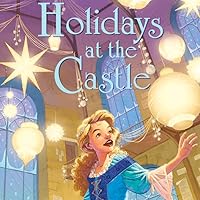
Hmm...I was unfortunately disappointed by this one. I went into it with my expectations too high, I suppose - in my head, I had a guess for how the story would turn out, but when it didn't materialize, I was a little put out, and of the opinion that what I'd expected to happen would've made for a much more interesting book. Ah well, at least the cover art was beautiful.
In 1952, there was a body found in a bog near Windeby, Germany during construction excavation. The lower half of the body was cut off by the equipment, but it appeared to be the remains of a young girl, with her head half shaved, wearing just a cape. Numerous guesses as to why she was there were made, and it was determined that it dated from about 41 BCE to 118 CE. After studying this for years, scientists decided that this was really the body of a young boy, and how and why he died is still up in the air. Author Lowry, captivated by this sad story, introduces readers to the archaeological backdrop, then tells the story from the point of view of Estrild, a young girl who ended up in the bog. Her story includes her longing to expand gender roles in her time period, and her wish to become a warrior like the young men in her community, which leads to herr eventual death. Lowry then tells us more about the archaeology, and proceeds to tell another story, this time of Varick, Estrild's friend and supporter. If the body in the bog was a boy, how did Varick end up there? The details of how difficult life was at the time, especially for a disabled child like Varick who was abandoned by his family, are well explained. Strengths: There are so few books that combine fiction with nonfiction that the only example that came to mind was Faber's Fish Finelli (2013). I think it's valuable to describe real events that occur when they motivate an author to work them into a fictional tale, and the format is new and innovative. Estrild will speak to readers who like to see girls fight against the social strictures of their times, and the details about life during this time period are drawn bleakly and well. Varick was an interesting character, so I was glad to see the story from his point of view as well. Weaknesses: From the beginning, it was clear that this would be a fairly bleak book, especially since we get two different versions of the bog child's death! What I really think: Years ago, there was a book about a boy in a prehistoric cave dwelling family who found a dog and took it in. Can't remember the title, sadly, and did put a copy I reviewed in the library. I thought it was interesting, especially when read with The Dog in the Cave. My students did not share my enthusiam; I don't know that the book checked out one time. Maybe fans of Catherine Called Birdy or Yolen's A Girl in the Cage would pick this one up? Impressed me a bit like Paulsen's Northwind; authors of a certain stature can write anything that they would like, but it doesn't mean that they will recapture the magic of Hatchet or A Summer to Die. (Or The Giver, which has just never been a book I personally enjoyed, although I liked Gathering Blue.) I will not purchase unless a teacher who has read the book wants me to.
This is a miserable book.. There is a forward that explains that the story will be about a bog mummy and what a bog mummy is. Though well-written, this is slow-moving and will not engage the pre-teen audience this book is meant for. But perhaps that is a blessing. Maybe the kids will bail before reading any more.
The first story is of a girl named Estrild who aspires to be the first woman warrior in a patriarchal society. She befriends Varick, a sensitive, intelligent, disabled orphaned boy who the village allows only the most meager existence possible to help her learn the warrior ways. When she dresses as a warrior to try to show the council of elders her interest and readiness, she is shorn, shamed, blindfolded, and thrown in the bog. I honestly do not want any of my students reading that regardless of its possible historical accuracy. The message it sends is do not be true to yourself, because doing so will put you in grave danger.
But if that weren't bad enough, there is another author's note saying wait! They've done DNA analysis on this mummy and it turns out the mummy is male. So you know what's next: they're going back for Varick. He dies trying to save the Forger, a man who paid him no mind while using him as an assistant.. Varick goes out in a storm to practice setting a hip joint on a fallen cow so he can help the Forger who has dislocated his own hip joint.. Sickened by his exposure to the cold and largely ignored by the villagers, he stumbles off in a delirious dream fugue to throw himself into the bog. This second story sends an equally awful message: If you are different, no one will help you, and it will be your undoing.
I’m going to preface this by saying that if you haven’t yet read the book, stop reading here: don’t read any reviews, get the book and go in cold. Yes, it’s marketed as a middle-grade/YA book but it’s SO much more than that, and I don’t even think many students would pick up all the little gems here in the plot, characterization and writing. And… you don’t want to spoil the twist. Yes, there’s a twist, a real one, and a number of reviewers blithely give the whole thing away. Philistines. (I nearly gave everything away myself in the quote I almost started with: a delicious conversation that contained a very special, and incidentally brilliant, clue.) So - this is my first Lois Lowry, an author who’s now in her 80s, and I was absolutely knocked flat by it. The concept is brilliant, the execution is brilliant, the structure and format are brilliant. I would have adored this as a teenaged reader, although as I say, I don’t think I’d have recognized all the little bright spots for what they are. I'm recommending this to everyone, and don't miss the bibliography, photographs, discussion questions or the list of quotes at the end. I’m ordering a copy for myself, to enjoy again. 5 sparkling stars.
ARC provided by the publisher through NetGalley in exchange for an honest review.
It's difficult to review this one because I'm not the target age group, so while I appreciated what the author did here, I'm not sure a middle grade audience would feel the same way.
This isn't a straightforward story. It is based on history, namely the discovery of the Windeby bog body, which fascinated the author and had her mind spinning with stories about the person who once lived there so long ago. In this book, she tells us two different versions, and describes her thought and writing processes to explain how she came up with them. It's half nonfiction, half fiction, which makes it a weird one. While it was nice to get insight into how her brain works, the stories themselves were just fine, and not ones that will stay with me.
When beginning this book I had absolutely no clue what it was about. I saw an ad that Lois Lowry was appearing in person near me, bought the tickets, and then prayed to the NetGalley gods that my advance copy request would be granted. I’ve never been more grateful that it was ,except perhaps in finishing this book. This book takes what you think you know about storytelling and turns it on its ear. The author provides fascinating insights on the story in an unconventional manner. In addition to this the story unfolds in a way that makes you care about the characters before backtracking and unfolding on itself again. A fantastic read
It must be nice to be Lois Lowry. Walking about with enough clout to get a book like this published. I found this stream-of-process book interesting, but I wonder how many child readers will be there for it. One of versions of the stories was fascinating and one was simply feminist-fan-fiction-wishful-thinking.
It’s Lois Lowry so I needed to read it. It’s very … unusual. Half fiction, half scientific and historical facts. I’m not sure who the intended audience.
If ever there was a neutral review from me, it is this one. I will say, however, that I am a bit disappointed. The structure is what made this so unenjoyable. If all the "History" had been put as a forward it may have been better, but I do realize not many people actually read those and thus might have missed the point of the book in the first place. This is why it was hard to review for me.
I liked the concept. I didn't like the execution. I didn't feel anything like I hoped I would, especially because this is an intriguing topic to me. I like the bog bodies, and the idea of telling the fictional, "would-be" story of a real adolescent bog body sounds cool! It just got cut up and made it an odd push and pull between fiction and the author's anecdotes about writing them.
My CAWPILE Scores: Characters: 5/10No strong feelings
Atmosphere: 7/14 breakdown - setting: 6/10 Something is off - mood: 1/4 I didn't feel a thing
Writing Style: 11/18 breakdown - storytelling: 5/10 No strong feelings - grammar: 4/4 No grammar issues - format: 2/4 Formatting made it hard to read
This book was definitely not in the genre of books I usually read, but I’m so thankful that I read it anyways. This was such an amazing book. I was definitely quite sad at the endings of both stories, especially Estrild’s. But still, this was a great book! If you love historical fiction, I definitely recommend this book!
To be honest I'm not sure why the 5 star rating exactly except that I really enjoyed this style! Lois Lowry did a wonderful job crafting the story of the Windeby Child. Even tho it was really sad I couldn't help but feel the sense of resolution that she seems to want to give the reader in this fold of history. It was a very intriguing way to write it.
While this is marketed as a middle-grade, this doesn't really fit there for me. I thought the stories were interesting but more fascinating to me was Lowry explaining how she came up with the ideas for this book and then how she wrote it. It's written in 4 parts with Lowry's explanations in between 2 stories. If you listen, the audio is read by Lowry herself.
Boy, as a librarian, this would be a tough book to sell to kids! It isn’t bad…Lois Lowry…can’t write a bad book…but it is an odd combination of fiction and nonfiction. Maybe it could be used by a teacher on how to write fiction. It is based on a child who drowned in a bog perhaps about year 100 C. E. or AD. At first scientists thought it was a girl so Lowry wrote a story about a girl. I think this was the story she preferred. But then the science improved and it turned out to be a disabled boy so she wrote another story. I enjoyed it but it is not a best seller, definitely.
If you have a kid interested in history, this might be a good match. Recommended for the right kid. I suspect at this point Lowry can tell her editor “I’m writing this” and the editor goes along with it!