This award-winning collection moves from the dark and technically astonishing title essay—on growing up within the confines of a huge Army arsenal in Ohio—to reflections on mountain hikes, limestone quarries, and fathers teaching their sons.
Scott Russell Sanders is the award-winning author of A Private History of Awe, Hunting for Hope, A Conservationist Manifesto, Dancing in Dreamtime, and two dozen other books of fiction, personal narrative, and essays. His father came from a family of cotton farmers in Mississippi, his mother from an immigrant doctor’s family in Chicago. He spent his early childhood in Tennessee and his school years in Ohio, Rhode Island, and Cambridge, England.
In his writing he is concerned with our place in nature, the practice of community, and the search for a spiritual path. He and his wife, Ruth, a biochemist, have reared two children in their hometown of Bloomington, in the hardwood hill country of southern Indiana. You can visit Scott at www.scottrussellsanders.com.
In August 2020, Counterpoint Press will publish his new collection of essays, The Way of Imagination, a reflection on healing and renewal in a time of climate disruption. He is currently at work on a collection of short stories inspired by photographs.
I didn't feel as if I were reading an essay about a man's childhood inside an arsenal during World War II. He immediately grabbed my attention with his diction and descriptions. Though his essay is narrative based, it still provides you with plenty of insight as to how life may have been in during that time. Not only that, he also gives you a new and unique perspective of his situation. It was interesting to read about the games the children would play and the things that they would find. He does bring up quite a few good points about how we all have some level of radioactivity in our bones.
Coming From the Country: I enjoyed Sanders' stubborn, yet determined outlook on life while living in the city. I understand how strange it might be to be waited on and served whenever needed. I found some of his comparisons interesting, such as where country folk may keep scrap metal around their lawns while the city dwellers toss any extra material. I also liked his quote, "It's a do it yourself culture." Without our advancements in technology, medicine, and science, the world wouldn't be where it's is today. But with technology right at our fingers, it's it really making us dependent on it? We depend on our phones, the tv, the internet. We'd be completely lost without them.
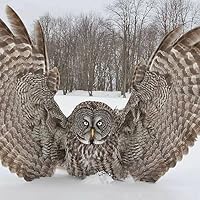
Listening to Owls: Sanders' imagery is phenomenal. I could easily picture the cold, snowy forest he presented at the beginning of the piece. I especially liked when he described the lake and the 'miniature forest of ice crystals'. I like his attention to detail and his mindfulness towards the world around him. Seeking out nature is one of the best ways to become inspired or even just to calm down. I often go to write in the woods behind my house, even when there's snow on the grown and icicles hanging from the tree branches. I also liked the fact that he weaved the history of the dinosaurs and facts about owls throughout the essay.
Cloud Crossing: Much like Sanders, I too have a curiosity towards what once was. Whether it being scorned dirt or shattered glass and rusty nails, it is interesting to imagine a story behind the objects and how they became what they did. I liked the humor Sanders included in this essay. I also liked how he made comparisons between his children and the forest. He noticed the decaying leaves, 'the land burying its own dead' and how fast his children were growing up. He notes how they are constantly growing and changing. He even mentions that the viewpoint he sees of the mountains will be very different from what his children see when they bring children of their own to the same spot.
Feasting on Mountains: 'I have a hunger for nonhuman spaces, not out of any distaste for humanity, but out of a need to experience my humanness the more vividly by confronting stretches of the earth that my mind has had no part in making.' From what I have read so far, I think this quote perfectly sums up Sanders' curiosity towards nature. Deep down, I think we all feel the same way as he does. It is interesting to see what is in place of what once was. Someday, I want to go back to Arizona and visit a ghost town. I'm fascinated by the stories behind items that were left to rot and collect dust.
Digging Limestone: I like how violent Sanders depicts the slow process of the formation of fossils and limestone. Again, he compares the act of 'ripping into the crust of the earth, tearing hunks of it loose', to war. I suppose one could say that we are constantly at war with Mother Nature. We take what we want and when we're done with it, nature takes it back. But there will always be traces of us left behind. It was interesting to read about the process of removing the limestone from the earth and likewise about how technology changed their workload.
In Stone Country: Mining is a dangerous job with deadly consequences. Every move you make must be thoroughly thought through before removing a stone from the earth. The horrifying deaths often overshadow the ones who manage to walk out each and every day. “You got to keep your eyes and ears open”, Cedric states. “Everything together makes a sound.” With technology improving, I wonder how today’s quarries safety compares to quarries in the 70’s. Obviously, today’s regulations are more strict, I’m just curious to know what kind of violations they got away with.
The Inheritance of Tools The tools that our ancestors created and used were essential to their survival. Though they aren’t as crucial to our survival, we continue to use those tools today. Even after all of these years, their designs and purposed have barely changed. Sanders mentions that his grandfather passing down his tools and how he will likely continue to pass down those same tools to his own children. The tools not only helped to enhance his skill set, they also connected him with his father and the memories that they shared.
The Men We Carry In Our Minds In this essay, Sanders brings about gender and its role in society. Sanders very much contradicts himself within this essay. First, he mentions how he really only has two options for his future. Work in a factory or become a soldier. He found his options to be rather unfair when he believed women could stay at home and live an easy, enjoyable life. However, he opens his eyes a little bit wider when he attends college and suddenly realizes and sees how difficult like really is for women.
Death Games Sanders brings up many good points in this essay. The desire for guns, war, and power. The hard reality of someone’s life just ceasing to exist. And the fact that we are the root of it all. Sanders discusses his son’s fascination with guns and tries to determine where it came from. Concluding that it is a male trait, Sanders brings about questions many parents face when raising children. In many respects, it is up to the child’s guardian to determine what is acceptable and what is not. Though, it is inevitable for the child to overhear to be told of things that their parent would not want them to hear. It’s basically keeping the child’s innocents intact for as long as possible.
Doing Time in the Thirteenth Chair I do and I don’t fell bad for Sanders as he recounts his time in the thirteenth chair. I do: While the twelve jurors get to discuss and determine the fate of the criminal on the trail, Sanders gets to sit through hours of testimony with only a slim chance of replacing one of the twelve if need be. I don’t: He mentions how he could be doing something useful with his time by helping his wife build bookshelves or preparing for Christmas. But just Sanders, everyone else in that courtroom has something better to do with their time. It was interesting reading about Sander’s point of view. I’m curious to check out some trials that actually used the thirteenth chair in mild or extreme cases.
A profoundly thoughtful series of essays centering on nature: the natural world, human nature, and the ways in which humans connect with and destroy the natural world. Themes of legacy, respect/disrespect and awe connect the simple yet deeply observant stories.
“The Inheritance of Tools” and “Death Games” are worth reading. Not so much the rest of it.
The essays have no point and are pretty self-congratulatory. He has a whole essay describing his sense of false humility at being a bumpkin. Essentially "sorry, I don't know how to BUY all of these things--I only know how to make or fix them! Unlike those cultured cityfolk, amiright?"
Maybe it's not fair to read this right after Flannery O'Connor, but the imagery is as pointless as the narratives. Unimportant things are described in great detail, and I get the impression this is just because the author thought he had a cool series of words.
Sometimes the imagery adds less than nothing, as in a description of a sign pinned to a tree: "Here is a human sign for certain, with its labels imposed on the wordless landscape.” It’s literally a sign. This is its actual function. You cannot make it more evident than that. It might as well say “The sign pinned to the tree hung there like a sign indicating information.”
Dead trunks “gleam a ghostly white”
Old logs are like “dinosaur bones”
“Patches of velvety green” are pastures.
How much more obvious can you get? These are literally the first comparisons that anyone might scribble down.
All-in-all, it’s not offensive. But it is pretty lackluster. In a world of good books, why waste your time on this?
4.5 stars Collection of memoir/ essay/ musings, well written, vivid prose, good "meaning" if not a little formulaic and neat. Contents: At Play in the Paradise of Bombs, Coming from the Country, Listening to Owls, Cloud Crossing, Feasting on Mountains, Digging Limestone, In Stone Country, The Inheritance of Tools, The Men We Carry in Our Minds, Death Games, Doing Time in the Thirteenth Chair.
This book delicately leads the reader through Sanders' self-discovery, spanning from early childhood to his own fatherhood. He is successful at telling his story without any hint that his life is more deserving to be in print than anyone else's.
Scott Russell Sanders is one of the best essayists of our generation. The fact that this, his first book of essays, is so powerful says a lot about his talent.
I am hoping that since I share two/thirds a name with him, the genius will somehow transfer over.