Jump to ratings and reviews
Rate this book

The Werewolf

Rate this book
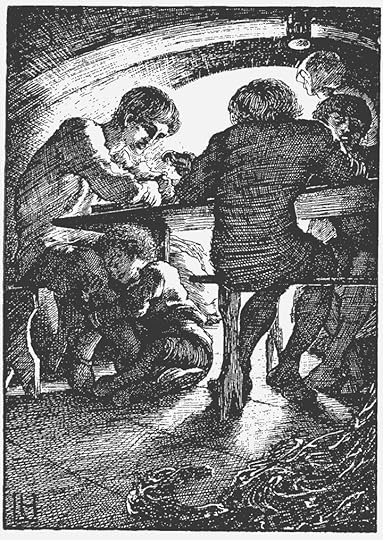
As she tugged at the door, he sprang across grasping his flask, but Sweyn dashed between, and caught him back irresistibly, so that a most frantic effort only availed to wrench one arm free. With that, on the impulse of sheer despair, he cast at her with all his force. The door swung behind her, and the flask flew into fragments against it. Then, as Sweyn's grasp slackened, and he met the questioning astonishment of surrounding faces, with a hoarse inarticulate cry: "God help us all " he said. "She is a Werewolf."

108 pages, Paperback

First published January 1, 1890

28 people are currently reading
647 people want to read

About the author

Clemence Housman

42 books13 followers
Clemence Annie Housman (23 November 1861 – 6 December 1955) was an author, illustrator and activist in the women's suffrage movement. She was the sister of A. E. Housman and Laurence Housman. Her novels included The Were-Wolf, Unknown Sea and The Life of Sir Aglovale De Galis. She was also a leading figure in the Suffragette movement

Ratings & Reviews

What do you think?
Rate this book

Friends & Following

Create a free account to discover what your friends think of this book!

Community Reviews

5 stars
91 (21%)
4 stars
162 (37%)
3 stars
139 (32%)
2 stars
38 (8%)
1 star
2 (<1%)
Displaying 1 - 30 of 80 reviews
Profile Image for Werner.
Author 4 books724 followers
July 16, 2022
Note, July 15, 2022: I've just edited this to correct two minor typos.

One of the more enduring motifs of traditional folklore is the idea of shape-shifting, of humans somehow taking on animal form. Its origins are probably prehistoric; it can be found in Africa and Asia as well as Europe. More than one kind of animal figures in this material (Russia, for instance, has its were-bear lore), but the wolf seems to be predominate. (In Old English, "were-wolf" means literally "male human-wolf.") Wolves have never enjoyed a good press among their human neighbors. They're large carnivores with big, strong bodies and formidable fangs, who hunt in packs, and who could do serious damage to a human if they wanted to. The fact that they don't typically want to (see Never Cry Wolf: The Amazing True Story of Life Among Arctic Wolves by Farley Mowat) has never kept people from assuming that they do. Add to that the fact that they certainly do hunt domestic animals, and will fight humans who try to interpose between them and this (in their eyes, perfectly legitimate) prey, and that rabid wolves have at times attacked humans and infected them with rabies by their bites, and you have the ingredients for an eons-old fear of the species, and for a terrifying mythos of the humans who can transform into one of them. This belief is pre-Christian; but in medieval Europe, it also marinated for 1,000 years in the matrix of a Christian world-view which reinterpreted the older elements as part of a conflict between God and Satan (with the werewolves very definitely seen as being on the side of Satan).

As supernatural fiction took shape in the European literary tradition in the early modern centuries, this folkloric background was the quarry from which the writers would hew their material. (Since the lore itself is varied, literary treatments of it vary; and the differing imaginations and literary visions of the authors would make for further diversity.) Werewolf fiction in English goes back well into the 19th century (at least). This 1896 novella --really a glorified short story; I read it this time in two sittings-- is far from the first use of the motif, but it is the oldest one I've read so far. This was a reread for me, but was the first time I read it in a free-standing format; my prior read was as part of A Lycanthropy Reader: Werewolves in Western Culture. (And I actually read it this time for free online at the Owl Eyes site, here: https://www.owleyes.org/text/the-were... , rather than in the e-book edition to which this review is attached.)

Our setting is medieval Scandinavia --it's not defined any more narrowly than that, and that much is made clear only by the descriptions, the characters' names, and the kind of social setting depicted. It's winter, and the action takes place on and around a manorial farm in a sparsely populated locale, where the nearest neighbors are on other farms a very long walk away. The male stead-holders are two brothers, fraternal twins (their mother's still living, but their father isn't mentioned), dominant Sweyn and symbolically-named Christian. These contrasting characters and their interpersonal dynamic are brought to very vivid life, and these play a key role in the tale. It won't be much of a spoiler to note that the werewolf figure here is female, a clever touch which gives her the weapons of feminine mystique and elemental physical attraction, where males are concerned, to add to her arsenal, as well as the protection of the instinctive reluctance of decent males to do violence to a woman. (Various elements of traditional werewolf folklore and mythology are utilized, and the werewolf is definitely the traditional malevolent, homicidal figure.) Housman crafts her story with consummate artistry. What makes it particularly noteworthy, however, is the clarity and extraordinary power of the explicit Christian symbolism which is the central thrust and message of the story. This is far and away the most profoundly Christian treatment of the werewolf mythos that I've ever read. IMO, it deserves to be vastly more well-known than it currently is.
Profile Image for Leo.
4,997 reviews628 followers
March 31, 2023
Found an interesting ebook collection thingy where it takes a subject and have three classic ebooks about that. Previously read a non fiction about werewolves and now I read this one. I hadn't hear of either of them.

It was an okay story not quite my cup of tea but interesting to read a classic horror/paranormal that isn't Dracula or Frankenstein.
Profile Image for Mariana.
422 reviews1,929 followers
February 1, 2023
"La mujer lobo" de Clemence Housman narra una historia que parece sacada de un libro de cuentos tradicionales. Una misteriosa extraña llamada Piel Blanca aparece un día en el pueblo (en plena tormenta de nieve) y capta la atención del guapo Sweyn. Sin embargo, el hermano de Sweyn, Christian se da cuenta de que hay algo raro en esta mujer y pronto descubre que es una mujer lobo. Sweyn está cegado por su amor y rechaza las teorías de Christian, quien está dispuesto a todo con tal de proteger a su hermano. La historia tiene unos tintes cristianos muy interesantes (pero muy extraños, diría Paty Chapoy) que no esperaba. El prólogo de S.T. Joshi ayuda bastante a poner en contexto la historia y a la misma Housman, pero creo que lo mejor de todo el libro es el epílogo de Melissa Purdue.
Purdue le da una lectura a la historia que para mi habría pasado desapercibida por completo. Housman fue una gran activista por el sufragio de las mujeres, por lo cual me intrigaba que su novela se sintiera reforzadora de los valores patriarcales (al menos a primera vista). Sin embargo, como Purdue explica en el epílogo, Piel Blanca simboliza a la nueva mujer y su "monstruosidad" al no conformarse con los valores tradicionales. No sé si coincido al 100% con todo lo que Purdue interpreta en el texto, es innegable que Housman también era una mujer de valores cristianos, pero sin duda el epílogo añadió muchísimo valor a esta historia que de otro modo no habría trascendido en mis lecturas.
Profile Image for Mighty Aphrodite.
611 reviews59 followers
October 8, 2025
É una notte d’inverno per una piccola casa di campagna. Ognuno adempie ai propri compiti con energia: c’è chi fila la lana, chi prepara la cena, chi alimenta il fuoco. Solo Rol, il piccolo di casa, si muove inquieto, da un gruppo all’altro, alla ricerca di qualcosa da fare e di qualche marachella da combinare.

A squarciare il silenzio si leva all’improvviso una voce di bambino dall’oscurità, al di là della porta. Chiede di entrare e l’uscio trema sotto i suoi colpi, ma quando Sweyn va a controllare, non c’è nessuno sul portico.

Il timore di qualcosa di sovrannaturale crea scompiglio tra gli abitanti della casa. Quella voce lamentosa di bambino sembra provenire da un’altra dimensione, come il canto di una sirena deciso a far cadere chi lo ascolta in una trappola mortale. 

Nuovi colpi alla porta tornano a farsi sentire, ma questa volta sul portico c’è una donna avvolta in una lunga pelliccia bianca. Si chiama White Fell e chiede ospitalità. Si è persa dopo aver a lungo camminato nella neve. Aspettava un segnale dal villaggio vicino, un segnale che avrebbe annunciato l’arrivo di una guida, ma nessuna luce è visibile all’orizzonte.

continua a leggere qui: https://parlaredilibri.wordpress.com/...
Profile Image for Mir.
4,975 reviews5,329 followers
March 19, 2021
This is included in Weird Women: Classic Supernatural Fiction by Groundbreaking Female Writers, 1852-1923. Once I started I realized I had indeed read it before. It has decent writing and some moderately effective imagery, but is a bit heavy-handed with the "This is a metaphor for Christ!" message.

I'd recommend this for people who are interested in the history of horror and fantasy, although I doubt any modern reader would find it especially scary or suspenseful.
Profile Image for  Danielle The Book Huntress .
2,756 reviews6,629 followers
February 19, 2010
I stumbled across this short story for free on Kindle, and I am very glad that I downloaded and read it. With its period settling and rich language, this story involved me very deeply. It is the story of two brothers: one tall, muscular and handsome; and the other, not handsome at all, slight of build and blessed with the incredible ability to run swiftly over long distances. Sweyn is the beautiful, well-admired brother, and Christian is more than happy to walk meekly in his shadow. But when a beautiful, young, white-haired stranger arrives, she drives a wedge between the brothers. For Christian soon suspects that she is the werewolf he has been tracking, and Sweyn quickly falls in love with this mysterious female who calls herself White Fell, and believes that Christian's ravings are induced by jealous madness.

This story inspired a mix of emotions in me, from dread, to anxiety, to deep sadness. It was one of those stories where you are thinking, "This can't end well," when you get to a certain point in reading it. Indeed, the ending is hardly upbeat. But for a story that starts out as one of thrilling suspense and horror, it has a very meaningful message. It's a story about the power of love and sacrifice, and it was very well-done. A great free find on Amazon Kindle. Recommended to fans of classic genre fiction with a deeper, even spiritual message.
Profile Image for Nickolas B..
368 reviews105 followers
August 31, 2017
I prefer mostly vampire novels but that was a good short story (recommendation actually by Lamprini)!

There are a lot of cliches but at least they are bearable and sometimes good.
Also the author deserves a lot of credits for the horror and spooky atmosphere....

In the middle of the night a lady with a white fur showed up in a small place.
Is she a dangerous creature? Is she related with some strange disappearance?
The answer is within these few pages...

3.5/5!
Profile Image for Juan Carlos malik.
955 reviews352 followers
January 9, 2023
Un libro clásico de terror en donde encontramos a un monstruo femenino y una renovación del tema de la licantropia.
Temas acerca de la religión. La humanidad y su lado bestia. El ascenso a la muerte y las diferentes formas de vencer a una bestia como estas. Hacen que la obra se vuelva ágil, estremecedora y con un final agridulce.
Profile Image for Sara Jesus.
1,685 reviews123 followers
August 28, 2021
A ghost story about two twins brothers and a women with a kiss kills men. This is a story about sacrifice, trust and do things before is too late. Christian is a metaphor of Jesus Christ, for his brother will he do anything. His brother is the one that have to seen to belive.
Profile Image for Jesus Flores.
2,581 reviews70 followers
November 2, 2023
Interesante historia corta sobre un "werewolf".

Me gusto como describe y la ambientacion que le da, basicamente todo ocurre en dos sitios, al interior de una casa de granja, y un par de escenas en el exterior, y aun asi logra crear tension sobre que va a ocurrir, manejando bien la sospecha de un personaje por un lado, y la negaciòn de otro.

Corto, divertido y efectivo.

SPOILERS

SPOILERS


3.5 stars
Profile Image for Miguel Lupián.
Author 20 books145 followers
January 30, 2023
Al ser un gran entusiasta de la literatura licántropa, no podía perderme esta maravillosa noveleta (o cuento largo) publicada con gran esmero (como siempre) por Perla Ediciones. La historia es sumamente ágil y emotiva, con un lenguaje que roza lo poético y con un trasfondo feminista muy importante. En el prólogo, S. T. Joshi nos cuenta sobre la vida de los Housman, resaltando el activismo de Clemence, quien luchó por conseguir el voto de las mujeres. Situación que, como lo analiza Melissa Purdue en su deslumbrante epílogo, le da la vuelta a las concepciones que se tenían del hombre lobo. Por ejemplo, prescinde de toda la carga sexual --sobre todo cuando son mujeres las que se transforman (explotando la figura de la femme fatale)-- y de la violencia irracional (nuestra loba sólo ataca cuando es molestada). Como extra, se incluyen las ilustraciones originales de la primera y segunda ediciones. Cierro con una cita de Purdue: "Housman aborda los miedos sociales en torno al papel cambiante de la mujer y aboga por la liberación, tanto de hombres como de mujeres, de las restrictivas expectativas de género".
Profile Image for Helen Grant.
Author 68 books197 followers
December 7, 2013
I very much enjoyed this story of an isolated community in whose midst a beautiful stranger appears - is she all she seems to be? As this was written in the late 1800s, don't expect a Stephen King style horror novel. What you can expect is rich prose, a genuinely sinister atmosphere, some really exciting scenes and a little heartbreak. Recommended.
Profile Image for Tania.
1,046 reviews127 followers
April 28, 2021
An atmospheric Victorian Werewolf story written by the sister of A.E. Housman.
Profile Image for Juushika.
1,844 reviews220 followers
May 23, 2019
A woman in the arrives of wake of ominous portents, leaving wolf tracks behind her. This has held up phenomenally well since 1896. The antiquated language is a minor hurdle, especially in such a short text, and a beautiful but strong, axe-wielding woman who straddles gender stereotypes and has an erotic but ambiguous danger still feels progressive and still feels like a fresh take the werewolf trope. It's one of the more satisfying werewolf narratives I've encountered: the climax is an extended, grueling, numinous chase; it's a fulfilling take on an aspect of the trope which is generally underutilized. There are flaws elsewhere--the slow build and overdrawn resolution are effective but nothing exceptional--but that middle section is flawless and won me entirely.
Profile Image for Katherine Sas.
Author 2 books35 followers
August 19, 2024
Read as part of a short story collection, but as it's technically a novella I'm allowing myself the separate entry. Quite heavy-handed but effective.
Profile Image for Oszka.
42 reviews4 followers
April 21, 2024
Uh, nie wiedziałam, że piszę się na przypowieść o Chrystusie.
Często miałam problem ze zrozumieniem języka, ale to już moja wina.
Profile Image for Suvi.
866 reviews155 followers
October 19, 2013
Sweyn and Christian are brothers, who clash after a beautiful woman comes into their lives. Sweyn falls in love with her, but Christian believes she's a werewolf. He tries to convince his brother, but Sweyn thinks he's mad. Christian ends up showing to him the meaning of real love.

I absolutely loved that this felt like an extended and elegantly written folk tale, which also has the kind of werewolf I love. The references to Christ's sacrifice could have been less obvious. I'm more into showing, not telling. That was just a minor thing, though, and luckily it wasn't taken very far. The violence during the chase scene caught me by surprise. Pleasantly, but it was still kind of icky. I can just hear that crackling in my ears. The beginning on the other hand was creepy and subtle in just the perfect way. People are gathered around the fireplace, when suddenly they hear a voice from the outside. The way Housman desribed the darkness when the door was opened was great. She had also taken all the interesting aspects of werewolf mythology, and managed to make a seemingly simple story into a wonderful allegorical horror tale.

By the way, Clemence was a leading figure in the Suffragette movement. A suffragette writing about werewolves makes me unbelievably happy. I don't know why, but it does.
Profile Image for Amy H. Sturgis.
Author 42 books405 followers
September 9, 2010
Originally published in 1897, The Were-Wolf is an elegant, bittersweet story of twin brothers and the beautiful woman who comes between them -- a woman who happens to be a were-wolf. Housman effectively creates an atmosphere of dread and horror before transforming her brief tale into an equally haunting religious allegory. I definitely recommend this to any fan of classic gothic literature.
Profile Image for Julie.
129 reviews2 followers
July 13, 2011
Read this short story is about an hour and a half and in that time I was in the story as if I was there. This is probably the best story about suspense, family and horror wrapped all in one. AMAZING!
957 reviews19 followers
October 6, 2021
This was such a thrilling read. It had everything I want from a horror story as well as the ability to truly engage my feelings in a way that is rare for a short story.
Profile Image for Nohemi Damian.
9 reviews
July 19, 2023
Saber que la autora de "La mujer lobo" dejo de escribir después de su segunda novela me da un poco de tristeza, ¿cuántas historias perdimos la oportunidad de conocer? Es una pregunta tirada al aire, lo sé, pero no puedo evitar preguntármelo...
Respecto a la noveleta, me gusta cómo Clemence nos presenta a su mujer lobo: no solo le atribuye belleza y ternura, sino también fortaleza, independiencia y buenas habilidades de caza y lucha.
Estos últimos atributos son los que finalmente roban el corazón de Sweyn, uno de los gemelos y personajes principales de la historia.
El hermano gemelo de Sweyn, Christian, es el único que sospecha de la verdadera naturaleza de la licántropa, Piel Blanca, y en el transcurso de la historia veremos cómo los hermanos tendrán varias disputas por culpa de ella.
Uno cegado por el amor no verá las advertencias del otro.
Si pudiese señalar algún aspecto "malo" sobre esta obra de Housman, sería la persecución de Christian contra Piel Blanca (para mí fue innecesariamente larga).
La narración de esta autora me gusto mucho (tradición gótica) y la construcción de Piel Blanca y Christian.
Definitivamente fue un grato descubrimiento tanto la autora como la lectura.
Profile Image for Keith.
943 reviews13 followers
August 25, 2022
“The clear stars before him took to shuddering, and he knew why: they shuddered at sight of what was behind him. He had never divined before that strange things hid themselves from men under pretence of being snow-clad mounds or swaying trees; but now they came slipping out from their harmless covers to follow him, and mock at his impotence to make a kindred Thing resolve to truer form. He knew the air behind him was thronged; he heard the hum of innumerable murmurings together; but his eyes could never catch them, they were too swift and nimble.”


I read “The Were-Wolf” by Clemence Housman because it is featured in The Literature of Lovecraft, Vol. 1. This collection includes stories that were admired by the American author H.P. Lovecraft (1890-1937). In his literary essay Supernatural Horror in Literature writes that about the novelette: “Clemence Housman, in the brief novelette ‘The Were-wolf’, attains a high degree of gruesome tension and achieves to some extent the atmosphere of authentic folklore.”


I wish HPL could have elaborated more on his impressions of “The Were-Wolf,” as I found the writing to be beautifully written and the character development to be outstanding, especially in the conflict between the two brothers. Scholar Bobbie Derie (2022) has been able to find little more than passing references to it in Lovecraft’s thousands of surviving letters, such as a November 7, 1930 letter to Clark Ashton Smith: “I have read Clemence Housman’s ‘Werewolf’—George Kirk has it—& thought it rather good—though not so good a werewolf tale as Biss’s “Door of the Unreal”, which Cook, Munn, & Morton own.” I wonder what he would have thought of the gender dynamics. Did HPL even know that Clemence Housman was a woman? And a suffragette at that. The monster in “The Were-Wolf” is female, taking on the shape of a beautiful woman. Derie (2022) writes:
Her name was White Fell, and metaphorically she is the literal serpent in this icy Scandinavian garden, who intrudes on the idyllic home life and sets brother against brother. Yet in some ways, White Fell represents something of the fierce freedom and independence that Clemence Housman campaigned for, the woman that could cross a hundred leagues of snow and ice hunting game, confident and independent and not constrained by either skirts or customs.
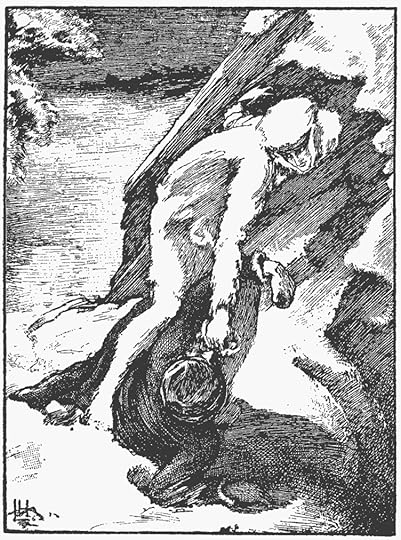
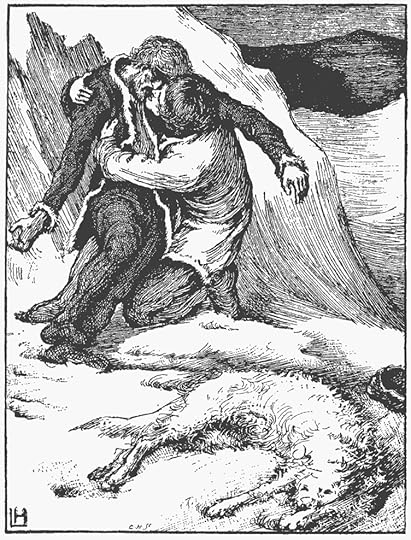
Derie (2022) refers to the essay “Clemence Housman’s The Were-Wolf: A Cautionary Tale for the New Woman” by Melissa Purdue (2016), which argues that Housman’s depiction of a strong woman was deliberate. It’s an interesting interpretation of the material. A more obvious one is that it is a Christian allegory. However you interpret the moral or message of the story to be, it is a very good weird tale that really does “provide gruesome tension” in one of most exciting chase scenes that I have read. Lovecraft is right that it has an “atmosphere of authentic folklore” in the timeless, apparently Scandinavian setting that Housmen provided.


Title: The Were-Wolf
Author: Clemence Annie Housman
Dates: 1896
Genre: Fiction - Novelette*, horror
Word count: 15,215 words
Date(s) read: 8/21/22-8/22/22
Reading journal entry #239 in 2022


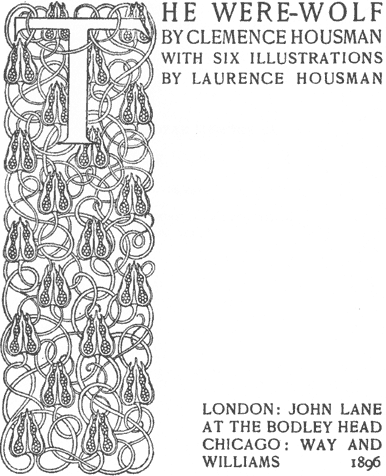
Link to the story and illustrations: https://www.gutenberg.org/files/13131...

Link to Lovecraft’s essay: https://www.hplovecraft.com/writings/...

Sources:
Derie, B. (2022, April 16). The Were-Wolf (1896) by Clemence Housman. Deep Cuts in a Lovecraftian Vein. https://deepcuts.blog/2022/04/16/the-...

Fifer, C., & Lackey, C. (2013, February 15). Episode 146 - The Were-Wolf. H.P. Lovecraft Literary Podcast
https://www.hppodcraft.com/list/2013/...

Fifer, C., & Lackey, C. (2013, February 23). Episode 147 - The Were-Wolf. H.P. Lovecraft Literary Podcast
https://www.hppodcraft.com/list/2013/...

Fifer, C., & Lackey, C. (2013, February 27). Episode 148 - The Werewolf. H.P. Lovecraft Literary Podcast
https://www.hppodcraft.com/list/2013/...

Housman, C. (2021). The were-wolf. In H.P. Lovecraft Historical Society (Ed.), The literature of Lovecraft, vol. 1.. (S. Branney, Narr.; A. Leman, Narr.) [Audiobook]. HPLHS. https://www.hplhs.org/lol.php (Original work published 1896)

Lovecraft, H. P., & Joshi, S. T. (2012). The annotated supernatural horror in literature (second edition). Hippocampus Press. https://www.hplovecraft.com/writings/... (Original work published 1927)

Purdue, M. (2016). Clemence Housman’s the were-wolf: A cautionary tale for the new woman. Revenant, 1(2), 42–55. http://www.revenantjournal.com/conten...

The contents of The Literature of Lovecraft, Vol. 1 are:
"The Adventure of the German Student" by Washington Irving
"The Avenger of Perdóndaris" by Lord Dunsany
"The Bad Lands" by John Metcalfe
"The Black Stone" by Robert E. Howard
The Boats of the "Glen Carrig" by William Hope Hodgson
"Count Magnus" by M.R. James
"The Dead Valley" by Ralph Adams Cram
"The Death Mask" by Henrietta Everett
"The Fall of the House of Usher" by Edgar Allan Poe
"The Ghost of Fear" by H.G. Wells (also called “The Red Room”)
"The Ghostly Kiss" by Lafcadio Hearn
"The Horla" by Guy de Maupassant
"The House and the Brain" by Edward Bulwer-Lytton
"The House of Sounds" by Matthew Phipps Shiel
"Idle Days on the Yann" by Lord Dunsany
"Lot #249" by Arthur Conan Doyle
"The Man-Wolf" by Erckmann-Chatrian
"The Middle Toe of the Right Foot" by Ambrose Bierce
"The Minister's Black Veil" by Nathaniel Hawthorne
"The Monkey's Paw" by W.W. Jacobs
"One of Cleopatra's Nights" by Théophile Gautier
"The Phantom Rickshaw" by Rudyard Kipling
The Place Called Dagon by Herbert Gorman
"Seaton's Aunt" by Walter de la Mare
"The Shadows on the Wall" by Mary E. Wilkins
"A Shop in Go-By Street" by Lord Dunsany
"The Signal-Man" by Charles Dickens
"Skule Skerry" by John Buchan
"The Spider" by Hanns Heinz Ewers
"The Story of a Panic" by E.M. Forster
"The Strange Case of Dr. Jekyll and Mr. Hyde" by Robert Louis Stevenson
"The Tale of Satampra Zeiros" by Clark Ashton Smith
"The Tapestried Chamber" by Sir Walter Scott
"The Upper Berth" by F. Marion Crawford
"The Vampyre" by John Polidori
"The Venus of Ille" by Prosper Mérimée
"The Were Wolf" by Clemence Housman
"What Was It?" by Fitz-James O'Brien
"The White People" by Arthur Machen
"The White Wolf of the Hartz Mountains" by Frederick Marryat
"The Willows" by Algernon Blackwood
"The Yellow Sign" by Robert W. Chambers
"The Yellow Wallpaper" by Charlotte Perkins Gilman

Here is a list of the stories in the order in which they were written, with links to my reviews of them:
The Vampyre (1819) by John William Polidori
The Adventure of the German Student (1824) by Washington Irving
The Tapestried Chamber (1828) by Walter Scott
The Minister's Black Veil (1836) by Nathaniel Hawthorne
The Venus of Ille (1837) by by Prosper Mérimée
The White Wolf of the Hartz Mountains (1839) by Frederick Marryat
The Fall of the House of Usher (1839) by Edgar Allan Poe
What Was It? (1859) by by Fitz-James O'Brien
The House and the Brain (1859) by Edward Bulwer-Lytton
The Signal-Man (1866) by Charles Dickens
The Man-Wolf by Erckmann-Chatrian
The Ghostly Kiss (1880) by Lafcadio Hearn
One of Cleopatra's Nights (1882) by by Théophile Gautier
The Upper Berth (1886) by F. Marion Crawford
The Strange Case of Dr. Jekyll and Mr. Hyde (1886) by Robert Louis Stevenson
The Horla (1887) by Guy de Maupassant
The Phantom Rickshaw (1888) by Rudyard Kipling
”The Middle Toe of the Right Foot” (1891) by Ambrose Bierce
Lot #249 (1892) by Arthur Conan Doyle
The Yellow Wallpaper (1892) by Charlotte Perkins Gilman
The Ghost of Fear (1894) by H.G. Wells- also called The Red Room
The Yellow Sign (1895) by Robert W. Chambers
The Dead Valley (1895) by Ralph Adams Cram
The Were-Wolf (1896) by Clemence Housman
The Monkey's Paw (1902)
The Shadows on the Wall (1903)
Count Magnus (1904)
The White People (1904)
The Willows (1907)
The Boats of the "Glen Carrig" (1907)
Idle Days on the Yann (1910)
The Story of a Panic (1911)
The House of Sounds (1911)
A Shop in Go-By Street (1912)
The Avenger of Perdóndaris (1912)
The Spider (1915)
The Death Mask (1920)
The Bad Lands (1920)
Seaton's Aunt (1922)
The Place Called Dagon (1927)
Skule Skerry (1928)
The Tale of Satampra Zeiros (1929)
The Black Stone (1931)

*The difference between a short story, novelette, novella, and a novel: https://owlcation.com/humanities/Diff...

Vignette, prose poem, flash fiction: 53 - 1,000 words
Short Stories: 1,000 - 7,500
Novelettes: 7,500 - 17,000
Novellas: 17,000 - 40,000
Novels: 40,000 + words
Profile Image for Yomi.
178 reviews24 followers
May 29, 2023
my biggest non-sarcastically "joder, esto sí es literatura🚬" ever


Podría ponerme a analizar punto por punto esta obra maestra pero no tengo ganas puedo. Es preciosa en su totalidad. Y miren que a mi los detalles excesivos me aburren, pero acá Housman hizo un trabajo hermoso. Quedé enamorada. ¿Y esa persecución final? Mamita... Hasta yo mordía la mesa por saber cómo iba a terminar.
La moraleja: no te calientes por una cara bonita. Si tu hermano te dice que es una mujer lobo, hacele caso¿
7 reviews
April 1, 2011
This is one of the best-crafted short stories I have ever read. It has a powerful message about love; the werewolf only appears to set off a chain of events that'll ultimately provide the protagonist with the opportunity to demonstrate what real love means. the price is high, but it's the only choice he has. Sadly, more people are reading Twilight than they are reading this; if this were made compulsory reading at high school level, some of us might have been spared being bored out of our minds. OK, i'm being mean :D The sheer beauty of the prose (this book, not Twitlike) is enough to make you weep. ok, i'm just being overly dramatic ;); maybe you will, maybe you won't but you can't deny the prose alone is beautiful.
Profile Image for Anže.
4 reviews14 followers
May 2, 2014
I've stumbled upon this free short horror story on Project Gutenberg and didn't expect much. I definitely didn't expect for this 120-year-old book to scare me, but the author sets such a great, yet simple setting with very suspenseful mood. This is not you typical "man gets bitten, transforms and kills those he loves most" story, but a tale of conflict between two brothers, one aware of the dangers of a beautiful young woman, and the other blinded by love, or better-lust. It is also a story of mystery and sacrifice, of regret and brotherly love.

I would definitely recommend this one.
Profile Image for Marie.
Author 80 books116 followers
May 11, 2015
A fairytale in an unnamed far northern land in the grip of winter. I quite enjoyed the fairytale quality of it, and found it rather haunting. Also it doesn’t hurt that the werewolf is a badass woman with an axe.
Profile Image for Mir.
4,975 reviews5,329 followers
Want to read
May 8, 2010
Little Rol and his puppy sound familiar - I think I read this years back.
Profile Image for Michael F Simpson.
Author 2 books16 followers
November 13, 2023
The Werewolf is an interesting story of love - both romantic and familial - as well as curses and brotherly rivalry. There's a Christian aspect to this classic werewolf story that brings to mind vampire stories of the era. Having been interested in ghosts and vampires in literature for some time, I really want to dive into the werewolf subgenre, and see how it has evolved over the decades.

There were a lot of issues dragging this story down from the pedestal it might have shared with the classic tales of other supernatural figures. First of all is its poor quality writing, especially for a time in which greater attention was placed on expressive prose. This doesn't really feel Gothic, it unfortunately just feels clunky. There are issues with pacing also, with the story at first rushing into its introductions and conflicts before taking on a much slower pace that drags a little too long.

This also doesn't feel much like a werewolf story, with its supernatural antagonist only making a very minor appearance. This approach is a staple of the Gothic, but here it didn't feel deliberate, moreso like it was lacking some vital element. This is especially noticeable thanks to the underwhelming protagonists.

All that said, The Werewolf may well still be ahead of its time in some ways. Like The Beetle, this feels a much faster read than typical Gothic literature - for both good and bad - and it also has much more visceral violence than I expected. I can see its simplicity appealing to many readers also, for the same reason I was a little put off by it.

I was definitely entertained - I read the story in a single sitting - but unfortunately this is not quite the true classic werewolf story I had hoped it to be.
Displaying 1 - 30 of 80 reviews

Can't find what you're looking for?

Get help and learn more about the design.