

What do you think?

Indian Boyhood
WHAT boy would not be an Indian for a while when he thinks of the freest life in the world? This life was mine.
152 pages, Paperback
First published January 1, 1902
About the author
Charles Alexander Eastman
78 books118 followersCharles Alexander Eastman is unique among Indian writers, whether storytellers or oral historians. He was raised traditionally, as a Woodland Sioux, by his grandmother, from 1858 - 1874, until he was 15. He thus gained a thorough first-hand knowledge of the lifeways, language, culture, and oral history.
His father (thought to have been hanged at Mankato, Minnesota) reappeared and insisted he receive the white man's education. Educated at Dartmouth and Boston University medical school, Eastman became a highly literate physician, who was the only doctor available to the victims of the Wounded Knee massacre in 1890 -- a major historical event, often described as "ending the Indian wars".
Other Indian writers of this period were either entirely acculturated -- had never lived the traditional life of their people or been educated out of their native knowledge -- or were not literate, and were able to provide only "as told to" materials, through the filters of interpreters and non-Indian writers. Eastman had the lifeways and historical events experiences, and he did not need the literary filters of translators and white anthropologists or collectors.
http://www.worldwisdom.com/public/aut...
His father (thought to have been hanged at Mankato, Minnesota) reappeared and insisted he receive the white man's education. Educated at Dartmouth and Boston University medical school, Eastman became a highly literate physician, who was the only doctor available to the victims of the Wounded Knee massacre in 1890 -- a major historical event, often described as "ending the Indian wars".
Other Indian writers of this period were either entirely acculturated -- had never lived the traditional life of their people or been educated out of their native knowledge -- or were not literate, and were able to provide only "as told to" materials, through the filters of interpreters and non-Indian writers. Eastman had the lifeways and historical events experiences, and he did not need the literary filters of translators and white anthropologists or collectors.
http://www.worldwisdom.com/public/aut...
Ratings & Reviews
Friends & Following
Create a free account to discover what your friends think of this book!
Community Reviews
Displaying 1 - 30 of 48 reviews

November 17, 2021
Reading this book is like being in another world from a different time. The illustrations in the book are of varying quality and seem to be done by different artists.

April 26, 2023
3.5 stars

May 26, 2016
An Indian Boyhood Revisited
In 1902, Charles Eastman, or Ohiyessa, wrote an account, "Indian Boyhood" of his Dakota Sioux childhood. Eastman (1858 -- 1939) lived a remarkable life in two cultures. Up to the age of 15, he was raised in the Sioux culture he described in "Indian Boyhood". Eastman went on to graduate from Dartmouth College and from the medical school of Boston College. He had a career as a physician, worked as a field secretary for the YMCA, helped found the Boy Scouts, and wrote eleven books beginning with "Indian Boyhood". Eastman's life was featured in the 2007 HBO documentary, "Bury My Heart at Wounded Knee", but he remains all-too-little remembered today.
This new book, "Indian Boyhood: The True Story Of A Sioux Upbringing" is an adaptation of Eastman's 1902 book for children between Kindergarten and third grade. Michael Fittzgerald, the author of two books about Eastman among other works, arranged Eastman's story for young readers while Heidi Rasch, an artist who has been adopted into the Crow Tribe, prepared the illustrations. Charles Trimble, an author, member of the Oglala Sioux Tribe, and former Executive Director of the National Congress of American Indians, wrote a short, elegant Foreword to the story.
Eastman's story introduces readers of all ages to a lost world of freedom and romance. "What boy would not be an Indian for a while when he thinks of the freest life in the world?", the book begins. "This life was mine".
Eastman describes how he was raised by his grandmother upon the death of his mother and how his father apparently died in 1862 during the Sioux uprising. Eastman describes what he calls his "wild life" which continued until the age of 15. At that time, his father who had been pardoned by President Lincoln, returned and the young boy began his education in the larger society. For a few years of childhood, Eastman hunted, told stories, prepared for war, crossed the Missouri River in buffalo-skinned boats, and lived what he remembered as a life of total freedom. It is a romantic story which children and grown-ups will find immediately appealing. Rasch's illustrations are lovely and include notes at the end of the book which readers may share with the children.
I loved this little children's book and wanted to learn more about Eastman. Children will love and learn from the book. The book is published by Wisdom Tales, which specializes in spiritually-themed books from around the world with an emphasis on Indian cultures. Wisdom Tales' parent company, World Wisdom, has published Fitzgerald's two other books about Eastman for interested readers. Wisdom Tales kindly sent me a copy of "Indian Boyhood" to review.
Robin Friedman
In 1902, Charles Eastman, or Ohiyessa, wrote an account, "Indian Boyhood" of his Dakota Sioux childhood. Eastman (1858 -- 1939) lived a remarkable life in two cultures. Up to the age of 15, he was raised in the Sioux culture he described in "Indian Boyhood". Eastman went on to graduate from Dartmouth College and from the medical school of Boston College. He had a career as a physician, worked as a field secretary for the YMCA, helped found the Boy Scouts, and wrote eleven books beginning with "Indian Boyhood". Eastman's life was featured in the 2007 HBO documentary, "Bury My Heart at Wounded Knee", but he remains all-too-little remembered today.
This new book, "Indian Boyhood: The True Story Of A Sioux Upbringing" is an adaptation of Eastman's 1902 book for children between Kindergarten and third grade. Michael Fittzgerald, the author of two books about Eastman among other works, arranged Eastman's story for young readers while Heidi Rasch, an artist who has been adopted into the Crow Tribe, prepared the illustrations. Charles Trimble, an author, member of the Oglala Sioux Tribe, and former Executive Director of the National Congress of American Indians, wrote a short, elegant Foreword to the story.
Eastman's story introduces readers of all ages to a lost world of freedom and romance. "What boy would not be an Indian for a while when he thinks of the freest life in the world?", the book begins. "This life was mine".
Eastman describes how he was raised by his grandmother upon the death of his mother and how his father apparently died in 1862 during the Sioux uprising. Eastman describes what he calls his "wild life" which continued until the age of 15. At that time, his father who had been pardoned by President Lincoln, returned and the young boy began his education in the larger society. For a few years of childhood, Eastman hunted, told stories, prepared for war, crossed the Missouri River in buffalo-skinned boats, and lived what he remembered as a life of total freedom. It is a romantic story which children and grown-ups will find immediately appealing. Rasch's illustrations are lovely and include notes at the end of the book which readers may share with the children.
I loved this little children's book and wanted to learn more about Eastman. Children will love and learn from the book. The book is published by Wisdom Tales, which specializes in spiritually-themed books from around the world with an emphasis on Indian cultures. Wisdom Tales' parent company, World Wisdom, has published Fitzgerald's two other books about Eastman for interested readers. Wisdom Tales kindly sent me a copy of "Indian Boyhood" to review.
Robin Friedman

December 15, 2021
Aylar öncesinde sahafta dolaşırken Kızılderilinin Çocukluğu kitabı gözüme çarpmıştı ve yayımlanmış ilk Kızılderili otobiyografilerinden olduğunu öğrenince alıp okumaya karar vermiştim. Kısa sayılabilecek bir otobiyografi, Ohiyesa (Galip) adındaki Charles Eastman'ın çocukluk dönemine ilişkin anılarını anlatıyor. Bunun yanında kültürleri, avlanmaları, düzenleri, yaşamları ve daha birçok konudan detaylı şekilde bahsetmiş. Bir yerde çoğu Kızılderilinin kapalı ortamlara uyum sağlayamadığından hatta hayatını kaybedenler olduğundan bahsetmiş ki Birleşik Devletlere uyum sağlamaya çalışırken ne kadar zorlandıklarını bu şekilde daha iyi anlamış oldum. Doğaya özlem içeren bir metin. Daha öncesinde Küçük Ağaç'ın Eğitimi adında yine Kızılderililer hakkında olan bir kitap okumuştum ve inanılmaz derecede beğenmiştim. O kitabın farkı daha romansı bir havayla yazarın hayatını anlatmış olmasıydı. Eastman ise son derece düz ve benim için hiç ilgi çekici olmayan bir tarzda hayatını anlatmış ve bu yüzden keyifle okuyamadığım bir kitap oldu. Ayrıca fazla milliyetçi tavırları bir yerden sonra beni yormaya başladığından kitabı çok sevemedim. Kızılderililerin geçmişi kesinlikle herkes tarafından bilinmeli bu yüzden bu kitaba bakmak bazı konularda ve kültürlerini anlamada yardımcı olacaktır. Ancak daha keyifle okunabilecek bir kitap için Küçük Ağaç'ın Eğitimi daha güzel bir tercih.

Read
October 26, 2011The reason I enjoy reading Ohiyesa's books so much is his unique perspective, one that came from living in two different worlds, native and mainstream American. This book traces his life in the first world, growing up in a Sioux camp.
Most of his account is set in Canada where he went into exile after being separated from his father and siblings following the 1862 Dakota War. Before Indian Boyhood, I read Old Indian Days and my favourite story in that book was based on this event; it was interesting to find out that the author was more closely connected to it than I imagined. I guess I should have read Mr. Eastman's biography more closely (and perhaps I should be referring to him as Dr. Eastman instead).
As always, his writing is honest and his depiction of Sioux life without pretension, whether he talks of hunting or making sugar, feasts or evenings in the lodge with his grandmother and uncle. The latter comes across as a truly admirable human being, whether because of his skill as a hunter or his simple but honest opposition to slavery. While Dr. Eastman writes from a clearly Sioux perspective, he isn't really biased either as in his retelling of a Cree legend where the Sioux are the antagonists. I like that even though the philosophies here are meaningful and spiritual, they avoid cliched mysticism as if their spirituality exists only to offer solace to jaded modern readers. At the same time, these are ideas that you can appreciate learning from, like when Ohiyesa's uncle says, "I think we are really bravest when most calm and slow to action."
The book is also full of homely pleasures, like the hilarious story about Chadozee and the bear (especially the bit about the bear scowling at him :P) as well as the ones Smoky Day (whom I first met as a fictional character in Wigwam Evenings) tells. I love that in Sioux society, solitude is not necessarily a bad thing. As someone who enjoys the refreshing calmness of being alone and is often questioned about this supposedly strange habit, I am grateful for Ohiyesa's defence of it. This book also helped me understand many of the things Dr. Eastman talks about in The Soul of the Indian. On the other hand, the author's narration feels a little abrupt sometimes, especially when he shuffles between the first person and the third person.
Reading this book creates a strange sort of wistfulness. Ohiyesa never paints his life as some sort of New Age hippie paradise - Indian life back then was clearly difficult and not always simple. And yet, he makes it clear that it was a good life. The sheer freedom without avoiding a sense of duty, the luxury of solitude combined with the warmth of community living is something I wish still existed.
Most of his account is set in Canada where he went into exile after being separated from his father and siblings following the 1862 Dakota War. Before Indian Boyhood, I read Old Indian Days and my favourite story in that book was based on this event; it was interesting to find out that the author was more closely connected to it than I imagined. I guess I should have read Mr. Eastman's biography more closely (and perhaps I should be referring to him as Dr. Eastman instead).
As always, his writing is honest and his depiction of Sioux life without pretension, whether he talks of hunting or making sugar, feasts or evenings in the lodge with his grandmother and uncle. The latter comes across as a truly admirable human being, whether because of his skill as a hunter or his simple but honest opposition to slavery. While Dr. Eastman writes from a clearly Sioux perspective, he isn't really biased either as in his retelling of a Cree legend where the Sioux are the antagonists. I like that even though the philosophies here are meaningful and spiritual, they avoid cliched mysticism as if their spirituality exists only to offer solace to jaded modern readers. At the same time, these are ideas that you can appreciate learning from, like when Ohiyesa's uncle says, "I think we are really bravest when most calm and slow to action."
The book is also full of homely pleasures, like the hilarious story about Chadozee and the bear (especially the bit about the bear scowling at him :P) as well as the ones Smoky Day (whom I first met as a fictional character in Wigwam Evenings) tells. I love that in Sioux society, solitude is not necessarily a bad thing. As someone who enjoys the refreshing calmness of being alone and is often questioned about this supposedly strange habit, I am grateful for Ohiyesa's defence of it. This book also helped me understand many of the things Dr. Eastman talks about in The Soul of the Indian. On the other hand, the author's narration feels a little abrupt sometimes, especially when he shuffles between the first person and the third person.
Reading this book creates a strange sort of wistfulness. Ohiyesa never paints his life as some sort of New Age hippie paradise - Indian life back then was clearly difficult and not always simple. And yet, he makes it clear that it was a good life. The sheer freedom without avoiding a sense of duty, the luxury of solitude combined with the warmth of community living is something I wish still existed.

November 6, 2020
I read this as a lovely little Astonishing Stories reprint, part of the Million Book Project to provide access to books published before 1923. I admire the publisher for making materials available, but unfortunately, there was literally no information about the publication or the author. I was amazed when I looked up Charles Eastman and Indian Boyhood. The book was published in 1902. The author was a Dakota Sioux who grew up under almost pre-contact conditions. The book ends when at age 15, he is reunited with his father and begins to live in the world of European colonializers. He becomes a physician, converts to Christianity, and helps establish the Boy Scouts and other groups. He wrote several books about his childhood.
The book definitely has the sense of a child telling the story of growing up. As I read this little book – only 104 pages - I became more and more part of his world. I feel that I gained a lot of knowledge about the native culture that I have never recognized before – perhaps because of the story telling nature of the book.. I marked a few sentences (p 102) from Eastman’s recounting of one of the tribal story tellers talking about his initial encounters with civilization.. (To quote Bobby Burn: O wad some Pow'r the giftie gie us,To see ourselvs as ithers see us!)
“The greatest object of their lives seems to be to acquire possessions – to be rich.”
“They have divided the day into hours, like the moons of the year. In fact, they measure everything.”
“I can hardly believe that their Great Chief President compels every man to pay him for the land he lives upon and all his person goods – even for his own existence – every year.”
“In war they have leaders and war chiefs….The common warriors are driven forward like a herd of antelopes to face the foe. It is on account of this manner of fighting– from compulsion and not from personal bravery – they we count no coup on them.”
The book definitely has the sense of a child telling the story of growing up. As I read this little book – only 104 pages - I became more and more part of his world. I feel that I gained a lot of knowledge about the native culture that I have never recognized before – perhaps because of the story telling nature of the book.. I marked a few sentences (p 102) from Eastman’s recounting of one of the tribal story tellers talking about his initial encounters with civilization.. (To quote Bobby Burn: O wad some Pow'r the giftie gie us,To see ourselvs as ithers see us!)
“The greatest object of their lives seems to be to acquire possessions – to be rich.”
“They have divided the day into hours, like the moons of the year. In fact, they measure everything.”
“I can hardly believe that their Great Chief President compels every man to pay him for the land he lives upon and all his person goods – even for his own existence – every year.”
“In war they have leaders and war chiefs….The common warriors are driven forward like a herd of antelopes to face the foe. It is on account of this manner of fighting– from compulsion and not from personal bravery – they we count no coup on them.”

November 21, 2022
This was a very interesting book. Sometimes Eastman seemed harsh in his description of his own people, but he was raised to be a warrior, and then later to be an American, so perhaps his use of language makes sense in this context, and probably his writing would not have been considered insensitive when he wrote this. Whatever the case may be, it is clear that he remembered his childhood with great fondness. I think this book is a treasure. That it was difficult to follow can be attributed more to my failings as a reader than to Eastman’s as an author. His keen memory and concise storytelling makes this feel like oral history, which it is.

June 29, 2016
This is a first-hand experience story written many years ago by a Sioux Indian, Ohiyesa (Charles Alexander Eastman, his white man's world name) recounting his boyhood as he was raised in the traditional Sioux Indian way. It is fascinating to learn how this child grew thoroughly immersed in the Indian world and then went on into adulthood and assimilated into the white man's world as a highly educated doctor and published author.Originally published in 1902 by Charles Eastman recounting his traditional Dakota Sioux childhood. Mr. Eastman lived 1859 to 1939 so he was intrinsically involved.
Indian Boyhood is the story of a disappearing culture even during this recounted childhood, and it is wonderful to see that today's publishers and editors see the value in a resurgence of this man's story and are adapting and publishing it for today's children to read and learn about original Americans.
While the book doesn't have much "girl appeal," it is certainly a valuable source of information for any child. Targeted for age four and up, the text flows easily and simply states in a very simple form what transpires as the boy grows until he leaves with his re-discovered father for the white man's world.
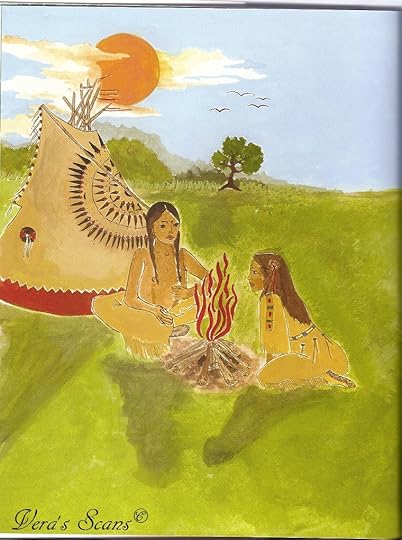
The illustrations are very well done and capture the essence of the Indian life the story details. I like that the book opens with pictures of the author in traditional Indian clothes as well as his white man's world clothes. At the end of the book, there is a list of explanations that helps to understand the illustrations.
A very good book for simply learning about the young Indian boy's life. A must for school libraries.
DISCLOSURE: I received a complimentary copy from Wisdom Tales to facilitate this review. Opinions are my own. I was not compensated for this review.
Indian Boyhood is the story of a disappearing culture even during this recounted childhood, and it is wonderful to see that today's publishers and editors see the value in a resurgence of this man's story and are adapting and publishing it for today's children to read and learn about original Americans.
While the book doesn't have much "girl appeal," it is certainly a valuable source of information for any child. Targeted for age four and up, the text flows easily and simply states in a very simple form what transpires as the boy grows until he leaves with his re-discovered father for the white man's world.
The illustrations are very well done and capture the essence of the Indian life the story details. I like that the book opens with pictures of the author in traditional Indian clothes as well as his white man's world clothes. At the end of the book, there is a list of explanations that helps to understand the illustrations.
A very good book for simply learning about the young Indian boy's life. A must for school libraries.
DISCLOSURE: I received a complimentary copy from Wisdom Tales to facilitate this review. Opinions are my own. I was not compensated for this review.

March 27, 2010
I wanted to read this book after watching a movie about Eastman's life. I hope to read more of his writings.
Read
January 26, 2022good goodbook
March 22, 2017
Genre: Biography, Autobiography, Juvenile Literature
Written by Charles Eastman a.k.a. Ohiyesa (Santee Dakota), adapted by Michael Oren Fitzgerald (member of Crow tribe), and illustrated by Heidi M. Rasch.
This book entails a simple story about what it's like to live the Indian boyhood life. The story are recollections of Eastman's earliest childhood memories, and it gave insight to the traditions and customs of Indian boyhood. Some of these topics included how the Indian boy should be prince of the wilderness, a great listener, and a good hunter. Towards the end of the book, there was a sad and nostalgic feeling presented by the book as the boy grew into adulthood, left his tribe, and went on to the "civilization."
I love this book simply because it was a very easy and relaxing read. The illustrations were crisp and colorful, and it presented the characters authentic to the time period. The language used was age appropriate and easy to understand. I think that this would be a great read-aloud because there are many Native cultural characteristics presented within the book and from the characters. It also gave a Native's perspectives on what it feels like to miss the traditional life that you have had before. I feel that the readers will be able to take this and reflect on the importance of Native American history as well as being able to empathize with someone who might experience a similar situation.
Written by Charles Eastman a.k.a. Ohiyesa (Santee Dakota), adapted by Michael Oren Fitzgerald (member of Crow tribe), and illustrated by Heidi M. Rasch.
This book entails a simple story about what it's like to live the Indian boyhood life. The story are recollections of Eastman's earliest childhood memories, and it gave insight to the traditions and customs of Indian boyhood. Some of these topics included how the Indian boy should be prince of the wilderness, a great listener, and a good hunter. Towards the end of the book, there was a sad and nostalgic feeling presented by the book as the boy grew into adulthood, left his tribe, and went on to the "civilization."
I love this book simply because it was a very easy and relaxing read. The illustrations were crisp and colorful, and it presented the characters authentic to the time period. The language used was age appropriate and easy to understand. I think that this would be a great read-aloud because there are many Native cultural characteristics presented within the book and from the characters. It also gave a Native's perspectives on what it feels like to miss the traditional life that you have had before. I feel that the readers will be able to take this and reflect on the importance of Native American history as well as being able to empathize with someone who might experience a similar situation.
July 10, 2022
Indian Boyhood is a unique book. Charles Eastman was one of the last generation to grow up in the nomadic way of life of the American native. He tells of a boyhood most boys would envy, where little boys are encouraged to hunt with small bows and arrows, fight amongst themselves and learn to ride and race ponies. Nights were a time for storytelling, which were their history, heroic literature, religion, geography and natural history lessons. The book continues to reveal how a tribe privides and governs itself, and interacts with others and the surrounding world. At the very end Eastland became a Christian and chose to be educated in the white man's way. He had a career as an author and spokesman for Indian rights in Washington (sigh). No matter how one might judge his choices his voice is wise, a]reciative of everything and often humorous. A very unusual book I'm glad I stumbled onto. Thank God for libraries!!

December 23, 2019
This book is wonderful. Not for the apparently-stereotypical themes one tends to pick up on in their first read, but for the way the final section changes it all. Through encouraging reflection upon oneself and one’s potentially (yet unintentionally) colonist ideals, a second read of this with the understanding that comes from the final section makes everything clearer. I read this for a Native American Literature course, and it was easily one of my favorites. Eastman is incredibly clever, writing with intentional duality in order to illustrate his personal experiences as a Native man in a white community. I can’t sympathize given that I’m a white woman who knows very little about Native experiences, but I can definitely appreciate it, and it’s an incredibly enlightening read. Highly recommended!

July 12, 2018
Indian Boyhood is the humorous, nostalgic memoir of a Sioux born in 1858, in the twilight of his tribe's days as a free people. His use of the word "savage" to describe himself and his culture comes across as wryly ironic, a play on the sensibilities of his white readers. Eastman nevertheless does not downplay the dangers of inter-tribal warfare or the precariousness of a nomadic hunter-gatherer existence. The book is incredibly rich in its descriptions of traditional Sioux customs, ceremonies, stories, and spiritual beliefs, and in how they perceived the transitional period in which they lived. Eastman closes, symbolically, with his first encounters with mainstream white America.

September 15, 2024
It’s great to be able to listen to this on Librivox for free, since my library doesn’t have an audiobook version. My favorite part of this book was the first section, all about Ohiye S’a as a child and what life was like among the Sioux at that time. The rest of the book had a higher ratio of stories and myths than the daily life or ceremonial or historical descriptions that I found most interesting. After reading this I next read “Indian Child Life” from the Eastman page on Librivox, and discovered that half that book is lifted from this one. Since that book focuses more on things young people will find interesting, that’s the one I’ll get for my nephews rather than this book.

September 6, 2020
This is a compilation of Sioux tales with a frame story which reminds me of 19th century children's fiction.
The frame story reflects the New England influence on the author's life. Breaking from the stereotype of a "savage," Charles Eastman graduated from an Ivy League school, married a white New Englander, converted to Christianity, and practiced medicine at Wounded Knee.
Fictional characters pepper the tales, but if the reader is sharp enough to remove them from the story, he will find rich narratives that speak to the respect of the natural world.
The frame story reflects the New England influence on the author's life. Breaking from the stereotype of a "savage," Charles Eastman graduated from an Ivy League school, married a white New Englander, converted to Christianity, and practiced medicine at Wounded Knee.
Fictional characters pepper the tales, but if the reader is sharp enough to remove them from the story, he will find rich narratives that speak to the respect of the natural world.

January 4, 2024
I loved the narrator (Michael Richards on Audible), and the stories were interesting to listen to. Not all of the book was traditionally entertaining, but that is exactly what I expected when I started this book. I wasn't looking to be entertained - I was looking to be educated. I chose this book for a varied historical perspective (different from my own culture) of life in the geographic area where I also grew up. You can expect to hear about North Dakota, South Dakota, Minnesota, Wisconsin, and Southern Manitoba. This book delivered! Would recommend!!

June 7, 2019
This is cool, but is strongly edited and presented in picture book format. It looks as though the original work, published in 1902, might be amazing? Or might be very confusing for modern readers. Cannot find a current publication, hope it gets reprinted. Seems like a powerful work for upper elementary could be in there. Love the own voices, and the poetic power of the story.

February 29, 2024
Interesting account of the life of a Native American community, mostly set during the 1860s/70s. Eastman's early years were spent living the traditional life of a Santee Dakota (Sioux), brought up by his grandmother after his father was captured and imprisoned after the Dakota War of 1862. His account is vivid and unsentimental about the values, habits and lifestyle of his childhood.

June 27, 2026
I enjoyed this one far more than I expected. I'd previously read a few books about Native American upbringing and lifestyle, so I thought I knew what to expect, but I really connected with the author in this one. His narration was much funnier than I expected, and I really connected with both his writing and his experiences. I will also always enjoy reading about Native Americans because it makes me feel connected to my great Grandad and I imagine him sititng in his armchair in Coventry reading the same book about 50 years ago. 4/5.
December 4, 2018
Daha derin olmasını isterdim sanırım. Avcılığa fazla yer vermiş sevgili Eastman, ama ben onun daha çok yaşadığı şeyleri ve duygularını isterdim. Kızılderili olmak nedir bunu isterdim. Ama o bir nebze daha basitleştirip, kendini soyutlamış gibi hissettim.
2,5/5
2,5/5

May 23, 2023
This book was written by the author over 70 years ago.
It is a series of events of his life.
I found his life as a Native young man very interesting and entirely different from anything I have experienced.
It is a series of events of his life.
I found his life as a Native young man very interesting and entirely different from anything I have experienced.

April 24, 2019
I wish I had childhood like that. Everything I dreamed of...

October 15, 2020
A beautiful and sad first-hand account of Sioux life in the nineteenth century... written by a really interesting man (look him up!).

November 13, 2020
This book just didn't grab me like many of the other type of books like this did.
Also trigger warning on dog death/animal sacrifice.
Also trigger warning on dog death/animal sacrifice.

February 10, 2021
I read this book for a class I’m taking in college about indigenous people in Minnesota. Full of stories, sadness, and knowledge about what it’s like to grow up Dakota.
March 5, 2021
Very insightful to the Dakota life. Bit outdated in many terms, but all things to be expected given when it was written. Very easy to read, smooth writing style.

June 7, 2021
Enjoyable. I think it's likely I'll read all of Eastman's books.

July 10, 2022
This autobiography is well written but didn't capture my attention like I hoped it would.

June 19, 2023
An excellent autobiography. I enjoyed learning about the boy and his culture.
Displaying 1 - 30 of 48 reviews