

What do you think?

Black Dog Opera Library
Der Fliegende Hollander: Libretto
Nach dem Erfolg seiner dritten vollendeten Oper "Rienzi" wandte sich Wagner der Vertonung eines Stoffes zu, dem er Jahre zuvor in Heinrich Heines "Schnabelewopski"-Fragment begegnet war. Zum ersten Mal ist im "Fliegenden Holländer" einen Thematik umgesetzt, die bestimmend für Wagners Schaffen bis hin zu seinem letzten Musikdrama "Parsifal" war: der Erlösungsgedanke. Der "Holländer" ist zugleich der erste Schritt des Komponisten von der Nummernoper zum durchkomponierten Musikdrama. Dieses Buch enthält neben dem Textbuch einführende Kommentare von Kurt Pahlen. Er begleitet das musikalische und das äußere wie innere dramatische Geschehen der Oper mit Hinweisen zu kompositorischer Struktur und Sinnzusammenhang. Eine kurze Inhaltsangabe und ein Abriss der Entstehungsgeschichte stellen das Werk in einen Zusammenhang mit dem Gesamtschaffen des Komponisten und seiner Biographie und bieten eine umfassende, reich illustrierte Einführung.
192 pages, Paperback
First published January 1, 1843
About the author
Richard Wagner
3,404 books195 followersGermanic legends often based romantic operas of especially known composer Richard Wagner, who worked
Tannhäuser
(1845) and the tetralogy
Der Ring des Nibelungen
(1853-1876).
From 1872, Richard Wagner lived at Bayreuth to 1883 and designed the opera house, used chiefly for performances of his works.
Works of Jacques Martin Barzun include Darwin, Marx, Wagner (1941).
Wilhelm Richard Wagner conducted, directed theater, and authored essays, primarily for his later called "music dramas." Unlike most other greats, Wagner wrote the scenario and libretto.
https://en.wikipedia.org/wiki/Richard...
From 1872, Richard Wagner lived at Bayreuth to 1883 and designed the opera house, used chiefly for performances of his works.
Works of Jacques Martin Barzun include Darwin, Marx, Wagner (1941).
Wilhelm Richard Wagner conducted, directed theater, and authored essays, primarily for his later called "music dramas." Unlike most other greats, Wagner wrote the scenario and libretto.
https://en.wikipedia.org/wiki/Richard...
Ratings & Reviews
Friends & Following
Create a free account to discover what your friends think of this book!
Community Reviews
Displaying 1 - 17 of 17 reviews

October 21, 2020
Richard Wagner o personalitate „obsedată" de mituri(legende)...un filosof profund cugetător care a fost preocupat de marile întrebări ale omenirii cu privire la viață, iubire, divinitate, moarte.
October 22, 2018
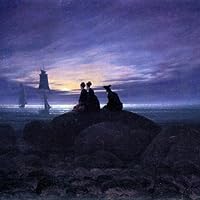
3.5 stars. A simple, straightforward libretto. The power rests in the Romantic imagery of the ghostly captain and his ship. The unfolding narrative is quite cheesy, but Wagner's evocative score lends itself to swarthy, gloomy images (think the artwork of Caspar David Friedrich) that provides a backdrop that can sustain the cheesiness, much like the atmosphere of a gothic novel can often save it from the overly melodramatic plot.
The problem is when this opera is so often performed in a “modern” context. As soon as we leave the realm of 19th century Romanticism by including avant garde staging and/or an “updated” setting (The Dutchman is an airline pilot! No...he haunts a tourist cruise ship!) then the opera loses all force and just becomes silly. In the immortal words of David St. Hubbins, "It's such a fine line between stupid and clever." And this opera lives in that space!
The problem is when this opera is so often performed in a “modern” context. As soon as we leave the realm of 19th century Romanticism by including avant garde staging and/or an “updated” setting (The Dutchman is an airline pilot! No...he haunts a tourist cruise ship!) then the opera loses all force and just becomes silly. In the immortal words of David St. Hubbins, "It's such a fine line between stupid and clever." And this opera lives in that space!

December 31, 2023
Nunca había escuchado ni leído el mito del Holandés Errante, así que fue una sorpresa, para mí, esta obra que, al igual que un tal Fausto con sus muchas versiones, Wagner la cuenta a su manera.

Read
October 18, 2022This is Wagner. So of course, it is undoubtedly brilliant. But also, it can be an excruciating exercise in patience.
April 21, 2025
tbh das ist ein banger
September 13, 2025
Aardig verhaal voor een kortere opera

November 1, 2022
Zusammen mit Tannhäuser meine absolute Lieblingsoper. Wie bei allen Dingen die man mag wünschte ich, sie wäre länger! Zwischendurch echt Gänsehaut, so begeistert war ich. Hätte nicht übel Lust sie mir in der Oper anzuschauen aber in der verfluchten Hamburger Staatsoper bringen die nur Neuinszenierungen😡

Read
March 29, 2021Read the libretto in preparation for the MetOpera.org pandemic livestream of the March 10,2020 performance: "Our week of operatic myths and legends comes to a close with Wagner’s breakout masterpiece, Der Fliegende Holländer. Bass-baritone Evgeny Nikitin gives a commanding performance in the title role, leading a cast of extraordinary Wagnerians that also includes soprano Anja Kampe as Senta, tenor Sergey Skorokhodov as Erik, and bass Franz-Josef Selig as Daland. Valery Gergiev conducts François Girard’s vivid staging."

April 13, 2021
Nu mă așteptam ca o operă atât de scrută să fie atât de compactă. Sunt foarte multe surse de inspirație în această operă pe care le pot sesiza ușor: elementul folcloric, elementul livresc provenit din tragediile antice și drame contemporane, precum și un element religios atașat unuia filosofic (aproape nihilist în unele momente). Piesa aceasta este scrisă cu mult geniu, subiectul este unul destul de interesant, iar de-a lungul ei întâlnim diverse elemente ce îi întăresc reputația.

June 10, 2019
I was always curious about Wagner's work but somehow had the feeling is too profound to grasp the entire philosophy and meaning. I truly enjoyed the libreto, seems a bit easy at a first look but reading also an additional description in the book introduction made me understand the entire context. Next step is to watch the live opera
April 3, 2025
Read it before we went to see the opera, of course! I really enjoyed it - I think the story is quite classic, a bit romantic, but could have a touch more tension. I loved the music and it was a great opera though!
October 5, 2020
This guy Daland marries off his daughter Senta to the Flying Dutchman; jilting Erik in the process. And Erik’s suspicions turn out to be right, but because of envy, he was wrong.
August 5, 2023
Sehr gut.

January 29, 2013
A very short work that lacked depth in characters. The idea of the Flying Dutchman was interesting but not properly explored in my opinion (also maybe in its time more people were aware of the details, I don't know). The ending was intriguing but there is little more to say on it because I'm not perfectly clear as to what exactly happened and why.

May 21, 2014
awesome recording with a booklet included

September 9, 2016
Wagner + vodka = nightmare all night! :) <3

January 15, 2019
The music is good, but the words....
Displaying 1 - 17 of 17 reviews