

What do you think?

No. 252 Rue M. Le Prince
This story was first published in the book of macabre stories Black Spirits and White in 1895.
- GenresHorrorShort Stories
12 pages
First published January 1, 1895
About the author
Ralph Adams Cram
351 books8 followersRalph Adams Cram (December 16, 1863 – September 22, 1942) was a prolific and influential American architect of collegiate and ecclesiastical buildings, often in the Gothic Revival style. Cram & Ferguson and Cram, Goodhue & Ferguson are partnerships in which he worked.
Ratings & Reviews
Friends & Following
Create a free account to discover what your friends think of this book!
Community Reviews
Displaying 1 - 14 of 14 reviews

October 8, 2019
31 Classic Horror Stories Every Fan Should Read in October: A Literary Advent Calender for Halloween: Day 7:
https://www.oldstyletales.com/single-...
https://www.oldstyletales.com/single-...
August 9, 2023
4⭐
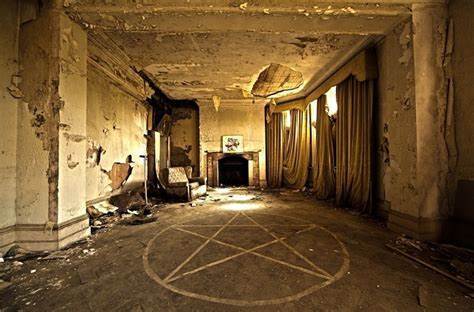
A man from Boston travels to Paris to visit a friend, Eugene Marie d'Ardeche who’d recently moved there after inheriting property from an estranged aunt he didn’t know well. The house in Paris at No. 252 Rue M. Le Prince is said to be cursed and known locally as 'The Mouth of Hell'. Eugene d'Ardeche's aunt was said to be "a more or less wicked and witch-like old person, with a penchant for black magic." When she chose to leave that house to her estranged nephew from America instead of her diabolical associate Sar Torrevieja, also known as the ‘King of the Sorcerers’, the place befell a terrible curse. The narrator agrees to accompany d'Ardeche with two other men and spend a night in the empty place. They discover several bizarre rooms where one room of the house seems to be a ritual room covered in black lacquer fitted out as a temple for magic with a pentagram on the floor, an altar and appurtenances. The narrator spends a night there and as night falls, a powerful, dark presence makes itself known. He is attacked by a gelatinous monstrosity with glowing staring eyes and suffers from a form of sleep paralysis.
A man from Boston travels to Paris to visit a friend, Eugene Marie d'Ardeche who’d recently moved there after inheriting property from an estranged aunt he didn’t know well. The house in Paris at No. 252 Rue M. Le Prince is said to be cursed and known locally as 'The Mouth of Hell'. Eugene d'Ardeche's aunt was said to be "a more or less wicked and witch-like old person, with a penchant for black magic." When she chose to leave that house to her estranged nephew from America instead of her diabolical associate Sar Torrevieja, also known as the ‘King of the Sorcerers’, the place befell a terrible curse. The narrator agrees to accompany d'Ardeche with two other men and spend a night in the empty place. They discover several bizarre rooms where one room of the house seems to be a ritual room covered in black lacquer fitted out as a temple for magic with a pentagram on the floor, an altar and appurtenances. The narrator spends a night there and as night falls, a powerful, dark presence makes itself known. He is attacked by a gelatinous monstrosity with glowing staring eyes and suffers from a form of sleep paralysis.

October 11, 2017
A wicked and despised (and recently deceased) aunt who practised the black arts in her secluded French mansion haunts this short tale. There is a brilliant description of her clandestine chambers, where in the form of a mural, a gigantic kneeling woman extends right across the ceiling, her arms surrounding the occupants as she leers gigantically down at them. The descriptions of rooms lined with tarnished and greening copper plating, basalt pillars, marble floors inlaid with a monstrous pentagram, stark and empty of idols (the furnishings and fittings have been completely stripped by a zealous and jealous relative) add to the sense of occult horror.
Cram was an architectural historian, who was fascinated by the occult and spiritualism, who believed that the 'great war' had been predicted in the automatic writings of mediums! Evocative and richly gothic, this is a dramatic and vivid tale taken from the collection of macabre stories, 'Black Spirits and White', 1895 - which has never been reprinted. Recommended.
Cram was an architectural historian, who was fascinated by the occult and spiritualism, who believed that the 'great war' had been predicted in the automatic writings of mediums! Evocative and richly gothic, this is a dramatic and vivid tale taken from the collection of macabre stories, 'Black Spirits and White', 1895 - which has never been reprinted. Recommended.

November 18, 2015
The narrator of this book is in Paris in May, 1886, intending to impose on an old friend from Boston who inherited property from an aunt. The aunt had something of a reputation for black magic, though and the property is now said to be haunted. His friend had found that he can't keep a tenant, but he's still paying taxes.
The narrator, his friend and two medical student friends decide to stay the night at the property.
Please read the full review here.
The narrator, his friend and two medical student friends decide to stay the night at the property.
Please read the full review here.

November 4, 2019
The language of this short story is a paradigmatic example of early modernism, more concretely of a genre discourse as a branch of early modernism.
The genre is of course a gothic story, precisely a ghost story.
The theme of a haunting house is an essential topos in the gothic fiction world. A true follower of the dark can never get enough of stories like these.
A ghostlike demon being as a proper subject of the fantastic antimimetic literature shows a strong antimodernist tendency of the zeitgeist in which the author lived.
It should not be strange that early modernistic literature was strongly antimodernist in its subtext. Lovecraft and Clark Ashton Smith are just the frontfronters of this socioartistic manifestation. The form of this story, and the form of the entire Lovecraft's and Ashton Smith's opus, is purely modernistic primarily because of the autodiegetic narrator and his scepticism about the supernatural.
The fantastic subtexts, all paranormal elements of the content, demonstrate an antimodernist ideology in a sense of an act against scientism, rationalism of the then newly industrial society, rising atheism and the mediocre tendencies of the radical left. In that way early modernism can be viewed as a form of neoromanticism.
The horrors and cul de sacs of modernism do not only come from the left but also from the right.
Racism is nothing but affirming Darwinian theory which is naive because it is godless. Darwin was so narrow-minded that he wasted his entire life on shallow biology without contemplating about the soul.
The truth is that the body is inside the soul, not the other way around
The twentieth century proves that Dostoyevsky was right, when people stop to believe in God then there is no moral.
Hitler, Stalin, Bush, Obama, crooked Hillary and acting Trump along with the rest of the rats are nothing but a consequence of an atheist and scientific society.
This small story shows so much and tells even more now than when it was written. https://youtu.be/XN54kruANNk
The genre is of course a gothic story, precisely a ghost story.
The theme of a haunting house is an essential topos in the gothic fiction world. A true follower of the dark can never get enough of stories like these.
A ghostlike demon being as a proper subject of the fantastic antimimetic literature shows a strong antimodernist tendency of the zeitgeist in which the author lived.
It should not be strange that early modernistic literature was strongly antimodernist in its subtext. Lovecraft and Clark Ashton Smith are just the frontfronters of this socioartistic manifestation. The form of this story, and the form of the entire Lovecraft's and Ashton Smith's opus, is purely modernistic primarily because of the autodiegetic narrator and his scepticism about the supernatural.
The fantastic subtexts, all paranormal elements of the content, demonstrate an antimodernist ideology in a sense of an act against scientism, rationalism of the then newly industrial society, rising atheism and the mediocre tendencies of the radical left. In that way early modernism can be viewed as a form of neoromanticism.
The horrors and cul de sacs of modernism do not only come from the left but also from the right.
Racism is nothing but affirming Darwinian theory which is naive because it is godless. Darwin was so narrow-minded that he wasted his entire life on shallow biology without contemplating about the soul.
The truth is that the body is inside the soul, not the other way around
The twentieth century proves that Dostoyevsky was right, when people stop to believe in God then there is no moral.
Hitler, Stalin, Bush, Obama, crooked Hillary and acting Trump along with the rest of the rats are nothing but a consequence of an atheist and scientific society.
This small story shows so much and tells even more now than when it was written. https://youtu.be/XN54kruANNk

October 8, 2020
Reading the October Halloween series - set in 19th century Paris about an old aunt's (Mlle Blaye de Tartas) inheritance to a young man (Eugene Marie d'Ardeche) to the displeasure of her friend (Sar Torrevieja), a fellow black arts specialist.
Contrasts past magical pursuits with current medical practices via the presence of two medical friends (Dusechne and Lucine) who, together with D'Ardeche and the American narrator (D'ardeche's friend), visit the aunt's former Quartier Latin house - 252 Rue M. Le Prince (Dusechne and Lucine) to sort out the strange goings on.
Evocative of Parisian life and times (Chien Bleu, Jardin Mabille), French literature (Zola, Flaubert) and mysterious Eastern regions (Indian and Egypt).
Contrasts past magical pursuits with current medical practices via the presence of two medical friends (Dusechne and Lucine) who, together with D'Ardeche and the American narrator (D'ardeche's friend), visit the aunt's former Quartier Latin house - 252 Rue M. Le Prince (Dusechne and Lucine) to sort out the strange goings on.
Evocative of Parisian life and times (Chien Bleu, Jardin Mabille), French literature (Zola, Flaubert) and mysterious Eastern regions (Indian and Egypt).

November 7, 2020
31 classic horror stories
https://www.oldstyletales.com/single-...
An excellent short that quickly built ambiance and anticipation.
https://www.oldstyletales.com/single-...
An excellent short that quickly built ambiance and anticipation.

October 7, 2019
Fair entry in this advent calendar of horror journey

October 8, 2019
A little too much build-up. Rather enjoyable still, though.

September 25, 2022
Great atmosphere and stunning architectural details, but the ending a bit vague and not fully explained.

October 12, 2025
Not as Gothic as the other short stories I have read but charming none the less

January 2, 2026
I enjoyed it but not nearly as creepy as I wanted it to be.

August 10, 2024
Relato incluido en el libro de fantasía gótica de la colección Fractales

November 29, 2009
When in May, 1886, I found myself at last in Paris, I naturally determined to throw myself on the charity of an old chum of mine, Eugene Marie d'Ardeche, who had forsaken Boston a year or more ago on receiving word of the death of an aunt who had left him such property as she had possessed.
From Wiki - The expression fin de siècle usually refers to the end of the 19th century, in Europe, France and/or Paris. It has connotations of decadence, which are seen as typical for the last years of a culturally vibrant period (La Belle Époque at the turn of the 20th century), and of anticipative excitement about, or despair facing, impending change, or both, that is generally expected when a century or time period draws to a close. In Russia, the term Silver Age is somewhat more popular.
That the expression is in French probably comes from the fact that the fin de siècle is particularly associated with certain late 19th-century French-speaking circles in Paris and Brussels, exemplified by artists like Stéphane Mallarmé and Claude Debussy, movements like Symbolism, and works of art like Oscar Wilde's Salomé (originally written in French and premiered in Paris)—which connects the idea of the fin de siècle also to the Aesthetic movement. Also, Edvard Munch spent some of his time in Paris around the turn-of-the-century, which was his most melancholy period.
From Wiki - The expression fin de siècle usually refers to the end of the 19th century, in Europe, France and/or Paris. It has connotations of decadence, which are seen as typical for the last years of a culturally vibrant period (La Belle Époque at the turn of the 20th century), and of anticipative excitement about, or despair facing, impending change, or both, that is generally expected when a century or time period draws to a close. In Russia, the term Silver Age is somewhat more popular.
That the expression is in French probably comes from the fact that the fin de siècle is particularly associated with certain late 19th-century French-speaking circles in Paris and Brussels, exemplified by artists like Stéphane Mallarmé and Claude Debussy, movements like Symbolism, and works of art like Oscar Wilde's Salomé (originally written in French and premiered in Paris)—which connects the idea of the fin de siècle also to the Aesthetic movement. Also, Edvard Munch spent some of his time in Paris around the turn-of-the-century, which was his most melancholy period.
This entire review has been hidden because of spoilers.
Displaying 1 - 14 of 14 reviews