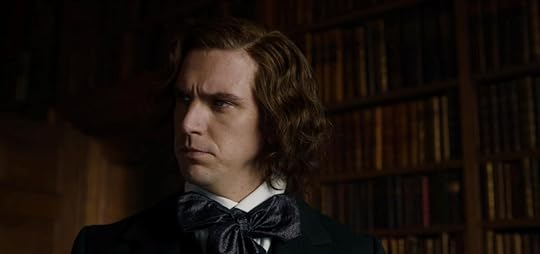
As uplifting as the tale of Scrooge itself, this is the story of how Charles Dickens revived the signal holiday of the Western world. Soon to be a major motion picture. Just before Christmas in 1843, a debt-ridden and dispirited Charles Dickens wrote a small book he hoped would keep his creditors at bay. His publisher turned it down, so Dickens used what little money he had to put out A Christmas Carol himself. He worried it might be the end of his career as a novelist. The book immediately caused a sensation. And it breathed new life into a holiday that had fallen into disfavor, undermined by lingering Puritanism and the cold modernity of the Industrial Revolution. It was a harsh and dreary age, in desperate need of spiritual renewal, ready to embrace a book that ended with blessings for one and all. With warmth, wit, and an infusion of Christmas cheer, Les Standiford whisks us back to Victorian England, its most beloved storyteller, and the birth of the Christmas we know best. The Man Who Invented Christmas is a rich and satisfying read for Scrooges and sentimentalists alike.
Les Standiford is a historian and author and has since 1985 been the Director of the Florida International University Creative Writing Program. Standiford has been awarded the Frank O'Connor Award for Short Fiction, a Florida Individual Artist Fellowship in Fiction, and a National Endowment for the Arts Fellowship in Fiction, and belongs to the Associated Writing Programs, Mystery Writers of America, and the Writers Guild.
“[Charles] Dickens, who is generally considered one of the most accomplished writers in the English language, published twenty novels in his lifetime…and none of them has ever gone out of print. His personal experience of harsh working conditions and a deep sympathy for the poor inform much of his writing, and more than one scholar has made a life’s work out of tracing the parallels between the author’s life and his fiction. The number of academic books, dissertations, monographs, and articles devoted to Dickens…is, practically speaking, beyond counting. But perhaps the best known and certainly the most beloved of all Dickens’s works has received relatively little study. Though A Christmas Carol abounds in references to Dickens’s life, and is the very apotheosis of his themes…critical attention has been scant. Perhaps it is because the book is short, fewer than 30,000 words; perhaps it is because of its very popularity, its readership said at the turn of the twentieth century to be second only to the Bible’s; or perhaps it is because of the difficulty or the irrelevance of analyzing what is simply very good…” - Les Standiford, The Man Who Invented Christmas: How Charles Dickens’s A Christmas Carol Rescued His Career and Revived Our Holiday Spirits
In 1897, an eight-year-old girl named Virginia O’Hanlon wrote a letter to the editor of the New York Sun. It is a short note that ends with the plaintive questioned echoed by countless children growing up in the shadow of Christmas: “Please tell me the truth, is there a Santa Claus?” Newsman Francis Pharcellus Church, channeling a burst of inspiration that would give him immortality, famously wrote back: “Yes, Virginia, there is a Santa Claus.”
Though not as memorable as those seven declarative words, Church’s most inspired bit of prose comes at the end of his editorial, as he passionately argues for faith in the existence of miracles: “You may tear apart the baby’s rattle and see what makes the noise inside, but there is a veil covering the unseen world which not the strongest man, nor even the united strength of all the strongest men that ever lived, could tear apart. Only faith, fancy, poetry, love, romance, can push aside that curtain and view and picture the supernal beauty and glory beyond.”
I thought of these lines while reading Les Standiford’s The Man Who Invented Christmas, which tells the behind-the-scenes tale of Charles Dickens’s A Christmas Carol, one of the most memorable English-language novels of all time. While it is brisk, good-natured, and unobjectionable in any way, it is also an act of tearing apart the baby’s rattle. It deconstructs a book that, in my estimation, is nearly perfect, and attempts to explain the inexplicable, and to analyze something that is purely magical.
***
Before going any further – and in the spirit of the holidays – let me be very clear that The Man Who Invented Christmas is totally fine. My hardcover version is very handsome, and seems designed as a gift book, and would probably be a nice one, had it any illustrations.
At just over 200 pages, it requires but a small investment in time, reads quickly, and is overall quite pleasant. Heck, if you decide this to have a cup or two of Christmas cheer – by which I mean wine – this might work even better.
***
In The Man Who Invented Christmas, Sandiford sets out a broadly chronological narrative. He begins by introducing us to Dickens as a child, as he works tirelessly to help pay the debts accrued by his irresponsible parents. This formative experience shaped Dickens’s mindset, and gave him a very intimate knowledge of need and want, motifs that are omnipresent in A Christmas Carol.
Indeed, Dickens struggled with his finances throughout his entire life, despite being an incredibly successful and internationally famous author. In 1843, with creditors beating a path to his door, Dickens pinned his hopes to a Christmas book. Using his own meager resources, Dickens did the 19th century version of self-publishing. He wrote the story. He supervised the illustrations. He designed the cover.
Not to ruin the ending, but A Christmas Carol turned out to be a lasting hit.
Unfortunately, as Sandiford notes, the smash success never secured Dickens the wealth he desired. But as the later sections of the book demonstrate, it changed the Christmas holiday going forward. In particular, the Christmas of A Christmas Carol threaded the needle between the anti-fun, anti-celebration ethos of the Puritans, and the too-much-fun, too-much-celebration, too-many-drunks-on-the-street shenanigans of the wassailing era.
A Christmas Carol’s protagonist is a man rich beyond measure, but impoverished without love, and who is given a reminder of what really matters by his visions of Christmas past. Its most potent symbol is a crippled boy who – through the alchemy of December 25 – is granted the gift of life itself. The end result is that Dickens’s yuletide celebrated the bonds of family; promoted charity, community, and social consciousness; and posited the notion that Christmas created its own gravity, forcing the dreary world to recede for one special day in which anything seemed possible. Anyone who has watched a Hallmark movie between October and January knows that others have taken this notion and run with it.
***
Just in case you were wondering: The Man Who Invented Christmas is not an academic work. Most of the research comes from secondary sources, such as Peter Ackroyd’s massive Dickens, Stephen Nissenbaum’s The Battle for Christmas, and Michael Patrick Hearn’s The Annotated Christmas Carol. Obviously, riffing on A Christmas Carol does not need to be peer-reviewed. Still, this heavy reliance on others is probably responsible for the lack of any real insights. If you’re a fan of the subject book, you probably already know everything that Sandiford is going to tell you.
***
Great works of art can create a spell. This illusion is shattered a bit when we look behind the curtain, scrutinize the mechanisms, and seek explanations for every step of the process. It’s a bit like a magician giving up his tricks. Sure, you learned something. But now the magic is gone, and gone forever.
A Christmas Carol is magic. It is a small brilliant gem that long ago transcended literature. For me – and for many – it is a tradition, an heirloom, a calendar; it is a clutch of memories, a friend you look forward to meeting once a year, a thing that becomes part of you. I don’t really need the backstory, because A Christmas Carol no longer belongs to Charles Dickens. It belongs wholly to me and – if you love it – it belongs wholly to you as well.
Charles Dickens’ classic Christmas tale is surely synonymous with the holiday season, from its spooky mention of ghosts to its endearing message of love and understanding. However, the story behind this shorter novel is almost as intriguing as the prose itself. After reading a fictitious version of events, I looked to Les Standiford, whose non-fiction account, The Man Who Invented Christmas, offers curious readers something on which they can chew to better understand the background. Highly educational and enlightening, this is a great piece to accompany the Dickens classic. Recommended to those with a love of the holiday season, as well as the reader who may want to chase the Scrooge out of their heart after a horrid 2020 (and 2021).
Charles Dickens may have been a popular author throughout his life, but that does not mean that he enjoyed a positive upbringing. Having come from a childhood of poverty, Charles Dickens was forced to pull himself up by his bootstraps. These early years of scrounging and being forced to rub two pennies together proved helpful when he penned some of his earliest novels, including Oliver Twist. As Standiford mentions throughout, it was his astuteness to his surroundings that gave Dickens ideas for his plots and characters.
Of interest to some readers, Standiford explores how Dickens used to write his novels piecemeal, submitting them for serial publication. While they could appear long as a final product, the short pieces that found their way into weekly or monthly collections made the stories seem a little more palatable. Standiford uses this contrast when discussing the creation of A Christmas Carol, which would not be as long as these other pieces, but had to be completed over a shorter time period.
Dickens had come off a less than stellar publication of a novel that was not getting the excitement his publishers had hoped. With the holiday season creeping up, Dickens was tasked with writing a Christmas story in a short period of time. Pulling on examples from all aspects of his life, Dickens wrote about a man—Ebenezer Scrooge—who hated the joyousness that Christmas brought, but who underwent a significant epiphany after being visited by four beings. The end result proved to be eye-opening for all involved and created a new buzz around the Christmas season.
Strandiford explores the Christmas celebration throughout the book, from its traditions to how it was only minimally celebrated through the centuries. It was the Victorian Era that pushed England to shed its neutrality to the celebrations and breathe new life into this most powerful of feast times. From the Germanic influence of trees at Christmas to the buzz of gift giving and the appearance of Father Christmas, England grew more accepting of the holiday, something that appears in Dickens’ story. While I think it would be a tad hyperbolic to say that Dickens alone breathed life into the holiday season, his story certainly explored some of the less commercial aspects of the season.
I only read A Christmas Carol for the first time in the 2019 Christmas season. While you try to catch your breathe and step back in shock, I will let you know that I have seen the movie and know the premise, but the story itself takes on new meaning when using the author’s actual prose. Pairing the actual story with Standiford’s book (as well as a piece by Samantha Silva, do check it out), offers a great understand of Victorian times and how the holiday evolved. There is a great deal for the reader to understand that will permit a thorough and comprehensive exploration of the themes and ideas. Standiford does a masterful job at shining some light on this for those readers who wish the context.
While there are portions of the book that are quasi-textbook, the information garnered from the pages of Standiford’s book is second to none. Understanding how Christmas was once passed off as just another day and what the Church did to counter the rise of pagan rituals is quite ingenious. Using that backstory and some of the Victorian traditions, the reader can see how it all comes together as Scrooge makes his way through his one sobering night. These nuggets proved useful and provided some additional takeaway, something I always enjoy when it comes to reading. With short chapters, full of great information, the reader is surely to find something that interests them, as it relates to the story. If only this were not such an isolating holiday season. I would love to regale people with ‘did you know?’ moments. Oh well, it just means I have another year to practice and study!
Kudos, Mr. Standiford, for a wonderful piece that entertained and educated in equal measure.
Standiford would have done better to simply have written an essay- this is really drawn out, with superfluous detail and filler. But....can I take a minute to just stand in AWE of just what kind of a genius Dickens was?
The times Dickens lived in and his really brutal childhood provides the background for how he conceived of his most beloved story, "A Christmas Carol." Dickens sought relief in creating this idealized family (the Cratchits- poor but happy, poor but loving) and it was this time in his life that he fully realized- while taking his rambling walks around London-how his novels would be the vehicles for his ideas about poverty and education. He was by no means Anti-Capitalist but felt strongly that those who were in those lofty positions of society (such as a man of business like Scrooge) should give back to those in stations below them in life. At this time, Dickens also was stinging from the failure of his last book, "American Notes", and his current serial that was not going well, "Martin Chuzzlewit". These failures-and the pressure to earn money to support his family and pay his debts-this pressure may have been what created diamonds from coal because out of it came this novella, probably the greatest ever written. His mind was set up for a creative breakthrough and after it many more novels were to follow (at the time he was practically himself at the brink of despair and giving up). He instead essentially created his career and helped to support the holiday of Christmas which was not widespread as it is today but I don't think it is fair to say that Dickens "invented" it. He encouraged it. (It was also the same year that Christmas cards were invented so he wasn't the only one who wanted to propagate Christmas).
He became not just a modern novelist but a great master of language. I read "A Christmas Carol" every year just to sink into the beauty of the language, the feeling of the setting and how this whole world is conjured by Dickens written in a white heat in a matter of a few weeks- and it saved his own skin- he was able to remain solvent.
A side note: there are the Spiritual dimensions of A Christmas Carol to consider. Scrooge- a miser who is miserable, stingy and only concerned with self-preservation-is transformed. The story is interdimensional; the Spirits enter his realm & bring him into a Larger Realm where he is able to transcend time and space and visits first the scenes from his past: he is confronting himself, then he must confront the present-day reality that exists around him that he is unaware of; finally, he must confront what will become of him, his death and ultimately the meaning of his life. Scrooge is humbled and he learns empathy and he is permanently changed. He returns to his former dimension still feeling a Higher Energy: he is giddy with joy...generous...in love with life and everything...happy with everyone....full of praise and laughter and, of course, keeping Christmas better than anyone else. What could be a better Christmas story than one of such spiritual dimensions and with Dickens hope of bettering the world?
I am on record for lo, these many years as Mr. Chuckles the Dick's least admiring consumer. In point of fact, I was *FORCED*AT*GRADEPOINT* to read A Tale of Two Cities, unsympathetically held to my teacher's viciously cruel reading schedule (an entire semester! A waste of the hours I could've {and did} devote to other books!) by my Dickensian-in-all-senses elder sister, and ultimately had an essay demanded of me about these tedious, seriously uninteresting people.
As a side note, that was the year I received from the Dickensian sister a copy of The Tale of Genji for my birthday, which I consumed in a week, Seidensticker's ponderous translation aside. So no, it didn't go above my head.
Subsequent encounters between me and the all-too-imitable Inimitable...in fact, imitable to the point of self-parody...went no better. A long-ago read of A Christmas Carol at the behest of my misguided sister went poorly enough that we indulged in my "family"'s favorite holiday pastime of screaming at each other. I've watched the filmed versions over the years with a smugly superior, tolerant smirk plastered on my sneering mouth. Yuck. Gooey sentimentality sludged up by being delivered as Orotund Pronunciamentoes lifted whole and entire from Chuckles's turgid prose.
Then a bookish friend watched this film and pronounced herself diverted. I'd had an annoying day. I figured I'd feel better if I snarked at the film while I've still got Prime. Plus, y'know, Dan Stevens. Eye candy is persuasive when your significant other's away for weeks and weeks and weeks and weeks. (Hi honey!)
Reader, I married him. I mean, I loved it. I was completely sucked in from the start, I liked the way Stevens presented his Dickens, I was delighted by Mr. Forster, Justin Edwards, Jonathan Pryce as feckless John Dickens was deeply touching. Not one of the women was more than self-moving scenery. The film was lovely, and the story was terrific. How Dickens created the entire concept modern Westerners carry around in their heads labeled "Christmas" is, in fact, pretty damned funny since he was as anti-capitalist an old buffer as there ever was, and this story is flippin' bitterly socialist!
The end credits surprised me: The film's based on a book! Whoopee! So I hauled my gift card over to the Kindle store, bought it, and read it in a sitting. Author Standiford does a creditable job of bringing the stakes of the story's success to life; he then does what the film doesn't and can't, ties it to today's buyfest, though not as tightly as a more polemical writer would have. He does tend towards the happy, shiny people hypothesis...not one I'm naturally in sympathy with...but still, his point was to make Chuckles the Dick's contribution to (I typed "culpability for" at least three times but am compelled to be fair to Author Standiford here) the modern world fit into its context, not critique the context. Others have, and will, do that hatchet job.
So here I am, atheist Yule celebrator and anti-Dickens to my deepest core, praising a book and its superior adaptation to film, and planning to re-watch the film in 2019. Christmas miracles, anyone?
I have to confess that I saw the movie first on this one. The film made be curious about what was actually based on fact. Since I had the book already I picked it up. This is a fascinating study of the contradiction we know as Charles Dickens. Although it's hard to believe he was ever not appreciated as a novelist, this book concentrates on a period when sales has slumped and financial woes had grown for Dickens. Having spent a dreadful youth where he faced the wrath of being poor, he had a lifelong fear of returning to that state.
A Christmas Carol was intended as a moneymaker, with heart. There's no doubt Dickens encouraged the celebration of Christmas—a holiday slow to catch on. He keenly felt the mistreatment of the poor and felt that this day, at least, good should be done to them, and for them. Meanwhile, Dickens wanted to improve his cash-flow with the book.
Those of us who write know the contradictions involved. Many write to try to improve the world, yet they are in the world themselves. So Dickens ended up divorcing the woman who in the movie seemed to adore him. He took up with a younger woman and eventually gained great wealth. What are we to make of such a man?
This book is a quick read to get into the holiday spirit. I had some other kinds of reflections posted on it here: Sects and Violence in the Ancient World, for those interested.
I read this mainly so I could watch the movie, and reread A Christmas Carol with a new perspective on the author.
I must confess that I didn't know that much about Dickens before starting this, so most of the information was new to me. And there are so many details!! It was a bit overwhelming.
I did like it, and I learned something for sure, but the writing style wasn't my favourite. The pacing also wasn't the best, and the timeline could get jumpy. I also felt like this was more about publishing books in Dickens's time than the man himself. But it did have a few funny moments.
Overall, not a bad read, but could've been shorter and more to the point.
This book tells the story of the making of “A Christmas Carol” by Charles Dickens.
Dickens was a man in love with life – he enjoyed social company and the banter of others. In the day he was a superstar, giving many public speeches and reading portions of his book to rapt audiences that could sometimes number over one thousand. And to use today’s jargon he could multi-task – before completing one book he would be starting another, all this while touring and at times editing a newspaper or periodical.
The author entertainingly narrates how he came to write “A Christmas Carol”. He was at a low point of his career; his latest book “Martin Chuzzlewit” was not doing as well as expected and his tour of the United States with a subsequent book on it also had tepid sales. He needed a new book to revive his popularity. He wrote “A Christmas Carol” in a matter of weeks and managed to get it published in time for Christmas. It became immensely popular and over the years was made into plays and even though remunerations from these theatrical productions were not of much monetary value to Dickens, it did help to advertise his books.
Afterwards Dickens wrote subsequent Christmas stories some of which became very popular during his lifetime – but none had the enduring value of the first one. Think of the common terms that have entered our vocabulary – Scrooge, Tiny Tim…
It is also a secular Christmas story. Dickens did not have much use for organized religion. The story emphasized many moral values like generosity, family spirit, along with a “joie de vivre”.
This is a very enjoyable Christmas read with a good biographical background of the magnificent Charles Dickens and his era.
I loved the 2017 movie The Man Who Invented Christmas starring Dan Stevens (of Downton Abbey fame) based on this book. Or I should say based on a part of this book. I enjoyed the book but also think it suffered from not being exactly as advertised. It did focus on the writing of A Christmas Carol, a book I came to very late in life and which I loved, but it also presented quite a survey of Dickens's writing and life before and after ACC, right up to his death.
It was filled with interesting factoids which I always appreciate. - Dickens was an early adopter of product tie-ins, for example Little Nell dolls and other toys and items people could buy based on his books. - Based on the success of ACC, he tried to write a Christmas story every year, but never matched the acclaim, the quality or the success of ACC. Indeed there are several books like The Complete Christmas Stories of Charles Dickens that compile some or all of these stories. - Dickens didn't make much money from ACC and was regularly ripped off by cheap imitations that were sold at a fraction of the price. Over the years, he took more and more control of the publishing of his works. - Almost immediately people (including Dickens) started doing public readings, plays and eventually movies based on ACC that continue unabated to this day. I'm sure we all have our personal favorite movies! - The influence of ACC spilled over into people's lives, which is part of the premise of this book. The ways ACC affected life in Victorian England were interesting. For example, before ACC the typical Christmas meal featured a goose, but after Scrooge ordered the biggest prize turkey sent to the Cratchets, guess what supplanted the Christmas goose?!
I can recommend this book if you're interested in A Christmas Carol or Dickens in general. It was a fun listen. A wonderful companion piece to this book is Mr. Dickens and His Carol, a novel about the writing of A Christmas Carol - a 5-star read for me!
Why I'm reading this: Part of my 2020 Christmas reading, this has been on my tbr since seeing the movie based on it starring Dan Stevens.
Hooo! Just under the wire. I thought I’d finish this book a week ago, but life. Loved reading this right after Mr. Dickens and His Carol. It was a wonderful real-life/non-fiction counterpart to that fictional story. Informative and festive this book was a short and sweet little book about Dickens writing his Carol and how it shaped Christmas as we know it. Lovely.
This came to my attention after seeing the trailer for movie with Dan Stevens. (The book came recommended after the movie was added to my wishlist).
For the most part, it kept my interest.I hadn't realized that there was such an interesting story behind the creation of the story. One of the things that surprised me was that Dickens was in such debt at the time and that he'd had three flops in a row before his mega-success with his little Carol.
The background info of the times before/after was interesting but some of it had me skimming a bit.. it wasn't boring, just didn't keep my interest and felt unnecessary too.
Also the summary of Christmas Carol in one part felt like padding that particular section.
Would still recommend, not a bad start to reading about Dickens. --- A Christmas Carol : (review when I finish it.. not in the mood for it right now)
This book is more about the professional and creative development of Dickens' work. There is a tremendous amount of context provided in the way that authorship transformed during the Victorian period.
There's a large amount of history of Dickens' relationship with different publishers and the way they did business. These are all things that are fairly factual and can be examined based on extensive documentation. It may or may not be as interesting to some readers as the original title suggests that dickens invented Christmas.
This book has a lot more support for Dickens' role in the nascent book publishing, distribution and sales business. It is interesting how Dickens was able to create opportunities for income as an author, including touts for speaking engagements and officially sanctioning certain interpretations of his work for other mediums such as stage.
The chief influences of "A Christmas Carol" attributed in this book seem to include Christmas the ubiquity of the story, the dominance of a turkey for dinner, Christmas cards and trees.
Although the author mentions in a later chapter that dickens life was fairly public until his separation from his wife of 22 years, he does not really include very much context about Dickens' family life relative to his professional life except to mention that he invested in soundproofing a study so he could write without disruption after the birth of his fifth child.
Although factually accurate, this book feels like it is lacking in other dimensions. Other books I have read about Dickens personal life and professional achievements have been more interesting (and are in fact referenced by the author of this book).
The Battle for Christmas is cited by the author of this book and offers a more complete story about Dickens' hand in creating the commercial holiday of Christmas as we know it now.
Christmas: A Candid History is a bit more optimistic, describing mid-winter holidays throughout human history and giving a bit of cheer to readers about participating.
Have you ever wondered how some of your favorite books came to be written? Les Standiford gives us a fascinating glimpse into the mind of Charles Dickens, and details the circumstances that led him to produce the world's most beloved and well-known Christmas story A Christmas Carol, while at the same time helping change the way the holiday is celebrated. This book is filled with enough fun facts to delight Dickens fans, trivia buffs, or folks who are just plain crazy about Christmas, there is something here for everyone.
The book is not without it's flaws however, at 256 pages, it still feels padded, the author uses long block quotes from Dickens works, the writing is repetitive at times, and at one point he actually spends 3 or 4 pages summarizing the Carol for the reader, when he says at several points throughout the book that the story is so well known that if all the copies were destroyed, everyone would still know it by heart. Well, which is it? One gets the feeling that when all the padding is stripped away that this material was probably better suited for a magazine article than a full-length book.
Still, Christmas is the season of forgiveness and good cheer, in that spirit, I urge readers to embrace this book as they have the original Carol.
This is a relatively short biography of Charles Dickens, viewing his life through the prism of his enduring classic, A Christmas Carol. Although there are probably few bits of information or insights in the book that would be new to a serious Dickens scholar, I think that a casual reader who has some interest in Dickens or who enjoys A Christmas Carol (who doesn’t?) would enjoy the book and learn from it.
The author describes how the publication of A Christmas Carol in December 1843 was a watershed event for Dickens. Although he had sold numerous copies of his books and was already a celebrity, he still struggled financially, in part because he continued to support his improvident father, whose stint in debtor’s prison had cast a huge shadow over Dickens’s childhood. After the success of A Christmas Carol, his financial situation was much more secure. He gained more control over the publication of his books, with higher profits, and A Christmas Carol was the Christmas gift that kept on giving, as Dickens did numerous public readings of the work and also received some limited royalties from stage productions.
But a central point that The Man Who Invented Christmas brings home is that for Dickens, A Christmas Carol was more than just a commercial venture. The story of Ebenezer Scrooge was a personal one for Dickens. Seeing poverty all around him, Dickens aimed to deliver the hopeful message that by adopting the “spirit of Christmas”—generosity to others—people could work towards the reduction of ignorance and want. Dickens struck similar themes in all his books, but its simplest and most accessible expression can be found, and for 150 years, has been found, in A Christmas Carol.
This is the best book I have read about the history of Christmas. I enjoyed the part of the book that was about how Charles Dickens wrote the great story A Christmas Carol. A must read for anybody who enjoys Christmas.
After reading Mr. Dickens and His Carol: A Novel, a fictionalized account of how Dickens came to write his famous Christmas Carol, I was hungry for more information and found it in this nonfiction book which was published in 2008 and made into a movie this year.
Les Standiford's book is very engaging as well as informational and covers most of Dickens' life, not just the few weeks it took to write his most famous Christmas story. Why was it so popular at the time it was published and remains so to this day? It touches a deep chord within most of us and brings out the desire to be generous and open-hearted towards our fellow man, in this holy season especially. It also holds out the hope of spiritual redemption along with the ability to change.
Dickens wrote several more Christmas stories but none were ever as popular as his A Christmas Carol.
3.5 stars. Interesting and enjoyable. I couldn’t quite get behind some of his assumptions to how Dickens’s life is in certain stories. I know about Copperfield, but a couple of others felt a stretch. Otherwise, I recommend this read.
This book is actually pretty good. The reason for my 3 star rating, and lower ratings from several other readers as well, I presume, is that we judged the book by its cover and had different expectations. What I anticipated was a warm look at A Christmas Carol, how Dickens came to write it, how it became ingrained in our cultural consciousness (perhaps more so than any other book except the Bible), and in what way it's defined Christmas since its writing. We get some of that (e.g. an interesting mention of the near ruin of England's goose industry, when Dickens' readers started having turkey for their Christmas dinner). But we also get a lot of biographical information about Dickens, an overview of his other novels and short stories (including the income Dickens derived from them, and contemporary reviews), and a fairly detailed discussion of 19th century publishing laws and Dickens' legal battles over plagiarism and royalties.
As an avid Dickens reader and someone who's just beginning to study the author, I enjoyed Standiford's book. Casual fans of A Christmas Carol, though, may feel deceived by the red, green and gold book jacket (complete with small touches of holly and candy canes) and the vague, if not misleading, title.
Anyone who loves Dickens’ A Christmas Carol should read this book; The Man Who Invented Christmas will help its reader understand Dickens’ condition at the time he wrote the story, and the challenges he faced in getting it written at all, let alone in the few weeks he had to finish the project before the Christmas season passed him by.
But The Man Who Invented Christmas is much more than a book about a book. Instead, it is best understood as an excellent short biography of Dickens and an explanation of his times and the impact of his work, with a special focus on A Christmas Carol. There is also a good deal of information about the history of Christmas, which Mr. Standiford provides to show how Dickens' book revived its celebration.
As I wrote my own Christmas story, Back to Christmas, I read and listened to A Christmas Carol more than a dozen times. But after listening to Mr. Standiford’s excellent book, I feel like I understand Dickens' story better than ever before.
This was really interesting. Sometimes it meanders a little too much, but I loved learning more about Charles Dickens and the history of the Christmas Carol. It was really interesting to learn how publishing and writing changed during his time, a lot of which can be attributed to his success. I didn't realize how much he struggled financially as well, and I didn't realize he published 4 additional books about Christmas. I want to check some of them out now.
Another book in the Dickens' biography bookshelf. It is not a bad book, per se, but essentially written from secondary sources. It gathers the known biographical information about Dickens and "houses" it within a look at how A Christmas Carol came to be and its cultural and historic impact.
For readability and a look at Dickens' career without wading into a biographical work like Peter Ackroyd's biography of Dickens, I can recommend it.
While overall this book should most likely be ranked 4 stars, I will fully admit I’m biased. Dickens for some is just the Christmas Carol guy but this book fully portrays him for what many don’t realize.. a champion of the working class and a social activist.
Christmas Carol not only saved Dickens from his financial trouble but it also reinvented Christmas to what we now enjoy in modern times and is also a true testament to what this time of year actually means. I also feel that with all his dad’s money issues that he also wrote this as a form of therapy. Scrooge is who he might have been.
The book’s focus is on how Christmas Carol not only made Dickens even more popular, but how it almost single handily (along with German and old English traditions) brought Christmas back to the masses. The author describes how Christmas was not as popular as it had been due to various historical events and Puritanical control.
While Christmas Carol skyrocketed the commercialism of Christmas (which is so ironic considering Dickens’ social beliefs), this was not his intent. As this book describes, the materialism was not the focus. No actual presents are exchanged in this book. It was all about love and goodwill. Santa isn’t even mentioned, even though some draw parallels between him and the Ghost of Christmas Present. There is also no reference to any religious aspects as Dickens was not a fan of organized religion, although another parallel can be seen between Tiny Tim and the Baby Jesus.
I knew quite a bit about Dickens but just seeing his works all laid out and his discussion of various social issues within his books still makes him one of my favourite authors.
The author overall did a great job of chronicling Dickens’ life to make A Christmas Carol. The only thing I wish is that he left out his major works as that could have been a different book.
The Man Who Invented Christmas is a wonderful follow-up to A Christmas Carol, which I just finished rereading. After immersing myself in the timeless story, this book served as a fascinating deep dive into the life of Charles Dickens and the creation of one of the most beloved works of literature.
Standiford’s biographical exploration of Dickens is both informative and engaging. I was captivated by the insights into Dickens's life and the struggles he faced leading up to the writing of A Christmas Carol. It was incredibly interesting to learn about the personal and financial pressures that influenced Dickens’s decision to write this now-iconic novella. The book gave me a new appreciation for the challenges Dickens overcame to get the story published, especially given the state of his career and the publishing industry at the time.
The impact that A Christmas Carol had on both culture and the publishing industry is explored, and I found this aspect of the book especially fascinating. Standiford does an excellent job showing how Dickens’s holiday classic reshaped Christmas traditions and helped establish the holiday as we know it today. I also appreciated the brief history of the publishing industry, which was something I hadn’t expected but found to be an enlightening addition to the narrative.
The Man Who Invented Christmas offers plenty of valuable information in an enjoyable and digestible way. The balance between biography, history, and Dickens’s own journey to write A Christmas Carol was well done, making this book both informative and entertaining.
Concise biographical insight into Dickens & the impulses and context for his creation of the beloved literary classic A CHRISTMAS CAROL. Smooth, highly readable prose but plenty of facts too. I particularly enjoyed learning about the Christmas writings of authors prior to Dickens--such as Washington Irving's non-fiction on the subject--as well as writers mostly forgotten today who were greatly influenced by Dicken's "little carol," such as Benjamin Farjeon. If you're a writer, or interested in the world of publishing, you'll find some fascinating tidbits about Dickens' relationships with his publishers, business model experiments, and so on.
The Man Who Invented Christmas: How Charles Dickens' A Christmas Carol Rescued His Career and Revived Our Holiday Spirits, by Les Standifold, is a wonderfully concise non-fiction about...well, the title says it all!
I enjoy author bios and the scope of this was tight, focusing on the early 1840s when Dickens experienced the first setbacks after his meteoric rise to fame. Born in 1812, Dickens was only 31 when he wrote A Christmas Carol in 1843, but with four children and a fifth about to be born, saddled by debt, not all of which was his own doing but that of his spendthrift parents and brothers.
Standifold provides pertinent background info on Dickens' life to set the stage on which he conceived and wrote his Christmas ghost story as well as details on the publishing industry and the history of Christmas as both a religious and secular holiday. He also discusses the legacy of A Christmas Carol--of course, we all know that Scrooge is part of our vocabulary and there are countless movies and stage productions every year. It's a bit astounding to think that Scrooge, Marley, Bob Crachit, and Tiny Tim have been with us for almost 180.
Favorite quote:
"... beginning with A Christmas Carol and culminating in David Copperfield, Dickens had finally dragged up the powerful demons of his past and wrestled them away..."
I zipped through this lovely book in just a few days and enjoyed every minute. Now I'm eager to get our Christmas tree and bake some cookies and watch the TV version, starring Dan Stevens.
While this is interesting, I found it to be somewhat dry reading. I knew some of the details of Dickens' childhood, but there were some things I didn't know. I think, for me, I was hoping for something to put me in the holiday spirit and this just wasn't it. I always recommend Mr. Dickens and His Carol if you want something to put you right in the spirit.
Not only do we learn about Charles Dickens and the creation of 'A Christmas Carol' but also a brief history of (1) publishing/marketing during the mid 1800s, (2) the horrendous condition of workhouses and the poor of London, and (3) the Christmas holiday. All of this in a small, non-intimidating book. Happy Holidays!
“Celebrating Christmas without some reference to A Christmas Carol seems impossible, a remarkable fact given that the book was published more than 150 years ago. Indeed, the resonance of the story has remained so strong through the generations that commentators have referred to Dickens as the man who invented Christmas.”
So, this book needs a change in its cover art. If you, like me, judged this book by its Christmasy cover, all red, green, and candy canes... and randomly thought it was a story with a plot featuring Dickens (and true-to-life facts about him), well, that's not accurate. To be clear, it's a biography, albeit, an interesting one that kept me turning the pages.
“No individual can claim credit for the creation of Christmas, of course – except, perhaps, the figure that the day is named for.... If Dickens did not invent Christmas, he certainly reinvented it.”
Dickens' childhood was cut short, as he had to work for his family. His parents spent more than they could earn. His father was held in court for his debts, and eventually the rest of the family too, even Charles and his siblings. As Dickens grew into adulthood, those days of debt and poverty always stayed with him, and is illustrated in many, if not most, of his writings. As the writer of this biography states, “It was as if, in writing this book [A Christmas Carol], he could will into existence a world of universal charity, empathy, and family harmony that he had not experienced in his life.”
Concerning A Christmas Carol, his publishers actually didn't believe in the success of the story, and they wouldn't take on the project to publish it themselves. So Dickens had it published, paying for all the costs, etc. He had to go to more extraordinary lengths than his other writings to get it published. In other words, it was the novel that almost wasn't. And this was all for a story that was about the Christmas holiday, which at the time, “ranked far below Easter, causing little more stir than Memorial Day.”
There are 4 main parts to the book. But it is part 3 that piques my interest the most, and has the information I was waiting to read. Things like how traditions may not be the same without his little book entering the world. Or how we might not so easily recognize a Victorian Christmas as a quintessential time if we didn't have A Christmas Carol. In fact, Christmas was quite different in the 1840s than it is now. The biography writer brings this about to tell what the holiday was all about back then – and it usually was not gift-giving. Other notes of interest: People ate a Christmas goose – not a turkey or a ham. Christmas cards hadn't even appeared on the scene before. Christmas trees weren't commercially sold. There's quite a bit of interesting history to learn in part 3, and I loved reading all about it.
I found out much about Charles Dickens that I just didn't expect. Some of it is about his family life, some about his celebrity, some about his books. For example, Oliver Twist may just be the first novel to have a child as protagonist; it may also be the first Victorian novel. It was neat to hear about how Dickens kept writing more “Christmas” novels each year, and the annual history behind each. Something else I was quite surprised to hear about was that copyright almost didn't exist in Dickens' day. Publishers could pirate off their own versions of popular novels and make good money doing it. Authors usually didn't get paid (or paid well) when plays (dozens of them) were put together, based on an author's novel. It was one of Dickens' fights in life to see about copyright issues for every author. He was certainly a man who had many tricks (and creative ideas) up his sleeve.
Reading The Man Who Invented Christmas definitely will get you in the mood not only for A Christmas Carol, but many of Dickens' other works. Charles Dickens will remain in our hearts because of his use of goodwill, the pleasures of good friends, family, and charity in his stories. Because the topics he used in A Christmas Carol and his other works really get us our the heartstrings, that's why people still want to read his books. I know I can't wait to read more from him.
I'd recommend this as an adult read – teens could enjoy it too, but there is some minor alluding to some mature topics.