In this widely acclaimed history of a country at war, Alexander Werth unfolds in startling human terms the story of the Russian people and their leaders in the Soviet conflict with the Nazis from the disasters of the Second World War to the beginnings of the Cold War. Himself an eyewitness to the shattering historical drama he vividly records, Werth offers an intensely detailed chronicle of the events that exceeded in savagery and hatred any other on Russian soil. From the hardships of the citizenry to the sweep of massive military operations to the corridors of diplomacy, this modern classic captures every aspect of the grim but heroic Soviet-German war that turned Russia into the most powerful nation in the Old World.
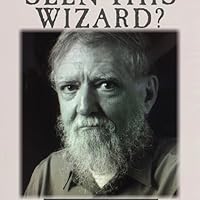
Alexander Werth was a Russian-born, naturalized British writer, journalist, and war correspondent.
Werth's family fled to the United Kingdom in the wake of the Russian Revolution.
Werth wrote about France in the prewar period and about Russia in World War II, especially the Battle of Stalingrad and the Siege of Leningrad. He was fluent in both Russian and English. His best-known work is "Russia at War 1941 to 1945", (London, 1964) a behind-the-scenes look at life in the wartime Soviet Union; he spent the war there as the BBC's correspondent, and had unrivalled access due to the combination of his BBC press credentials and his ability to function as a native Russian.
Werth was among a group of journalists to visit the Majdanek concentration and extermination camp after it had been discovered by the advancing Red Army. He filed a report on the atrocities, but the BBC initially refused to broadcast it, believing that it was too incredible to be true and suspecting a Soviet propaganda stunt.
He was the Moscow correspondent for the Guardian newspaper from 1946 to 1949. He was one of the first outsiders to be allowed into Stalingrad after the battle. Other works include: France 1940-1955: the de Gaulle Revolution; Moscow 41; The Last Days of Paris: a Journalist's Diary; Leningrad; The Year of Stalingrad; and Musical Uproar in Moscow.
His son Nicolas Werth is a well-known French historian (Directeur de recherche au CNRS) who specializes in the history of the Soviet Union.
This is a massive account of the German war on the Soviet Union from 1941-45.
Historically it ranks as the greatest and most atrocious war in modern history – for the totality of people (both soldiers and civilians) and equipment involved, and geo-political repercussions.
The book is well structured and chapters are logically organized. The author was Russian born (in St. Petersburg), but his parents fled to England during the Russian Revolution. The author was in the Soviet Union during much of the war serving as a correspondent for the BBC. The book has a very personal feel and the author visited several battlefronts, liberated villages and the Maidanek death camp. He spoke to both soldiers and civilians – let us say ordinary people. This is an on the ground history as well as providing us with the overall view of these horrendous years.
In the first two years of the war the Soviet Union was totally unprepared – mostly due to the Stalinist nature of the regime; for example there had been a liquidation of much of the officer corps in the late 1930’s. The regime did start to improve production by mid-1943 for tanks and airplanes. It was starting to out-produce Germany. Also Lend-Lease aid was kicking in – particularly for trucks and jeeps.
Everyone in the Soviet Union was impacted by this war. This is reflected in the poem “Wait for Me” by Konstantin Simonov.
Page 273 (my book)
Wait for me, and I’ll return, only wait very hard. Wait, when you are filled with sorrow as you watch the yellow rain; Wait, when the wind sweeps the snowdrifts, Wait in the sweltering heat, Wait when others have stopped waiting, forgetting their yesterdays. Wait even when from afar, no letters come to you, Wait even when others are tired of waiting... Wait even when my mother and son think I am no more, And when friends sit around the fire, drinking to my memory. Wait, for I’ll return, defying every death. And let those who did not wait say that I was lucky; They will never understand that in the midst of death, You, with your waiting, saved me. Only you and I know how I survived: It’s because you waited as no one else did.
Every village and city had atrocities carried out. Jews were rounded up and killed. Millions were sent as slave labourers to Germany. Millions of Soviet prisoners of war were neglected and starved to death or froze to death... In what was then Leningrad over one million died during the long siege. The German army had no interest in civilians.
Page 697 Guderian [German General] is, however, careful not to say a word [in his book] about the death from starvation that thousands of war prisoners and also thousands of civilians suffered in towns like Orel which, in 1941-42, were under the direct jurisdiction of his (Guderian’s) own troops.
Page 837 – an inscription on a wall in Sebastopol (site of tremendous battles in 1942) “You are not the same as before, when people smiled at your beauty. Now everyone curses this spot, because it caused so much sorrow. Among your ruins, in your lanes and streets, thousands upon thousand of people lie, and no one is there to cover their rotting bones.”
There came to grow a tremendous hate of the German nation who had invaded and desecrated their country. Revenge became a predominant theme in daily life. The book eloquently points out how personal the war became for all Soviet citizens. Also, with the loss of much of the Ukraine, Russian nationalism was encouraged along with the “resurrection” of the Orthodox Church.
After Stalingrad the war was seen to have a road that would end in Berlin. The Soviet Union became convinced of complete victory; sometimes to the point of underestimating German strength. Also after Stalingrad – Stalin played for higher stakes – Poland, the Baltic States and all of Eastern Europe – were to be part and parcel of the Soviet Empire. The Western Allies protested – but their bargaining power became weaker as millions of Soviet troops poured into Eastern Europe in mid-1944.
And as the Soviets “liberated” Eastern Europe the author visited the Maidanek death camp. Here is part of his poignant description:
Page 896-97 The warehouse was like a vast, five storey department store, part of the grandiose Maidanek Murder Factory. Here the possessions of hundreds of thousands of murdered people were sorted and classified and packed for export to Germany. In one big room there were thousands of trunks and suitcases... here were thousands of pairs of shoes, all of much better quality than those seen in the big dump near the camp. Then there was a long corridor with thousands of women’s dresses, and another with thousands of overcoats... here piled up hundreds of safety razors, and shaving brushes. In the next room were piled up children’s toys, teddy bears... [On the main floor were letters from Germany requesting goods]
The author I felt was overly lenient on the Red Army – more so in the last two years of the war. Zhukov is treated as a great General. The Red Army and its Generals’ treated their soldiers as cannon fodder. Their losses in both men and materiel would have been totally unacceptable in the western Allied armies. I do not accept the authors’ explanation for the halt of the Red Army outside Warsaw in 1944 while the Nazis exterminated the Polish Resistance. There is little of how brutal the Red Army was in Eastern Europe, more so in Germany. Hardly anything on how returning Soviet POW’s were placed in the Gulag.
To the author’s credit he does not believe the Soviet explanation for the Katyn massacre of Polish officers (the book was published in 1965). It was Gorbachev who finally acknowledged Soviet culpability.
This book is essential for anyone wishing a deeper understanding of what the Soviet Union underwent during World War II. It is magnificently written.
I read this as part of my research for a novel about the clash between Nazi Germany and Communist Russia in WW2. The fighting was absolutely horrific, the hatred mutual. The book is well-written and was critical for what I was setting out to do - it actually affected two novels in my series not just one. It made all the difference.
Much of the warfare took place in Ukraine where some ten million civilians died. In writing a novel about this time period, Russia at War provided me with important and essential backdrop information to what was happening to my characters who were caught up in the trauma, violence and destruction - American, Canadian, German, Russian, Ukrainian, Roma. My book, The White Birds of Morning, won Historical Novel of the Year (The Word Guild, Toronto) and this tome by Werth is part of the reason for that.
If you truly want to know about the Eastern Front 1941-45 I highly recommend this volume.
If there is one quote that captured for me the essence of this book, it is this quote from an SD officer, trying to comfort a small child about to be shot by the Germans. "Russia at War" by Alexander Werth relates his experiences during the Soviet-German conflict from 1941 to 1945.
Alexander Werth, a British-Russian journalist was well-equipped to provide this distinctive viewpoint on these events. His book serves as a testament to the human stories amidst the chaos of war. It is not just about battles and tactics; it's about the resilience, suffering, and sacrifices of the Soviet people. It is a behind-the-scenes eyewitness account, rich with personal stories and accounts of individuals who lived through those tumultuous times.
Alexander Werth's "Russia at War" is more than a military history; it offered me a unique perspective in the Eastern Front, and was therefore a valuable addition to the 'regular' militairy books that I have read on this theatre of World War 2.
The author was born in St Petersburg and lived there till he was 17. He returned in 1941 as a reporter for the BBC and resided in Moscow throughout WWII. Able to speak Russian he was given access to leaders, Generals, soldiers and battlefields. His book is full of unique views of the events leading up to WWII, during and after, giving a rare focus of the Russian side of events. I found most interesting the various relationships between Stalin and Hitler, then Stalin with Roosevelt and Churchill and how "friendships" worked then didn't. The tragic scope of the Russian Patriotic War is often shadowed by the books written from the Western forces' viewpoints. Werth's book is a weighty tome but is well written with various different ways of looking at events rather than from a pure military or political aspect.
Another 3.5 book. I enjoyed much of this book, but I found it dragged along when the author talked about his experiences in Russia during the war. I can appreciate that his first-hand account added to the personal knowledge of what happened, but some of it seemed 'contrived'. Obviously, the Russians were going to show only their side, and with overdone praise of Stalin, but it became tiresome. No one can deny that the Russians had a hell of a war. Their sacrifices were tremendous, but as the author mentioned in one reference Britain stood alone against the Nazis for a year while Stalin aided Hitler with materiels courtesy of their non-agression pact.
The battles were okay, but added little to my knowledge of them. I did find the information about Babi Yar and other aspects of the atrocities to be of interest. It was a no-holds slugging match to say the least. The battles on the Eastern Front played an important part in the victory of 1945, but they also opened the door to what became the countries behind the 'Iron Curtain'. Ironically, the Soviet Union lost a great deal in lives and property, but gained influence in much of eastern Europe.
1000-page tome of a book that moves quickly and captivates the imagination. Werth is a Westerner who lived in Russia during the time period of the book, giving it personal authenticity. he has a journalist's ear for the flow of words, and this central conflict of WW2 still captures the reader's attention more than fifty years after its initial publication.
My father owned a paperback copy of this book, and I grew up reading it. It's the most exhaustive book ever written on this subject. Werth was a working journalist and he was in Russia throughout the worst years of the war. His story is shaped by real-life interviews of every type of Russian imaginable, from homeless orphans to high-ranking diplomats. This book is a great classic of military history and also a moving human document.
Dunkirk. The Battle of Britain. Sink the Bismark. D-Day. Battle of the Bulge. In the USA, many of us have read of these Western Front battles. But, except for Stalingrad and Kursk, the Eastern Front’s German & Russian campaigns are unknown to most of us -- so this book intrigued me.
It turned out that the focus of this book was less on the battles and more on [1] the evolving Russian political decisions as their military fortunes ebbed and flowed and [2] the impact of the war on Russia’s cities and civilians.
The book explains the Russia invaded Eastern Poland, Lithuania, Latvia and Estonia in 1939 because Russia felt they needed a buffer between themselves and Germany. Perfectly reasonable – unless you happened to live in one of those invaded countries. Given that France and Britain went to war with Germany after they invaded Western Poland, what the ultimate fate of Western & Eastern Poland should be at war’s end remained a point of contention between Russia and Britain (and the USA) throughout the war.
Russia’s constant call for a 2nd front was another reoccurring subject in the book as Russia knew that without a 2nd front, they would continue to face nearly the full force of the German army by themselves. Fortunately, Russia had a (tenuous) peace with Japan so they did not have to fight a war in both their west and in their east simultaneously (unlike the USA).
As the Germans moved east, Russia used a scorched-earth policy to deny the Germans resources. While the Germans controlled their conquered territories, they shipped production and able-bodied civilians (for slave labor) back to Germany. And as the Russians began to recapture their lands, the Germans also used a scorched-earth policy. So the war devastated large areas of the Russian countryside (and its populace).
Stalingrad was covered well as it was the emotional turning point of the war for Russia (i.e., it was the first “we can win this war” awareness for them). But the book hardly mentioned Kursk -- the book essentially just said the Germans attacked but the attack stalled – and since the Germans had essentially burned themselves out due to heavy losses in men and material, the Russians then started their armies’ campaigns which began rolling the Germans back and ultimately sweeping into Rumania, Hungary and Germany itself.
Ever wonder why Russia today has problems with Chechen rebels? It turned out that Stalin had heard that the Chechens had fraternized with their Germans conquerors, so once the Russians recovered that territory, he had all of them shipped “to the east” (presumably, Siberia). The Tartars suffered a similar fate.
So why did I mentioned propaganda? Because some subjects were treated too kindly or even oddly. The book treated the Katyn massacre as “maybe the Russians did it, but the Germans probably did”. The halt of the Russian campaign outside Warsaw was argued as being a military necessity (rather than as a cold-blooded political decision to let the Germans eradicate Polish rebels). The rape of German women by Russian soldiers was explained away as being done by “sex-starved” soldiers (and also a possible “delight” for older women). The atom bomb was dropped “very largely in order to impress Russia with America’s great might” since “ending the war in Japan was incidental”. This book was printed in 1964 (25 years before the Berlin Wall came down), so perhaps some of my propaganda concerns were due the author’s lack of information rather than just parroting the Russian position – but they make the book misleading nonetheless.
Bottom line: More like “Life in Russia during the War” than “Russia at War”. Lots of information – but some topics were discussed often enough to almost seem repetitive.
Learned alot of crazy things from this book. The scale of the war between Germany and Russia exceeded anything encountered in Japan or the western front (about 40 Russians died during WW2 for every American). Great storytelling on the Leningrad blockade and the battle of Stalingrad. Doesn't go into much detail about the atrocities committed during/after the battle of Berlin, or the gulags. Heavier details on diplomacy during the war. The most interesting part is the crumbling of the relationship between Stalin and the western allies as the war closed. This reads like a textbook and is over 900 pages, but the story is important enough to keep you around.
This entertaining work, though a comprehensive overview of the political, military and economic factors affecting Soviet strategy, is particularly valuable as witness to the social environment of wartime Russia; particularly through the author's access to events and personalities as a wartime correspondent. Operational military topics are addressed sporadically and anecdotally but can be startlingly illuminating; sometimes originating from the author's first person account of significant junctures such as his sojourn with the Red Army in the immediate aftermath of Stalingrad.
Though criticised, unfairly, for lacking sufficient scepticism on diplomatic and political topics the generous presentation of contemporary Soviet propaganda is evenly handled by Cold War standards and provides an arguably essential counterpoint to the Anglo-American emphasis often implied in Western histories dealing with strategic events of the same period. For those seeking insight on the origins of Soviet wartime policy it is essential reading.
Feels wrong to give it less than a 4 because of the wealth of information and the unique perspective it provides of the war to anyone less familiar with the Eastern Front. However, the last section or so of this very long book nearly ruined it for me.
Once the Red Army starts entering Poland and then Germany, the author seems to deal with Soviet atrocities in these regions with a flippant attitude or tries to pin the worst of it on the central Asian ethnicities in the army. It seemed strange given how much empathy the author wrote with on all the events in the Soviet Union, and how careful he was to comb through Soviet propaganda in earlier parts of the book. The last section almost seemed to be written by a different person.
I still think this is a really valuable book for anyone interested in WW2 to read. Most western accounts of the war give almost no time to the Eastern Front, aside from a mention of Stalingrad. But this was where almost all of the fighting in Europe was going on for years while Britain planned to get back into the war and the US waited, then got into the war in the Pacific. This was the worst fighting in human history, and where the Nazis carried out the bulk of their worst atrocities. All the events we learn so much about, Operation Torch, the Invasion of Italy, D-Day, were like a sideshow to give some relief to the Soviets.
A lot of the book deals with the author’s personal accounts of being in the Soviet Union during the war and his interviews with citizens, soldiers, politicians, and generals, and less on the fine details of the actual battles. You hear about the attitudes of the people towards different western leaders, how soldiers in the siege of Leningrad shared their already meagre rations with civilians who got even less. One part I found particularly interesting was Soviet citizens’ attitudes toward the Japanese war and the American atom bombs. However, just remember when reading the book that it’s over 50 years old and some of the information is dated by the openings of Soviet archives, like the chapter on the Katyn Massacre.
William L. Shirer's quote on the dust jacket remains true after 50 years: "The best book we probably shall ever have in English on Russia at war." I suspect it may be the best single book on Russia at war regardless of language.
Werth, an English journalist born in St. Petersburg, spent most of the year reporting the war from Russia. As this book shows, Werth was not just a journalist but an historian as well. If you want to learn about the Eastern Front but only want to read one book, this should be it. It covers the entire war effort - political, military, economic, social.
The Soviet war effort was stupendous in many ways. The major battles were enormous in scope and scale. It's easy to find books about each of these battles but one story I'd like to learn more about is the relocation of economic assets east in advance of the Nazis. It boggles my brain. It's one thing to move a factory a thousand miles, assemble it in a building that stood where forest was two weeks before, and be productive in days. But it was much more than that. The Nazis occupied most of Soviet farmland and all their largest mines. It may be that this accomplishment was the one key thing that defeated Hitler's armies.
Worth reading mostly for the descriptions of the personal experiences of the author in Russia and Eastern Europe during World War II, it's also valuable as a general description of the Russian involvement in the war. Werth was in a unique position as a (Russian émigré) British correspondent who spoke fluent Russian and spent most of the war years in Russia. He uses an extensive bibliography, citing various Russian sources. He was in personal contact during those years with many members of the Russian (as well as British and American) political and military elite. Werth's descriptions of personal observations and the general mood among the Russian population are outstanding. However, his discussion of controversial subjects like the Katyn massacre and the Soviet Army's 'betrayal of Warsaw' feel unsatisfactory. Even in this 1000-page book there isn't enough space for a detailed analysis of these events and one is also reminded that the book is more than 50 years old, as insights into what happened have improved considerably by now. Another point of criticism is that Werth's descriptions of the Germans in general seem (not surprisingly) quite emotionally charged. All in all though, this document contains a wealth of information and valuable insights from a unique viewpoint.
One of the most comprehensive books written about the Soviet-German part of World War II prior to the opening of the old Soviet Archives in 1991. Werth had a Russian Mother and an English father and had access to the Soviet leaders of the day making this writing an indespenseable work of knowing the inner-minds of the Soviet leadership and one of the greatest struggles in human history
I say I finished this in 2016 only because I keep re-reading it, it's that rich a book on the Soviet side of the Second World War with numerous intelligent insights and candid on-scene interviews and portrayals. Werth had the incredible advantage of not only being on scene at major event sites, in some cases as they happened, but of being able to communicate easily with the individuals he met. This is by far the best work on Russia during the Second World War, written objectively and despite the author's dislike of the Soviet leaders, particularly Stalin, fairly. It's a great counter to often heavily biased German and Western works yet no one who reads it through could believe Werth approves of the Soviet Union or Stalin. I highly recommend it but would suggest reading other accounts at the same or near time, including "Soviet High Command" "Operation Barbarossa", "Rise and Fall of the Third Reich", "Panzer Leader" and various new biographies and academic histories of the period. Werth's description of Stalin's actions in 1940-1 and with regard to the American atomic bomb are extremely useful portraits in understanding what happened at the time of the invasion in 1941 and the dawn of the Cold War.
The author was born in St Petersburg and moved to England when he was 17. He returned to Russia in 1941 as a reporter for the BBC. As a history major, I have read many books about WWII. This book is the first to offer a reporter's view with the Russians based on actually going to various locations and interviewing civilians and military people. It is a unique look at the people in the various regions and the political and military tactics. I found that aspect of the book particularly interesting.
The author glosses over the well-documented atrocities committed by the Russian army--His excuse: the Germans started it and did worse things. That is not a justification--especially since many of the crimes were committed against women. He also has a definite Russian viewpoint re Finland, the Poles, etc. That is fine. Most books about this period have a Western slant. He emphasizes that most people fought for Mother Russia, not Stalin. I have read that in other books and it rings true.
It is an important book.
It is well worth reading..then do some research. This is an old book. New facts are available now.
This book didn't take into account the human factors involved this tragic war. Horrible occurrences like the Katyn massacre and the millions of Jews and Russian civilians killed and/or enslaved seemed to be minimized. The author had no adequate or believable explanation of who was involved in the Katyn massacre. I have read several accounts of this tragic event and many fingers were pointed at Russian involvement in the massacre of thousands of Polish military officers and enlisted soldiers. The Soviet Union was also complicit in the killing its own citizens and imprisoning uncounted people in the gulag system. The victims number in the millions, no one knows the real numbers. There are plenty of bloody hands to go around.
Petit livre de 682 pages (e n'est que le tome 1...) sur la guerre entre la Russie et l'Allemagne nazie. Le premier tome commence le 22 juin 41 et se termine par la victoire de Stalingrad (31 Janvier 1943). Son intérêt ? Livre écris par un des très rares correspondants de guerre anglais qui est resté quasiment toute la guerre à Moscou et qui a parcouru les champs de bataille. Un must donc...pour les aficionados uniquement. Vivement le tome 2 !
This is an extraordinary work that is easy to read, compelling and full of information that I had not seen or heard before about the role of the Soviet Union in World War II.
Russia at War is an account of Germany's assault on the Soviet Union and the Russians eventual counter offensive during Word War II told largely from the Russians' perspective. The book tries to cover a lot of ground, and it tries to cover the war from a political, military, economic, and first hand accounts perspective. The problem is that this encompasses a tremendous amount of material, so any attempt to do so feels a little over-simplified.
Much of this book is spent documenting which Russian general retreated from or recaptured what Russian city or town and when it occurred. It becomes a little mind-numbing after a while. And all the maps are close-ups of the areas involved, but don't indicate where these areas are located in the general scheme of things. Not a big deal, though, because everyone has access to maps on the internet. Very often when Alexander Werth introduces a topic in the book, he prefaces his commentary by saying that the subject has been extensively covered in other sources, so he will only briefly touch on the subject, but this approach still results in a book over 1000 pages long.
The most interesting parts of the book are Werth's inside knowledge of behind the scenes events which he was personally involved, and the eye witness accounts that he reports from interviews he conducted with war survivors and soldiers when visiting various combat areas. I would like to have seem more of these personal accounts. I would have also liked to have read more accounts from the German soldiers, but I guess that is expecting too much from a book like this which is largely Russian oriented. For that matter, there are very few German accounts in any books about World War II unless they are written by Germans from that time period.
Overall, this isn't a bad book. It probably best serves as an introduction to the fighting and living conditions on the eastern European front of World War II and a sampler for people who want to continue reading about this topic. No single book could possibly cover all the aspects of this topic.
This is a very long book and while it is readable, it doesn't really live up to its title. There isn't any detailed descriptions of the battles except the Battle of Stalingrad, and the Battle of the Kursk, though that is more about the prelude to the battle rather than the battle itself. There was heavy focus on diplomatic goings-on in this book, mainly between Russia and the US/Britain. This was good, but it came at the expense of focus on the military. There were some outdated sources, which I don't necessarily fault Werth for, as he didn't have access to the Soviet archives (for example, he writes on Katyn and suggests the Germans did it, and we now know that was indeed carried out by the Soviets). Werth tends to give the Soviets the benefit of the doubt in cases like Katyn or the mass executions in Ukraine, the Baltics, etc. Again, at the time (1962) this may have been understandable, but history has proven him wrong on that count. He also repeats some of the horror stories which have been proven by mainstream historians to be false (bars of soap, for instance). That's not to say the book isn't valuable. There are a variety of firsthand battle accounts from Russian generals like Chuikov, Konev, Zhukov, and lots of anecdotal accounts from Russian peasants and soldiers. The narrative is easy to follow and it never becomes too bogged down despite its length. I give it 3 out of 5 because it does not live up to its title. While I may be wrong, I was expecting this to be Russia's "Rise and Fall of the Third Reich". It's not, other than in length. Rise and Fall is far more in-depth and less anecdotal. The cover does kind of advertise it as Russia's Rise and Fall by including Shirer's quote. Decent book, if you want a book that is truly from the Russian perspective, this is it. I would say this book is a pro-Russian history of the war; it's not a "Western" book even if it's in English. Alexander Werth is Russian himself, though he lived in England for much of his life. But he was in Russia during most of the war.
Journalist's on-the-ground perspective on the war in Russia. This massive book covers the whole of World War II from the Russian perspective, through three big methods: (1) personal experience visiting major sites of the war, shortly before or after they became captured by / liberated from the Nazis, (2) press releases and interviews with Soviet leadership, (3) other subsequent publications. The first of these methods gives the journalist perspective, describing in-the-moment reactions from man-on-the-street voices. The others help fill in the gaps for people unfamiliar with all the specific events.
The reading experience is mostly good, especially in the middle 1000 pages or so. I thought the first 80-90 pages were a difficult start, with what felt like a lot of diplomatic names and minor events that were hard to follow. And the last 100-200 pages or so were fine, but I actually wanted more! Here you get stuff like "The Yalta Conference . . . has been described so often . . . that no detailed account of that historic meeting is required here." Fair enough for this specific event, I knew a bit about Yalta from the FDR biography I had read. But you get the sense that he was trying to wrap things up quickly close to the end.
The book has a few maps, but I think you'll want to consult some yourself unless you know where all the countries and major cities are in the Baltics, the Caucasus, etc.
Overall, I think this is the right book to read if you are an English-speaker who wants the history of World War II. Major topics are covered well, such as the discovery of Nazi atrocities, the positions of Poland and Ukraine, major battles like Stalingrad, the siege of Leningrad, Kursk, etc. These each get at least a chapter; Stalingrad and Leningrad each get their own sections, and both Poland and Ukraine are revisited several times.
Werth was a British correspondent stationed in Russia during WWII. In this massive work he details the Soviets at war with Germany and includes information from historical documents, including German and Russian, newspaper reports, propaganda releases, interviews with key figures, and his own diaries and rememberances. It is truly an epic work and generally very interesting. The book is generally sympathetic to the Soviets, although realistic about their motives and methods. It begins in the 1930s, and the famous Soviet, Stalin, purges which so weakened the officer corp. It takes the reader through the Nazi/Soviet non-aggression pact and the partition of Poland. IN June 1941, the German blitzkrieg over ran huge swaths of the USSR and inflicted almost incomprehensible levels of murder and destruction. The Soviets moved machinery and people to the East to carry on the war and we see the suffering of Leningrad and the siege of Moscow. After 2 or more years of reversals, the Soviets finally trap a Nazi army in Stalingrad, and then in the spring of 1943 defeat them at Kursk and its downhill for the Germans from there. All the while, Werth is describing the politcal maneuvers of Churchill, Stalin, and Roosevelt as the “allies” contemplate the partition of post war Europe, with Poland playing a key role. As we know, the alliance fell apart and the resulting Cold War, partitioned Europe for a half century. This book was written in 1964, well before the collapse of the USSR; it would have been interesting to see the author’s take on that event and the subsequent reshuffling of Europe.
The part of World War II Americans either know little or for the most part nothing about - the epic struggle of the Soviet Union against the Nazi Invasion written by a British journalist who was in the USSR during the war. Not to denigrate D-Day and the sacrifices made by both U.S. and Canadian militaries but the story of the Nazi invasion of the USSR, how far they got, how much horrific damage was done, and how the Soviets turned the tide at two places, one called Stalingrad, the second called Kurst - this story needs to be told - and told now to remind people, that without the role that the Soviets played, it is very possible that the Nazis would have won the war and the world be quite a different place than it is today.
For as good as Werth's writing is - and it is excellent - he got one thing wrong - the "Katyn Incident" a horrible massacre in which 22,000 Polish officers were executed. Until the Gorbachev days it was thought these Poles were executed by the Nazi SS, but no, it was done by the Soviets - something Gorbachev admitted. Still, despite this error - it is a significant one and one that not only Werth fell for - the book is a jewel...
Finally finished Werth's massive tour-de-force of 1,000+ pages. I can see why this is considered the standard for a general history of the German-Russian war in World War II. Werth paints a masterful, sweeping picture of the titanic struggle between Nazi Germany and Stalin's Soviet Union whose magnitude in terms of deaths and damage will likely never be equaled in a conventional war. Werth had unique access as a British reporter in the USSR during the war years and was granted some access to besieged and newly liberated cities and ordinary Russian citizens and soldiers. This is not a operationally focused military history; those wanting that will have to look elsewhere. But it is a very detailed diplomatic, social and general war history of the Eastern Front. The biggest drawback is Werth's bias towards Stalin and the Russians and his over reliance on official Soviet (i.e., censored and politicized) histories of the "Great Patriotic War." One must keep this in mind while reading this but it does not negates its historical value. Highly recommended.
As histories of the Eastern Front experience during the Second World War (with, also, a fairly good explanation of the Winter War, the Continuation War, etc), this is kind of second to none, and at 2.99 on Kindle, it is an absolute bargain. It's not the most recent of scholarship (published in 1964 after years of being assembled by Werth, a war correspondent in Russia during the conflict...and after, when he became less-and-less a fan of the Soviet state.), but if you're like me and like to read mid-20th century military history during those cold and just generally shitty winter nights, this book is excellent. If you're not like me and want this for a paper you're writing, use it, but, use something a bit more scholarly, too. This pairs well with the work of Svetlana Alexievich on the same subject. Also with several Russian (with subtitles) flicks and television series of recent years that you can find on Youtube. Highly recommend, among the latter, The Dawns Here are Quiet.
It’s really hard to review books that are double histories like this but this was a pretty decent introduction to the topic.
Despite the name of the book was kind of annoyed that most the countries in Eastern Europe didn’t get much of a look in but that ones on me tbh.
The way this guy talks about sexual violence WILL make you want to go write him a very angry letter but as they will cover in the intro he is already super dead. Also go elsewhere if you’re looking for much on anti-semitism more than in passing, although I think that could be somewhat of an assumption that the general Soviet lines on all that were still far more common knowledge than they are now. I get that vibe from a bunch of stuff which is infuriating but understandable since I’m so far from the original intended audience.
I wish you could put pictures in these reviews because one of the chapter titles is (maybe accidentally?) really, really funny, to me at least.
Super long read clocking in at 1000 pages. Werth goes between giving a political history of the war while talking about his time as a war correspondent on the eastern front. He gives his summary of visiting Stalingrad, Sebestopal, Crimea, Moscow, and Leningrad after the siege. There's a lot going on in this book, it was written and published during the 1960's while Khrushchev was still in power, so it was written during a backdrop of "De-Stalinization", however, Werth himself is an emigre from Petrograd/Leningrad/St. Petersburg. He doesn't come off as particularly anti-Soviet and appears to be an extremely fair judge of the events he's writing about. If you're interested in the eastern front in World War II I'd really recommend this book. All 1,000 pages of it, haha.