

What do you think?

The Spider's House
The dilemma of the outsider in an alien society, and the gap in understanding between cultures, are recurrent themes of Paul Bowles’s writings. In this novel, set in Fez, Morocco during that country's 1954 nationalist uprising, they are dramatized with brutal honesty. Relevant to today’s political situation in the Middle East and elsewhere, richly descriptive of its setting, and uncompromising in its characterizations, The Spider’s House is possibly Bowles’s best, most beautifully subtle novel.
432 pages, Paperback
First published January 1, 1955
About the author
Paul Bowles
257 books908 followersPaul Frederic Bowles grew up in New York, and attended college at the University of Virginia before traveling to Paris, where became a part of Gertrude Stein's literary and artistic circle. Following her advice, he took his first trip to Tangiers in 1931 with his friend, composer Aaron Copeland.
In 1938 he married author and playwright Jane Auer (see: Jane Bowles). He moved to Tangiers permanently in 1947, with Auer following him there in 1948. There they became fixtures of the American and European expatriate scene, their visitors including Truman Capote, Tennessee Williams and Gore Vidal. Bowles continued to live in Tangiers after the death of his wife in 1973.
Bowles died of heart failure in Tangier on November 18, 1999. His ashes were interred near the graves of his parents and grandparents in Lakemont, New York.
In 1938 he married author and playwright Jane Auer (see: Jane Bowles). He moved to Tangiers permanently in 1947, with Auer following him there in 1948. There they became fixtures of the American and European expatriate scene, their visitors including Truman Capote, Tennessee Williams and Gore Vidal. Bowles continued to live in Tangiers after the death of his wife in 1973.
Bowles died of heart failure in Tangier on November 18, 1999. His ashes were interred near the graves of his parents and grandparents in Lakemont, New York.
Ratings & Reviews
Friends & Following
Create a free account to discover what your friends think of this book!
Community Reviews
Displaying 1 - 30 of 202 reviews

April 12, 2017
What a delight to read a work by Paul Bowles for the first time. Paul Bowles (1910-1999) was a composer and writer, who settled in Tangier (Morocco) in 1947 and lived there until his death.
His vast knowledge of Moroccan people and their mentality, and what it is like to be a foreigner abroad seeps through his third novel The Spider's House (1955). The book starts off with two different stories. One is written from the point of view of a young, illiterate Moroccan boy called Amar. He is the son of a traditional healer and views the world solely from the "Moslem" point of view. Here is an example:
Halfway through the book, the paths of Amar and Stenham converge. Fez is in the middle of an insurrection. That's when the story becomes quite suspenseful. Will Amar's and Stenham's worlds collide into a violent clash, or will they find ways to get along? Will they both survive the violence that is raging in the city? I thought this part of the book was quite interesting, unfortunately the ending left me a bit hanging. But there's no doubt that Paul Bowles was way ahead of his time when he wrote about the culture clash of the West and the Islamic world. And when I read the news on the Middle East these days, it seems like not much has changed.
His vast knowledge of Moroccan people and their mentality, and what it is like to be a foreigner abroad seeps through his third novel The Spider's House (1955). The book starts off with two different stories. One is written from the point of view of a young, illiterate Moroccan boy called Amar. He is the son of a traditional healer and views the world solely from the "Moslem" point of view. Here is an example:
If you could not have freedom, you could still have vengeance, and that was all anyone really wanted now. Perhaps, he thought, rationalizing, [...] vengeance was what Allah wished His people to have, and by inflicting punishment on unbelievers the Moslems would merely be imposing divine justice.The other story is written from the point of view of an American expatriate living in Fez called Stenham. He hangs out with a variety of foreigners in the city and they have different views on Morocco, the French colonizers and the future of this country in the northwestern corner of the African continent. Some of Stenham friends support the French, others including Polly, an American woman are ardent supporters of the Moroccan independence movement (Istiqlal) and believe that the Moroccans are entitled to the same rights like Americans and the rest of the West. Stenham is annoyed by Polly's idealism. He loves Morocco just for the land that it is and the society that was different from the West. He fears that independence will radically change the Morocco he fell in love with.
Halfway through the book, the paths of Amar and Stenham converge. Fez is in the middle of an insurrection. That's when the story becomes quite suspenseful. Will Amar's and Stenham's worlds collide into a violent clash, or will they find ways to get along? Will they both survive the violence that is raging in the city? I thought this part of the book was quite interesting, unfortunately the ending left me a bit hanging. But there's no doubt that Paul Bowles was way ahead of his time when he wrote about the culture clash of the West and the Islamic world. And when I read the news on the Middle East these days, it seems like not much has changed.

June 21, 2013
The major portion of this book, the first 80%, is an utterly enchanting meditation on an exotic land (Morocco) and the contrasts between the archaic and modernity. The writing is brilliant. But the final part of the story either wobbled or, in my view, just collapsed - as Bowles simply didn't know how to resolve the story he had so meticulously constructed. If one can ignore this flaw, reading this book will be enormously rewarding.

June 24, 2011
There were a hundred things to say; there was nothing to say. He felt as if he had turned to stone.
*
His first reaction, that day,when he had identified his fear, was to sit down on a rock and stare at the ground.You've got to get hold of yourself, he thought. He could usually discover the origin of a state of anxiety; as often as not it was traceable to some precise physical cause, like insufficient sleep or indigestion. But what he had experienced in that flash had been almost like a momentary vision: he had seen consciousness as a circle, its end and beginning joined so that there was no break. Matter was conditioned by time, but not consciousness; it existed outside time. Was there then any valid basis for assuming that it was possible to know what went on inside the consciousness at the moment of death? It might easily seem forever, that instant when time ceased to function and life closed in upon itself, therefore it could prove to be inextinguishable. The immediacy of the experience had left him with a sensation of nausea; it was impossible to conceive anything more horrible than the idea that one was powerless to stop existing if one wanted, that there was no way to reach oblivion because oblivion was an abstraction, a fallacy. And so he sat, trying to shake off the nightmare feeling that had settled on him, thinking: What strange things happen in the mind of man. No matter what went on outside, the mind forged ahead, manufacturing its own adventures for itself, and who was to know where reality was, inside or out? He thought with passing envy of the people down the city below. How wonderful life would be if they were only right, and there were a god. And in the final analysis what more comendable and useful thing had mankind accomplished during its whole existence, than inventing of gods in whom its members could wholly believe, and believing, theryby find life more bearable?
*
His first reaction, that day,when he had identified his fear, was to sit down on a rock and stare at the ground.You've got to get hold of yourself, he thought. He could usually discover the origin of a state of anxiety; as often as not it was traceable to some precise physical cause, like insufficient sleep or indigestion. But what he had experienced in that flash had been almost like a momentary vision: he had seen consciousness as a circle, its end and beginning joined so that there was no break. Matter was conditioned by time, but not consciousness; it existed outside time. Was there then any valid basis for assuming that it was possible to know what went on inside the consciousness at the moment of death? It might easily seem forever, that instant when time ceased to function and life closed in upon itself, therefore it could prove to be inextinguishable. The immediacy of the experience had left him with a sensation of nausea; it was impossible to conceive anything more horrible than the idea that one was powerless to stop existing if one wanted, that there was no way to reach oblivion because oblivion was an abstraction, a fallacy. And so he sat, trying to shake off the nightmare feeling that had settled on him, thinking: What strange things happen in the mind of man. No matter what went on outside, the mind forged ahead, manufacturing its own adventures for itself, and who was to know where reality was, inside or out? He thought with passing envy of the people down the city below. How wonderful life would be if they were only right, and there were a god. And in the final analysis what more comendable and useful thing had mankind accomplished during its whole existence, than inventing of gods in whom its members could wholly believe, and believing, theryby find life more bearable?

May 11, 2013
The trick with historical novels is to make them equally specific and general. Reading them a long time after the events they depict have transpired, one should ideally feel the same sense of urgency of history being lived and written, as well as comprehending the socio-political context of their creation. This is no small feat.
Some historical novels go beyond even this; they become cultural and historic touchstones that, presciently, seem to predict or comment upon courses of events beyond their pages, events waiting in the wings of history when these very words were written. This gives them a power and a universality that makes such novels seemingly transcend history, and speak across the ages.
Too grandiose? Reading A Spider's House, I really do not think so. This novel is such a succinct, startling and visceral summation of all the tensions in the Middle East that erupted in the Arab Spring, it is astonishing to consider it was written in 1955, at the time when Morocco was struggling for independence from French rule.
In our time of hyper political correctness, there is a lot of pussyfooting around Islamic culture and religion in general, and a lot of hand-wringing about how the West misunderstands Islam and how fuzzy-wuzzy and tolerant it really is.
However, all that this does is appropriate Islam for consumer culture, and validate it in the context of Western values and mores. It is as far from 'understanding' as one can possibly get.
Bowles does something extraordinarily brave in this novel: his main viewpoint character is an illiterate Moslem boy, bookended by a pair of dissolute and thoroughly unlikeable Western expats. (There is also an evil Frenchman; Bowles spares no one.)
Interestingly, the male expat is an American writer bemoaning the fact that his romantic view of Fez is disintegrating in front of his eyes; this is contrasted with the female expat, a 'professional' tourist, who uses such sojourns as her Moroccan trip mainly for letter writing and dinner-party anecdotes.
She is also a 'fan' of the writer, but finds it difficult to reconcile the mouldy real-life person with the empathic author figure conveyed in his fiction. This makes for a lot of rather black humour in the novel, and a perceptive discourse on the role of art and truth in fiction.
Amar's daily scrabble for survival on the hard streets of Fez means he has no overarching sense of historical significance; he literally lives from one moment to the next, in the context of his moral convictions, which are shaped by the immutable tenets of Islam.
His world gets thrown into turmoil when nationalistic violence erupts in Fez, leading to a chance encounter with the pair of expats, and a steep learning curve for all on the mysteries and tragedies of the world.
Bowles writes in his introduction that "Fiction should always stay clear of political considerations" -- which is a peculiar statement considering that A Spider's House is acutely political.
Or is it? Maybe the concept of politics is as misunderstood and as misrepresented as religion is these days; certainly the interface between the two is very muddled, particularly in the Middle East.
Bowles has an incredible sense of place, evoking Morocco and Africa with his magnificent descriptive powers; Fez comes alive under his pen, in all its sun-baked, smelly and dusty glory.
The sense of history, too, is crackling and immediate, amid the gunfire, chaos and brutality. There is a lot of anger here: anger against the colonial powers, anger against cowardly liberals, religious bigots, traitors and diehard fanatics for despoiling the humanist tendencies of Islam.
It is a superbly sensory novel (inevitably this means it will be a disaster as a movie, especially if Hollywood gets its hands on it; one can only shudder at the thought of Amar being interpreted as a Spielbergian waif. The Bearded One would never have the courage to convey the utterly devastating ending of this novel. Or, even worse, he would turn him into a suicide bomber.)
I would recommend this novel to anyone trying to make head or tail of the ongoing implosion in the Middle East. You will get a far better understanding of the real issues facing the citizens on the ground, and the impact on their daily lives, than any number of bite-sized television segments or newspaper reports.
Some historical novels go beyond even this; they become cultural and historic touchstones that, presciently, seem to predict or comment upon courses of events beyond their pages, events waiting in the wings of history when these very words were written. This gives them a power and a universality that makes such novels seemingly transcend history, and speak across the ages.
Too grandiose? Reading A Spider's House, I really do not think so. This novel is such a succinct, startling and visceral summation of all the tensions in the Middle East that erupted in the Arab Spring, it is astonishing to consider it was written in 1955, at the time when Morocco was struggling for independence from French rule.
In our time of hyper political correctness, there is a lot of pussyfooting around Islamic culture and religion in general, and a lot of hand-wringing about how the West misunderstands Islam and how fuzzy-wuzzy and tolerant it really is.
However, all that this does is appropriate Islam for consumer culture, and validate it in the context of Western values and mores. It is as far from 'understanding' as one can possibly get.
Bowles does something extraordinarily brave in this novel: his main viewpoint character is an illiterate Moslem boy, bookended by a pair of dissolute and thoroughly unlikeable Western expats. (There is also an evil Frenchman; Bowles spares no one.)
Interestingly, the male expat is an American writer bemoaning the fact that his romantic view of Fez is disintegrating in front of his eyes; this is contrasted with the female expat, a 'professional' tourist, who uses such sojourns as her Moroccan trip mainly for letter writing and dinner-party anecdotes.
She is also a 'fan' of the writer, but finds it difficult to reconcile the mouldy real-life person with the empathic author figure conveyed in his fiction. This makes for a lot of rather black humour in the novel, and a perceptive discourse on the role of art and truth in fiction.
Amar's daily scrabble for survival on the hard streets of Fez means he has no overarching sense of historical significance; he literally lives from one moment to the next, in the context of his moral convictions, which are shaped by the immutable tenets of Islam.
His world gets thrown into turmoil when nationalistic violence erupts in Fez, leading to a chance encounter with the pair of expats, and a steep learning curve for all on the mysteries and tragedies of the world.
Bowles writes in his introduction that "Fiction should always stay clear of political considerations" -- which is a peculiar statement considering that A Spider's House is acutely political.
Or is it? Maybe the concept of politics is as misunderstood and as misrepresented as religion is these days; certainly the interface between the two is very muddled, particularly in the Middle East.
Bowles has an incredible sense of place, evoking Morocco and Africa with his magnificent descriptive powers; Fez comes alive under his pen, in all its sun-baked, smelly and dusty glory.
The sense of history, too, is crackling and immediate, amid the gunfire, chaos and brutality. There is a lot of anger here: anger against the colonial powers, anger against cowardly liberals, religious bigots, traitors and diehard fanatics for despoiling the humanist tendencies of Islam.
It is a superbly sensory novel (inevitably this means it will be a disaster as a movie, especially if Hollywood gets its hands on it; one can only shudder at the thought of Amar being interpreted as a Spielbergian waif. The Bearded One would never have the courage to convey the utterly devastating ending of this novel. Or, even worse, he would turn him into a suicide bomber.)
I would recommend this novel to anyone trying to make head or tail of the ongoing implosion in the Middle East. You will get a far better understanding of the real issues facing the citizens on the ground, and the impact on their daily lives, than any number of bite-sized television segments or newspaper reports.

March 3, 2023
This is not the book to read before a trip to Morocco. Bowles' portrayal of the politics and character of the Moroccan people during their fight for independence from French is bleak. All of his characters, including the foreign tourists, are calculating, deceitful, and distrusting. Their actions are often perplexing, and the novel can be difficult to follow as an audiobook. Bowles has some interesting cultural observations. However, he overindulges in lengthy debates on what Morocco should be.

October 30, 2011
I've been trying to figure out how to review this book. Bowles is one of the most challenging novelists I've read. I read him, and I respond to the ideas and concepts emotionally and with a visceral understanding and empathy, more than intellectually. The plots, characters, dialogue leave me flummoxed but no less entranced.
I now love the two novels I've read, The Sheltering Sky and this one, although I'm convinced that I truly comprehend only about 10 or 15 percent of each one.
Both take place in North Africa--The Sheltering Sky's setting is a little more elusive in keeping with its greater philosophical and surreal bent; I think Morocco, Algeria and Tunisia or maybe all three, iirc--this one is Morocco just after the French overthrow of the Sultan and the Moslem (I'll go with Bowles' spelling here) response led by the nascent Istaqlal (nationalist party).
Bowles was a U.S. expat writer who lived most of his life in Morocco. Both TSS and this novel (and, from the looks of it, his other writings too) provide a vivid, tactile feel for the area. As another of his book's descriptions says, they "bring us closer to a world we frequently hear about, but often find difficult to understand."
Without, that is, actually helping us understand - which is a big part of their charm, for me at least. Bowles is, as I said, challenging, and by that I mean he forces you to confront your own ignorance and preconceptions about these places and cultures that are, essentially, "foreign," at least or especially to North Americans.
The novels, and this one in particular, throw a sharp light on the "otherness" of the place and people it describes (otherness, that is, from the POV of a Western reader); not only the physical landscape which figures prominently, but here in The Spider's House, the cultural, religious and political ones. That sense of disconnection, that lack of understanding, play directly into its themes: this novel is largely about the yawning gulf between the Judao-Christian and Moslem worldviews.
Incidentally - and this is key - the title refers to a passage from The Koran:
“The likeness of those who choose other patrons than Allah is as the likeness of the spider when she taketh unto herself a house, and lo! The frailest of all houses is the spider’s house, if they but knew.”
The Spider's House was published in 1954, but it reads today with as much contemporary relevance as though it was published this year. Indeed, it seems prescient. The events, although specific and localized in the novel, seem to represent any of the endless, repeated, ever-to-be-repeated conflicts that consume our headlines today. The ancient origins and shape of the forces at play; the tenor and evolution of the escalating conflict; the context in which these forces took root, grew and flowered into violence, terror and war, are laid out here.
The book's POV, i.e., the central character, Stenham's (a U.S. expat writer living and travelling in Morocco, natch) is jaded and unflinchingly accusatory of the colonial forces that were and are and will continue, in his mind, to corrupt - by transforming, modernizing, Westernizing - the essential beauty and purity of the Moslem faith and culture. He sees this, knows it is inevitable, and rages against it and his impotence* in the face of it.
* in true Bowles fashion, this kind of cultural/political impotence is rendered as a cynical, nihilistic detonation of the soul; very personal, very existential
He also condemns the post-colonial, liberal-democratic response through the character of Mme Veyron, aka Polly aka Lee Burroughs (she has a lot of names; is that intentional?), a Paris-based American-born divorcée (with all the stereotypical implications of that word; this is, after all, 1954) seeking to engage with the culture through adventurous travel, but embodying all the worst of Western naivete, ignorance and cultural insensitivity.
At the same time - and this is a neat trick - Stenham both idealizes and disparages the Moslem culture and its response to the events: an idealization that grows increasingly shaky and eventually evaporates as a result of his encounter with Amar, an illiterate and impoverished Moslem teenager, and a devoted adherent to Islam.
The closer that Stenham gets into direct contact with Morocco and the factions as they break into all-out war with each other, the less clear his own ideological position.
And ain't that always the way it goes.
Although it probably (?) wasn't his intent, Bowles has written in Amar the most compelling and, dare I say, understandable, portrait of how colonial oppression, poverty, and religious fundamentalism collide to create the perfect crucible for birthing jihadist extremism.
Understandable, believable, although I really don't know how accurate or true. Leaving me mystifed, muddled, confused - so basically, the same way I feel reading coverage of these same political-religious conflicts today.
I dock a star because the plot is nonsensical in places (and I think not only because I was so confused as to the events/history being depicted); Polly as a character is appallingly flat and clichéd (sort of forgiveable, as mentioned, because it's 1954) and the dialogue and relationship between Stenham and Polly seems unmotivated and unrealistic.
BUT - the last scene between Polly, Stenham and Amar is breathtaking. Absolutely breathtaking. I can say no more.
SO: I always recommend Bowles, and when my friends read him they invariably dislike him. But I love love love him. Proceed at your own discretion.
For a much better sense of what this is about (but caution, some spoilers if your threshold for same is low): see this NYT review from 1955; and this more contemporary review.
I now love the two novels I've read, The Sheltering Sky and this one, although I'm convinced that I truly comprehend only about 10 or 15 percent of each one.
Both take place in North Africa--The Sheltering Sky's setting is a little more elusive in keeping with its greater philosophical and surreal bent; I think Morocco, Algeria and Tunisia or maybe all three, iirc--this one is Morocco just after the French overthrow of the Sultan and the Moslem (I'll go with Bowles' spelling here) response led by the nascent Istaqlal (nationalist party).
Bowles was a U.S. expat writer who lived most of his life in Morocco. Both TSS and this novel (and, from the looks of it, his other writings too) provide a vivid, tactile feel for the area. As another of his book's descriptions says, they "bring us closer to a world we frequently hear about, but often find difficult to understand."
Without, that is, actually helping us understand - which is a big part of their charm, for me at least. Bowles is, as I said, challenging, and by that I mean he forces you to confront your own ignorance and preconceptions about these places and cultures that are, essentially, "foreign," at least or especially to North Americans.
The novels, and this one in particular, throw a sharp light on the "otherness" of the place and people it describes (otherness, that is, from the POV of a Western reader); not only the physical landscape which figures prominently, but here in The Spider's House, the cultural, religious and political ones. That sense of disconnection, that lack of understanding, play directly into its themes: this novel is largely about the yawning gulf between the Judao-Christian and Moslem worldviews.
Incidentally - and this is key - the title refers to a passage from The Koran:
“The likeness of those who choose other patrons than Allah is as the likeness of the spider when she taketh unto herself a house, and lo! The frailest of all houses is the spider’s house, if they but knew.”
The Spider's House was published in 1954, but it reads today with as much contemporary relevance as though it was published this year. Indeed, it seems prescient. The events, although specific and localized in the novel, seem to represent any of the endless, repeated, ever-to-be-repeated conflicts that consume our headlines today. The ancient origins and shape of the forces at play; the tenor and evolution of the escalating conflict; the context in which these forces took root, grew and flowered into violence, terror and war, are laid out here.
The book's POV, i.e., the central character, Stenham's (a U.S. expat writer living and travelling in Morocco, natch) is jaded and unflinchingly accusatory of the colonial forces that were and are and will continue, in his mind, to corrupt - by transforming, modernizing, Westernizing - the essential beauty and purity of the Moslem faith and culture. He sees this, knows it is inevitable, and rages against it and his impotence* in the face of it.
* in true Bowles fashion, this kind of cultural/political impotence is rendered as a cynical, nihilistic detonation of the soul; very personal, very existential
He also condemns the post-colonial, liberal-democratic response through the character of Mme Veyron, aka Polly aka Lee Burroughs (she has a lot of names; is that intentional?), a Paris-based American-born divorcée (with all the stereotypical implications of that word; this is, after all, 1954) seeking to engage with the culture through adventurous travel, but embodying all the worst of Western naivete, ignorance and cultural insensitivity.
At the same time - and this is a neat trick - Stenham both idealizes and disparages the Moslem culture and its response to the events: an idealization that grows increasingly shaky and eventually evaporates as a result of his encounter with Amar, an illiterate and impoverished Moslem teenager, and a devoted adherent to Islam.
The closer that Stenham gets into direct contact with Morocco and the factions as they break into all-out war with each other, the less clear his own ideological position.
And ain't that always the way it goes.
Although it probably (?) wasn't his intent, Bowles has written in Amar the most compelling and, dare I say, understandable, portrait of how colonial oppression, poverty, and religious fundamentalism collide to create the perfect crucible for birthing jihadist extremism.
Understandable, believable, although I really don't know how accurate or true. Leaving me mystifed, muddled, confused - so basically, the same way I feel reading coverage of these same political-religious conflicts today.
I dock a star because the plot is nonsensical in places (and I think not only because I was so confused as to the events/history being depicted); Polly as a character is appallingly flat and clichéd (sort of forgiveable, as mentioned, because it's 1954) and the dialogue and relationship between Stenham and Polly seems unmotivated and unrealistic.
BUT - the last scene between Polly, Stenham and Amar is breathtaking. Absolutely breathtaking. I can say no more.
SO: I always recommend Bowles, and when my friends read him they invariably dislike him. But I love love love him. Proceed at your own discretion.
For a much better sense of what this is about (but caution, some spoilers if your threshold for same is low): see this NYT review from 1955; and this more contemporary review.

January 1, 2013
Excellent, excellent book. Bowles sets the story in Fes, Morocco during the struggle for independence from France. I'm currently living in Fes, so it had an added interest to me. Bowles lived in Tangier for over half of his life so he was well acquainted with the Moroccan culture. He brilliantly uses different viewpoints--a local Muslim, a resident American, and a tourist American--to analyze different perspectives on the struggle.
The Fes resident is a committed Muslim who sees his hatred for the infidels--in this case the French--as ordained and approved by Allah. He displays a deterministic, resigned view of life where everything has been written beforehand by Allah and is his will.
The resident American loves Fes, at least for what it used to be. He's cynical about any attempts to change it, whether the by the French or the resistance party. He knows Fes will never be able to return to it's "magical" past and so he hates both sides in the struggle.
The tourist American is firmly committed to the idea of progress. To her, modernity is inevitable, and to resist the change that even the French are trying to bring foreshadows the death of that culture.
But the book is also about change. Each character slowly shifts their perspective on the struggle as they meet people that don't fit into their preconceived categories.
I don't want to throw the term "masterpiece" around lightly, but this certainly comes close. By never providing a resolution to the book's questions, he forces the reader to question what "progress" really is? Is modernity always a good thing? Shouldn't destructive patterns of life, however traditional, be eliminated wherever we find them? Isn't that in the people's best interest? After all, if they knew what they were missing, they would ask for it, right?
But Bowles isn't satisfied with surface answers. He convincingly shows how each perspective and each person's answers are inescapably tied to one's worldview. His psychological analysis is gripping and beautiful to read. I highly recommend this book.
The Fes resident is a committed Muslim who sees his hatred for the infidels--in this case the French--as ordained and approved by Allah. He displays a deterministic, resigned view of life where everything has been written beforehand by Allah and is his will.
The resident American loves Fes, at least for what it used to be. He's cynical about any attempts to change it, whether the by the French or the resistance party. He knows Fes will never be able to return to it's "magical" past and so he hates both sides in the struggle.
The tourist American is firmly committed to the idea of progress. To her, modernity is inevitable, and to resist the change that even the French are trying to bring foreshadows the death of that culture.
But the book is also about change. Each character slowly shifts their perspective on the struggle as they meet people that don't fit into their preconceived categories.
I don't want to throw the term "masterpiece" around lightly, but this certainly comes close. By never providing a resolution to the book's questions, he forces the reader to question what "progress" really is? Is modernity always a good thing? Shouldn't destructive patterns of life, however traditional, be eliminated wherever we find them? Isn't that in the people's best interest? After all, if they knew what they were missing, they would ask for it, right?
But Bowles isn't satisfied with surface answers. He convincingly shows how each perspective and each person's answers are inescapably tied to one's worldview. His psychological analysis is gripping and beautiful to read. I highly recommend this book.

March 9, 2008
It has been about two years since i read this book, so i won't go into too much plot detail, but i will instead share some of my impressions of the book.
This book was written circa 1956-58 by Paul Bowles, an American author who spent most of his adult life living in Morocco. The book, unsurprisingly, takes place in Morocco on the eve of the revolution in which the Moroccans won their independence from France. The story follows a young Moroccan and an American author simultaneously, and depicts what happens when their paths cross.
This book was written circa 1956-58 by Paul Bowles, an American author who spent most of his adult life living in Morocco. The book, unsurprisingly, takes place in Morocco on the eve of the revolution in which the Moroccans won their independence from France. The story follows a young Moroccan and an American author simultaneously, and depicts what happens when their paths cross.
Bowles writes with a rather straight-forward, almost journalistic style, painting a decidedly unsympathetic picture of his characters. The book is ultimately about the differing values of the Moroccan people and their desire for sovereignty, and those of the westerners depicted in the story who wish to see the "charms" of colonial Morocco remain intact, an outcome not likely to occur under self-rule. The author's third-person voice and unemotional delivery effectively express the conflict between these cultures and allow the reader ample room to establish an informed opinion, even with little or no other knowledge of Moroccan history.
The story doesn't have outer-worldly plot twists, like Vonnegut, certainly isn't at all romantic like Fitzgerald, and doesn't ask you to put on a funny accent when reading it like "Trainspotting". Neither is it a particularly quick read, but it is an engaging, thoughtful book that will at once get you intimately acquainted with an exotic (and beautiful) locale while gently and subtly encouraging you to consider an ethical and socio-political stance you likely haven't considered before,and all without seeming too sententious. On this last point, Bowles earns my respect for executing this literary balancing act about as perfectly as can be done.

September 18, 2014
Paul Bowles In The Spider's House
Paul Bowles (1910 -- 1999) was an American composer and writer who lived as an expatriate in Tangier beginning in 1947. Bowles' third novel takes its title from a verse in The Koran:
"The likeness of those who choose other patrons than Allah is as the likeness of the spider when she taketh unto herself a house, and lo! the frailest of all houses is the spider's house, if they but knew."
Unlike Bowles' famous novel, "The Sheltering Sky", which tells the story of lost, wandering Americans, "The Spider's House" has a strong political component. Most American readers will be unfamiliar with the background. The novel is set in Fez, Morocco, in 1954 and deals with the political upheaval against the French colonialists. In 1953, the French had replaced a Sultan who had resisted them and replaced him with a more pliant individual. In 1954, the independence party, the Istiqlal, led a rebellion against French rule. The rebellion was led by Moslems; but in Bowles' account it was less a religious than a nationalist rebellion with components which included communism.
Bowles' novel is subtle, perceptive, and complex but also difficult to follow. It discusses the confusing politics and manages as well to be highly introspective. The many characters in the book include religious Moslems, leaders of the Istiqlal, and expatriates from the United States and Britain. The group examines the relationships of these groups between themselves and with one another.
The two primary characters are John Stenham and Amar. Stenham is an American author who has resided in Morocco for many years. In many respects, Stenham, who had flirted with communism in his youth, is a figure similar to Bowles. Amar is a deeply religious Moslem adolescent who is illiterate but gifted with healing powers. A third important character is an American woman Polly (Lee) Burroughs, in her mid-20s who is a tourist in Morocco after a divorce from her French husband.
The organization and scope of the book wander. It opens in the middle of things with a highly confusing Prelude in which Stenham leaves a party with an escort provided by his host to return to his hotel under tense circumstance. This opening scene is not explained until mid-point in the book. The early chapters focus on Amar, on traditional Moslem practice in Fez, and on Amar's relationship to his parents and others. It tells a good detailed story with many portrayals of local conditions but initially seems detached from what follows. The middle chapters of the book shift abruptly to a hotel frequented by expatriates including Stenham, his British friends, and Lee. The book describes some of the thinking of each of the characters on Morocco and on the reasons for their stays in the country. A possibly romantic relationship begins to develop between Stenham and the haughty, rejecting Lee. In the final sections of the book Amar is brought together with the expatriate characters. The relationship between the characters proceeds against the background of increasing violence and danger to the expatriates as well as to the locals. Besides showing the war and its impact, Bowles has the characters attempt to communicate with one another about their radically differing views of life, religion, and the ongoing fighting.
The book does not hold together well as a novel, with its many divergent themes and sudden shifts in character and location. It remains highly thought-provoking and worthwhile. The writing and the many descriptive passages are often beautiful. The book explores the troubled nature of Morocco in overthrowing colonial rule and the causes for the rebellion. The strongest passages in the book are the sections in which the characters simply talk and try to understand each other and the many sections of introspective soliloquy. Young Amar wants to live a devout traditional Moslem life but sees change coming. Lee is an American liberal and an advocate of progressive causes and social change. Stenham's views are complex and closest to those of the author. He is a disillusioned communist and ex-liberal who was raised without religion. Stenham is moved by the simple piety he finds in the Moslem community and wants that community to continue in its faith, even though it is a faith he is unable to share. Stenham is unable to support either of the belligerents in the war, the French or the Istiqlal, but instead wants life to continue as it is and, as he sees it, as it had been since medieval times.
The book offers insight into the Moroccan rebellion. The book continues to have a topical relevance to events in the Middle East and elsewhere. There is a danger in pushing the historical parallels too far or too uncritically. As are Bowles' earlier novels, "The Spider's House" is basically a work of introspection and reflection by a skeptic and born outsider. It is a difficult, moving work. The novel is available in this paperback edition and in a collection of Bowles' first three novels published by the Library of America.
Robin Friedman
Paul Bowles (1910 -- 1999) was an American composer and writer who lived as an expatriate in Tangier beginning in 1947. Bowles' third novel takes its title from a verse in The Koran:
"The likeness of those who choose other patrons than Allah is as the likeness of the spider when she taketh unto herself a house, and lo! the frailest of all houses is the spider's house, if they but knew."
Unlike Bowles' famous novel, "The Sheltering Sky", which tells the story of lost, wandering Americans, "The Spider's House" has a strong political component. Most American readers will be unfamiliar with the background. The novel is set in Fez, Morocco, in 1954 and deals with the political upheaval against the French colonialists. In 1953, the French had replaced a Sultan who had resisted them and replaced him with a more pliant individual. In 1954, the independence party, the Istiqlal, led a rebellion against French rule. The rebellion was led by Moslems; but in Bowles' account it was less a religious than a nationalist rebellion with components which included communism.
Bowles' novel is subtle, perceptive, and complex but also difficult to follow. It discusses the confusing politics and manages as well to be highly introspective. The many characters in the book include religious Moslems, leaders of the Istiqlal, and expatriates from the United States and Britain. The group examines the relationships of these groups between themselves and with one another.
The two primary characters are John Stenham and Amar. Stenham is an American author who has resided in Morocco for many years. In many respects, Stenham, who had flirted with communism in his youth, is a figure similar to Bowles. Amar is a deeply religious Moslem adolescent who is illiterate but gifted with healing powers. A third important character is an American woman Polly (Lee) Burroughs, in her mid-20s who is a tourist in Morocco after a divorce from her French husband.
The organization and scope of the book wander. It opens in the middle of things with a highly confusing Prelude in which Stenham leaves a party with an escort provided by his host to return to his hotel under tense circumstance. This opening scene is not explained until mid-point in the book. The early chapters focus on Amar, on traditional Moslem practice in Fez, and on Amar's relationship to his parents and others. It tells a good detailed story with many portrayals of local conditions but initially seems detached from what follows. The middle chapters of the book shift abruptly to a hotel frequented by expatriates including Stenham, his British friends, and Lee. The book describes some of the thinking of each of the characters on Morocco and on the reasons for their stays in the country. A possibly romantic relationship begins to develop between Stenham and the haughty, rejecting Lee. In the final sections of the book Amar is brought together with the expatriate characters. The relationship between the characters proceeds against the background of increasing violence and danger to the expatriates as well as to the locals. Besides showing the war and its impact, Bowles has the characters attempt to communicate with one another about their radically differing views of life, religion, and the ongoing fighting.
The book does not hold together well as a novel, with its many divergent themes and sudden shifts in character and location. It remains highly thought-provoking and worthwhile. The writing and the many descriptive passages are often beautiful. The book explores the troubled nature of Morocco in overthrowing colonial rule and the causes for the rebellion. The strongest passages in the book are the sections in which the characters simply talk and try to understand each other and the many sections of introspective soliloquy. Young Amar wants to live a devout traditional Moslem life but sees change coming. Lee is an American liberal and an advocate of progressive causes and social change. Stenham's views are complex and closest to those of the author. He is a disillusioned communist and ex-liberal who was raised without religion. Stenham is moved by the simple piety he finds in the Moslem community and wants that community to continue in its faith, even though it is a faith he is unable to share. Stenham is unable to support either of the belligerents in the war, the French or the Istiqlal, but instead wants life to continue as it is and, as he sees it, as it had been since medieval times.
The book offers insight into the Moroccan rebellion. The book continues to have a topical relevance to events in the Middle East and elsewhere. There is a danger in pushing the historical parallels too far or too uncritically. As are Bowles' earlier novels, "The Spider's House" is basically a work of introspection and reflection by a skeptic and born outsider. It is a difficult, moving work. The novel is available in this paperback edition and in a collection of Bowles' first three novels published by the Library of America.
Robin Friedman

September 23, 2009
In Spider's House, Paul Bowles leaves behind the moral lessons of meddling American's and decides to focus, truly, on the events of Morocco. Set during their revolution against the French, the story follows two strands, that of an illiterate but intelligent native boy and that of an American novelist (and his cohorts, at differing times) living in the country for the last five years.
The book is at its strongest when telling from the perspective of the Moroccan boy. He is interesting and unique, both a product of his culture and independant from it, the way the best characters are. While the American's story provides most of the context for the revolution, it is weakest because it presents, pretty much, a tired and seen-before narrative.
What is best, however, about the story, is that everyone is wrong. The book is filled with misconceptions, misunderstandings and flat out biases. No one is spared from Bowles' criticism as even the most kind hearted and giving person is full of it at points and flat out incorrect at others.
To those that loved The Sheltering Sky, this novel may not work as well. Whereas that first novel was reminiscent of the Sahara sun, spare and harsh, this one is steeped in Fez, dense and layered without the sense of clarity. It is muddled, but in the way that people are muddled. I would say it's a better book, but many disagree.
The book is at its strongest when telling from the perspective of the Moroccan boy. He is interesting and unique, both a product of his culture and independant from it, the way the best characters are. While the American's story provides most of the context for the revolution, it is weakest because it presents, pretty much, a tired and seen-before narrative.
What is best, however, about the story, is that everyone is wrong. The book is filled with misconceptions, misunderstandings and flat out biases. No one is spared from Bowles' criticism as even the most kind hearted and giving person is full of it at points and flat out incorrect at others.
To those that loved The Sheltering Sky, this novel may not work as well. Whereas that first novel was reminiscent of the Sahara sun, spare and harsh, this one is steeped in Fez, dense and layered without the sense of clarity. It is muddled, but in the way that people are muddled. I would say it's a better book, but many disagree.

March 3, 2023
I have never read a work of fiction that is less driven by plot. All the "action" in A Spider's House is social commentary--how Westerners and Muslims view each other, the differences in the their perspectives on life, the mind games that people play, etc. Such material might be the basis for an interesting play, but it makes a terrible novel.

April 16, 2017
An uneven marriage of fable and character study.
"The Spider's House" is Bowles's third book, though it reads a bit more like a first book, what with a central character who stands in for the author, a lot of discussion of personal philosophy, a flabby structure, and all of this overwhelmed by a story that is too rooted in symbolism.
Which is not to say that it's a bad book, necessarily: better than his fourth and final novel, though no where near as good as his first two or many of his short stories. There are some acute insights into the two main characters, John Stenham and Amar, and some well crafted passages. But these cannot save the book entirely, either.
The story starts out--as numerous commenters have noted--almost like a Graham Greene story, a high-end novel of espionage, with Stenham being escorted to his Moroccan hotel amid growing political restiveness. And there are fragments of such a novel, the ex-patriates and travelers holed up in the hotel that is increasingly isolated as political rebellion becomes increasingly violent and partisans fight with each other.
There is an escape from the city, Fez, and sneaking back in; there are threatening thugs and shadowy figures of unknown sympathies. There is a love affair made more exciting by the threats to life.
But this is a Bowles story, and his primary interest--as he says in the preface, and in the opening parts of the book, is not primarily politics. The problem is, it's not quite clear what his primary interest is, ad the book seems to serve too many purposes.
After the opening prologue, focused on Stenham, the novel turns to a long section on Amar, at least a quarter of the book, maybe more. He's a good character, Amar, and this section is a bravura performance in some ways, as Bowles seeks to represent the viewpoint of a young, devoutly Moslem adolescent who has lived his life under the subjugation of the French and is starting to chafe against his lack of control, and embrace a desire for vengeance in many forms.
The section, though, has no real organizing backbone, and the paragraphs are particularly long by Bowles's standard. A lot of his stories are without--or with little--dialogue, but this one focuses so intently on Amar's mind that Bowles seems to get a bit lost. Long stretches seem to be showing off, or unnecessary.
Which feeds back into the story of Stenham, who is very much stand-in for Bowles himself, an American writer in love with North African culture, hoping it won't change and realizing it is: that the ousting of the French will not bring back the Medieval culture he romantically valorizes, but set it on a different path to modernity. Here, Bowles is criticizing his own ingenuousness.
This criticism is in another fairly long section, as we meet with Stenham, some British ex-patriates, and a French-American woman making lives for themselves in Morocco, living off wealth and as disconnected from the surrounding culture as they want to be. Only Stenham and the woman, Lee, really like the aesthetic features of North Africa, and only Stenham has bothered to learn the language and something of the culture. The section focuses on the picayune contests among the group, but without the pay-off that comes in his earlier novels, The Sheltering Sky and Let It Come Down.
Even as the story catches up with the prologue, the The two Brits mostly are there only as scenery. They disappear soon enough, having performed minor plot functions, and without consequence. The weak attraction between Stenham and Lee is mostly a set-up for later in the book, without ay real interest here. As I say, there are some insights in Stenham, especially as Bowles seems to deconstruct his own beliefs, but for the most part the characters remain flat. There's none of the typical Bowlesian oddness, but neither is there much work investing them with even usual characteristics. To the extent that they work at all in the story, it is mostly t set at odds two different philosophical viewpoints, one a kind of bleeding-heart liberalism and one a rootless Romanticism at war with itself.
Soon enough the stories merge, and Lee, Stenham, and Amar join together and leave Fez as the violence becomes unbearable, and the fruitlessness of vengeance and violence makes itself known, at least in vague forms, to Amar. Here, the mountains away from Fez, they get a chance to touch something like Stenham's Romantic notion of Moroccan civilization, but they are also confirmed outsiders, and Stenham knows it will all change soon enough.
Amar makes his way back to the city, which sets the stage for the final section. He is confronted by the nationalists who want to modernize the nation--and secularize Islam--both to his horror. He sees the worthlessness of vengeance, and merely wants to reunite, again, with his family: harsh, in its way, but a model of Islam, too, unreconstructed by modernism. Here is where the book's title and epigraph come through: the nationalists are building a house on something other than the Koran, and it, like the spider's house, will be fragile--that is taken from a passage of the Koran. The spider's house also a web--this seems to be Bowles's addition--that has netted victims, and trapped the country.
The ending of the novel proceeds not from the characters, but works only on a symbolic level. (Bowles has written some fables, most notably "The Hyena," but even in it, the animal characters were more alive than Stenham and Lee are here.) Lee and Stenham meet up with Amar, and he wants them to take him to his family, which has decamped outside of Fez. Throughout the story, and prominently in the preface, Bowles used automobiles to symbolize the governing of statehood, and so there is a sense in which Amar wants Stenham, who alone understands and valorizes the true, Moslem, medieval North Africa that his family--alone--lives--Amar wants Stenham to drive him home: to make the un-modern Morocco.
But Stenham has hooked up with Lee--who has seen him in a new light, come to understand his hesitations as he has overcome those same stutterings: he has rejected that Romantic notion. He has agreed to live with a modern, Westenr woman, a kind loathed by Amar as brazen and against Islam. Stenham has left, and so cannot meet Amar where he needs to be met. And so he leaves Amar, on the side of the road--which makes no sense for Stenham as a character, and even less so for Lee to agree to it, but is done in the service of the symbol, the fable.
It's an awkward ending to an awkward book.
"The Spider's House" is Bowles's third book, though it reads a bit more like a first book, what with a central character who stands in for the author, a lot of discussion of personal philosophy, a flabby structure, and all of this overwhelmed by a story that is too rooted in symbolism.
Which is not to say that it's a bad book, necessarily: better than his fourth and final novel, though no where near as good as his first two or many of his short stories. There are some acute insights into the two main characters, John Stenham and Amar, and some well crafted passages. But these cannot save the book entirely, either.
The story starts out--as numerous commenters have noted--almost like a Graham Greene story, a high-end novel of espionage, with Stenham being escorted to his Moroccan hotel amid growing political restiveness. And there are fragments of such a novel, the ex-patriates and travelers holed up in the hotel that is increasingly isolated as political rebellion becomes increasingly violent and partisans fight with each other.
There is an escape from the city, Fez, and sneaking back in; there are threatening thugs and shadowy figures of unknown sympathies. There is a love affair made more exciting by the threats to life.
But this is a Bowles story, and his primary interest--as he says in the preface, and in the opening parts of the book, is not primarily politics. The problem is, it's not quite clear what his primary interest is, ad the book seems to serve too many purposes.
After the opening prologue, focused on Stenham, the novel turns to a long section on Amar, at least a quarter of the book, maybe more. He's a good character, Amar, and this section is a bravura performance in some ways, as Bowles seeks to represent the viewpoint of a young, devoutly Moslem adolescent who has lived his life under the subjugation of the French and is starting to chafe against his lack of control, and embrace a desire for vengeance in many forms.
The section, though, has no real organizing backbone, and the paragraphs are particularly long by Bowles's standard. A lot of his stories are without--or with little--dialogue, but this one focuses so intently on Amar's mind that Bowles seems to get a bit lost. Long stretches seem to be showing off, or unnecessary.
Which feeds back into the story of Stenham, who is very much stand-in for Bowles himself, an American writer in love with North African culture, hoping it won't change and realizing it is: that the ousting of the French will not bring back the Medieval culture he romantically valorizes, but set it on a different path to modernity. Here, Bowles is criticizing his own ingenuousness.
This criticism is in another fairly long section, as we meet with Stenham, some British ex-patriates, and a French-American woman making lives for themselves in Morocco, living off wealth and as disconnected from the surrounding culture as they want to be. Only Stenham and the woman, Lee, really like the aesthetic features of North Africa, and only Stenham has bothered to learn the language and something of the culture. The section focuses on the picayune contests among the group, but without the pay-off that comes in his earlier novels, The Sheltering Sky and Let It Come Down.
Even as the story catches up with the prologue, the The two Brits mostly are there only as scenery. They disappear soon enough, having performed minor plot functions, and without consequence. The weak attraction between Stenham and Lee is mostly a set-up for later in the book, without ay real interest here. As I say, there are some insights in Stenham, especially as Bowles seems to deconstruct his own beliefs, but for the most part the characters remain flat. There's none of the typical Bowlesian oddness, but neither is there much work investing them with even usual characteristics. To the extent that they work at all in the story, it is mostly t set at odds two different philosophical viewpoints, one a kind of bleeding-heart liberalism and one a rootless Romanticism at war with itself.
Soon enough the stories merge, and Lee, Stenham, and Amar join together and leave Fez as the violence becomes unbearable, and the fruitlessness of vengeance and violence makes itself known, at least in vague forms, to Amar. Here, the mountains away from Fez, they get a chance to touch something like Stenham's Romantic notion of Moroccan civilization, but they are also confirmed outsiders, and Stenham knows it will all change soon enough.
Amar makes his way back to the city, which sets the stage for the final section. He is confronted by the nationalists who want to modernize the nation--and secularize Islam--both to his horror. He sees the worthlessness of vengeance, and merely wants to reunite, again, with his family: harsh, in its way, but a model of Islam, too, unreconstructed by modernism. Here is where the book's title and epigraph come through: the nationalists are building a house on something other than the Koran, and it, like the spider's house, will be fragile--that is taken from a passage of the Koran. The spider's house also a web--this seems to be Bowles's addition--that has netted victims, and trapped the country.
The ending of the novel proceeds not from the characters, but works only on a symbolic level. (Bowles has written some fables, most notably "The Hyena," but even in it, the animal characters were more alive than Stenham and Lee are here.) Lee and Stenham meet up with Amar, and he wants them to take him to his family, which has decamped outside of Fez. Throughout the story, and prominently in the preface, Bowles used automobiles to symbolize the governing of statehood, and so there is a sense in which Amar wants Stenham, who alone understands and valorizes the true, Moslem, medieval North Africa that his family--alone--lives--Amar wants Stenham to drive him home: to make the un-modern Morocco.
But Stenham has hooked up with Lee--who has seen him in a new light, come to understand his hesitations as he has overcome those same stutterings: he has rejected that Romantic notion. He has agreed to live with a modern, Westenr woman, a kind loathed by Amar as brazen and against Islam. Stenham has left, and so cannot meet Amar where he needs to be met. And so he leaves Amar, on the side of the road--which makes no sense for Stenham as a character, and even less so for Lee to agree to it, but is done in the service of the symbol, the fable.
It's an awkward ending to an awkward book.

August 24, 2022
Dopo un viaggio in Marocco, le mie figlie mi hanno regalato questo libro che mi ha prolungato le sensazioni provate. L'autore ricrea magistralmente l'atmosfera unica della meravigliosa Fes.
Ma anche i personaggi sono ben definiti: Amar è quello a cui mi sono più affezionata, per la sua integrità morale, la spontaneità, la fiducia nel prossimo e la sincerità.
Ma anche i personaggi sono ben definiti: Amar è quello a cui mi sono più affezionata, per la sua integrità morale, la spontaneità, la fiducia nel prossimo e la sincerità.

August 21, 2011
One could read this novel in many ways: as Paul Bowles' skewering of his own orientalist desires for Moroccan transhistorical "primitivism"; as a fictionalised account of the beggining of the Moroccan revolution; as a far superior, more complex and far more critical reading of the "clash of civilizations" thesis; as a novel about a stupid American man pursuing a rather bratty American woman; as a novel about tourism and travel, to be read alongside Edward Said's Orientalism; as an attempt to understand Islam; as a parable satirizing liberal qualms about post-WWII third world nationalist movements, modernization and marxism.
I think it's possible to read it in all ways at once and to revel in the prose, the bite, the wit:
"it was too bad she had to have opinions; she had been so agreeable to begin with before she had started to express them. And then, the terrible truth was that neither she nor he was right. It would not help the Moslems or the Hindus or anyone else to go ahead, nor, even if it were possible, would it do them any good to stay as they were. It did not really matter whether they workshipped Allah or carburetors--they were lost in any case. In the end, it was his own preferences which concerned him. He would have liked to prolong the status quo because the decor that went with it suited his personal taste."
For all that, it fails as a political project; precisely because it's no good reading a white dude's self-absorbed account of white tourists during a revolution (or a white dude's "channelling" of an Arab youth). One ought to be reading the novels written by Moroccans that tell the story of these things.
I think it's possible to read it in all ways at once and to revel in the prose, the bite, the wit:
"it was too bad she had to have opinions; she had been so agreeable to begin with before she had started to express them. And then, the terrible truth was that neither she nor he was right. It would not help the Moslems or the Hindus or anyone else to go ahead, nor, even if it were possible, would it do them any good to stay as they were. It did not really matter whether they workshipped Allah or carburetors--they were lost in any case. In the end, it was his own preferences which concerned him. He would have liked to prolong the status quo because the decor that went with it suited his personal taste."
For all that, it fails as a political project; precisely because it's no good reading a white dude's self-absorbed account of white tourists during a revolution (or a white dude's "channelling" of an Arab youth). One ought to be reading the novels written by Moroccans that tell the story of these things.

February 19, 2008
As much as I hate to admit it, many of the observations made about culture and the perception of foreigners really opened my eyes. My favourite anecdote is when one of the Moroccan characters sees a woman, and the way he takes her in. He notices her hair is uncovered, the jewellery she wears, but mainly how brazen she is, how flamboyant her gestures are, and how loud her speech is. Initially he says, “She must be a prostitute of the lowest sort, because even decent prostitutes display some sense of modesty” and then he realizes she is a foreigner, and an American. Just makes me think about the way people view me in public, especially since I look Moroccan. It’s quite amusing! The book is written from a few perspectives and has a mystical “everything happens by the will of Allah” quality at times. It is well put together, but the ending leaves something to be desired.

June 25, 2020
This was the third novel by the American author Paul Bowles, originally published in 1955, set in the 1954 Moroccan uprising against the occupying French in the city of Fez. It is the story of Amar, a poor, illiterate Muslim boy; and of John Stenham, who has lived in Fez for a number of years and knows Arabic, admires Islam from afar, but doesn't know that the reason for the nationalist rebellion is the Muslim hatred of all non-Muslims.
January 26, 2015
Neste livro, Paul Bowles leva-nos até Marrocos, no início dos anos 50; tempo de conflito entre árabes e franceses. A vida adquire um tom anárquico, os homens abandonaram as suas famílias, forçados pela pobreza, em busca de trabalho em cidades vizinhas ou alistaram-se no exército onde há a garantia de que terão o que comer.
Tensão, raiva e uma boa dose de preconceito de ambos os lados levam ao desencadear de acções violentas que espalham o terror...e acabam por juntar três indivíduos cuja aproximação, num cenário diferente, seria bastante improvável - uma progressista ingénua nas suas convicções, um ex-comunista americano que gostaria simplesmente que tudo voltasse ao que era antes e um adolescente analfabeto mas bastante perspicaz que se deixa guiar fervorosamente pela religião.
Não utilizei em vão o verbo levar no primeiro parágrafo. Com as suas fantásticas descrições Paul Bowles desperta os nossos sentidos e parece, efectivamente, transportar-nos para os cenários de que nos fala. Ficam-nos imagens fortes que, acompanhadas de uma abordagem competente da cultura local, a nível religioso e político, e perdendo tempo fundamentando mentalidades e costumes, transformam este livro numa leitura muito interessante.
A narrativa aproxima-nos a dois lados e culturas bastante diferentes. Muitos autores mostram um lado e tentam, muitas vezes até sem sucesso, explicar o outro, alheando-se do mesmo e tornando óbvio que há para eles um lado certo e um lado errado. Bowles mostra-nos os dois lados, e até mais, de forma equivalente, fundamentando-os. Infelizmente, fá-lo também através das suas personagens, criticando-as, destacando os seus traços negativos, e cortando assim qualquer laço de afinidade que pudéssemos desenvolver com elas.
O ritmo é ligeiramente mais lento do que o desejável e acabei por gostar mais do exotismo do livro e da informação útil que contém do que propriamente do enredo ficcional. Incomodou-me a mudança abrupta de pontos de vista; acabamos por voltar a entrar no compasso do livro mas não sem passar por momentos de alguma confusão.
O jovem marroquino Amar acredita na constante intervenção de Alá; tudo o que acontece está fadado a acontecer e um homem não tem o direito de lamentar o que é inevitável. Da mesma forma, o autor cruza a vida destas três personagens com algum fatalismo, como se estivesse destinado a acontecer.
Tensão, raiva e uma boa dose de preconceito de ambos os lados levam ao desencadear de acções violentas que espalham o terror...e acabam por juntar três indivíduos cuja aproximação, num cenário diferente, seria bastante improvável - uma progressista ingénua nas suas convicções, um ex-comunista americano que gostaria simplesmente que tudo voltasse ao que era antes e um adolescente analfabeto mas bastante perspicaz que se deixa guiar fervorosamente pela religião.
Não utilizei em vão o verbo levar no primeiro parágrafo. Com as suas fantásticas descrições Paul Bowles desperta os nossos sentidos e parece, efectivamente, transportar-nos para os cenários de que nos fala. Ficam-nos imagens fortes que, acompanhadas de uma abordagem competente da cultura local, a nível religioso e político, e perdendo tempo fundamentando mentalidades e costumes, transformam este livro numa leitura muito interessante.
A narrativa aproxima-nos a dois lados e culturas bastante diferentes. Muitos autores mostram um lado e tentam, muitas vezes até sem sucesso, explicar o outro, alheando-se do mesmo e tornando óbvio que há para eles um lado certo e um lado errado. Bowles mostra-nos os dois lados, e até mais, de forma equivalente, fundamentando-os. Infelizmente, fá-lo também através das suas personagens, criticando-as, destacando os seus traços negativos, e cortando assim qualquer laço de afinidade que pudéssemos desenvolver com elas.
O ritmo é ligeiramente mais lento do que o desejável e acabei por gostar mais do exotismo do livro e da informação útil que contém do que propriamente do enredo ficcional. Incomodou-me a mudança abrupta de pontos de vista; acabamos por voltar a entrar no compasso do livro mas não sem passar por momentos de alguma confusão.
O jovem marroquino Amar acredita na constante intervenção de Alá; tudo o que acontece está fadado a acontecer e um homem não tem o direito de lamentar o que é inevitável. Da mesma forma, o autor cruza a vida destas três personagens com algum fatalismo, como se estivesse destinado a acontecer.

December 11, 2023
Sure, Bowles may fall on easy spikes to rescue late narratives out of their seeming insolubility, but I don’t much mind. Save a cod flaring of the corporal passions unearned (but not ‘Hemingway unearned’), it’s a pretty flawless inter-sectioning of the actors, disparate and otherwise, that combine to form the many tableaux most often lumped under the lumpen banner of ‘Islamic fundamentalism.’ Which, for anyone playing at home, differs so radically from Christian evangelical fundamentalism—and I don’t mean in religious tenets—as to be an entirely different chimera. Fundamentalism can largely go fuck itself, but Bowles contributes here, some 70-odd years ago, the multivalent force actors and their malignancies that would one day reify in Islam’s global bid for the sweepstakes showdown. Fundamental Christians, meanwhile, just get court appointments and shop at J Crew.
Slayer.
Slayer.

February 11, 2017
Знайомство з Полом Боулзом почала не з його найвідомішого "The Sheltering Sky", що чекає на мене вже роки два, а несподівано з "Дому павука", який порадили зовсім недавно. Але порадила особа, котра сама прожила декілька років у Танжері, дуже багато читає (в тому числі, про марокканську історію та культуру), і назвала саме цей текст найточнішим і найцікавішим із того, що можна знайти в художній літературі про цю країну.
Щоб надто не спойлерити, скажу лише, що йдеться про 1950-ті роки - а власне, період напередодні та на початку антифранцузького повстання, яке врешті призвело до здобуття незалежності Марокко. Іншими словами, про щось таке, про що раніше я не знала майже нічого, крім самого факту. А Боулз робить іще й так, що я бачу все з кількох перспектив - не знаю, чи найдостовірніших, але принаймні літературно переконливих.
Дія відбувається в місті Фес, і побачено тут усе очима трьох оповідачів. Місцевого хлопця-підлітка Амара - ходячого оксюморона, в якому поєднуються розум, дитяча допитливість і відкритість до всього нового (від французьких черевиків і до тих політичних змін, які відбуваються в його рідному місті) з «запаяними» з найранішого дитинства залізобетонними схемами мислення (показово, скажімо, як цей хлопчик, вихований у традиційній мусульманській родині, оцінює поведінку емансипованої західної жінки, як ставиться до своєї віри або що думає про нового американського "приятеля"-письменника). Другий оповідач - той-таки американський письменник Стенхем, колишній лівак, давно розчарований у своїх давніших переконаннях, який не перший рік сидить у комфортному феському готелі, тішиться традиційністю марокканського суспільства, чарівного для нього якраз через його (суспільства) "недорозвиненість", ліниво пописує черговий роман і дуже нервується через те, що всі ці події порушили його усталений режим існування. Можна запідозрити, що є в Стенхемі і якесь іронічне відсилання до самого Баулза, котрий прожив у Танжері купу років. Але таки не певна, що це автобіографічний персонаж (надто мало я читала про автора, щоб це стверджувати). І нарешті Лі - багатійка на "канікулах", яка захоплюється мужністю «марокканського народу», готового вмирати за свою незалежність, сентиментально рятує маленького "аборигена" (звісно, того-таки Амара), аби потім тицьнути йому в кишеню гроші на пістолет (!), а згодом просто залишити посеред дороги, коли ситуація вийде з-під контролю і треба буде рятувати свою... голову.
Ну, а поза тим, у першій частині роману справді багато Марокко, і не так описово (хоч описи тут теж є), а радше атмосферно. Це насамперед старий Фес (зокрема, мусульманська медіна, що лишилася майже незмінною від середньовічних часів), але також і «французьке село», яке виросло вже на очах місцевого населення. А крім того, Боулз дуже тонко передає атмосферу наростання змін, які починаються з дрібниць, аби поступово, майже непомітно, дійти до тієї критичної точки, в якій взаємна неприязнь переростає у ворожнечу і нарешті готовність до взаємознищення. Мабуть, зайво казати, що Боулз далекий від декларування істин чи шукання рецептів щастя. Усе завершується найлогічніше – відкритим фіналом, хоч і з гіркуватим присмаком у роті.
Одне слово, читатиму Боулза далі.
Щоб надто не спойлерити, скажу лише, що йдеться про 1950-ті роки - а власне, період напередодні та на початку антифранцузького повстання, яке врешті призвело до здобуття незалежності Марокко. Іншими словами, про щось таке, про що раніше я не знала майже нічого, крім самого факту. А Боулз робить іще й так, що я бачу все з кількох перспектив - не знаю, чи найдостовірніших, але принаймні літературно переконливих.
Дія відбувається в місті Фес, і побачено тут усе очима трьох оповідачів. Місцевого хлопця-підлітка Амара - ходячого оксюморона, в якому поєднуються розум, дитяча допитливість і відкритість до всього нового (від французьких черевиків і до тих політичних змін, які відбуваються в його рідному місті) з «запаяними» з найранішого дитинства залізобетонними схемами мислення (показово, скажімо, як цей хлопчик, вихований у традиційній мусульманській родині, оцінює поведінку емансипованої західної жінки, як ставиться до своєї віри або що думає про нового американського "приятеля"-письменника). Другий оповідач - той-таки американський письменник Стенхем, колишній лівак, давно розчарований у своїх давніших переконаннях, який не перший рік сидить у комфортному феському готелі, тішиться традиційністю марокканського суспільства, чарівного для нього якраз через його (суспільства) "недорозвиненість", ліниво пописує черговий роман і дуже нервується через те, що всі ці події порушили його усталений режим існування. Можна запідозрити, що є в Стенхемі і якесь іронічне відсилання до самого Баулза, котрий прожив у Танжері купу років. Але таки не певна, що це автобіографічний персонаж (надто мало я читала про автора, щоб це стверджувати). І нарешті Лі - багатійка на "канікулах", яка захоплюється мужністю «марокканського народу», готового вмирати за свою незалежність, сентиментально рятує маленького "аборигена" (звісно, того-таки Амара), аби потім тицьнути йому в кишеню гроші на пістолет (!), а згодом просто залишити посеред дороги, коли ситуація вийде з-під контролю і треба буде рятувати свою... голову.
Ну, а поза тим, у першій частині роману справді багато Марокко, і не так описово (хоч описи тут теж є), а радше атмосферно. Це насамперед старий Фес (зокрема, мусульманська медіна, що лишилася майже незмінною від середньовічних часів), але також і «французьке село», яке виросло вже на очах місцевого населення. А крім того, Боулз дуже тонко передає атмосферу наростання змін, які починаються з дрібниць, аби поступово, майже непомітно, дійти до тієї критичної точки, в якій взаємна неприязнь переростає у ворожнечу і нарешті готовність до взаємознищення. Мабуть, зайво казати, що Боулз далекий від декларування істин чи шукання рецептів щастя. Усе завершується найлогічніше – відкритим фіналом, хоч і з гіркуватим присмаком у роті.
Одне слово, читатиму Боулза далі.

Read
June 7, 2019An interesting perspective into 1950's Fes and non-French Expats living in Morocco. I found myself often thinking about Edward Said's Orientalism as Bowles painted different pictures of Morocco/Moroccans. Amar seems especially representative in this aspect. I found this read to be more in context and descriptive than Sheltering Sky. Still not sure how I really feel about it.. Will update this after thinking on it a few days..

July 1, 2026
This was a great change of pace for me and an easy sell. I just happened to be travelling Morocco at the time.
A time period piece of colonialism. Also, the fears and consequences of change.
Really enjoyed viewing a good portion of this through the eyes of the Muslim Moroccan. Watching one’s culture seemingly in peril.
Looking forward to checking out The Sheltering Sky.
A time period piece of colonialism. Also, the fears and consequences of change.
Really enjoyed viewing a good portion of this through the eyes of the Muslim Moroccan. Watching one’s culture seemingly in peril.
Looking forward to checking out The Sheltering Sky.

May 23, 2016
Loved this. There were a few short bits between an American man (a writer similar to the author) and an American woman (a beautiful traveler) that got a little tedious, but otherwise it was nearly perfect. The first thing by Paul Bowles I've read. I was looking for books set in Morocco and this story, which takes place in Fes in 1955, was of special interest because Bowles lived in Morocco from 1947 until his death in 1999.
A good part of the book (at least one-third) is from the point of view of an Arab-Moroccan teen named Amar. This seemed a real tour de force to me because it was very convincing, layered, and complex, even though Amar is not only young but also wholly illiterate. His father, a religious scholar, put Amar in school when he was small, but Amar rebelled in such a headstrong way, his father said fine and let him go. Like any teenage boy (before video games), Amar spends as little time as possible at home. As he roams the streets, hangs out with friends, and works in a potter's shop, he makes acute observations about the actions and motives of people around him. These are informed by his confident and unwavering sense of religious right and morality, which he apparently developed by osmosis in his family home, as he does not go to the mosque. Neither does he pray. But God is a constant, unwavering presence in his life, and he never questions his own certainty about right and wrong, even when he chooses to do what he knows is wrong. In other words, his worldview is firmly rooted in Islam, but he is far from devout.
The other main characters are the two Americans. The man has lived in Morocco long enough to become fairly fluent in Arabic. The woman is one of those travelers with money we find in books, not rich enough to live well at home but rich enough to live in hotels abroad. She's entirely new to Morocco and northern Africa, and her attitudes are at odds with those of the man. This starts out well but eventually leads to the tedious bits I mentioned before.
Altogether separate from these characters, the Moroccan independence party, the Istiqlal, is working hard to stir up the people to rebel against the French Protectorate. This effort comes to a dangerous head, and the effects on Amar and the two Americans make up the second half of the book.
Of course the author was an outsider, neither Moroccan nor Muslim, and I can't claim to be able to judge whether his depictions are accurate or fanciful — but I feel certain there are many truths here, and I also feel sure that in Amar, Bowles was trying to come to terms with what he knew and what he guessed about the worldview of many Moroccans at that time. As Francine Prose points out in the Introduction, this is so important in the context of our world today, when radical Islamist extremists plague the world with violence and mayhem. Even though I read her Introduction after I had finished the book, I had had many of the same thoughts while reading about Amar's thoughts regarding the French and other western people. He didn't want to kill them, but so much about them offended him so deeply. At the same time, he was attracted to the Americans. This deep contradiction was a fascinating part of the story.
A good part of the book (at least one-third) is from the point of view of an Arab-Moroccan teen named Amar. This seemed a real tour de force to me because it was very convincing, layered, and complex, even though Amar is not only young but also wholly illiterate. His father, a religious scholar, put Amar in school when he was small, but Amar rebelled in such a headstrong way, his father said fine and let him go. Like any teenage boy (before video games), Amar spends as little time as possible at home. As he roams the streets, hangs out with friends, and works in a potter's shop, he makes acute observations about the actions and motives of people around him. These are informed by his confident and unwavering sense of religious right and morality, which he apparently developed by osmosis in his family home, as he does not go to the mosque. Neither does he pray. But God is a constant, unwavering presence in his life, and he never questions his own certainty about right and wrong, even when he chooses to do what he knows is wrong. In other words, his worldview is firmly rooted in Islam, but he is far from devout.
The other main characters are the two Americans. The man has lived in Morocco long enough to become fairly fluent in Arabic. The woman is one of those travelers with money we find in books, not rich enough to live well at home but rich enough to live in hotels abroad. She's entirely new to Morocco and northern Africa, and her attitudes are at odds with those of the man. This starts out well but eventually leads to the tedious bits I mentioned before.
Altogether separate from these characters, the Moroccan independence party, the Istiqlal, is working hard to stir up the people to rebel against the French Protectorate. This effort comes to a dangerous head, and the effects on Amar and the two Americans make up the second half of the book.
Of course the author was an outsider, neither Moroccan nor Muslim, and I can't claim to be able to judge whether his depictions are accurate or fanciful — but I feel certain there are many truths here, and I also feel sure that in Amar, Bowles was trying to come to terms with what he knew and what he guessed about the worldview of many Moroccans at that time. As Francine Prose points out in the Introduction, this is so important in the context of our world today, when radical Islamist extremists plague the world with violence and mayhem. Even though I read her Introduction after I had finished the book, I had had many of the same thoughts while reading about Amar's thoughts regarding the French and other western people. He didn't want to kill them, but so much about them offended him so deeply. At the same time, he was attracted to the Americans. This deep contradiction was a fascinating part of the story.

August 11, 2013
I've been living in Fez for four days with Amar, Polly (Lee) and John Stenham. What an adventure inside and out of the medina. Paul Bowles artfully weaves Arabic and French words in the story which did bother me at first (much like the first few days traveling in Asia or the Middle East) until i gave into it and caught on. War between the French and Moroccans wasn't the only battle going on. It was a battle of the sexes when Lee and Stenman got together. It was also a battle between pure Islam and Arabs who didn't follow the Koran, plus the age-old differences between those scraping along for money and the opulent rich. Bowles descriptions walked me through the narrow passageways and zigzagging streets of Fez, sat me down in the tea houses and on a crowded seat riding out on a rickety bus to a religious gathering in the countryside. No one was really in a comfort zone with all of the changes happening in French-occupied Morocco. That was the heart of the creative tension in the story. Bowles lived in Morocco and had a writer's view of the changes happening there that he captured beautifully. He crawled inside the hearts and minds of the characters as well as capturing the setting. His writing is often poetic with images so strong I stopped and reread sentences to let them seep into my imagination as I savored them. In the end (and the story did have to end) I was left with the not-so-profound thought that no one in the story really understood anyone who wasn't just like him or herself when even belonging to the same family or faith didn't help. The two Americans left Amar in the dust as they drove off. He was alone, but clever enough to make his way I'm sure. We ARE all alone, bottom line, and live by our innate beliefs, probably never really understanding others. Does confronting another culture help us know ourselves or do we leave it behind like John and Polly?
I want to reread The Sheltering Sky and then get started on Bowles other books. Reading The Spider's House was a sensory experience.
I want to reread The Sheltering Sky and then get started on Bowles other books. Reading The Spider's House was a sensory experience.
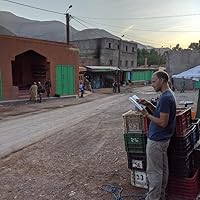
Read
May 25, 20193.5/5 stars. Before coming to Morocco I heard that Paul Bowles was the quintessential author on all things Morocco, so I set out to read The Sheltering Sky, his best known work. After a somewhat disappointing read based on my expectations, it took me until now to give Bowles another shot with The Spider’s House.
The Spider’s House used two narrators: an American author who lived and wrote in Fez, and an illiterate teenage boy trying to find his way in the world. The drastic difference in their worldview expressed in front of the same backdrop of 1950s Fez was a great way for Bowles’ to express ideas about Moroccans, ex-pats, colonizers, and the way people view each other. I found myself questioning my own relationship with Moroccans at times, while also nodding along in agreement when Bowles seemed to hit the nail on the head.
I particularly enjoyed the way Bowles painted a picture of 1950s Fez. The way of life and the belief systems present jumped off the page and took me to an era of Morocco that is far from the one I know. Overall a solid read and one that will probably push me to read either another novel of Bowles’ or potentially a collection of essays or short stories.
The Spider’s House used two narrators: an American author who lived and wrote in Fez, and an illiterate teenage boy trying to find his way in the world. The drastic difference in their worldview expressed in front of the same backdrop of 1950s Fez was a great way for Bowles’ to express ideas about Moroccans, ex-pats, colonizers, and the way people view each other. I found myself questioning my own relationship with Moroccans at times, while also nodding along in agreement when Bowles seemed to hit the nail on the head.
I particularly enjoyed the way Bowles painted a picture of 1950s Fez. The way of life and the belief systems present jumped off the page and took me to an era of Morocco that is far from the one I know. Overall a solid read and one that will probably push me to read either another novel of Bowles’ or potentially a collection of essays or short stories.
June 7, 2012
This is definitely the best of Bowles's first three novels, an extremely detailed and well-crafted story about the beginnings of the Moroccan struggle for independence from France. The novel's protagonist is a Fassi boy and much of the story is told from his point of view, which makes the contrast between his worldview and that of the American characters very stark and, ultimately, devastating. The American protagonists are slowly revealed to be people entirely selfish and not knowledgeable about Islam and local customs (even though the male character, Stenham, supposes himself an expert in such things; Bowles quite nicely reveals how arrogant and frankly stupid orientalist attitudes are). Bowles also nicely represents the divide between Islam and the leninist-voluntarist beliefs and tactics of the Istiqlal as they played out in Fez during the first year of the war. A very enlightening and satisfying read.
October 7, 2012
This should have been an easy one for me.... I like Paul Bowles and I like Fez. Unfortunately, this book just didn't work for me, overly long and meandering. The relationship between Stenham and Lee Burroughs just doesn't ring true. They don't seem that interested in,or even to like, each other. If this had been written by Graham Greene it would have been two hundred pages shorter and the boy would have ended up dead through some act of betrayal. Bowles seems to have been dragged reluctantly into a genre he quite clearly isn't comfortable with... political thriller.

June 15, 2015
Evocative, hypnotic, and strangely prophetic. Though not as widely read as Bowles' other novels, I think this one is his best.

May 20, 2026
Less striking than The Sheltering Sky
Published in 1955, The Spider's House centers on the incipient civil unrest that led to Morocco's independence the following year. In a foreword, Bowles indicated that he sought to avoid writing a political novel though it became one, in fact. Although the novel features the heavy-handed suppression of protests by the governing French authorities, the main protagonists are a young Arab boy (Amar), a long-term resident American (Stenham), and a visiting American woman (Polly Burroughs).
Each has a different take on the unfolding political crisis. Amar is the rebellious son of a respected traditional healer. He is instinctively supportive of the nationalist cause, but his pious, unschooled views are contrasted with the secular approach of the Istiqlal party which is willing to intensify the suffering of the Moroccan population to help foment a rebellion. Polly has a naive view of the situation, and supports the independence movement, regardless of the costs. Stenham presumably represents Bowles' attitude, which is to regret the independence movement, because the push for secular modernization will result in the loss of the picturesque aspects of local culture in Fez where he has made his home.
The novel alternates between the perspectives of Stenham and Amar, highlighting their very different perspectives and lack of mutual comprehension. This, for example, is Amar's reaction when he spots the independent and adventurous traveler, Polly Burroughs, with Stenham in a Fez cafe:
"The woman was obviously a prostitute of the lowest order, because her arms and shoulders were completely uncovered, and the dress she wore had been cut shockingly low in the neck. As if to confirm Amar's verdict, she presently took from her handbag a small case containing cigarettes, and put one in her mouth, waiting for the man to light it for her. Amar was astounded at her brazenness. Even the French women in the Ville Nouvelle did not go to quite such extremes in their lewd dress and behavior. And even the most disreputable prostitute would have taken the care to keep herself from being so badly burned by the sun. This woman had obviously come from working in the fields: she was completely brown from having been out in the open for a very long time. Yet here she was, wearing gold bracelets. His intuition told him that he had made a mistake in his evaluation of her. She was probably not from the fields at all, but had had some misfortune which had obliged her to walk for many days in the sun's glare, and now she was ashamed, and wanted to hide herself from the crowd until she should be white again, which was why she had sought out the empty back room in which to sit."
Stenham and Burroughs, in turn, fail to see Amar's inner life, viewing him as just another needy, uneducated urchin.
This is a fascinating read, though I preferred The Sheltering Sky. Neither Stenham nor Burroughs are particularly attractive characters - he is smugly self-confident and she naively foolhardy, both being blind to the risks they are taking by staying in Fez as the independence unrest escalates. And given the antipathy between the two for much of the novel, the eventual affair seems implausible.
Paul Bowles reviews
1949, The Sheltering Sky, 4*
1954, The Spider's House, 4*
Background on Morocco's Independence
The push for independence intensified after Sultan Mohammed V was exiled to Madagascar in 1953 and replaced by the unpopular Mohammed Ben Aarafa. This sparked widespread opposition, uniting Moroccans in what became known as the Revolution of the King and the People. The nationalist Istiqlal Party, founded in 1943, played a central role in organizing resistance and negotiating with colonial authorities.
Negotiations for independence began after Mohammed V's return in 1955. In March 1956, the French protectorate officially ended, and Morocco regained sovereignty. Spain ceded most of its protectorate in northern Morocco shortly thereafter. In August 1957, Mohammed V assumed the title of king, officially founding the Kingdom of Morocco. He established a constitutional monarchy with a modern government structure and a balance of power to prevent the Istiqlal Party from dominating through a one-party state.
Published in 1955, The Spider's House centers on the incipient civil unrest that led to Morocco's independence the following year. In a foreword, Bowles indicated that he sought to avoid writing a political novel though it became one, in fact. Although the novel features the heavy-handed suppression of protests by the governing French authorities, the main protagonists are a young Arab boy (Amar), a long-term resident American (Stenham), and a visiting American woman (Polly Burroughs).
Each has a different take on the unfolding political crisis. Amar is the rebellious son of a respected traditional healer. He is instinctively supportive of the nationalist cause, but his pious, unschooled views are contrasted with the secular approach of the Istiqlal party which is willing to intensify the suffering of the Moroccan population to help foment a rebellion. Polly has a naive view of the situation, and supports the independence movement, regardless of the costs. Stenham presumably represents Bowles' attitude, which is to regret the independence movement, because the push for secular modernization will result in the loss of the picturesque aspects of local culture in Fez where he has made his home.
The novel alternates between the perspectives of Stenham and Amar, highlighting their very different perspectives and lack of mutual comprehension. This, for example, is Amar's reaction when he spots the independent and adventurous traveler, Polly Burroughs, with Stenham in a Fez cafe:
"The woman was obviously a prostitute of the lowest order, because her arms and shoulders were completely uncovered, and the dress she wore had been cut shockingly low in the neck. As if to confirm Amar's verdict, she presently took from her handbag a small case containing cigarettes, and put one in her mouth, waiting for the man to light it for her. Amar was astounded at her brazenness. Even the French women in the Ville Nouvelle did not go to quite such extremes in their lewd dress and behavior. And even the most disreputable prostitute would have taken the care to keep herself from being so badly burned by the sun. This woman had obviously come from working in the fields: she was completely brown from having been out in the open for a very long time. Yet here she was, wearing gold bracelets. His intuition told him that he had made a mistake in his evaluation of her. She was probably not from the fields at all, but had had some misfortune which had obliged her to walk for many days in the sun's glare, and now she was ashamed, and wanted to hide herself from the crowd until she should be white again, which was why she had sought out the empty back room in which to sit."
Stenham and Burroughs, in turn, fail to see Amar's inner life, viewing him as just another needy, uneducated urchin.
This is a fascinating read, though I preferred The Sheltering Sky. Neither Stenham nor Burroughs are particularly attractive characters - he is smugly self-confident and she naively foolhardy, both being blind to the risks they are taking by staying in Fez as the independence unrest escalates. And given the antipathy between the two for much of the novel, the eventual affair seems implausible.
Paul Bowles reviews
1949, The Sheltering Sky, 4*
1954, The Spider's House, 4*
Background on Morocco's Independence
The push for independence intensified after Sultan Mohammed V was exiled to Madagascar in 1953 and replaced by the unpopular Mohammed Ben Aarafa. This sparked widespread opposition, uniting Moroccans in what became known as the Revolution of the King and the People. The nationalist Istiqlal Party, founded in 1943, played a central role in organizing resistance and negotiating with colonial authorities.
Negotiations for independence began after Mohammed V's return in 1955. In March 1956, the French protectorate officially ended, and Morocco regained sovereignty. Spain ceded most of its protectorate in northern Morocco shortly thereafter. In August 1957, Mohammed V assumed the title of king, officially founding the Kingdom of Morocco. He established a constitutional monarchy with a modern government structure and a balance of power to prevent the Istiqlal Party from dominating through a one-party state.

December 31, 2019
This book takes place in the city of Fez, Morocco. It takes place in the 1950s, when the French are in control. The Muslims hate the French, and the French take many underhanded ways of trying to control them. The three main characters are Stenham an author, Madame Veyron, and Amar, a Muslim boy. To get an idea how much the Muslims hate the French, here is a musing by Amar:
P.129
"under his breath he began to invent a long prayer to Allah, asking him to see to it that every Frenchman, before he was dragged down to hell, which was a foregone conclusion in any case, might suffer, at the hands of the Muslims, the most exquisite torture ever devised by man. He prayed that Allah might help them discover new refinement in the matter of causing pain and despair, might show them the way to the umposing of hitherto undreamed - of humiliation, degradation and agony. 'and drop by drop their blood will be licked by dogs, and ants and beetles will crawl in and out of their shameful parts, and each day we will cut away one more centimeter from each Frenchman's entrails. only they must not die, ya rabi, ya rabi. Never let them die. At each corner of the street let us have one hung up in a little cage, so when the lepers come by they can use them as latrines, and we will make soap of them, but only for washing the sheets of the brothels. And one month before a woman is to give birth we will pull the child out and make a paste of it and mix it with the flesh of pigs and the excrement from the bellies of the nazarenes' own dead, and feed their virgins with it.'
Stenham prides himself on understanding the natives of Fez. He has spent 5 seasons living in Fez, and is regularly invited to dinner at the home of a Muslim family, who like him so much that they regularly ask him if he would not like to join the Muslim religion. But Stenham is an atheist, and one day, musing on what the Muslims said happened upon death, and what he himself believed, he thought:
P.197
"as a child of six he had known that when the physical organism ceased to function, consciousness was extinguished, and that was death, beyond which there was nothing.... matter was conditioned by time, but not consciousness; it existed outside time. Was there any valid basis for assuming that it was possible to know what went on inside the consciousness at the moment of death? It might easily seem forever, that instant when time ceased to function and life closed in upon itself, therefore it could prove to be inextinguishable. The immediacy of the experience had left him with a sensation of nausea; it was impossible to conceive anything more horrible than the idea that one was powerless to stop existing if one wanted, that there was no way to reach Oblivion because oBlivian was an abstraction, a fallacy.
Amar sees the world through the teachings of his religion, and his father, who is descended from the Prophet. Therefore, he strictly controls his feelings of greed when Madame Vervon gives him money to buy a gun, to protect himself in the war against the French.
P.361
"he folded the money carefully and put it away again. Then he took 200 francs out of the handkerchief in which his own money was tied and put it into his other pocket. When he came out, Mohammad was standing there, looking anxiously toward the door, as if he were afraid AMar might simply vanish. This was a mystery Amar had never been able to fathom. The rich were not ashamed to let it be seen that they cared about money. Where a man with only 20 rial in the world would as a matter of course use those 20 rial to pay for all the teas at the table, another with a thousand rial in his wallet, when the time came to leave the cafe, would begin to fumble inside his clothing and murmur aloud: 'let's see, there are six people at 15 francs each, that's 18 rial. I have only 15 francs change, which is exactly my share. Each one had better pay his own.' for the poor man such behavior was unthinkable : his shame would be so great he could never face his friends again. But the rich gave it no importance. 'that will all change when the French leave,' Amar was fond of thinking. The concept of Independence was easily confused with that of social equity."
P.129
"under his breath he began to invent a long prayer to Allah, asking him to see to it that every Frenchman, before he was dragged down to hell, which was a foregone conclusion in any case, might suffer, at the hands of the Muslims, the most exquisite torture ever devised by man. He prayed that Allah might help them discover new refinement in the matter of causing pain and despair, might show them the way to the umposing of hitherto undreamed - of humiliation, degradation and agony. 'and drop by drop their blood will be licked by dogs, and ants and beetles will crawl in and out of their shameful parts, and each day we will cut away one more centimeter from each Frenchman's entrails. only they must not die, ya rabi, ya rabi. Never let them die. At each corner of the street let us have one hung up in a little cage, so when the lepers come by they can use them as latrines, and we will make soap of them, but only for washing the sheets of the brothels. And one month before a woman is to give birth we will pull the child out and make a paste of it and mix it with the flesh of pigs and the excrement from the bellies of the nazarenes' own dead, and feed their virgins with it.'
Stenham prides himself on understanding the natives of Fez. He has spent 5 seasons living in Fez, and is regularly invited to dinner at the home of a Muslim family, who like him so much that they regularly ask him if he would not like to join the Muslim religion. But Stenham is an atheist, and one day, musing on what the Muslims said happened upon death, and what he himself believed, he thought:
P.197
"as a child of six he had known that when the physical organism ceased to function, consciousness was extinguished, and that was death, beyond which there was nothing.... matter was conditioned by time, but not consciousness; it existed outside time. Was there any valid basis for assuming that it was possible to know what went on inside the consciousness at the moment of death? It might easily seem forever, that instant when time ceased to function and life closed in upon itself, therefore it could prove to be inextinguishable. The immediacy of the experience had left him with a sensation of nausea; it was impossible to conceive anything more horrible than the idea that one was powerless to stop existing if one wanted, that there was no way to reach Oblivion because oBlivian was an abstraction, a fallacy.
Amar sees the world through the teachings of his religion, and his father, who is descended from the Prophet. Therefore, he strictly controls his feelings of greed when Madame Vervon gives him money to buy a gun, to protect himself in the war against the French.
P.361
"he folded the money carefully and put it away again. Then he took 200 francs out of the handkerchief in which his own money was tied and put it into his other pocket. When he came out, Mohammad was standing there, looking anxiously toward the door, as if he were afraid AMar might simply vanish. This was a mystery Amar had never been able to fathom. The rich were not ashamed to let it be seen that they cared about money. Where a man with only 20 rial in the world would as a matter of course use those 20 rial to pay for all the teas at the table, another with a thousand rial in his wallet, when the time came to leave the cafe, would begin to fumble inside his clothing and murmur aloud: 'let's see, there are six people at 15 francs each, that's 18 rial. I have only 15 francs change, which is exactly my share. Each one had better pay his own.' for the poor man such behavior was unthinkable : his shame would be so great he could never face his friends again. But the rich gave it no importance. 'that will all change when the French leave,' Amar was fond of thinking. The concept of Independence was easily confused with that of social equity."

March 29, 2020
Bowles is great at atmosphere and at building tension. He is less good at providing satisfying resolutions to the tension he has built, particularly in his novels. I think he is a much better short story writer than novelist, but I'm glad to have read his novels.
This book, like his others, is set in North Africa. It's Morroco on the eve of an uprising against the French Colonials. One interesting thing here is that, though the French are central to everything that's going on, there are basically no French characters in the book. They have nothing to say. Instead, we follow three main characters.
First, there's an Arab teenager, who turns out to be the main character of the book. He seems naive, but is also uncannily knowing about things. He is a purely devout Muslim, and he sees things from a perspective that the Nazarines (Americans) cannot understand. Nor, as it turns out, can the revolutionary Arabs trying to overthrow the French. Thus, apart from his father who beats him mercilessly, he stands separate from everyone else in the book. He represents the old ways, which are both incomprehensible and pure.
Then there is the expatriate American novelist. He loves the Arab world for its stasis, and thus dislikes the ways in which the French occupation have corrupted it. He doesn't recognize that, without the Colonialization, there would likely be no opportunity or place for himself in that world. Still, he would like to be able to cling to the old ways, simply to observe them.
Finally, there is an American woman who is a traveller. She is probably a member of the Communist party, but its unclear how deeply involved she is. Her sympathies are for her ideas of progress and the people, but she has basically zero understanding of either, and thinks that everything should change to fit her view of the world, even though she doesn't have any clear idea of the world as it actually is.
The writer and the the woman have an odd romance. It's clear from the outset that he has the hots for her, and is very gentlemanly about it. She, on the other hand, loathes him, though she keeps his company. Her loathing grows and grows, but like everything else with her, its based on a misconception of him and even of herself.
From this description, it may sound like she is a shallow character, but I actually thought her development was excellent and she was a more fully rounded character than the writer. And the characterization of the teen is quite remarkable.
Based on all of the above, I should have liked the book more than I did. Unfortunately, I found the structure a bit odd, and I thought the resolution unsatisfying. It did not have the harrowing ending of The Sheltering Sky, which was horrible but inevitable and oddly beautiful. Instead, it just sort of ended, and while the major character conflicts came to rest, I felt left with the impression that they were only set aside, and not actually resolved. (Can't go into more without deep spoilers which would still only give my opinion.)
This book, like his others, is set in North Africa. It's Morroco on the eve of an uprising against the French Colonials. One interesting thing here is that, though the French are central to everything that's going on, there are basically no French characters in the book. They have nothing to say. Instead, we follow three main characters.
First, there's an Arab teenager, who turns out to be the main character of the book. He seems naive, but is also uncannily knowing about things. He is a purely devout Muslim, and he sees things from a perspective that the Nazarines (Americans) cannot understand. Nor, as it turns out, can the revolutionary Arabs trying to overthrow the French. Thus, apart from his father who beats him mercilessly, he stands separate from everyone else in the book. He represents the old ways, which are both incomprehensible and pure.
Then there is the expatriate American novelist. He loves the Arab world for its stasis, and thus dislikes the ways in which the French occupation have corrupted it. He doesn't recognize that, without the Colonialization, there would likely be no opportunity or place for himself in that world. Still, he would like to be able to cling to the old ways, simply to observe them.
Finally, there is an American woman who is a traveller. She is probably a member of the Communist party, but its unclear how deeply involved she is. Her sympathies are for her ideas of progress and the people, but she has basically zero understanding of either, and thinks that everything should change to fit her view of the world, even though she doesn't have any clear idea of the world as it actually is.
The writer and the the woman have an odd romance. It's clear from the outset that he has the hots for her, and is very gentlemanly about it. She, on the other hand, loathes him, though she keeps his company. Her loathing grows and grows, but like everything else with her, its based on a misconception of him and even of herself.
From this description, it may sound like she is a shallow character, but I actually thought her development was excellent and she was a more fully rounded character than the writer. And the characterization of the teen is quite remarkable.
Based on all of the above, I should have liked the book more than I did. Unfortunately, I found the structure a bit odd, and I thought the resolution unsatisfying. It did not have the harrowing ending of The Sheltering Sky, which was horrible but inevitable and oddly beautiful. Instead, it just sort of ended, and while the major character conflicts came to rest, I felt left with the impression that they were only set aside, and not actually resolved. (Can't go into more without deep spoilers which would still only give my opinion.)
Displaying 1 - 30 of 202 reviews