The author traces the chequered career of Jinnah from his birth to death, probes every aspect of hispolitical life, and gives a lucid and penetrating insight into his relentlesspursuit of power which eventually resulted in the division of India and thebloody and disastrous aftermath that followed in its wake and which hascontinued to destabilise South Asia ever since.
I have a lot of respect for Rafiq Zakaria because of his book 'Muhamamd and Quran' where he refuted Rushdie's book 'Satanic Verses' with reasoning and research.
But this book is written with pre-decided motive (evident from the preface of the book) to make Mr Jinah responsible for all the wrongs that followed partition of India. Though, I don't consider Mr Jinah an infallible, who could not commit any mistake, but the author does not forgive him even after quoting the mischievous actions of Nehru and Patel.
The author conveniently failed to address some important aspects of division of India like:
(i) Why Congress was adamant to have united India, when British had conquered different states and then made them part of one country. Akhand Bharata might be some mythical concept, but before British in which era of history, India was united as it was under British Raj before partition.
(ii) The author is of the view that congress leaders were naive to give statements which provoked Jinah not to show any flexibility from his demand of division. Later these leaders like Nehru and Patel regretted. If they had regretted and had some sincerity for people who suffered due to partition, why did they not provided Pakistan its due share in its infancy? This is obvious dishonesty at the part of Congress which support demand for separate country for Muslims.
(iii) Mountbatten had definitely acted in favour of Nehru to create problem like Kashmir, but the author failed to condemn Nehru and Mountbatten for such conspiracy and keep on suggesting that Pakistan is creating problem in Kashmir. This is sheer hypocrisy from the author who is ready to judge Muslim League and its leaders but fails to consider conspiracies by Congress and India's first Governor General.
(iv) The author failed to consider movements like Shudhi, which obviously created concerns among Muslims (rightly or wrongly).
Must read to know about the political side of the partition. Though, the author blames Jinnah in entirety, the blame should lie on Nehru, Mountbatten and Jinnah.
Mohammed Ali Jinnah (1876-1948) saw the realisation of his ambition, the formation of a sovereign nation for Indian Muslims: Pakistan, a year before he died as its supreme leader. Jinnah was a brilliant barrister and orator. His brilliance is described by Rafiq Zakaria in his book "The Man who divided India". The author, clearly recognising his subject's skills, does not rate him highly as an individual. His lucid, well-reasoned text makes this very clear.
At first, Jinnah, who was always attracted to politics, strove for Hindu-Muslim unity/harmony in pre-independence India. Various factors, including his disapproval of the anti-British Khilafat uprisings of India's Muslims following WW1, led to him being sidelined by both the Indian National Congress and the main Indian Muslim political groupings. This led to him leaving India and establishing a legal practice in London and also attempting (in vain) to become involved in British parliamentary politics.
Returning to India after a few years in London, Jinnah recommenced his struggle to become prominent in the Indian polical scene. To do this, he abandoned the idea of working for Hindu-Muslim unity for the opposite - the alienation of India's Muslims. This proved successful. Under his leadership of the Muslim League, he promoted the idea of a separate sovereign state for India's Muslims by indoctrinating his followers to believe that as the Congress became more powerful and when the British left India, Muslims would be at the very least dominated by the Hindus. By 1947, when the British gave up their hold on India, the formation of Pakistan, a sovereign state for Indian Muslims, was guaranteed.
The formation of Pakistan was associated with mass movements of people: Muslims into Pakistan, Hindus and Sikhs out of the newly created country. During this 'Partition', there was massive loss of life and much irreversible misery both in Pakistan and India. Furthermore, Pakistan was not one contiguous territory, but two widely separated portions: West Pakistan and East Pakistan (now Bangladesh).
Zakaria describes how Jinnah, the great leader of the Muslims, was really a very unobservant Muslim. Throughout his life, Jinnah ate pork, enjoyed alcohol, hardly knew the Koran, and never learnt Urdu, the language of the Muslims of the Indian subcontinent. According to Zakaria, Jinnah did not hold his fellow Muslims in high regard, to put it mildly. It appeared to me while reading the book that Jinnah took advantage of Muslim fears of possible domination by the Hindus to further his ambitions of achieving political prominence, which were indeed successful.
Zakaria uses the last few chapters of his fascinating book to discuss the legacy of Jinnah's creation, Pakistan. He paints a gloomy picture. Having espoused the idea of the separateness of the Muslims, and promoted the idea that the Indian Muslims were a 'race' or 'nation' separate from their non-Muslim Indian neighbours, Jinnah, like his hero the Turkish leader Kemal Ataturk in Turkey, decided that Pakistan should become a 'modern' secular state rather than some kind of Islamic entity. He wanted to govern Pakistan using the model of British imperialism, which the Indian subcontinent had just freed itself. This has not happened in Pakistan; it is now an Islamic state.
Zakaria emphasises that far from unifying India's Muslims, Jinnah's creation of Pakistan has achieved the very opposite. The Muslims of the subcontinent are now divided between Pakistan, India, and Bangladesh. Many families have members now separated by international borders. Many Muslims in India continue to live with the fear that they are somehow threatened by the Hindu majority in the country. In addition, within Pakistan itself, different factions of Muslims (Sunnis, Shias, and others) are in permanent conflict with each other. In Bangladesh, there are also problems. And, if that were not bad enough, the political situation in modern Pakistan is extremely unstable and life there is far from peaceful. From what I have read in Zakaria's interesting and highly readable book, Jinnah's dream of unifying India's Muslims has turned into a nightmare.
To conclude, it should be mentioned that Zakaria, an Indian Muslim, has served the Indian Congress Party, which opposed Jinnah in the years before independence, as a high-ranking official. Despite that, I felt that his book attempts quite successfully to give a balanced view of Jinnah and his politics without concealing his own views.
Over the last few years my interest in reading about India’s freedom struggle and the Partition has been growing.
As I started reading I discovered that I know very little about one of the principal actors of the drama – Muhammad Ali Jinnah. For me there is a general dislike of Jinnah (hatred is an emotion a little too strong for me), but nothing much beyond that. But there may be some subconscious admiration for one quality of the man – single-minded determination for a cause. So I decided to learn a little more about a man who broke not just a geographical territory, but the civilizational consciousness of a people. Almost single-handedly.
But read what?
As I looked around I found a number of options. Hector Bolitho’s Jinnah: Creator of Pakistan. MJ Akbar, in his Gandhi’s Hinduism: In Struggle Against Jinnah’s Islam, informs us that the New Zealander Bolitho was commissioned by the Govt of Pakistan to write a biography of the nation’s creator. A sarkari biography, that is. And we Indians know what sarkari history reads like! So Bolitho is out.
Then, Ayesha Jalal’s The Sole Spokesman: Jinnah, the Muslim League and the Demand for Pakistan. But – I may be wrong – this Cambridge University Press-published book somehow seemed a little academic. And I was sure that with my limited understanding it would go over my head.
What about Jinnah of Pakistan by Stanley Wolpert? I was curious. Wolpert has written a number of books. On Partition, on Gandhi, Nehru and even a general history of India. But I needed to learn a little more about Wolpert before taking up any of his books.
So, I finally settled on Rafiq Zakaria. Why Rafiq Zakaria?
For some time my interest has been growing about the works of two Indian Muslims. First, Mahomedali Currim (MC) Chagla. His autobiography – Roses in December – gets repeatedly recommended. By people whose judgment I respect. And, second, Rafiq Zakaria. These are two gentlemen – among many, I am sure – whose take on the issues relating to Indian Muslims is worth listening to. Besides, both of them have been published by the Bharatiya Vidya Bhavan.
So, how did The Man Who Divided India turn out?
Excellently. I would say.
Look at the man. A man who was not a practicing Muslim, who did not know Urdu or Koran, who enjoyed pork, cigar and Saville Row suits, who married the socialite daughter, 24 years his junior, of his Parsee friend, became the champion of “Muslim nationalism” crying himself hoarse that Islam was in danger.
And look at his metamorphosis. It is almost unbelievable that this is the same man speaking:
“… towards Hindus our attitude should be of goodwill and brotherly feelings. Cooperation to the cause of our motherland should be our guiding principle.” (c. 1917)
“It is quite clear that Hindus and Mussalmans derive their inspiration from different sources of history. They have different epics, their heroes are different; very often the hero of one is the foe of the other and, likewise, their victories and defeats overlap. To yoke together two such nations under a single state… must lead to… final destruction.” (Presidential Address in the Muslim League Annual Session, Lahore, 1940)
“… we shall have either a divided India or a destroyed India.” (Calling for Direct Action Day, July, 1946)
“You may belong to any religion, caste or creed – that has nothing to do with the business of the State.” (Address to the Pakistan Constituent Assembly, August, 1947)
Needless to say that in this makeover he has been ably assisted by the omissions and commissions of the people who occupy large space in our school history textbooks. Impractical idealism of a Gandhi or stupid arrogance of a Nehru.
But beyond the blind hatred that we, Indians, harbour, or the equally blind hero-worship of the Pakistanis for their Quaid-e-Azam, study of Jinnah’s life will offer us many a lesson as to how politics should not be done. At least not the weak-kneed variety we witnessed in the 1940s.
When a past-his-prime male Muslim film actor, gyrating as a 'Pathan', dances around with a scantily-clad Hindu female actor and we search for an adequate explanation in the faiths of the actors, probably Jinnah can afford to have a hearty laugh that his two “nations” have not stopped colliding even after seventy five years.
The last third of the book deals with Pakistan after Jinnah. It is very well-written. I would specially commend the last chapter, “The Historic Blunder”.
In 300 pages Shri Zakaria, with his delightful command over English, has done a good job of recreating the political life of a man who sowed the poison seed the bitter harvest of which we are still reaping.
The revelation is this book is truly enlightening, M.A. Jinnah`s hands are red with the blood of millions of innocent human beings. Jinnah was a non practicing Muslim, who used religion as a tool to conduct the vivisection of India and render thousands homeless due to partition resulting in largest migration ever in the history of mankind. The only reason he wanted partition was to satiate his endless ego which was hurt when he was sidelined by the congress and the league who refused give him any importance or recognize him as the sole representative of the Muslims, though to be fair, Jinnah alone cannot be blamed for the partition of India, our leaders in the congress like Gandhi, Nehru, Patel, Ali brothers failed to keep a check on his communal growth or to vehemently protest against the partition. In the end the Congress leaders as well its supporters were too eager to think the long term consequences of this ghastly surrender to fate to which all the Congress leaders acquiesced.
This is a nice book covering the most important aspects of the Indian freedom movement post 1930's. The theme of the book, as it suggests, revolves around Mohammed Ali Jinnah or popularly known as Jinnah. Author Zakaria has done a brilliant job is collating all the facts from the history and presented us a riveting account of the thug life of Jinnah. Now, why I said thug life is the thematic overview of this book.
A stubborn, naive, audacious, confused person like Jinnah can create a havoc in a country to fulfill their personal agenda. Jinnah as the author puts it in his research work is not a religious man. Few facts from the book suggests that, Jinnah is not a practicing Muslim at all. He was so awed by the western living lifestyle and adopted till the end of his life. The clear cut explanation by the author leaves us with an opinion that, Jinnah was a nationalist during his earlier days till the arrival of Gandhi. Once he lost his limelight to Gandhi and certainly Gandhi brought all those innovative idea of Non-violence movement had obviously attracted the crowd like never before. This has left Jinnah infuriated, which made him to return to London.
After few years practicing law in London, Jinnah with a determination returned to India with the sole purpose of getting back his position in the political arena. He went all hook and crook and made himself the undisputed leader of the Muslim League and even forced the British authorities to accept him as the single leader representative of Muslim. His ego clashes with Gandhi and Nehru-Patel duo made him to stick to his country dividing idea and he never shown any sign of compromise. The rest was history.
Author had brilliantly explained the grim situations of both India and Pakistan post the partition. The major setback was for Pakistan with its chunk of the country staying in the East (East Pakistan, now Independent Bangladesh) separated by the wide gap. This has made Pakistan and their corrupt leaders to unmanageable. Eventually, East Pakistan became Bangladesh with the help of India in 1971. Whereas Pakistan, as per the author's research work is still under turmoil. The religion fundamentalists, and the Mullahs are still poking their noses in the administration of Pakistan. With not a complete democratic government and still keeping one foot on religious ideologies and gazing blankly at the modernized world, Pakistan is paying the price. Education, Banking, Industry and Healthcare has hit the rock-bottom. The lack of money and basic education and importantly with the advent of thousands of Madrasas in Pakistan is taking its youth to terrorism with a radicalized brainwashed fundamentalist ideologies.
Overall, an important book for all the history buffs. The language is very simple and an easy read. The author must be highly appreciated for the research work he has put in this book. Recommended.
Provides some interesting perspective. One of the arguments of the author is that Jinnah wasn't even a believer in Islam; He started using it only for political gains. He provides some evidence to corroborate that claim. An interesting anecdote : apparently Jinnah claimed that some pictures that he saw in a foreign university reminded him of the Prophet Mohammad; when Islam officially prohibits giving form to the prophet, how could Jinnah have seen the prophet's pictures to make this comparison? Obviously he didn't; he just used this to please Muslims about his visit to that place.
Few thoughts: 1) the fact that this book criticizes Jinnah didn't go very well with a Muslim friend of mine. He immediately launched an attack on the author. He claimed that the author did all that just for money. He didn't provide any reasoning or evidence/references to refute the claims of the author though. This incident is a reminder to me about the many difficulties India is facing with its Muslim community. I have evidence that suggests that this friend of mine, who is highly educated, holds Bin Laden in high regard.
2) Both the men, Nehru, and Jinnah, who took over India from the British, were completely disconnected from the socio-economic situation of the millions of masses that they came to lord over. I remember reading something to the effect that Nehru is not a believer in Hinduism in his book 'The Discovery of India'. Both Nehru and Jinnah were plush with wealth they inherited from their parents. Both were educated in England and chose to live like the English in India; their dressing, food habits, even their love lives were English. I'm not sure about Jinnah but Nehru apparently ruled India like he was the monarch; and he was very successful in establishing his dynasty, and making sure that his progeny would rule India for generations to come. Is it any surprise that the subcontinent continues to languish in inescapable poverty even 62 years after the British have left?
The Man who Divided India is an absorbing portrait of Mohammad Ali Jinnah, who doggedly fought for and realized creation of Pakistan based on the theory of two nations - of Hindus and Muslims, which defied any logic then and was proved as such by subsequent events. Zakaria says in the preface that ‘this book would concentrate on how and why he (Jinnah) sought to divide Hindus and Muslims and brought about the division of India’ and the book accordingly traces the trajectory of Jinnah’s journey from his return to Bombay after qualifying as barrister-at-law and his initiation into politics to the time his all consuming passion was attaining Pakistan from the British before they left the shores of India. Zakaria keeps the narrative light and engaging.
The character of Jinnah that emerges from the narrative is that of a well-meaning, progressive and principled interlocutor for fellow Muslims who, upstaged by the mass-based politics of Gandhi and finding that he is fast losing relevance, briefly withdraws from politics to return with vengeance and a lethal agenda. Had he remained true to his original moorings, Jinnah would have been a noble nationalist albeit an also-ran supporting actor like Maulana Abdul Kalam in the sterling cast of independence movement. By projecting himself as the one and only champion of Muslims and single-handedly securing Pakistan, he has gained the formidable status as Quaid-i-Azam, the Great Leader, in Pakistan and seen as an arch villain in India.
Jinnah did not start as a rabid communalist but when he changed the course, he did so completely negating every value and principle he espoused in early years of his political engagement. In the initial years and for quite some period he not only championed Hindu-Muslim unity (while seeking to protect the interests of Muslims) but also took positions that were opposed to what Muslims saw as important to them. He was a staunch nationalist who opposed division of Bengal and refused to join All-India Muslim League founded in Dacca as a counter to Congress in 1906. Similarly, he opposed the idea of separate electorate for the Muslims as ‘a poisonous dose to divide a nation against itself’. Yet, he later used the very same Muslim League to divide the country on the basis of religion. He bitterly opposed Khilafat and non-cooperation movement characterizing it as seditious and that he would not be a party to such an open rebellion that threatened public life. The same Jinnah a few years down the road, after turning coat literally from Saville Row suit to sherwani, had no hesitation in calling for Direct Action to give a foretaste of what would happen if Pakistan was not given. He also disliked religion being brought into politics but his entire campaign for Pakistan was based on religion.
Jinnah was the unlikeliest champion of Muslims. To begin with he belonged to a sect of Muslims – Khoja Muslims, followers of the Aga Khan, who were not considered as true Muslims. He did not speak Urdu; he could not recite even a single line from the Holy Quran. He ate pork and loved his drinks. He wore western clothes and swapped them for traditional sherwani and fez only when he started earnestly wooing his community to rally them around the idea of Pakistan. He disliked the rough and tumble of confrontational politics that would soil his neatly pressed suit and came with the risk of going to jail. He lived in luxury and did not find it necessary to connect with common people as did Gandhi. He just needed to play on the fear of Muslims that they would live under the domination of majority community of Hindus in united India. Even as Punjab and Bengal were witnessing mass murders and rapes on the eve of independence, Jinnah was ensconced in his bungalow unconcerned by the goings on.
The tragedy of Jinnah is that the two-nation theory that he based his argument for Pakistan was seriously flawed. Zakaria quotes some very interesting conversations of Jinnah with Gandhi, members of Cabinet Mission and Mountbatten. Jinnah argued that Hindus and Muslims were not merely religions but were in fact quite different and distinct social orders, and that it was a dream that they could ever evolve into a common nationality. Gandhi on the other hand believed that it was difficult to tell apart a Bengali Hindu and a Bengali Muslim because they spoke the same language, ate the same food and dressed alike. Similar was the case with a Hindu and a Muslim in any other part of India. Gandhi told Jinnah that he found ‘no parallel in history for a body of converts and their descendants claiming to be a nation apart from the parent stock’, to which Jinnah’s response was that true welfare of not only Muslims but the rest of India lies in division of India…’
There was a catch in Jinnah’s proposal for division of India. He wanted the entire Punjab and Bengal to be carved out as Pakistan. The Cabinet Mission argued that they saw no justification in including within Pakistan those districts of Punjab and of Bengal and Assam in which population was predominantly non-Muslim. Creation of Pakistan as proposed by Jinnah and the Muslim League, the Cabinet Mission and later Viceroy Mountbatten argued, would not only not resolve the issue but would result in sizeable minorities (of Hindus) in Pakistan and (of Muslims) in India. When Mountbatten suggested that the same logic applied by Jinnah to create Pakistan would compel him to divide Punjab and Bengal, Jinnah initially protested saying he did not want a moth-eaten Pakistan; but sadly that was the compromise everyone ended up agreeing to by the end of the day!
Zakaria also provides an insightful analysis of consequences of partition based on two-nation theory. The first schism appeared when West Pakistan tried to impose Urdu as official language on Bengalis. The so-called religious affinity did not bind the Muslims of West and East Pakistan together. The East Pakistan parted ways after ironically a bloody genocide by fellow Muslims in 1971. The migrants from India to West Pakistan, the mujhahirs, faced discrimination in many ways and did not fully assimilate into Pakistani society. The Muslims from Bihar and M.P. who migrated to East Pakistan, not being Bengalis, stuck out like a sore thumb. Their siding with the West Pakistan in the Bengali Muslims’ liberation struggle, made their subsequent existence difficult. India has been left with a huge numerical minority of Muslims who also faced (and continue to face) discrimination in many ways.
It is tempting to speculate what it would have been like if India remained united – apart from having formidable cricket and hockey teams! I will leave you with that thought:-)
Overall a good read, although the author could have highlighted more on the roles played or abstained from playing by leaders like Nehru, Gandhi, etc. But since author does not claim to have written a comprehensive history behind partition this cannot be stressed much. With his anecdotes he has highlighted how Jinnah took a good chunk of people for a ride with his stories that were not only lies but also un-Islamic.
The best exposition in its most robust form of what one can call the 'nationalist Muslim' view on Hindi-Muslim relations in the run up to independence. Needless to say Jinnah emerges as the principal villain of the the piece in line with traditional Indian historiography on the subject. Still there is some remarkable criticism of Nehru and Patel, neither of whom are portrayed in a flattering light in the last minute negotiations in the run up to Partition. Surprising, given the author is a stalwart of the Congress party in post-colonial India, having been an MP and Minister in several Congress governments both in Maharashtra and at the centre. Despite recurring inaccuracies and its overall bias, well worth reading.
Good book. Though it defined the events backing the grotesque event behind the partition of India which claimed many lives. It is also to understand the on what bases the first premier of Pakistan what to run that country and how he wanted to create a delightful nation to muslims following the example of Mr Mustafa kemal ataturk. His early demise has left the pakistan we see now, still what he viewed was good for muslims inspite of his ego and selfishness. This book is to understand Mr Jinna and his views on Muslims and in creating a Muslim nation. This book was good. A person should have some history back ground, not the history of India or history of pakistan but history of similar events that happened across the world like raise of third reich, balkan wars, raise of Yugoslavia under Mr Josip Broz Tito against the communistic principles of USSR. If only you read all these, then you can completely undertand what really happened to Indian, Congress, Mr Jinna and Muslim League. Please don't just spat whatever you feel like. READING, every literate can do, UNDERSTANDING, on whole sense, needs knowledge and wisdom.
The author hates Jinnah - that much is plainly obvious in every chapter. But he does try to be fair to the man. I think he is not necessarily wrong in his estimation of Jinnah, but his naked hatred takes away some credibility from an otherwise good biography. One thing that you cannot take away from the author is the undiluted passion in his writing. Its this fervour that makes this book, in my opinion, one of the best popular criticisms of Jinnah - exposing his double-standards, his ego, his willingness to sacrifice all principles, and at the same time, recognizing his obvious genius. Quite readable and informative (though partially biased), its a one-stop shop for all wannabe-Jinnah-bashers!
The appropriate rating would be 3.5 IMO, but b/w a choice of 3 and 4, I'm going with 4
A man's ego is hurt and just to avenge this humiliation he does a volte face to his life long conviction and embarks on a path which wreaks havoc on millions of innocents and completely changes the couse and destiny of a great mass movement.An unbiased,logical and factful book written in an unimitable story telling style.This book shattered some of my long held notions about Jinnah,undisputably one of the most important characters in our freedom movement.This book will help you to understand the genesis of the burning flame of contemporary communalist ideologies prevalent in south-asia consuming thousands every year.
Quaid-e-Azam a Pork eater drank 3 pegs of Scotch daily & never spoke Urud divided India on the pretext of Religion... He built a Nation riding on millions of dead bodies, just to suffice his politic dream ... The gravity of its benefit to Indian Muslims is still a protruding question... A brief comparative study of 'Mahatma & Jinha', 'India & Pakistan'... Hapless Nehru & Sardar's handling Jinha... Author Rafiq Zakaria has done a commendable job... Worth reading it, 'Dudes'...
An eye opener for those who are still in the dilemma that who was primarily responsible for the division of india.Probably a hawkish and critical approach from Rafiq, a nationalist pained by the abortion of India.A well compile book with a quantum of facts.A must read.
I havent Read a Single book, but the interestest generated n displayed by the Reader's community is my 5* to Rafik miya. True to himself is true to nation. True miya bhai. Thank you. Adab.. jug jug jio



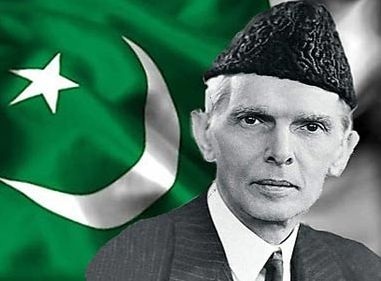 Jinnah