

What do you think?

The Crisis: The President, the Prophet & the Shah-1979 & the Coming of Militant Islam
The conflict between militant Islam and the West was catalyzed in Iran in 1979, making this the best kind of history: a book that helps us understand not only the past, but the present. The author traveled to Iran and Europe to interview participants whom previous books had ignored, so for the first time we also get the full, inside story of what happened.
480 pages, Hardcover
First published October 27, 2004
Ratings & Reviews
Friends & Following
Create a free account to discover what your friends think of this book!
Community Reviews
Displaying 1 - 8 of 8 reviews

October 19, 2008

David Victor Harris - image from ketonetworth.com
In this account of Iranian hostage crisis, we are treated to detailed portraits of Reza Shah Pahlavi and Ruhollah Khomeini, and the routes to their arrival in the turmoil of the late 1970s. Each of the players is given significant treatment. Zbigniev Brezinski comes across as an aggressive neocon-like militarist, eager to apply a military solution, and not all that interested in the survival of the hostages.
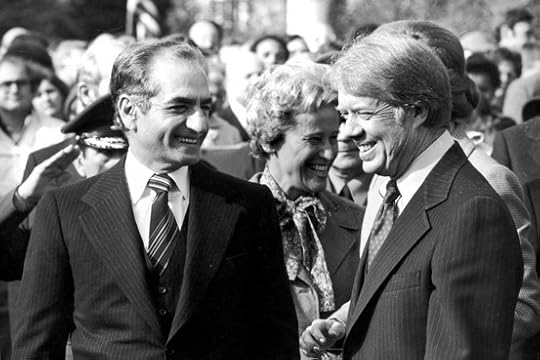
Reza Shah Pahlevi with Jimmy Carter - image from PBS
Carter made a series of mistakes, mostly in being so out front about his support for the Shah, and allowing his intelligence (military, not personal) to be hamstrung by an old agreement about not spying on Iran. Still, he gained the respect of the military guys involved, showed plenty of resolve, and tried his best to see that the hostages were returned home alive.
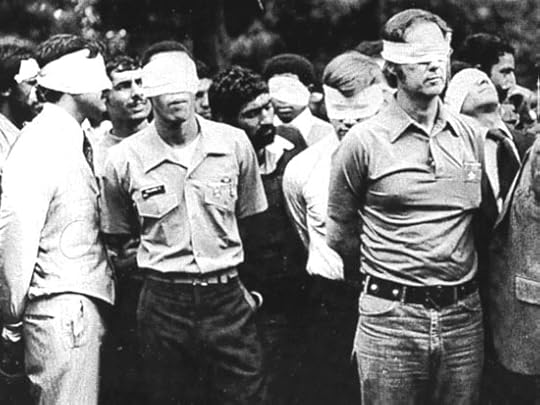
Americans held hostage in Iran - image from The History Guy
The picture we get of the Iranian side is quite interesting as well. The factions were not all in synch and political infighting and positioning played a major role in the unfolding events. We get a view of Khomeini that is new to me. He was or played a remote guy who would not take much initiative once they had taken over, but would ok actions or reject them only after they had occurred. Strange. The students who took the hostages were not officially part of the government, but freelancers. It was no small thing to get custody of the hostages shifted from them to the government.
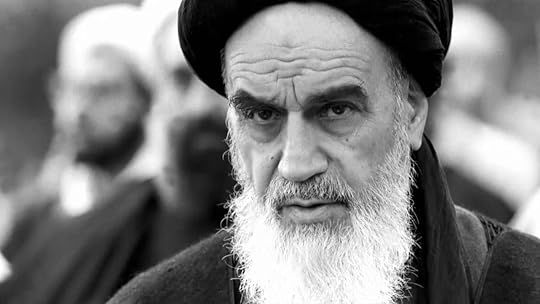
Ayatollah Ruholla Khomeini - image from HuffPo
We see much of the internecine politics between Bani Sadr and Ghotsbeydegh. I had not realized how much Kurt Waldheim had screwed things up during one phase of negotiations. Harris raises the issue of whether the Republicans had bargained with Iran about cutting them a good deal if they would hold the hostages long enough to embarrass Carter. It was not proven in several investigations, but the notion lingers in the air that it was not disproved either. Ultimately patience and sanctions paid off. When Iraq invaded, Iran became more needful of military supplies that had been denied as a result of the international boycott, and thus more interested in resolving the hostage standoff. It is a very interesting book, a must read for anyone interested in this period of history. The level of detail is high, but not so high as to make it an unpleasant read. Highly recommended. Dare we say captivating?
Review first posted in 2008
=============================EXTRA STUFF
Links to the author’s GR, and wiki pages

March 11, 2012
I was born in 1979, and the Iranian Revolution and hostage crisis occupy a blind spot between the history I learned in school and what I remember happening. While I can't compare it (yet) to other books on this topic, The Crisis is a clear, easy, and riveting read for morons such as myself who know nothing of these events. The story unfolds like a particularly excruciating and cringe-inducing drama, with its principal actors -- the shah, Khomeini, Carter, and other major political players and negotiators -- vividly represented.
The story of the hostage crisis, as told here, reminded me of those days when everything you try to do is just a total disaster: you've got something important at work first thing in the morning, but there was a power outage overnight and your alarm doesn't go off. So you're already running late, plus out of half and half and then you spill coffee on your shirt... Of course your car won't start, so you take the bus. The bus takes forever to arrive, then breaks down so all the passengers have to file off as it starts to pour down rain. At this point you wish you were into astrology, because you're pretty sure if you'd read your horoscope it would've told you just to stay in bed.
Of course, the Carter administration couldn't stay in bed, and so for 444 days they haplessly lurched along, powerless against Mercury in Retrograde. Or that at least is the interpretation I got from this book. Harris seems to feel that Carter did the best that he could, but was stymied by occasional bad actors, relentless application of Murphy's Law, and an endless string of unpredictable SNAFUs. I mean, it is kind of miraculous to me that they did eventually get all these hostages home in once piece, especially in light of all the chaos and death constantly surrounding them in Iran. There wasn't really a government for a lot of the time they were there, and what government there was summarily rounded up and executed people. There were violent political demonstrations and all kinds of madness in the street, not to mention Iraqi invasion...! Considering how long these hostages were there, I'm surprised there weren't a few deaths even just for medical reasons. I think it's pretty amazing that they all survived -- though I gotta say, being one of these hostages totally sounds like it sucked. I read another account of a hostage held in war-torn Lebanon in a much bloodier incident during which a hostage was killed, and it sounded like less of a drag, though more terrifying -- these Iranian students do not sound like very fun people.
But this book is more about the political situation and less about the experience of the hostages, and Harris's efforts to flesh out the hostages a bit and represent their experience weren't as successful to me as the rest. However, his handling of the political negotiations is for the most part great. There are some questions of presentation that come up -- the abuses of the shah and the CIA's coup against Mossadegh are definitely reviewed early on, but sort of fade later against attention to the shah's exile and terminal illness, making Iranian fury against the shah and the Americans seem maybe slightly crazier than it actually was. At least, that was how I took it, though I do think Harris tried to be fair.
I'm giving this book four stars because I slurped it down like a fat sleazy beach novel. I greatly enjoyed it and found it a thrilling read, so the four stars represent its success there. That said, The Crisis is almost worse than useless as a history book because of Harris's decision NOT TO USE ENDNOTES. The sources list at the end is totally unhelpful because he indicates at no point where he got the information on any given page. COME ON PEOPLE! Why not, seriously, WHY WOULD YOU NOT?? I totally get not putting those subscript numbers in the text of a non-academic book -- and in fact I greatly prefer it -- but don't you HAVE to say at some point how you know someone said something? It's honestly just beyond my powers of comprehension. I guess that he is a journalist and that journalists aren't supposed to have to do that, but I don't understand why they don't in this type of book.
In addition to endnotes, this book would have benefited from more pictures (I LOVE PICTURES!) and, ideally, some kind of timeline. Still, on the whole I did really enjoy it, and Harris told this dramatic story of international frustration and intrigue in a highly engaging way.
The story of the hostage crisis, as told here, reminded me of those days when everything you try to do is just a total disaster: you've got something important at work first thing in the morning, but there was a power outage overnight and your alarm doesn't go off. So you're already running late, plus out of half and half and then you spill coffee on your shirt... Of course your car won't start, so you take the bus. The bus takes forever to arrive, then breaks down so all the passengers have to file off as it starts to pour down rain. At this point you wish you were into astrology, because you're pretty sure if you'd read your horoscope it would've told you just to stay in bed.
Of course, the Carter administration couldn't stay in bed, and so for 444 days they haplessly lurched along, powerless against Mercury in Retrograde. Or that at least is the interpretation I got from this book. Harris seems to feel that Carter did the best that he could, but was stymied by occasional bad actors, relentless application of Murphy's Law, and an endless string of unpredictable SNAFUs. I mean, it is kind of miraculous to me that they did eventually get all these hostages home in once piece, especially in light of all the chaos and death constantly surrounding them in Iran. There wasn't really a government for a lot of the time they were there, and what government there was summarily rounded up and executed people. There were violent political demonstrations and all kinds of madness in the street, not to mention Iraqi invasion...! Considering how long these hostages were there, I'm surprised there weren't a few deaths even just for medical reasons. I think it's pretty amazing that they all survived -- though I gotta say, being one of these hostages totally sounds like it sucked. I read another account of a hostage held in war-torn Lebanon in a much bloodier incident during which a hostage was killed, and it sounded like less of a drag, though more terrifying -- these Iranian students do not sound like very fun people.
But this book is more about the political situation and less about the experience of the hostages, and Harris's efforts to flesh out the hostages a bit and represent their experience weren't as successful to me as the rest. However, his handling of the political negotiations is for the most part great. There are some questions of presentation that come up -- the abuses of the shah and the CIA's coup against Mossadegh are definitely reviewed early on, but sort of fade later against attention to the shah's exile and terminal illness, making Iranian fury against the shah and the Americans seem maybe slightly crazier than it actually was. At least, that was how I took it, though I do think Harris tried to be fair.
I'm giving this book four stars because I slurped it down like a fat sleazy beach novel. I greatly enjoyed it and found it a thrilling read, so the four stars represent its success there. That said, The Crisis is almost worse than useless as a history book because of Harris's decision NOT TO USE ENDNOTES. The sources list at the end is totally unhelpful because he indicates at no point where he got the information on any given page. COME ON PEOPLE! Why not, seriously, WHY WOULD YOU NOT?? I totally get not putting those subscript numbers in the text of a non-academic book -- and in fact I greatly prefer it -- but don't you HAVE to say at some point how you know someone said something? It's honestly just beyond my powers of comprehension. I guess that he is a journalist and that journalists aren't supposed to have to do that, but I don't understand why they don't in this type of book.
In addition to endnotes, this book would have benefited from more pictures (I LOVE PICTURES!) and, ideally, some kind of timeline. Still, on the whole I did really enjoy it, and Harris told this dramatic story of international frustration and intrigue in a highly engaging way.

July 8, 2019
This book tells the story of the 1979 fall of the Shah of Iran, the Islamic Revolution and the crisis over the invasion of the U.S. embassy and taking of hostages by Iranian revolutionary students. Forty years later, this seminal event still haunts and affects United States foreign and natioanal security policy; indeed, the threat and complications Iran poses today may represent America's greatest foreign policy threat and challenge today in 2019.
Having just read the more recent book President Carter The White House Years by a Carter Administration insider, I wanted to read this slightly older book to see how the two compared, and I found remarkable similarity which suggests the history of what happened in 1979 has settled down and can now be looked at more analytically with the distance of 4 decades.
This is a sobering tale. What is clear is our intelligence resources and foreign policy establishment had no clue in the late 1970s of the real situation inside Iran. What they wanted to believe and what the truth was, were at odds. It was like Vietnam all over again.
Regardless of how "loyal" the Shah was over the years, by 1979 he was rapidly losing control and was in reality terminally ill with cancer although our spies never knew that. Instead of pivoting to replace the shah before the extremists took over, America's blue-blood foreign policy establishment, led by the status quo State Department, and outsiders such as Henry Kissinger and David and Nelson Rockefeller, insisted we stand by the Shah until it was too late. Even after the Shah fell these characters played America into the hands of the extremists by insisting we allow the hated Shah into America for medical treatment.
Enter President Jimmy Carter. While everyone greatly admires Mr. Carter's post-presidential accomplishments, his record as president put simply was crash and burn, and nowhere was that greater than with the Iranian situation. Even worse, his instincts were often right, but he still allowed those around him to make bad decisions. Striking in the book is Mr. Carter's assertion that he was against allowing the Shah back into the United States. Yet in the end, he allowed his advisors and other entities to push him into doing what he personally disbelieved in, a pattern throughout his presidency, and an intolerable trait for a leader.
Carter was extremely ill-suited to handle a foreign policy crisis like the Iranian Revolution. While he had reversed the post-Vietnam decline in defense spending, he was loath throughout his presidency to project American strength through our military, and it is hard to not characterize him a wimp in this regard.
His handling of the hostage situation was simply a disaster. By allowing the Shah back into America, he inflamed an already out of control situation. He was unable to demand U.S. intelligence services immediately improve their work in Iran. He was unable to stomp down Henry Kissinger and David Rockefeller's improper behind the scenes interference with American foreign policy with regard to the ex-Shah. He took no military action to protect the U.S. embassy in Iran in the face of huge demonstrations over days and weeks and a collapsing Iranian government, and threatened no military action when the Iranian students violated international law by invading our embassy and taking hostages.
Carter put the lives of the hostages ahead of the interest of the American nation, and he actually seemed to believe he could negotiate with religious extremists whose entire political mantra to this day was based on pure hatred of America. When he finally authorized an attempted military rescue, which failed miserably, even today, it is a plan painful to contemplate. Common sense indicated the ridiculously complicated plan was doomed from inception and any failure would do more harm than any success could achieve.
Carter's presidency was on life support before the 1979 Iranian hostage crisis began and his mismanagement of it doomed any small chance he had of re-election. People personally liked Mr. Carter, and they hung in with him until literally the last weekend of the 1980 election. But when events that weekend sadly showed the Ayatollah had again played him yet again, Americans simply gave up on Mr. Carter as his own pollster told the story.
In the end, Carter deluded himself with regard to the hostages, thinking his endless "negotiations," 24 hours a day in the final days of his presidency, resulted in their release. But Iran did not release the hostages due to Mr. Carter's efforts. They released them because the hostages political value had ended and they feared the new president, Ronald Reagan, who was clearly not the pushover Carter had been. Interestingly enough, history would show that Reagan fell into the same trap, personally identifying with hostages, which led to his own "arms for hostages" fiasco which became known as the Iran-Contra Affair.
There were no good solutions for America to the 1979 Iranian Revolution. Our foreign policy establishment had sown the seeds of the disaster with the 1950s CIA coup that had overthrown Mossadaq and reinstated the shah's family. But a stronger president more willing to stand up to the foreign policy blue-blood establishment and more willing to immediately project military strength might have led to something different than the now 40 year hostile theocracy America still has to deal with today as a key foreign relations and national security threat.
This book is a sobering, well-written account of a pivotal event in American foreign policy and national security policy that is worth a careful read.
Having just read the more recent book President Carter The White House Years by a Carter Administration insider, I wanted to read this slightly older book to see how the two compared, and I found remarkable similarity which suggests the history of what happened in 1979 has settled down and can now be looked at more analytically with the distance of 4 decades.
This is a sobering tale. What is clear is our intelligence resources and foreign policy establishment had no clue in the late 1970s of the real situation inside Iran. What they wanted to believe and what the truth was, were at odds. It was like Vietnam all over again.
Regardless of how "loyal" the Shah was over the years, by 1979 he was rapidly losing control and was in reality terminally ill with cancer although our spies never knew that. Instead of pivoting to replace the shah before the extremists took over, America's blue-blood foreign policy establishment, led by the status quo State Department, and outsiders such as Henry Kissinger and David and Nelson Rockefeller, insisted we stand by the Shah until it was too late. Even after the Shah fell these characters played America into the hands of the extremists by insisting we allow the hated Shah into America for medical treatment.
Enter President Jimmy Carter. While everyone greatly admires Mr. Carter's post-presidential accomplishments, his record as president put simply was crash and burn, and nowhere was that greater than with the Iranian situation. Even worse, his instincts were often right, but he still allowed those around him to make bad decisions. Striking in the book is Mr. Carter's assertion that he was against allowing the Shah back into the United States. Yet in the end, he allowed his advisors and other entities to push him into doing what he personally disbelieved in, a pattern throughout his presidency, and an intolerable trait for a leader.
Carter was extremely ill-suited to handle a foreign policy crisis like the Iranian Revolution. While he had reversed the post-Vietnam decline in defense spending, he was loath throughout his presidency to project American strength through our military, and it is hard to not characterize him a wimp in this regard.
His handling of the hostage situation was simply a disaster. By allowing the Shah back into America, he inflamed an already out of control situation. He was unable to demand U.S. intelligence services immediately improve their work in Iran. He was unable to stomp down Henry Kissinger and David Rockefeller's improper behind the scenes interference with American foreign policy with regard to the ex-Shah. He took no military action to protect the U.S. embassy in Iran in the face of huge demonstrations over days and weeks and a collapsing Iranian government, and threatened no military action when the Iranian students violated international law by invading our embassy and taking hostages.
Carter put the lives of the hostages ahead of the interest of the American nation, and he actually seemed to believe he could negotiate with religious extremists whose entire political mantra to this day was based on pure hatred of America. When he finally authorized an attempted military rescue, which failed miserably, even today, it is a plan painful to contemplate. Common sense indicated the ridiculously complicated plan was doomed from inception and any failure would do more harm than any success could achieve.
Carter's presidency was on life support before the 1979 Iranian hostage crisis began and his mismanagement of it doomed any small chance he had of re-election. People personally liked Mr. Carter, and they hung in with him until literally the last weekend of the 1980 election. But when events that weekend sadly showed the Ayatollah had again played him yet again, Americans simply gave up on Mr. Carter as his own pollster told the story.
In the end, Carter deluded himself with regard to the hostages, thinking his endless "negotiations," 24 hours a day in the final days of his presidency, resulted in their release. But Iran did not release the hostages due to Mr. Carter's efforts. They released them because the hostages political value had ended and they feared the new president, Ronald Reagan, who was clearly not the pushover Carter had been. Interestingly enough, history would show that Reagan fell into the same trap, personally identifying with hostages, which led to his own "arms for hostages" fiasco which became known as the Iran-Contra Affair.
There were no good solutions for America to the 1979 Iranian Revolution. Our foreign policy establishment had sown the seeds of the disaster with the 1950s CIA coup that had overthrown Mossadaq and reinstated the shah's family. But a stronger president more willing to stand up to the foreign policy blue-blood establishment and more willing to immediately project military strength might have led to something different than the now 40 year hostile theocracy America still has to deal with today as a key foreign relations and national security threat.
This book is a sobering, well-written account of a pivotal event in American foreign policy and national security policy that is worth a careful read.

November 26, 2018
I remember the Iran Hostage Crisis from when I was a kid and all the anti-Iran sentiment in 1980 and 81 but I really didn't understand it as a kid. This book provides the context you need to understand why it happened, why it took so long to resolve and why they weren't released until after Ronald Reagan was inaugurated. The author's intent was to write an updated book on the Crisis based on classified documents that have only recently been released and interviews with the main behind-the-scenes players. His focus is firmly on the diplomatic efforts to get the hostages released and the complicated politics in Iran that made that almost impossible. I liked that this was written for a general audience with endnotes but no footnotes. It is compulsively readable, like a real-life spy novel. I thought it was outstanding.
June 2, 2019
Very well researched and tries to tell the story both from the US and the Iran point of view. Does a good job of explaining Iranian politics and ideas at the time, and describing those Iranians who opposed the Shah's handling of the crisis.

November 12, 2007
great account of the revolution and events leading up to it. Very well written and researched, although he made a few mistakes in reference to Islam, nothing major, but clear a Muslim didn't review the book before it was published. Otherwise very informative.

Want to Read
January 8, 2009A crisis about which I'd like to know more than I do--I remember the hostage crisis, but I was 10 years old in 1979, and not really big on critical analysis of international politics yet ...
OST NON-FICTION ADULT STK 327.73 HAR
OST NON-FICTION ADULT STK 327.73 HAR

November 5, 2012
i finished before the year was over! yay!
review to come.
but a map really would have improved this book. and maybe some footnotes. or at least, end notes.
excellent overview of the characters and the chronology of events though.
review to come.
but a map really would have improved this book. and maybe some footnotes. or at least, end notes.
excellent overview of the characters and the chronology of events though.
Displaying 1 - 8 of 8 reviews