Jump to ratings and reviews
Rate this book
Rate this book
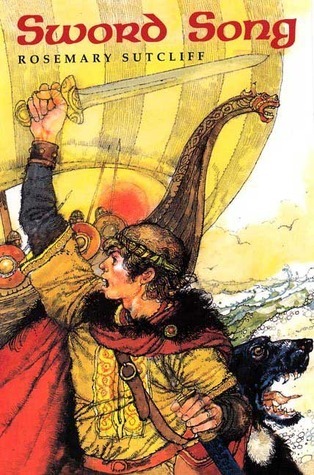
Discovered among Rosemary Sutcliff 's papers after her death in 1992, Sword Song is the swashbuckling epic of a young Viking swordsman, banished from his home for unintentionally killing a man, who takes up a new life as a mercenary.

288 pages, Paperback

First published May 13, 1997

11 people are currently reading
642 people want to read

About the author

Rosemary Sutcliff

107 books677 followers
Rosemary Sutcliff, CBE (1920-1992) was a British novelist, best known as a writer of highly acclaimed historical fiction. Although primarily a children's author, the quality and depth of her writing also appeals to adults. She once commented that she wrote "for children of all ages, from nine to ninety."

Born in West Clandon, Surrey, Sutcliff spent her early youth in Malta and other naval bases where her father was stationed as a naval officer. She contracted Still's Disease when she was very young and was confined to a wheelchair for most of her life. Due to her chronic sickness, she spent the majority of her time with her mother, a tireless storyteller, from whom she learned many of the Celtic and Saxon legends that she would later expand into works of historical fiction. Her early schooling being continually interrupted by moving house and her disabling condition, Sutcliff didn't learn to read until she was nine, and left school at fourteen to enter the Bideford Art School, which she attended for three years, graduating from the General Art Course. She then worked as a painter of miniatures.

Rosemary Sutcliff began her career as a writer in 1950 with The Chronicles of Robin Hood. She found her voice when she wrote The Eagle of the Ninth in 1954. In 1959, she won the Carnegie Medal for The Lantern Bearers and was runner-up in 1972 with Tristan and Iseult. In 1974 she was highly commended for the Hans Christian Andersen Award. Her The Mark of the Horse Lord won the first Phoenix Award in 1985.

Sutcliff lived for many years in Walberton near Arundel, Sussex. In 1975 she was appointed OBE for services to Children's Literature and promoted to CBE in 1992. She wrote incessantly throughout her life, and was still writing on the morning of her death. She never married.

http://us.macmillan.com/author/rosema...

Ratings & Reviews

What do you think?
Rate this book

Friends & Following

Create a free account to discover what your friends think of this book!

Community Reviews

5 stars
116 (24%)
4 stars
203 (42%)
3 stars
140 (29%)
2 stars
15 (3%)
1 star
3 (<1%)
Displaying 1 - 30 of 44 reviews
Profile Image for Dan Lutts.
Author 4 books120 followers
November 8, 2019
Sixteen-year-old Bjarni Sigurdson didn’t mean to kill the man of the White Christ. But the man kicked Bjarni’s dog. So Bjarni dunked the old man’s head in the water for just a short time. How was Bjani to know the man couldn’t hold his breath very long, and so drowned? And how was Bjarni to know that Rafn, the settlement’s chief, had sworn an oath that men of the White Christ would be safe within the boundaries of Rafn’s lands? The killing made Rafn an oath breaker. So Rafn expelled Bjarn from his land for five years. After that time, Bjarn could return and Rafn would decide if he could bear to see Bjarn’s face. Thus began Bjarn’s journey from boyhood to manhood.

Bjarni’s wanderings take him all over the British Isles and he becomes a hired sword to two powerful Viking chiefs. Along the way he learns the value of loyalty and compassion and that sometimes it is better to avoid a fight. He also finds love in the most unusual place.

Rosemary Sutcliff has become one of my favorite authors. Sword Song was her last book. She died before she could finish the second draft but her godson and cousin, Anthony Lawton, completed the novel and saw it through the publication process. I’m glad he did because I would have hated to have had this precious gem of a book lost.
Profile Image for Nicky.
4,138 reviews1,112 followers
March 8, 2011
I much prefer the books set in Roman Britain, of this series, than this Norse turn that it's taking. Possibly because Roman Britain is an interest of mine, but not one I know in any sort of depth, whereas I do Norse myth and saga, and can translate parts of sagas... Stories about, rather than from, the Norse countries tend to fall flat with me now. They don't capture the spirit of the real Norse stories, which I know quite well by now.

It doesn't help that the bearer of the dolphin ring isn't a character until the very last section of this story. Which is a shame, because she has an interesting one, and I can't actually think of a story by Rosemary Sutcliff with a female protagonist that privileges the female account of the world over the male one. I didn't get on so well with the male protagonist -- I just didn't sympathise with him so much. I did enjoy the glimpses we got of the idea of a female world, but I wish there was more of it.
Profile Image for Els.
299 reviews2 followers
November 27, 2019
This book got so slow at points that I actually skipped to the end and read it (which I never do!). But I did finish it, and I did enjoy it, it just could have used the third draft. Sometimes I feel that unpublished works are meant to remain thus, and the draggy bits of this one aren't a good depiction of Sutcliff's usual beauty.

Liked it, didn't adore it.
Profile Image for ambyr.
1,081 reviews100 followers
July 6, 2023
I admit I'm rating this more for what it could have been that for what it is. This was Sutcliff's final novel, found in her files in draft and published posthumously. To be a good book, it needed more rounds of revision; I don't think anyone anyone would dispute that, Sutcliff included. There's repetition that could be trimmed and character development that would benefit from fleshing out. But when it sings, it sings.
Profile Image for Laura Verret.
244 reviews84 followers
July 5, 2019
Bjarni Sigurdson is sentenced to five years away from his settlement, the settlement where Rafn Cedricson sits as Chief of the Hall. His crime is no small matter in the eyes of the Thing; he has killed a priest of the White Christ, a group whom Rafn had sworn would be assured of safety in his settlement. He has made an oath-breaker out of Rafn, the Chief, and Rafn is displeased.

As punishment, Rafn temporarily exiles Bjarni from the settlement. Five years must he wait before he can return home. Bjarni determines to hire out his services to another liege-lord. He will become a great warrior, and return to his settlement with glory!

But can Bjarni withstand the dangers and loneliness of these five years? Will death swallow him up in the next great battle? Will he ever see his home settlement again?

Discussion.

I did not realize this until I had purchased it and carefully escorted it home, but Sword Song is the last book that Rosemary Sutcliff wrote. She actually died before she had completed the second drafting of it. And, I hate to say this, but it showed. Oh, it was still an interesting, adventurous work, but it didn’t have the zip and zing of The Eagle. Most importantly, it didn’t have the gel.

What I mean, is, that the storyline wasn’t as coherent or purpose-driven as some of her other works. In The Eagle, the purpose is clear – recover the Eagle or die – and the story is concentrated on this theme. Sword Song, on the other hand, does not have this driving purpose. At the beginning of the story, Bjarni is exiled. For the rest of the story, he is finding a way to occupy his time until he will be allowed back home. The whole story felt as though it were waiting for the action to happen. Why? Because the hero’s goal was to get back home, and the only way he could get back home was to burn up five years. In those five years he fights in many battles, but none of them concerns his ultimate goal of returning back home. They are simply battles that he fought because he was hired to fight them.

Also, the cast of characters shifted multiple times. There were at least three sets of main secondary characters in a two hundred seventy page book. I felt that I barely had time to get to know them before I was whisked off to another setting so that Bjarni could fight in more battles so that eventually he could get home. He wasn’t working towards his goal, just, well… drifting towards it?

Sutcliff still managed to create a definite world and give an atmosphere to her story. And the writing was still spectacular – there were bursts of brilliance and excitement. It was the story idea that bugged me, partly because I couldn’t help comparing it to her magnum opus, The Eagle.

Conclusion. Not as masterful as her work The Eagle, but still a worthwhile piece of historical fiction.
13 reviews
March 26, 2012
Sword Song is a novel about a fifteen year old Viking boy who has trouble controlling his temper. We meet Bjarni Sigurdson as he stands in front of his Chieftain awaiting a sentence for the crime of “man slaying”. Christianity is on the rise and holy men wander the countryside trying to convert or add Christ to the mantle of Gods such as Thor and Odin. One of these holy men assaulted Bjarni’s dog and to teach him a lesson Bjarni holds the man’s head underwater, but the holy man drowns in the puddle. Bjarni is sentenced to five years of exile where upon finishing his five years he may return to the settlement. The Chieftain gives Bjarni a sword and tells him to leave on the next tide. Bjarni sets off on an adventure that will take him through rough seas, harsh battles, and lands that have damsels in distress that need saving. He first must find a chief who will hire him and his sword, but being only fifteen in a world where your strength is judged by the length of your beard or scars on your body, this is a challenge for Bjarni. Throughout the book Bjarni struggles with his temper and comes to terms with his identity. There are bloody battle scenes, suspenseful ocean storms, and even a love story that make this a very entertaining, well rounded novel.
As a reader this book is very entertaining because there is almost never a dull moment in the book. Bjarni is constantly fighting for something or figuring out a way to get what he wants. This book would be a good supplementary text for a Beowulf lesson. There are a lot of themes based around “the hero” and coming of age. A vocabulary lesson would be necessary before starting the book because there is a lot of Viking terminology. It was a little like reading Clockwork Orange for the first time; you pick up the language eventually. This book also gives context to the spread of Christianity and the lives of the Viking people and could be used in collaboration with social studies classes.

Stephen and Katherine
Profile Image for Sineala.
764 reviews
January 25, 2013
This is so far my least favorite of the Sutcliff books I've read. Bjarni Sigurdson is a young Viking kicked out of his home for accidentally murdering a priest, and he proceeds to have various adventures all around the British Isles. It sounds like it should be exciting. It isn't. I don't know whether the book being a posthumously-published draft had anything to do with it, but Bjarni is awfully boring and I dislike him intensely. Basically, he's a jerk, and mostly he wanders around being a jerk.

There were two characters I thought were interesting -- Lady Aud and Angharad -- and both of them deserved to be in a better book than this. Angharad in particular is actually the bearer of the Dolphin Ring -- the thing that, you know, links this series together -- and she doesn't even show up until the end! I would have liked her story. I give this three stars for the two of them, but if you're reading the Dolphin Ring books, there's no need to be in a hurry to read this one.

Also, there are totally not enough lavish descriptions of nature in this book.
Profile Image for Christine.
77 reviews1 follower
January 24, 2020
M and Dan are enjoying my reading of it; lots of action. Does anyone really love their dogs THAT much? I'm guessing how to pronounce the Norse words, sometimes I sound like the Swedish chief.

Dan was marveling that Miss Sutcliff could write such manly blood and thunder books. Matt just wants me to read him more of her work.
695 reviews73 followers
March 30, 2019
My seven-year-old and I both enjoyed this book. I thought it was a little less exciting than Sutcliff's other books but otherwise good. I was annoyed at the girl surviving alone on a farm caring for the sick old man situation - too unrealistic. As if that wasn't bad enough Sutcliff makes her a healer that everyone thinks is a witch - just too over the top.
Profile Image for Rik.
600 reviews8 followers
November 14, 2014
a good historical story, which conveys what it may have been like to live during the viking period. I found the language a little hard going as (I guess) the author attempted to convey the different speech of the period, and this detracted from the enjoyment for me.
Profile Image for Kirsten.
87 reviews5 followers
December 1, 2020
Posthumously published from an existing draft, this lacks something of the polish of a completed novel (the glorious nature porn in particular seems a bit thin on the ground!) and I have the feeling Sutcliff didn’t have the same bone-deep affinity for the Norse that she obviously felt for the Romans and Celts. But an unpolished Sutcliff is still better than about 90% of the rest of the stuff out there, and this is still a cracking book, with all of Sutcliff’s hallmark themes of change, continuity, displacement and belonging, and she depicts the complexities of cultural and religious identities of the period with her usual flair.

Looking at other reviews, it seems other readers weren’t that fond of Bjarni, but I liked him fine. He’s more sullen and prickly than your average Sutcliff protagonist, but she has the ability to make you empathise with characters like that (for what it’s worth, I also loved Aquila in The Lantern Bearers), and I couldn’t help but be charmed by his extreme protectiveness of his dogs. He’s basically a personification of that Rosa Diaz meme!

As always, the supporting cast is colourful, with a higher percentage of real historical figures cropping up than usual. I particularly liked her portrayal of Aud the Deep-Minded. Picking out the points of continuity between this and other books was as fun - and poignant - as ever. I really loved Angharad - and yes, I had All The Feels when the dolphin ring appeared!
Profile Image for Christie Thomas.
Author 11 books83 followers
November 6, 2023
I generally liked this book, although it felt like a very different era of writing. If it actually HAD been a different era, I would have been more gracious, but this book was published in the 80s (after her death), so I think the archaic phrasing should have been updated before the final version was printed. I read it aloud to my kids and there were many moments I stumbled over needlessly complicated sentences. It also included words that, even in the 80s, wouldn’t have been appropriate for a middle grade book (like bitch and faggot - both according to their original definitions, but still inappropriate for today’s kids).

In addition, a glossary would have been helpful. I still have no idea what a ‘garth’ is and am fuzzy on the idea of a ‘sea-kist’, among many other words that were used. It is possible to give the feel of an older style book without it feeling like it was written in a different language.

The book alternated from vivid and beautiful (of confusing) descriptions and scenes of intense action. I’d love to see this book updated by a editor who can keep the original feel of Bjarni’s adventures but revise to include modern sentence structure for a modern middle grade audience.
Profile Image for Stephanie.
348 reviews14 followers
January 12, 2015
Sword Song is a marvelous tour of northern Great Britain during the Viking age, prior to the coming of the Normans. The main character, Bjarni Sigurdson, is expelled from his home settlement for manslaughter at the age of 16 and sells his service as a bodyguard and warrior to a series of seafaring captains, seeing the world as far south as Ireland, along the coasts of Scotland, and up to the far northern Orkney Islands. He encounters not only other Scandinavian expats, but such diverse characters as wild Pictish warriors, Welsh farmers, Irish thralls, and Ionian monks.
Rosemary Sutcliff is, as far as I know, the preeminent author of British historical fiction for young adults. I have only read one other of her books, The Shining Company, but it made a profound impression on me and it remains one of my favorite books.
Sutcliff was disabled, beginning in early childhood, with severe arthritis. She did not learn to read until she was nine years old, partly because of this disease and partly because her family moved a lot; her father was in the British Navy. She died in 1992. Sword Song was in its second draft and posthumously became her last published book.
Biographer Margaret Meek described the author’s writing process: Once she had the idea for a book, she began with the encyclopedia and checked out all the works cited in an entry from the library. She continued likewise with these books’ bibliographies and wrote down all the information she collected in red notebooks. According to the Historical Novel Society’s Sandra Garside-Neville, “Then Sutcliff would start to create a picture of the daily life of the era her idea was set in. This was the most enjoyable part for her. Not much of the plot would find its way into the notebooks.”
Her painstaking research is clear in passages like this, where a simple walk through the village en route to the next action scene is a detailed tableau:
Men were at work in the wood-wright’s yard and the smithy, someone was driving a pig up the stony street, women with their cloaks huddled about them against the thin rain were moving between house and byre and gathered bucket in hand around the spring head, children and dogs were busy about their own affairs.

The book is alive with sights, sounds, smells, and unobtrusive facts that tell the contemporary reader what that world was like.
No mother is mentioned in Bjarni’s narrative, and it is interesting to watch his understanding of women develop as he slowly encounters them one by one. I appreciate that Sutcliff doesn’t present them as exotic objects of desire for a starved male appetite, but instead as people he sympathizes with. Their situations as well as Bjarni’s are presented matter-of-factly. His saga of exile is different from those usually proceeding from the Viking age, showing how the greatest virtue for these land-poor people was not glory in warfare but the ability to adapt.
Bjarni is a stubborn young man, more critical than accepting of other people, especially those in authority. This is apparently typical of Sutcliff’s heroes; she described one of her own favorite characters as “difficult and prickly.” The world she draws is thus not idealized but natural and human.
The portrait of religious attachment in Sword Song is interesting in this light. Sutcliff said in an interview:
The Middle Ages I am not at home in. I am interested in them and love to read about them, but I can’t write about them, or practically not at all. I think it is because I can’t take the all-pervasiveness of religion which has a stranglehold on life. The more level-headed viewpoint of the Romans is nearer to our own way of looking at things.

Some of the Christian believers Bjarni meets, like the great lady Aud the Deep-Minded, are extremely attractive characters. His experience on Iona appears to stir his soul more than anything else in his life’s travels. There are also the monks sprinkled throughout who bring more inconvenience than blessing. Indeed, it is a monk who drowns a little too easily in the first chapter, providing the occasion for Bjarni’s five-year exile. But the pagan priest portrayed in the story is by far the most unpleasant religious figure.
Eventually, Bjarni takes the mark of the White Christ in a ceremony called “prime-signing”: a pre-baptismal step involving little to no religious commitment but offering one slight advantages over complete pagans when trading with Christians.
And eventually Bjarni finds a bride, in developments that are both romantic and pragmatic. Towards the end of the book Bjarni is called upon to entertain two young girls with the harp, and he hesitantly recognizes the potential of embellishing his life story, making a dramatic song from it. His story in Sutcliff’s hands is a fascinating thing, with plenty of excitement for the young reader and also plenty to reflect upon, since it is presented in a thoughtful and historically sensitive way.
A Times review of The Shining Company in June 1990 expresses her ability to evoke feelings of honor and tragedy along with her admirable realism:
[Sutcliff:] is moved by simple concepts of loyalty and integrity that may be as foreign to today’s children’s literature as they were to the no-baby-talk Gododdin. But by admitting their possibility, while not shirking the real facts of ferocious woundings and pragmatic betrayals, she still persuades us that a bardic reading of the past is sustainable alongside an awareness of its squalor and its indifferent, but unpolluted, landscapes.
Profile Image for Night Owling.
307 reviews
July 30, 2020
Out of all the Rosemary Sutcliff books I have read in the last few months -this is turning into a Rosemary Sutcliff summer after all -this was the one I had a hard time liking. And the only one that I might have thought that was in fact intended for a younger audience.

(When I read historical novels that are supposedly addressed to middle school readers, I often find myself dialsagreeing. Sure, a young reader might enjoy this, but most of the themes seem to be for an older audience.)

It was an interesting read, fascinating because so far it's the first Sutcliff novel where the hero converts to christianity - is there another one? Where that happens?- though it is not quite clear why he does.

I struggled with the story a bit, I skimmed through passages- and I never do that, but I enjoyed the conclusion very much.
74 reviews4 followers
March 18, 2021
This book is an ideal candidate for abridgement. Sadly, in its current form I would not recommend it. I was not able to finish the book. I read the book aloud to my middle school children who enjoyed my summaries better than the book itself. I skipped over the innuendo on the eve of wedding celebrations. I also summarized fight scenes without the gory details, but otherwise I would say the subject matter was clean.

This book is about a young man making his way in the world of the Vikings. It reads like someone has strung together many sailors' stories and attempted to weave them into one story line. It has the potential to be an exciting and adventurous book with more editing.

A map at the beginning of the book to make sense of all the foreign locations mentioned along with leaders' names over the regions where they reigned would be very helpful in any reprinting.
Profile Image for Lea.
289 reviews83 followers
May 30, 2022
This review is a long time coming, but overall a great read. A few memorable notes for this book include my typical and now amusing issue of accidentally jumping into a series with a sequel book (in this case, #7 in the series... not even close to the beginning). The good thing is that once I realized this after reading the entire book, I didn't feel lost and believe the book should be able to be enjoyed as a standalone. While short, the story and characters are well imagined and have decent development. For me, the pacing was a little slower, but it made me appreciate the details when I had time to invest in it.

I'm always looking for some good historical fiction, and glad to find another author's collection to add to the list. Now, I'll need to go find book one and start this series from the very beginning. :)
Profile Image for Charles Sheard.
611 reviews19 followers
March 18, 2023
I continue to find myself sinking blissfully into the warmth and swaddling comfort of Sutcliff's prose, and she is just as capable here as in earlier works of offering fluid, rhythmic language that seems utterly at home in the time of time period of the tale. Unfortunately, this work does not have quite the coherent story that she crafts in her other books, this time falling into more of the adventure style of tale where one event follows another event follows another, without anything really tying them together other than being the same main character in each, more similar to a chronicle than a tale. But nevertheless, this book too is a strong portion of that comfort zone which Sutcliff's works provide me.
2,073 reviews5 followers
June 29, 2018
I just finished reading Sleeping Beauties; I’m somewhat burned out on how men are mostly evil vicious warriors, and women are saintly. This might have earned a higher ranking if I’d read something else before it.
Bjarni kills a Christian priest, unintentionally, after the priest injures Bjarni’s dog. Bjarni is ordered to leave his home for five years, because he has broken his leader’s vow.
Bjarni and a dog reappear throughout the novel, as well as his temper and lack of thinking ahead. ( I kept flashing on Frank in Sleeping Beauties.) Bjarni travels around Norway, Scotland, Ireland, etc., selling his sword and services to several different men.
It’s an okay novel, but very repetitive.
Profile Image for Littlerhymes.
309 reviews2 followers
July 17, 2022
This is a posthumously published work and the final book in the dolphin ring cycle. Bjarni is exiled from his Viking home for five years after killing a priest, so becomes a mercenary. He grows up and becomes a man and along the way also gains a very loyal hound (so Sutcliff of him). He bears witness and takes part in some fairly momentous events, and loses some of his innocence, and it is a journey which eventually leads him home. Enjoyed it and found it very typical of Sutcliff - if you like her you will like it.
427 reviews1 follower
February 13, 2024
Sword Song is the story of Viking lad Bjarni Sigurdson, cast out of the settlement for drowning a Christian holy man and left to make his way in a world of war. Bjarni did not mean to drown the monk. He held him under water to teach him a lesson, that it was a bad idea to kick Bjarni's dog. The monk died, and the chief of the settlement sent Bjarni away for five years.
Rosemary Sutcliff wonderfully describes the Viking world and Bjarni's journey through it.
The reader feels Bjarni's determination and the sights and sounds of the Viking settlements as well. Great book. Read it.
Profile Image for Sarah.
19 reviews1 follower
March 14, 2022
As a fan girl of Sutcliff, I recommend this story for its arch & pacing. And yet it’s vocabulary of mixed Nordic and other old English words pull the reader back instead of propelling forward into the story. Surcliff didn’t finish this book before her death - and I applaud the team who did! For anyone walking through world history with students K-9, Sutcliff’s books add adventure and context to the timeline.
Profile Image for Ránna Shirrin.
86 reviews
June 9, 2025
I really enjoyed this book. I honestly (and it might not be such a good thing) prefer fantasy to any other kind of book, but Rosemary Sutcliff manages to make her worlds feel as good as fantasy. This was the first book of Sutcliff that I had ever read, but even now, when I go back to it, I love it. It is such a good book. I would recommend it for anyone, but especially someone who loves ancient historical fiction and or fantasy.
750 reviews2 followers
October 13, 2024
This is the one book of my Dolphin Cycle reread that I hadn't previously read. By necessity, it isn't as polished or satisfying as the other books, but I'm glad I had the opportunity to read it. It's very much a bildungsroman, and a lot of the beats were predictable. In many ways, I would have preferred to read Angharad's story, even though she only shows up in the later sections of the book.
Profile Image for Bob.
55 reviews1 follower
July 31, 2021
I love Sutcliffe's vivid writing, and I loved this her last book. After reading 4 of Bernard Cornwell's books set in about the same period, this was refreshing for its sheer humanity. I think I'll go back and reread some of her earlier work.
Profile Image for Judy.
681 reviews2 followers
June 8, 2019
Pretty good especially if you're wanting Viking fiction.
Profile Image for John.
35 reviews3 followers
March 7, 2021
This story is one I enjoy recalling.
Profile Image for Rose.
1,109 reviews4 followers
October 23, 2017
This is one of the last books where the dolphin ring appears.
The story of a young Viking boy's adventures, this is Rosemary Sutcliffes at her best.
When you feel like you have entered the time period, you know the author is good! When you stop reading and wonder for a split second where your longboat is, you know she is beyond good!!
Displaying 1 - 30 of 44 reviews

Can't find what you're looking for?

Get help and learn more about the design.