Four centuries after the Mayflower 's arrival, a landmark collection of firsthand accounts charting the history of the English newcomers and their fateful encounters with the region's Native peoples
For centuries the story of the Pilgrims and the Mayflower has been told and retold--the landing at Plymouth Rock and the first Thanksgiving, and the decades that followed, as the colonists struggled to build an enduring and righteous community in the New World wilderness. But the place where the Plymouth colonists settled was no it was Patuxet, in the ancestral homeland of the Wampanoag people, a long-inhabited region of fruitful and sustainable agriculture and well-traveled trade routes, a civilization with deep historical memories and cultural traditions. And while many Americans have sought comfort in the reassuring story of peaceful cross-cultural relations embodied in the myth of the first Thanksgiving, far fewer are aware of the complex history of diplomacy, exchange, and conflict between the Plymouth colonists and Native peoples. Now, Plymouth Colony brings together for the first time fascinating first-hand narratives written by English settlers-- Mourt's Relation , the classic account of the colony's first year; Governor William Bradford's masterful Of Plimouth Plantation ; Edward Winslow's Good News from New England ; the heterodox Thomas Morton's irreverent challenge to Puritanism, New English Canaan ; and Mary Rowlandson's landmark "captivity narrative" The Sovereignty and Goodness of God --with a selection of carefully chosen documents (deeds, patents, letters, speeches) that illuminate the intricacies of Anglo-Native encounters, the complex role of Christian Indians, and the legacy of Massasoit, Weetamoo, Metacom ("King Philip"), and other Wampanoag leaders who faced the ongoing incursion into their lands of settlers from across the sea. The interactions of Plymouth Colony and the Wampanoag culminated in the horrors of King Philip's War, a conflict that may have killed seven percent of the total population, Anglo and Native, of New England. While the war led to the end of Plymouth's existence as a separate colony in 1692, it did not extinguish the Wampanoag people, who still live in their ancestral homeland in the twenty-first century.
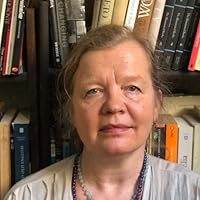
Lisa Brooks is an historian, writer, and professor of English and American studies at Amherst College in Massachusetts where she specializes in the history of Native American and European interactions from the American colonial period to the present.
I didn’t read every text in this, but a good chunk for an early American literature class. Not being entirely versed in the subject, from what I can tell, Plymouth Colony is a great introduction that provides a lot of important texts written during the formation of the American colonial identity. It’s interesting because the reading can both be very boring (promotional literature, travelogues of the settler-colonial mindset, William Bradford trying to mythologise Plymouth Plantation and those old Separatists) yet it’s some of the most important reading to understanding America as a settler-colonial state and how the grand mythology of America was formed. The teacher I had, who was phenomenal, taught us about historicising and rhetorical analysis (beyond what you learn in comp classes) and that definitely aided in making the readings extremely interesting; once you really get under the text’s architecture, so to say, there is a wealth of things working within the texts that can be analysed, so many tensions, ideologies, and so on that reveal a lot about the structure of settler-colonialism, its inner-workings, and how effectively it works, textually, physically, ideologically, and so on.
For anyone wanting to understand America, the erasure of the Native, settler-colonialism, or have a strong intro into early American lit, this collection is indispensable.
This book, like many other historical Library of America collections, is a compilation of primary-source writings from a section of our early history, Plymouth. About 2/3 of the book focuses on Plymouth and the separatists/pilgrims, the troubles they had, and the early history of the colony. The last third focused on King Phillip's War, fifty years later, and the effect it had. The writings are definitely interesting, a very comprehensive look at the people who made the journey and settled in New England, with a good amount of their early interactions with the Wampanoag tribe. You'll get a detailed understanding of how they survived here, what they had to learn, etc. The Thanksgiving feast associated with them is mentioned, but is barely an afterthought for the people who lived it. It seems much of the lore of the holiday got attached later. One thing readers should note, the writing is 17th century English, and pretty different from what we're used to. Think a working-class version of Shakespeare, with no standardized spellings (Some of it's practically phenetic!). If your not familiar with older styles of English that might slow you down a bit.
If based on the period documents alone, I'd give this five stars. But unfortunately, Library of America brought in editors that seem more interested in grinding modern political. The introduction, the 'editor notes' after each selections, they all seem like they were thrown in to push politically correct messages. They add little, and often detract. Worse still, they include several documents not from the period, some from the mid 1800s, some from the mid twentieth century, that stick out like a sore thumb. It's alltogether disappointing. Anybody with the intellectual curiosity to seek out a collection like this is smart enough to judge historical documents and realize they're products of their time and place. They don't really need modern academics trying to slant their understanding. Worse still, all the pages they wasted on it could've been spent on other documents from the time, giving the reader even more of what they came for. Definitely hurts the overall book. Four stars.
"The book’s editors, Lisa Brooks and Kelly Wisecup, point to widespread misconceptions in the traditional telling of the history of the Plymouth Colony, such as the notion that the coastal area known to the Wampanoag people as Patuxet was a “virgin land” or “wilderness,” and that it was acquired from them through means that were fair or at least peaceful. While the Plymouth Colony of the public imagination may seem quaint or peripheral, the story the texts they gather in Plymouth Colony tells is a story of power." -Karim Tiro