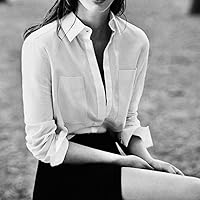
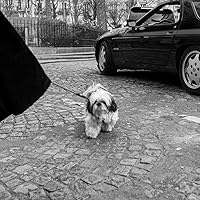
La imagen fotográfica ocupa un lugar muy destacado en la reflexión de Walter Benjamin tras su etapa juvenil, apareciendo en los textos más heterogéneos y relacionada con los temas más diversos. El presente volumen reúne las páginas a ella dedicadas por el filósofo alemán, algunas de las cuales son poco conocidas, ya que se encuentran dispersas en reseñas y crónicas periodísticas, mientras que otras se hallan incorporadas a ensayos literarios o bien a escritos de carácter autobiográfico (sin contar con las anotaciones y citas al respecto incluidas en su magno proyecto sobre el París decimonónico). Benjamin piensa la fotografía históricamente. En su condición de casi testigo reconstruye sus comienzos con amena y poética erudición desde la proximidad de una infancia todavía decimonónica; analiza su desarrollo en relación con las vanguardias y, por último, la convierte en ejemplo privilegiado de esas imágenes técnicamente reproducibles que, al subvertir las condiciones de la recepción del arte, favorecieron su difusión masiva con consecuencias no menos revolucionarias.
Walter Bendix Schönflies Benjamin was a German Jewish philosopher, cultural critic, media theorist, and essayist. An eclectic thinker who combined elements of German idealism, Romanticism, Western Marxism, Jewish mysticism, and neo-Kantianism, Benjamin made influential contributions to aesthetic theory, literary criticism, and historical materialism. He was associated with the Frankfurt School and also maintained formative friendships with thinkers such as playwright Bertolt Brecht and Kabbalah scholar Gershom Scholem. He was related to German political theorist and philosopher Hannah Arendt through her first marriage to Benjamin's cousin Günther Anders, though the friendship between Arendt and Benjamin outlasted her marriage to Anders. Both Arendt and Anders were students of Martin Heidegger, whom Benjamin considered a nemesis. Among Benjamin's best known works are the essays "The Work of Art in the Age of Mechanical Reproduction" (1935) and "Theses on the Philosophy of History" (1940). His major work as a literary critic included essays on Charles Baudelaire, Johann Wolfgang von Goethe, Franz Kafka, Karl Kraus, Nikolai Leskov, Marcel Proust, Robert Walser, Trauerspiel and translation theory. He also made major translations into German of the Tableaux Parisiens section of Baudelaire's Les Fleurs du mal and parts of Proust's À la recherche du temps perdu. Of the hidden principle organizing Walter Benjamin's thought Scholem wrote unequivocally that "Benjamin was a philosopher", while his younger colleagues Arendt and Theodor W. Adorno contend that he was "not a philosopher". Scholem remarked "The peculiar aura of authority emanating from his work tended to incite contradiction". Benjamin himself considered his research to be theological, though he eschewed all recourse to traditionally metaphysical sources of transcendentally revealed authority. In 1940, at the age of 48, Benjamin died by suicide at Portbou on the French Spanish border while attempting to escape the advance of the Third Reich. Though popular acclaim eluded him during his life, the decades following his death won his work posthumous renown.
In his essay the author describes how our perception of the reality has changed with appearance of photography. He is also convinced that photography has enriched the ways of artistic expression. To support his opinion he quotes Tristan Tzara, 1922: ' When everything that went by the name of art was seized with paralysis, the photographer lit his thousand-candle lamp and the sensitive paper gradually absorbed the darkness of several objects of common use. He had discovered the potential of a delicate, untouched flash of light which was more important than all the onstellations given to our eyes to enjoy '.
-------------------------------------------------------------------------------- 'The more all-embracing the crisis of contemporary society, the more that the individual aspects of the latter confront one another in rigid opposition, so the more the creative reveals itself as the merest form of variant, with contradiction for its father and imitation as its mother; the creative has become a fetish whose features owe their life simply to the changing lights of fashion. The creative in photography is the latter's responsiveness to fashion. The world is beautiful - that precisely is its motto. Therein is unmasked a photography which is able to relate a tin of canned food to the universe, yet cannot grasp a single one of the human connections in which that tin exists; a photography which even in its most dreamlike compositions is more concerned with eventual saleability than with understanding. Since, however, the true face of this photographic creativity is the advertisement or the association, its legitimate counterpart is exposure or construction. For, says Brecht, the situation, is ' complicated by the fact that less than at any time does a simple reproduction of reality tell us anything about reality.'
Este libro es una colección de ensayos de éste renombrado filósofo alemán, entre ellos, algunos pocos conocidos pero que en conjunto son una reflexión de la fotografía y su evolución cultural, temporal y técnica. Para un lector apasionado, es una lectura esencial, pero muchos de los temas tocados son discusiones ya llevadas a cabo en otros textos y se hace un poco redundante y más al final del libro, básicamente hojeé por los capítulos en búsqueda de algún análisis más profundo y revelador o diferente y terminé por leerlo por alto, ya que fue muy abrumador la enorme cantidad de citaciones, extractos de textos y etc.
La fotografía tiene sus inicios con la invención del daguerrotipo en 1839, siendo este la primera cámara fotográfica de la historia, su inventor Daguerre ofrecía con el nuevo artefacto poder fijar la imagen que pasaba a través de una pequeña cámara obscura en una placa de plata, cuestión técnica que se había tratado de descifrar por muchos años sin avances concretos. A lo largo de las páginas de este libro nos es posible conocer los caminos y dificultades que la fotografía se vio obligada a enfrentar.
Los primeros detractores argumentaban que era un "arte diabolico" pues no se debía tener permitido a dicha invención humana el poder plasmar con tal realismo a la naturaleza y al hombre, si acaso sólo los pintores podían gozar de este privilegio por medio de una especie de inspiración divina con la que lograban en muchas ocasiones una pieza realista aunque nunca exacta. Por otro lado, algunos "defensores" le atribuían cierta utilidad sosteniendo que ésta podría ser tan sólo una herramienta para las ciencias ayudando en la astronomía o como evidencia para respaldar sucesos históricos, y en las artes encontraría su mejor uso como guía para la pintura (aunque más tarde algunos pintores adquirieron reconocimiento por sus aportaciones fotográficas más que por sus pinturas).
Pero a pesar de todo o de todos, ésta, la fotografía, había nacido, estaba viva y respiraba, desarrolló su propia personalidad; no tenía la ambición de opacar o competir con la pintura, su obsesión fue enseñar realidades alternas dificilmente visibles al ojo y siempre visibles a través del único portal: la cámara. Podemos por ejemplo tener la percepción de estar observando en la fotografía una columna antigua cuando lo que realmente se fotografió fue un detalle en una planta, o en una de mis experiencias más recientes, ver lagos en paisajes donde no existen más que paredes. Su pasatiempo favorito es contemplar "el aura de las cosas" y nosotros al ser sus complices también nos es obligado observar y respirar esa aura de paisajes, edificios, animales, personas u objetos. Así fue cómo logró abrirse paso por el mundo de las artes.
This entire review has been hidden because of spoilers.
O lectura scurta si intensiva. Walter povesteste despre imprejurarile in care a aparut si a inceput sa se dezvolte fotografia, preluand stafeta in portretizarea oamenilor si peisajelor de la pictura. Gratie internetului, am reusit sa vad acele prime fotografii pomenite in eseu (David Octavius Hill "Pescarita din New Haven", Dauthenday, Nadar, Stelzner, Pierson, Bayard). Fotografiile copilului de 6 ani Franz Kafka. Un elogiu deosebit i se aduce lui Eugene Atget, primul care a iesit din studioul fotografic si a inceput sa fotografieze strazile Parisului, dupa spusele lui Walter precursorul fotografiei suprarealiste. Apoi este August Sander, primul care a fotografiat oameni din cele mai diverse medii intr-o nota nonpotretistica (spre deosebire de inceputurile fotografiei cand familia / so+sotie / copilul erau fotografiati in studioul din care nu lipsea coloana de sprijin, avand in vedere ca trebuiau sa intepeneasca pana la cateva minute cat dura atunci timpul de expunere). Pictorul Antoine Wiertz a salutat in 1855 aparitia fotografiei, fiind optimist in ceea ce priveste evolutia acesteia spre rangul de arta, parere neimpartasita de Baudelaire in 1959, pentru care aceasta industrie, reprezentarea exacta a naturii nu au nimic de a face cu arta.
Daca doriti sa aflati mai multe despre inceputurile fotografiei, cititi acest scurt eseu. Vi-l recomand.
"En un día de reposo, en un mediodía de verano, seguir con la mirada la línea de una cordillera o contemplar una rama que arroja su sombra y sentir que el instante o el momento se funden con esas apariciones: eso significa respirar el aura de esas montañas, de esa rama".p.33 Breve introducción a un mundo completo <3
"La présentation cinématographique de la réalité est pour cette raison celle qui, aux yeux de l'homme d'aujourd'hui , est incomparablement la plus significative, précisément parce qu'en pénétrant dans la réalité de la manière la plus intensive au moyen de l'appareil, elle lui procure l'aspect de la réalité, debarassé de l'appareil, qui requiert à bon droit de l'ouvre d'art"
'Les audaces du cameraman sont de fait comparables à celles du chirurgien. Énumérant les tours d'adresse techniques spécifiquement gestuels, Luc Durtain recense ceux "qui dans le domaine chirurgical, sont requis par des interventions particulièrement difficiles. Je prends un exemple choisi dans le domaine de l'oto-rhino-laryngologie ...; je pense à ce qu'on nomme le procédé perceptif endonasal ou encore au tours d'adresse, aux véritables acrobaties auxquelles les chirurgiens du larynx doivent se livrer en se guidant sur l'image inversée du laryngoscope; je pourrais également parler du travail de précision qui n'est pas sans rapeller celui des horlogers, requis par la chirurgie de l'oreille."
Tout a été prédit - la réalité d'un art plus vrai que nature, et la déliquescence par l'invention, encore à cette époque impossible même à imaginer, d'un art participatif - du jeu vidéo, et de la propagande en découlant de ces nouveaux arts. La finesse et la crudité future de cet nouvel art de la photographie y sont décrit, les critiques qui allaient arriver, comme les arguments pour parer ces critiques.
Un ouvrage édifiant sur la nature de l'art et de son évolution, malgré sa taille tout à fait diminutive dans l' œuvre écrit de Walter Benjamin.
Очень эмоциональное и красивое эссе-размышление автора о том, как появление феномена фотографии, а также кинематографа меняет у аудитории восприятие и ценность искусства
While Benjamin wrote no such book, he did write some essays on the topic which have been translated and compiled by Esther Leslie, each with its own forward and footnotes, into this compact volume. That being said, as they were written during the late 1920s and early 1930s, they are amongst the earliest writings that discuss the emergence and evolution of photography as an artistic medium and the juxtaposition of photography as art with its commercial use. There are some parallels with Susan Sontag’s book of the same name although the latter which also commenced as a set of essays was completed as a book by its author who was living a less precarious life many decades later. Both books explore the relationship between photography and painting, both discuss its evolution and both include insights which demand the observant reader to pause and reflect.
I expected a history lesson; a condensed booklet of dates, names and examples about the technological development, historical impact and cultural relevancy of photography.
If that’s what you’re looking for, you’re better off googling it.
The book started strong. Nice pictures. But the more you read the more it becomes a flow of uninteresting word salad. A painful read towards the end.
They sell this in the gift shop of the renouned Louisiana Art Museum in Denmark. Great museum. Don’t buy this book though.
An obscure but invigorating translation of Benjamin’s fascination with photography and its place in the world of accessible cultural media. The bourgeoise claimed Art as a province of the individual genius on a higher plane than any capitalist mode of transaction could contain, yet from the onslaught of modern mechanical reproduction came its own counter balance: the aura of life frozen in time of any class perspective.
Excellent complementary piece to his famous "The Work of Art in the Age of Mechanical Reproduction". I guess this one was written earlier, as it discusses some ideas in details, which are only briefly mentioned in "The Work of Art...".
If you love Walter Benjamin's brand of historicizing, philosophizing insight into technological breakthroughs, you will love this brief brilliant meander from Daguerre's invention through choice highlights to what photography was in the late 1920's, early 30s. Photography irrevocably changed how we see things: this is his insight, in a nutshell. And how we see ourselves, as well. Benjamin distinguishes between portrait photography -- its many iterations, via changes in technique and technology -- and cityscape photography. Architecture and groups, crowds. He leaves no signature invention unstudied: David Octavius Hill; Karl Albert Dauthendy; Karl Blossfeldt; Pierre Louis Pierson; Eugene Atjet; August Sander. The highlight is when Benjamin contrasts Antoine Wiertz's rhapsodic praise of photography, and places it on a continuum with painting; vs Charles Baudelaire pessimistic view of photography's simplistic representational capacity vs painting's arduous craftsmanship of images. Is photogrphy in competition or in league with painting? Or are they completely different worlds? These are a couple of the questions asdressed in Benjamin's elegant history.
I'm sure that when I reread this brief book, wjether in English ot in German, it will release more pleasures. The choice of images is awesome.
Et pourtant, ce qui demeure décisif en photographie, c’est toujours la relation du photographe à sa technique. Camille Recht l’a caractérisé dans une belle métaphore: «Le violoniste, dit-il, doit d’abord créer la note, il doit la chercher, la trouver en un éclair, tandis que le pianiste frappe sur une touche: la note retentit. Le peintre comme le photographe ont un instrument à leur disposition. L’usage du dessin et du coloris correspondent à la création du violoniste; le photographe partage avec le pianiste l’aspect mécanique, soumis à des lois contraignantes auxquelles échappe le violon. Aucun Paderewski ne recueillera jamais la gloire ni n’exercera la magie légendaire d’un Paganini.»
- Walter Benjamin.
Votre érudition, mon cher Benjamin, est d'un raffinement qui émerveille.
Il libro di Walter Benjamin costituisce una delle primissime - e più moderne - analisi della storia della fotografia. Partendo dai primi dagherrotipi e attraversando l'evoluzione della tecnica, Benjamin intraprende una innovativa analisi delle conseguenze estetiche e sociali di un tale cambiamento, mirando più a sollevare dubbi e sollecitare domande nel lettore, che a "risolvere" la neonata questione della fotografia come arte - o dell'arte come fotografia. L'analisi del filosofo si rivela pionieristica - il libro è stato pubblicato per la prima volta nel 1931! -.
Il libro è breve, scorrevole, non presuppone conoscenze per essere letto ed è generalmente consigliabile a tutti gli appassionati di fotografia, estetica e filosofia, ma non solo!
En termes generals ha resultat un exercici tremendament interessant sobre els origens i primers passos de la fotografia, que es veu complementat pels exercicis de diferenciació entre l’art —pintura,escultura—i la fotografia. El més interessant són els seus anàlisis sobre els daguerrotips i les misterioses aparicions del que nomena aura, repartides en diversos escrits però sobretot al mític La obra de arte en la era de reproductibilidad técnica. El cert és que aquest article és el millor amb diferència, molt i molt bo, investigant quina és realment la pèrdua que estem sofrint a mans de la invasió de les imatges reproduïdes, juntament amb el derrocament de l’art.
Se lee en una tarde y es una interesante reflexión sobre temas ya explorados por Benjamin en escritos como La obra de arte en la época de la reproductibilidad técnica. Acá, además, el autor expone los principales problemas y polémicas a los que se enfrentó la fotografía y su amenaza, pero luego apropiación, por parte del arte. Esta edición incluye, además, un breve ensayo de Paul Valéry a propósito de los 100 años del primer daguerrotipo, en donde se explora la relación de la fotografía con el arte de la narración, la historia y la filosofía.
Türkçesi karmaşık olsa da üzerine düşülüp düşünülmesi gereken, fotoğraf örneklerine bakarak anlamaya çalışmak zevkliydi. Fakat yine de dil karmaşası yorucu ve anlamı kısıtlayıcıydı. Tekrar tekrar anlamak gerek.
Si bien en muchos de los apartados se repite la información, tiene ideas brillantísimas sobre la fotografía y el arte. Excelente, revelador, los términos son sencillos de entender aún cuando estamos hablando de un pensador como Benjamin.
Un libro de ensayos donde se reflexiona si la fotografía es arte, si la fotografía ha cambiado al arte, entre otras cosas. Hay también un esbozo de ensayo que nunca se terminó, por la muerte de Benjamin.