

What do you think?

Bad Nature, or With Elvis in Mexico
A boiled-down gem of a Marías story about how Elvis (in Acapulco to film a movie) and his hard-drinking entourage abandon their interpreter in a seedy cantina full of enraged criminals after insults start to fly. When the local kingpin demands to be told what the Americans are saying, Elvis himself delivers an even more stinging parting shot – and who has to translate that?
57 pages, Paperback
First published January 1, 1996
About the author
Javier Marías
148 books2,564 followersJavier Marías was a Spanish novelist, translator, and columnist. His work has been translated into 42 languages. Born in Madrid, his father was the philosopher Julián Marías, who was briefly imprisoned and then banned from teaching for opposing Franco. Parts of his childhood were spent in the United States, where his father taught at various institutions, including Yale University and Wellesley College. His mother died when Javier was 26 years old. He was educated at the Colegio Estudio in Madrid.
Marías began writing in earnest at an early age. "The Life and Death of Marcelino Iturriaga", one of the short stories in While the Women are Sleeping (2010), was written when he was just 14. He wrote his first novel, "Los dominios del lobo" (The Dominions of the Wolf), at age 17, after running away to Paris.
Marías operated a small publishing house under the name of Reino de Redonda. He also wrote a weekly column in El País. An English version of his column "La Zona Fantasma" is published in the monthly magazine The Believer.
In 1997 Marías won the Nelly Sachs Prize.
Marías began writing in earnest at an early age. "The Life and Death of Marcelino Iturriaga", one of the short stories in While the Women are Sleeping (2010), was written when he was just 14. He wrote his first novel, "Los dominios del lobo" (The Dominions of the Wolf), at age 17, after running away to Paris.
Marías operated a small publishing house under the name of Reino de Redonda. He also wrote a weekly column in El País. An English version of his column "La Zona Fantasma" is published in the monthly magazine The Believer.
In 1997 Marías won the Nelly Sachs Prize.
Ratings & Reviews
Friends & Following
Create a free account to discover what your friends think of this book!
Community Reviews
Displaying 1 - 30 of 131 reviews
![Profile Image for s.penkevich [hiatus-will return-miss you all].](https://i.gr-assets.com/images/S/compressed.photo.goodreads.com/users/1735525095i/6431467._UX200_CR0,11,200,200_.jpg)
April 25, 2013
‘It all happened because of Elvis Presley.'
Death often strikes suddenly and unexpectedly, like a flash of lightning piercing even the most common of events and leaving behind a hemorrhaging corpse where once stood living, breathing flesh. Javier Marías’ petite novella Bad Nature, or With Elvis in Mexico is a wildly comedic investigation into how a drunken good time came quickly lead to disaster and life on the run. Marías’ gift of perception and alluringly poetic philosophical musings are expertly packed into this 57pg story surrounding a what-if scenario of the Elvis film Fun in Acapulco, combining the humorously absurd with the bluntness of mortality to deliver a satisfying plunge into Mexico’s murky underworld of ‘whitewashed gangsters’. Marías’ common motifs and themes are all condensed and sharpened to cut like a razorblade in this reflection on death and the predicaments of translation.
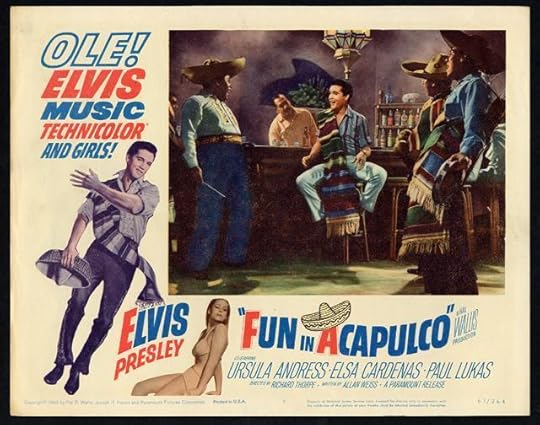
Bad Nature features a 55 year old Ruibérriz de Torres, whom fans of Tomorrow in the Battle Think on Me will recognize, as he recounts his youthful adventures in with Elvis during the filming of Fun in Acapulco. While history insists that Elvis never left the United States and that only a small camera crew crossed the Mexican border to film a few background shots to be added in, this story takes on the possibility that Elvis had in fact gone to Mexico but a certain disastrous occasion forced him to leave and expunge any evidence of his journey. Ruibérriz serves as a translator for his idol, paid to instruct towards correct pronunciation since Elvis must sing Guadalajara in Spanish for the film. Language barriers become a critical component to the novella, initially shown as having comical implications. 'he thought it was hilarious when I told him what Tupelo means in Spanish if you divide the first two syllables (“your hair,” he repeated, laughing uproariously) especially since it sounds so much like toupee.' Much of the humor surrounds puns and comedic phrasings, making language the focus of this story.
Translation and language are an important aspect of any Marías novel, the author being on of Spain’s leading translators from English. He is careful to explore the implications of any switch in dialogue between the tu and usted form, and has a repertoire of clever methods to ensure certain language-specific jokes won’t be ground away in by the gears of translation.
A similar idea is explored in Tomorrow in the Battle Think on Me, that ‘once a story has been told, it’s anyone’s, it becomes common currency, it gets twisted and distorted, and we all tell our own version.’ Although it is Elvis’ insult that Ruibérriz delivers, it must inevitably become his as well since he is twisting and reshaping it through languages, unable to avoid putting his own interpretation on the words and thereby making them essentially his own. It is key then that Marías should write from the first-person perspective, to use the voice of the teller, as it is the telling of the story that trumps the story itself. Which makes the translations of his work into English, in this case by Ether Allen (Borges, Flaubert) instead of the usual Margaret Jull Costas (Saramago, Pessoa), an impressive task. Allen does well by leaving the speech of the ‘whitewashed gangsters in Spanish, allowing the reader the catharsis of language gaps and to remain at the mercy of Ruibérriz’s translations to understand what is said (well, for a reader who doesn’t speak Spanish or isn’t inclined to use an online translator.)
This novella has an incredible circular feel to it, beginning and ending on the same sentiments that ‘No one knows what it is to be hunted down without having lived it,’ Described through his signature manner of digressions and philosophical wit, bookending the novella with the sound of ‘venomous footsteps, setting off with all hatred to destroy me,’ brilliantly seals the story while leaving the reader with a feel that this isolated incident incited a lifelong feeling of escape. The narrator has looked death in the face and ran headlong into the maelstrom of life, knowing that death is always seeking him out.
Javier Marías is an incredible writer and it is stunning to see how well he boils down his major themes into this slim novella without sacrificing any of the punch. Both wildly comedic and stoically ponderous, Bad Nature is a fantastic story that would make an excellent introduction to this fabulous author as well as a quick dive back into his world for those already familiar with him. It is especially entertaining for those who have also read Tomorrow in the Battle Think on Me, or The Infatuations (which alludes to the Elvis incident here) and are already familiar with the loveable scoundrel Ruibérriz de Torres. Bad Nature, or With Elvis in Mexico is a short, fantastic book that is sure to delight.
4/5
‘[A] pick is killing him that has been waiting, thrown down in a backyard, for a thousand years, a pick to split open the grassy soil and dig an improvised grave, a pick that may never have tasted blood before, the blood that still smells more like fish and is still wet and welling out and staining the wind that is rushing away from the storm.’
Death often strikes suddenly and unexpectedly, like a flash of lightning piercing even the most common of events and leaving behind a hemorrhaging corpse where once stood living, breathing flesh. Javier Marías’ petite novella Bad Nature, or With Elvis in Mexico is a wildly comedic investigation into how a drunken good time came quickly lead to disaster and life on the run. Marías’ gift of perception and alluringly poetic philosophical musings are expertly packed into this 57pg story surrounding a what-if scenario of the Elvis film Fun in Acapulco, combining the humorously absurd with the bluntness of mortality to deliver a satisfying plunge into Mexico’s murky underworld of ‘whitewashed gangsters’. Marías’ common motifs and themes are all condensed and sharpened to cut like a razorblade in this reflection on death and the predicaments of translation.
Bad Nature features a 55 year old Ruibérriz de Torres, whom fans of Tomorrow in the Battle Think on Me will recognize, as he recounts his youthful adventures in with Elvis during the filming of Fun in Acapulco. While history insists that Elvis never left the United States and that only a small camera crew crossed the Mexican border to film a few background shots to be added in, this story takes on the possibility that Elvis had in fact gone to Mexico but a certain disastrous occasion forced him to leave and expunge any evidence of his journey. Ruibérriz serves as a translator for his idol, paid to instruct towards correct pronunciation since Elvis must sing Guadalajara in Spanish for the film. Language barriers become a critical component to the novella, initially shown as having comical implications. 'he thought it was hilarious when I told him what Tupelo means in Spanish if you divide the first two syllables (“your hair,” he repeated, laughing uproariously) especially since it sounds so much like toupee.' Much of the humor surrounds puns and comedic phrasings, making language the focus of this story.
Translation and language are an important aspect of any Marías novel, the author being on of Spain’s leading translators from English. He is careful to explore the implications of any switch in dialogue between the tu and usted form, and has a repertoire of clever methods to ensure certain language-specific jokes won’t be ground away in by the gears of translation.
How could I explain to Mr. Presley, at that moment, that the tough guys were using nouns in the feminine gender to refer to McGraw, la nena vieja, pesada, la bailona, English nouns have no gender and I wasn’t going to give him a Spanish lesson right there on the dance floor.Language barriers become a breading ground for potential violence when a bar fight breaks out and Ruibérriz must translate between the two parties, emphasizing the difficult role a translator must take on as he must navigate through the languages as if running across a minefield.
"Ah, you didn’t do anything but translate,” the fat gangster—and the most gravely insulted—replies. “Too bad we don’t know if that’s true, we don’t speak English. Whatever Elvis said we didn’t understand, but you we understood, you speak very clearly, in a little bit of a rush like everyone else back in Spain, but we hear you loud and clear and you can rest assured that we’re listening."The translator is the immediate voice delivering secondhand messages, the bearer of news, and despite only being a messenger, they are the ones most accessible to their own words which are not entirely their own. As in films set in medieval times, it is the messenger that must face the consequences of another’s words, words that inevitably become theirs once they pass from their own lips.
A similar idea is explored in Tomorrow in the Battle Think on Me, that ‘once a story has been told, it’s anyone’s, it becomes common currency, it gets twisted and distorted, and we all tell our own version.’ Although it is Elvis’ insult that Ruibérriz delivers, it must inevitably become his as well since he is twisting and reshaping it through languages, unable to avoid putting his own interpretation on the words and thereby making them essentially his own. It is key then that Marías should write from the first-person perspective, to use the voice of the teller, as it is the telling of the story that trumps the story itself. Which makes the translations of his work into English, in this case by Ether Allen (Borges, Flaubert) instead of the usual Margaret Jull Costas (Saramago, Pessoa), an impressive task. Allen does well by leaving the speech of the ‘whitewashed gangsters in Spanish, allowing the reader the catharsis of language gaps and to remain at the mercy of Ruibérriz’s translations to understand what is said (well, for a reader who doesn’t speak Spanish or isn’t inclined to use an online translator.)
He’s killing him, killing him, he is killing him, no one could have seen it coming, death can be as stupid and unexpected as they say, you walk into some dive without ever imagining that everything can end there in the most ridiculous way and in a second, one, two, and three and four, and every second that passes without anyone intervening makes this irreversible death more certain, the death that is happening as we watch…The immediacy, unpredictability, and irreversibility of death is often explored with stunning depth and insight by Marías. ‘One, two, and three and four’ is often scattered throughout the novella, like a mantra, a counting of seconds where each one is a reassurance that a person is still alive in the present and not relegated to the past, a simple change of tense that is utterly irreversible, as he is quick to mention and repeat. All lives lead to a death that often strikes without any warning or often without the courtesy of introductions, lurking in the future for our lives to reach it. ‘[A]nd without knowing it he has been waiting twenty-two years for me, my life is short and is ending against the dry grass of a back yard on the outskirts of Mexico City…’
This novella has an incredible circular feel to it, beginning and ending on the same sentiments that ‘No one knows what it is to be hunted down without having lived it,’ Described through his signature manner of digressions and philosophical wit, bookending the novella with the sound of ‘venomous footsteps, setting off with all hatred to destroy me,’ brilliantly seals the story while leaving the reader with a feel that this isolated incident incited a lifelong feeling of escape. The narrator has looked death in the face and ran headlong into the maelstrom of life, knowing that death is always seeking him out.
When you’re being hunted down like that you feel as if your pursuers do nothing but search for you, chase you twenty-four hours a day: you’re convinced that they don’t eat or sleep even for one second, their venomous footsteps are incessant and tireless and there is no rest; they have neither wife nor child nor needs, they don’t need to pee, they don’t pause to chat, they don’t get laid or go to soccer games, they don’t have television sets at home, at most they have a car to pursue you.It comes as no surprise that Roberto Bolaño admired his work, as this passage reminded me of Bolaño’s own The Savage Detectives. While a man can be on the run from other humans and hope to survive, we must inevitably succumb to death. We always look back on our lives, reflecting on the places we have been, the people we knew and know, and the people we have been, and then we tell these stories to affect a place of permanence in the world and the memories of those around us because one day death will catch us and our present will end as we become a figure only able to be spoken of in the past tense.
[M]y eyes only look back while those of my pursuers look ahead, at my dark back, and so they are bound to catch up with me always.
Javier Marías is an incredible writer and it is stunning to see how well he boils down his major themes into this slim novella without sacrificing any of the punch. Both wildly comedic and stoically ponderous, Bad Nature is a fantastic story that would make an excellent introduction to this fabulous author as well as a quick dive back into his world for those already familiar with him. It is especially entertaining for those who have also read Tomorrow in the Battle Think on Me, or The Infatuations (which alludes to the Elvis incident here) and are already familiar with the loveable scoundrel Ruibérriz de Torres. Bad Nature, or With Elvis in Mexico is a short, fantastic book that is sure to delight.
4/5
‘[A] pick is killing him that has been waiting, thrown down in a backyard, for a thousand years, a pick to split open the grassy soil and dig an improvised grave, a pick that may never have tasted blood before, the blood that still smells more like fish and is still wet and welling out and staining the wind that is rushing away from the storm.’

November 5, 2022
Marías al cien por cien, con una prosa inconfundible y que a mí me atrapa, cuente lo que cuente. Siempre me gusta su estilo, pero aquí lo disfruto todavía más que en sus obras largas, que requieren más concentración y esfuerzo lector.
Como siempre en su obra, hay una reflexión continua sobre el hecho mismo de contar o no contar, la diferencia entre saber o no saber:
La vida es piadosa, lo son todas las vidas o esa es la norma, y por eso consideramos malvados a quienes no encubre ni ocultan ni mienten, a quienes cuentan cuanto saben y escuchan, también lo que hacen y lo que piensan. Decimos que son crueles.
Las historias me han parecido muy variadas y entretenidas, cabalgan entre diferentes géneros, pero hay siempre un aire de misterio, de incertidumbre, que las hace muy especiales. Por señalar algunas:
- La canción de Lord Rendall
- Lo que dijo el mayordomo
- El médico nocturno
- Sangre de lanza
Hay que decir que esta antología abarca todos sus cuentos, incluso algunos publicados en los años 70, y por tanto el nivel es desigual, pero el conjunto me parece excelente.
Como siempre en su obra, hay una reflexión continua sobre el hecho mismo de contar o no contar, la diferencia entre saber o no saber:
La vida es piadosa, lo son todas las vidas o esa es la norma, y por eso consideramos malvados a quienes no encubre ni ocultan ni mienten, a quienes cuentan cuanto saben y escuchan, también lo que hacen y lo que piensan. Decimos que son crueles.
Las historias me han parecido muy variadas y entretenidas, cabalgan entre diferentes géneros, pero hay siempre un aire de misterio, de incertidumbre, que las hace muy especiales. Por señalar algunas:
- La canción de Lord Rendall
- Lo que dijo el mayordomo
- El médico nocturno
- Sangre de lanza
Hay que decir que esta antología abarca todos sus cuentos, incluso algunos publicados en los años 70, y por tanto el nivel es desigual, pero el conjunto me parece excelente.

April 26, 2020
For me, Javier Marias primarily is the writer with the wonderfully languorous phrases that spin in endless circles and cover only a minimum of action, instead focusing on the literally "grinding" thoughts of the protagonists. That this Proustian approach does not really lend itself to short stories, is evident, and it shows in this collection. Only in a few stories can you recognize the style with which Marias marvelled, as in his masterpiece the trilogy Your Face Tomorrow: Fever and Spear / Dance and Dream / Poison, Shadow, and Farewell; it is no surprise that it are the longer stories in this book that captivate, such as the story "While they sleep".
In other words, we get to know a slightly different Marias here, one who surprises with pointy gothic stories à la E.A. Poe and paranoia dreams along the lines of Gogol; Borges also is never far away. The literary level of the different stories of course is very uneven, but not entirely without merit. Does that sound a little irreverent? Perhaps, because - as said - you expect recognisability from the grandmaster, but that is only offered in a limited way. My favorites include the stories “While they sleep”, “Gualta”, “Blood of a lance sting” and "In uncertain Time".
Finally, there is some confusion about the exact composition of this book. It goes back to the Spanish edition of 2012, which was called "Mala Indole: Cuentos Aceptados y Aceptables". These are certainly not ALL stories of Marias, but a broad selection, made by himself. It is based on his first collection of short stories published in 1990 under the title "Mentre ellas duermen" (While they are sleeping), that was republished and enlarged in 2000. The other collection on which this book is based, is called "Cuando fui Mortal", and was released in 1996; that contains the longer story "Mala indole", translated as "Bad Character", also available in a separate edition. No wonder most sites present this broader collection of short stories by Marias in wrong editions (also here on Goodreads!). I read a Dutch translation of this, called "Terwijl zij slapen".
In other words, we get to know a slightly different Marias here, one who surprises with pointy gothic stories à la E.A. Poe and paranoia dreams along the lines of Gogol; Borges also is never far away. The literary level of the different stories of course is very uneven, but not entirely without merit. Does that sound a little irreverent? Perhaps, because - as said - you expect recognisability from the grandmaster, but that is only offered in a limited way. My favorites include the stories “While they sleep”, “Gualta”, “Blood of a lance sting” and "In uncertain Time".
Finally, there is some confusion about the exact composition of this book. It goes back to the Spanish edition of 2012, which was called "Mala Indole: Cuentos Aceptados y Aceptables". These are certainly not ALL stories of Marias, but a broad selection, made by himself. It is based on his first collection of short stories published in 1990 under the title "Mentre ellas duermen" (While they are sleeping), that was republished and enlarged in 2000. The other collection on which this book is based, is called "Cuando fui Mortal", and was released in 1996; that contains the longer story "Mala indole", translated as "Bad Character", also available in a separate edition. No wonder most sites present this broader collection of short stories by Marias in wrong editions (also here on Goodreads!). I read a Dutch translation of this, called "Terwijl zij slapen".

March 12, 2015
“Oh no, dear God, spare him that,” I thought when I found out that Presley was going to play the tambourine and do a Mexican sombrero dance in a cantina surrounded by folklore mariachis…
This novella brought me right back to my childhood with my little brother and our one TV with three channels, and our parents whose eyes lit up on Sunday afternoons when it was blazing-dry-bushfire hot outside, and one of those damn Elvis movies would start. Up would go the volume, down would go the blinds, and there we were again, with our parents, and Elvis playing a doctor or pilot or some kind of Man of Importance in Hawaii or Mexico, and between the gyrating and plane landing and cliff diving and racecar driving, he’d save the world, or at least preserve his hairstyle and win the girl. Needless to say, my brother and I played outside a LOT.
This was my fourth Marias, and it’s quite the departure from the wistful and emotional mood that usually lingers with me after reading him. This was one wacky ride. I guess, technically, you could call this historical fiction; a fantasy of Elvis’ time spent filming that abominable Acapulco film, narrated by his fictional Spanish translator/speech coach, and the rumble they get into at a bar. It’s mostly hilarious and clever and absurd, but begins and ends on a dark, brooding note and with just enough unease injected into it to remind me that this is the writer who, as yet, can do no wrong in my eyes.
This novella brought me right back to my childhood with my little brother and our one TV with three channels, and our parents whose eyes lit up on Sunday afternoons when it was blazing-dry-bushfire hot outside, and one of those damn Elvis movies would start. Up would go the volume, down would go the blinds, and there we were again, with our parents, and Elvis playing a doctor or pilot or some kind of Man of Importance in Hawaii or Mexico, and between the gyrating and plane landing and cliff diving and racecar driving, he’d save the world, or at least preserve his hairstyle and win the girl. Needless to say, my brother and I played outside a LOT.
This was my fourth Marias, and it’s quite the departure from the wistful and emotional mood that usually lingers with me after reading him. This was one wacky ride. I guess, technically, you could call this historical fiction; a fantasy of Elvis’ time spent filming that abominable Acapulco film, narrated by his fictional Spanish translator/speech coach, and the rumble they get into at a bar. It’s mostly hilarious and clever and absurd, but begins and ends on a dark, brooding note and with just enough unease injected into it to remind me that this is the writer who, as yet, can do no wrong in my eyes.

December 8, 2023
Javier Marías dejó escrito en la nota previa a la edición de este libro el siguiente párrafo:
Nada es nunca seguro, pero, dado lo poco que he frecuentado el noble arte del cuento en los últimos tiempos, es posible que ya no escriba más y que lo que aquí se ofrece acabe siendo la totalidad aceptada y aceptable de mi contribución al género. Me caben escasas dudas de que, si así resultare, no perderá gran cosa dicho género.
Y tiene razón. Fuera de toda duda está la capacidad y el talento para escribir y narrar de Marías, posiblemente el mejor escritor español vivo hasta que el perro año de 2022 decidió privarnos de su estilo inconfundible e inimitable. Pero el estilo de Marías, tan prolijo, lleno de meandros y sinuosidades, obsesivo en el estudio e indagación de sus ideas, puntilloso hasta la nausea, no es el más adecuado para enfrentar este género; salvo que el punto de partida sea lo suficientemente sugerente, tal como ocurre en los cuentos aceptados. Los aceptables, sin embargos, escritos durante la juventud, son más ensayos de lo que el aspirante Marías quería convertirse que relatos sensu stricto: hay uno en particular que parece vómito de diccionario, una incontinencia verbal dura de escribir pero más dura de leer. En total son 31 relatos los que componen la totalidad de la obra cuentística de Marías, la que el considera que debe ser tenida en cuenta, por supuesto. No me atrevo a ir uno por uno, así que me detendré solo en los que, a mi juicio, no son aceptados ni aceptables, sino memorables.
La dimisión de Santiesteban (***): el clásico relato que Marías definía como cuento con fantasma, esto es, un cuento en el que el fantasma no es una presencia espeluznante, sino una manifestación espectral consciente de su condición que, sencillamente, aparece. En este caso, el protagonista es un inglés destinado a un colegio inglés en Madrid, en el que tendrá que adaptar su flemático temperamento al humor español, tan ajeno, y a las jugarretas inocentes de un fantasma que se aparece de madrugada en el instituto. Un cuento simpático con un final un tanto irreverente.
Gualta (***): la interpretación de Marías del tema del doble. El protagonista, pulcro e higiénico, conoce a su homónimo, y en él reconoce -y se reconoce- todo lo que le repugna de su persona. Intentando desligarse de la imagen que le devuelve su reflejo de carne y hueso, transformará su personalidad al máximo, sin darse cuenta de que su sosias siempre le devuelve la misma imagen repugnante. Un cuento muy Buzzati.
La canción de Lord Rendall (****): probablemente el cuento más famoso de Javier Marías, que en su momento publicó con seudónimo inglés para hacerlo pasar como una creación escrita a principios de siglo XX. En este relato el protagonista, el narrador, vuelve de la guerra a su hogar ansioso por reencontrarse con su esposa e hijo. Frente a su hogar, a través de la ventana, puede observar como su mujer no está sola, un hombre le hace compañía. La identidad de ese extraño hombre le estremecerá.
Mientras ellas duermen (****): en unas vacaciones de verano a la orilla del mar, el narrador se fijará en el obsesivo ritual fotográfico de su vecino de toalla para con su joven esposa. Una noche de insomnio encuentra al marido en la piscina y le preguntará acerca de esa necesidad extrema por fotografiar constantemente a su mujer. Como decía antes, el mejor Marías es el que sugiere más que explica, o sea, el inglés.
En el viaje de novios (***): rescato este relato por ser el embrión de una de las escenas más potentes de Corazón tan blanco, la primera novela que leí de Marías. Aquí, el protagonista, mientras su mujer duerme, se asoma al balcón para observar a la multitud cuando, de pronto, advierte una mujer desconocida que parece increparle.
Cuando fui mortal (****): un fantasma rememora su vida, deteniéndose en su infancia y en su madurez, a pocos meses de morir. En su infancia, nos contará el oscuro secreto que mantenían sus padres y que, por ser niño, descubrió una vez muerto; en su madurez, sus escarceos extramatrimoniales. También, un cuento cargado de sensibilidad. Me llama mucho la atención cómo, siendo Marías un escritor tan cerebral, consigue escribir diálogos tan espontáneos y creíbles.
Menos escrúpulos (***): una madre soltera, apurada de dinero, se ve obligada a participar en una película porno. Allí conocerá a su partenaire, y este le contará que hay trabajos más ingratos, desagradables y denigrantes. No se sí ese trabajo será mejor o peor que el de actriz porno, pero desde luego un servidor no practicaría ninguno de los dos ¡Mucho tendría que descarrilar mi vida!
Sangre de lanza (****): la muerte luctuosa de un amigo escritor muy querido, asesinado de un lanzazo en su cama junto a una prostituta, obliga al protagonista a investigar el caso, pues hay elementos que no cuadran dentro de la escena del crimen. El primero, y más llamativo, la presencia de una prostituta, dada la conocida homosexualidad de la víctima ¿Qué hubiera sido de Marías si se hubiera dedicado a la novela negra? Porque no tenía mala mano.
No más amores (****): una mujer se encarga de entretener a una viuda leyendo en voz alta sus libros favoritos. Un día descubrirá cómo una presencia fantasmal disfruta también de estas sesiones de lectura. Cuando la viuda muere, la protagonista continuara con las sesiones de lectura en voz alta, solo para satisfacer al fantasma. Un cuento muy bonito claramente inspirado en El fantasma y la señora Muir, una de las películas favoritas de Marías, dicho por el mismo.
Mala índole (****): el protagonista, contratado para ser el profesor de acentos de Elvis Presley, viaja a Acapulco al rodaje de una de las infames películas del cantante. Entre sus obligaciones estará acompañar a Elvis y su corte de admiradores a tugurios de la misma calidad que las deleznables cintas para correrse buenas juergas. Allí descubrirán como el talante mexicano no está para aguantar chorradas de unos cuantos pijos estadounidenses. Un cuento tenso. Ojala los mexicanos se los hubieran ventilado a todos, la verdad.
Un inmenso favor (***): habiendo leído recientemente a Bernard Quiriny, tengo fresco el tema de los asesinos a sueldo y me descubro disfrutando mucho del estudio que hacen los autores de estas siniestras figuras. En este caso, el protagonista, debido a la mediación de un amigo de la infancia, acude, sin saberlo, a un asesino a sueldo. Este asesino, descubierto el equívoco, le expondrá su filosofía de asesino y la poca gracia que le hacen estas situaciones incómodas. Lo mejor del relato, su final: pura comedia negra.

March 21, 2013
Apologies to all but this didn't do it for me. Marias can write, and he wants you to know it, but to me this was just a cute idea with a lot of run-on sentences to give it the appearance of depth.
I mean, is this stream-of-consciousness thing really the best way to denote passion, intensity, meaning? To me it seems an excuse for padding out a short story to the size of a novella. Nor do I find the long reflective opening passages very illuminating. In between there's some stuff - a single scene, basically, with some scene-setting leading up to it - that's amusing and charming and well-executed, along with a good point about translation that could have been the topic of an effective short story.
It doesn't help that there's (what appears to be) a historical error in the first few pages: I doubt Colonel Tom Parker could ever have traveled to Mexico since he didn't have a passport (this accounts for the fact that Elvis never toured outside of the U.S.), and since his appearance is entirely unnecessary to the plot this didn't give me much confidence re Marias's research or knowledge of the period he's describing. Granted, the whole story's fictional, but isn't the point of this kind of thing to make it as real as possible? Besides which, why Elvis? Yeah, it's funny. It's cute. It sounds good in synopsis. But is that all?
Aside from this I've only read All Souls, and while I enjoyed it in parts I have to think Marias and I will probably never really get along.
POSTSCRIPT:
Lest I've rained on the constant parade that is Marias's reception here on Goodreads, a qualification. Marias, like Billy Crystal's idealised conception of a writer in Throw Momma From the Train, strikes me as a writer who 'writes, always', and maybe that's just not my ideal conception of a writer. I like those who burn brightly and briefly, who cook and cook away at their stuff until it's sticky and pungent and potent, who rarely luxuriate, for whom a passage - any passage - of prose is never just another day at the office. Marias, while certainly possessed of a style, too often seems to be going through the motions. Impressive motions they may be, but just not weighted enough, not important-seeming, to him or to me, because there's always the sense he'll be back tomorrow to go through them again, and again. For what it's worth.
And I dig the pick in, one and two and three times, it makes a kind of squelch, kill him, I kill him, I am killing him, how can it be true, it is happening and it is irreversible and I see him...
I mean, is this stream-of-consciousness thing really the best way to denote passion, intensity, meaning? To me it seems an excuse for padding out a short story to the size of a novella. Nor do I find the long reflective opening passages very illuminating. In between there's some stuff - a single scene, basically, with some scene-setting leading up to it - that's amusing and charming and well-executed, along with a good point about translation that could have been the topic of an effective short story.
It doesn't help that there's (what appears to be) a historical error in the first few pages: I doubt Colonel Tom Parker could ever have traveled to Mexico since he didn't have a passport (this accounts for the fact that Elvis never toured outside of the U.S.), and since his appearance is entirely unnecessary to the plot this didn't give me much confidence re Marias's research or knowledge of the period he's describing. Granted, the whole story's fictional, but isn't the point of this kind of thing to make it as real as possible? Besides which, why Elvis? Yeah, it's funny. It's cute. It sounds good in synopsis. But is that all?
Aside from this I've only read All Souls, and while I enjoyed it in parts I have to think Marias and I will probably never really get along.
POSTSCRIPT:
Lest I've rained on the constant parade that is Marias's reception here on Goodreads, a qualification. Marias, like Billy Crystal's idealised conception of a writer in Throw Momma From the Train, strikes me as a writer who 'writes, always', and maybe that's just not my ideal conception of a writer. I like those who burn brightly and briefly, who cook and cook away at their stuff until it's sticky and pungent and potent, who rarely luxuriate, for whom a passage - any passage - of prose is never just another day at the office. Marias, while certainly possessed of a style, too often seems to be going through the motions. Impressive motions they may be, but just not weighted enough, not important-seeming, to him or to me, because there's always the sense he'll be back tomorrow to go through them again, and again. For what it's worth.

July 4, 2021
Ne yazsa merak ettiğim, okumaya çalıştığım Marias’ın bu toplu öykülerini uzun sayılacak bir zamana yayarak okuyabildim. Marias külliyatında daha alt sıralarda yer alır düşüncesindeyim. Zaten kendi de önsözünde bazılarının acemi işi olduklarını dolaylı olarak kabul ediyor. Ancak benim gibi Marias hastalarını memnun eder sanırım bir bütün olarak. Ama kitapta Kadınlarımız Uyuyorken, Titizliğe Yer Yok, Mızraktaki Kan, Kötü Niyet (tek başına bir novella olarak da basılabilir bence) gibi güçlü birkaç öykü var ki sadece bunlar için bile alınabilir.

September 29, 2020
Yazarın kendisi de önsözde tüm öykülerden emin olmadığını zaten dile getiriyor. Marias'ın sıkı okurları bazı öykülerin romanlarında da kullanılmış olduğunu fark edecektir. Bu öyküler roman taslakları gibi, çoğu yavan; yine de Marias okumak her zamanki gibi zevkli.

Read
March 29, 2019Elem, Bad nature je zapravo malo duža pripovetka iako je objavljuju zasebno i kao takva može da se prozviždi za sat vremena. Utoliko je super početna tačka za ljude koji nisu čitali Marijasa i nisu sigurni da li da se upuštaju u tu avanturu. Ima sve što i Marijasovi romani: nepouzdanog i malo kvarnog pripovedača, lavirintske rečenice, jednako lavirintsko kruženje oko teme i skretanja na najčudnijim mestima, digresije koje su pola njegovog šarma, i specifično bavljenje mračnim stranama ljudskih bića. A ovde imamo i Elvisa koji je prikazan nekako taman kako treba, s merom uživljavanja i s merom realizma i sa mnogo razumevanja prema tome koliko ume da bude prokletstvo biti Kralj.
(i sve ali sve činjenice koje narator onako usput navodi o snimanju filma Fun in Acapulco su tačne, osim jedne oko koje je naravno izgrađena cela priča, Marijase, mi te volimo)
(i sve ali sve činjenice koje narator onako usput navodi o snimanju filma Fun in Acapulco su tačne, osim jedne oko koje je naravno izgrađena cela priča, Marijase, mi te volimo)

April 9, 2020
‘Ghosts are just old houses dreaming people in the night.’ der David Berman, Marias’ın hayalet öyküleri de tam olarak bu tonda.

January 5, 2014
The title always turned me off. It sounded as though a sincere choice could not be made, and it taunted be as being comedic. Even though I didn’t fully enjoy his last book Marias remained as one of my favorite authors.
I have read Marías for his erudite synchronized tone and the tempo of his voice. A melodic whisper in my ear of intelligence and perception. It was back. Something I wasn’t sure I would hear again. Due to the shortness of the book I stretched out my turning of a page, lingering upon the sound of the placed words, the construction of sentences and paragraphs, the digressions revealing turns of life at an angle I had not considered. My kind of book. My kind of reading. My author.
The plot fairly simple revolves around a fifty two year old man recounting thirty years back when he found himself as part of Elvis’ entourage during a shoot for a movie in Mexico. He served as a translator to help Elvis speak the Spanish from Spain Elvis insisted on. We are present to witness the hypocrisies of human foibles as they unfold in myriad and entertaining ways on and off the set.
Elvis couldn’t stand sitting and would take off on his private plane following the shoots with his entourage and our then twenty two year old interpreter. Being used to walking into whatever place they chose, ill advisedly they passed through the doors into a questionable bar. From there the story reaches its high point of riveting suspense and a direct confrontation with mortality stretched to its unbearably possible breaking point. I experienced the astonishment of mortalities rasp, fates astonishing indifference, as much as the narrator. Also, I felt from the opening of the book’s initial passage that death is our stalker. Always there seeking us. At its own pace but continuously hunting us. Remarkable. As I write this out I understand even more how remarkable it is and in so few pages. Maybe not enough pages but not due to any error in style, my just wanting, needing, more of his eloquent writing.
When a child stacks blocks there is a moment as the pile rises of temptation to pull a block out from the bottom to see what will happen, or to see what is known will happen. A giggle then a laugh arises as the pile tumbles down and is left bereft on the living room floor. Did Marías intend a couple of forced-implausible events as a jab at the genre or was it his discomfort with the rare short-short work providing fewer blocks and requiring a new form of stylistic architecture?
I will leave it up to you.
I have read Marías for his erudite synchronized tone and the tempo of his voice. A melodic whisper in my ear of intelligence and perception. It was back. Something I wasn’t sure I would hear again. Due to the shortness of the book I stretched out my turning of a page, lingering upon the sound of the placed words, the construction of sentences and paragraphs, the digressions revealing turns of life at an angle I had not considered. My kind of book. My kind of reading. My author.
The plot fairly simple revolves around a fifty two year old man recounting thirty years back when he found himself as part of Elvis’ entourage during a shoot for a movie in Mexico. He served as a translator to help Elvis speak the Spanish from Spain Elvis insisted on. We are present to witness the hypocrisies of human foibles as they unfold in myriad and entertaining ways on and off the set.
Elvis couldn’t stand sitting and would take off on his private plane following the shoots with his entourage and our then twenty two year old interpreter. Being used to walking into whatever place they chose, ill advisedly they passed through the doors into a questionable bar. From there the story reaches its high point of riveting suspense and a direct confrontation with mortality stretched to its unbearably possible breaking point. I experienced the astonishment of mortalities rasp, fates astonishing indifference, as much as the narrator. Also, I felt from the opening of the book’s initial passage that death is our stalker. Always there seeking us. At its own pace but continuously hunting us. Remarkable. As I write this out I understand even more how remarkable it is and in so few pages. Maybe not enough pages but not due to any error in style, my just wanting, needing, more of his eloquent writing.
When a child stacks blocks there is a moment as the pile rises of temptation to pull a block out from the bottom to see what will happen, or to see what is known will happen. A giggle then a laugh arises as the pile tumbles down and is left bereft on the living room floor. Did Marías intend a couple of forced-implausible events as a jab at the genre or was it his discomfort with the rare short-short work providing fewer blocks and requiring a new form of stylistic architecture?
I will leave it up to you.

June 3, 2026
enteresan bir deneyim oldu benim için. aslında bir yandan da bunu bekliyordum, çünkü "azılı" bir marías fanı olarak hep "bu yazarın mayası öyküye uygun değil be kardeşim" diyerek rafta her gözüm takıldığında gözlerimi kaçırıyordum. haklıymışım, değilmiş, ki kendisi de kitabın başındaki önsözünde bunu itiraf ediyor ve "hepsini bir yerde topladım işte, merağınız varsa bakarsınız" diyip çekiliyor. dolayısıyla kızamıyorsunuz da pek. kitaplarını okuyanların tanıdık bulacağı, hatta bazı kitaplarda birebir aynısı bulunan sahneler de var öykü olarak, bağımsız olanlar da var; gerçi her kitabını henüz -çok şükür- okumadığım için belki hiçbiri bağımsız değil ve bağımsız sandıklarım da diğer kitaplarında, ya da kafasındaki kitaplardaydı ve okumak hiç kısmet olmayacak... işte marías okumak böyle çenemi düşürüyor ve öyküler tam o çene düşmesinin başında, keyifle bir şey anlatırken tatsız bir şey tarafından bölünmüş gibi bir his bırakıyor: erkenden bittiği için, kısa kesildiği için. ben beyefendiyle zihnimin arşivlerine kadar inmeyi, hiç oksijen görmemiş odalarını havalandırmayı seviyorum. benim paralel evrendeki hiç marías okumamış zavallı versiyonum bu kitabı muhtemelen benden daha çok severdi.
bu arada, değinmeden geçemeyeceğim, can yayınlarının da allah belasını versin dedirtecek seviyede kötü kapaklarından biri bu. bu adama layık gördüğünüz kapak bu mu yahu. insaf.
bu arada, değinmeden geçemeyeceğim, can yayınlarının da allah belasını versin dedirtecek seviyede kötü kapaklarından biri bu. bu adama layık gördüğünüz kapak bu mu yahu. insaf.

October 31, 2023
Marias’a özel bir düşkünlüğünüz yoksa öykülerini değil de romanlarını okumanızı tavsiye ederim.

August 3, 2015
I do not know how I found this little gem, I would like to know who recommended it so I could personally thank them. Bad Nature, or With Elvis in Mexico is a short novella that tells the story of Ruibérriz de Torres who is brought in to translate for Elvis Presley who is in Mexico to film Fun in Acapulco. While in town, Elvis and his entourage, find themselves in a seedy bar where they get into a little trouble with a local kingpin.
Javier Marías has managed to create a punchy story that explores a complex life of a translator, on one hand he has a big famous singer/actor that the world idolises and adores but his entourage has got him into trouble with a crime lord that is feared in Acapulco. Ruibérriz de Torres is stuck in the middle unsure if he should be translating the words that could get everyone into a fight. Should he censor the words for either Elvis or the kingpin just to keep the peace? This novella explores the idea of translations and the second hand nature of words, in a very meta way since this novella was translated from the Spanish into English by Esther Allen. This is only fifty pages long, but manages to explore a complex issue in a very interesting way; I have not been able to stop thinking about the ideas found in Bad Nature, or With Elvis in Mexico.
Javier Marías has managed to create a punchy story that explores a complex life of a translator, on one hand he has a big famous singer/actor that the world idolises and adores but his entourage has got him into trouble with a crime lord that is feared in Acapulco. Ruibérriz de Torres is stuck in the middle unsure if he should be translating the words that could get everyone into a fight. Should he censor the words for either Elvis or the kingpin just to keep the peace? This novella explores the idea of translations and the second hand nature of words, in a very meta way since this novella was translated from the Spanish into English by Esther Allen. This is only fifty pages long, but manages to explore a complex issue in a very interesting way; I have not been able to stop thinking about the ideas found in Bad Nature, or With Elvis in Mexico.

November 16, 2019
Javier Marias edebiyatıyla aram her gün daha da açılıyor. İyi bir yazar, okumayı da sevdiğim bir yazar, ama en başta düşündüğüm kadar da büyük bir yazar değil. En başta Nobel alırsa şaşırmayacağım bir yazar olarak sınıflandırırken, şimdilerde o seviyede görmüyorum örneğin.
Bu hikâye kitabı, Marias'ın kendisinin de öyle iftiharla sunduğu bir şey değil, utana sıkıla yazılmış bir önsöz içeriyor hatta. Ama Marias bu öykülerdeki kadar kötü bir yazar da değil.
Öyküler genel olarak yazmaya yeni başlayanların bilmediği yerleri keşfetmek için, biraz da elini açmak için yazdıklarına benziyor. "İlginç fikirler" tehlikeli şeylerdir, diye düşünürüm hep, Marias'ın öykücülük biçimi de bunu doğruluyor. Çoğu ilginç, ama pek de orijinal olmayan fikirlere dayanan öykülerin arka planı da boş. Ben zaten pek öykü seven biri değilim ama bu kitaptaki öyküler gerçekten vasatın altında. Marias'ın bu kitaptaki tek numarası yer yer kendini gösteren bildiğimiz şiirsel üslubu.
Okumasaydım da olurdu.
Bu hikâye kitabı, Marias'ın kendisinin de öyle iftiharla sunduğu bir şey değil, utana sıkıla yazılmış bir önsöz içeriyor hatta. Ama Marias bu öykülerdeki kadar kötü bir yazar da değil.
Öyküler genel olarak yazmaya yeni başlayanların bilmediği yerleri keşfetmek için, biraz da elini açmak için yazdıklarına benziyor. "İlginç fikirler" tehlikeli şeylerdir, diye düşünürüm hep, Marias'ın öykücülük biçimi de bunu doğruluyor. Çoğu ilginç, ama pek de orijinal olmayan fikirlere dayanan öykülerin arka planı da boş. Ben zaten pek öykü seven biri değilim ama bu kitaptaki öyküler gerçekten vasatın altında. Marias'ın bu kitaptaki tek numarası yer yer kendini gösteren bildiğimiz şiirsel üslubu.
Okumasaydım da olurdu.

October 4, 2020
“Ha caído el otro guante,”
I have a lot of respect for Javier Marías but it was while reading this collection of short stories the reason became more clear. I always thought it was because he seemed to have good insight into human nature. Rather he seems to have good insight into the “bad nature” of people. When the other glove falls, things happen.
So here we have a collection of stories based on people being bad. What makes us move into the “bad” category? What makes us as a reader, want to read about this bad nature? For example, a man is obsessed with looking through his binoculars while staying at a posh hotel in San Sebastián. Checking out the scantily clad bodies on the beach? Hey what if he spots someone else doing the same thing? And what is he looking at exactly? And what if it leads to a bad outcome?
Or his famous “Mientras ellas duermen” (While they are sleeping) involves a couple who notice another younger couple on the beach. The man, much older and fatter records his much younger and slimmer wife all the time. A chance encounter has the two men discuss the video obsession while the women “are sleeping.” Are they?
“Cuando fui mortal” (When I was mortal) tells a man’s story from the grave while “Mala índole (Bad nature) tells a bizarre tale of a translator involved in the making of the Elvis Presley movie “Fun in Acapulco”. “Sangre de lanza” (Blood of the spear) is a very twisted obsession with Aleister Crowley.
Yet the two I loved were the ghost stories, “No más amores” (No more loves) and “Serán nostalgias” (They will be nostalgic). They are almost the same story but one set in England and the other in Mexico (where the best ghost stories come from). The basic story involves a young woman reading to her mistress tales of love when a young male ghost appears to listen. Suddenly he disappears. Why? read to find out.
The bulk of these stories are in a section called “Accepted stories” and range from 1975 to 2005. These are stories that bring no shame (as noted in the forward. A small portion make up “Acceptable stories” or a little bit tolerable shame.
No shame reading these tales.
I have a lot of respect for Javier Marías but it was while reading this collection of short stories the reason became more clear. I always thought it was because he seemed to have good insight into human nature. Rather he seems to have good insight into the “bad nature” of people. When the other glove falls, things happen.
So here we have a collection of stories based on people being bad. What makes us move into the “bad” category? What makes us as a reader, want to read about this bad nature? For example, a man is obsessed with looking through his binoculars while staying at a posh hotel in San Sebastián. Checking out the scantily clad bodies on the beach? Hey what if he spots someone else doing the same thing? And what is he looking at exactly? And what if it leads to a bad outcome?
Or his famous “Mientras ellas duermen” (While they are sleeping) involves a couple who notice another younger couple on the beach. The man, much older and fatter records his much younger and slimmer wife all the time. A chance encounter has the two men discuss the video obsession while the women “are sleeping.” Are they?
“Cuando fui mortal” (When I was mortal) tells a man’s story from the grave while “Mala índole (Bad nature) tells a bizarre tale of a translator involved in the making of the Elvis Presley movie “Fun in Acapulco”. “Sangre de lanza” (Blood of the spear) is a very twisted obsession with Aleister Crowley.
Yet the two I loved were the ghost stories, “No más amores” (No more loves) and “Serán nostalgias” (They will be nostalgic). They are almost the same story but one set in England and the other in Mexico (where the best ghost stories come from). The basic story involves a young woman reading to her mistress tales of love when a young male ghost appears to listen. Suddenly he disappears. Why? read to find out.
The bulk of these stories are in a section called “Accepted stories” and range from 1975 to 2005. These are stories that bring no shame (as noted in the forward. A small portion make up “Acceptable stories” or a little bit tolerable shame.
No shame reading these tales.

January 27, 2015
A book about Elvis inciting a fight in Mexico as a premise sounds pretty damn incredible, am I right? What's not to love about that? Basically, that alone was more than enough to sell me, and I already anticipate that I'll need to revisit this one, as life circumstances at the time meant I had to break it up into small chunks instead of breezing through it all at once, like I had wanted to.
Essentially, Elvis is filming a movie in Mexico and wants his accent to be legit - South American Spanish as opposed to Spain Spanish - so he hires Ruibérriz de Torres (who apparently appears in other Marías books) to help him with his pronunciation, but de Torres basically ends up serving as a translator for most of the trip. A fight breaks out during one of the cast and crew's nights out at a bar and things escalate from there.
More than anything, Bad Nature ultimately ends up being about the power of words and language, the intricacies and unintended consequences. To get into it more than that is to over-express the whole thing, and honestly it's so short as to be worth reading..
Part of the reason why I wish I'd read it in one clip is because the first few pages take a bit to get into - Marías writes with a particular rhythm that takes time to adapt to, but ends up being the perfect treatment for the story and the subject.
I'd love to do a deeper dive on this, but it's been awhile now since I've read it, and ultimately, I think it's probably worth your time if you remotely have any interest - it's 57 pages, just go for it.
This is my first and only Marías thus far, and while I don't feel as though I can make any greater conclusions about his work, it was enough that I would consider something else of his, though I've heard decidedly mixed things about The Infatuations. If you've read something of his you've liked, I'd like to hear about it.
Essentially, Elvis is filming a movie in Mexico and wants his accent to be legit - South American Spanish as opposed to Spain Spanish - so he hires Ruibérriz de Torres (who apparently appears in other Marías books) to help him with his pronunciation, but de Torres basically ends up serving as a translator for most of the trip. A fight breaks out during one of the cast and crew's nights out at a bar and things escalate from there.
More than anything, Bad Nature ultimately ends up being about the power of words and language, the intricacies and unintended consequences. To get into it more than that is to over-express the whole thing, and honestly it's so short as to be worth reading..
Part of the reason why I wish I'd read it in one clip is because the first few pages take a bit to get into - Marías writes with a particular rhythm that takes time to adapt to, but ends up being the perfect treatment for the story and the subject.
I'd love to do a deeper dive on this, but it's been awhile now since I've read it, and ultimately, I think it's probably worth your time if you remotely have any interest - it's 57 pages, just go for it.
This is my first and only Marías thus far, and while I don't feel as though I can make any greater conclusions about his work, it was enough that I would consider something else of his, though I've heard decidedly mixed things about The Infatuations. If you've read something of his you've liked, I'd like to hear about it.

December 23, 2009
bad nature is one of the best short stories (novellas?) i've read in quite some time. marías has composed an absolutely gorgeous, engaging tale rife with suspense, intrigue, and compelling narrative thrust. despite its brevity, bad nature is a story that will not be easily or soon forgotten.
no one knows what it is to be hunted down without having lived it, and unless the chase was active and constant, carried out with deliberation, determination, dedication and never a break, with perseverance and fanaticism, as if the pursuers had nothing else to do in life but look for you, keep after you, follow your trail, locate you, catch up with you and then, at best, wait for the moment to settle the score.
no one knows what it is to be hunted down without having lived it, and unless the chase was active and constant, carried out with deliberation, determination, dedication and never a break, with perseverance and fanaticism, as if the pursuers had nothing else to do in life but look for you, keep after you, follow your trail, locate you, catch up with you and then, at best, wait for the moment to settle the score.

March 18, 2012
That you have awe for Marias' dexterity after reading this is an understatement.
And it is essential for the Bolano reader, because Marias' dismay-of-telling and comic undercurrents contrast well with Bolano's insistence on vague horror, more so because the story / plot is something that could have easily excited Bolano as well.
More Marias please.
And let me also generally gloat about the beauty of Spanish and Latin American literature in translation, its long and sinuous sentences, its unforced and understated (as opposed to American literature) relationship with popular culture.
And it is essential for the Bolano reader, because Marias' dismay-of-telling and comic undercurrents contrast well with Bolano's insistence on vague horror, more so because the story / plot is something that could have easily excited Bolano as well.
More Marias please.
And let me also generally gloat about the beauty of Spanish and Latin American literature in translation, its long and sinuous sentences, its unforced and understated (as opposed to American literature) relationship with popular culture.

August 15, 2021
I like Marias’s humour and imagination.
Preferable to his more serious writing.
The narrator begins by saying..
..a digression, if there can be such a thing from the outset.
He then goes onto explain how he himself became one of the ‘hunted’.
In the 1960s, as a Spaniard, he got hired to work on an Elvis Presley film because Presley wanted to speak and sing with a true Spanish accent, rather than a Mexican one. He becomes one of the Presley entourage and jets around Mexico enjoying the nightlife after the days of filming.
But one night things don’t go according to plan..
It’s an amusing idea, and really well presented as ever by New Directions. Marias does a great job of portraying the King, and how life with the star might have been.
Preferable to his more serious writing.
The narrator begins by saying..
No one knows what it's like to be hunted down without having lived it.
..a digression, if there can be such a thing from the outset.
He then goes onto explain how he himself became one of the ‘hunted’.
In the 1960s, as a Spaniard, he got hired to work on an Elvis Presley film because Presley wanted to speak and sing with a true Spanish accent, rather than a Mexican one. He becomes one of the Presley entourage and jets around Mexico enjoying the nightlife after the days of filming.
But one night things don’t go according to plan..
It’s an amusing idea, and really well presented as ever by New Directions. Marias does a great job of portraying the King, and how life with the star might have been.
‘What did he say?’ Presley asked me immediately. He had his own urgent need to understand what was happening, I saw him slipping into belligerence, the ghost of James Dean descended upon him and sent a shiver down my spine. His own movies were too bland to satisfy that ghost.

April 10, 2018
la minaccia della violenza è essa stessa una violenza?
Ruibérriz, un nome che torna poi anche nelle altre opere di Marìas, è ingaggiato per insegnare la pronuncia spagnola al Re durante la lavorazione di uno dei suoi film "L'idolo di Acapulco", una sera sono in giro con alcuni membri della troupe e si imbattono in un gruppo di malvitosi locali, il giovane è il solo a parlare spagnolo e traducendo l'arroganza di Elvis viene preso in mezzo e sembra destinato a pagare per le parole dell'altro...
racconto breve e fulminante, in effetti non ci sarebbe stato materiale per un lavoro più consistente, questo Malanimo è come un esercizio di stile del dotatissimo scrittore spagnolo, il quale gioca con il lettore e intriga con elementi presi dalla sua ipotetica biografia e con personaggi che ricorrono nei suoi lavori, tessendo il tutto in un gioco di rimandi, non è impossibile certo che l'idea gli sia venuta sul set di uno dei film del famoso zio Jesùs Franco, ma di certo non ha conosciuto il Re e nemmeno è finito in mano a dei malavitosi ad Acapulco...insomma si legge e si filosofeggia, ma il lettore vuole di più...i romanzi ci hanno viziato e un racconto è come un aperitivo, dopo ci vuole il pranzo :-P
Ruibérriz, un nome che torna poi anche nelle altre opere di Marìas, è ingaggiato per insegnare la pronuncia spagnola al Re durante la lavorazione di uno dei suoi film "L'idolo di Acapulco", una sera sono in giro con alcuni membri della troupe e si imbattono in un gruppo di malvitosi locali, il giovane è il solo a parlare spagnolo e traducendo l'arroganza di Elvis viene preso in mezzo e sembra destinato a pagare per le parole dell'altro...
racconto breve e fulminante, in effetti non ci sarebbe stato materiale per un lavoro più consistente, questo Malanimo è come un esercizio di stile del dotatissimo scrittore spagnolo, il quale gioca con il lettore e intriga con elementi presi dalla sua ipotetica biografia e con personaggi che ricorrono nei suoi lavori, tessendo il tutto in un gioco di rimandi, non è impossibile certo che l'idea gli sia venuta sul set di uno dei film del famoso zio Jesùs Franco, ma di certo non ha conosciuto il Re e nemmeno è finito in mano a dei malavitosi ad Acapulco...insomma si legge e si filosofeggia, ma il lettore vuole di più...i romanzi ci hanno viziato e un racconto è come un aperitivo, dopo ci vuole il pranzo :-P

February 1, 2010
If you float around in certain semi-pretentious bookish circles, Javier Marías is one of those names you hear tossed around, usually coupled with a statement like, “is going to win the Nobel Prize for Literature!” As pretentious as I'm sure I myself can be at times, a statement such as this is actually not likely to make me rush out and want to read a writer's work. The Nobel Prize committee and I do not seem to have terribly similar tastes. Do I need to go off again about how much I hated Blindness? No, I don't think I do.
So this guy Marías: I was suspicious. Especially because the previous work of his we'd carried was his epic Your Face Tomorrow, which I've heard described as “1,000 pages detailing 10 minutes of espionage.” Further, when I peeked at the first volume's first page, it seemed to consist of a single paragraph and some infinitely long sentences. Not really my cuppa.
But then Bad Nature arrived, and it was of a much more manageable size, and it had an amusing subtitle (or With Elvis in Mexico). I opened it up and yup, there were those long, twisty sentences again, but suddenly I found them addictive and compelling—they grabbed me like an undertow and dragged me into this bizarre, hilarious, and wonderfully dark tale of Elvis' Spanish translator and the scary shenanigans he and the King get up to in Mexico while shooting a film. This short little book really is like a whirlpool: it's exhilarating to find yourself sucked in, tossed around—narrowly avoiding some sharp rocks—and then chucked back out again. I resort to metaphor because a large portion of the joy of this story is discovering it for yourself, being surprised by it. I for one was not expecting such humor and verve. If they're at all like this, then 1,000 pages detailing 10 minutes of espionage do not sound at all bad to me. Hell, go ahead and throw in that Nobel Prize.
So this guy Marías: I was suspicious. Especially because the previous work of his we'd carried was his epic Your Face Tomorrow, which I've heard described as “1,000 pages detailing 10 minutes of espionage.” Further, when I peeked at the first volume's first page, it seemed to consist of a single paragraph and some infinitely long sentences. Not really my cuppa.
But then Bad Nature arrived, and it was of a much more manageable size, and it had an amusing subtitle (or With Elvis in Mexico). I opened it up and yup, there were those long, twisty sentences again, but suddenly I found them addictive and compelling—they grabbed me like an undertow and dragged me into this bizarre, hilarious, and wonderfully dark tale of Elvis' Spanish translator and the scary shenanigans he and the King get up to in Mexico while shooting a film. This short little book really is like a whirlpool: it's exhilarating to find yourself sucked in, tossed around—narrowly avoiding some sharp rocks—and then chucked back out again. I resort to metaphor because a large portion of the joy of this story is discovering it for yourself, being surprised by it. I for one was not expecting such humor and verve. If they're at all like this, then 1,000 pages detailing 10 minutes of espionage do not sound at all bad to me. Hell, go ahead and throw in that Nobel Prize.
January 22, 2023
Kitap, yazarın utanmadığı yirmi üç ve biraz utandığı yedi olmak üzere toplam otuz öyküden oluşuyor. Kendisini ilk defa okuyorum ama tekte elinden ne çıksa okurum diyecek noktaya geldim. Normalde kalın öykü kitaplarının yarısını standartlarını koruyamadığı hissine kapılıp içim sıkılarak zorla okurum ama bu sefer diğer öykülerin yanında sönük kalmış veya zor akan olsa olsa beş öykü sayabilirim.

May 5, 2010
One of the editors at New Directions passed this along to me because he thought I would enjoy it based on my enduring love of Bolano. He wasn't kidding. Clocking in at a slender 57 pages, this is the sort of gripping novella you can and will read in one sitting. The story is a first-person account by an unnamed narrator looking back on a formative moment in his life. As a Spaniard in his early 20's he moved to Hollywood in hopes of finding fame and fortune in the film world. While working odd jobs for a studio he was suddenly offered the opportunity of a lifetime: A director approached him with the news that Elvis was making a new film (Fun in Acapulco) and was looking for someone to tutor him in Spanish, but, due to one of the King's whims, he wanted a "Spanish" Spanish accent, not a Mexican one. The studio was full of Mexican illegals, but as the only Madrid native the narrator jumped at the chance to vacation in Mexico with the most famous rock star in the world. While a terrible actor who was utterly uncapable of speaking Spanish with any degree of authenticity, Elvis proved to be a jovial and inclusive sort. Bursting with energy, after each day's shoot he insisted on going out and exploring the Mexican nightlife. His exhausted and excited entourage could consist of anywhere from three to ten people, but the narrator was always required to be a part of it as he was the only one who spoke Spanish and could act as translator. One night they went to Mexico City with Elvis's pilot, a pretty girl with a bit part in the film, and a particularly obnoxious and abrasive investor. They walked into the wrong bar at the wrong time and the ivestor did something to irk the local mob boss who owned the place. An argument ensued leaving the narrator to act as go-betweeen for two groups who didn't speak the same language, in more ways than one. Due to some of the finer nuances of translation, the argument devolved into a much more serious situation and the narrator ended up getting in over his head. The story pops with energy, violence, and sharp, witty language. As someone who tends to geek out on writing involving rock music and issues surrounding the problems of translation I obviously loved it. But I think the writing here would appeal to all lovers of literary fiction.

February 18, 2013
A short novella or long short story, Bad Nature is a first person account of a fictional adventure that a young Spanish man has with Elvis Presley during the making of “Fun in Acapulco,” a movie in which the King’s scenes were all filmed in Hollywood. Marias uses this fact (I’m assuming it’s a fact) to imagine why Presley didn’t do any location shooting and came up with the idea that he did but something happened that led to an aborted stay and a cover up of Presley’s presence in Mexico.
This is the story of that “event.” The narrator describes his being hired by Presley’s crew to help him with his Spanish lines—the King wanted to speak proper Castilian Spanish. In Mexico, they spend three weeks on location, disappearing once the day’s filming was done in the evening and on weekends to Mexico City or other places that might amuse the easily bored Presley. In one of these places, Presley and his entourage run afoul of local gangsters and things get complicated.
Marais is a highly regarded Spanish author and he uses this efficient coming of age story to present Elvis as a kind of metaphor for the US—charming, self-righteous, self-indulgent, and a bit of an unintended mess-maker, leaving degrees of chaos in his wake that others have to clean up. It’s a well done, absorbing little story and leaves me eager to read more of Marias’s fiction.
This is the story of that “event.” The narrator describes his being hired by Presley’s crew to help him with his Spanish lines—the King wanted to speak proper Castilian Spanish. In Mexico, they spend three weeks on location, disappearing once the day’s filming was done in the evening and on weekends to Mexico City or other places that might amuse the easily bored Presley. In one of these places, Presley and his entourage run afoul of local gangsters and things get complicated.
Marais is a highly regarded Spanish author and he uses this efficient coming of age story to present Elvis as a kind of metaphor for the US—charming, self-righteous, self-indulgent, and a bit of an unintended mess-maker, leaving degrees of chaos in his wake that others have to clean up. It’s a well done, absorbing little story and leaves me eager to read more of Marias’s fiction.

September 1, 2013
Mixed reviews abide here, and for good reason. Only the most rabid fan of Javier Marías could love this "little gem". Not really a novel or even a novella by my lights, but simply a long short story that didn't have to be written. I like Javier Marías. I am grateful I had a proper introduction to him with Tomorrow in the Battle Think on Me. Had I not read that book first I would have given up on this one after the opening monologue which I found to be the most pleasing aspect of the book. Other negative reviews pointed out their dislike of same. But I love it when Javier Marías goes off on me. And now that I own at least another four or five of his books I am going to pick the one that he most went off in to read next. I almost wish I hadn't read this little Bobbie Ann Mason snivel but I am going to forgive and forget if Javier Marías finds a way to kick my ass again. And I am sure he will. Apologies to all the lovers of this book. Especially you! (You know who you are too.) Just not my cup of tea. You can now, because of me, get a very inexpensive first printing for yourself on amazon.com, that is, if you hurry.
November 6, 2021
i'd forgotten what a joy marias is to read; bolano-by-way-of-proust, with long essayistic digressions punctuating his modernist takes on potboiler fare. this short story has a great opening - a claustrophobic monologue on being hunted - and knits itself into an obscure little armpit of motion picture history, the filming of a particularly unremarkable elvis movie, one of the few stand-by PoMo moves that doesn't irritate me. a little bit of riffing on U.S. cultural hegemony and the nature of death follows. the story pivots on an incident in which, on a filming break, the narrator is endangered by elvis interceding against some gangsters on behalf of a man who is essentially a caricature of the living punchline he died as; quite symmetrically, our narrator seems to speak to us about his younger self from a position of unsettled mortality, embarrassed middle-aged lethargy. the story ends on the image of a gangster demanding to see the narrator "flayed, and his body smeared with tar and feathers ... his carcass skinned and butchered, and then he will be no one." as in fever and spear, his great anti-spy novel, marias sees that we inflict such fates on ourselves - ignominy, humiliation, obscurity - far better than our enemies can try to inflict them on us.

January 26, 2011
I never really got the whole Elvis thing. Granted I wasn't alive when Elvis was the King, but still, he's one of those cultural figures that doesn't really mean much to me. Maybe that's because this is the sort of thing I think of when I think of Elvis:
"Since he was a hard and serious and even enthusiastic worker, he couldn’t see how his roles looked from the outside or make fun of them. I imagine it was in the same disciplined and pliant frame of mind that he allowed himself to grow drooping sideburns in the seventies and agreed to appear on stage tricked out like a circus side show, wearing suits bedecked with copious sequins and fringes, bell bottoms slit up the side, belts as wide as a novice whore’s, high-heeled goblin boots, and a short cape—a cape—that made him look more like Super Rat than whatever he was probably trying for, Superman, I would imagine."
"Since he was a hard and serious and even enthusiastic worker, he couldn’t see how his roles looked from the outside or make fun of them. I imagine it was in the same disciplined and pliant frame of mind that he allowed himself to grow drooping sideburns in the seventies and agreed to appear on stage tricked out like a circus side show, wearing suits bedecked with copious sequins and fringes, bell bottoms slit up the side, belts as wide as a novice whore’s, high-heeled goblin boots, and a short cape—a cape—that made him look more like Super Rat than whatever he was probably trying for, Superman, I would imagine."

August 13, 2020
Da igual en novela o cuentos, Javier Marías es siempre un escritor al que hay que leer con calma y dejándose llevar por su inconfundible y trabajada prosa. La casi totalidad de los cuentos reunidos en este libro son soberbias obras maestras en las que el lector solo puede quedarse deleitado tras acabar cada uno de ellos. Es cierto que hay algún que otro cuento tramposo puesto que alguno ya ha aparecido en sus novelas como un pasaje más, y algún otro es repetitivo, pero todos están escritos con una delicadeza soberbia.
Solo ha habido un cuento que he decidido no leer ya que era tan sumamente aburrido que estaba a punto de errar toda mi percepción del conjunto. Aún así, para adentrarse en el universo Marías este libro es idóneo.
Solo ha habido un cuento que he decidido no leer ya que era tan sumamente aburrido que estaba a punto de errar toda mi percepción del conjunto. Aún así, para adentrarse en el universo Marías este libro es idóneo.

February 22, 2012
Entertaining, occasionally grammatically liberal, surprisingly gripping, thoughtful, Elvis-evoking, half-day read. My first Marias, although I've read the opening bits of three others. Now I know to trust him and will give the ones I own a serious try before too long.
Displaying 1 - 30 of 131 reviews