Jump to ratings and reviews
Rate this book

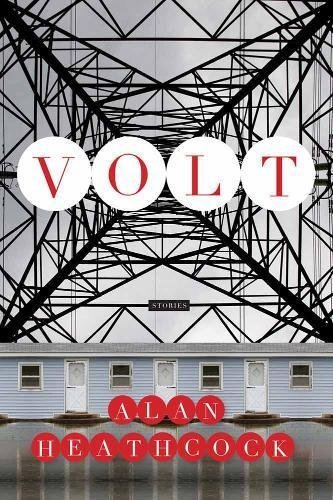
Volt: Stories

Rate this book
A blistering collection of stories from an exhilarating new voiceOne man kills another after neither will move his pickup truck from the road. A female sheriff in a flooded town attempts to cover up a murder. When a farmer harvesting a field accidentally runs over his son, his grief sets him off walking, mile after mile. A band of teens bent on destruction runs amok in a deserted town at night. As these men and women lash out at the inscrutable churn of the world around them, they find a grim measure of peace in their solitude. Throughout Volt, Alan Heathcock’s stark realism is leavened by a lyric energy that matches the brutality of the surface. And as you move through the wind-lashed landscape of these stories, faint signs of hope appear underfoot. In Volt, the work of a writer who’s hell-bent on wrenching out whatever beauty this savage world has to offer, Heathcock’s tales of lives set afire light up the sky like signal flares touched off in a moment of desperation.

208 pages, Kindle Edition

First published March 1, 2011

44 people are currently reading
2789 people want to read

About the author

Alan Heathcock

8 books267 followers
Alan Heathcock has won a Whiting Award, the GLCA New Writers Award, a National Magazine Award, has been awarded fellowships from the National Endowment for the Arts, the Sewanee Writers’ Conference, the Bread Loaf Writers’ Conference, the Lannan Foundation, and the Idaho Commission on the Arts. His story collection, VOLT, was a 'Best Book of the Year' selection from numerous newspapers and magazines, including GQ, Publishers Weekly, Salon, and the Chicago Tribune, was named as a New York Times Editors’ Choice, and a finalist for the Barnes and Noble Discover Prize.

Ratings & Reviews

What do you think?
Rate this book

Friends & Following

Create a free account to discover what your friends think of this book!

Community Reviews

5 stars
547 (33%)
4 stars
553 (33%)
3 stars
406 (24%)
2 stars
110 (6%)
1 star
31 (1%)
Displaying 1 - 30 of 205 reviews
Profile Image for karen.
4,012 reviews172k followers
September 26, 2018
what i am finding i like the most about these tales of the downtrodden in appalachia are their range of expression. this one falls in between the explosive, gratuitous (in a great way) violence of Crimes in Southern Indiana: Stories and the almost severe restraint and quietude of In the Devil's Territory. they are stories of strict realism, told dispassionately, but not without emotional appeal, if that makes sense.

and before anyone squawks, for me, "appalachia" is a state of mind and a mode of delivery rather than a specific location, which is completely arbitrary of me, but ppbblltt.i am not exactly sure where "krafton" is, except "west" somewhere, so it might not be technically, geographically, appalachia proper. but to me,appalachian lit is that which takes place in that unsung "america" whose denizens have slipped through the cracks in one way or another, and live small-town, insular lives, concerned with the realities of the day-to-day struggle, living on their own terms, autonomous from the country that has all but forgotten it, where there is struggle and fortitude and suffering, and the hardscrabble old-testament practicality that comes from this romantic underclass. and while this is not technically always appalachia, it is as convenient a term as any to describe that body of literature that emerges. for me, it is a transition from my early love of thomas hardy, my late-teen love of steinbeck, my early twenties discovery of cormac mccarthy, and my last-ten years affection for Winesburg, Ohio.

i am loose with my terms.

this neo-appalachia trend is, for me, noteworthy because of its characters. people responding to situations, invoking a situational morality, not unsophisticated, but definitely inward-turning, unsentimental, earthy.it's a tonal thing; you either see it or you don't.

but enough about that, on to the actual book. these stories all take place in the fictional town of krafton, and are explorations of loss and loyalty, specifically about the things we will do for family and for justice.

there is a lot of death in this book, but it is not the showy, cinematic kind. it is quiet and unsentimental. people die from accidents, murders, accidental manslaughter, war, and acts of god. god is definitely a presence in this book, although frequently a presence-by-absence.

as one character meditates,

Maybe awful things is how God speaks to us. ...trudging up the lightless tunnel. Maybe folks don’t trust in good things anymore. Maybe awful things are all God’s got to tell us he’s alive.

helen farraley becomes the town's substitute God, as krafton's "first and only law officer." she appears in a couple of stories, she sees people at their most broken, and she administers justice or compassion accordingly.she gets the last word in the collection, and she uses the opportunity well.

this is a book that more people should read, a little like like mccarthy, but with less emphasis on the beautiful and jarring possibilities of language.

there are only eight stories here, which gives heathcock the opportunity to really explore the town and the interactions of its inhabitants, giving a sense of the collective mindset of the
people, but naturally, i would like more. i am a greedy monkey when i find an author that does what i like well.

if this makes no sense, blame nyquil. i am.

come to my blog!
Profile Image for Guille.
1,004 reviews3,270 followers
July 10, 2023

En esto de comentar libros se me ocurren al menos cinco situaciones posibles, tres de ellas son más o menos fáciles de solventar: aquellas en las que nos encontramos con libros maravillosos, más fácil cuanto más los disfrutamos; aquellas en las que el libro solo nos provoca rechazo, más y más fácil cuanto más decepcionados o irritados nos sintamos; y los «no, pero sí», esos libros que literariamente no nos han parecido gran cosa, pero que por lo que sea nos lo han hecho pasar muy bien. Las otras dos situaciones son más peliagudas: los que ni fu ni fa, esos que no sabemos ni por dónde cogerlos, que no nos parecen ni buenos ni malos, que no nos han divertido, pero que tampoco podemos decir que nos hayan aburrido, de hecho, bien poco podemos decir de ellos; y por último están los «sí, pero no», libros que nos parecen notables pero que no hemos sabido apreciar, categoría que también podría denominarse «no eres tú, soy yo».
“Lo mismo la gente ya no cree en las cosas buenas. Lo mismo las cosas horribles son lo único que le queda a Dios para recordarnos que sigue vivo.”
Volt entra en la categoría de estos últimos, lo que es un absoluto misterio para mí. El libro lo forman nueve cuentos muy en la línea de autores que admiro como Donald Ray Pollock o Harry Crews (el protagonista del primero de los cuentos, «El mercancías detenido», mi preferido, bien podría haber salido de la pluma de Crews). Todos los relatos transcurren en un condado ficticio del medio oeste americano, un contenedor de eso que se ha dado en llamar basura blanca, hombres y mujeres sin futuro ni escapatoria, para los que la violencia y el dolor son su día a día, duros a base de los muchos golpes recibidos, pero de esa dureza capaz de fracturarse en cualquier momento.
“Quedarse o marcharse es lo mismo… quema todo el punto mundo si quieres, pero nada va a cambiar.”
Como puede ver todo aquel que me haya leído en otras ocasiones, lo tenía todo para gustarme, empezando por su publicación en esa infalible (o casi) editorial que es Dirty Works. Me saben mal las tres estrellitas, y ni siquiera puedo decir aquello que escupe uno de los personajes más aborrecibles de estos relatos: “Soy cristiano… estoy perdonado”.
Profile Image for Richard Derus.
4,162 reviews2,261 followers
July 8, 2023
Bleak is not always to be avoided. Sometimes art needs shadows to prove there's light. These stories aren't feel-gooders, and shouldn't be attempted by those in need of uplift.

The rest of the review can now be found at Expendable Mudge Muses Aloud.
Profile Image for Lou.
887 reviews924 followers
May 5, 2013
Check out my interview with Alan Heathcock @ http://more2read.com/review/interview-with-alan-heathcock-may-2012/

If you have liked the Authors, William Faulkner, Flannery O'Connor, Steinbeck, Cormac McCarthy and William Gay you will like this.
These snippets of stories feel like ballads of loss, love, redemption and reconciliation, they ooze originality and great craftsmanship. He takes you to dream like sense of feelings at times in these stories of magical realism. Literature with dark themes, wonderful characters, eras, setting and sense of feelings.
Splendid prose visceral and poignant.
All the stories are unique in different ways it's hard to choose my most liked.
The Daughter the longest story here is tragic and poignant tale on loss and sanity.
The Staying Freight a story that will stay with the reader for as long as you know regret and loved ones.
Smoke an even more powerful than the stories mention previous, because it stirs emotions of what could have been, of mistake we may have made and how well do we know our kin.
Each story carries a thought provoking sense of feeling and meaning. He rustles up emotions in this darkness and ask yourself bigger questions on the trappings of life and consequences of actions on those we love and leave behind.
Stories written during dark times, wars and financial decline.
A writer who's touched the shocking brutal reality of man on this earth.

These are a few of the stories that I have reviewed.

Smoke
A story of regret. One man doesn't now another from Adam. A argument ends in deadly consequences. He's wronged a man a still wants to do good by them but it must be too late?
The story touches on kin and how well do we know our loved ones. The son in this story finds he knows Roy Rogers more than the face of his father. It reminds you of time and things that should really count, how it passes fleeting and many other bigger issues.

"Ain't a woman in the world more beautiful than your mother. I was thinking about how much I loved her, and how that ain't changed, and that got me thinking about my heart and how when it rains your skin and hair gets wet and cold, but your heart don't know if it's raining, or hot, or windy. It just keeps on beating."

Staying Freight
A working man out in the field with his Combine take care of his family.
One day out in the fields his life turns upside down a tragic accidental death sends him into a state of distraught and unacceptable consequences.
Just like in the movie Forest Gump, where Forest running across the land, he takes off into the wildness to escape these horrors of reality put before him. Possibly he needs to find himself again and realise and accept what has taken place. He's virtually suicidal at times.
What will become of him?
Shall he return to the darkness left behind with light and hope?
Well this is really a powerful moving story I had to read this a couple of times as there a things that possibly I missed the first time round.
Loss, reconciliation and finding the light again.

The Daughter
A really well done story. The longest of the collection about daughters and things that happen to the mind and the actions they do due to their psychological decline. One daughter the main character from this story Miriam is struggling to come to terms with her mothers death caused by a horrible accident. It's has caused her to fear stepping foot into her mothers home where she lives. The sight of her mothers truck with the blood stain on the grill hurts her eyes and heart. She does also have a daughter in this story who's there to help her and care for her. Miriam lives in a closed knitted community and they all know of her mothers death and her decline in health. The local pastor and church goers wish her back to health happy again, hopefully singing songs of praise in church.
Miriam is in grief and that has taken her to a level of closure and instilled fears.
To escape all the darkness she has made a maze in the corn field. That area of peace also becomes disturbed by intruders unwelcome, out to scare and tease. She spent joyful moments out there with her daughter in the corn, out of the house.
A local boy goes missing and the police arrive to enquire and the search starts.
As she is just about to find courage and some clarity more problems arise.

This story is possibly about loss, love, kin and the mind.
Poignant and brutal at times another memorable story from the author.

Lazarus
A man divorced wishes to have his wife and family back again back in his home.
The truth is he can't really things have changed time has taken its course they have lost their son in a war. He in this story visits his ex-wife equipped with a box of sealed letters from their son. He feels it's times to open the unread and unopened to read from a slice of their sons heart. An action that has been to painful in the past. Once the act is completed they for once are a bit more at ease and understand that things have happened and time moved, on he must let go. He's a pastor now and has new life and responsibilities.

"So much of life they'd shared, so many laughs so many touches. But there were things people should never share, but he and Martha had those things between them, too."

Review also @ http://more2read.com/review/volt-by-alan-heathcock/
Profile Image for Maciek.
573 reviews3,835 followers
October 1, 2015
Alan Heathcock's stories reminded me heavily of Donald Day Pollock's Knockemstiff - both are set in a small, rural town somewhere in the American Midwest, and feature characters who are struggling with their lives - and themselves. Their existence and the world around them seems empty, desolate - plains and prairies stretching endlessly, days little different from one another, little hope or something new and better. Heathcock's Krafton is such a town It is a town closely tied with the cycle of seasons - with reaping and sowing, working for the harvest. The crop might turn out different every year, but it will always be there - and it will always need work, leaving little space for emotions.

Volt opens very strongly with The Staying Freight, a real stunner of a story. Winslow, a wheat farmer, accidentally runs over his son during harvest, killing him. Thirty eight and a respected, reliable farmer, Winslow is consumed by grief and guilt - unable to communicate with his wife, Sadie, and seek solace in her. Winslow tries to lose himself in his work, almost colliding with a freight train in the process - the conductor angrily attacks him at first, but then suddenly leaves the train in the middle of the field, running away. "I ain't gonna do it no more", he says, and so thinks Winslow: he leaves behind his truck and combine and begins to walk through the fields, without a specific destination, lighting out away from everything, into the forests and solitude.

Winslow spends weeks in the woods, living on berries and things that he can find and hunt down; the vast wilderness morphs him into a different person - at least physically: his hair, skin and physique all change: his skin is darker, hair tangled, body hard with muscle, allowing him to walk for days without end. Eventually Winslow reaches another town, where no one knows him - and even if they did, hardly anyone would recognize him. He becomes a local attraction - being able to take a punch in the stomach from anyone without speaking, and not be knocked down. Winslow makes money doing this, but also seeks in it a way to no longer feel guilty - for his son's death, for leaving behind his wife and farm. But it is no help - Winslow realizes that ultimately he can't move away from himself.

The Staying Freight is a truly evocative and touching story, and one of the best that I have read - not only recently. The next story, Smoke, is also very good - but not quite as good and polished as The Staying Freight. Smoke involves a father asking his son to help him hide a dead body of a man whom the father claims to have killed in self defense. The son is shocked by his father's request, but agrees to help - and the two embark on a journey deep into the woods to find an appropriate place to hide the body, a place where it will never be found. As they travel together, the son tries to make sense of the violence that happened - and the father confuses him with his own father, burdening him with guilt for things that he did not commit. Smoke is a very bleak story, but one which leaves a lesser punch than The Staying Freight.

Just like in Knockemstiff, the stories in this connection are interconnected by small details - but none of the later stories matches the impact of the opening two, especially of The Staying Freight. Paradoxically, Heathcock becomes the victim of his own talent: the opening story eclipsed all others. Still, the collection is certainly worth reading, if just for that one story - if The Staying Freight was a full length novel, this review would warrant at least one extra star - as things are now, I hope that the author will give us one of such quality in the near future.
Profile Image for RandomAnthony.
395 reviews108 followers
January 4, 2012
Ok, I tried to write a normal Volt review and failed. I’m going with bullet points.

Volt is really fucking good. Sorry. I know doesn’t give you much information. Let us move on.

• I try not to read reviews until I’m finished with a book, but I’m guessing (the unfortunately named) Heathcock (heh) gets compared to Woodrell, Faulkner, etc. Volt invites comparison and Heathcock’s (stop it) influences aren’t hard to track. That’s not a criticism. Volt isn’t a weak imitation of its predecessors. The book comes from the same neighborhood (e.g. poor white people in the middle of nowhere doing awful things) but builds its own house.

• Notice I didn’t call this book a novel. And I’m not sure I can call Volt a short stories collection, either. The structure is similar to Winesburg, Ohio in that the settings and characters intertwine and central themes emerge without a straightforward storyline.

• Heathcock focuses on people who can’t articulate why they do what they do, how they respond to the scenarios, and the dread they feel trying to make sense of both what they’re doing and what’s happening around them. The balance between impulse and reason is weak and comprehension unconscious and underwater. I’m reminded of the last few pages of Woodrell’s Tomato Red. Heathcock creates a strong sense of detail as well; he doesn’t overdo the specifics but, for example, notes the details a cop sees when she walks through a trashy yard on the way to talk with an old friend/fugitive’s mother.

• Rarely has the title of a book, in the work’s content, meant so much to me. When, in the last story, the connection between the title and the stories emerged, I felt an emotional wave pass through me in a way that people who don’t read will never, ever understand.

• I’m not a big book recommender, but I’m pushing this book like crack on a couple of my friends (Donald, Tadpole, I’m looking at you) who I think will like Volt. The only barrier to a five star rating is the transparency of the influences. The rest is top-notch.
Profile Image for Alan.
Author 15 books192 followers
April 26, 2011
I was just saying (on another review) how I don't abandon books, but 'Volt' came along, and that called to me and told me to stop everything and read it: two stories in, it's brilliant. Terrifying and riveting and bone melting.

Later..
Yes the whole book was terrifying and riveting and bone melting. Heathcock is in the tradition of McCarthy and Carver and Steinbeck in the unflinching approach to his characters, here people of an imaginary town called Krafton (I hope it's imaginary cuz there's far too many murders/suicides/disasters for one place to sustain - flood and fire and death everywhere you look). He gets into their souls and makes you think and feel like them. I had to hold on tight to survive the first couple of stories. You become displaced from your seat on the bus or wherever and are on the tractor that kills Winslow's son on the first page:
Winslow simply didn't see his boy running across the field. He didn't see Rodney climb onto the back of the tractor, hands filled with meatloaf and sweetcorn wrapped in foil. Didn't see Rodney's boot slide off the hitch....
..He whirled to see what he'd plowed, and back there lay a boy like soemthing fallen from the sky.

(besides this Icarus one there are other classical allusions, eg the monster in the maze in The Daughter)
That simple and effective writing [those diminishing sentences saying so much: Winslow simply didn't see; He didn't see; Didn't see..] is there throughout the book. Winslow cannot cope with what he's (accidentally) done . At first I thought here's another 'descent' story, like many of Beckett's or Paul Bowles's fabulous 'A Distant Episode', and it does follow that trajectory, but then it goes beyond that and into a kind of redemption, a sliver of hope for the poor man. You are glad for him. The next story - I won't spoil anything by telling you exactly what happens but there is another death, gradually revealed and how a father and son cope with it, how they physically go about the task, gives the story a kind of hyper-reality, lurching and sickening, but it comes with a great depth of feeling (and insight) for the boy. The third, well this has more of the same, again about how people react and cope with death and destruction, how they defend morally (to themselves mainly) their actions. This latter has a woman sheriff out of her depth (not because she is a woman I hasten to add) trying to cope with several tough things - a flood and looters and child abduction and... perhaps I've already said too much. There is some similarity to 'Fargo' in the set up here, and throughout you get touches and flavours of American stories and novels you know, but Heathcock adds his own special intensity. His town is full of the inarticulate or partially articulate up against an indifferent landscape and the full force of weather and human appetite and stupidity, or just plain error and misunderstanding. Through his words you get inside their skins in a unique way.

The book should be read in order as characters appear throughout the book and build on what you know about them previously (although they all stand up as separate pieces too). This is particularly true of Helen, the sheriff I mentioned - she appears in several stories and you follow her development as she attempts to adminster justice and deal with criminal families, and this all comes together in the wonderful title story, the last in the book.

There were a couple of things that niggled - I got a bit lost in the long story 'The Daughter', but that was probably just me. The other thing was the dates - in the flood story we are told it is 2007 and 2008, yet there are very few references to modern life or culture - eg mobiles (cell phones I think they're called in the US), and the film stars that are mentioned, eg Roy Rogers and Trigger and Shirley Temple are from way back, so I was a bit confused there. Apart from that all I have to say is this is a truly stunning collection, one of those that comes along only once in a while and my advice for those that love short stories is to buy it now.
Profile Image for Melanie.
175 reviews138 followers
November 21, 2012
I've bruised and battered this book, taken it with me here and there, unable to shelf it, even after reading it. Largely because although I read the thing, a greedy read does not do the work justice.

Of all the short stories I've read lately - Woodrell, Pollock, Flannery O'Connor, this collection has the most heart.

The first two short stories are spellbinding. Cinematic. Slight gear change with the stories that followed but still in the territory of excellence. A new favourite.

Profile Image for Ned.
363 reviews166 followers
November 12, 2022
I won’t remember why I picked this up, a stranger recommended it. But pithy accolades on the back cover from Robert Olmstead and Daniel Woodrell sold me. The author hasn’t published much other than short stories in literary magazines, is said to be from Chicago and teaches (or taught) at Boise State University. These stories often intersect in place and people, a central character being a lonely woman in a small town who struggles to keep the peace amongst those she grew up with. Helen has issues of her own, and teeters on the edges, alternating authoritative over-compensating aggressiveness, very afraid and vulnerable, and merciful. Another character is Vernon, at various stages of life, a boy through an older man. Some stories occur during, before and after a flood, so surely this must be set in the south. Yet the location, or any identifiable markers of place and (largely) time are not revealed. Winter is coming to me, so I’m sitting by the first (gas) fire of the year, watching cold wind from this coziness, anticipating my next book and how I will spend my precious weekend time. This book was published by a small press, so later today I’m going to be searching for how to help my father in law publish his own little memoir, which is mostly constructed. He doesn’t have that much time on this earth, in all likelihood, and so I want to get this done for him.

This is a collection of short stories with substantial punch – not the insanity of a Harry Crews or TC Boyle, nor the male-dominated and alcoholic seriousness of Carver or Olmstead. The female lead bring an interesting dimension to several of these, as she seeks to understand those returning from the Vietnam war and their horrors fitting in. It is also a story of longing, as the teenage boy in “Fort Apache” fantasizes about hopping a freight and going west yet is tempered by the older boys’ jaded cynicism that there’s really no there there – thus relegating them all to a drunken night of riotous larceny and arson on the streets of the silent old town square. These stories are often about recognizing and accepting the limitations of life, and the mourning of what will never be. These characters ache, sometimes thrash about, as they seek comfort where they can and hang onto shreds of hope. Heathcock is a fine writer – I’m sure he’s teaching his students well. I enjoyed greatly his craft and, most importantly, his characters and surprising plot twists. There’s always a moral in there, subtlety inserted, which gives the necessary heft to great short stories. A couple of samples:

P. 46, here a father and son feel the weight of tragedy together, after an unspeakable act: “Vernon had never seen his father cry. This overwhelmed him and he began to cry, too, and his father continued to cry and Vernon found that weeping made his head feel better. They did not look at each other or speak as they trod the jagged downslope weeping.”

P. 174/175, a man and woman estranged and separated through the death of their son in war, finally read his sweet letters together many years hence: “Watching Martha sleep, her lips parted as if singing, and still in her clothes, in her nest of covers, Vernon felt more lover for her than he’d ever felt for anything. So much of a life they’d shared, so many laughs, so many touches. But there were things people should never share, and he and Martha had those things between them, too.” This one singed me, since I had a brother who lost a child in an accident, a horror which he and his wife share to this day.

p. 192, here Helen the policewoman gazes down on her people, knowing she can never go back again, feeling the loneliness: “Teens lounged in truck beds. Kids ran with sparklers. Men threw horseshoes in the empty lot where the SuperAmerica once stood. Others talked in the road, and though Helen had once been one of them, she was no longer sure what they said to each other, these people who saw each other day after day, week after week, until they died.”
Profile Image for Repix Pix.
2,549 reviews539 followers
February 6, 2019
Estos relatos no están mal, pero no he visto en ellos a Cormack McCarthy ni a Donald Ray Pollock, dos de mis escritores favoritos. Una tremenda decepción.
Profile Image for Ken.
Author 3 books1,238 followers
February 22, 2012
Blurbs aren't usually worth the paper they're written on, but Stewart O'Nan's take on Alan Heathcock's short story collection, VOLT, about nails it: "In the tradition of Breece D'J Pancake and Kent Meyers, Alan Heathcock turns his small town into a big canvas. Like the tales in WINESBURG, OHIO, the stories in VOLT are full of violence and regret, and the sad desperation of the grotesque."

While we are about the business of allusions, I would add Henry David Thoreau's famous line, "The mass of men lead lives of quiet desperation." The characters of Heathcock's 8-story collection still haven't found what they're looking for, that's for sure, and many of them are so lost that they seem this side of hopeless in their search. Many try to run, but you cannot run from yourself when you are the baggage.

This collection is similar to WINESBURG, too, in that its setting remains consistent -- the mythical, western town of Krafton and surroundings -- and has repeating characters who sometimes appear from story to story. One is the sheriff, a solid woman named Helen Farraley. Others are ne'er do wells, such as the just-returned-from-service-in-the-Middle East kid, Jorgen Delmore.

In "The Staying Freight" a farmer who accidentally plows over his young son (occurs on the first page of the story) lights out for the woods and keeps running. Through deprivation in the wilds, he is finally found by some yahoos in a half-wit town where a man uses him as a fighter to take on all comers with a fistful of dollars and a brain full of mush. In "Smoke," a young man is asked by his father to help burn the body of a man he, the father, has accidentally-on-purpose murdered. They go on the run deep into the wilds, then up to a mountainous cave to do their dirty work, but can sin be disposed of that easily? The smoke reminded me of Lady Macbeth's blood stain. About the only weak story in the collection is "Peacekeeper," which bounces back and forth in time and loses some of its gravitas in the process.

"Furlough" is about a kid named Jorgen Delmore who, against his own judgment, plays a key role in setting up a young girl for a practical joke that, like many scenes in Krafton, borders on the cruel and flirts with the violent. "Fort Apache" treats on a group of kids' wild night on a temporarily vacant town (yep, towns are THAT small). "Daughter," the longest story, is a compelling tale of a middle-aged woman reeling from the murder of her aged mother. She builds a maze in her cornfields for comfort, but when it's occupied by very young but wayward, white-trash boys with not-so-innocent "kid" weapons, bad things start to happen to good (and not so good) people.

The final two stories do not let up, either: "Lazarus" shows us a pastor on the edge, his son dead in an overseas war and his wife lost to divorce, trying to revive his love for the wife via a questionable method -- the dead son's as yet unopened letters from the front. And in a final, vicious finish, Helen Farraley gets called upon to serve a summons to the son in the toughest, meanest trash family the town has to offer: the Delmores. You won't soon forget her visit or the rogue's gallery of scary sorts that comprise that family.

What I like best about Heathcock's book is his prose style. It's good and lean -- hard, minimalist prose that values the meat and potatoes we know as specific nouns and action verbs. Thus you get lines like, "The night hung a damp chill. Jorgen stuffed his hands in his pockets, nodded for Mary Ellen to follow... Hickory trees rustled overhead. Wet leaves papered the road. Jorgen had once been at the center of things, with everyone else, but then he went to serve overseas, in that desert land, and though he'd been back awhile he felt as gone here as he had over there."

If you've a stylistic penchant for the writings of Hemingway, Raymond Carver, Cormac McCarthy, and yes, Breece D'J Pancake, Alan Heathcock is your man and VOLT is your book. Highly recommended, though not for the faint of heart or those in need of any cheerful pick-me-ups. Quiet -- and sometimes noisy -- desperation, remember?
Profile Image for Lori.
1,786 reviews55.6k followers
January 1, 2011
Release date: 3/11


So in my mad rush to cram another book into 2010 - I cracked this collection of short stories open and found myself unable to lift my eyes from it's pages. Not because I wanted to finish it before the ball dropped, but because it completely sucked me in and refused to spit me back out!


2010 seemed to be bursting at the "short story" seams. I read more short stories this year than any other years combined and it looks as though 2011 is headed in the same direction. What I love about Alan Heathcock's collection, what sets his book apart from most other collections, is an interconnectedness amongst his characters and their setting.


Volt is a series of short stories that all take place in the made-up town of Krafton: A bad luck, back-woodsy sort of place that reeks of tragedy and mischief. Running into some of the same characters, at different points in their lives, helped create a sense of familiarity and eased the transition between stories for me.


We meet Jorgen as a sort of love-sick, confused young man on the verge of returning to the war - and then catch up with him much later in life, when an outside police force contact Helen, the local sheriff, with a warrant for his arrest after he fails to show for a court date. By this time, we've already met Helen, the local sheriff, as she rescues the townspeople during a flood while reminiscing about a murder she attempted to cover up. Vernon, who we know once helped his father dispose of a man he killed, winds up knocking on his ex-wife's door many years later with a shoe box filled with unread letters from his dead son.


Reading Volt is almost like flipping through the family album, or reading a decades worth of back to back newspaper clippings from a single town. Each story cuts deeper and deeper into the wounds of the Krafton and it's residents. Each chapter pulls the skin back a little farther, exposing more of it's filthy rotting core.


Heathcock is a master at torturing his characters - sometimes physically, sometimes mentally. Heathcock allows them to grieve and grow and be human. But he does not hand them resolutions. They do not get closure. We are left to believe that their pain and suffering and frustrations continue long after the story we've read has ended. That is the beauty of Volt.


His writing and his stories reminded me very much of author Benjamin Percy - who, believe it or not, is acknowledged on the back cover of the ARC with advanced praise for Volt. A must read for fans of the dark, dreary, underside of humanity.


Many thanks to publisher Heathcock's publisher Graywolf Press for making the ARC available to me for review!
Profile Image for Adrián Ciutat.
195 reviews31 followers
March 1, 2018
El debut literario de Alan Heathcock es este libro de relatos editado maravillosamente por Dirty Works Editorial.
.
El escenario, Krafton, un pueblo fantasma y fantasmagórico de la américa profunda que podría ser cualquiera.
.
Los personajes, un puñado de espíritus derrotados que viven bajo el yugo de la fe, arrastrando el fardo de la culpa, inhalando humo de muerte. Almas rotas que huyen a ninguna parte. Cuerpos inertes que flotan sin esperanza tras la inundación.
.
Las historias, zarpazos que desgarran. Y luego dejan la herida abierta, palpitante por la infección, incapaz de cicatrizar.
.
El estilo minucioso, lírico, cuenta más con lo que no cuenta. En sus mejores momentos una auténtica epifanía en la vida de los personajes que se vive en carne propia, en los menos inspirados una descripción exagerada a ratos capaz de alejar la atención de esta gloriosa obra.
Profile Image for Melki.
7,279 reviews2,606 followers
January 29, 2016
This is one of those books that, based on glowing reviews, I bought a few years ago, then put on the shelf, just waiting for the right time to read. I planned to luxuriate in this book; to savor each and every story. So, finally, the moment had come. And then . . .

Sad sound of head hitting the desk.

I could try to pin this on the author by saying HE failed to make me care about any of the characters or their exploits, but I suspect this is not his fault. Plenty of other people closed this collection with satisfied grins on their faces. Why not me? I can't say for sure. Maybe it was the wrong book/wrong time, or perhaps I'm just a flawed individual.

Whatever.

All I know is that I came to dread reading one of these stories each day.
Profile Image for Richard Thomas.
Author 102 books706 followers
May 5, 2011
(This review was originally published at The Nervous Breakdown.)

Small town living is always the same, whether it’s in Arkansas, Idaho, or Missouri. Built on the backs of linked story collections like Winesboro, Ohio by Sherwood Anderson and Knockemstiff by Donald Ray Pollock, Volt (Graywolf Press) by Alan Heathcock follows the lives of a handful of lost souls, tragedy washing over them like a great flood, people with names like Winslow, and Jorgen, and Vernon. In the fictional town of Krafton, we see what people do when living out in the woods, close to nature. When there’s nothing to do, they make their own fun, picking fights over nothing, running through cornfields, tipping over cows. In a small town, everybody knows everybody, and gets in their business, sometimes to help, and sometimes to enable their own survival.

Throughout Volt we witness loss and gain, tragedy and survival, families united and divided. It is a gut wrenching collection, but it speaks the truth, calling to your attention the rich details of the landscape around us—every gnarled knob, desolate hill and crippled creek.

One of the things that Heathcock does well in this collection is set the stage. You get a strong sense of what it is like to live in Krafton, to struggle there, to survive. In a town like this, you wander the woods. If you don’t have a car, you walk across dirt roads, dogs barking, leaping at chain link fences, tied to a post in the ground. Ramshackle huts flank you on either side, held up by grime and sheer will. From “Lazarus”:

“The streets were plowed and salted, filthy banks of snow climbing the poles of lit signs before strips of bright shops. The high walls of the city airport stretched for blocks, a plane lifting off, its lights fading as it passed into the clouds. A day-glo truck pulled beside Vernon, its music thumping. Stoplight after stoplight, so many cars. A line of cars smoked in a chicken restaurant’s drive-through. In what looked like an old department store, a church lay between an insurance agency and a florist.”

There is a sense of history in a small town, and a sense of place. Also from “Lazarus”:

“The roads were slick and the one-hour drive from the city took two. At the Krafton exit, daylight flashed off the corrugated walls of the old McCallister mill. Vernon surveyed the sparkling land, playing in his mind the knobs beyond the mill, naming who lived on what road, knowing them by their fields, by their barns and kitchens and drawing rooms, knowing kids from parents, aunts from cousins, naming them each by their pains and praises.”

It can be a comforting presence, this familiarity around you. Or it can be suffocating. You can settle in and stay close to family and friends, or you can run like hell. Most don’t get out, unsure of what awaits them in the nearest big city, unable to picture themselves in any other setting, no matter how hard they may want to flee, or how desperate things have gotten. What would they do, who would they turn to? It’s the devil you know, versus the devil you don’t. And oftentimes, you can deal with the devil you know.

Another compelling aspect of this collection is how Heathcock empowers women. We follow Helen, the reluctant sheriff who was elected as a joke but takes her job very seriously—at least on the days that she isn’t ready to call it quits. We see her as an angel of vengeance in “Peacekeeper” and as a waning light in “Volt”. But we see her. She is humanity, in all of its anger and frustration—she is the voice of reason in a chorus of chaos and insanity. She takes her lumps at the hands of the drug-addled and violently unstable, and yet, she continues to get up, and do what is right. These passages are from “Peacekeeper” and show Helen in the true duality of her role as sheriff:

“Parked on the quarry’s service road, the cruiser growing cold with the motor off, Helen sipped peppermint schnapps and considered the world made of her design. My religion is keeping peace, she thought. It hadn’t begun that way, was nothing she’d planned, but now she saw that’s how it was. I just ran a grocery, she thought. I don’t want this. I ain’t the one to make the world right. She swallowed more schnapps, then capped the bottle and put it away in the glove box.”

And later, when required to dispense justice to the murderer and rapist Robert Joakes:

“Helen wore a rain poncho over her coat, wore yellow rubber gloves. She held the lantern to Robert Joakes’s swollen face. Faint plumes of breath trickled from his lips...She considered, as she had many times before, asking him why. But what could he possibly say? What insight could possibly be gleaned? Instead, she inserted the barrel of a shotgun into his mouth. He made noises, not words, gagging on the metal. She set the lantern on the stove, raised her poncho’s hood, turned away her face, and squeezed her gloved thumb over the trigger.”

It weighs heavy on Helen, this work she does, as it does on the reader who has to witness it. But who hasn’t rooted for revenge, for justice, preferring death at the hands of a lawmaker to time behind bars for the criminal, a cushy life with three squares and a television set, life on the inside better then it was out in the real world?

There is a great deal of loss in this collection. There is pain and suffering, questions without answers. Mothers and fathers bear witness to the death of their children, at war, by accident, at the hands of criminals, and their own clumsy mitts as well. The strong survive, the meek crumble and fall. But when the darkness descends, it is family that stands up to help you, no hesitation or explanation required. We see it in “Smoke” as a son helps his father drag a body through the woods, a fight over right of way, two men standing on a road, neither willing to surrender their path. Stubborn old coots that would prefer to die than give in. And we see it in “The Daughter” in which a mother, already filled with despair over the loss of her own mother, finds strength in the actions of her daughter and steps up to help her in the face of random tragedy:

“When she looked up from the sink, a face glared back from the window. Night had come early, and she gazed at her bleary reflection in the snow-streaked glass, stared at the room behind her, its faded wallpaper, its watery light, her baby girl slumped at the spot where each morning her mother had sipped her coffee and worked her puzzles.

Miriam set the sponge beside the sink, dried her trembling hands on the thighs of her jeans. Possessed by a great swelling of love, she went to her daughter and hugged her from behind, Miriam’s cheek pressed into Evelyn’s back. Evelyn clutched her mother’s arms crossed before her, gently kissed Miriam’s wrists.

Then it felt like victory, for they remained. They were still here while others were gone.”

I’ve spent time in small towns. For six months I withered in Conway, Arkansas, working for $5 an hour in a processing plant. And that was one of the good jobs. It was a dry county, and if you wanted something to drink, you went to the bootleggers house, but only if you knew them—shotguns at the door to protect their livelihood. I watched racism explode on Friday nights, driving the alleys, sitting in the back of a pick-up truck, looking for black kids to hassle. I saw people surrender to a life at the rail yard, or the gas station, or the diner, expecting nothing better for themselves, never daring to dream any bigger. I saw girls cheat on their boys, drunk driving and domestic violence, and what it does to somebody when they pull up the rug of their house, and there is dirt underneath, instead of concrete.

When there is no stability, no permanence, and nothing on the horizon, when the only way that you’re going to have dinner is if you wander into the woods and kill it yourself—this is the tension I felt reading Volt. In Alan Heathcock there is a whisper of the lyrical Cormac McCarthy, the authority of the aforementioned Donald Ray Pollock, and the danger of Benjamin Percy. You may not come out of this collection whistling “Dixie” and it may darken your soul for a spell, but you’ll come out of it with a sense of gratitude for the tragedy you’ve avoided, and a humble grace for being allowed to see the light.
Profile Image for Josh.
134 reviews24 followers
December 1, 2013
These stories are awful. Just awful. In being awful, they are great. If you too are someone who can still enjoy the story despite it being about less than uplifting characters, circumstance, and developments then you will love this collection. I would almost guarantee that this one will hit the mark.

Others have compared his writings to Cormac McCarthy, William Gay, Daniel Woodrell and the like. I get that, but I think he has a certainly unique voice; I hope for much more work from him in the future- put me on the list of buyers on release day.

I would actually compare this work to most closely to Donald Ray Pollack's Knockemstiff but in a more digestible way; grotesque, but not hyper grotesque. Similar to Knockemstiff in that all the stories have loose threads of different happenings in a singular community- some characters appear in multiple stories at multiple points of life. These stories take root in your brain. If you can't handle having stories hang around in your head, in your dreams, in the things you encounter for weeks to come then I would avoid it because there's a little bit of this suffering on the fringe of the lives we all lead. My favorite story was "The Daughter" but there isn't a one of these that isn't great......or awful depending on how you like your eggs served.
Profile Image for Larry Olson.
136 reviews4 followers
April 2, 2011
Bruce Machart (Wake of Forgiveness) recommended Volt by Alan Heathcock that clinched a three-run homer for me. Pretty rare that you read three novels in a row that you are absolutely crazy about but starting with Machart, then Percy’s Wilding set the bar pretty high. Heathcock did not disappoint. I am a big fan of southern gothic literature where a strong focus on the significance of family and community in one’s personal and social life is a central theme and what draws me to the type of writing like Larry Brown’s Fay and William Gay’s The Long Home - particular favorites. Heathcock’s stories reminds me of this style of writing where he masterfully centers on characters and place in the fictional Midwestern town of Krafton. Through these eight powerful stories, he surgically explores love, loss, guilt, revenge, being too young, growing too old – big broad themes you aren’t even aware that you are dealing with because you are so focused on the strong character development. I almost never read short stories because I find myself wanting the stories to continue and to be further developed. Heathcock’s stories are so densely packed and beautifully written, you’ll feel like you’ve completed eight novels. Read it.
Profile Image for Kirk Smith.
234 reviews89 followers
August 17, 2014
Another top shelf collection of short stories to recommend. Writing style is bold,and full of heart. Imaginative use of reverse/random chronological order in PEACEKEEPER may have been a way to depict the fatigued and scattered thoughts of the female law officer. Very effective, at least for me. Very little blood or gore, I really appreciated being more focused on motivations and emotions. The outstanding one for me was LAZURUS with a very quotable spiritual line that concluded the story. Sorry quoting it now, out of context, would ruin it. I enjoyed all the stories and will be looking for others by this author. Universal human sentiments delivered so well I'm wishing for more!
Profile Image for Anthony.
Author 54 books25.4k followers
March 17, 2011
These stories are blistering, distinctive, and moving. They transport their reader fully into their harsh and simmering worlds.
Profile Image for Jenny Shank.
Author 4 books72 followers
June 11, 2011
http://www.newwest.net/topic/article/...

Alan Heathcock’s ‘Volt’ Delivers Cinematic Stories of Small Town Noir
Boise writer Alan Heathcock makes a strong debut with Volt.

By Jenny Shank, 3-07-11


Volt
by Alan Heathcock
Graywolf Press, 207 pages, $15

Boise writer Alan Heathcock‘s gripping debut short story collection Volt is an intricately crafted examination of a fictional small town called Krafton that could be located anywhere in rural America. If you happened to pass through Krafton, you’d be advised to lock your doors and keep on driving—although on the surface it seems like a sleepy town, Krafton is riven with crime, secrets, terrible accidents, and heartache. Several characters in the book are compelled to help hide a body and several become murderers. The violence is multi-generational—characters recur, and their experience of harrowing troubles in one story doesn’t absolve them from receiving additional misery in another.

Although each story is written in timeless, distilled language, there are subtle clues that peg these stories as occurring at different times between the 1940’s and the present. Many of the characters have returned to Krafton after serving in some twentieth or twenty-first century war, irrevocably changed, and are no longer content to live peacefully in their hometown. But often it’s not war, but something unexplainable that makes these people snap. In the title story, which concludes the collection, the mother of one such character explains: “You think some are just bad or evil or whatnot, but somewhere along the way they was someone’s baby, sucking the teat like anybody. Then something puts a volt in ‘em and they ain’t the same no more.”

Take Helen Farraley—an unmarried woman with no children, who made her living working at Freeley’s General store for ten years until she became Krafton’s “first and only law officer.” Heathcock writes, in “Peacekeeper”: “It’s been a joke that Helen, a middle-aged grocery store manager, had been nominated and then elected, and when protests arose—I thought it’d be a goof to vote for her, didn’t think she’d win—it was [Mayor] Freely who declared civilized democracies stuck by a vote.”

Shortly after Helen becomes the sheriff, a girl named Jocey Dempsy turns up missing. Even though Helen isn’t an experienced detective, she’s a careful observer and diligent investigator. When she figures out what happened to Jocey and discovers who committed the crime, she decides to keep this information from the town and enact her own swift justice.

“Peacekeeper,” which won a National Magazine Award and appeared in the Best American Mystery Stories, is compelling not only for the knotty moral conundrum at its center and the human sympathy that Helen evokes, but also for its innovative structure, which seems to take its cues from film as much as from literature. The story flashes back and forth in time between the days surrounding Jocey’s abduction and a massive flood that occurs the following year, gradually revealing its mystery.

Movie-like structure and references to film occur in several other stories, notably in “Smoke,” in which a teenager named Vernon is woken by his father in the middle of the night and asked to help move the body of the man he killed. As they go about their grim labor, Vernon’s dad explains how he came to kill the stranger he calls “Mr. Augusto” inadvertently, in self-defense during a freak argument.

Exhausted and shocked, Vernon imagines or hallucinates he’s talking to Roy Rogers, who invites him to sing a song. “I ain’t got no voice for singing them dumb songs,” Vernon tells Roy, which riles him: “My songs ain’t dumb, Vernon. You got a problem with my songs, you got a problem with me.” Poor Vernon turns up again later in the story “Lazarus,” as a grown man whose son has died overseas in a desert war.

The story “Fort Apache” is similarly imbued with love for movies. Seventeen-year-old Walt wears a fedora he hopes make him “look a bit like Bogie or Cagney…any of the picture-show toughies.” Walt sneaks into the movie theater with his brother on the night the Krafton bowling alley burns down. Heathcock writes, “Without a conscious moment of sliding, Walt was inside the screen, there on that dusty road behind the battlements, the sun sweltering above and everything of this world gone—the red fabric walls, the stuttering projector, Hep and Georgette, and the whole shitty town.”

Walt longs to escape this “shitty town” and head “out west,” as his older brother Lonnie had promised him they would one day. But Lonnie has a wife and son, and tells Walt, “I ain’t a kid no more.” Still, he’s irresponsible enough to get loaded with Walt and his friends, steal bowling balls from the burnt down alley and use the town as a bowling lane in a scene of spectacular, casual destruction that beautifully captures how these characters’ longing drives them toward recklessness.

One of the strongest stories in Volt is the riveting, novella-length “The Daughter,” whose action takes many surprising turns. It too has a cinematic quality, opening just after an incident of random violence that takes the life of Miriam’s elderly mother. In her grief, Miriam withdraws from her usual active participation in the town, and cuts a maze into her cornfield rather than harvesting the crop, something the townsfolk can neither understand nor accept. Miriam’s charming daughter Evelyn takes time off from nursing school to stay with her mother during this traumatic time. They want to do nothing but stay home, away from the church they regularly attend, and hang out in their corn maze, but no one will leave them alone, which leads to a murder mystery that left me dazzled and rereading the story to track where it took its sharp turns.

The stories in Volt make the reader slide into Heathcock’s world as easily as the moviegoers he depicts enter the films they’re watching. Novelist Dan Chaon and Booklist compared Heathcock’s work to Cormac McCarthy’s, but Heathcock’s stories put me more in mind of the great Flannery O’Connor, sharing her fascination with human oddity and moral failings, her unsentimental examination of small town America, and her gift for mingling violence with black humor.

Profile Image for Brandon Tietz.
Author 10 books57 followers
May 22, 2011
Some say that you know you're reading perfect writing when you don't even realize you're reading anymore. The page numbers pass uncounted. You, the reader, devour each word with greed, like a drug. And before you know it, the story is over and you are changed somehow, both resolved and left thinking at the same time.

This phenomena happens in Alan Heathcock's collection, "Volt," and it happens right away with his first story, "The Staying Freight," a piece about a man who kills his own son and engages in a walkabout, searching for his own penance to satiate his grief and guilt. In my opinion, it's one of the best stories I've read in years, but unfortunately, Heathcock sets the bar too high for his own good. The phenomenon never repeats and we are left with seven subsequent stories that never match that initial mark. Perhaps my opinion of what "best" is doesn't match with those reading this review, however, you also need to consider that "The Staying Freight" first saw publication in The Harvard Review, and in that respect, also sees no equal when considering his other stories and their initial publications.

"Smoke" is about a father and son getting rid of a dead body together after an altercation. This is easily my second favorite of the collection, but something very interesting happens when you get done with these first two: you realize there's a consistency in the writing, the tone, the narrative, and this is when you officially check in that there's a certain repetitiveness to these pieces. It's most relevant with the setting of the town, and in this respect, Heathcock succeeds by drawing readers into this seedy part of the world and feeding each of our senses.

This is when people diverge into two camps: the "I like consistency" party and "I'd like some variation" party. Basically with "Volt" you get the same kind of writing with characters that are small-town sounding in a place that varies little to none with each story.

I experienced this before with "Knockemstiff," a collection by Donald Ray Pollock. Small town inhabited by small town folk doing dark or "transgressive" things. The problem is that whereas Pollock fully embraced the darkness, the grime, the depravity, Heathcock maintains a lighter, less edgy version of that. It's more fluffy and literary, as if to say, "I'm going to show you my dark side, but I'm going to put my best foot forward, too." He executes this to perfection with the first story, but as I said, they mostly go downhill from there.

Heathcock also intermingles characters and events of this time and place--and this is something that I really enjoy about collections when done right, however, Pollock has also done this before and did it better.

Perhaps this comparison is unfair, but if you've read both collections--even if it was months apart (as is the case here), it doesn't take too long for those dots to connect that "Volt" and "Knockemstiff" are cut from the same cloth, but the latter does it better.

Regarding "Volt," I loved the first story, enjoyed the next, but the remaining six were very much hit and miss, the biggest (and longest) miss of them all being "The Daughter," which read like the longest, most convoluted 50 pages of my life. Ultimately, I feel lukewarm. Whether or not I read Heathcock's next remains to be seen, but after reading "Volt," I hope he takes the route of Pollock and gives us a novel instead.
Profile Image for Lavinia Ludlow.
Author 5 books38 followers
February 6, 2012
Heathcock's debut collection of stories, Volt, comes highly concentrated and packs a tight punch. In mere paragraphs, he can describe a scene, a situation, and introduce multiple characters, and he does it naturally and unforced. He has a rustic writing style, reminding me of Mark Twain and Jon Steinbeck, leading me to believe this book was not written in today's fast-paced, technology and information overloaded society, but one of a quieter nature somewhere in the wooded towns and farm-ridden states of America. Content-wise, Volt defies the everyday mundane. A total of eight stories shed light on the barbaric underbelly of society, and how grief-stricken victims react to intense emotional traumas.

The book opens with The Staying Freight, a gritty tale about a man who accidentally tills his son into the ground. Post-incident, he wanders out for "just a walk," but turns it into a Forest Gump-like expedition, searching for sanctuary from his searing guilt, "Under a pale moon, Winslow knew he no longer belonged to the world of men and would forever roam the woods as a lost son of the civil." His agony disconnects him from his ability to relate to others, so he heads into the woods, takes on a new identity, finds a job in the killing room of a turkey farm, and becomes a circus show where the highest bidder gets to punch him in the stomach. In the end, his wife finds and leads back home to his familiar home; however, it's obvious that he's irreversibly damaged.

In Smoke, a man asks his son, Vernon, to help him cover up the tracks of his murder. Together, the two venture off the beaten path, reminisce about the past, chat about right and wrong, Heaven and Hell, and finally, burn the victim’s body. I wondered what impact the series of events would have on this kid, and whether he'd take the disturbing experiences and apply them for the better or worse. Either way, I envisioned a cycle of violence within the next generations, and a helluva lot of counseling for the next of kin.

To me, Heathcock's strongest writing surfaced in Peacekeeper, a story about a town's police officer, Helen, discovering the butchered remains of a young girl. "Slivers of pink broached the flurries in the western sky. She paused, breathing heavily, and stared down over the valley. A black stream cut the mottled white, powdered trees hunched on their hummocks. In one distant corner of the prairie the last of daylight glinted off a tin roof. Some gentle movement in her periphery made her notice the near trees. Far below, a large white oak still held its autumn leaves, its branches gently waving. Through a gap in its canopy she glimpsed a flash of pale skin. Her breath drew away, and then she was shuffling down the bench and she slipped and fell hard on her back, sliding in the new snow to the base of the slope." Helen turns vigilante, attempting to cover up the murder and take justice into her own hands by torturing the murderer.

Overall, Volt is a collection built upon the darkest emotions of the human experience. Often, I was searching for glimmers of positivity, whether in the form of a small joke, ironic dialogue, anything to uplift the shadows of every paragraph. However, Heathcock writes the dismal, ugly, and atrocious well, and I look forward to seeing what he'll release in the coming years. Volt is currently available for purchase through Graywolf Press and other retailers.
Profile Image for Bookbeaver.
83 reviews16 followers
December 27, 2011
I came across quite a bit of hype for this collection of stories over at TMN in anticipation of the upcoming ToB so I conjured up a copy through my local inter-library loan process. Among the praises being sung for these stories were comparisons to Carver (yes, these were about the down-trodden, people with less than they deserve (?) or those living a tough live of their own making), McCarthy (well, Heathcock is from Idaho and one assumes his locale of 'Krafton' is 'out west', so there's that, and some violence and darkness). And the stories were more than sufficiently dark to hold my interest, the repeated characters became familiar and well-defined as the stories evolved. So how do I explain my dearth of stars? In a word: religion. It seemed inescapable throughout the stories. Perhaps it just the paradox of the whole myth that allows the sheriff to hide the body of a a murdered girl from her parents and torture the perpetrator of the crime at one point, then ponder the sacred truth god at another. This is a well-written collection of stories that bogs down, for me, in a trough of unnecessary righteousness. I'm sure, that for believers, this will make the stories that much more convincing and relative. For many others it only makes it that much more difficult to relate.
Profile Image for Siobhan Fallon.
Author 7 books274 followers
March 21, 2011
Magnificent. The kind of fiction that will keep you up at night, from either staying up too late reading, or tossing and turning with the lights out, trying to digest the stories. These are not tales for the faint hearted or beach readers, but darkly moving tales with electric dialogue and plots twists that jerk like fish on a hook. This is real literature, folks. And Heathcock knows how to make it incredibly exciting to read, from a small town sheriff tracking down a child's killer to a deadly stand off between two men on an empty road, the stories are on fire.
Profile Image for Sonya.
883 reviews213 followers
April 23, 2017
We read one story from this collection in my short story class and if there ever were a case for being so wowed by a story that it would almost make you afraid to write because how could you ever write something that good yourself, PEACEKEEPER would be that story.

Later...

The collection as a whole is strong and violently observant.
Profile Image for Alana Portero.
7 reviews152 followers
December 2, 2016
Alan Heathcock escribe con la calma incómoda de Cormack McCarthy, la crueldad malsana de Donald Ray Pollock y una piedad dolorosa, casi inocente, absolutamente propia.
Obra maestra.
Profile Image for Daniel LeSaint.
275 reviews15 followers
June 25, 2023
Unremarkable, unmemorable, bland and boring.
Not seeing the appeal here. Not for me.


Ok so maybe “The Staying Freight” is worthy of 2-3 stars, but it just doesn’t make up for the rest of this.
Profile Image for Tuck.
2,264 reviews252 followers
May 13, 2011
i read a lot of short stories, most recently:
Raymond CarverRaymond Carver: Collected Stories

Sherman Alexie War Dances

Lydia Peelle
Reasons for and Advantages of Breathing: Stories
Wells Tower Everything Ravaged, Everything Burned
Amy Bloom Where the God of Love Hangs Out
Sam Shephard Day Out of Days: Stories
Thomas Lynch Apparition & Late Fictions: A Novella and Stories
Ron Rash Burning Bright: Stories
Eddie Chuculate Cheyenne Madonna
nonrequired reading The Best American Nonrequired Reading 2010
Best European Best European Fiction 2011
20 under 40 20 Under 40: Stories from The New Yorker
Moscow Noir (akashic) Moscow Noir
Mike Young Look! Look! Feathers

and i must say, Alan Heathcock's collection is some of the most stunning, coherent, rural and heart wrenching/shocking i have read in a long while. And as an added bonus for 21st century lit, only one mention of dope in the whole damn thing. If you only read one book of short stories in 2011, make it this one.
Profile Image for a_reader.
464 reviews2 followers
November 20, 2014
“All that innocent until guilty bullshit. ‘Cause out here, some are guilty the moment you lay eyes on ‘em, and what the law ought to do is stop ‘em ‘fore they can do what they’re born to do”

Whoa. Volt took me by utter surprise and really did a number on me. I was not prepared for the emotional journey I was about to embark upon. I first learned about this collection of short stories in the article “It’s More Than Just Meth Labs and Single Wides: A Rural Noir Primer” (http://litreactor.com/columns/its-mor...) and since Alan Heathcock was discussed in the same vein as Donald Ray Pollack and Frank Bill I was anticipating another high-octane, punched-in-the-gut reading experience. Nope, I was wrong.

For the most part these are stories of people doing horrible things to others but Heathcock took a different approach by targeting the emotional qualities of the assailants. For example, in “Smoke” a man bludgeons a stranger to death with a tire iron for not moving his pickup truck out of his path. As he drags the body through the woods to dispose of the evidence I couldn’t help but feel complete empathy him. What?? How can I feel sorry for someone who just committed such an atrocious crime? I’m not certain how Heathcock accomplished that feat but I just wanted to give the killer a big hug and tell him all will be okay.

These eight short stories all take place across different decades in the fictional town of Krafton. But which state is Krafton located? (Yes, these details are important to me.) The reader never quite knows. I tried to guess but all I can speculate is it is not the Deep South or the Southwest since a long snowy and cold winter was described in a couple of stories. I noticed that the author resides in Idaho so maybe that is a clue?

To understand why the collection is called “Volt” you need to read to the end of the last story. It is at that point that the stories will gain a cohesive feeling and the little light bulb will go on.
Profile Image for LindaJ^.
2,517 reviews6 followers
August 2, 2016
Eight stories based in a fictional small town called Krafton. Helen Farraley, elected sheriff as a joke, is featured in two of the eight -- Peacekeeper and Volt. Jorgen Delmore, Iraq vet, plays a role in two - Furlough and Volt. Vernon, as a 15-yr old boy and as a 50+ pastor, takes the lead in two -- Smoke and Lazurus. Pastor Hamby, never the lead, makes an appearance in The Staying Freight, Peacekeeper, and The Daughter (Vernon just might be Pastor Hamby). Roy Rodgers shows up in Smoke and Fort Apache. And the impact of war is apparent in Smoke, Furlough, Fort Apache, Lazurus, and Volt.

Krafton, like many small towns, has probably seen better days. The folks in these stories are mostly desperate. They have seen or experienced the underside of life. There's a far amount of death - through murder, war, happenstance, or collateral damage. These stories are about desperation. They are sometimes gruesome. They are always sad. They are in the mold of the stories in American Salvage by Bonnie Jo Campbell and Knockemstiff by Donald Ray Pollock, without the sense of redemption of American Salvage and without the extreme gruesomeness of Knockemstiff. I thought they were all brilliant.
Displaying 1 - 30 of 205 reviews

Can't find what you're looking for?

Get help and learn more about the design.