

What do you think?
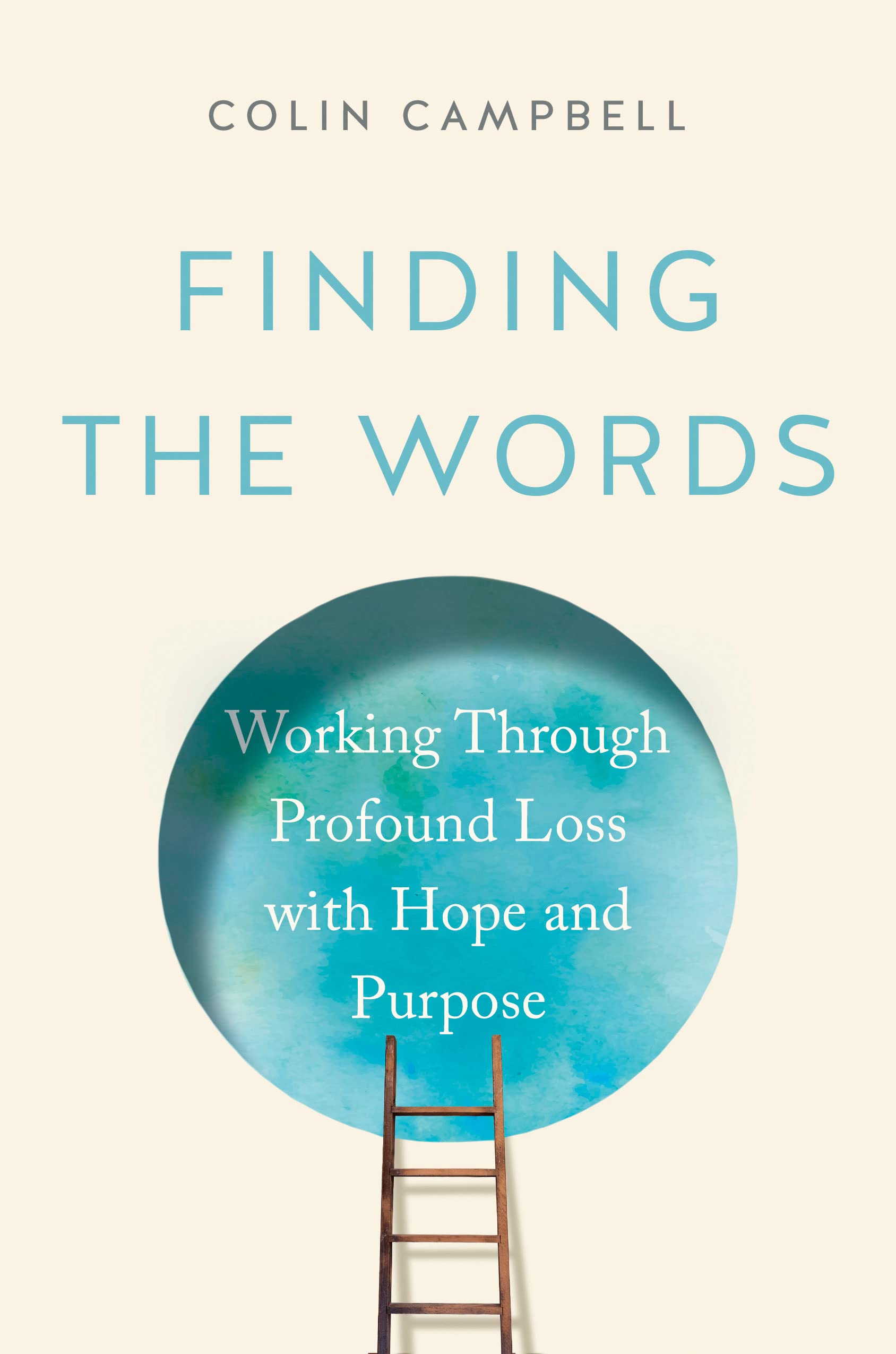
Finding the Words: Working Through Profound Loss with Hope and Purpose
A powerful account of one father’s journey through unimaginable grief, offering readers a new vision for how to more actively and fully mourn profound loss.
"After loss, one of the most common responses is “There are no words.” But often times, words are what people who are grieving need the most. When silence is replaced with empathy and support, we help others heal. In his new book Finding the Words, Colin Campbell provides powerful advice for processing pain and being there for those who are. By bravely sharing his journey through the unimaginable, Colin will bring hope to so many."
—Sheryl Sandberg, Founder, LeanIn.org and OptionB.org
When Colin Campbell’s two teenage children were killed by a drunk driver, Campbell was thrown headlong into a grief so deep he felt he might lose his mind. He found much of the common wisdom about coping with loss—including the ideas that grieving is a private and mysterious process and that the pain is so great that “there are no words”—to be unhelpful. Drawing on what he learned from his own journey, Campbell offers an alternative path for processing pain that is active and vocal and truly honors loved ones lost.
Full of practical advice on how to survive in the aftermath of loss, Finding the Words teaches readers how to actively reach out to their community, perform mourning rituals, and find ways to express their grief, so they can live more fully while also holding their loved ones close. Campbell shines a light on a path forward through the darkness of grief.
"After loss, one of the most common responses is “There are no words.” But often times, words are what people who are grieving need the most. When silence is replaced with empathy and support, we help others heal. In his new book Finding the Words, Colin Campbell provides powerful advice for processing pain and being there for those who are. By bravely sharing his journey through the unimaginable, Colin will bring hope to so many."
—Sheryl Sandberg, Founder, LeanIn.org and OptionB.org
When Colin Campbell’s two teenage children were killed by a drunk driver, Campbell was thrown headlong into a grief so deep he felt he might lose his mind. He found much of the common wisdom about coping with loss—including the ideas that grieving is a private and mysterious process and that the pain is so great that “there are no words”—to be unhelpful. Drawing on what he learned from his own journey, Campbell offers an alternative path for processing pain that is active and vocal and truly honors loved ones lost.
Full of practical advice on how to survive in the aftermath of loss, Finding the Words teaches readers how to actively reach out to their community, perform mourning rituals, and find ways to express their grief, so they can live more fully while also holding their loved ones close. Campbell shines a light on a path forward through the darkness of grief.
300 pages, Kindle Edition
Published March 14, 2023
Ratings & Reviews
Friends & Following
Create a free account to discover what your friends think of this book!
Community Reviews
Displaying 1 - 30 of 69 reviews

June 17, 2023
This is the second book on grief I’ve read since Pat's sudden, tragic death in January. I desperately wish I didn't have to read this, but Colin's words were comforting and validating. Thank you, Colin, for sharing your story, along with Ruby and Hart's stories, with the world.
Many pieces of this book resonated with me, but I want to share this quote: "Part of the work of grieving is the difficult task of stretching our hearts, opening them up simultaneously to the pain of our loss and also to the joy of life. It is so hard to hold both at the same time. It requires a tremendous spirit. And creativity. It is ultimately a generative act to forge a path through life that allows us to bring our loss along with us. Loss tears at our hearts and initially makes them shrink in pain and fear. How can we ever love again, now that we know how terrible loss can be? And yet how can we not risk love again, now that its absence has taught us just how important and powerful love truly is? Our scarred hearts are actually capable of stretching wider than ever before."
Many pieces of this book resonated with me, but I want to share this quote: "Part of the work of grieving is the difficult task of stretching our hearts, opening them up simultaneously to the pain of our loss and also to the joy of life. It is so hard to hold both at the same time. It requires a tremendous spirit. And creativity. It is ultimately a generative act to forge a path through life that allows us to bring our loss along with us. Loss tears at our hearts and initially makes them shrink in pain and fear. How can we ever love again, now that we know how terrible loss can be? And yet how can we not risk love again, now that its absence has taught us just how important and powerful love truly is? Our scarred hearts are actually capable of stretching wider than ever before."

Read
September 12, 2023I wish this book had been around 16 years ago when my son died. It is a much more proactive approach to grief. More Jewish than Christian (though author is agnostic).

March 13, 2023
Campbell, a writer/director, writes about grief after his teen daughter Ruby and son Hart were killed in a car crash; the drunk driver at fault also left Campbell and his wife physically injured and emotionally scarred. This book's power is in its specificity: the myriad ways in which Campbell and his wife Gail worked, and continue to work, through a loss almost beyond imagining. He writes about what helped, what hurt, what rituals aided them in moving forward, and what new practices they adopted to carry on with their forever-altered lives toward a meaningful future. I was particularly struck by how they managed to effectively communicate with friends, family and colleagues about what they really needed to move forward, and also, what actions or words by others were hurtful and should be avoided. This book is heart-wrenching, practical and inspiring, and left me thinking about it for days. I believe it will help others find a way forward in the excruciating aftermath of major loss.

August 4, 2023
The author’s two teenage kids tragically died in a car crash that he and his wife survived. The author discusses the various feelings and stages associated with grief, such as anger and despair, and he relays what helped him and his wife through these difficult emotions. I really related with him when he discussed how people were often scared to bring up his kids, but he and his wife loved when people said their names, asked about them, and shared stories about them. I also appreciated how he and his wife continually asked for what they needed from their grief supporters. They developed personal “grief spiels” to share with friends, friends, and co workers to let others know what they needed and to normalize the grief experience. He emphasizes many times that everyone’s grief is different so it’s important to state your needs and that there is no one right way to live with grief. I think this is a great resource for anyone who goes through loss and grief!

June 2, 2023
I cried this whole entire book. I thought I dealt with profound loss until I read this.
The Jewish traditions on grief really resonated with me and was very interesting.
Don’t drive drunk.
The Jewish traditions on grief really resonated with me and was very interesting.
Don’t drive drunk.
March 17, 2023
Stunningly beautiful book. Campbell writes with deep wisdom, insight, and charm about how he confronted the unimaginable grief that he experienced as a result of the tragic death of his two beautiful teenage children, Ruby and Hart. It is a crucial guide book for anyone confronting grief or in a relationship with folks who are confronting grief- in other words - every one of us. Despite the obviously heavy content, it is an absolute pleasure to read and the lessons within will guide me throughout my life.

January 1, 2024
This was my 4th or 5th book on grief, and it is my favorite. The author's two children died in a drunk driving accident, and he knows the pain of losing a child. The book put into words everything that I have been feeling after my own son died 12.19.2023. While the author is not Jewish, his wife is; the book describes many Jewish rituals they experienced throughout the first years of life without Ruby and Hart. This book also provides the reader with actionable steps and optional journal prompts to consider at the conclusion of every chapter. I am so glad that I found this book. I liked it so much that I bought three copies to share with others. While the book is for someone experiencing grief, I hope those who love someone grieving (pretty much everyone) also read it.
Our country needs to return to communal ways of supporting each other through life. So many don't know how to respond or what to do when someone is grieving. This book stated my needs perfectly.
Our country needs to return to communal ways of supporting each other through life. So many don't know how to respond or what to do when someone is grieving. This book stated my needs perfectly.

December 3, 2023
This should be required reading for everyone as the human experience comes with loss. Think of this book as a job aide to get through the toughest part of our existence. The book was depressing and hopeful, sorrowful and empowering, so many emotions and also very compelling. I wanted to read this book so that I could do better for friends and family during times of profound loss recognizing that I didn’t know what to do in the past. I feel much better equipped for what lies ahead for myself and others in this finite life. I always know a book is resonating when I take notes so that I have them for future reference.
Thank you to Colin and Gail for sharing this beyond their immediate community. Another lovely way of honoring their children, Ruby and Hart.
Thank you to Colin and Gail for sharing this beyond their immediate community. Another lovely way of honoring their children, Ruby and Hart.

May 31, 2023
Wow! Loved the discussion about profound loss. I used to say “there are no words” but there are lots of words and I want to talk a lot to keep them alive in some way. Lots of great practical ideas like mourning rituals and group therapy.
It’s hard to read because it’s such a difficult subject, but it’s important. I had a tendency to compare my loss to theirs and feel bad but that’s my own issue.
It gave me a lot to think about, but mostly I felt seen.
It’s hard to read because it’s such a difficult subject, but it’s important. I had a tendency to compare my loss to theirs and feel bad but that’s my own issue.
It gave me a lot to think about, but mostly I felt seen.
February 19, 2024
I listened to a Free Press podcast featuring Colin Campbell last summer and found it to be incredibly impactful following the death of my daughter. So when I heard he had written a book, I knew it was a must read. And I was right, it was a balm for my soul.
I appreciate Campbell’s proactive approach to navigating grief. As a Christian myself, I have read many books about grief written from the Christian perspective, but I enjoyed learning more about Jewish practices surrounding death and the community support that continues far past the funeral. I wish more people would adopt that approach when helping those near to them navigate profound loss and grief. I found Colin’s words to be comforting and validating and strongly feel as if this book is a gift to those of us who find ourselves in this club that no one ever wants to be a part of.
A couple quotes that really resonated with me…
“It is often said that time heals all wounds. I think that is bullshit, but my relationship to the pain of this wound has definitely changed.”
“In some ways my loss has made me tougher and fiercer. But in other ways, I am much more fragile… I don’t have a lot of extra bandwidth to cope with additional emotional challenges. And on a day to day basis it feels like I am less productive. It feels as though I pay a grief tax. Every day a certain amount of time and energy gets drained away simply by being in grief.”
I appreciate Campbell’s proactive approach to navigating grief. As a Christian myself, I have read many books about grief written from the Christian perspective, but I enjoyed learning more about Jewish practices surrounding death and the community support that continues far past the funeral. I wish more people would adopt that approach when helping those near to them navigate profound loss and grief. I found Colin’s words to be comforting and validating and strongly feel as if this book is a gift to those of us who find ourselves in this club that no one ever wants to be a part of.
A couple quotes that really resonated with me…
“It is often said that time heals all wounds. I think that is bullshit, but my relationship to the pain of this wound has definitely changed.”
“In some ways my loss has made me tougher and fiercer. But in other ways, I am much more fragile… I don’t have a lot of extra bandwidth to cope with additional emotional challenges. And on a day to day basis it feels like I am less productive. It feels as though I pay a grief tax. Every day a certain amount of time and energy gets drained away simply by being in grief.”

April 9, 2024
Campbell writes about the hardest things with familiarity and comfort. This book is great for anyone who doesn’t know what to say to someone grieving, or is going through grief themselves. I appreciated a book so honestly taking us through this heartbreak and loss.

February 22, 2024
Very thoughtful and poignant, this is a hybrid of advice and memoir. In 2019, the author’s two teen children were killed in an auto accident caused by a drunk driver. Colin’s book chronicles the unimaginable aftermath of this loss, focusing on what he and his wife Gail needed from their friends and family. The book’s title comes from his dissatisfaction with the common but useless phrase, “There are no words.”
As a surviving parent who lost an adult son to cancer a little over five years ago, I strongly recommend this to anyone who is grieving. Each chapter ends with practical actions and journal prompts, which are great food for thought even for those who might not put a pen to paper. Though Colin is an atheist and I am a practicing Catholic, I found that we very much shared an approach to living life after our losses. Probably the greatest takeaway for me was the confidence to continue talking about my wonderful son Tommy despite the sometimes startled or uncomfortable reactions others can have.
As a surviving parent who lost an adult son to cancer a little over five years ago, I strongly recommend this to anyone who is grieving. Each chapter ends with practical actions and journal prompts, which are great food for thought even for those who might not put a pen to paper. Though Colin is an atheist and I am a practicing Catholic, I found that we very much shared an approach to living life after our losses. Probably the greatest takeaway for me was the confidence to continue talking about my wonderful son Tommy despite the sometimes startled or uncomfortable reactions others can have.

April 25, 2023
Colin and his wife experienced a traumatic loss when the car the two of them and their two teenage children were traveling in was hit by a drunk driver. Both children were killed. The thought alone causes me sorrow and fear. Colin lives with the actual reality of this every day. He has done, is doing, the extremely difficult work involved in going through grief and trauma. The beautiful gift of this book wouldn’t exist without the tragedy of Ruby and Hart having their lives cut short. However, Campbell tells the reader in no uncertain terms that there is no reason his children died. This horrible loss was randomness.
I believe this is the best book I’ve ever read on the topic of grief. It contains quality advice for those grieving and those who love and want to support the grievers. It is a light through the darkness of grief because it acknowledges all the emotions and thoughts, even the ones we’d rather not admit to having. Colin and his wife have taken their loss and each day choose to do their best to walk through it and choose life and love.
As you may surmise, this book is emotionally draining. I dreamed of death while getting through this book. I cried, I got chills, I was filled with gratitude, I was anxious. This book will make you feel.
There is some repetition but that’s because any chapter can be read as a stand alone even though the book is meant to be read straight through.
I believe this is the best book I’ve ever read on the topic of grief. It contains quality advice for those grieving and those who love and want to support the grievers. It is a light through the darkness of grief because it acknowledges all the emotions and thoughts, even the ones we’d rather not admit to having. Colin and his wife have taken their loss and each day choose to do their best to walk through it and choose life and love.
As you may surmise, this book is emotionally draining. I dreamed of death while getting through this book. I cried, I got chills, I was filled with gratitude, I was anxious. This book will make you feel.
There is some repetition but that’s because any chapter can be read as a stand alone even though the book is meant to be read straight through.

May 1, 2023
We all experience loss and grief as part of the human condition, so while this book is specifically about mourning in the wake of death, I found lessons that apply to all kinds of losses. The author’s experience with profound loss more than qualified him to write this gorgeous guide/memoir about his experiences following the death of his two extraordinary teenage children who were killed by a drunk driver. Finding the Words is a beautiful and brave guide into ritual and community, dealing with complex emotions, and asking for what you need in a time a crisis. I can tell that there were so many who loved Ruby and Hart - add me to the list - and their beautifully attuned parents.
March 17, 2023
A staggering conjuring of love and meaning. Enlarging & practical - it provides solidarity, wisdom and guidance not only for mourners and those who care about them, but for anyone who wants to inhabit the world with more compassion and bolder love.
May 17, 2023
A spectacular book that offers both extraordinary wisdom and sensitivity to those who have suffered catastrophic losses, as well as for those who are supporting people who have suffered such losses. A must read.
May 3, 2025
I found this book extremely helpful after the loss of my mom about 9 months ago. Reading about the process of grief in the Jewish tradition, grief spiels, mourning rituals and the whole idea of leaning into grief rather than away have helped so much in my journey of processing the loss of my mom.
The writer of the book is an atheist, which I knew going into the book so I certainly was not expecting a spiritual component to the book. For me personally, this was a missing piece that provides an enormous amount of hope and peace, however I have found support in this area through my local church and Grief Share group.
The writer of the book is an atheist, which I knew going into the book so I certainly was not expecting a spiritual component to the book. For me personally, this was a missing piece that provides an enormous amount of hope and peace, however I have found support in this area through my local church and Grief Share group.

March 13, 2024
I am so sorry for Mr. Campbell's loss. His advice is good, words I've used myself in tragic situations. I didn't find anything new here, but it is good to confirm how careful we should all be, and how we should also not shy away.
April 4, 2025
The author writes openly and honestly about his approach to grieving for his young son and daughter who were killed by a drunk driver. Each chapter ends with action items and journal prompts making it easier to follow the author’s suggestion to “lean into grief.”

March 16, 2023
I give it 4.5 stars. It is a very emotional book. It really makes you think. It's hard to know how you would feel if you lost all your kids. He guides us on his grief story.
The author gives us good guidance what to do if we are involved in grief. Also, good guidance on how to support others who are going through grief.
The book ends in a hopefully spirit. The book, overall is well written and so insightful. Thank you for such an eloquent book.
The author gives us good guidance what to do if we are involved in grief. Also, good guidance on how to support others who are going through grief.
The book ends in a hopefully spirit. The book, overall is well written and so insightful. Thank you for such an eloquent book.

June 20, 2023
Warning: Finding the Words is a powerful read. The book is hard to absorb because it puts every parent's nightmare right in your face. The author lost his two teenage children when a drunk driver slammed into their card. Just like that. Just like that, his 17 year old daughter Ruby and 14 year old son Hart were gone. Just gone. How do you survive? Colin Campbell offers the world valuable guidance in this book.
This is more than a book about grief. Yes, Mr Campbell tells his story and tells it so well. His tears practically dampen every page (Wait. Maybe those are my tears.). His grief is real and profound and he is not afraid to show it. He models the way to authentic grieving, through the shock, the disbelief, the pain, the anger, the despair, the love, the connections, the depth of it all. But he is not only telling his story. He is offering strategies that worked for him (and/or for other people awash in grief). His grief unfolds through the pages and he tells what he has learned along the way. At the end of each chapter, he provides some concrete suggestions for holding onto and letting go of grief.
My parents and some good friends have died but I have never experienced a loss as tragic and all encompassing as what Ruby and Hart's parents have experienced. I think this book works well for anyone who is grieving any loss but wow. If you ever encounter someone who has lost a child, give them this book. When they are ready for it, it will be of great value to them. As for me in my daily life right now, I appreciated the book because Mr Campbell also shows me how I can be supportive to someone who has experienced any kind of loss but especially such a heart-wrenching loss. Five stars for Mr Campbell served with a huge helping of gratitude.
A few quotes worth pondering:
"There is no magic bullet here. Any progress we make in processing our loss is slow and incremental: for every ten stops forward, it's nine steps back. But it seems to me that each time we allow ourselves to think about our loved ones, who have died, and endure the pain of that loss, we are giving ourselves opportunities to feel connected to them. We are making room for memories to come back to us. If we are not afraid of the painful feelings, we will have more access to the positive feelings. They go hand in hand." p. 32
"Anyone who had the courage to come into our home was only there out of love for us and for our children. it was a first lesson in how scared people might be of our grief, and the effort it took for them to even be with us." p. 33
"Create your own grief spiel." p. 75
"An essential part of our work as we journey through grief is to find our own reasons to live. We're not dead. We weren't killed. So it's our job to live to the fullest extent." p. 224
"It seems to me that the lesson my life with Ruby and Hart has given me is not that loving another person is a mistake, but rather the exact opposite: loving is the only choice that makes sense." p251
"We only exist as a part of the people we love, and who love us. So of course our loved ones are still here, with us. In us. I still share my life with Ruby and Hart." p. 269
"We hold them close, but not in a desperate clutch. Instead, we hold them loosely. They were never wholly ours to begin with. They always belonged to the universe. After all, part of being a parent is learning to let go. Had Ruby and Hart grown to adults, Gail and I would have had to learn to let them live their own lives. In a similar way, in death, I have to learn not to cling. So I strive to hold their spirits close, but loosely. With open arms, With lightness. With joy." p.269
I liked this excerpt from a Maya Angelou poem that was included at the end:
"And when great souls die,
after a period peace blooms,
slowly and always
irregularly. Spaces fill
with a kind of
soothing electric vibration.
Our senses , restored, never
to be the same, whisper to us.
They existed. They existed.
We can be. Be and be
better. For they existed."
This is more than a book about grief. Yes, Mr Campbell tells his story and tells it so well. His tears practically dampen every page (Wait. Maybe those are my tears.). His grief is real and profound and he is not afraid to show it. He models the way to authentic grieving, through the shock, the disbelief, the pain, the anger, the despair, the love, the connections, the depth of it all. But he is not only telling his story. He is offering strategies that worked for him (and/or for other people awash in grief). His grief unfolds through the pages and he tells what he has learned along the way. At the end of each chapter, he provides some concrete suggestions for holding onto and letting go of grief.
My parents and some good friends have died but I have never experienced a loss as tragic and all encompassing as what Ruby and Hart's parents have experienced. I think this book works well for anyone who is grieving any loss but wow. If you ever encounter someone who has lost a child, give them this book. When they are ready for it, it will be of great value to them. As for me in my daily life right now, I appreciated the book because Mr Campbell also shows me how I can be supportive to someone who has experienced any kind of loss but especially such a heart-wrenching loss. Five stars for Mr Campbell served with a huge helping of gratitude.
A few quotes worth pondering:
"There is no magic bullet here. Any progress we make in processing our loss is slow and incremental: for every ten stops forward, it's nine steps back. But it seems to me that each time we allow ourselves to think about our loved ones, who have died, and endure the pain of that loss, we are giving ourselves opportunities to feel connected to them. We are making room for memories to come back to us. If we are not afraid of the painful feelings, we will have more access to the positive feelings. They go hand in hand." p. 32
"Anyone who had the courage to come into our home was only there out of love for us and for our children. it was a first lesson in how scared people might be of our grief, and the effort it took for them to even be with us." p. 33
"Create your own grief spiel." p. 75
"An essential part of our work as we journey through grief is to find our own reasons to live. We're not dead. We weren't killed. So it's our job to live to the fullest extent." p. 224
"It seems to me that the lesson my life with Ruby and Hart has given me is not that loving another person is a mistake, but rather the exact opposite: loving is the only choice that makes sense." p251
"We only exist as a part of the people we love, and who love us. So of course our loved ones are still here, with us. In us. I still share my life with Ruby and Hart." p. 269
"We hold them close, but not in a desperate clutch. Instead, we hold them loosely. They were never wholly ours to begin with. They always belonged to the universe. After all, part of being a parent is learning to let go. Had Ruby and Hart grown to adults, Gail and I would have had to learn to let them live their own lives. In a similar way, in death, I have to learn not to cling. So I strive to hold their spirits close, but loosely. With open arms, With lightness. With joy." p.269
I liked this excerpt from a Maya Angelou poem that was included at the end:
"And when great souls die,
after a period peace blooms,
slowly and always
irregularly. Spaces fill
with a kind of
soothing electric vibration.
Our senses , restored, never
to be the same, whisper to us.
They existed. They existed.
We can be. Be and be
better. For they existed."

August 23, 2023
A friend suggested a podcast to me where Colin Campbell was the guest. This was my introduction to Colin and his story of child loss. I listened to the interview and found that many of the things he was saying have been said by me as well. In 2018, I lost my son and only child to a diabetic episode when he was barely twenty years old.
I obtained a copy of Colin's book and read it in a few days. The book gives some insight into the life of the Campbell family, and shows the raw grief experienced by Colin and his wife, Gail, as well as extended family and friends after the loss of Ruby and Hart. The book is well-written and offers a guide to navigating your own journey of grief. It also offers no excuses for the lack of empathy and understanding that's so often experienced by the bereaved. We live in a death phobic society, and this is especially evident when it comes to child loss.
Thank you Colin and Gail for sharing your story with the world. Ruby and Hart deserve to be honored and memorialized, as their lives mattered. And their names and stories deserve to be spoken and shared regardless of how long they've been gone.
I obtained a copy of Colin's book and read it in a few days. The book gives some insight into the life of the Campbell family, and shows the raw grief experienced by Colin and his wife, Gail, as well as extended family and friends after the loss of Ruby and Hart. The book is well-written and offers a guide to navigating your own journey of grief. It also offers no excuses for the lack of empathy and understanding that's so often experienced by the bereaved. We live in a death phobic society, and this is especially evident when it comes to child loss.
Thank you Colin and Gail for sharing your story with the world. Ruby and Hart deserve to be honored and memorialized, as their lives mattered. And their names and stories deserve to be spoken and shared regardless of how long they've been gone.
December 2, 2025
This book was one in a series of books I’m reading around grief to help feel less alone defining where each heartbreak overlaps with the many losses that have impacted my life. There are definitely not answers or insightful explanations to grief - I know everyone is on their own journey in their own time.
The loss of his two children is openly shared and his insistence that grief needs to be spoken hit me hard. He challenges you to talk about the people you’ve lost, saying their names, remembering their lives, letting other people see us tear up at the mention of them. He says Thats how we hold on to the love instead of just the pain- and that felt reassuring as there are sometimes feelings of guilt and questions and moments I wish I could rewrite in my own stories of loss. The reflections at the end of each chapter helped me see that more clearly.
.
This book doesn’t make grief lighter but helps to understand that love survives through the retelling one memory at a time.
The loss of his two children is openly shared and his insistence that grief needs to be spoken hit me hard. He challenges you to talk about the people you’ve lost, saying their names, remembering their lives, letting other people see us tear up at the mention of them. He says Thats how we hold on to the love instead of just the pain- and that felt reassuring as there are sometimes feelings of guilt and questions and moments I wish I could rewrite in my own stories of loss. The reflections at the end of each chapter helped me see that more clearly.
.
This book doesn’t make grief lighter but helps to understand that love survives through the retelling one memory at a time.

May 9, 2024
Possibly the best book for grieving parents I've found. The author lost both of his beautiful, teenaged children at once when a drunk driver hit their car and killed both kids, leaving him and his wife alive. He explores methodically what works if you have no belief in an afterlife (which I didn't before my son's death and so could relate to how empty most platitudes feel when spoken to someone who has no faith). Sharing your grief, saying plainly what you need, looking for new meaning, honoring your lost children, letting each partner grieve as they wish, and so forth. I felt after I read this that I instinctively did most things he recommends, even though many people tried to shut me down or said I was over sharing, and it felt good to be validated in this way. I recommend this as a guidebook for any newly grieving parent trying to figure out what to do next.
July 12, 2023
This is one of the most beautiful and important books I’ve ever read. Colin Campbell takes the lessons he learned from the most tragic time in his life and he gifts them to us. I bought this book to read as a social worker with the hope of learning more about how to hold others through grief. I am also a person who has experienced profound loss. Between the time I bought the book and when I began reading, I was diagnosed with cancer. Reading this during the early weeks of a scary diagnosis was really powerful. I considered not picking it up given my circumstances even though it was “next” in my TBR pile. I am beyond grateful that I read it. So much of the advice and wisdom helped to hold me up. Thank you Colin (and Gail) for this brutal, life affirming, wise, gentle book.
May 23, 2025
Colin Campbell details the horrific events of the worst day of his life (a car accident outside of Joshua Tree that took the lives of his two teenage children) and then goes into the aftermath, hoping to help others who are grieving.
This is so sweet and tender and I can't talk about it without crying. I so appreciate the wisdom and strength that Colin gained and shared, and I'm glad he wrote this.
"There is no shielding us from the pain of loss. It's our reality."
"Our community gathered together to stop traffic in the name of Ruby and Hart. And once again, it was active. It demanded that we walk in our grief. The surest path out of despair is by transforming our pain and loss into physical action. Over and over again I am struck by the power of this truth."
This is so sweet and tender and I can't talk about it without crying. I so appreciate the wisdom and strength that Colin gained and shared, and I'm glad he wrote this.
"There is no shielding us from the pain of loss. It's our reality."
"Our community gathered together to stop traffic in the name of Ruby and Hart. And once again, it was active. It demanded that we walk in our grief. The surest path out of despair is by transforming our pain and loss into physical action. Over and over again I am struck by the power of this truth."
April 18, 2025
A how-to guidebook to coping with profound loss. Colin Campbell suffered the greatest loss imaginable--that of both his only children. His suggestions for surviving this have to be given respect and are probably helpful in general but mostly the book describes how the rich and influential manage these things. A big part of the advice is to create rituals for painful dates or memories--like throw a party for 150 of your closest friends or buy a vacation house in a meaningful place. I sympathize with CC and his need to escape from guilt as the driver of the car where his young kids were killed. Anguishing to recall that he turned into the path of a speeding car.
July 29, 2026
I do not like self-help books. I'm an introvert, I keep things to myself. I hate asking for help. This book is the first book (ever) that I've highlighted in all sorts of random spots. I used sticky notes throughout. I took pics of some of the poetry to have on the hard days. The author lost his two children-I lost my son-and he just gets it. It isnt just about child loss, though. It's for anyone who has experienced profound loss. It's for anyone who has experienced profound loss years ago, or just yesterday. There are stories throughout of different kinds of loss. I will keep this close by, for those days when I forget it's ok to grieve exactly how I need to.

April 16, 2023
The death of a child who dies before you is devastating. I know that personally. The death of two children who die before you is extremely tragic. Definitely life sucks times two. Colin's book details this fact but also gives perfect insight of what it does to parents and what they do to survive as well as explain how to react and handle friends and family to continue to keep your dead loves ones' names and memories alive. Chapters are by grief categories with action and journaling ideas at the end of each chapter.

June 7, 2023
This book is helpful in understanding how to process grief through community, rituals, and meaning-making. It was hard for me to relate to the author's particularly horrifying grief, however, which was all encompassing, in the sudden loss of his two teenaged children. I am sure it would be a welcome guide for bereaved parents. As someone who has recently experienced very different losses, it was possibly too heavy for me. But I am still grateful for the guidance, in helping both others in grief and myself.
Displaying 1 - 30 of 69 reviews