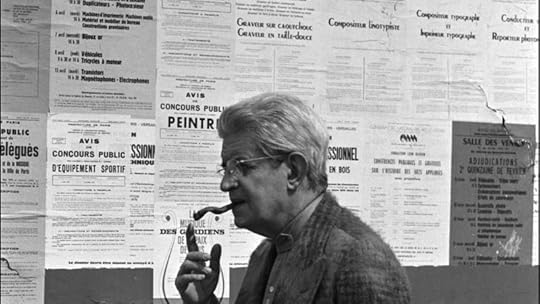
Leo de pluma de Sollers que para el Claudel es ante todo el que El Paraiso esta alrededor de nosotros en este mismo momento con todos sus bosques atentos como una gran orquesta invisiblemente que adora y que suplica. Toda esta invencion del Universo con sus notas vertiginosamente en el abismo una por una donde el prodigio de nuestras dimensiones esta escrito .Pues bien Lacan es para mi el que en este seminario El infierno nos conoce es la vida de todos los dias . Es lo mismo? ¡Ah no lo creo Aca no hay adoracion no hay orquesta invisible ni vertigos ni prodigios. Empecemos por el Lacan evacuado de la calle de Ulm con sus oyentes no sin resistencia ni escandalo. El episodio dio que hablar. Que habia hecho el para merecer esto? Se dirigio no solo a los psicoanalistas sino tambien a una juventud aun enardecida por los acontecimientos de mayo que lo acepta sin embargo como un maestro del discurso en el mismo momento en que suena con subvertir la Universidad. Que les habia dicho el? Que Revolucion quiere decir volver al mismo lugar. Que en lo sucesivo el saber impone su ley al poder y que se ha vuelto ingobernable. Que el pensamiento es como tal una censura. Les habla de Marx pero tambien de la apuesta de Pascal que en sus manos se vuelve una nueva version de la dialectica del amo y del esclavo y tambien de los fundamentos de la teoria de los conjuntos. Continua con una clinica de la perversion con los modelos de la histerica y del obsesivo. Todo esto contagia brilla cautiva. Entre lineas se sigue el dialogo de Lacan consigo mismo sobre el sujeto del goce y la relacion de este con la palabra y el lenguaje.
Jacques-Marie-Émile Lacan was a French psychoanalyst, psychiatrist, and doctor, who made prominent contributions to the psychoanalytic movement. His yearly seminars, conducted in Paris from 1953 until his death in 1981, were a major influence in the French intellectual milieu of the 1960s and 1970s, particularly among post-structuralist thinkers.
Lacan's ideas centered on Freudian concepts such as the unconscious, the castration complex, the ego, focusing on identifications, and the centrality of language to subjectivity. His work was interdisciplinary, drawing on linguistics, philosophy, mathematics, amongst others. Although a controversial and divisive figure, Lacan is widely read in critical theory, literary studies, and twentieth-century French philosophy, as well as in the living practice of clinical psychoanalysis.
I'm at a loss for what's going on in this seminar of Lacan's. After going through the whole thing, I fail to see the takeaway. Perhaps this. In Lacan's framework, every human being is born with this essential feeling of lack or deficiency, which in ordinary life we seek to satisfy through the desire of certain people and things. Matters go off the rails for folks when they find in their lives a dissatisfaction toward what they want or else they set up impossible, unachievable goals.
There are other cases but let's stick to two categories of neuroses. In the Lacanian framework, the hysteric wants someone else to tell him or her what to want, to guide him or her on the right path. The obsessive, on the other hand, wants things he or she could never have. An obsessive might buck authority, for instance, and wish that there were no authority figures, but so long as he or she makes that his or her personal goal and that goal dominates his or her life, the obsessive will naturally be frustrated because everybody's got to serve somebody.
Now the therapist's role in all this is to allow the patient (typically a neurotic, either hysterical or obsessive) to unload his or her baggage onto the therapist while the therapist works to get the patient to break out of some of his or her bad patterns.
This kind of stuff I've just put into words is better put in more summary form by Lacanian psychoanalyst Bruce Fink in his great book The Lacanian Subject. Sure, you might be able to glean several of the above points from this, Lacan's seminar From an Other to the other, but you'd best get it elsewhere.
This translation hasn’t been published in America yet. I picked it up in England on a visit. I may be the first American to have read it, which excites me. Good seminar, but I need to know more about set theory and I want the rest of his seminars translated damn it!
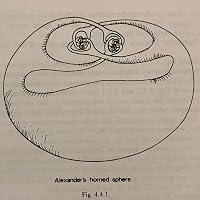
A couple helpful clarifications: the recourse to Pascal's wager is to think God as Other, a product of discourse: by grounding the belief in God's existence on the wager, Pascal thereby reduces God from a transcendental figure to the product of discourse, the Other as a "terrain scrubbed clean of jouissance." When Lacan writes 1, he means the unary trait, just as a is always the objet petit a. The sphere, torus, cross-cap, and Klein bottle are meant to correspond to objects of the drives (five minus genital): oral, anal, scopic, and invocatory. In sublimation, man loves woman but at the cost of reducing her to a Thing. Otherwise, like many Seminars, this can, at many points, play like a "greatest hits" compilation, Lacan referencing (then reiterating) points made in prior seminars, speeches, writings, etc.
This seminar kind of stands out. It is rendered outdated by further seminars, it's the last at the ENS, and as such it has a very obvious Althusserian overtone, not to mention thoroughly mathematical. Not that that's a bad thing, it's just that Lacan will not develop much of what's been said here, as he moves his theory into somewhat different directions after changing venues.
On its own, it's profound, like if someone attended, in live, only this seminar, that would be perfectly enough for them to write a dissertation on Lacanian theory. But as I say, later seminars re-develop core ideas, like the mathematization of objet a.
All in all, it is a skippable seminar if one is invested in the lattermost teaching of Lacan. Which is why I haven't finished it in its entirety, but only skimmed to the end.