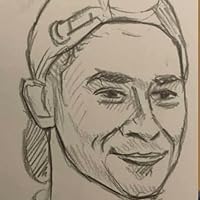
During these tough days of so many undemocratic national leaders, it was refreshing to read about a born leader who made true, harsh sacrifices to bring democracy to his nation – from the prison cell. While I lived through these years, read about his fight and joined protests against apartheid in South Africa and, since reading a number of books his leadership, it has been a while, and this book brought even more realities to life.
When reading a book, I highlight important portions and highlight the page number of pagers that have especially important facts on it. Many of Lodge’s books now is in yellow for he brings forward so many important facts and interesting stories.
Nelson Mandela and the fight for a free South Africa, is complicated with so many issues at play --- involvement of the communist party, the split among the blacks in South Africa, the violence, ANC’s politics, Mandela’s own upbringing, the messy situation around his divorce from his second wife, and the inability for decades for the ANC to move the public against the horrific system.
It was interesting to read how Mandela’s views changed over the years. When he first started to get involved, he was against interracial involvement to change the government, a position he did a 180-degree change over the years. He later explained that “I feared that joint campaigns where Africans and few literate and trained men, and where they lacked economic resources and influential contacts, could give to minorities enjoying these advantages an influence out of all proportions to their numbers.” Mandela also advocated for the expulsion of the communists in the 1940’s but came to understand the importance of their involvement later. Surprisingly, Mandela kept pictures of Lenin and Stalin on the walls above him at his desk at home in the 1950’s.
The fact that the ANC spelled out their aims way back in 1955 demonstrates how this struggle was much longer than most Americans really considered; many of us thought it was a new struggle in our lifetimes. It is much like the fight in our own country for equal rights – of African Americans, Asians, the LGBTQ community, and others in our own country. The ANC drafted the ‘charter,’ which Mandela called “revolutionary.”
The book gives some indication to the brutal actions of the white government to maintain control – the shootings, prison sentences, the censorship, and the personal attacks on leaders of the opposition. Mandela and his family paid a steep price for his actions, causing the family to have little money and his own liberties in detention for over 27 years. 10,000 people were held for nearly two weeks under the new detention law when mass protests finally started to surface.
The book provided in depth details about how Mandela’s prison experience – and how he fought back and dealt with the retrogressive government. That was one of the most extraordinary segments of the book. Early in his stay, he was stripped searched like the other prisoners and given a uniform that included shorts. Mandela pushed the authorities until one day he had a pair of long trousers in his cell; they were taken away when he pushed for the others to be treated in a similar manner. It took years before he was able to move the prison authorities. These were the years when he was alone and spent a lot of time reflecting on his life and journey. The government withdrew many concessions they made to Mandela and other leaders and cancelled visitation of family. Only later did the government retract some of the worse treatments.
Ironically, once Mandela became the most famous prisoner in the world, the rulers of South Africa had a real problem on their hands. They met with him repeatedly to offer a release but with conditions the future president would not accept. They moved Mandela and some of his top leaders to better quarters then even better as they continued to try to negotiate with him on a settlement to what had become a world focused crisis. According to this book, by the end of 1989, the white rulers knew that any settlement had to be endorsed by Mandela to be viewed as legitimate; they were the ones in political prison. Mandela played it perfectly, at a huge cost to himself.
The book reminded me of the political rollercoaster all who were watching this drama unfold were put through. Lodge reminded the reader of many of these events – the untimely death of Prime Minister P.W. Botha, the violence that continued to rock the country – and world – the stalled negotiations. I forgot or did not know that Mandela’s release was delayed for a day so the head of the powerful National Union of Mineworkers, Cyril Ramaphosa, could craft a message after the historic release of Mandela walking hand-in-hand with his wife, Winnie.
The author stated that at the start of 1990, de Klerk had no plans to giving up full power to the ANC. The book goes through the complicated negotiations, the proposals, and the two-year dela in negotiations. Joe Slovo convinced Mandela to suspend their military option, a critical concession to de Klerk that ultimately moved the negotiations forward. It was Mandela who brokered a compromise that moved the format of the negotiations forward in a way that ultimately gave the ANC the upper hand. But the leaders of the two main factions did not have any warmth and limited trust. Mandela lashed out publicly, but the two sides continued to plot along to a final resolution. Later Mandela told the press that de Klerk “was a very brave chap…very bright.” The final resolution was a historical election in April 1994 setting a five year government through coalition administration. Their joint work earned them a joint Nobel Peace Prize, an award that Mandela wished he did not have to share.
Lodge presents many interesting stories about Mandela, including:
• Mandela was a gifted attorney who usually played to the jury. He once represented a domestic servant brought up on charges of stealing his employer’s laundry. Manela picked up a pair of the woman’s knickers with the tip of his pencil and asked the employer if they were hers; she was too embarrassed to admit it and the court dismissed the charge.
• Mandela’s famous speech at the end of his trial was not reported widely in the local newspaper, only giving a brief review due to censorship.
This book has a lot to offer. It’s dense. I would suggest reading it like one would sip a fine wine, taking in the texture and experiencing slowly to appreciate it fully. It is one of the better books I’ve read about this crisis and great man who went from prisoner to president.