Brother David Steindl-Rast is a Benedictine monk, author, and lecturer widely recognized for his commitment to interfaith dialogue and his emphasis on gratitude as a transformative spiritual practice. Born in Vienna in 1926, he survived the challenges of World War II before emigrating to the United States in 1952. He entered monastic life at Mount Saviour Monastery and went on to engage deeply with both Christian and Buddhist traditions, studying with notable Zen masters. His work bridges spirituality and science and has led him to collaborate with religious and cultural figures across traditions. He co-founded the Center for Spiritual Studies and A Network for Grateful Living, advocating for gratefulness as essential to human flourishing. His writings include Gratefulness, the Heart of Prayer and Belonging to the Universe (with Fritjof Capra). Known for his mystical approach, he describes religion as a living flame that must be rediscovered beneath layers of doctrine, ritual, and dogma.
Wise and funny. Worth a read, a re-read and a third read. Actually, stop reading. And just do what Steindl-Rast says. And watch everything change. His words continue to challenge me.
A little treasure of a book. Written by a monk, but he holds a beautifully inter-faith perspective. I heard him interviewed at On Being years ago and always wanted to read more.
Has to be read bit by bit because his style isn’t narrative, or always well organized, but just one lovely little thought after another. Sometimes he lost me in the waterfall of so many thoughts. But so glad I read it.
A very good book, quite difficult in part. The main downside is that the word8ng can over intellectualise the beautiful and simple meaning of what the author is trying to say. This is one of those books you can re read over and over again and pick up something new.
I love a book that changes my life :))) kept finding myself wishing I was hanging out with the catholic monk who wrote it. I don’t think I’m gonna look at life the same way ever again.
Although I do not feel I am a Christian, I found this book illuminating and inspiring. It was also thought provoking, really giving me some things to think about. It reminded me how beautiful Christianity can be. Gratitude and surprise, prayer, faith, hope, love - these were explored in the light of Christianity and given a much deeper meaning than is usually the case. I tried to read this book with an open mind and as much humility as I could. It is well worth the read for anyone interested in deepening their spirituality and embracing life more fully.
Gratitude and gratefulness should have a huge role in our lives and David Steindl-Rast offers useful insights on the subject. Love the simple, profound wisdom shared in this book.
I'm no longer concerned by other people's spiritual leanings; for me David Steindl-Rast's language is easily perceived as spirituality rather than religious dogma. However, if you cannot get past the language of God, you will struggle with this text.
Several readers commented on the final words in our TED summary from Brother Steindl-Rast – “Stop. Look. Go.” His invocation inspired me to take another look at this book, which is both wonderfully simple and deeply profound. Brother David himself says that he could summarize this book in just two words: “Wake Up!” …but it is worth reading all of the other words in here too.
I've been reading this off and on for a long time. I love the work of Brother David Steindl-Rast (especially The Music of Silence) and his reflections on the simple life and gratitude. Recently I watched some interviews with him - he is well over ninety now and still an inspiration. You don't have to be a Christian to appreciate his deep wisdom about the contemplative life.
This book has helped me look at gratefulness differently. Previously I considered a practice of gratitude as a good thing to do, now I see it as an essential and soul-changing discipline. Br. David Steindl-Rast walks the reader so engagingly and graciously through some theological thoughts about gratefulness and how it is "an approach to life in fullness" and leads us to prayerfulness that brings about communion with God and, by his grace, great joy. A couple of especially captivating thoughts are how Steindl-Rast distinguishes that we are not to be grateful *for* everything, but *in* everything and helps the reader see the "gift character" of life. You'll be more grateful for having read this!
Well-organized and deeply spiritual. The author explores faith, hope, and love in our relationship with God and with our fellow beings. He defines the three words in ways that I found very satisfying, and he demonstrates that the three concepts are closely intertwined rather than independent of one another. I especially appreciated the last chapter in which he provides a summary of key concepts that were investigated in the prior chapters. It's like a textbook's reference section, and it provides a concise, helpful reminder of the ideas that the author has sought to share with his readers. I'm certain that I will revisit it.
This book requires non-rushed, contemplative reading. While the book title has "prayer" in it, this is not a book that is strictly religious in tone. Br. Steindl-Rast is able to use spirituality as a way to live and to receive maximum joy in life. Prayer is part of this, but he encourages his readers to find surprise, leisure, and love to create gratefulness. The last chapter is pure joyful reading!
Phew, it's all there, but can be a little dense, as some have noted. The first read gives you a good overview. But I feel like each chapter could be a semester course: maybe just an hour or two a week, but it has to be lived through time. On my second read, I think I will just bite off a bit, then then "read, mark, and inwardly digest" before moving on!
Brother David Steindl-Rast turns the religious experience from worshipping God in more traditional ways to worshipping the moments and experiences with gratitude and openness, expansive living as prayer. A beautiful and kind read for secular and religious people alike.
Beautiful writing but felt like the complexity and deepness of writing was both it's strength and weakness at times. Hard to understand sometimes whilst other times could make you teary. Might need multiple reads. Read a bit every morning before prayers.
A tremendous book. An antidote to anxiety the author invites us into a perspective that puts us in touch with the fullness of life. The glossary at the back of the book, is worth the price of the book itself.
"At every moment life gives you the opportunity to do something with what life gives you, grateful living means learn to avail yourself to that opportunity to enjoy." He says stop long enough to be present and look for the opportunity at this moment and grab it.
Dúfal som, že kniha o vďačnosti od autora bude taká dobrá a takým štýlom ako jeho skvelý TED-talk. Začiatok dobrý, ale potom prešiel na veľmi náboženský jazyk a to už ma nebavilo, ani som tomu nerozumel. Teda asi naopak - tomu katolíckemu newspeaku ja nerozumiem a preto ma to nebavilo. škoda.
Didn't finish this as I found this hard to read as the author contrasts various terms like leisure, work, play, prayer, contemplation and in confusing ways and eventually ties them in with gratitude. I’ve read better books on prayer, mindfulness and contemplation. I had expected a more direct focus on gratitude. The first chapter is the best.
"Sooner or later we discover that prayers are not always prayer. That is a pit. But the other half of that insight is that prayer often happens without any prayers. And that should cheer us up."
A huge part of prayer is seeing the everyday, the over and over again, the mundane as they were meant to be seen- with gratefulness.
David Steindl-Rast puts life into the perspective that seems pretty much perfect. He writes of leisure as a necessary experience to correct our world view. We can get so caught up in work and purpose that we do not even see all around us God's leisure, his playfulness:
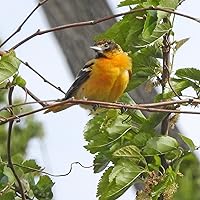
"There are titmice, juncos, and chickadees; woodpeckers, gold finches, starlings and crows. The only bird God never created is the no-nonsence bird. As we open our eyes and hearts to God's creation, we quickly perceive that God is a playful God, a God of leisure."
This book just goes on and on with amazing good stuff in finding, knowing and living gratefully.
My spiritual director gave this to me for x-mas one year...it is truer and truer every day...gratefulness is necessary for any advancement in the spiritual life, but it is also a gift...synergistic even...
The final chapter pulls everything together and made this a worthwhile read for me, but not an easy or particularly pleasurable one. There are some real gems, but some of his logic I found to be circular. His basic premise, though, is true and timeless; the foundation of a full life.
This book seemed to be too much talking about something that can only be experienced. I'd apply Shane Hipps' analogy of spending too much time talking about the menu instead of actually eating what's right in front of you.