Jump to ratings and reviews
Rate this book

Un chapeau léopard (COLL BLEUE)

Rate this book
Pendant vingt ans, quinze ans, et de plus en plus intensément avec le temps, le Narrateur eut l'oeil fixé sur Fanny, son amie. Il la considéra mille fois de dos, de profil, de face avec douceur car Fanny redoutait un peu les regards dans les yeux. Il était sensible à son corps dur, ferme, et parfois à demi mort comme celui de L'Homme pétrifié. Dans ce corps, quelque chose était figé et ne circulait pas : le sang ? la lymphe ? C'était avec des mots, ses mots - pauvres choses - que le Narrateur tentait de redonner vie à ce corps, d'y faire circuler la vie bouillonnante, intrépide, qui se tenait ramassée en Fanny au creux de son ventre comme un poing serré, une pierre, un enfant mort, une pauvre bête empaillée. Fanny est un être insondable. Par intermittences, elle laisse entrevoir des facettes singulières de sa personnalité. La jeune femme au regard perdu peut être enjouée, rieuse, mutine. Derrière le masque lisse qu'elle offre à son entourage existent d'autres Fanny : une Fanny bis, une Fanny ter, comme celle qui un jour a chapardé un chapeau léopard... Mais ces Fanny-là restent cloîtrées dans une enveloppe charnelle rigide. Fanny porte en elle une douleur, elle est "différente". C'est cette différence que le Narrateur interroge inlassablement.

144 pages, Kindle Edition

First published January 1, 2008

411 people are currently reading
14978 people want to read

About the author

Anne Serre

25 books66 followers

Ratings & Reviews

What do you think?
Rate this book

Friends & Following

Create a free account to discover what your friends think of this book!

Community Reviews

5 stars
481 (14%)
4 stars
1,154 (34%)
3 stars
1,188 (35%)
2 stars
421 (12%)
1 star
75 (2%)
Displaying 1 - 30 of 691 reviews
Profile Image for s.penkevich [hiatus-will return-miss you all].
1,573 reviews14.8k followers
July 12, 2025
Is that what we write with, then? Happiness and desire?

How well can two people truly know each other? Is there some unknowable stranger residing behind every face upon which we look, even when gazing into a mirror? Addressing the intricate interior mysteries of others, Anne Serre’s Leopard Skin Hat gives us the lifelong platonic friendship between “the Narrator” and Fanny, a woman who contains multitudes yet is adrift at the mercy of their unchained chaos struggling through life with ‘a piece of eternity clinging to her.’ Based upon the relationship with her younger sister who passed at an early age, Serre scatters a collage of vignettes to create a portrait of the character’s friendships while also examining how assessing the ambiguities of one another are much like the work of a writer ‘telling a story: you had to be extremely focused in order to piece the elements together.’ Serre’s elegant prose—brought to life in English through Mark Hutchinson’s beautiful translation which is shortlisted for the 2025 Booker International—weaves through psychological portraits and heartwrenching assessments on the limitations of friendships and the frailty of life. Gorgeously introspective, this is a beautiful testament to life and enduring love amidst the pains of mental illness and the ambiguities of the self.

It’s inside herself that she looks, astonished at the sight of this dark turmoil, puzzled to be harboring such a thing, understandably a bit skeptical, but doing what she can to acknowledge its incredible existence.

Serre’s Leopard Skin Hat, not to be confused with the Bob Dylan song, is a labor of love, both for the Narrator (as he is only called) and the author herself. ‘I wrote the book after the suicide of my younger sister, at the age of 43, with whom I had an intense bond,’ Serre explained in an interview for the Booker Prize, ‘I wanted to create a memorial to her, one that was as beautiful as possible.’ It is beautiful indeed. Serre has fashioned such an intricate story within such a tight space and her prose polishes every observation until all the nuances and facets shine like a gem in the light. It is a story about the struggles with mental health but also a platonic love that tries to hold one another together. We have the Narrator who ‘was stuck in the role of the watchful friend, steadfast and reliable,’ and we have Fanny, ‘the one who strays’ and ‘only with the greatest difficulty manages to maintain a semblance of stability.’ In this way she is a treasured friend—since childhood—yet also unrelentingly a stranger despite their closeness.

Love is far more important that death, and when it comes to love, a carnage is often indispensable. It’s the law.

There is an affinity of sorts in the novel to fellow French author André Breton classic surrealist novel, Nadja, though with far more sensitivity to mental health and women. While Breton’s narrator fetishized and exploited Nadja’s mental struggles to capture a portrait of “absurdity” in the belief that ‘beauty will be CONVULSIVE or will not be at all,’ Serre’s ‘soul in limbo’ is observed more in the belief that ‘perhaps it's mental illness that transforms you into a landscape’ and to impress upon the reader that ‘there was more to Fanny than the obstacles she encountered.’ The narrator cares for Fanny but also feels himself trapped outside, wanting to look in but finding the glass foggy and the inner workings a mystery. Yet he is also pained that, despite her ambiguities and awkwardness, she refuses to allow him his own space for himself. ‘The narrator could never get Fanny to accept that he was entitled to his own secrets, and she never understood or forgave him for this,’ the Narrator observes in a rather succinct example of their relationship. Yet for all the tumult and troubles, they remain steadfast to one another.
Perhaps in the end it was more about love than friendship? What other name is there for this urgent, violent marriage of minds, the appalling prospect of someone going to pieces, the impossibility of being indifferent, the joy you feel when at last they’re sleeping peacefully?

We get an in depth portrait of Fanny who is ‘an untamed countryside’ that comes into view piece by piece in the vignettes that flit about the timeline seemingly with little aim other than to amalgamate into an expression that champions the writing advice of “show, don’t tell” by perfect example. One of these central impressions is of the titular hat, which Fanny shoplifted, and how in the rare moments of wearing the hat ‘she would resemble the woman she might have been’ a Fanny if her ever changing and lose self of self had ‘not denied her entry to the cheerful straightforward world we all of us inhabit, regardless of our afflictions.’ It brilliantly establishes a juxtaposition with each Fanny (or Felix, as she called herself as a youth) we are presented.

You never know who your loved ones are or what they are capable of.

Fanny is difficult for the narrator to pin down, just as much as she is for herself it may seem. ‘Whenever two people meet, there are really six people present,’ goes the quote attributed to American psychologist and philosopher William James, ‘there is each man as he sees himself, each man as the other person sees him, and each man as he really is.’ Such a statement can be said about Fanny who ‘would never say the “I” of someone else,’ the Narrator writes, adding that she still was ‘never quite managing to say her own,’ as if no true or singular “I” existed within. Writing is his way of trying to construct an impression of Fanny not only for the reader but for himself.
Like the profuse material of life to which a text gives form and meaning, the turmoil and mystery of Fanny’s emotions demanded to be worked upon. She was the living example of what a Narrator has to confront every hour of every day. She was a book from before the book.

Other friends, the narrator says, are so simple, ‘each of them was a character no thicker than a sheet of paper,’ and were he to attempt this book with them instead of Fanny ‘the whole thing would be wrapped up in ten pages.’ He must grapple with her instead for a novella’s worth of pages. It becomes a realization that we can never truly know one another and this is why she remains in his mind so strongly, like a cut in our mouth we can’t stop touching.
Perhaps we all have lives the person closest to us knows nothing of? And perhaps this is what really attracts us to each other: the presence of this secret life which, from time to time, is revealed to us through a gleaming, narrow slit. The vision is fleeting and comes as a complete surprise; all our convictions are shaken because, however observant we might be, we hadn’t noticed a thing.

In this observation, however, we must also wonder if we can ever understand ourselves. It recalls Jean-Paul Sartre’s philosophical musings on the multiplicity of the self, the self-in-and-of-itself and the self we see reflected back by others, but also the self that exists in the minds of others and in a way Fanny was a living embodiment of all these and more. It is also why there is such an interesting distance of authorial proximity in the text, with the Narrator writing of himself in the third person. He observes how he can only understand others by thinking of them as a character and this, too, applies to himself on the page, making him ‘the one writing the story and the stranger within.’ But also still in a limbo of proximity with Anne Serre who is actually creating these characters who are and also aren’t her sister. It is a rather engaging textual texture that nudges the notion that, as a narrator, ‘you are a stranger to someone you live inside’ and dont ‘know who exactly you are working for.’ And then we, the reader, must confront our proximity and question how well we know ourselves as well.

The world can crumble for all we care, it’s us and we are here

Anne Serre has crafted a lovely little gem of a novella with Leopard Skin Hat. A brilliantly incisive look at the limitations of knowledge about one another and a gorgeous tribute to her late sister, this is a slow burn of a novel that nevertheless kept me eagerly turning pages. Her prose is so delightful that each observation might as well be an action sequence, but here the action is of the mind. It is also reminder to love those around you while you can and find a way to do good for each other ‘because it instilled a certain gravity in you, whereby you began to resemble the rest of the world, the ones who live, who somehow manage to live.’ Lets live this life, friends.

3.5/5

Existence…is strange and complicated and has more than one trick up its sleeve, sometimes insists on adopting forms so contrary to the truth that a holy man will look like an assassin.
Profile Image for Adina ( on a short Hiatus) .
1,277 reviews5,457 followers
April 17, 2025
Book 3/13

Now shortlisted for the International Booker Prize 2025

Translated in English by Mark Hutchinson

A beautiful and emotional book about a strong friendship between the narrator and her childhood friend, Fanny, who suffers from different mental illnesses. The novel is written from the POV of the narrator who is mentioned in 3rd person. Interesting technique and a way to distance the writer from the narrator.

It's been a month since I finished the novel and my feelings towards it have faded. I thought it was a stronger novel immediately after turning the last page but now, I am not sosure. I still think it is well written but I expected my fondness for it to linger a bit more.

Also, here are some quotes:

"It’s inside herself that she looks, astonished at the sight of this dark turmoil, puzzled to be harboring such a thing, understandably a bit skeptical, but doing what she can to acknowledge its incredible existence."

"Basically, the Narrator said to himself, the idea we form of others comes solely from their relationship with ourselves. Seen through their relationship with someone else, they are necessarily slightly different. And should we catch a glimpse of them in the privacy of their own self (which is impossible without spying on them or rummaging through their papers) they are someone of whom we know strictly nothing."

"As if doing a little harm could do you a little good, not because it gave you some unspeakable thrill—certainly not—but because it instilled a certain gravity in you, whereby you began to resemble the rest of the world, the ones who live, who somehow manage to live."
Profile Image for EveStar91.
267 reviews266 followers
August 22, 2025
For there was more to Fanny than the obstacles she encountered. She also had in her, popping up from time to time, and always when you least expected it, the jovial young woman in the leopard-skin hat she would have been had certain hatches not got battened down one day, by accident, abruptly, as if by a gust of wind.

Shortlisted for the International Booker Prize 2025

A Leopord-Skin Hat is a beautiful story of a narrator's friendship with Fanny, suffering with unnamed mental disorders, and his experiences as he continues to help Fanny through the good and the bad days for more than two decades.

When they’re together and she’s in a bad way, the Narrator is alone; when they’re together and she’s doing fine there are two of them. To be friends with Fanny is to move ceaselessly back and forth between solitude and company, without ever knowing when you will find yourself alone and when there will be two of you.

The short novella gives quite a complete picture of the narrator's friendship with Fanny, despite showing only a few vignettes of Fanny's life and habits. And it succeeds in providing a rather hopeful description of Fanny's life, despite the almost inevitable end.

For were you to place Fanny on a sculptor’s stand and slowly revolve the object you had before you, the number of facets you would discover would be quite astonishing.

Anne Serre's writing is lovely, and her familiarity with supporting a mentally ill person comes through even with the distance created by the inclusion of a narrator, whose experiences are in turn described in third-person by the author. The readers don't find out much about the narrator's life, but the narrator's emotions shine brilliantly and we find out the his relevant struggles and small victories in helping Fanny anyway.

On the whole, recommended for anyone interested in a story of hope and beauty in little things, in a life taken over by the mind.

Inhabited by someone who nobody ever saw on earth, I can assure you. Someone not unlike the woman in the leopard-skin hat, only better: less mysterious, fully present from head to toe, with a sound, plentiful past and a network of delicate, secure walkways connecting her thoughts and emotions, the memories gleaned from her travels, her friendships and affections, the books she has read, the films she has seen.

🌟🌟🌟🌟
[3/4 star for the premise and the whole book; 3/4 star for the characters; 3/4 star for the world-building and description; 3/4 star for the story; One star for the writing - Four stars in total.]
Profile Image for Robin.
573 reviews3,638 followers
June 28, 2025
Perhaps it's mental illness that transforms you into a landscape.

This small novella, written by French author Anne Serre after the death of her youngest sister, attempts to capture the complexity and mystery of an unfathomable character, Fanny, who suffers from mental illness. It's written with a great deal of love, with sides of bafflement and grief.

It's odd timing that I read this on the heels of Ford Madox Ford's The Good Soldier, because immediately I identified that the narrative structure is the same (or at least similar): non-linear summary of events happened in the past. It's not my favourite style, but I do understand how it serves both novels. This isn't a story about Fanny, it's the story about her friend's deep desire to understand her, and regret at not having helped her.

The narration is slightly eccentric in this novel, because the third person narrative voice keeps referring to Fanny's friend as "the Narrator" even though he is not the narrator -- or is he? "The Narrator" is a writer. So there's a bit of meta happening there that I bristled at a little bit, I wasn't sure how necessary it was, and it seemed a bit pretentious. It took me out of the novel (as meta is apt to do) and made me think of the author herself, seeing Serre writing about her own stuggles with her sister and finding an obvious way to insert herself without really doing so.

When they're together and she's in a bad way, the Narrator is alone; when they're together and she's doing fine, there are two of them. To be friends with Fanny is to move ceaselessly back and forth between solitude and company, without ever knowing when you will find yourself alone, and when there will be two of you. To move ceaselessly back and forth between night and day, cold and light...

"The Narrator" is a man, a friend, not Fanny's sister, which at times I found an odd choice. He seems overly attentive to Fanny, almost obsessive, given that it was so difficult to be around her, and I would have believed the intensity of their relationship much more had it been familial, or at least romantic.

In the end though, I let that go, and found it quite a beautiful study of mental illness, and the gap that sometimes exists between people who suffer from it, and those who love them.

3.5 stars
Profile Image for Henk.
1,192 reviews282 followers
April 8, 2025
Shortlisted for the International Booker prize 2025
Interesting thoughts on mental health and the unknowable nature of other people. I was touched by this story, even if initially I found it quite hard to orient myself
No doubt we all have someone else inside us, thought the Narrator, though, to tell the truth, I’ve never felt this with anyone but Fanny. And if I examine my conscience, the Narrator went on, I know that I myself am that character, the writer’s secret twin, the one writing this story and the stranger within.

Anne Serre brings us the story of Fanny, related through the eyes of impersonal Narrator who is male and writer. Fanny suffers from mental illness, culminating to the narrator looking back on their relationship. The result is a touching portrait that works remarkably well for the initially detached way of storytelling in A Leopard-Skin Hat.
I know a friend of my husband who reminded me a lot of the highs and lows of Fanny, and even though the writing initially feels very experimental, with constant references to a Narrator, the personal angle of this book, written by Serre after the death of her younger sister, shines through. To read it as one sister trying desperately to understand, to help, to “fix” her erratic and unhappy sister gives more gravity to the often light and playful tone of the book.

Quotes:
So there were three of them now: the Narrator, Fanny the old friend with the crippling existence, and this other woman, the one in the hat, the jovial, ringleted one hiding behind her curtain, whom it would have been unthinkable to mention, to simply set down at the table – that was strictly forbidden – but whom it was neither prohibited nor authorised to throw a lifeline to. When you’re out on a limb, you have to try everything.

We have to face the facts: however astonishing it might seem in light of the enormous powers we all possess, there are things we cannot do. I myself, for example, thinks the Narrator, am incapable of writing a realistic novel. There’s nothing I can do about this. I’m a good observer, I love realistic novels, yet the moment I try to write one I yawn with boredom, crumple up and vanish.

You never know who your loved ones are or what they are capable of.
Perhaps they have lives we never even suspect? Perhaps we all have lives the person closest to us knows nothing of? And perhaps this is what really attracts us to each other: the presence of this secret life which, from time to time, is revealed to us through a gleaming, narrow slit. The vision is fleeting and comes as a complete surprise; all our convictions are shaken because, however observant we might be, we hadn’t noticed a thing.

Basically, the Narrator said to himself, the idea we form of others comes solely from their relationship with ourselves. Seen through their relationship with someone else, they are necessarily slightly different. And should we catch a glimpse of them in the privacy of their own self (which is impossible without spying on them or rummaging through their papers) they are someone of whom we know strictly nothing.

Each book would enable him to rectify something in himself.

We can, by not thinking enough, be responsible for the most appalling things.

As if doing a little harm could do you a little good, not because it gave you some unspeakable thrill – certainly not – but because it instilled a certain gravity in you, whereby you began to resemble the rest of the world, the ones who live, who somehow manage to live.


Longlist International Booker Prize 2025 ranking
Shortlisted books in bold
1 Under the Eye of the Big Bird - 4.5 stars rounded up, review here: https://www.goodreads.com/review/show...
2 On the Calculation of Volume I - 4.5 stars rounded down, review here: https://www.goodreads.com/review/show...
3 The Book of Disappearance - 4 stars, review here: https://www.goodreads.com/review/show...
4 Eurotrash - 4 stars, review here: https://www.goodreads.com/review/show...
5 Perfection - 3.5 stars rounded up, review here: https://www.goodreads.com/review/show...
6 A Leopard-Skin Hat - 3.5 stars rounded down, review here:
https://www.goodreads.com/review/show...
7 Reservoir Bitches - 3 stars, review here: https://www.goodreads.com/review/show...
8 Heart Lamp: Selected Stories - 3 stars, review here: https://www.goodreads.com/review/show...
9 Solenoid - 3 stars, review here: https://www.goodreads.com/review/show...
10 Hunchback - 3 stars, review here: https://www.goodreads.com/review/show...
11 On a Woman's Madness - 2.5 stars rounded up, review here: https://www.goodreads.com/review/show...
12 Small Boat - 2.5 stars rounded up, review here: https://www.goodreads.com/review/show...
13 There's a Monster Behind the Door - 2.5 stars rounded up, review here: https://www.goodreads.com/review/show...
Profile Image for Paul Fulcher.
Author 2 books1,941 followers
May 18, 2025
Shortlisted for the 2025 International Booker Prize

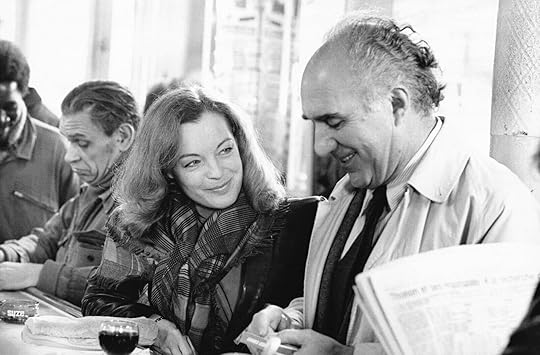
But we tell ourselves stories. too. And to see Fanny as a body that has collapsed in on itself - she who was so collected when she swam - is perhaps a grave mistake, an overly simplistic view of the complexity of her makeup. Only this morning, for instance, the Narrator came across a photo of Romy Schneider in The Passerby, a film he hasn't seen. In the photo, she's leaning against a bar, gazing at Michel Piccoli with the exact same smile Fanny sometimes had. The resemblance is startling, almost uncanny. The Narrator had often seen Fanny with that smile; it was very pretty and each time it intrigued him. The lips are pursed, but the lips are almond-shaped and gay, mysterious.

description

A Leopard-Skin Hat (2023: US, 2024: UK) is Mark Hutchinson's translation of Anne Serre's Un chapeau léopard (2008) and the fourth of her novels to appear in English after The Governesses, The Fool and Other Moral Tales and The Beginners, all translated by Hutchinson. The Fool and Other Moral Tales is actually from three short works from Serre in the original - Petite table, sois mise !, Le • Mat and Le narrateur.

I've read all but The Beginners and this novel has a rather darker hue than their, often erotically charged, playfulness. Un chapeau léopard followed the death by suspected suicide of the author's younger sister, as she has explained (retrieved from Wayback Machine):

Just like The Beginners – and I have only written this sort of novel twice – it is a book of circumstance. A Leopard-Skin Hat came about after my younger sister’s probable suicide when she was 43. I wrote this book to make a tomb for her, so that her whole body and soul wouldn’t completely disappear. The only way I could express her struggle to live, her unhappiness, and also her unique genius, was to step out of my position as her sister and put myself in the place of a narrator who knows how to tell stories.”


The novel tells of a 43 year old woman, Fanny, who died in similar circumstances, and the story of her character, and her struggles with pscyhological disorders. But this is distanced, as Serre describes, even doubly so, as the novel is told by a Narrator, writing on behalf of a (male) Writer, who is a close friend, rather than a sibling of Fanny.

The novel's title comes from a hat that Fanny shoplifted at one point and which, when she wore it, reveals another Fanny, a more carefree and engaged one, that the character the Narrator usually knows, one hidden inside and only revealed in flashes:

Twenty euros would get her through a day, or two days, or ten. But she was light-headed enough to pilfer things, and one day came home with an elegant leopard-skin hat which in reality she hardly ever wore but had taken a shine to. She would tell you about the theft with the amused and somewhat shamefaced air of a little girl and, were she to put on the hat, would resemble the woman she might have been had her clenched belly, her often uninhabited body, and her sluggish hand not denied her entry to the cheerful, straightforward world we all of us inhabit, regard-less of our afflictions.
[...]
No doubt we all have someone else inside us, thought the Narrator, though, to tell the truth, I've never felt this with anyone but Fanny. And if I examine my conscience, the Narrator went on, I know that I myself am that character, the writer's secret twin, the one writing this story and the stranger within. But unlike this blonde-haired woman hiding behind her curtain, I work. When my master cries out to me for a story, even if I'm accustomed to not answering him at once, playing hard to get because I'm not servile, I always respond in the end because I would get bored otherwise and because it's my role in life. So who exactly is this blonde-haired lady? Fanny's narrator? No, no, she's different somehow, it would never occur to her to dabble in poetry or fiddle about disentangling this enormous web of words as we Narrators do; no, what she would like no doubt is to live, to climb over the railing, cross to the other side of the screen; but how can she possibly do this when Fanny has placed her under 'house arrest'?


The voice of the narrator is taken from an earlier Serre work, Le Narrateur, translated as mentioned above one of the stories in The Fool and Other Moral Tales. "The narrator" in that work, whose story is told in the third person, as here, by another meta-narrator, interacts with, and fictionalises the lives of, those around them, in particular a friend called Fanny "who lives, I’m sorry to say, in what can only be called a mental asylum"

“It’s really not fair,” declares Fanny, “that I and others whom you claim so fervently to love are the very people you fleece. You’re a wolf, narrator, and I detest your story. What on earth were you thinking when you set me down in a ‘country asylum’? Who do you take me for? How dare you turn me into a sort of paper puppet!” “But that’s the whole point,” mumbles the narrator, “it’s not you I have painted, it’s an image that you call to mind.” “And this body you describe. How dare you describe my body and my arms and my hands!” exclaims Fanny. “Because sometimes I bore that body,” grumbles the narrator. “Oh you did, did you? And why exactly did you bear it? So that you could make use of it perhaps? So that you could take possession of it? “Perhaps,” says the narrator. “Perhaps I do nothing cleanly. Perhaps, in spite of myself, I can only act inside a book.”
[...]
Fanny chimes in, “you describe all of us solely in terms of our weaknesses. That, narrator, is what is unacceptable. Your book is a way of seizing power, and by the same token, an attempt to destroy us.” “And when you do describe our qualities,” Madame Saintier pitches in, “you’re so supercilious and patronizing that they come across as ridiculous and pitiful!” “I think we’ll have to kill him,” someone remarks. “Or at least get him to write another book,” says another, a little alarmed by the turn events are taking.


A Leopard-Skin Hat is a fascinating but complex character study, one that at times makes for a slightly frustrating read as the reader fails to pin down Fanny's attributes, but that in turn reflects the nature of her mental illnesses as well as (per comments Serre made at the International Booker readings) the author’s own fragmentary memories:

'Suppose I were to place other friends on that turntable and, like a phrenologist, examine them closely, with my fingers: would I glean as much information, would I discover as many crannies, craters, mountains, and landscapes?' the Narrator wonders. He thinks of friends he is fond of, and tells himself, no, the whole thing would be wrapped up in ten pages. Perhaps it's mental illness that transforms you into a landscape.

3.5 stars

The judges' take

Anne Serre’s short novel is the deeply romantic telling of a platonic love story between the narrator and his complicated childhood friend, Fanny; a story so beautifully realised – and translated so sensitively by Mark Hutchinson – that the pair become part of the life of the reader. A perfectly balanced book, slender in size but bearing significant weight all the way through, A Leopard-Skin Hat is testament to the ways in which we continue to hold the people we love in our memories, with respect and dignity, after they die.
Profile Image for Maxwell.
1,435 reviews12.3k followers
March 10, 2025
[3.5 stars]

I didn't quite get on with the loose structure of this. It made it hard to feel grounded in any sort of narrative, and perhaps that's the point. But I found aspects of this incredibly moving and tender. There's so much compassion for the characters, especially Fanny, which makes sense in light of the author's own experience with losing her little sister and writing this book to contend with those circumstances.

The idea of the other main character being called The Narrator but not being the actual narrator made more sense as the story went on, but I don't think it quite worked for me fully. Perhaps if I re-read this now in light of the last 2 chapters, I would appreciate it even more. I think she's a skilled writer and the translation is flawless, but for me there wasn't quite *enough* to this book to blow me away. Still, there were quite a few very beautiful moments sprinkled throughout and it does an excellent job giving you perspectives of both parties: the one struggling with mental illness and the ones who carry the weight of caretaking.

"It's not that he's spineless, he's simply made in such a way that his life began with a question, and along the way all the things he has seen, read, heard and experienced have given him part of the answer, but over the years, of course, these answers have grown more and more meager, warped, swollen, and grayed, and he's so enamored of this perpetual back and forth between edification and composition that he keeps on toiling away."
Profile Image for ritareadthat.
245 reviews52 followers
June 19, 2025
I think the readers that will appreciate and understand this book the most are those that either struggle with mental illness themselves, or have someone very close to them that does.

I know the heaviness of this book will not be for everyone. It's also written in a loose narrative, nonlinear, and with no real plot. The "Narrator" is trying to come to understand the suffering that his dear friend Fanny endures. Looking on as an observer, he gives voice to the thoughts, emotions, and daily struggles (both physical and mental) that it means to live in a mind that wants to betray you. Just being able to put into words some of the observations that the author has weaved into this book is impressive. It is stated on the book's cover that the author wrote this after the death of her sister (which after doing some Googling found that her death was likely by suicide, and she is the same age as Fanny in the book, 43). You can feel through the author's words that this is very intensely personal to her. The 40s for women is a very tumultuous time. I can definitely attest to that.

This is such an important book. I wish more would be interested in learning what real mental illness is like. It's about trying to live every day. There are good days and bad days. There are days where everything is painful, and days where everything is joyful. There is also such an extreme spectrum of what mental illness encompasses. The stigma that society has placed on the mentally-ill is harsh and enduring.

We see all of this through the eyes of the Narrator. He tells the life of this woman. He shows us that he SAW her. Who she was, what she did, what she looked like, what she loved - what she hated. And isn't that what we all want from our deepest depths of our hearts - simply, to be seen?

I see you. I do.

(The last 2 chapters were particularly difficult for me to get through, but they were also 2 of the most meaningful chapters.)

"What was interesting at moments like these was realizing you had no idea what Fanny knew. With people in general, after a few minutes' conversation you basically know what you are up against in terms of knowledge. You can, of course, misjudge this slightly, believing someone to be more or less knowledgeable than they are, but it's rare that some word of theirs doesn't quickly rectify the general idea you had formed of them. With Fanny, for all their closeness and the millions of wide-ranging conversations they'd had, the Narrator often had the impression - and it was one of her more potent charms - that she was aware of all sorts of important, vital things, but for some reason was unable or unwilling to show that she possessed that knowledge. At other times, it was the opposite: you would assume she understood everything and be surprised at her lack of understanding...

...It may be that this plasticity of knowledge, with its waxings and wanings, its expansions and contractions, is characteristic of people with severe mental disorders, thought the Narrator. He had noticed it in others, themselves seriously disturbed. Still, it's hard to have a conversation with someone the scope of whose knowledge fluctuates in this way. You could, of course, bank solely on the expanded bulk, addressing them exclusively as a person of learning; that would be the most respectful. But what happens then is very strange: the person you're addressing seems pained by the trust you have placed in the extent of their knowledge. Should you choose to address the shrunken part instead, they are often as not annoyed. Whom should you address, then? And how? Not their knowledge? But what else in that case?"
Profile Image for Rachel Louise Atkin.
1,352 reviews594 followers
August 6, 2024
A really short book following our ‘Narrator’ who is almost a third person character in the book, and Fanny who is his life long friend. Fanny suffers from a number of profound psychological disorders and each chapter of the book looks at how the Narrator witnesses her mental struggles and sticks by her with a profound attachment. He writes about her almost as though he is studying her and muses about what she is thinking and why she acts the way she does. I found it really heartfelt but also really sad at the same time in how the narrator never felt he could abandon Fanny but knew she was going to ultimately leave him alone in the world. It was written beautifully and I haven’t seen a book about mental health written in such a lyrical way filled with both love and pity. I really enjoyed the book and would love to find more like it.
Profile Image for Katia N.
706 reviews1,101 followers
Read
March 26, 2025
This novella magically succeeds to combine the gravity of the topic with the playfulness of the text and profound but never didactic observations. It is pensive and moving but effortlessly so:

Perhaps we all have lived the person closest to us knows nothing of? And perhaps this is what really attracts us to each other: the presence of this secret life which, from time to time, is revealed to us through a gleaming narrow slit. The vision is fleeting and comes as a complete surprise; all our convictions are shaken because however observant we might be, we hadn’t noticed a thing.


It never pressures you, never tries to convince you of something. It also manage to be full of light while it could have been full of bleakness and dread. It tells the story of close friendship between the two people, the one of them is mentally ill. But also it comments on itself: it is told by the Narrator who appreciates how unreliable he could be, but never forgets why he needs to tell the story at all:

Can we write more or less accurately when we start from nothing? That would certainly seem to be the case, and yet, all things considered, it is rather surprising. This nothing isn't altogether nothing after all. It's frantic desire to understand - which is not nothing- an accumulation of delights dread largely from reading; which is not nothing either. There's a good deal of happiness and desire, in other words. Is that what we write with, then? Happiness and desire? At the same time, the Narrator worries that he might simply be serving a very peculiar writer... At the same time, you work in the mercilessly medieval attic inhabited by all serious Narrators, at something which neither he (the writer) nor you (the Narrator) fully understand, and yet here you are, the pair of you, thrumming away at the heights, happy and content, and you can work like this for hours on end, describing your wonderful friend Fanny, who is unfathomable and who is dead, and whose death, the m moment you embark on your story, has turned into fiction.


Maybe this way of writing won't be for everyone, but I could not get enough of it. It reminded me a bit of Vilas-Matas, but much more sensual one. Also there is an echo of Malina, but without its existential panic. I think the translation is brilliant as well. It is palpable that every sentence in English was well designed.

"How delectable this lightness is and how exactly right!"
Profile Image for Sharon.
150 reviews23 followers
July 4, 2024
“‘So I was right!’ she cried out. ‘I wasn’t so crazy, after all.’
It’s death, in fact, that confirms to her the beauty and necessity of her former self. The terrible misunderstanding that led to her being regarded as ill when, in reality, she simply lived a rather unconventional life.”

😭😭😭
Profile Image for leah.
517 reviews3,364 followers
March 5, 2025
a slim novel following an unnamed ‘narrator’ as he reflects on his longtime friend fanny, who suffers from a number of psychological disorders. the book is essentially a character study told from the narrator’s point of view, sharing his examinations of fanny’s behaviours and idiosyncrasies from the years of their friendship. this novel was written after the author’s younger sister passed away, so the narrator’s attempts to help and understand his friend (to no avail) feel a lot more poignant within that context. with beautiful yet simple writing, it’s a novel about how we can never fully know another person, no matter how much we love them.

some of my favourite quotes:

“no doubt we are all made that way: composed of the thoughts of others in whom we have recognized a brother, a master, a fellow traveler; thoughts that have amplified, refined, and nourished our own.“

“it was this that pained her. that you were happy because you had achieved some great victory she could have understood. that you were happy because your existence was unusually full and rich and the world was exactly equal to your appetite she could have accepted. but that you were happy for no real reason, for no good reason at all, was a source of outrage and torment to her, and, to some degree, madness.”

“perhaps they have lives we never even suspect? perhaps we all have lives the person closest to us knows nothing of? and perhaps this is what really attracts us to each other: the presence of this secret life which, from time to time, is revealed to us through a gleaming, narrow slit. the vision is fleeting and comes as a complete surprise; all our convictions are shaken because, however observant we might be, we hadn’t noticed a thing”

“the idea we form of others comes solely from their relationship with ourselves. seen through their relationship with someone else, they are necessarily slightly different. and should we catch a glimpse of them in the privacy of their own self (which is impossible without spying on them or rummaging through their papers) they are someone of whom we know strictly nothing.”

“we can, by not thinking enough, be responsible for the most appalling things.”


“love is far more important than death, and when it comes to love, a carnage is often indispensable. it’s the law.”
Profile Image for Harun Ahmed.
1,641 reviews417 followers
Read
April 23, 2025
মানুষকে আমরা যা দেখি আর মানুষ আসলে যা - এই দুইয়ের মধ্যে বিস্তর ব্যবধান আছে। এই গল্পটা ফ্যানি'র।কথক (গল্পেও তাকে কথকই বলা হচ্ছে) প্রায় সারাজীবন ধরে বিমর্ষ, ক্লান্ত, দলছুট ফ্যানির বিশ্বস্ত বন্ধু। পাঠকের সামনে আমরা ধীরে ধীরে দুজনার সম্পর্ক তথা ফ্যানির জীবন উন্মোচিত হতে দেখি। কথা হচ্ছে, কথক কতোটা চেনে তার বান্ধবীকে?পাশে থাকলেই কি মানুষ চেনা যায়? লেখিকার গল্প বলার ধরন খুব পছন্দ না হলেও বিষয়বস্তু খুবই আগ্রহোদ্দীপক। পরে আবার কখনো পড়ার ইচ্ছা রইলো।
Profile Image for Bianca R.
24 reviews
March 2, 2025
this was like a piece of modern art, everyone will dissect it to pieces but truly it was not that deep. it read like a bullet point list of,i give her that, best iphone notes about relationships, people and mental health. one of the stars is for the cover
Profile Image for Mau (Maponto Lee).
411 reviews133 followers
May 15, 2025
Esta es una novela breve, delicada y profundamente melancólica. Aunque su título puede evocar algo excéntrico o incluso ligero, lo que encontramos entre sus páginas es una historia íntima sobre la fragilidad de la mente humana, el amor en su forma más desinteresada y la imposibilidad (a veces desgarradora) de salvar a quienes amamos.

El narrador, un hombre solitario, recuerda su relación con Fanny, una mujer que desde muy joven mostró signos de desequilibrio mental. Fanny es presentada como una figura poética, libre, impredecible, brillante y desgarradora. Su extravagancia, marcada por su sombrero de leopardo, es una expresión más de su lucha interna, un símbolo de su distancia del mundo común y corriente. A través de los ojos del narrador, la vemos flotar entre la lucidez y el delirio, entre la belleza y el dolor.

La novela está compuesta como una serie de escenas o recuerdos fragmentados, contados en un tono contenido pero cargado de afecto. Serre evita cualquier tipo de dramatismo fácil. No hay grandes giros narrativos ni clímax emocionales. En su lugar, hay una constante sensación de pérdida, de distancia, de algo que se escapa y que no puede recuperarse. Es un libro sobre la memoria, sobre la forma en que recordamos a las personas que nos han marcado profundamente, incluso cuando no entendimos del todo quiénes eran.

Lo que más me impresionó fue el estilo de la autora: sereno, limpio, elegante. La prosa es cuidada y al mismo tiempo accesible, con una belleza silenciosa que se mantiene página tras página. El ritmo es pausado, incluso estático a veces, y eso puede exigir algo de paciencia. No es una historia que se devora con rapidez, sino una que se saborea lentamente, como una conversación con alguien que no ves hace mucho tiempo.

En cuanto a los personajes secundarios, están apenas esbozados, lo que tiene sentido dentro del enfoque casi obsesivo del narrador por Fanny. El mundo gira en torno a ella, y lo demás queda difuminado, como sucede a menudo en las relaciones marcadas por el deseo de cuidar o proteger a alguien que vive al borde del abismo.

Entre los temas que atraviesan la novela destacan la salud mental, la amistad (o el amor platónico) que perdura más allá de la comprensión, y el modo en que el tiempo transforma nuestras percepciones. El sombrero de leopardo del título se convierte en un motivo que representa tanto la diferencia de Fanny como la forma en que ella se aferra a una identidad frente al caos.

"A Leopard-Skin Hat" fue escrita en un contexto muy personal para la autora, escrito tras la muerte de su hermana menor, es al mismo tiempo una celebración de una vida trágicamente acortada y una profunda despedida.
Profile Image for Spyros Batzios.
214 reviews60 followers
April 11, 2025
How interesting it is to think that the knowledge we have of someone is strictly personal and comes solely from the prism through which we experience this person? How each one of us might “know” the same person in a completely different way. And how attractive is the idea that the same person might keep from us “hidden” character traits and personality aspects that other people interacting with them are able to see? “A Leopard-Skin Hat” by Anne Serre, uses a number of vignettes to describe a long lasting friendship between the Narrator and Fanny, a middle aged woman that is affected by a mental health disorder and finally commits suicide. I have to admit I had high hopes for this book as it is now shortlisted for the International Booker Prize Award and has received very positive reviews. Unfortunately for some reason it didn’t work out. The story felt too diffuse. I found myself confused following the Narrator’s train of thoughts and it was on occasion very disjointed for my taste. In addition, even in the parts I really liked the narration was so dense that the text did not give you time to absorb what you were reading and let it breathe in your heart and mind. The first half of the book felt so flat that I had to power through in order not to DNF it. The second part though was definitely better, with the last 30 pages being brilliant and the very last chapter amazingly thought provoking. This is definitely not a bad book, it is just a book that didn’t work for me and I am sure can work for others, but I am definitely happy I read it even if the only think I will keep are the last few sentences which are pure genius.

This is a book about love and friendship. Regularity and fidelity, genuine concern and attachment. The beauty of being in touch with someone’s real life and the pleasure of spending time with friends. The roles we sometimes play in friendships, the secrets we keep from them. The awkwardness of some relationships that sometimes feel abusive. A story about the unknowability of others and our desire to know as much as we can. The impulse to understand each other and the hidden parts that make someone interesting or exciting. Our avidity for new encounters and the mysterious nature of our personalities. It is also a book about mental health disorders, psychiatry and medicating. The human strength to endure a little longer. The moments everything is falling apart and the defensive mechanism of retreating in your dreams as a form of escape. Common sense, reflections with no clear focus and different perspectives for the same things. Being hurt and not knowing the world you belong to. A story about the love for literature and how it can shape your life. How reading can help you organise your thoughts and emotions. Death and loss. Our compromises, that make us lose ourselves and die. Mostly though, this is a book about our effort to piece everything together and our worry about staying alive while we are preoccupied with eternity. The things that comfort us and our constant need of a presence that loves us. The memories that make you travel back in time and the search of your own path in life: the path to happiness that might be different from anyone else and does not need to be justified.


This is a 2.5-3/5 for me (unfortunately)!


Why should you read “A Leopard-Skin Hat”?

Because you will realize that we all hide inside us different selves that emerge on our surface to play their role while we interact with particular people.
Because you will accept the fact that we never truly know who our loved ones are or what they are capable of.
Because you will remember how many details you notice in those people that have a special place in your heart.
Because you will understand that some friendships are unconventional and feel as an endless trip, back and forth, between solitude and companionship.
Because you will feel the sadness of reaching a point where the question “What’s the point?” can make you feel so disembodied that you want to give up your life.
Because you will acknowledge the difficulty of accepting that someone you love is suffering from a mental disorder.
Because you will see how beautiful it is to be remembered and leave traces of yourself after you die in the mind of someone who truly loved you.
Because you will cherish the idea that the eternity we all yearn for the cessation of our suffering might be a true thing.


Favourite quotes:

“Fanny wasn’t jealous of this in the way petty and embittered people are sometimes envious of the happiness of others; her feelings were nobler than that: she couldn’t bear the Narrator’s happiness because she couldn’t conceive of such a thing. It was this that pained her. That you were happy because you had achieved some great victory she could have understood. That you were happy because your existence was unusually full and rich and the world was exactly equal to your appetite she could have accepted. But that you were happy for no real reason, for no good reason at all, was a source of outrage and torment to her, and, to some degree, madness”.

“Perhaps they have lives we never even suspect? Perhaps we all have lives the person closest to us knows nothing of? And perhaps this is what really attracts us to each other: the presence of this secret life which, from time to time, is revealed to us through a gleaming, narrow slit”.

“Most human beings, even when you take into account their astonishing complexity, behave exactly as you expect them to behave”.

“Perhaps in the end it was more about love than friendship? What other name is there for this urgent, violent marriage of minds, the appalling prospect of someone going to pieces, the impossibility of being indifferent, the joy you feel when at last they’re sleeping peacefully?”.

“Love is far more important than death, and when it comes to love, a carnage is often indispensable. It’s the law”.

“They laugh, they can be anxious or preoccupied at times, but only with themselves and their gigantic love, which is far too big for them. They’re amazed to know each other, amazed ever to have met, and twenty years later, nothing has changed. They inspect each other, question each other with their eyes, but no, it’s still you, eternal, I’ve known you for a hundred years, we haven’t grown old, you’ll say something which does and doesn’t surprise me, do something I do and don’t expect, your eyes are implacable as are mine. It’s us, there’s nothing we can do about it, the world can crumble for all we care, it’s us and we are here”.
Profile Image for Rachel.
472 reviews122 followers
February 25, 2025
A character study of a woman suffering from psychological disorders as seen through the lens of her childhood friend, the Narrator—though narrator of the book he is not. Franny has long struggled, as often filled with despair as she is with joy. She’s hard to pin down, so quickly do her moods and attitudes change. Hidden inside Franny, the Narrator is convinced, is Franny B, a woman donning a leopard-skin hat and resembling the Franny that might have existed in a world without the demons and burdens that constantly plague her.

By only viewing Franny through the perception of the Narrator, we never really come to know or understand Franny at all. The Narrator, loyal to his name, divulges to the reader his inability to view those around him as real people, to view them as something other than fictional characters.

Written after the death of her younger sister, I found thinking about Franny and the Narrator’s relationship as the actual sisterhood it was based upon to be more affecting. To read it as one sister trying desperately to understand, to help, to “fix” her erratic and unhappy sister gave more gravity to the often light and playful tone of the book.

Serre’s formally innovative and meta book is ultimately about the unknowability of another person, even those we are closest to. About the distances between writers and narrators, between narrators and characters, about how to break through the veil that separates us. Was Franny actually mentally ill or is it only through the lens of another that she appears this way?

This is one that I would think would become even stronger after a reread.
Profile Image for Sava (Fang Runin’s version).
280 reviews123 followers
June 18, 2025
3.25⭐️
I really liked 70% of this book but the ending was disappointing to me. I liked the prose but sometimes the same type of structure of the sentences was repeated over and over way too much. I wish this books was longer and was more like a full on novel. It is uniquely written, yet sometimes it is over the top wordy just for the sake of it.
Profile Image for Amber.
779 reviews164 followers
March 25, 2025
4.5/5 finished copy gifted by the publisher

HAT is the kind of quietly devastating book that sneaks up on you. At first glance, its unconventional narrative, a collection of sharply focused vignettes, might feel fragmented or elliptical. But for me, this structure was precisely what made it so resonant. Instead of offering a traditional deep-dive character study, Serre gives us glimmers of the essence of a woman navigating mental illness, leaving much unsaid and hovering in the silences.

The balance Serre strikes between profound sadness, wry humor, and fleeting hopefulness reminded me so much of NORWEGIAN WOOD (Haruki Murakami) and BIBLIOPHOBIA (Sarah Chihaya)—two books I hold close to my heart. Like those books, HAT doesn't sensationalize mental illness but instead captures its subtle, often contradictory textures.

HAT will reward patient readers who are comfortable leaning into ambiguity without the need for plot-driven stories or full character arcs. The ending, in particular, leaves space for multiple interpretations, and Serre's ability to evoke so much with such restraint is remarkable. At its heart, HAT is a delicate meditation about memory, and how the people we love remain elusive to us no matter how close we stand.

-

some quick thoughs when I first finished this:

I love this story with an unconventional structure following a friendship between Fanny and “Narrator”
The mixture of profound sadness, hopefulness, and sometimes humor about mental illness reminds me of NORWEGIAN WOOD and BIBLIOPHOBIA, two of my all-time favorites

In each chapter, we’re presented with an observation from Narrator about Fanny’s personality in a hyper focused manner. Due to the length and how the chapters are structured, the readers will only have a fragmented understanding of who Fanny is. While readers who crave deep character studies might find this book frustrating, I think the various ways to interpret the ending makes it a worthwhile and profound read that deserves to be reread
Profile Image for ⊹ Ellie ⊹.
114 reviews6 followers
June 14, 2025
A ruminative little book about the narrator’s relationship with his childhood friend, Fanny. There’s no plot; it’s just a quiet character study of Fanny before and after the onset of her mental illness. The narrator reflects on their time together and how her psychological disorder hollowed out the lively girl he once knew before she committed suicide. It’s tender, thought-provoking, and the ending struck me as especially graceful and moving.

I’ll be making my way through more of the International Booker Prize shortlist 🏆
Profile Image for jaz ₍ᐢ.  ̫.ᐢ₎.
273 reviews220 followers
May 22, 2025
Book 4 of my journey through the International Booker Prize! I am once again reading the entire shortlist, it has become a fun way to find new favourite books and challenge myself. I will be filming it all for my Youtube Channel!

Incredible book, incredible. Was my pick for the winner, will always be the winner in my heart. Creeps up on you and has you crying by the last three chapters.
Profile Image for jason.
173 reviews15 followers
May 17, 2025
a leopard-skin hat is a deeply analytical character study of a woman named franny from the perspective of her best friend known solely as “the narrator.” franny’s character is dissected by the narrator and we learn about their friendship over the years and its intricacies. franny deals with mental health issues and the narrator examines how this affects her, her relationships, and her life. franny can be lively in one moment, then distant in the next. the narrator, at one moment, equates himself to being a lighthouse for franny, unwilling to intervene fully in her self-destruction but hoping that, simply by being there as a light, she will return to him in those far-off moments.

“She was like a horse in fetters, it was truly dreadful to behold: to be so full of life, yet bound up in chains. And for what? To what end? Merely to endure, to endure a little longer.”

the writing can be very dense at times, so i initially struggled to get into it, but once i found my rhythm i was flying through the pages. the prose is so poetic. this is one of the few books i’ve read where we view psychological issues from an outside perspective, and that lens worked well for me here. despite the narrator telling our story, he almost felt like an outsider still—fanny was the core here, all-encompassing, similarly to how the people in her life felt, such as the narrator and franny’s father, who put her before themselves so as to protect her as best they can. i also liked the narrator’s realization that despite probably being the closest person to franny, there was still so much more to her that he had yet to see and fully comprehend.

“When they’re together and she’s in a bad way, the Narrator is alone; when they’re together and she’s doing fine there are two of them. To be friends with Fanny is to move ceaselessly back and forth between solitude and company, without ever knowing when you will find yourself alone and when there will be two of you.”

i felt there was so much depth and complexity to franny and the narrator’s relationship. at times i believed there had to be some deeper, romantic feelings there, and it could be argued that maybe there was, despite the narrator having had a separate relationship outside of franny. but overall that sense of love was so present that it ultimately didn’t matter what type of relationship they had.

“She would come back, though. As would the Narrator, for what would they have been without each other? Perhaps in the end it was more about love than friendship? What other name is there for this urgent, violent marriage of minds, the appalling prospect of someone going to pieces, the impossibility of being indifferent, the joy you feel when at last they’re sleeping peacefully?”

at times, i felt some of the observations about franny became repetitive, which isn’t great considering how short this book is. i feel like some other facets of franny’s life could have been explored further, like i would have loved to read more about how franny’s mother’s death at such an early age impacted her, but for the most part i really enjoyed this once i got into the writing style and the story as a whole.

to be examined and remembered as a person so intricately is such an intimate experience conducted out of love.
Profile Image for Marcus (Lit_Laugh_Luv).
461 reviews934 followers
June 10, 2025
[3.5 stars] A meta fictional exploration into grief and mental illness that I enjoyed. The narrative voice wasn’t my favourite, but the quality of the writing itself was superb.

The sheer unknowability of someone and their inner motivations is what our narrator attempts to parse. His infatuation with his enigmatic friend Fanny is largely driven in his desire to understand her. Her rough upbringing and lifelong struggle with mental illness results in their relationship being a careful push and pull.

Often our narrator veers into hypothesizing a potential alternative life where Franny is unburdened from mental illness - and it leads to an interesting moral impasse about how we view others. Often with disabled people of any kind, loved ones and caretakers struggle with accepting someone as they are versus creating a fictional narrative where they can exist as “normal”. It often leads to us romanticizing someone’s behaviour and struggling to keep them at arms-length.

Knowing the context that inspired this story makes it much more successful, in my opinion. I don’t see this taking home the International Booker Prize, but I enjoyed this more than I anticipated.
—-
Everyone hated this, but I’m not like other girls (I have no idea if I’ll like this either)
Profile Image for makayla.
210 reviews634 followers
May 22, 2024
“But Fanny? How could she appear normal with a piece of eternity clinging to her?” now what…..now what chat
Profile Image for Laura.
781 reviews423 followers
May 28, 2025
Meistä monilla on varmasti ollut sellaisia ystävyyssuhteita, joissa toinen osapuoli on vienyt meiltä enemmän kuin olemme itse toiselta saaneet. Toisissa hetkissä, toisissa suhteissa, olemme monet varmasti olleet myös itse niitä enemmän vieviä, enemmän syöviä. Usein tällaiset ystävyyssuhteet ovat ehkä juuri epätasapainoisuutensakin vuoksi väliaikaisia – äärettömän suuria ja tärkeitä, mutta enemmän elämäntilanteeseen tai hetkiin kuin ikuisuuteen sidottuja. Joskus ne kestävät kuitenkin koko elämän. Tai ainakin sen, mitä toisen elämä kestää.

Anne Serren alunperin 2008 ranskaksi julkaistu kaunis, pieni ja vähäeleinen pienoisromaani A Leopard-skin hat on tällainen tarina. Se on kertomus Fannysta ja The Narratorista, Kertojasta, heidän ystävyydestään. Fanny on herkkä, hauras ja niin hennosti kiinni maailmasta, että hän jäljittelee enemmän muita kuin löytää itsensä muiden joukosta kokonaisena. Kertoja taas on kannatteleva, antava osapuoli, joka varjelee Fannya suurimmalta salaisuudeltaan: oman elämänsä onnellisuudelta ja tasaisuudelta. Usein kun epäsuhtaisimmat ystäyyssuhteet elävät juuri siitä, että niihin mahtuu vain yksi tunne ja yksi todellisuus, ja se harvoin on jomman kumman hyvinvointi.

Booker Internationalin lyhytlistalta lukulistalleni päätynyt englanninnos on upea kuvaelma ystävyydestä sekä mielenterveydestä, jopa hulluudesta (kirjailijan sanavalinta, joka aukeaa upeasti teoksen luettua), joka vie kauneudellaan mennessään. Se on viipyilevä ja psykologisesti tarkka, se tavoittaa jotain sellaista herkkää, joka useammalta jää ihmissuhteissa ja ihmisissä huomaamatta. Serren kieli ja Hutchinsonin käännös on vavisuttavan kaunista, jopa lyyristä kieltä kompastumatta silti liikaa kikkailuun – estetiikka on läsnä kuvastamassa paitsi Fannyn itsetuhoa myös Kertojan salattua, onnellisempaa elämää.

"Love is far more important than death, and when it comes to love, a carnage is often indispensable. It's the law."
Profile Image for Dree.
1,785 reviews61 followers
September 12, 2025
Serre write this after the death of her younger sister, but it is unclear (from the back cover of the book) how much her relationship with her sister is in this book,as so much has changed. The narrator is male, is a childhood friend who reconnected as an adult.

I found this book (despite it being a novella!) to be a long slog. The narrator (aka "Narrator") seems to struggle with why they continued their relationship with Fanny--his frustration with her struggles is clear. So much of this book is in passive voice, which is hard to read--and I could not figure out why some sections were passive and others active. And then when the Narrator is referenced in third person. And who is the Narrator's...girlfriend?...is she married?

I did not enjoy the writing in this and it was just odd an uncomfortable. It felt voyeuristic toward Fanny, and what would she think of that?
Profile Image for Jacob Hoover.
136 reviews3 followers
March 7, 2025
The exposition in this book is SO long winded.. I swear every other sentence was a half page long with 40 commas. I can only learn so much about this ordinary woman called Fanny.

I enjoyed the first half a lot. then I picked it up the next day and became hyper aware of the constant overuse of words, it all felt like a word salad.

There’s no point to this book, it’s a bland character study that gets very old VERY fast. I didn’t even want to write this review because it’s so stupid, but I wanted to warn other readers that this is a shit book that doesn’t deserve your time, in my opinion.

I would skip this one if you’re reading the IBP.


Profile Image for Aleksandra Fatic.
466 reviews11 followers
July 18, 2025
Poetično napisano koliko zapravo ne razumijemo ljude sa duševnim bolestima, ne mogu reći mentalnim ni psihičkim, nego baš duševnim, jer se u knjigama nekada više nego u životu vidi da je to baš jedna patnja duše! 4⭐️, trebalo je mnogo hrabrosti i ljubavi da se spisateljica na ovaj način oprosti od sestre!
Profile Image for Jennifer.
Author 3 books16 followers
September 7, 2023
Unreliable narrator; delicious, between-the-lines slow reveal; out-of-the-box meta stylings-- too much fun! I loved every minute of it.
Profile Image for Oscreads.
464 reviews270 followers
November 20, 2023
I don’t know what words to choose to describe what this novel is.
Displaying 1 - 30 of 691 reviews

Can't find what you're looking for?

Get help and learn more about the design.