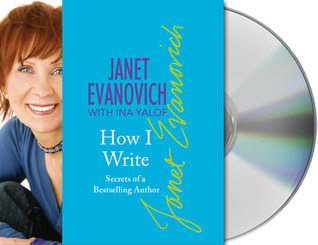
How many people would kill to be a bestselling novelist? Especially one like Janet Evanovich.Writers want to know how a bestselling author thinks, writes, plans, and dreams her books. And they are primed for a book from Janet Evanovich that tells, in a witty Q&A format: • How she comes up with such remarkable characters • How she nails the perfect name every time • How she finds out insider details • Just how she sets up those masterful plots • What the life of a full-time writer is really like • What she'd tell an aspiring author about the publishing industry • And much, much more!
This book details the elements of writing and publishing a novel, and addresses all categories of fiction--from mystery/thriller/action titles to romance; from stand-alone narratives to series. It offers practical and inspiring advice on such subjects as structuring a plot and handling rejection. And it combines one of today's most successful fiction writers with a published non-fiction writer who teaches creative fiction. HOW I WRITE is the perfect reference for anyone looking to improve their writing, and for those fans who are hungry to find out more about just how Janet Evanovich ticks.
Janet Evanovich is the #1 New York Times bestselling author of the Stephanie Plum series, the Lizzy and Diesel series, twelve romance novels, the Alexandra Barnaby novels and Trouble Maker graphic novel, and How I Write: Secrets of a Bestselling Author, as well as the Fox and O'Hare series with co-author Lee Goldberg.
Audiobook review. 2.5 Stars. This audiobook is very rough. At 6 minutes it does a very abrupt jump forward. I had to go back several times to confirm that it wasn’t just me missing something. The end is also a complete repeat of parts covered in the beginning. It was very poorly spliced and put together. Quality was definitely not a priority.
The content was ok. I thought I’d get more insight into the art of writing in Ms. Evanovich’s interpretation and to some degree I did. I liked how she shared writing devices and elements using her own books as examples. I liked that she and her daughter, who is also a part of the audiobook, didn’t always agree on topics but she shared both insights. It felt a bit on the surface level and I would’ve liked a bit more depth.
I know this is a little bit on the older side and her views may have changed, but her stance on self-publishing was very much a turnoff for me. She is not for self-publishing unless it’s a subject major houses wouldn’t typically go for like family memoirs. Her tone regarding the subject was discouraging. I read and respect many self published authors. Someday I too hope to become a published author and the device through which I publish should not matter. Writing is writing regardless of how you share your words.
Overall, I don’t recommend listening to the audiobook if you’re interested in this book. Read it in print or digital.
5 Stars for How I Write (audiobook) Janet Evanovich and Ina Yalof read by the authors and Lorelei King.
This was a wonderful look into the Stephanie Plum world and how it came to be. Janet Evanovich explains her creative process and credits her small team that helps bring each book to press. This is a great resource for aspiring writers and a must read for Stephanie Plum fans.
As a fan of the wildly popular Stephanie Plum series and a wanna-be writer, I couldn't help picking up a copy of Janet Evanovich's guide to writing. I was pleasantly surprised to find it was written in the same fun and easy-to-read style as her books.
The format is simple Q's and A's - taken directly from questions posted by her fans on Evanovich's website. Various entertaining excerpts from the Stephanie Plum series are used as examples. Useful tips and how to's are included.
Evanovich spills the beans about how she creates and names her whacky characters, writes dialogue, POV, creates suspense and mystery through action, and why she continues blowing up cars.
When asked how she writes sex scenes, Evanovich notes she needs a "couple glasses of cheap champagne and a bucket of M&M's".
She also names Tom Jones singing "Sex Bomb", John Travolta's dancing, the movie "Captain Ron", Eminem videos (really?!), birthday cake, jelly donuts, the Indiana Jones ride at Disneyland and the Rock naked as her inspiration. (I always suspected the Rock had something to do with Ranger's character!)
Well, On Writing this was not. "How I Write" was, though, a thorough and accessible look at the writing process. Janet covers a lot of ground here -- getting ideas, writing dialogue, forming characters, publishing your book, marketing, etc. She does this with her trademark light and entertaining touch.
The information in this book may not be new for the most part, but I believe it is useful and instructive for aspiring writers. I did have some mixed feelings about Janet's unrelenting optimism as she encourages her readers to keep trying to write and get published. I started to feel the way I felt when I read The Alchemist -- should everyone be pursuing this dream?
Overall, though, a light and interesting undemanding read for people interested in reading about writing.
The presentation, done in a mostly Q&A fashion, was terrible. I got through the first 10 pages and decided enough is enough.
No disrespect and I know she is a top selling author, but she was offering nothing but trite platitudes that you can find for free online or with some common sense when it came to writing.
I thought it would give me some ideas with my own novel(s) but it wasn't anything I hadn't read/seen/hear elsewhere already - and with better presentation.
Maybe some people like the Q&A format, but I didn't. Especially when there wasn't tons of great information within.
Good thing I got this from my local library and didn't pay money for this.
I haven't read very much Janet Evanovich, but I like the handful of books I've tried. One of these days I'll get around to reading the whole Stephanie Plum series, I'm sure. As I'm always interested in the creative process, I picked this up from the library yesterday. It's a slender book, and I read it in a single evening.
Evanovich comes across as humble and hilarious, presenting useful, actionable advice to writers of all skill levels. She also seems very engaged with her fan base; the book is based on questions she received from readers on her website.
So why the relatively low rating, when so much of the book is quite interesting? Partly because Evanovich shares the book with a co-writer, Ina Yalof, who frankly feels like an interloper. She seems to get just as much face-time with the reader as Ms. Evanovich, sharing tips and suggestions on how to write quality fiction. Strange, since Ms. Yalof is known as a non-fiction author. This tends to make me not much care what she has to say about anything related to fiction. It feels like one author doing her friend a favor: "Sure, Ina, you can co-write this book with me!" I found myself skimming her sections more often than not.
Also, as this book is nearly ten years old now, a lot of the information is regrettably out of date. For instance, Evanovich still treats self-publishing like a fate worse than death, rather than the viable career path it has become. And of course, there's no mention of the Kindle, or the digital publishing revolution. I certainly can't fault a writer for being unable to see the future, but it does make the book seem a bit antiquated.
However, the portions of the book which deal with writing technique, instead of how to woo an agent or land a traditional publishing deal, are evergreen. They offer practical advice while also being entertaining.
I am not very familiar with Evanovich's work. I read One for the Money and thought it was cute but felt no special desire to read anything else by her. However, I am always curious to hear what bestselling authors have to say about writing since obviously something they are doing is working. I was pleasantly surprised with this one. Evanovich takes us from character development all the way through book tours in a light, funny question-and-answer format. She is realistic about the publication process (she collected rejection slips for ten years before publishing her first book) while remaining optimistic and upbeat about the entire journey. It's also quite thorough: since the questions come from ten years of reader emails, even minutia like webpage design, paper quality for manuscripts, and transitions are covered, and in the back there is a list of references. This is one of the few books I would recommend all aspiring authors to keep on hand. I borrowed it from the library but I plan on getting my own copy soon. That's high praise from someone who almost never rereads books.
I found this "how to" book on writing very disappointing, especially after just finishing Anne Lamott's much superior "Bird By Bird." It's a book with big fonts and lots of spacing (obvious filler) and the advice is largely common sense and obvious. Her advice on how to write boils down to "just sit down and do it," which is about as helpful to aspiring writers as "just eat less and excercise more" is to dieters: If it was that easy, everyone would do it. There's quite a lot of description of how she personally writes (the mechanics of it" when she works, where she works, etc.), but there is very little illuminating the craft of writing.
Since I love Janet Evanovich's books so much, it was only natural that I would want to read the guide she has written to how she actually *writes* them.
How I Write is basically a glorified collection of the writing FAQs gathered from Evanovich's website, with occasional interjections from co-writer Ina Yalof and Evanovich's daughter - and webmaster - Alex, but that's not to say it's not entertaining and valuable, just a bit, well, basic. There is little writing advice that you wouldn't already be aware
To read the rest of this review (and more!), please visit Trashionista
This books is a work of minor marketing/form genius. It's set up as a series of Q&A that seems like it would take the author about an hour in total to answer. But it's not unsatisfying to read, and it should even be marginally helpful to many (especially genre or beginning) writers.
Evanovich makes writing sound so easy. That's nice to see, coming from the literary tradition where writers are more often depicted as tortured (or at least extreme) geniuses.
Her ease seems genuine, too. This woman churns out books: she'd written twelve romance novels before starting her bestselling Stephanie Plum "One for the Money" series. She consistently describes the writing process in terms of months, not years. Like I said, I bet this book took her (and her two co-writers? assistants?) a few months tops. "Just do it," she seems, like Nike, to be saying. That's pretty exciting. It's much more freeing than the other "How I Write" books I'm more likely to read, who come off less like cheery ad campaigns and more like the complex layers of cultural reference and mythology those companies borrow from. (see: Greek Goddess of victory.)
The book also uses enough samples from the Plum books that it's fun in a fan kind of way--nice flashes back to when I read them, years ago. I did like her fictional world, especially Lula and Grandma Mazur.
I'm going to go write some fluffy, funny something now. It'll be easy, and I'll like it.
Helpful and brief. Enjoyed the advice about how she storyboards (something I hope to try) and how to draw interesting characters for mysteries. Always fun to learn about a successful author's writing process and how that developed over time.
It's so bad. And out of date. And not even informative at the time. You could replace it with memes about writing you find on the internet and save yourself an hour. Or burn it and save other people's valuable time.
I decided to tackle my books on the craft of writing—I have a lot. I have so many, that one book mentioned two others that sounded interesting, and I already had both. (Too many? Eh. That’s why I need to read and rid or keep.)
While this book does have some advice on craft, there’s not much depth in that area. The title says it all—this is a book about how Evanovich writes, and she is not an expert in teaching others how to write, nor is her coauthor. Her advice for people who get writers block or have difficulty staying motivated and disciplined is basically, “Just suck it up and write.” This reads more like a book for fans of Evanovich’s Stephanie Plum series. It’s written in Q&A style, drawing from content on her website. There is also a lot of content pulled from the Plum series to illustrate the points made.
I was once a huge fan of the Stephanie Plum series and would probably have enjoyed this book more back when it was first published in 2006, just after the twelfth book in the series. Not long after that, the series started to decline, or rather stagnate. This book does give some insight into the choices that I think led to that. Most significantly, Evanovich decided her characters would never age and while they would grow a bit in each book, they would essentially remain the same. Stephanie will be 30 forever.
The issue with that is there are no character arcs. I just finished Blake Snyder’s excellent screenwriting book Save the Cat! where he points out that every good character should have an arc—a beginning, middle, and end—and be different at the end of the movie than they were at the beginning. Only bad guys don’t change and evolve.
In the Plum series, the characters did grow and evolve just a bit as readers got to know them over the first dozen or so books, which added momentum to the series. I remember when I couldn’t wait for the next book to find out what would happen next in the love triangle. More about them was revealed, relationships grew a little and shifted. And then all that fade away. The world and characters became stagnant, the formula taking precedent to the point that the books became almost interchangeable. There was no drive of anticipation about which hot guy she should choose, Joe or Ranger? She will never choose either one. She will never get married, have kids, become good at her job, change jobs, face the loss of a loved one, or move to a new city. She will be forever single, living in Trenton with her hamster Rex, bungling through her job, having pot roast at her parents’ house, conflicted about the men in her life who will also be eternally single and stuck in this vague love triangle. It’s like Groundhog’s Day. The characters stopped growing, the world stopped developing. I strongly suspect the books are now ghostwritten, at least in part, and have been for awhile.
So I can’t say I agree with all the advice in this book. It’s not uncommon for authors to discover a formula that works for them and write each book to that formula. There’s nothing wrong with that—it develops brand loyalty, and many readers like to know exactly what they’ll get from a book. It’s why they follow a specific author. There’s a bond of trust that romances will end with happily ever after, and mysteries will deliver justice as good triumphs over evil. In fact, in commercial fiction, diverging too much from your brand can lose a good chunk of your audience. That’s why many authors use public pen names when they write a slightly different genre, to let readers know what is “off brand.”
I don’t mean to judge Evanovich harshly. Her series has been immensely successful, and part of this is reader frustration because I used to love these books. She had to make a choice early on without knowing how long the series would last. And if she let the characters age a year with each book, Stephanie, Joe, Ranger and Lula would now be nearing 60, and that doesn’t work with the fast and fluffy style of these novels. But I do think she could have let Stephanie make some choices, grow more, change to keep the novel fresh rather than reset the world to neutral at the end of each book. I wonder how her advice today would differ from what is in this book.
The other big problem with this book is it’s very dated. It was written before social media was common which influenced expectations of authors’ self-marketing (Evanovich basically says to do very little marketing, and describes the kind of book tours that publishers only give NYT bestselling authors and major celebrities). It predates electronic editing and digital submissions (all her advice on submissions involves mailing printed letters and manuscripts and self-addressed stamped envelopes or postcards for responses). It’s also from before eBooks became mainstream and pushed forward the development of self-publishing (she says you can’t succeed as a self-published author, and refers to “vanity presses”). The advice wasn’t necessarily off back in 2006, but 15 years later it’s completely obsolete.
Bottomline: Because this book is quite dated and limited not only to Evanovich’s personal experience and writing decisions but also limited to a single series, I wouldn’t recommend this to aspiring authors as a writing craft book. There’s an interesting nugget here or there, but overall it feels like advice for her fans who have never tried writing fiction and know almost nothing about the craft. Avid fans of the Plum series, however, might still enjoy parts of it.
I had high hopes for this book, as it's one of very few on writing actually written by a successful writer. You'd think that would happen more often, but after Stephen King and Orson Scott Card there's...Patricia Highsmith?
Unfortunately, Evanovich just didn't put much effort into this. Most of the book consists of her responses to reader questions on her website, cleaned up and categorized, and the rapid-fire Q and A format ensures that no single topic will get more than a paragraph on the outside. At that level of depth, all you get are insipid platitudes and Evanovich's infectious positivity that gives you the impression that any idiot can be a best seller.
Like anybody. Here's one gem: "Q: I just completed my novel of 189 pages. Do you think I can actually get it published? I'm fifteen.
Janet: Sure. Manuscripts are submitted by mail, so no one will know your age unless you tell them..." As if that's the biggest problem this fifteen-year-old's novel is going to face.
In between these Q and A exchanges, a person called Ina Yalof offers overarching writing advice so bland that it makes Evanovich's answers seem deep. Stuff like exhorting you to give your story a beginning, a middle and an end. And what happens if you skip the middle? What would that even mean? It's not exactly explained.
I liked the chatty nature of the book, and Evanovich is a good writer, so I hate to rate this one star. But honestly, unless you're just starting to write and want some false confidence, this book is a writing advice dead end.
I love this kind of book and this is a good one of its kind. The only other one I've read is Stephen King's ON WRITING: A MEMOIR OF THE CRAFT. If you know of any others in this genre (writers writing about writing), please let me know.
If you like to read Evanovich's "Stephanie Plum" novels, you'll enjoy this book too. She uses examples from the series to make her points and keeps the humor coming. The book is written in a Q and A format. Janet (I like to be on a first name basis with my authors) answers questions from readers about how to write a novel, how to get published, how to deal with rejection and more. There was one question from a person who wanted to be a book publisher. Janet explained what it takes to get a job in a New York City publishing house. That may be the retirement job for me.
I am not interested in writing a novel. I love to write and it's interesting to me to read about people who get paid for writing.
NOTE: I don't have a Kindle. I listened to this book on CD. I guess I clicked on the wrong book cover.
Through the minds' eye of Janet Evanovich is a book written to her readers, and readers-to-be, just how she claimed her spot on the New York Times Best Seller's list, twice. Mrs. Evanovich takes a refreshing approach on wrting a book on writing. For over a decade readers have sent her letters asking just how she does what she does and she has come out full throttle with this writing how-to book answering those curious questions. As soon as the book is opened she reels the reader in by captivating them with an excerpt from one of her Stephanie Plum novels. She has definitely mastered the art of writer for her readers and thus shows, in extension to telling us, how to do this ourselves. From hook, to character creation, editing and publishing Janet Evanovich shows us how to write from the soul and make your readers feel it. Janet Evanovich's How to Write would be a powerful tool for any new or mildly seasoned writer.
I'm a huge Stephanie Plum fan so I thought I'd give this a go. While it's got some handy information, delves into the Plum world and gives some insight into the author's writing life, it didn't really provide anything new that isn't covered in other books about writing.
I think what I liked the least about this book, and why I couldn't get fully engaged, is the format. It's done in a Q&A style that was probably intended to keep things light, but I found a little jarring.
Still, I'm glad I checked this out because I'm always interested in reading about how other writers go about their writerly business. 😃
This short, question and answer, book was interesting since I had read all the Stephanie Plum novels. She used examples from those books to point out the writing examples and they were nice reminders of the stories. It's not deep and merely discusses how this particular author writes. It's quite refreshing, though, since it is very down-to-earth and doesn't dictate right and wrong ways to do things. It's basically a lot of common sense which, sometimes, can be a good reminder.
An easy, quick read done Q&A style. I thought the parts on characterization were the strongest. To be clear, this is a pop-lit author's guide on how to write more pop-lit, so it doesn't go particularly deep on how to really build a fictional human with complex motivations, but Janet's an undisputed bestselling author, so I deeply appreciated the wisdom she shared here. Lots of great advice about how she does it. More practical, I think, than the highly-lauded equivalent book by Stephen King.
I love her writing so much, and this was such a great find for me! Funny anecdotes as well as real world writing wisdom. I especially love how she talks about condensing her dialogue down to only what is essential. She is so masterful at this in her Stephanie Plum series. Great advice- I try to remember this as I write.
Great and informative book! Makes me appreciate writers even more. Its a hard job. So much hard work that can then be rejected again and again. Ugh! I would recommend this book to anyone who wants to get the true info on becoming published.
This was published in 2006, so the passages about self-publishing and how publishing in general are outdated. The sections I enjoyed were about the author's journey, her writing tips as well as her humor.
It was an interesting look into how Janet Evanovich writes her books. If you like the Stephanie Plum novels and want to someday write a book of your own, this is a good read.
I loved this book mostly because I think Janet is hilarious. But also, as someone who dreams about being able to write a book one day, it was super informative and helpful for beginners.
I've certainly read my share of "how I write" books, but what drew me to this was the "best-selling author" part. Not that Stephen King, whose "On Writing" is one of the books I've read, isn't a best-selling author, mind you, but the the fact that she noted that right in the title was an indication that this could contain information on how to craft a book that would also sell well. It did, and that's what I was looking for.
It also contained answers to questions that new writers have, taken from her web site. This bored me at first because I've heard these questions and similar answers so many times before, but since I was walking and didn't want to try to skip over the audiobook to find something with more meat, I kept listening. I found her advice reasonable and delivered with a nice dash of humor and encouragement, something new writers need. So, for new writers, this book is an excellent start. It delivers chewable bites of information for those new to the writing and publishing business.
It contained many short excerpts from the Stephanie Plum series that illustrate the point she's making. Some may say it's just a way to plug her books. Maybe it is. But it's also an effective way to illustrate a point. Fans of the series will probably really enjoy this because they can relate to how they felt when they were reading those selections. [I've never read the series.] Think about a movie that you really enjoyed. This is like a "making of" video extra. Because you saw the movie, it makes more sense and means more to you.
If I were to rate this for Stephanie Plum fans who have recently decided to write, I'd give it 5 stars. For people who have been been writing for a while, having been reading writing advice elsewhere, this book may be too basic, so I'd give it only 4.
But I have to deduct 1 star each for the age of the book. This book was published in September 2006. That means it was probably written in 2005. So much has changed has changed in the process of getting books to print in the last twelve years that a lot of the publication information is woefully out of date. I don't think it mentions eBooks or audio books at all. It still talks about sending physical copies to the publisher and querying with a letter on good-quality paper.
The first half of this was a solid 1 star. There was nothing useful and I really don't like her characters. I imagine someone who likes her books already would really enjoy this because it gives you some behind the scenes looks at her books. I had to force myself to get through it (the first half) so I could give it a fair review.
The second half got a lot better. I enjoyed listening more about her writing process and how she stays motivated to keep writing and about how she does the different drafts of the books.Though some of the information felt a little outdated, it was more relevant to someone curious about the writing process, while the first half felt like either common sense or stuff I had learned in school already.
I think if you like her books, you will definitely enjoy this book. If you've never read her books, I'd probably recommend reading one to see if you like them before reading this.
I'll be honest, I bought this book based on the brief description on the back cover. I have not yet read a Janet Evanovich book. I have just finished the zero draft of my first novel, am taking a brief break before beginning the editing/revision process. I've spent a lot of time recently in my local Goodwill book stores perusing books on novel writing and revision.
The back cover referred to her "remarkable" characters (none of whom I am familiar with.) The table of contents indicated there was a section on choosing names, which I have been struggling with in my first novel. So I plopped down my $3.00 (Goodwill, remember) and carried the book home. I skipped ahead to the section on names, and was mildly disappointed. But I found the interview style of the book very engaging, and easy to read a chapter at a time.
Fortunately, I found PLENTY of useful stuff in this amusing little book. I photocopied a few of the shaded sections (summaries/overviews of the topics being discussed) and added them to my writer's notebook. I already owned several of the writing craft books contained in her recommendations section, so I am encouraged that I'm on the right track.
I also liked that the book was a clever bit of self marketing. I learned a lot about her Plum series, and found myself walking around the Goodwill bookstore yesterday with one in hand. I have mild OCD, and couldn't find book one in the series, but I'll keep searching until I do. I recommend this book. Very upbeat and encouraging, just what I needed at this point in the writing process.
Listen to this book to hear a stone cold pro give her insights into work. For me, it was mostly a nice kick in the pants of hearing her straight up say "you're a professional; show up and do the work."
For me, that's what I needed to hear at the time and made it worth it.
The actual content itself is comprised mainly of questions received via her website. If someone is a new writer, this is a fantastic resource because it covers very basic questions like "I have a great idea for a story. Where do I begin?" If you're hoping for a more detailed look into her workflow that doesn't really come through - how does she come up with the right name? She thinks about it. What's her writing process like? She writes it, then she re-writes it. This isn't flippant question dodging; the underlying theme behind all of her answers to the myriad incarnations of "How do you DO that?" is that she shows up and puts in the work. There's no deeper secret.
One thing that has not aged well from publication is her insights into the publication process. It came out in 2006; she gives advice on mailing your query letters, including SASE, and sending post card follow ups. E-mail queries were discouraged.
I don't know if that information was dated at the time, and ultimately that doesn't matter, because it is certainly dated now.
If you're looking for a nuts and bolts approach to writing, this book ain't really it. If you're after some motivation and reminders of fundamentals? You can't go wrong with this little thing.