

What do you think?

The Glitter in the Green: In Search of Hummingbirds
Struck by the brilliant colours of the stuffed hummingbirds he had seen in London’s Natural History Museum as a child, Jon Dunn determined to encounter them in the wild. His journey took him the length of the Americas, from Alaska to Tierra del Fuego, glimpsing elusive species flashing through the rainforest, and learning about the myths and legends they have inspired.
336 pages, Paperback
First published April 20, 2021
Ratings & Reviews
Friends & Following
Create a free account to discover what your friends think of this book!
Community Reviews
Displaying 1 - 30 of 129 reviews

June 24, 2021
The Glitter in the Green: In Search of Hummingbirds is a captivating and exquisitely researched hummingbird odyssey across the Americas, celebrating the beauty and rich cultural heritage of this most rare and charismatic bird from one an acclaimed natural history writer. Leaving his croft on the remote Shetland Islands, Jon Dunn makes the journey across the Atlantic to the Americas in search of this elusive, mesmerising bird as their populations begin to dwindle.
Hummingbirds, with their unsurpassed jewel-like plumage, acrobatic flight, and immense character, have captured our imaginations for centuries. They possess a fascinating history, one that has frequently collided with the human world. We see them crop up in ancient religion, folklore, art, fashion, and literature. In the rich oral traditions of native tribes, for instance, they often served as messengers between the living and the spirit world. To this day, hummingbirds have a unique hold on us and a cultural significance unlike any other family of birds. Natural history writer and wildlife guide Jon Dunn has not been immune to the allure of the hummingbird.
In The Glitter in the Green, Jon Dunn follows the trail of the charismatic hummingbird the full length of their worldwide range, from Alaska to the bottom tip of South America. He shares exhilarating tales, from marooning on a Chilean island to catch a glimpse of the rare Juan Fernández Firecrown, to an arduous trek through the Andes searching for a hummingbird lost to science for decades, and to a market in Mexico City – where readers will learn of dark superstitions surrounding the hummingbird.
Along the way, Dunn introduces a charming cast of birdwatchers, conservation workers, scientists, and locals and explores how hummingbirds have shaped our lives, past and present, and the zealous passion they inspire. This alluring and wonderful book tells the story of the hummingbird as never before – their history, their compelling lifecycles, and the stories of those who have fallen under their spell. It is the ultimate celebration of the world’s most charismatic bird and is certain to delight birders and nonbirders alike. I can not recommend it highly enough.
Hummingbirds, with their unsurpassed jewel-like plumage, acrobatic flight, and immense character, have captured our imaginations for centuries. They possess a fascinating history, one that has frequently collided with the human world. We see them crop up in ancient religion, folklore, art, fashion, and literature. In the rich oral traditions of native tribes, for instance, they often served as messengers between the living and the spirit world. To this day, hummingbirds have a unique hold on us and a cultural significance unlike any other family of birds. Natural history writer and wildlife guide Jon Dunn has not been immune to the allure of the hummingbird.
In The Glitter in the Green, Jon Dunn follows the trail of the charismatic hummingbird the full length of their worldwide range, from Alaska to the bottom tip of South America. He shares exhilarating tales, from marooning on a Chilean island to catch a glimpse of the rare Juan Fernández Firecrown, to an arduous trek through the Andes searching for a hummingbird lost to science for decades, and to a market in Mexico City – where readers will learn of dark superstitions surrounding the hummingbird.
Along the way, Dunn introduces a charming cast of birdwatchers, conservation workers, scientists, and locals and explores how hummingbirds have shaped our lives, past and present, and the zealous passion they inspire. This alluring and wonderful book tells the story of the hummingbird as never before – their history, their compelling lifecycles, and the stories of those who have fallen under their spell. It is the ultimate celebration of the world’s most charismatic bird and is certain to delight birders and nonbirders alike. I can not recommend it highly enough.

May 26, 2021
Click here to hear my thoughts on this book over on my Booktube channel, abookolive.
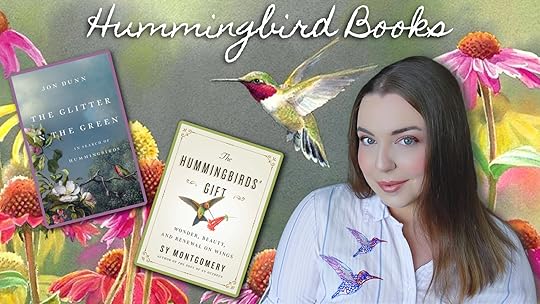
An interesting mixture of travel writing, natural history, and plain old history as the author details an international birding trip with the goal of seeing as many species of hummingbird as possible. The addition of related information about the travel locations and the relationship between humans and this book kept the book compelling, but also caused the focus on the birds to be lost.
An interesting mixture of travel writing, natural history, and plain old history as the author details an international birding trip with the goal of seeing as many species of hummingbird as possible. The addition of related information about the travel locations and the relationship between humans and this book kept the book compelling, but also caused the focus on the birds to be lost.

January 13, 2021
A mesmerizing account of nature writer Jon Dunn’s trek from the Arctic to near Antarctica to follow hummingbirds. His language is as lush as these jewels of nature, and I longed to trade my life for his. My fave book yet this year — perfect for birders, nature lovers and anyone who digs adventure!
5 of 5
Pub Date 20 Apr 2021
#TheGlitterInTheGreen #NetGalley
Thanks to the author, Perseus Books, Basic Books , and NetGalley for the ARC, in exchange for my honest review.
5 of 5
Pub Date 20 Apr 2021
#TheGlitterInTheGreen #NetGalley
Thanks to the author, Perseus Books, Basic Books , and NetGalley for the ARC, in exchange for my honest review.

June 12, 2021
2.5 Stars
As a huge birder and bird lover, I have read a lot of nature and bird books but sadly for me this one didn't love up to others.
There definitely was some interesting and useful information to learn from this book but I felt I was constantly searching for it through all the other descriptions, mainly historical facts about the country he was in or just rather dull information on hos travelling. There wasnt actually that much about the birds themselves but instead alot about the author and his journey and I felt the balance wasn't right. I also thought the book was too long and went into too much detail about things that didn't even need to be included. I also wanted more science and less waffle.
As with all nature books that talk about many different species, I felt there needed to be some beautiful illustrations or at least some photos but there wasn't anything. It was rather frustrating having to constantly google so I could picture the specific bird...especially with hummingbirds that often can look rather similar.
I didn't actually like the way the author approached his birding some of the times. He said he wasn't "one of those birders that ticks off lists of birds but more appreciates nature as a whole", and uet in many instances he overlooks other bird species because they aren't what he travelled there for. It didn't sit right with me, especially as he seemingly put down other birders that do the same.
Overall, I enjoyed some of the content but found myself skimming to find the interesting facts among a rather boring "journey" to see the hummingbirds.
Please note that I was gifted this ebook in exchange for an honest review.
As a huge birder and bird lover, I have read a lot of nature and bird books but sadly for me this one didn't love up to others.
There definitely was some interesting and useful information to learn from this book but I felt I was constantly searching for it through all the other descriptions, mainly historical facts about the country he was in or just rather dull information on hos travelling. There wasnt actually that much about the birds themselves but instead alot about the author and his journey and I felt the balance wasn't right. I also thought the book was too long and went into too much detail about things that didn't even need to be included. I also wanted more science and less waffle.
As with all nature books that talk about many different species, I felt there needed to be some beautiful illustrations or at least some photos but there wasn't anything. It was rather frustrating having to constantly google so I could picture the specific bird...especially with hummingbirds that often can look rather similar.
I didn't actually like the way the author approached his birding some of the times. He said he wasn't "one of those birders that ticks off lists of birds but more appreciates nature as a whole", and uet in many instances he overlooks other bird species because they aren't what he travelled there for. It didn't sit right with me, especially as he seemingly put down other birders that do the same.
Overall, I enjoyed some of the content but found myself skimming to find the interesting facts among a rather boring "journey" to see the hummingbirds.
Please note that I was gifted this ebook in exchange for an honest review.

August 22, 2021
As a wildlife writer and photographer, Jon Dunn has come to focus on small and secretive but indelible wonders. His previous book, which I still need to catch up on, was all about orchids, and in this new one he travels the length of the Americas, from Alaska to Tierra del Fuego, to see as many hummingbirds as he can. He provides a thorough survey of the history, science and cultural relevance (from a mini handgun to an indie pop band) of this most jewel-like of bird families. The ruby-throated hummingbirds I grew up seeing in suburban Maryland are gorgeous enough, but from there the names and corresponding colourful markings just get more magnificent: Glittering-throated Emeralds, Tourmaline Sunangels, Violet-capped woodnymphs, and so on. I’ll have to get a look at the photos in a finished copy of the book!
Dunn is equally good at describing birds and their habitats and at constructing a charming travelogue out of his sometimes fraught journeys. He has only a narrow weather of fog-free weather to get from Chile to Isla Robinson Crusoe and the plane has to turn back once before it successfully lands; a planned excursion in Bolivia is a non-starter after political protestors block some main routes. There are moments when the thrill of the chase is rewarded – as when he sees 24 hummingbird species in a day in Costa Rica – and many instances of lavish hospitality from locals who serve as guides or open their gardens to birdwatchers.
Like so many creatures, hummingbirds are in dire straits due to human activity: deforestation, invasive species, pesticide use and climate change are reducing the areas where they can live to pockets here and there; some species number in the hundreds and are considered critically endangered. Dunn juxtaposes the exploitative practices of (white, male) 19th- and 20th-century bird artists, collectors and hunters with indigenous birdwatching and environmental initiatives that are rising up to combat ecological damage in Latin America. Although society has moved past the use of hummingbird feathers in crafts and fashion, he learns that the troubling practice of dead hummingbirds being sold as love charms (chuparosas) persists in Mexico.
Whether you’re familiar with hummingbirds or not, if you have even a passing interest in nature and travel writing, I recommend The Glitter in the Green for how it invites readers into a personal passion, recreates an adventurous odyssey, and reinforces our collective responsibility for threatened wildlife.
Originally published on my blog, Bookish Beck.
Dunn is equally good at describing birds and their habitats and at constructing a charming travelogue out of his sometimes fraught journeys. He has only a narrow weather of fog-free weather to get from Chile to Isla Robinson Crusoe and the plane has to turn back once before it successfully lands; a planned excursion in Bolivia is a non-starter after political protestors block some main routes. There are moments when the thrill of the chase is rewarded – as when he sees 24 hummingbird species in a day in Costa Rica – and many instances of lavish hospitality from locals who serve as guides or open their gardens to birdwatchers.
Like so many creatures, hummingbirds are in dire straits due to human activity: deforestation, invasive species, pesticide use and climate change are reducing the areas where they can live to pockets here and there; some species number in the hundreds and are considered critically endangered. Dunn juxtaposes the exploitative practices of (white, male) 19th- and 20th-century bird artists, collectors and hunters with indigenous birdwatching and environmental initiatives that are rising up to combat ecological damage in Latin America. Although society has moved past the use of hummingbird feathers in crafts and fashion, he learns that the troubling practice of dead hummingbirds being sold as love charms (chuparosas) persists in Mexico.
Whether you’re familiar with hummingbirds or not, if you have even a passing interest in nature and travel writing, I recommend The Glitter in the Green for how it invites readers into a personal passion, recreates an adventurous odyssey, and reinforces our collective responsibility for threatened wildlife.
Originally published on my blog, Bookish Beck.

April 1, 2021
Obsessions can make for fascinating books. In Jon Dunn’s The Glitter in the Green, his obsession with hummingbirds takes him from his native and hummingbirdless Shetland Islands to the Americas, where literally thousands of hummingbird species are hanging on. It is a great trip, with history, folk tales and biology percolating throughout. There’s even the occasional dash of danger. But not from the hummingbirds.
Hummingbirds are a western hemisphere phenomenon. They live from the farthest reaches of Alaska to the tip of South America at Tierra del Fuego, up mountains and down at sea level, and Dunn booked himself a top to bottom trip to see the rarest of the rare, and if possible, photograph them.
This is far better than what his predecessor obsessives used to do, which was kill them, stuff them and collect their dead bodies in their homes. Hummingbirds have been a horrifically big industry. Hundreds of thousands of tiny hummingbird bodies have gone into women’s hats, for example, and they are still sold as pendants and amulets promising health and happiness to wearers. It got to the point where fraudsters made up their own species. They pieced together feathers and skins from different birds, and sold them as new or (extremely) rare species. Some of the best museums in the world fell for it.
If destroying their habitats weren’t enough, poisoning them with neonicotinoid pesticides and children shooting them with slingshots have made it a miracle they’re around at all. Cats, a billion strong around the world, love to snatch the life from them, because they are too tame and trusting. Rats invade their tiny nests. Agriculture reduces their living space. But plumage hunters have nearly done them in. A hundred fifty years ago, Lord Strathmore noted: “The activities of the plumage hunters have cut the number of species of hummingbird species in Trinidad from nineteen to five,” for example.
It is actually fortunate that so many people are obsessed with hummingbirds, because they set up feeders for them all up and down the continents. While some bemoan the new dependency on feeders instead of (or in addition to) harder foraging, it might be the case that manmade feeders have become completely critical to their migrations and survival.
Hummingbirds migrate. This is something Man has only recently discovered, by tagging a leg and examining the same bird up to 3500 miles elsewhere. From Alaska to Florida, in this case. They can still do it because feeders along the way are charging stations. The dearth of natural flora, tied to the steep decline of pollinators as well as industrial takeovers of all useful land, makes their travels iffy without human intervention.
The birds need an astonishing amount of such fuel to thrive. They live in the fast lane. Their wings beat at 50-200 times per second; their hearts pump at 1200 beats per minute. To do this, they burn 4000 calories an hour, spending their lives feeding and resting, feeding and resting. They flick their long tongues at nectar 16 times a second, allowing the snatch and grab feeding that keeps them from being in one exposed place for too long. They don’t slurp so much as snatch. Their tongues are actually two pieces, which they purse into a tube to capture nectar.
Dunn begins at the top of the world, in Alaska, where he sets the pace. Birders are very supportive of each other. They will help if they possibly can. They will go out of their way to aid a birder in search of his or her holy grail. Dunn gets to network and meet all kinds of helpful and supportive people along the way, making each country he visits into a successful foray despite the weather, the climate, the terrain or, as in Bolivia, nationwide turmoil over the federal election where Evo Morales tried to cook the books.
Dunn’s journey, a trip most of us would consider the adventure of a lifetime, took him down from Alaska through the western American states, through Mexico, over to Cuba, back to Costa Rica, Colombia, Ecuador, Bolivia, Peru, Brazil, Chile and Argentina, where he ended up at the tip of South America, to find a rare hummingbird just as it got too cold for the bird to stay much longer. Each country has its own story and marvelous people who help. By then end, readers would be justified in feeling that birders should be running things – everything.
He spends time on Robinson Crusoe Island, a rock of terrible weather, festooned with feral cats, rats, and brambles, all of which are invasive species brought in by residents to improve things. It doesn’t take a genius to predict that the opposite happened, as the cats kill the hummingbirds, the rats eat their eggs and the brambles wreak havoc with the native fauna. Oh-for-three is a typical score when people tamper with nature.
Four rabbits were let loose in Tierra del Fuego in 1936, and at last count, in 1953, there were 30 million. The government brought in beavers(!) to create a fur industry, which never took off, but the beavers, with no natural enemies to control their numbers, have changed the environment completely. The result is reduced habitat for hummingbirds, something Dunn finds all over the hemisphere.
Hummingbirds are represented by so many species, they are all too often limited to a tiny territory with very specific characteristics. They are often simply endemic to a tiny area of a country and nowhere else. Destroy those environmental conditions, and the hummingbirds could vanish. They migrate to another tiny area in order to satisfy the need for energy food when the seasons dictate. We can only hope they come back.
Fortunately, residents and some whole countries (such as Costa Rica) are noticing the value of ecotourism. Birders in particular seem to be wealthier, leisurely, friendly, harmless and passionate. Catering to their needs and whims is proving worthwhile. Setting out a fenceline full of feeders in the right neighborhood sees flocks of birders assembling daily. The word spreads fast among them. Hummingbird-friendly homes become targets of pilgrimages.
The birds range in size from tiny – the size of a bumblebee, to dragonfly size, to “gigantic” – finch size. Some supplement their nectar diet with insects, sucking them out of woodpecker-drilled holes, or catching them in the air like dragonflies do.
For the most part, they come in shockingly brilliant, iridescent colors, often clashingly and obnoxiously so. (This is how they ended up decorating hats and books, among other things.) Some have furry boots, outrageously long tail feathers, and personalities to match. One hummingbird was constantly bullied by a fiercer species, to the point where it complained to the feeders’ owner. It hovered in front of the man’s face until he agreed to go over to a feeder and cup his hands around it so that only the complainer could (finally) feed in peace there. Now of course, the owner is well trained and has to do this all day. He complains he can’t go anywhere any more.
There are placid hummingbirds, and territorial hummingbirds, that will chase all others away and/or fight them to the death. Some have serrated beaks for doing battle. Some will sit on a person’s finger and sip at leisure from a thimbleful of sugar water. Some will even enter the house to be so fed. It is a whole society, with every personality we are familiar with.
Obsessives today collect memories rather than stuffed bodies. Dunn makes a point of remembering every aspect of his many sightings, and relates them in terrific detail. He describes another obsessive, Sandy Komito, who set out to see as many as he could, and logged 725 different species of them in just one year. That’s two different hummingbirds a day, every day, for a year. There is much to see in the world of hummingbirds.
So the book is part travelogue, part nature study, part history and part trivia, a great combination that keeps it moving, not perhaps at hummingbird speed, but with plenty of zigs and zags to keep readers turning the pages.
David Wineberg
Hummingbirds are a western hemisphere phenomenon. They live from the farthest reaches of Alaska to the tip of South America at Tierra del Fuego, up mountains and down at sea level, and Dunn booked himself a top to bottom trip to see the rarest of the rare, and if possible, photograph them.
This is far better than what his predecessor obsessives used to do, which was kill them, stuff them and collect their dead bodies in their homes. Hummingbirds have been a horrifically big industry. Hundreds of thousands of tiny hummingbird bodies have gone into women’s hats, for example, and they are still sold as pendants and amulets promising health and happiness to wearers. It got to the point where fraudsters made up their own species. They pieced together feathers and skins from different birds, and sold them as new or (extremely) rare species. Some of the best museums in the world fell for it.
If destroying their habitats weren’t enough, poisoning them with neonicotinoid pesticides and children shooting them with slingshots have made it a miracle they’re around at all. Cats, a billion strong around the world, love to snatch the life from them, because they are too tame and trusting. Rats invade their tiny nests. Agriculture reduces their living space. But plumage hunters have nearly done them in. A hundred fifty years ago, Lord Strathmore noted: “The activities of the plumage hunters have cut the number of species of hummingbird species in Trinidad from nineteen to five,” for example.
It is actually fortunate that so many people are obsessed with hummingbirds, because they set up feeders for them all up and down the continents. While some bemoan the new dependency on feeders instead of (or in addition to) harder foraging, it might be the case that manmade feeders have become completely critical to their migrations and survival.
Hummingbirds migrate. This is something Man has only recently discovered, by tagging a leg and examining the same bird up to 3500 miles elsewhere. From Alaska to Florida, in this case. They can still do it because feeders along the way are charging stations. The dearth of natural flora, tied to the steep decline of pollinators as well as industrial takeovers of all useful land, makes their travels iffy without human intervention.
The birds need an astonishing amount of such fuel to thrive. They live in the fast lane. Their wings beat at 50-200 times per second; their hearts pump at 1200 beats per minute. To do this, they burn 4000 calories an hour, spending their lives feeding and resting, feeding and resting. They flick their long tongues at nectar 16 times a second, allowing the snatch and grab feeding that keeps them from being in one exposed place for too long. They don’t slurp so much as snatch. Their tongues are actually two pieces, which they purse into a tube to capture nectar.
Dunn begins at the top of the world, in Alaska, where he sets the pace. Birders are very supportive of each other. They will help if they possibly can. They will go out of their way to aid a birder in search of his or her holy grail. Dunn gets to network and meet all kinds of helpful and supportive people along the way, making each country he visits into a successful foray despite the weather, the climate, the terrain or, as in Bolivia, nationwide turmoil over the federal election where Evo Morales tried to cook the books.
Dunn’s journey, a trip most of us would consider the adventure of a lifetime, took him down from Alaska through the western American states, through Mexico, over to Cuba, back to Costa Rica, Colombia, Ecuador, Bolivia, Peru, Brazil, Chile and Argentina, where he ended up at the tip of South America, to find a rare hummingbird just as it got too cold for the bird to stay much longer. Each country has its own story and marvelous people who help. By then end, readers would be justified in feeling that birders should be running things – everything.
He spends time on Robinson Crusoe Island, a rock of terrible weather, festooned with feral cats, rats, and brambles, all of which are invasive species brought in by residents to improve things. It doesn’t take a genius to predict that the opposite happened, as the cats kill the hummingbirds, the rats eat their eggs and the brambles wreak havoc with the native fauna. Oh-for-three is a typical score when people tamper with nature.
Four rabbits were let loose in Tierra del Fuego in 1936, and at last count, in 1953, there were 30 million. The government brought in beavers(!) to create a fur industry, which never took off, but the beavers, with no natural enemies to control their numbers, have changed the environment completely. The result is reduced habitat for hummingbirds, something Dunn finds all over the hemisphere.
Hummingbirds are represented by so many species, they are all too often limited to a tiny territory with very specific characteristics. They are often simply endemic to a tiny area of a country and nowhere else. Destroy those environmental conditions, and the hummingbirds could vanish. They migrate to another tiny area in order to satisfy the need for energy food when the seasons dictate. We can only hope they come back.
Fortunately, residents and some whole countries (such as Costa Rica) are noticing the value of ecotourism. Birders in particular seem to be wealthier, leisurely, friendly, harmless and passionate. Catering to their needs and whims is proving worthwhile. Setting out a fenceline full of feeders in the right neighborhood sees flocks of birders assembling daily. The word spreads fast among them. Hummingbird-friendly homes become targets of pilgrimages.
The birds range in size from tiny – the size of a bumblebee, to dragonfly size, to “gigantic” – finch size. Some supplement their nectar diet with insects, sucking them out of woodpecker-drilled holes, or catching them in the air like dragonflies do.
For the most part, they come in shockingly brilliant, iridescent colors, often clashingly and obnoxiously so. (This is how they ended up decorating hats and books, among other things.) Some have furry boots, outrageously long tail feathers, and personalities to match. One hummingbird was constantly bullied by a fiercer species, to the point where it complained to the feeders’ owner. It hovered in front of the man’s face until he agreed to go over to a feeder and cup his hands around it so that only the complainer could (finally) feed in peace there. Now of course, the owner is well trained and has to do this all day. He complains he can’t go anywhere any more.
There are placid hummingbirds, and territorial hummingbirds, that will chase all others away and/or fight them to the death. Some have serrated beaks for doing battle. Some will sit on a person’s finger and sip at leisure from a thimbleful of sugar water. Some will even enter the house to be so fed. It is a whole society, with every personality we are familiar with.
Obsessives today collect memories rather than stuffed bodies. Dunn makes a point of remembering every aspect of his many sightings, and relates them in terrific detail. He describes another obsessive, Sandy Komito, who set out to see as many as he could, and logged 725 different species of them in just one year. That’s two different hummingbirds a day, every day, for a year. There is much to see in the world of hummingbirds.
So the book is part travelogue, part nature study, part history and part trivia, a great combination that keeps it moving, not perhaps at hummingbird speed, but with plenty of zigs and zags to keep readers turning the pages.
David Wineberg

May 19, 2021
I really wanted to like this book, and have been looking forward to it ever since I heard about it a year ago. Unfortunately, it was not to be. The fundamental issue with this book is purpose, and a lack thereof. Ostensibly a journey from the northernmost to the southernmost reaches of the hummingbird's habitat, I expected an intriguing, interesting journey that really got to grips with this species, both physically and culturally. However, there was just a lack of purpose to the whole book, which followed this pattern:
• A lot of historical information about the country (especially the Ecuador chapter - most of that was historical background, and then he sees a hummingbird, end of chapter)
• A short description of the physical journey to reach the hummingbirds
• An extremely brief and quick (just like the bird) encounter with the hummingbird
• End of chapter
The author states in the book that this isn't a list for him; he's not just checking off birds, but that's exactly what it feels like. More pertinently however, is the issue of cohesion, which I felt was sorely lacking. I love learning interesting tidbits of history and culture, however, none of these were anchored to the book. It was just a lot of history without really tying it into his hummingbird narrative - it was too tangential. And a lot of the time it was an overview of the country, and hummingbirds in general, rather than relating to the specific bird he is looking for. There was even one section, where, after seeing a hummingbird, he spends a lot of time talking about the Nazca Line hummingbird geoglyph he goes to see. Phrasing it as "the second hummingbird I saw", my surprise was verbalised, "it was just a picture of a hummingbird? That's it?"
Comparing it to the best non-fiction "story" book I've read, Seashaken Houses: A Lighthouse History from Eddystone to Fastnet, elucidates my point. In that book, everything, every piece of historical information, every literary and cultural reference, is directly tied to the author's present-day lighthouse journey. In The Glitter in the Green, it just seemed very bland and meaningless. He goes to a country and sees a hummingbird, after which the chapter abrupty ends - there's no wider narrative or point he's trying to make. When I think back on the book, it's just blurry, like the hummingbirds themselves. In my mind, it's just a lot of hummingbirds with nothing to ground it in. Whilst the historical information was interesting, it did feel like I was reading 'The History of South America' rather than a hummingbird book.
I also had some problems with his syntax, which required me to reread sentences on many occassions. And I did notice repetition of phrasing throughout the book - "a remarkable man/woman by any standards" is the go-to phrase for describing many of the eighteenth and nineteenth century hummingbird associated (sometimes very loosely) figures. Other than that, the prose is truly beautiful when describing the hummingbirds, it glitters and gleams. These gem-infused paeans are the highlight of the book (however, having seen photos of the hummingbirds after, I feel the author is a little too mean to some of what he considers the less beautiful).
The chapters are also quite long, and felt it. By the end of chapter 7, I was losing the will to read, and ended up skimming the rest of the book.
I was clearly hoping for something more than "This is the country I'm in, here's historical information about country, tie that into environmental issues, the feather trade, I see the hummingbird, next chapter." There wasn't much build-up to seeing the hummingbird, and as aforementioned, the hummingbird encounters are all to brief, which felt anti-climactic.
Ultimately, there wasn't actually a story here; it didn't feel like a journey, just a check-list.
• A lot of historical information about the country (especially the Ecuador chapter - most of that was historical background, and then he sees a hummingbird, end of chapter)
• A short description of the physical journey to reach the hummingbirds
• An extremely brief and quick (just like the bird) encounter with the hummingbird
• End of chapter
The author states in the book that this isn't a list for him; he's not just checking off birds, but that's exactly what it feels like. More pertinently however, is the issue of cohesion, which I felt was sorely lacking. I love learning interesting tidbits of history and culture, however, none of these were anchored to the book. It was just a lot of history without really tying it into his hummingbird narrative - it was too tangential. And a lot of the time it was an overview of the country, and hummingbirds in general, rather than relating to the specific bird he is looking for. There was even one section, where, after seeing a hummingbird, he spends a lot of time talking about the Nazca Line hummingbird geoglyph he goes to see. Phrasing it as "the second hummingbird I saw", my surprise was verbalised, "it was just a picture of a hummingbird? That's it?"
Comparing it to the best non-fiction "story" book I've read, Seashaken Houses: A Lighthouse History from Eddystone to Fastnet, elucidates my point. In that book, everything, every piece of historical information, every literary and cultural reference, is directly tied to the author's present-day lighthouse journey. In The Glitter in the Green, it just seemed very bland and meaningless. He goes to a country and sees a hummingbird, after which the chapter abrupty ends - there's no wider narrative or point he's trying to make. When I think back on the book, it's just blurry, like the hummingbirds themselves. In my mind, it's just a lot of hummingbirds with nothing to ground it in. Whilst the historical information was interesting, it did feel like I was reading 'The History of South America' rather than a hummingbird book.
I also had some problems with his syntax, which required me to reread sentences on many occassions. And I did notice repetition of phrasing throughout the book - "a remarkable man/woman by any standards" is the go-to phrase for describing many of the eighteenth and nineteenth century hummingbird associated (sometimes very loosely) figures. Other than that, the prose is truly beautiful when describing the hummingbirds, it glitters and gleams. These gem-infused paeans are the highlight of the book (however, having seen photos of the hummingbirds after, I feel the author is a little too mean to some of what he considers the less beautiful).
The chapters are also quite long, and felt it. By the end of chapter 7, I was losing the will to read, and ended up skimming the rest of the book.
I was clearly hoping for something more than "This is the country I'm in, here's historical information about country, tie that into environmental issues, the feather trade, I see the hummingbird, next chapter." There wasn't much build-up to seeing the hummingbird, and as aforementioned, the hummingbird encounters are all to brief, which felt anti-climactic.
Ultimately, there wasn't actually a story here; it didn't feel like a journey, just a check-list.

June 12, 2021
This is a great and engaging chronicle of the author's search in the Americas for hummingbirds hard to find and under threat. The adventures are many but the book also has many amusing and interesting stories connected to hummingbirds. Best of all there are many wonderful photographs at the end of this load of detailed historical and current information. One that tickled was the story of Ian Fleming's choice of "James Bond" for his hero. (James Bond had published field guide to birds in West Indies and Fleming was a bird lover.)
The author lives in Shetland Islands without hummingbirds so was motivated perhaps more than most of us to undergo arduous travel. The story covering those adventures is quite wonderful.
For me, I have vivid memories of my first encounter with hummingbirds on a walk in the woods by a lake when I was 5 years old. They remain my favorite bird to watch.
Can't resist saying...if you have a father who loves birds, this would be a perfect Father's Day gift.
Library Loan
The author lives in Shetland Islands without hummingbirds so was motivated perhaps more than most of us to undergo arduous travel. The story covering those adventures is quite wonderful.
For me, I have vivid memories of my first encounter with hummingbirds on a walk in the woods by a lake when I was 5 years old. They remain my favorite bird to watch.
Can't resist saying...if you have a father who loves birds, this would be a perfect Father's Day gift.
Library Loan

December 21, 2021
Doesn't this book have the most beautiful title? In reading, my year began and ended with a beautiful article on hummingbirds in the New York Review of Books, called ‘‘A Searing Bolt of Turquoise’ by Christopher Benfey. The review was about a poem by Emily Dickinson, a novel and a book of nonfiction:
The Glitter in the Green: In Search of Hummingbirds, by Jon Dunn
&
Hummingbird Salamander, by Jeff VanderMeer
https://www.goodreads.com/review/show...
I read Jeff VanderMeer's novel immediately but did not get to The Glitter of Green until mid-December... I loved both! The review was so well-done and so bought Benfey's latest, A Summer of Hummingbirds: Love, Art, and Scandal in the Intersecting Worlds of Emily Dickinson, Mark Twain, Harriet Beecher Stowe, and Martin Johnson Heade, which won both the 2009 Christian Gauss Award of Phi Beta Kappa and the Ambassador Book Award.
The Glitter in the Green begins with the Dunn reminiscing about his childhood fascination with hummingbirds. You see, in England there are no hummingbirds and from childhood he longed to see them in their natural habitat, ie, in the Americas. He is wonderful. He begins in Alaska and then Mexico to think about migration and the way their beautiful gem-like plumage was the object of fashion and consumer desire. They live on a knife point... From the arctic to the subarctic he follows them--allowing his eyes savor their beauty. A wildlife photographer and naturalist writer, he is amazing at what he does in this book.I loved it and recommend it to everyone (It was one of the books I gave to loved ones at Christmas). Don't miss the beautiful photographs he took and included in the volume.
From Benfey's review: "In her poem “Questions of Travel,” Elizabeth Bishop wondered what possesses people to journey great distances “to see…the tiniest green hummingbird in the world.” The English birder and photographer Jon Dunn offers some answers in The Glitter in the Green, which follows his search for hummingbirds—including the smallest, the bee hummingbird, or zunzuncito, of Cuba, which weighs less than a dime—from their northernmost point of migration, in Alaska, to their southernmost habitat in Tierra del Fuego. Several hummingbird species are on the verge of extinction; Dunn’s quest was “to see some of them before they were gone altogether.”
Hummingbirds, whose range is restricted to the Americas, were among the plunder Europeans brought back from the New World. By the end of the nineteenth century, it was already clear that the lucrative trade in feathers for women’s hats—“murderous millinery”—along with the predations of sport hunters, might render hummingbirds extinct. At an 1887 auction in London, 400,000 dead hummingbirds were for sale. As late as 1932, 25,000 Brazilian hummingbirds were shipped to Italy to decorate chocolate boxes. And hummingbirds are still harvested in Mexico for love charms (as in Frida Kahlo’s Self-Portrait with Thorn Necklace and Hummingbird). As a forerunner to his own quest to encounter hummingbirds in their native habitats, Dunn mentions the artist and hummingbird enthusiast Martin Johnson Heade, who traveled to Brazil (just once, in 1863, and not three times, as Dunn says). “Between the frosts, taxidermists, and milliners,” Heade later wrote, “I fear they’ll be almost exterminated in a few years.”
Dunn combines an intense emotional response to the radiant appearance of each transfixing bird with a pervasive anxiety that many of the birds he witnesses are on the verge of extinction. His first encounter with the marvelous spatuletail, in Peru, fuses vivid metaphor and close observation:
A searing bolt of turquoise, the colour of Caribbean water over white coral sand, shone from its throat above a tiny white body bisected by an inky-black stripe. Beneath him hung two midnight-purple discs, seeming unattached from the bird itself, so thin were the filaments of feather spine that supported them.
Among the rarest of hummingbirds, its habitat shrinking with the rapid deforestation of the Amazon, the spatuletail leaves in its wake, for Dunn, “a potent mix of elation and melancholy.” After catching sight of the Juan Fernández firecrown (“an intense dazzle of searing orange”) on a remote Pacific island infested with invasive plant species and feral cats, Dunn writes, “For the first time in my journey through the Americas I would be looking at a species that was almost certainly doomed to be extinct within my lifetime,” adding, “I felt like I could cry at the hopelessness of it all.”
https://www.nybooks.com/articles/2021...
The Glitter in the Green: In Search of Hummingbirds, by Jon Dunn
&
Hummingbird Salamander, by Jeff VanderMeer
https://www.goodreads.com/review/show...
I read Jeff VanderMeer's novel immediately but did not get to The Glitter of Green until mid-December... I loved both! The review was so well-done and so bought Benfey's latest, A Summer of Hummingbirds: Love, Art, and Scandal in the Intersecting Worlds of Emily Dickinson, Mark Twain, Harriet Beecher Stowe, and Martin Johnson Heade, which won both the 2009 Christian Gauss Award of Phi Beta Kappa and the Ambassador Book Award.
The Glitter in the Green begins with the Dunn reminiscing about his childhood fascination with hummingbirds. You see, in England there are no hummingbirds and from childhood he longed to see them in their natural habitat, ie, in the Americas. He is wonderful. He begins in Alaska and then Mexico to think about migration and the way their beautiful gem-like plumage was the object of fashion and consumer desire. They live on a knife point... From the arctic to the subarctic he follows them--allowing his eyes savor their beauty. A wildlife photographer and naturalist writer, he is amazing at what he does in this book.I loved it and recommend it to everyone (It was one of the books I gave to loved ones at Christmas). Don't miss the beautiful photographs he took and included in the volume.
From Benfey's review: "In her poem “Questions of Travel,” Elizabeth Bishop wondered what possesses people to journey great distances “to see…the tiniest green hummingbird in the world.” The English birder and photographer Jon Dunn offers some answers in The Glitter in the Green, which follows his search for hummingbirds—including the smallest, the bee hummingbird, or zunzuncito, of Cuba, which weighs less than a dime—from their northernmost point of migration, in Alaska, to their southernmost habitat in Tierra del Fuego. Several hummingbird species are on the verge of extinction; Dunn’s quest was “to see some of them before they were gone altogether.”
Hummingbirds, whose range is restricted to the Americas, were among the plunder Europeans brought back from the New World. By the end of the nineteenth century, it was already clear that the lucrative trade in feathers for women’s hats—“murderous millinery”—along with the predations of sport hunters, might render hummingbirds extinct. At an 1887 auction in London, 400,000 dead hummingbirds were for sale. As late as 1932, 25,000 Brazilian hummingbirds were shipped to Italy to decorate chocolate boxes. And hummingbirds are still harvested in Mexico for love charms (as in Frida Kahlo’s Self-Portrait with Thorn Necklace and Hummingbird). As a forerunner to his own quest to encounter hummingbirds in their native habitats, Dunn mentions the artist and hummingbird enthusiast Martin Johnson Heade, who traveled to Brazil (just once, in 1863, and not three times, as Dunn says). “Between the frosts, taxidermists, and milliners,” Heade later wrote, “I fear they’ll be almost exterminated in a few years.”
Dunn combines an intense emotional response to the radiant appearance of each transfixing bird with a pervasive anxiety that many of the birds he witnesses are on the verge of extinction. His first encounter with the marvelous spatuletail, in Peru, fuses vivid metaphor and close observation:
A searing bolt of turquoise, the colour of Caribbean water over white coral sand, shone from its throat above a tiny white body bisected by an inky-black stripe. Beneath him hung two midnight-purple discs, seeming unattached from the bird itself, so thin were the filaments of feather spine that supported them.
Among the rarest of hummingbirds, its habitat shrinking with the rapid deforestation of the Amazon, the spatuletail leaves in its wake, for Dunn, “a potent mix of elation and melancholy.” After catching sight of the Juan Fernández firecrown (“an intense dazzle of searing orange”) on a remote Pacific island infested with invasive plant species and feral cats, Dunn writes, “For the first time in my journey through the Americas I would be looking at a species that was almost certainly doomed to be extinct within my lifetime,” adding, “I felt like I could cry at the hopelessness of it all.”
https://www.nybooks.com/articles/2021...

January 16, 2022
This book is notable for its beautiful, creative, metaphorical descriptions of hummingbirds. The genius title of the book and the gorgeous cover art are just the beginning. Jon Dunn's love for these little birds is evident on every page. Each new species he encounters is a revelation and you can't help but feel enthusiastic along with him. The photography is very good. Also enjoyable were his historical notes about each hummingbird. He often has interesting anecdotes about their "discovery," along with local lore.

July 30, 2022
This book was written for me. I'm obsessed with hummingbirds and still hold my breath every time one flits to our feeder, even though I've been brewing nectar and coaxing these tiny, exquisite birds closer for three summers running now. Dunn captures the wonder of their delicacy, ferocity, scintillation, and outsized personality. He is also erudite and thoughtful, well-read, reflecting on literary and artistic depictions of hummingbirds; his own turns of phrase can often be lyrical without being overwrought. There is a note of melancholy, loss, and anger that echoes through the book, as he narrates the history of wanton human cruelty to birds in the name of trade, from religious icons decorated with hummingbird feathers to Victorian hats sporting their taxidermied bodies to contemporary love charms for sale in Mexican black markets. These long histories build up to the crises of deforestation and climate change that imperil these birds, and Dunn is not optimistic that many will be able to follow him in his hemispheric travels to spot these creatures like momentarily coalescing jewels in the tree tops. This undertow of the ruthlessness of human beings and the fragility of the natural world makes the small South American sanctuaries he finds where these birds flourish even more meaningful to read about.

May 19, 2021
I LOVED this book! The author weaves a tale of adventure, natural history, history, and conservation starring hummingbirds! He adroitly connects the dots between the birds, early ornithology, human history and cultures, avian evolution, conservation, and his personal experiences searching for and finding these feathered gems in the Americas from Alaska to Tierra del Fuego. I learned so much. This book about jewel-like birds is itself a gem!

June 9, 2021
In addition to traveling the full length of the hummingbirds' range, from the cusp of the Arctic Circle to near-Antarctic islands in his quest to encounter all varieties of the bird, Dunn also shares the history of hummingbirds in art, religion, and superstition—past and present. A fascinating and informative natural history adventure.

April 11, 2021
Though they are tiny, hummingbirds are among the most fascinating of birds thanks to their colorful plumage and their singular flying skills. Their ability to hover in front of flowers is unmatched in the skies and their wings can beat up to hundreds of times per second, creating the humming sound that gives them their name. Some species have ranges that span thousands of miles, while others exist within in small ecological niches on a single island or across a few mountains. They have been part of the cultures of the Americas for millennia and have faced threats from collectors and fashionistas across the centuries. But while these beautiful birds are beloved by ornithologists and bird enthusiasts around the world, they are threatened across the board thanks to wildlife trafficking, habit destruction, invasive species, and climate change. We may love these birds, but they are in grave danger of disappearing forever.
In his new book, The Glitter in the Green: In Search of Hummingbirds, photographer and wildlife enthusiast Jon Dunn sets out from his home in the Shetland Islands off the northern coast of Scotland on an epic journey that will take him from subarctic Alaska to the southern reaches of South America. His goal? To see as many hummingbird species as he can and learn about the birds, the cultural history that revolves around them, and what their future may entail. Along the way, he encounters other more dangerous animals such as bears and mountain lions, and has a run-in with the world’s most dangerous creature: angry humans. Dunn encounters wonderful people, too. Friendly people who give him good advice and who are willing to spend hours driving a random bird enthusiast into the wilderness so he can see a handful of hummingbirds, or who fell in love with hummingbirds themselves by sheer chance and then turned their homes into a refuge for these tiny, beautiful birds.
But The Glitter in the Green is more than just one man listing the countries he traveled to and the birds he saw there. Dunn delves into the history of the lands he visits as it pertains to hummingbirds. Along the Mexican border he sees a wildlife market where dead hummingbirds are sold for folk remedies and love potions. In central America, he describes how the hummingbirds were seen as fierce little warriors by the Aztecs, who associated them with war gods in spite of their small size. Farther along in his expedition, Dunn details the exploits of English naturalists and collectors who raced to find the strangest, rarest, or most beautiful hummingbirds– and then kill them so they could ship them back to their museums. There are accounts of made-up hummingbirds that ornithologists believed were real, and real hummingbirds that were thought to be made-up until they were spotted in the wild. There is a vast array of hummingbird species, and scientists are still trying to figure out how many there are and how they are related to each other. And the sad truth is that we may never know how many different kinds of hummingbirds exist– or have existed– because some populations are so small and so dependent on a tiny ecological zone that, once that zone is destroyed, we will never know that a particular little bird existed.
There is some hope for some species of hummingbirds, however. As awareness of them as a precious and lovable creature grows, and as ecotourism expands in countries like Colombia and Brazil, pockets of protected areas will grow. But whether those pockets will allow hummingbirds to thrive or even survive at all is up for debate, and in some regions, such as the tiny Robinson Crusoe Island off the coast of Chile, it is unlikely that the local hummingbirds will exist in another twenty years, no matter what lengths the local people will go to to help protect them. Dunn may revel in the beauty of a place or wax rhapsodic about the shimmering colors of hummingbird wings, but such descriptions of lovely places and wonderful people can’t quite balance out the elegiac parts. When he began his journey, Alaska’s forests were on fire; wildlife trafficking in Mexico was unabated; political unrest was threatening to destabilize Bolivia; a right-wing president was abandoning policies designed to protect indigenous people and hundreds of thousands of square miles of untouched rain forest in Brazil.
The Glitter in the Green is more than just a book about hummingbirds, attractive as they are. It’s a compelling and elegantly written cultural history, a travelogue, and a stark reminder that humanity has a complex relationship with the natural world and that all too often, we end up destroying the things we say we love.
Thank you to NetGalley and Basic Books for providing me with a free ebook in exchange for an honest opinion. This did not affect my opinion.
In his new book, The Glitter in the Green: In Search of Hummingbirds, photographer and wildlife enthusiast Jon Dunn sets out from his home in the Shetland Islands off the northern coast of Scotland on an epic journey that will take him from subarctic Alaska to the southern reaches of South America. His goal? To see as many hummingbird species as he can and learn about the birds, the cultural history that revolves around them, and what their future may entail. Along the way, he encounters other more dangerous animals such as bears and mountain lions, and has a run-in with the world’s most dangerous creature: angry humans. Dunn encounters wonderful people, too. Friendly people who give him good advice and who are willing to spend hours driving a random bird enthusiast into the wilderness so he can see a handful of hummingbirds, or who fell in love with hummingbirds themselves by sheer chance and then turned their homes into a refuge for these tiny, beautiful birds.
But The Glitter in the Green is more than just one man listing the countries he traveled to and the birds he saw there. Dunn delves into the history of the lands he visits as it pertains to hummingbirds. Along the Mexican border he sees a wildlife market where dead hummingbirds are sold for folk remedies and love potions. In central America, he describes how the hummingbirds were seen as fierce little warriors by the Aztecs, who associated them with war gods in spite of their small size. Farther along in his expedition, Dunn details the exploits of English naturalists and collectors who raced to find the strangest, rarest, or most beautiful hummingbirds– and then kill them so they could ship them back to their museums. There are accounts of made-up hummingbirds that ornithologists believed were real, and real hummingbirds that were thought to be made-up until they were spotted in the wild. There is a vast array of hummingbird species, and scientists are still trying to figure out how many there are and how they are related to each other. And the sad truth is that we may never know how many different kinds of hummingbirds exist– or have existed– because some populations are so small and so dependent on a tiny ecological zone that, once that zone is destroyed, we will never know that a particular little bird existed.
There is some hope for some species of hummingbirds, however. As awareness of them as a precious and lovable creature grows, and as ecotourism expands in countries like Colombia and Brazil, pockets of protected areas will grow. But whether those pockets will allow hummingbirds to thrive or even survive at all is up for debate, and in some regions, such as the tiny Robinson Crusoe Island off the coast of Chile, it is unlikely that the local hummingbirds will exist in another twenty years, no matter what lengths the local people will go to to help protect them. Dunn may revel in the beauty of a place or wax rhapsodic about the shimmering colors of hummingbird wings, but such descriptions of lovely places and wonderful people can’t quite balance out the elegiac parts. When he began his journey, Alaska’s forests were on fire; wildlife trafficking in Mexico was unabated; political unrest was threatening to destabilize Bolivia; a right-wing president was abandoning policies designed to protect indigenous people and hundreds of thousands of square miles of untouched rain forest in Brazil.
The Glitter in the Green is more than just a book about hummingbirds, attractive as they are. It’s a compelling and elegantly written cultural history, a travelogue, and a stark reminder that humanity has a complex relationship with the natural world and that all too often, we end up destroying the things we say we love.
Thank you to NetGalley and Basic Books for providing me with a free ebook in exchange for an honest opinion. This did not affect my opinion.

August 25, 2021
I live in the mountains and we have tons of hummingbirds visit our feeders on a daily basis so I was excited when I saw this book! It starts out strong, humorous and very honest with amazing statistics about these tiny wonders but it steadily goes down hill from about a quarter of the book to the end. At least for me, I would have enjoyed learning more about the bird (the main subject) than about the author and his travels around the world in pursuit of seeing a variety of hummingbirds amongst his complaints about climate change. Really! Or the depth and detail he goes into about a variety of cultures and their fascination with hummingbirds. Too dry and too detailed to remember any points he was trying to make!
Find The Glitter in the Green: In Search of Hummingbirds at the Westminster Public Library today!
And if you are in search of new books to read, try our services, What Do I Read Next. Our library staff are standing by to create a personalized recommendation list for you!
9781541618190
Find The Glitter in the Green: In Search of Hummingbirds at the Westminster Public Library today!
And if you are in search of new books to read, try our services, What Do I Read Next. Our library staff are standing by to create a personalized recommendation list for you!
9781541618190

Read
June 19, 2022This book got off to a promising start with the author setting out on his search to see the hummingbirds of the world.
However, I feel the narrative would have worked better as a travel memoir of sorts as it talks more about places and people than the birds themselves. There were too many details and too many digressions and I couldn't focus on it after a point.
I enjoyed some parts of it but I began to skim too many parts too quickly. Sadly, I did not finish reading it.
Thanks to NetGalley and Bloomsbury for the reader copy.
However, I feel the narrative would have worked better as a travel memoir of sorts as it talks more about places and people than the birds themselves. There were too many details and too many digressions and I couldn't focus on it after a point.
I enjoyed some parts of it but I began to skim too many parts too quickly. Sadly, I did not finish reading it.
Thanks to NetGalley and Bloomsbury for the reader copy.

August 31, 2026
Freaking finally finished this book after several months of chipping away at it!
It’s a solid 3.5 stars for me. Non-fiction is always harder for me to read than fiction, even a well written narrative non-fiction like this that has lots of fun tangents and thought rabbit holes and research side quests. I learned lots of interesting history and appreciated seeing (and yes I mean “seeing,” because I was constantly looking things up to see what he was describing for myself!) the different ways hummingbirds (and their dismembered parts 😔) have been integrated into human arts, culture, and storytelling forever! I also loved looking up all the different hummingbird species that weren’t featured in the photo pages and am now in search of a good “hummingbirds of the world” guidebook to see them all in one place. Recommendations welcome.
Another part of the reason this book took me so long to read is because I was annotating it heavily as I read, with the intention of giving it as a gift to my dad for his birthday (which is a little over a week away now as I write this), so that when he reads it, it’s like we’re reading it together! 😁
It’s a solid 3.5 stars for me. Non-fiction is always harder for me to read than fiction, even a well written narrative non-fiction like this that has lots of fun tangents and thought rabbit holes and research side quests. I learned lots of interesting history and appreciated seeing (and yes I mean “seeing,” because I was constantly looking things up to see what he was describing for myself!) the different ways hummingbirds (and their dismembered parts 😔) have been integrated into human arts, culture, and storytelling forever! I also loved looking up all the different hummingbird species that weren’t featured in the photo pages and am now in search of a good “hummingbirds of the world” guidebook to see them all in one place. Recommendations welcome.
Another part of the reason this book took me so long to read is because I was annotating it heavily as I read, with the intention of giving it as a gift to my dad for his birthday (which is a little over a week away now as I write this), so that when he reads it, it’s like we’re reading it together! 😁

April 18, 2022
I'd been putting off reading this book for a while. I couldn't tell you why. It appeared on many "best bird books of 2021" lists -- and deservedly so.
Dunn, who lives in the Shetland Islands, describes several trips made over several years to the Americas to see hummingbirds. The book is arranged geographically, viewing Rufous Hummingbirds at the northern edge of their range in Alaska, Green-backed Firecrowns in Tierra del Fuego, and many species and places in between. The focus is on the tropics, where the widest variety can be seen.
His journeys seem (to me) quite arduous, and while he does comment on the occasional frightening drive or tense political situation, his focus is always on the birds. I found myself stopping to look up the many species he mentions -- I didn't realize that many of them were included in "plates" that were at the back of the ebook version I read. The variety is way more stunning than I imagined. And hummingbirds have some of the most creatively descriptive names in ornithology -- Marvelous Spatuletail, Fiery Topaz, Sparkling Violetear, Velvet-purple Coronet, Little Woodstar, Gilded Sapphire -- and hundreds more.
As with any recent books on the natural world (and specifically, birds), the increasing pressures we put on the planet and it's many species has to be addressed. Dunn's fears are palpable, and there is a feeling of needing to see these beautiful creatures before they disappear. Yet there is also much to celebrated in conservation efforts by local people wanting to preserve "their" birds. It's not all gloom and doom, but it's serious.
A beautifully written book about some of the world's most beautiful creatures.
Dunn, who lives in the Shetland Islands, describes several trips made over several years to the Americas to see hummingbirds. The book is arranged geographically, viewing Rufous Hummingbirds at the northern edge of their range in Alaska, Green-backed Firecrowns in Tierra del Fuego, and many species and places in between. The focus is on the tropics, where the widest variety can be seen.
His journeys seem (to me) quite arduous, and while he does comment on the occasional frightening drive or tense political situation, his focus is always on the birds. I found myself stopping to look up the many species he mentions -- I didn't realize that many of them were included in "plates" that were at the back of the ebook version I read. The variety is way more stunning than I imagined. And hummingbirds have some of the most creatively descriptive names in ornithology -- Marvelous Spatuletail, Fiery Topaz, Sparkling Violetear, Velvet-purple Coronet, Little Woodstar, Gilded Sapphire -- and hundreds more.
As with any recent books on the natural world (and specifically, birds), the increasing pressures we put on the planet and it's many species has to be addressed. Dunn's fears are palpable, and there is a feeling of needing to see these beautiful creatures before they disappear. Yet there is also much to celebrated in conservation efforts by local people wanting to preserve "their" birds. It's not all gloom and doom, but it's serious.
A beautifully written book about some of the world's most beautiful creatures.

October 14, 2021
Sadly I must admit I have never seen a hummingbird except on the pages of a book or on a screen of some form. They are a bird that can only be found in the Americas and I haven’t been there! They are quite amazing little birds though. They have evolved exclusively to feed on the nectar of flowers and each species has found and exploited a particular niche that suits them.
They have an incredibly high metabolic rate and have to feed a lot during a day just to survive. They are tiny birds too, the largest is only nine inches long, but only weighs 24g! The smallest is the bee hummingbird and is a mere two inches long and only weighs 2g. Their name comes from the noise that the wings make as they hover in front of the flowers flapping them at up to 88 beats a second. There are well over 300 of these amazing little subspecies of birds.
As with a lot of creatures at the moment, they are poised on a knife-edge of survival, mostly caused by us again, with habitat destruction being one of the key reasons. The wildlife photographer, Jon Dun wanted to make sure that he could get to see them before they disappeared for good.
His travels around America will take him from the jungles of South America right up to Alaska, yes, there are even hummingbirds there. He goes looking for the Violet-crowned Hummingbird in Arizona, for the smallest hummingbird in Cuba and uncovers the link between these brightly colour birds and 007. He explores how the feather trade impacted them and chases Coquettes in Brazil and Bolivia.
I must say that I really liked this. Jon is a thoughtful and enthusiastic writer who is passionate about his tiny avian subjects. I liked the blend of travel, natural history as well as some of the historical stories of hummingbirds. Some of the places that he ends up in the pursuit of particular species are pretty dangerous! Dunn is a photographer after all, so the colour photos make this book too, so I wouldn’t expect anything less to be honest. Perhaps one day I will get to see one of the amazing and utterly beautiful creatures, but I can’t see that happening any time soon.
They have an incredibly high metabolic rate and have to feed a lot during a day just to survive. They are tiny birds too, the largest is only nine inches long, but only weighs 24g! The smallest is the bee hummingbird and is a mere two inches long and only weighs 2g. Their name comes from the noise that the wings make as they hover in front of the flowers flapping them at up to 88 beats a second. There are well over 300 of these amazing little subspecies of birds.
As with a lot of creatures at the moment, they are poised on a knife-edge of survival, mostly caused by us again, with habitat destruction being one of the key reasons. The wildlife photographer, Jon Dun wanted to make sure that he could get to see them before they disappeared for good.
His travels around America will take him from the jungles of South America right up to Alaska, yes, there are even hummingbirds there. He goes looking for the Violet-crowned Hummingbird in Arizona, for the smallest hummingbird in Cuba and uncovers the link between these brightly colour birds and 007. He explores how the feather trade impacted them and chases Coquettes in Brazil and Bolivia.
I must say that I really liked this. Jon is a thoughtful and enthusiastic writer who is passionate about his tiny avian subjects. I liked the blend of travel, natural history as well as some of the historical stories of hummingbirds. Some of the places that he ends up in the pursuit of particular species are pretty dangerous! Dunn is a photographer after all, so the colour photos make this book too, so I wouldn’t expect anything less to be honest. Perhaps one day I will get to see one of the amazing and utterly beautiful creatures, but I can’t see that happening any time soon.

May 20, 2021
Amazing book. Highly recommend it. Jon Dunn weaves his adventure across the Americas from the most northerly latitudes to the most southerly, with history, poetry, humanity, and described it all vividly. Birders and naturalists will of course enjoy this, but I think anyone could pick this up even with little knowledge of hummingbirds and thoroughly enjoy it.

May 13, 2021
A classic modern example of an accessible popular natural history book. As a Birder I was richly entertained with memories of species seen, and ones just on the bucket list. But non-birders will also enjoy this book - by weaving in history, folklore, travel writing and environmentalism, the author has written an excellent account of some of the most interesting creatures on the planet. Highly recommended.

June 6, 2023
An engaging read. Humans vs hummingbirds, guess who’s going to win?
April 27, 2021
For non-birders, this maybe be TMI (too much information), but if you are fascinated by these tiniest of birds, you’ll appreciated Dunn’s look at the hummingbird. Dunn, a natural-history writer, set off to see hummingbirds in the America’s. Starting off in Cordova, Alaska where he looked for the rufous hummingbird, he made his way south to tierra del Fuego in search of the green-backed firecrown. As he goes he tells how the “glitter in green” has been threatened because of their beauty. As far back as the Aztecs, their feathers were used in clothing and pictures. And as climate change impacts the birds, he worries about their future.

March 25, 2021
I have seen hummingbirds twice in my lifetime - once in a car park on the Californian coast and once in a hotel garden in Las Vegas! This author has travelled throughout the Americas and has sought out many (not all) species of hummingbird in a multitude of environments including some which are as extraordinary as they are unlikely.
The narrative starts in Alaska. Who knew there were hummingbirds in Alaska! And it ends at the other end of the Americas in Tierra Del Fuego, Argentina. In between the author visits multiple locations, treks up mountains, avoids civil unrest and gradually fulfills his quest to see as many hummingbirds as possible. Of course he sees other birds and animals too - in fact, there is a description of an encounter with a bear early in the Alaska section.
I found the book to be part natural history memoir, part travelogue and with a good amount of history thrown into the mix. The historical facts which are shared are quite shocking in part - not least the numbers of birds killed for early museum displays, private collections or fashion. There are also many ecological observations ranging from deforestation to the use of neonicotinoids, overpopulation and of course climate change. Somehow the author has brought all of these things together in a book which reads well, is engaging, educational and as mesmerising as the birds he describes.
I actually considered stopping reading before I got to the half way point and waiting for the hardback to be published. I was fortunate enough to have a review copy of the e-book courtesy of the publishers Bloomsbury and NetGalley. But I craved some photographs to go alongside the narrative and in this respect I suspect the hardback will be better than the e-book version. But I couldn't wait! I did, however, find the author's own website and there is a gallery of hummingbird photos there.
This book is highly recommended to anyone who loves natural history and travel. It is fabulous! Thankyou to NetGalley for an early copy of the book in exchange for an honest review.
The narrative starts in Alaska. Who knew there were hummingbirds in Alaska! And it ends at the other end of the Americas in Tierra Del Fuego, Argentina. In between the author visits multiple locations, treks up mountains, avoids civil unrest and gradually fulfills his quest to see as many hummingbirds as possible. Of course he sees other birds and animals too - in fact, there is a description of an encounter with a bear early in the Alaska section.
I found the book to be part natural history memoir, part travelogue and with a good amount of history thrown into the mix. The historical facts which are shared are quite shocking in part - not least the numbers of birds killed for early museum displays, private collections or fashion. There are also many ecological observations ranging from deforestation to the use of neonicotinoids, overpopulation and of course climate change. Somehow the author has brought all of these things together in a book which reads well, is engaging, educational and as mesmerising as the birds he describes.
I actually considered stopping reading before I got to the half way point and waiting for the hardback to be published. I was fortunate enough to have a review copy of the e-book courtesy of the publishers Bloomsbury and NetGalley. But I craved some photographs to go alongside the narrative and in this respect I suspect the hardback will be better than the e-book version. But I couldn't wait! I did, however, find the author's own website and there is a gallery of hummingbird photos there.
This book is highly recommended to anyone who loves natural history and travel. It is fabulous! Thankyou to NetGalley for an early copy of the book in exchange for an honest review.

April 3, 2021
Originally posted on my blog: Nonstop Reader.
The Glitter in the Green is a layman accessible cautionary tale of conservation by Jon Dunn. Due out 20th April 2021 from Hachette on their Basic Books imprint, it's 352 pages and will be available in hardcover, audio, and ebook formats. It's worth noting that the ebook format has a handy interactive table of contents as well as interactive links and references throughout. I've really become enamored of ebooks with interactive formats lately.
This is a wonderfully descriptive book and will be especially relevant for birders. The author describes ten different destinations and their related hummingbird species and his descriptions of the terrain, the travels, the people he meets along the way, and the birds and other wildlife, are full of enthusiasm and beauty and very often pathos. The habitat is shrinking, the weather patterns are becoming more hostile, and introduced species are destroying indigenous species at a catastrophic rate.
Even though there's a pervasive sadness and quiet desperation written into the narrative, I found it a compelling and important read. I would recommend it for readers of nature and conservancy writing, fans of Rachel Carson, John Muir, David Attenborough, and related writers. In some ways it also reminded me of Douglas Adams and Mark Cawardine's Last Chance to See .
Five stars.
Disclosure: I received an ARC at no cost from the author/publisher for review purposes.
The Glitter in the Green is a layman accessible cautionary tale of conservation by Jon Dunn. Due out 20th April 2021 from Hachette on their Basic Books imprint, it's 352 pages and will be available in hardcover, audio, and ebook formats. It's worth noting that the ebook format has a handy interactive table of contents as well as interactive links and references throughout. I've really become enamored of ebooks with interactive formats lately.
This is a wonderfully descriptive book and will be especially relevant for birders. The author describes ten different destinations and their related hummingbird species and his descriptions of the terrain, the travels, the people he meets along the way, and the birds and other wildlife, are full of enthusiasm and beauty and very often pathos. The habitat is shrinking, the weather patterns are becoming more hostile, and introduced species are destroying indigenous species at a catastrophic rate.
Even though there's a pervasive sadness and quiet desperation written into the narrative, I found it a compelling and important read. I would recommend it for readers of nature and conservancy writing, fans of Rachel Carson, John Muir, David Attenborough, and related writers. In some ways it also reminded me of Douglas Adams and Mark Cawardine's Last Chance to See .
Five stars.
Disclosure: I received an ARC at no cost from the author/publisher for review purposes.

March 28, 2021
The Glitter in the Green by Jon Dunn is an excellent nonfiction that was truly a journey of one man’s quest to immerse himself into the fascinating existence of the hummingbird that I will never forget.
I have always found hummingbirds so endearing, unique, fierce, and mighty despite their tiny size, and I honestly have wondered more about them. I stumbled upon this nonfiction, reference, and part memoir of the author’s quest to discover, learn, and experience the full scope (as much as safely possible) of the fascinating hummingbird.
We readers get to travel along in the author’s widespread journey while he discovers, unearths, and describes so much, not only in regards to the hummingbird, but also about nature, and so many locations themselves.
Never has learning so much been so enjoyable. This is a real gem and I highly recommend this book to anyone that is interested in not only hummingbirds, but nature, the world, and the journey of life.
5/5 stars
Thank you NG and Basic Books/Perseus Books for this wonderful arc and in return I am submitting my unbiased and voluntary review and opinion.
I am posting this review to my GR and Bookbub accounts immediately and will post it to my Amazon, Instagram, and B&N accounts upon publication.
I have always found hummingbirds so endearing, unique, fierce, and mighty despite their tiny size, and I honestly have wondered more about them. I stumbled upon this nonfiction, reference, and part memoir of the author’s quest to discover, learn, and experience the full scope (as much as safely possible) of the fascinating hummingbird.
We readers get to travel along in the author’s widespread journey while he discovers, unearths, and describes so much, not only in regards to the hummingbird, but also about nature, and so many locations themselves.
Never has learning so much been so enjoyable. This is a real gem and I highly recommend this book to anyone that is interested in not only hummingbirds, but nature, the world, and the journey of life.
5/5 stars
Thank you NG and Basic Books/Perseus Books for this wonderful arc and in return I am submitting my unbiased and voluntary review and opinion.
I am posting this review to my GR and Bookbub accounts immediately and will post it to my Amazon, Instagram, and B&N accounts upon publication.

December 21, 2020
Love Letter To Hummingbirds. This is a travel/ bird spotting book following the author's adventures as he seeks to see as many hummingbirds as possible in their natural (ish) settings, from pole to pole. The narrative structure follows the author as he starts in Alaska chasing down a particular bird that was reportedly seen there - that had been originally tagged in Tallahassee, Florida. A bird that weighs just a few ounces, making a flight that many of its far larger brethren would never imagine. We continue to follow the hummingbirds into the US, spending a fair amount of time in Arizona and Mexico, and we continue all the way down to Tiego Del Fuego - the bottom of the world (as far as hummingbirds go, where here they share their habitat with penguins!). Part ornithological expedition, part history, part current events commentary, this is a solidly written - if a bit esoteric - book perfect for bird watchers and related enthusiasts. Even as a generic travel book, this still works well as Dunn so completely describes the environs he finds himself in - including an up close and personal encounter with a puma! Very well done, and very much recommended.
June 11, 2021
Passionate about his topic, clear and colorful in his writing, Jon Dunn shares his love of hummingbirds while weaving in the history, culture, and scenery of his travels. Oddly, the book was short on actual hummingbirds. Instead we got a steady dose of politics (why do I care what he thinks of Donald Trump?) and relentless preaching on climate change. Dunn laments the selfishness of humanity, while jet-setting across the globe. If you lean left, you'll love the book. If you don't, its still an interesting albeit annoying read.

March 28, 2021
The Glitter in the Green: In Search of Hummingbirds by Jon Dunn is a highly recommended nature guide and travelogue about hummingbirds.
Dunn, a natural history writer, fell in love with hummingbirds as a child. In The Glitter in the Green, he begins his journey in Alaska and ends it in Argentina in his quest to follow the full length of the range of the over three hundred wildly variable hummingbirds. As we follow his journey he expounds on all things hummingbirds and how these delicate birds are adapting as well as threatened by climate change, habitat loss, and hunting. As he describes his travels, he shares many remarkable facts about the migrations, coloring, physiology, adaptability, habitats, mechanics, about the various species of each hummingbird in each location. In each location he visits he is cognizant of considering the culture, history, folklore, and literature of the region and the place hummingbirds hold in these cultural touchstone areas. He also discusses the threats they face in each region.
Dunn presents his captivating narrative in wildly descriptive, poetic prose, and detailed facts. He is passionate about everything he presents, whether it is details about a specific species of hummingbird, a story, or the effects of climate change. This is an admirable study of hummingbirds that will enchant both dedicated birders and those with a casual interest in hummingbirds and natural history. While I reviewed a digital edition, I am sure the hard cover book is a wonder to behold.
Disclosure: My review copy was courtesy of Basic Books in exchange for my honest opinion.
http://www.shetreadssoftly.com/2021/0...
Dunn, a natural history writer, fell in love with hummingbirds as a child. In The Glitter in the Green, he begins his journey in Alaska and ends it in Argentina in his quest to follow the full length of the range of the over three hundred wildly variable hummingbirds. As we follow his journey he expounds on all things hummingbirds and how these delicate birds are adapting as well as threatened by climate change, habitat loss, and hunting. As he describes his travels, he shares many remarkable facts about the migrations, coloring, physiology, adaptability, habitats, mechanics, about the various species of each hummingbird in each location. In each location he visits he is cognizant of considering the culture, history, folklore, and literature of the region and the place hummingbirds hold in these cultural touchstone areas. He also discusses the threats they face in each region.
Dunn presents his captivating narrative in wildly descriptive, poetic prose, and detailed facts. He is passionate about everything he presents, whether it is details about a specific species of hummingbird, a story, or the effects of climate change. This is an admirable study of hummingbirds that will enchant both dedicated birders and those with a casual interest in hummingbirds and natural history. While I reviewed a digital edition, I am sure the hard cover book is a wonder to behold.
Disclosure: My review copy was courtesy of Basic Books in exchange for my honest opinion.
http://www.shetreadssoftly.com/2021/0...

April 27, 2022
Jon Dunn is even more obsessed with hummingbirds than I am and I’m super jealous of how many species he managed to observe during his travels. He journeyed the entire range of hummingbirds throughout the Americas, from their northernmost summering grounds in Alaska, to the southerly islands of Tierra del Fuego at the tip of South America. Dunn explores not only the socioeconomic impact of birding and ecotourism on the hummingbirds’ habitats, but other aspects of their cultural influence such as mythology, fashion, and art.
Of course, the usual suspects are responsible for the species decline: habitat loss, climate change, hunting. But in my opinion, nothing was worse than the wonton collecting of specimens during the peak of natural historical exploration in the 19th century. As John Fowles so eloquently stated, “All natural history collectors in the end collect the same thing: the death of the living.”
I found myself googling the various species that Dunn encountered and was in awe of the splendid color and variety of these tiny little flying jewels. This book is all-encompassing narrative of a quirky, evolutionary novelty and even if you’re not a bird nerd, there’s something here for everyone including history, geography, and even pop culture. Delightful!
Of course, the usual suspects are responsible for the species decline: habitat loss, climate change, hunting. But in my opinion, nothing was worse than the wonton collecting of specimens during the peak of natural historical exploration in the 19th century. As John Fowles so eloquently stated, “All natural history collectors in the end collect the same thing: the death of the living.”
I found myself googling the various species that Dunn encountered and was in awe of the splendid color and variety of these tiny little flying jewels. This book is all-encompassing narrative of a quirky, evolutionary novelty and even if you’re not a bird nerd, there’s something here for everyone including history, geography, and even pop culture. Delightful!
Displaying 1 - 30 of 129 reviews