

What do you think?

Marcus Didius Falco #15
The Accusers
Lindsey Davis's Falco thrillers normally focus on how like us the Romans were; The Accusers concentrates on an important difference. Prosecutors were rewarded with a portion of the guilty's goods, or fined to compensate the innocent. When a senator, found guilty in a corruption trial, apparently kills himself, Falco is hired to prove he was murdered because suicide nullifies the prosecution's financial claims. Only the question is: which of the late Metellus' heirs poisoned him, since almost all of them had more than one motive? Falco finds himself and his wife Helena caught up once again in the dark side of Roman high society and all the interesting ways in which it is contiguous with the busy life of sordid streets.
Davis's books are always at their best when Falco, as our viewpoint, is finding out something he does not know about how things work; this is a good detective story partly because of the exposition of the Roman legal system and not in spite of it. It also helps that it is one of the Davis novels in which Falco over-reaches and finds himself distinctly out of his depth; he is one of the most attractive of historical detectives because he is not infallible. --Roz Kaveney
Davis's books are always at their best when Falco, as our viewpoint, is finding out something he does not know about how things work; this is a good detective story partly because of the exposition of the Roman legal system and not in spite of it. It also helps that it is one of the Davis novels in which Falco over-reaches and finds himself distinctly out of his depth; he is one of the most attractive of historical detectives because he is not infallible. --Roz Kaveney
384 pages, Paperback
First published June 5, 2003
About the author
Lindsey Davis
87 books1,538 followersLindsey Davis, historical novelist, was born in Birmingham, England in 1949. Having taken a degree in English literature at Oxford University (Lady Margaret Hall), she became a civil servant. She left the civil service after 13 years, and when a romantic novel she had written was runner up for the 1985 Georgette Heyer Historical Novel Prize, she decided to become a writer, writing at first romantic serials for the UK women's magazine Woman's Realm.
Her interest in history and archaeology led to her writing a historical novel about Vespasian and his lover Antonia Caenis (The Course of Honour), for which she couldn't find a publisher. She tried again, and her first novel featuring the Roman "detective", Marcus Didius Falco, The Silver Pigs, set in the same time period and published in 1989, was the start of her runaway success as a writer of historical whodunnits. A further nineteen Falco novels and Falco: The Official Companion have followed, as well as The Course of Honour, which was finally published in 1998. Rebels and Traitors, set in the period of the English Civil War, was published in September 2009. Davis has won many literary awards, and was honorary president of the Classical Association from 1997 to 1998.
Her interest in history and archaeology led to her writing a historical novel about Vespasian and his lover Antonia Caenis (The Course of Honour), for which she couldn't find a publisher. She tried again, and her first novel featuring the Roman "detective", Marcus Didius Falco, The Silver Pigs, set in the same time period and published in 1989, was the start of her runaway success as a writer of historical whodunnits. A further nineteen Falco novels and Falco: The Official Companion have followed, as well as The Course of Honour, which was finally published in 1998. Rebels and Traitors, set in the period of the English Civil War, was published in September 2009. Davis has won many literary awards, and was honorary president of the Classical Association from 1997 to 1998.
Ratings & Reviews
Friends & Following
Create a free account to discover what your friends think of this book!
Community Reviews
Displaying 1 - 30 of 128 reviews

October 11, 2021
Read this book in 2014, and its the 15th volume of the amazing Marcus Didius Falco series.
This time, after having returned from Britain with his family and a young girl in tow with a name to remember, Flavia Albia, we find Falco in the legal business, taking up employment with the lawyers Paccius Africanus and Silius Italicus.
Only when a senator is found guilty of corruption in a trial, the prosecutors are to be rewarded by this same senator for their services.
Now this same senator is found dead, apparently suicide, and because of that the prosecution will get nothing, so the two lawyers are summoning Falco to investigate this case and try to prove it that it was murder.
So who of the Metellus' heirs could have poisoned the senator and who's hoping to come away with it, but it will be Falco at his best to unravel this case in his own thrilling fashion.
Together with the help of his intelligent wife, Helena Justina, they will have to tread into the dark side of Roman high society and all it interesting ways, in their effort to understand its workings, they must enter a world where deceit and murder is commonplace, before finally being able to solve this case in a satisfactory manner.
Very much recommended, for this is another wonderful addition to this great series, and that's why I like to call this episode: "A Very Enjoyable Roman Law Mystery"!
This time, after having returned from Britain with his family and a young girl in tow with a name to remember, Flavia Albia, we find Falco in the legal business, taking up employment with the lawyers Paccius Africanus and Silius Italicus.
Only when a senator is found guilty of corruption in a trial, the prosecutors are to be rewarded by this same senator for their services.
Now this same senator is found dead, apparently suicide, and because of that the prosecution will get nothing, so the two lawyers are summoning Falco to investigate this case and try to prove it that it was murder.
So who of the Metellus' heirs could have poisoned the senator and who's hoping to come away with it, but it will be Falco at his best to unravel this case in his own thrilling fashion.
Together with the help of his intelligent wife, Helena Justina, they will have to tread into the dark side of Roman high society and all it interesting ways, in their effort to understand its workings, they must enter a world where deceit and murder is commonplace, before finally being able to solve this case in a satisfactory manner.
Very much recommended, for this is another wonderful addition to this great series, and that's why I like to call this episode: "A Very Enjoyable Roman Law Mystery"!

February 11, 2019
Falco faces dangers of a most subtle form when he must find the killer in a court of law. Follow our favorite detective/informer in ancient Rome.
image:
Scum of the earth - Informer or respected member of the nobility - Lawyer.
I had been an informer for over a decade when I finally learned what the job entailed.
There were no surprises. I knew how society viewed us: lowborn hangers-on, upstarts too impatient for honest careers, or corrupt nobles. The lowest grade was proudly occupied by me, Marcus Didius Falco, son of the utterly plebeian rogue Didius Favonius, heir to nothing and possessing only nobodies for ancestors. My most famous colleagues worked in the senate and were themselves senators. In popular thought we were all parasites, bent on destroying respectable men.
I knew how it worked at street level—a hotchpotch of petty investigative jobs, all ill-paid and despised, a career that was often dangerous too. I was about to see the glorious truth of informing senatorial-style.
image: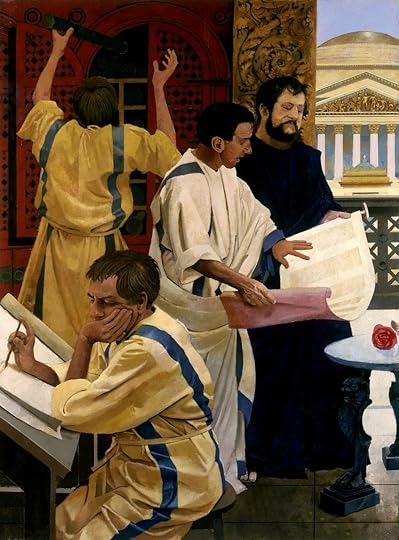
Falco and Associates - planning sessions
Breakfast was where we all met up. In the manner of traditional Roman marriages, Helena Justina would consult me, the respected head of our household, about domestic issues. When she had finished telling me what was wrong, what part she felt I had played in causing it, and how she proposed to remedy the matter, I would gently concur with her wisdom and leave her to get on with it. Then her brothers would arrive to take orders from me on our current cases. Well, that was how I saw it.
Saturnalia - a wild summer holiday - a bit like Christmas with no rules
Clients were sluggish, but we knew there would be plenty as soon as the cries of “Io Saturnalia” died down. As always, that time of unrestricted relaxation and large family gatherings had brought out the worst in people. Marriages were breaking up on every street. As soon as Janus let in the New Year in a screaming gale, we would be offered missing persons to trace after violent fights with unknown assailants who were disguised in fancy dress (but who looked like that snotty swine from the bakery). Upset employees would hand us evidence of malpractice by employers whose Saturnalia gifts had been too miserly. Festive wax tapers had burned down homes, with the loss of crucial documents. Houses left empty had been broken into and stripped of their artworks. Could we recover the loot? The wrong people had been kissed in dark corners, only to be spied on by spouses who now wanted not only divorce, but also their rights (in the form of the family shop). Children had been abused by uncles and stepfathers during the ghost stories. Could we blackmail the bastards and stop it? Drunks had never come home. Slaves playing king-for-the-day acquired too much of a taste for role-swapping and locked crazy old masters and mistresses in cupboards while they took over the house permanently. Lonely recluses had died unnoticed, so their cadavers were now smelling out their apartments. Once long-lost offspring were found and lured back to arrange burials, a hunt would start for missing fortunes that had long ago been whisked away by swindlers, then there would be work hunting down the swindlers, then the swindlers would swear their innocence and want their names cleared—and so on.apartments. Once long-lost offspring were found and lured back to arrange burials, a hunt would start for missing fortunes that had long ago been whisked away by swindlers, then there would be work hunting down the swindlers, then the swindlers would swear their innocence and want their names cleared—and so on.
image: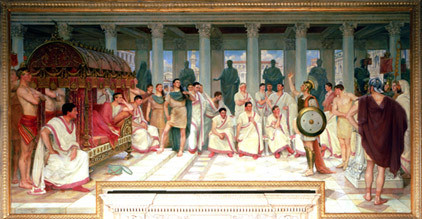
The legal twists and turns would baffle even Perry Mason. Falco keeps us all on the edge of our seat as he makes the court room system really work.
Enjoy!
image:
Scum of the earth - Informer or respected member of the nobility - Lawyer.
I had been an informer for over a decade when I finally learned what the job entailed.
There were no surprises. I knew how society viewed us: lowborn hangers-on, upstarts too impatient for honest careers, or corrupt nobles. The lowest grade was proudly occupied by me, Marcus Didius Falco, son of the utterly plebeian rogue Didius Favonius, heir to nothing and possessing only nobodies for ancestors. My most famous colleagues worked in the senate and were themselves senators. In popular thought we were all parasites, bent on destroying respectable men.
I knew how it worked at street level—a hotchpotch of petty investigative jobs, all ill-paid and despised, a career that was often dangerous too. I was about to see the glorious truth of informing senatorial-style.
image:
Falco and Associates - planning sessions
Breakfast was where we all met up. In the manner of traditional Roman marriages, Helena Justina would consult me, the respected head of our household, about domestic issues. When she had finished telling me what was wrong, what part she felt I had played in causing it, and how she proposed to remedy the matter, I would gently concur with her wisdom and leave her to get on with it. Then her brothers would arrive to take orders from me on our current cases. Well, that was how I saw it.
Saturnalia - a wild summer holiday - a bit like Christmas with no rules
Clients were sluggish, but we knew there would be plenty as soon as the cries of “Io Saturnalia” died down. As always, that time of unrestricted relaxation and large family gatherings had brought out the worst in people. Marriages were breaking up on every street. As soon as Janus let in the New Year in a screaming gale, we would be offered missing persons to trace after violent fights with unknown assailants who were disguised in fancy dress (but who looked like that snotty swine from the bakery). Upset employees would hand us evidence of malpractice by employers whose Saturnalia gifts had been too miserly. Festive wax tapers had burned down homes, with the loss of crucial documents. Houses left empty had been broken into and stripped of their artworks. Could we recover the loot? The wrong people had been kissed in dark corners, only to be spied on by spouses who now wanted not only divorce, but also their rights (in the form of the family shop). Children had been abused by uncles and stepfathers during the ghost stories. Could we blackmail the bastards and stop it? Drunks had never come home. Slaves playing king-for-the-day acquired too much of a taste for role-swapping and locked crazy old masters and mistresses in cupboards while they took over the house permanently. Lonely recluses had died unnoticed, so their cadavers were now smelling out their apartments. Once long-lost offspring were found and lured back to arrange burials, a hunt would start for missing fortunes that had long ago been whisked away by swindlers, then there would be work hunting down the swindlers, then the swindlers would swear their innocence and want their names cleared—and so on.apartments. Once long-lost offspring were found and lured back to arrange burials, a hunt would start for missing fortunes that had long ago been whisked away by swindlers, then there would be work hunting down the swindlers, then the swindlers would swear their innocence and want their names cleared—and so on.
image:
The legal twists and turns would baffle even Perry Mason. Falco keeps us all on the edge of our seat as he makes the court room system really work.
Enjoy!

December 18, 2017
Back in Rome again, this novel examines what must have been Falco's bread-and-garum income - indeed why he is referred to as an 'informer' rather than an investigator.
Expect a novel going back to the noir style, with cynical witticism only lawyers can come up with. The plot matches the tone, and is closer to the classical convoluted whodunit of hard-boiled detectives. We get a look at the early Roman empire legal system, of which so much of the modern Western world systems are based on (be glad for the improvements over time).
Be aware that while it's not necessary to read the books in order, it certainly helps - certainly so far into the series.
--
Assaph Mehr, author of Murder In Absentia: A story of Togas, Daggers, and Magic - for lovers of Ancient Rome, Murder Mysteries, and Urban Fantasy.
Expect a novel going back to the noir style, with cynical witticism only lawyers can come up with. The plot matches the tone, and is closer to the classical convoluted whodunit of hard-boiled detectives. We get a look at the early Roman empire legal system, of which so much of the modern Western world systems are based on (be glad for the improvements over time).
Be aware that while it's not necessary to read the books in order, it certainly helps - certainly so far into the series.
--
Assaph Mehr, author of Murder In Absentia: A story of Togas, Daggers, and Magic - for lovers of Ancient Rome, Murder Mysteries, and Urban Fantasy.
August 28, 2020
Falco finds himself in court, first as an accuser, then as the accused. Falco and associates are out to prove that a suicide (honorable) was really a murder (most foul). Then Falco is accused of not properly taking care of the sacred royal geese. Of course, in the end, everything works out fine for Falco in this entertaining series. Recommended.

March 14, 2018
Not my favorite so far in my reading of this series, so those who plan on starting with this one should think again. Gets off to a rather slow start, so much so that I was vaguely considering abandoning the book when the action picked up, and it became a regular Falco investigative mystery. Moreover, I don't usually have this problem having listened to these books in audio format, but here I did have some issue of telling the players apart; the Latin names started sounding alike.

February 10, 2020
In my opinion, this is not one of the most outstanding of the Lindsey Davis novels about the Emperor's Chief Informer aka Marcus Didius Falco, but there was enough detail about everyday roman life to make it a captivating story nonetheless. Much was revealed about the legal machinations of the Roman law of the times and its application in various contexts, especially when involving family murder, poisonings or supposed suicides, on which this particular story focusses -- however it did seem to lack some of the zing & excitement of previous plotlines in the Falco series of novels. As usual, Marcus and his family members go about their business of getting to the truth behind seeming trivial events to uncover what really happened; from our 21st century viewpoint, this all seems to be based on gossip and hearsay with very little forensic evidence, which does however eventually lead to the not-so-startling conclusion. Nonetheless, I enjoyed the story for its insights into the personalities of everyday characters and their motives as deduced by Falco as much as for the reveal about Roman laws at the time and practical applicaiton within the culture.
January 5, 2023
Roman justice was an horrific ordeal, guilt or innocence did not seem important what counted was whose lawyers put on the best show, made the most impassioned speeches, evidence, not necessary, innuendo and scandal were what counted. At least that's how this book makes it look. Falco has been going through a really good spell, he has Helena, a new house, his new status, money in the bank (for once) and is now a firm ..... Falco and associates ...... So when he is approached to provide evidence on a Roman noble who rather than pay up a costly court find has supposedly committed suicide Falco doesn't question the commission. Big mistake........ Falco's cases are always complex, difficult to figure out, just when you think you have all the answers everything spins and you're left reeling from new information. That's the case here, Falco goes from being a mere side character in someone else's story to suddenly finding himself faced with the loss of everything he has managed to accumulate and there seems to be no way out for him...................
This entire review has been hidden because of spoilers.

July 26, 2020
Translated by:
Susanne Aeckerle
Back in Rome Falco and Partners is now engaged to investigate an alleged senatorial suicide so they are drawn into corruption, blackmail, murder and other malfeasance.
The 15th story of informer Falco had everything I expected and love in this series; a lot cynicism and witty dialogues, character development and glimpses into, what feels like, everyday antic roman life. The Courtroom drama in this one, which was a bit different than the usual plots, was something I particularly enjoyed.
Susanne Aeckerle
Back in Rome Falco and Partners is now engaged to investigate an alleged senatorial suicide so they are drawn into corruption, blackmail, murder and other malfeasance.
The 15th story of informer Falco had everything I expected and love in this series; a lot cynicism and witty dialogues, character development and glimpses into, what feels like, everyday antic roman life. The Courtroom drama in this one, which was a bit different than the usual plots, was something I particularly enjoyed.

February 27, 2017
Some time in the mid-1980s I recall, for a reason that eludes me, finding myself – at the time an advocate and rabble-rouser of sorts (or so I liked to think of myself) – in a pricey commercial lawyer’s den. Part way through the meeting he cited the classic line from Henry IV, Pt1 “But let us kill all the lawyers”: it was the first time I’d heard Shakespeare’s advocacy of juridicide – and as the years have gone by it seems to have acquired a populist following….. Lindsey Davis, in Falco’s 15th drolly witty and oh, so cynical outing has barely a kind word for the legal profession seen here as long game charlatans, exploiting their legal and senatorial positions for corrupt self-aggrandisement and pocket lining. Contempt for lawyers has a long (fictional, at least) pedigree.
Falco, still of an equestrian ranking but with excellent noble associations and bedmate, finds himself, and Associates, the sharp Helena Justina and her senatorial brothers drawn into legal proceedings involving corruption charges, murder, blackmail and all manner of jurisprudential malfeasance that threaten mayhem and destitution. The young brothers in law are coming along nicely, the imperial post as Procurator of Juno’s Geese keeps the household in omelettes, the children of course always well-behaved and young Albia, brought back from the recent outings to Britannia, seems handy in self- and household-defence when she needs to be. But Falco and associates find themselves up against players of the long game, looking to take down, or at least fleece, a vulnerable senatorial family with a secret.
There is all the cynicism and witty dialogue we’d expect of M D Falco, rich and compelling grounding in a thoroughly plausible imperial Rome and a suitably labyrinthine plot: thoroughly enjoyable – Davis and Falco & Associates continue to delight.
Falco, still of an equestrian ranking but with excellent noble associations and bedmate, finds himself, and Associates, the sharp Helena Justina and her senatorial brothers drawn into legal proceedings involving corruption charges, murder, blackmail and all manner of jurisprudential malfeasance that threaten mayhem and destitution. The young brothers in law are coming along nicely, the imperial post as Procurator of Juno’s Geese keeps the household in omelettes, the children of course always well-behaved and young Albia, brought back from the recent outings to Britannia, seems handy in self- and household-defence when she needs to be. But Falco and associates find themselves up against players of the long game, looking to take down, or at least fleece, a vulnerable senatorial family with a secret.
There is all the cynicism and witty dialogue we’d expect of M D Falco, rich and compelling grounding in a thoroughly plausible imperial Rome and a suitably labyrinthine plot: thoroughly enjoyable – Davis and Falco & Associates continue to delight.

June 14, 2019
THE ACCUSERS is in large degree a courtroom drama, as might be indicated by the cover of of the book. It contains all the mystery elements that are guaranteed to please -- several murders, a beating by thugs, interactions with the cops, dark family secrets, courtroom drama. Falco now has Helena Justina's brothers working with him to do a lot of his legwork, and Helena takes an active role.
However, the pacing of the book a little odd. The book gets off to a slow, rambling start, as has been the way of several of the previous books in the series. Bad things happen to Falco. He has magnificent success and catastrophic reverses. All the loose ends are tied up at the end, but the resolution feels rather flat.
An excellent read, non-the-less.
However, the pacing of the book a little odd. The book gets off to a slow, rambling start, as has been the way of several of the previous books in the series. Bad things happen to Falco. He has magnificent success and catastrophic reverses. All the loose ends are tied up at the end, but the resolution feels rather flat.
An excellent read, non-the-less.

March 26, 2011
Once again I am not disappointed in Lindsey Davis and Marcus Didius Falco. This is fairly mellow installment in the saga. Falco is engaged by to investigate an alleged senatorial suicide. This eventually involves him defending an alleged murderer in the Roman courts. Rome's legal system is the main character here, and Falco &Co are our guides. I enjoyed the way Falco was less of a lone ranger this time, and really involved Helen and her brothers. As usual, his wit and wily ways get him into some difficult situations, including defending himself against a charge of impiety in his role as the guardian of Juno's Sacred Geese.

June 8, 2014
I love Lindsey Davis' Marcus Didius Falco mysteries, both because they are set in a convincingly imagined Ancient Rome and because her characters are endearing. She manages to make the hard-bitten detective style work beautifully in the historical setting. This particular one of the series has been my least favorite, though. It's a complicated case involving legacies, and the poisoning seems to be almost an afterthought. The ending is also anticlimactic. If you've never read any of these, you should start with the first one: The Silver Pigs.

January 23, 2018
(The Amazon blurb is not entirely accurate!) Yes. This had a pedestrian stage in the early middle, but picked up excitingly towards the end. The plot was intricate, but well laid out by Davis. My main disappointment was that, just when it was building up towards a major triumph of Falco's, everything went pear-shaped; and then it was outside circumstances, not Falco's keen intelligence or low cunning that saved the day.

May 17, 2009
Very good mystery - lots of twists and turns - but all very plausable

July 23, 2023
Definitely learned a lot about Roman law. ⚖️ A lot of characters to keep track of but the ending was fantastic and the author wrapped it up nicely. Great book.

January 29, 2017
In this installment of Marcus Didius Falco, our informer more or less stumbles into a very convoluted, but almost classic 'whodidit'-case. 'The Accusers' may indeed be regarded as the very first detective story in traditional meaning of the word, which must be something of an achievment considering this is volume fifteen in a book cycle about a 'detective'. :-)
Anyway, due to its topic, the story arch in 'The Accusers' feels much more constrained and focused than usually. Also, a lot of the story takes place in Rome's courts, which for some will be a tad boring, while other readers may find the experience both entertaining and enlightning . Luckily the rest of the book is executed in usual Lindsey Davis-style - the writing style is witty, recurring characters make their usual cameos and in the end... well, you'll have to read the book for that tidbit of information. If you're follower of the series, you won't be disappointed. If you're new to it, grab yourself 'Silver pigs' instead, start from the beginning and enjoy the ride.
Anyway, due to its topic, the story arch in 'The Accusers' feels much more constrained and focused than usually. Also, a lot of the story takes place in Rome's courts, which for some will be a tad boring, while other readers may find the experience both entertaining and enlightning . Luckily the rest of the book is executed in usual Lindsey Davis-style - the writing style is witty, recurring characters make their usual cameos and in the end... well, you'll have to read the book for that tidbit of information. If you're follower of the series, you won't be disappointed. If you're new to it, grab yourself 'Silver pigs' instead, start from the beginning and enjoy the ride.

April 20, 2013
If you are a Falco fan then you'll be happy. This is another excellent read in a series of excellent reads.
The plot is a little more depressing than usual as Falco has to deal with the so-called justice system and his disillusionment with the Emperor's inability to change the system and not employ the corrupt. There are long passages of court speeches and not so much action which might put some readers off. Also there aren't quite so many laughs for Falco is feeling his age and he hates that!
But Lindsey Davis has created a Roman world which is believable and a set of characters to care about.
She's a darned good writer and this is a book worth reading.
The plot is a little more depressing than usual as Falco has to deal with the so-called justice system and his disillusionment with the Emperor's inability to change the system and not employ the corrupt. There are long passages of court speeches and not so much action which might put some readers off. Also there aren't quite so many laughs for Falco is feeling his age and he hates that!
But Lindsey Davis has created a Roman world which is believable and a set of characters to care about.
She's a darned good writer and this is a book worth reading.

February 24, 2019
Another top notch comedy/mystery. All the best parts of a Lindsey Davis novel. I liked that it wasn’t a simple A to B mystery - it had lots of pauses, changes of direction. It perhaps started a little slow, but once it got going, I found it compelling enough to read it in one day.
The ‘afternote’ is interesting though - are people really taking these books seriously enough to complain about the characterisation of a particular profession in them? The intent of these books is obviously to light heartedly amuse... if you really pick up one of these novels expecting even-handed, gritty realism, you are definitely in the wrong place! Pretty sure that’s all but written on the label.
The ‘afternote’ is interesting though - are people really taking these books seriously enough to complain about the characterisation of a particular profession in them? The intent of these books is obviously to light heartedly amuse... if you really pick up one of these novels expecting even-handed, gritty realism, you are definitely in the wrong place! Pretty sure that’s all but written on the label.

April 22, 2010
I'll read more of Lindsey Davis's Falco mysteries. What a fun concept! An "informer" (like a private eye) operating in ancient Rome.
You'll learn plenty about the Roman justice (injustice) system.
Falco is a middle-class Roman (equestrian class, though he doesn't have a horse) who lucked into marrying a Senator's daughter. This fortunate mating gives him access to some higher-ups he can go to for his investigations, yet he's low-class enough to search the back alleys and less savory parts of Rome.
If you like historical and mysteries. This is a great combination.
You'll learn plenty about the Roman justice (injustice) system.
Falco is a middle-class Roman (equestrian class, though he doesn't have a horse) who lucked into marrying a Senator's daughter. This fortunate mating gives him access to some higher-ups he can go to for his investigations, yet he's low-class enough to search the back alleys and less savory parts of Rome.
If you like historical and mysteries. This is a great combination.

November 22, 2018
Another wonderful Falco mystery. In this episode Falco is hired to prove that a disgraced Senator did not commit suicide but was killed. The Senator had recently been heavily fined and the prosecutor who would receive this fine hires Falco because a suicide is honorable and wipes out the debts. As usual, things do not go smoothly and in this book there is a chance that Falco and his junior partners (Helena’s brothers) will be bankrupted.

August 5, 2011
Another great Falco story. This time our favorite Roman sleuth has to deal with one of the most corrupt and dangerous creatures in Ancient Roman: Accusers; also known as lawyers. Tangled up in a web of lies and secrets, Falco soon finds out he's btten off more than he can chew in this great addition to Lindsey Davis' series.

January 18, 2012
In this one, Lindsey Davis takes us to court. I appreciate that she is "writing us through" the various institutions of ancient Rome, but this installment was the most convoluted one yet and a bit of a drudge. I think I knew I was in trouble when early on one of the characters says, "What a bummer." Indeed.
August 30, 2012
The Falco books are fun to read. the voice may be contemporary but the historical details are still interesting. This book deals with a series of interlocking court cases and the portrayed Roman court system intrigued me. I foudn the ending a bit abrupt but that seems to be a hallmakr of the Falcon books.

May 12, 2010
The one set in the law courts with the fantastic historical detail and confirmation of what we all knew - with lawyers it has ever been thus. Interesting insights into the use of hemlock also :D

June 30, 2010
I really like this series and I look forward to the next. I recommend you start at the beginning because you get to know the main character from the start.

October 15, 2010
Again, I love the characters Lindsey Davis has created for this series. This time she showed us a bit about law and lawyers in Ancient Rome while entangling us in a suicide/murder mystery.

July 29, 2011
Fun, entertaining book

April 21, 2025
A dense and chewy mystery with lots of twists and a not entirely neat end - and all the better for it.
Quite wordy as befits a case set amongst the legal profession but the plot is definitely more down to earth and some very strong characters (poor “Birdy”!) and interesting insights into the responsibilities of being in charge of geese.
Quite wordy as befits a case set amongst the legal profession but the plot is definitely more down to earth and some very strong characters (poor “Birdy”!) and interesting insights into the responsibilities of being in charge of geese.
This entire review has been hidden because of spoilers.

Read
January 6, 2021Про судебную систему

June 15, 2020
A death, supposedly suicide, then the truth begins to bubble up. Murder! The daughter? The son? The wife? Court cases galore...
Displaying 1 - 30 of 128 reviews