

What do you think?

The Course of Honor
Rome in the first century A.D. saw the corrupt and bloody reigns of Tiberius, Caligula, Claudius, and Nero, as well as the Year of the Four Emperors. It also saw the rise of Vespasian, the destitute son of a provincial senator who brought peace to the empire after years of strife, court intrigue, and murder. Written from the perspective of Caenis, a female slave who was Vespasian's forbidden love, the future emperor advances in his climactic struggle for power. But as Vespasian brings hope to the people of Rome...he brings only despair to the one woman who loves him most.
336 pages, Paperback
First published February 25, 1997
About the author
Lindsey Davis
87 books1,538 followersLindsey Davis, historical novelist, was born in Birmingham, England in 1949. Having taken a degree in English literature at Oxford University (Lady Margaret Hall), she became a civil servant. She left the civil service after 13 years, and when a romantic novel she had written was runner up for the 1985 Georgette Heyer Historical Novel Prize, she decided to become a writer, writing at first romantic serials for the UK women's magazine Woman's Realm.
Her interest in history and archaeology led to her writing a historical novel about Vespasian and his lover Antonia Caenis (The Course of Honour), for which she couldn't find a publisher. She tried again, and her first novel featuring the Roman "detective", Marcus Didius Falco, The Silver Pigs, set in the same time period and published in 1989, was the start of her runaway success as a writer of historical whodunnits. A further nineteen Falco novels and Falco: The Official Companion have followed, as well as The Course of Honour, which was finally published in 1998. Rebels and Traitors, set in the period of the English Civil War, was published in September 2009. Davis has won many literary awards, and was honorary president of the Classical Association from 1997 to 1998.
Her interest in history and archaeology led to her writing a historical novel about Vespasian and his lover Antonia Caenis (The Course of Honour), for which she couldn't find a publisher. She tried again, and her first novel featuring the Roman "detective", Marcus Didius Falco, The Silver Pigs, set in the same time period and published in 1989, was the start of her runaway success as a writer of historical whodunnits. A further nineteen Falco novels and Falco: The Official Companion have followed, as well as The Course of Honour, which was finally published in 1998. Rebels and Traitors, set in the period of the English Civil War, was published in September 2009. Davis has won many literary awards, and was honorary president of the Classical Association from 1997 to 1998.
Ratings & Reviews
Friends & Following
Create a free account to discover what your friends think of this book!
Community Reviews
Displaying 1 - 30 of 165 reviews

October 7, 2021
Read this book in 2014, and its a standalone book about Vespasian and Antonia Caenis.
The book is set during the years AD 31-70, and it tells us the love story between the young farmer but ambitious Vespasian and the former slave-woman, his mistress for many years, Antonia caenis.
In this period of history we will encounter the turbulent reigns of Emperors, Tiberius, Caligula, Claudius and Nero, after which after a bloody civil war in the year AD 69, Vespasian becomes Emperor himself and finally bring peace to Rome, but their relation will continue till the end of their lives.
Its a most enthralling love story of two people who each will make a name for themselves, and their relationship, although Vespasian was married to someone else, will remain close and filled with love, and all this beautiful moments are brought to us bu the author in a most brilliant fashion.
Highly recommended, for this is a very engaging tale about two people in love during the bitter hard and brutal times of Rome and its Emperors , and that's why I like to call this beautiful book: "A Wonderful Roman Love Story"!
The book is set during the years AD 31-70, and it tells us the love story between the young farmer but ambitious Vespasian and the former slave-woman, his mistress for many years, Antonia caenis.
In this period of history we will encounter the turbulent reigns of Emperors, Tiberius, Caligula, Claudius and Nero, after which after a bloody civil war in the year AD 69, Vespasian becomes Emperor himself and finally bring peace to Rome, but their relation will continue till the end of their lives.
Its a most enthralling love story of two people who each will make a name for themselves, and their relationship, although Vespasian was married to someone else, will remain close and filled with love, and all this beautiful moments are brought to us bu the author in a most brilliant fashion.
Highly recommended, for this is a very engaging tale about two people in love during the bitter hard and brutal times of Rome and its Emperors , and that's why I like to call this beautiful book: "A Wonderful Roman Love Story"!

August 23, 2012
Lindsey Davis likes Vespasian. She likes him a great deal as even a cursory reading of her M Didius Falco series proves.
I like Vespasian. Among Rome’s many rulers, he ranks up there – in my opinion – with Augustus, Aurelian and Septimius Severus. And if I had the opportunity to have dinner with any emperor, he’d be the one I’d like to sit down with (or recline in the case of a Roman meal).
But Course of Honor* is not Vespasian’s story. It’s the story of the woman he loved – the freedwoman Antonia Caenis. From what little we know of her, she appears to have enjoyed an unprecedented relationship with Vespasian. One extraordinary enough to warrant at least passing mention in the histories that have come down to us. One which, given our lack of sources, is ripe for exploration.
Fortunately, Davis is up to the job as she recounts Caenis’ life from her first meeting with Vespasian to their final reunion when he became emperor. Davis focuses on the personal relationship between Caenis and Vespasian and does a good job of making both of them real people, Caenis particularly. The tone of the writing is more serious than the author’s Falco books but the emphasis on developing interesting characters over plot remains, which – in this case – is a good thing.
And Davis’ skill at putting you in ancient Rome remains as well.
Overall, Course of Honor gets a recommendation from me, especially if you want to read about a romance that doesn’t involve heaving bosoms, ripped bodices and iron-thewed men.
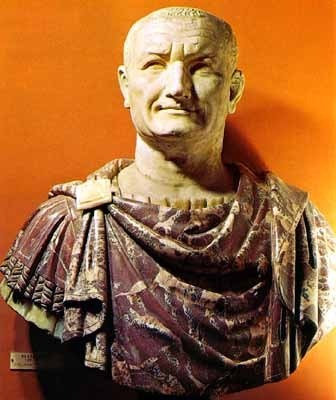
After all, this is our protagonist’s love interest:
* I have the American edition, so we lost the “u”.
I like Vespasian. Among Rome’s many rulers, he ranks up there – in my opinion – with Augustus, Aurelian and Septimius Severus. And if I had the opportunity to have dinner with any emperor, he’d be the one I’d like to sit down with (or recline in the case of a Roman meal).
But Course of Honor* is not Vespasian’s story. It’s the story of the woman he loved – the freedwoman Antonia Caenis. From what little we know of her, she appears to have enjoyed an unprecedented relationship with Vespasian. One extraordinary enough to warrant at least passing mention in the histories that have come down to us. One which, given our lack of sources, is ripe for exploration.
Fortunately, Davis is up to the job as she recounts Caenis’ life from her first meeting with Vespasian to their final reunion when he became emperor. Davis focuses on the personal relationship between Caenis and Vespasian and does a good job of making both of them real people, Caenis particularly. The tone of the writing is more serious than the author’s Falco books but the emphasis on developing interesting characters over plot remains, which – in this case – is a good thing.
And Davis’ skill at putting you in ancient Rome remains as well.
Overall, Course of Honor gets a recommendation from me, especially if you want to read about a romance that doesn’t involve heaving bosoms, ripped bodices and iron-thewed men.
After all, this is our protagonist’s love interest:
* I have the American edition, so we lost the “u”.

November 4, 2013
3.75 stars
As old as time, slavery has always existed in one form or another. This is the story of two young people who meet for the first time over the comforting scent of food. A sausage to be precise.
Vespasian and his brother are soldiers wandering through Rome when they smell something delicious. They are humbled when they meet Caenis, a young slave, who shares the meager portion of her meal with them. Vespasian will remember this special woman.
Caenis belonged to Antonia, a high-ranking woman. Both intelligent and cautious, her job was to write letters for her mistress. Eventually she would become Antonia's favorite. This allowed her luxuries that few slaves had such as companionship.
When Vespasian returned to Rome two years later, he sought her out. An antiquated law issued by a now-dead emperor forbade soldiers from having relationships with slaves and freed-people. Even though she was given permission to meet him, Caenis is both leery and happy while in Vespasian's presence. She knows that any suspicious act is justification to be put to death.
Vespasian is turned away on several occasions by Caenis but it is for his own good. She is as much concerned about him as she is for herself. Each time they see each other their relationship matures. "They had become confederates. They were talking like two outsiders from society. They talked for months they had already missed and the period of Vespasian's coming tour; openly and easily, sharing rudeness and laughter, discovery and surprise; until lunchtime, and into the afternoon. They talked until they were tired."
The plot of The Course of Honor covered most of Caenis's life. My biggest complaint was getting use to the author's clipped form of speech that her characters use periodically. Also, some readers might be turned off by Caenis's form of arrogance when she dealt with others. But caution came to mind, she never took anything for granted; after all, she was raised as a slave. Other than that, Ms. Davis did a good job letting me take a glimpse into an era that few people write about. I thought her description of everyday life was spot-on.
Please remember, readers, this is historical fiction. It covered a horrifying time if you were in the wrong place at the wrong time: no one was safe.
If you are expecting a wild romance with passion, look elsewhere. This is about the course of honor or cursus honorum, Latin for course of offices, and how it influenced men who aspired to hold public office during Roman times.
Ms. Davis wrote an entertaining narrative. It contained flawed main characters. The setting was unusual. Take yourself out of your comfort zone, like I did, and give this book a try.
*If you enjoy Ms. Davis's style of writing, she has written a mystery series with a witty detective named Marcus Didius Falco that works on cases during Vespasian's reign as emperor.*
As old as time, slavery has always existed in one form or another. This is the story of two young people who meet for the first time over the comforting scent of food. A sausage to be precise.
Vespasian and his brother are soldiers wandering through Rome when they smell something delicious. They are humbled when they meet Caenis, a young slave, who shares the meager portion of her meal with them. Vespasian will remember this special woman.
Caenis belonged to Antonia, a high-ranking woman. Both intelligent and cautious, her job was to write letters for her mistress. Eventually she would become Antonia's favorite. This allowed her luxuries that few slaves had such as companionship.
When Vespasian returned to Rome two years later, he sought her out. An antiquated law issued by a now-dead emperor forbade soldiers from having relationships with slaves and freed-people. Even though she was given permission to meet him, Caenis is both leery and happy while in Vespasian's presence. She knows that any suspicious act is justification to be put to death.
Vespasian is turned away on several occasions by Caenis but it is for his own good. She is as much concerned about him as she is for herself. Each time they see each other their relationship matures. "They had become confederates. They were talking like two outsiders from society. They talked for months they had already missed and the period of Vespasian's coming tour; openly and easily, sharing rudeness and laughter, discovery and surprise; until lunchtime, and into the afternoon. They talked until they were tired."
The plot of The Course of Honor covered most of Caenis's life. My biggest complaint was getting use to the author's clipped form of speech that her characters use periodically. Also, some readers might be turned off by Caenis's form of arrogance when she dealt with others. But caution came to mind, she never took anything for granted; after all, she was raised as a slave. Other than that, Ms. Davis did a good job letting me take a glimpse into an era that few people write about. I thought her description of everyday life was spot-on.
Please remember, readers, this is historical fiction. It covered a horrifying time if you were in the wrong place at the wrong time: no one was safe.
If you are expecting a wild romance with passion, look elsewhere. This is about the course of honor or cursus honorum, Latin for course of offices, and how it influenced men who aspired to hold public office during Roman times.
Ms. Davis wrote an entertaining narrative. It contained flawed main characters. The setting was unusual. Take yourself out of your comfort zone, like I did, and give this book a try.
*If you enjoy Ms. Davis's style of writing, she has written a mystery series with a witty detective named Marcus Didius Falco that works on cases during Vespasian's reign as emperor.*

May 16, 2012
This is Davis' retelling of the lifelong love between Vespasian and Antonia Caenis. He was proceeding through the cursus honorum [Course of honour], a graduated series of political positions which Roman patrician or equestrian young men would follow, from aedile to senator with possibility to rise to Consul. Caenis was a slave/amenuensis then freedwoman to Antonia, mother of Emperor Claudius. Caenis' personality and actions are purely from Davis's imagination. Caenis is mentioned only briefly in Suetonius and there also remains a funerary stone with her name and inscription on it erected by her freedman. Vespasian, his actions, and the main events surrounding him are based on an extensive passage in Suetonius.
The couple maintains their love over decades; she becomes his mistress before his marriage. When he marries, she breaks off their affair. After his wife dies, he seeks out Caenis after many years. They becomes lovers again and she his concubine when he becomes emperor: as Suetonius puts it: "wife in all but name" until her death in the mid-70s. Roman marriage law forbade marriage between people of their respective classes. This is a beautiful story with no graphic descriptions. I usually don't read love stories, but this was an marvellous exception, the story of two strong, decent people. I only wonder why the historical Emperor Vespasian never changed that law...
The couple maintains their love over decades; she becomes his mistress before his marriage. When he marries, she breaks off their affair. After his wife dies, he seeks out Caenis after many years. They becomes lovers again and she his concubine when he becomes emperor: as Suetonius puts it: "wife in all but name" until her death in the mid-70s. Roman marriage law forbade marriage between people of their respective classes. This is a beautiful story with no graphic descriptions. I usually don't read love stories, but this was an marvellous exception, the story of two strong, decent people. I only wonder why the historical Emperor Vespasian never changed that law...

October 25, 2009
I read this again recently and felt very differently about it! I complained last time about too much history retold in the author's own words, which I said wasn't woven in well and didn't have any relevance to the plot. This time I enjoyed the history sections and found they added to the overall picture, the world of the characters. I'm not sure why my perception has changed, maybe I've gotten more interested in history over time. I liked the descriptions of everyday life for ordinary people in Rome, small details about the types of jobs they had, what they ate, how they lived and traveled around, what they wore, and what sorts of things they'd do after work. Knowing that Caenis and Vespasian were real people who really did have a longstanding relationship made it even more interesting.
I still had a few COMPLAINTS because I am picky. I found the dialogue between the two main characters a bit cringe. When they first sleep together after she's given her freedom he actually utters the line: "Welcome to freedom - and welcome to me!" ...ick! I felt the author was trying very much to show what a realistic, practical, down-to-earth relationship they had, but then she'd throw in these cheesy Mills & Boon "you are my everything" type lines and it ruined the effect!
Her writing style was hard to follow at times - I kept finding I'd lost the thread of sense in her paragraphs and had to go back and re-read. You can tell it's a first novel, I think. Needed a good stiff edit! Of course, I don't expect it to be written in ancient Latin, but I do expect her to try and EVOKE the feel of the original dialect by using phrases, idioms, and slang that sound authentic to the period. She would occasionally do this (e.g. "skip over the Styx!") but other times the characters would use terms like "lass" or "jolly good show" which sound so quintessentially BRITISH that it didn't work.
However, the author did a good job, I thought, of portraying the casual brutality of the time period. For example, when Antonia's daughter is in disgrace for some kind of political disloyalty or something she literally murders her by locking her in her room until she starves to death! Geez.
I still had a few COMPLAINTS because I am picky. I found the dialogue between the two main characters a bit cringe. When they first sleep together after she's given her freedom he actually utters the line: "Welcome to freedom - and welcome to me!" ...ick! I felt the author was trying very much to show what a realistic, practical, down-to-earth relationship they had, but then she'd throw in these cheesy Mills & Boon "you are my everything" type lines and it ruined the effect!
Her writing style was hard to follow at times - I kept finding I'd lost the thread of sense in her paragraphs and had to go back and re-read. You can tell it's a first novel, I think. Needed a good stiff edit! Of course, I don't expect it to be written in ancient Latin, but I do expect her to try and EVOKE the feel of the original dialect by using phrases, idioms, and slang that sound authentic to the period. She would occasionally do this (e.g. "skip over the Styx!") but other times the characters would use terms like "lass" or "jolly good show" which sound so quintessentially BRITISH that it didn't work.
However, the author did a good job, I thought, of portraying the casual brutality of the time period. For example, when Antonia's daughter is in disgrace for some kind of political disloyalty or something she literally murders her by locking her in her room until she starves to death! Geez.

September 14, 2013
One of the things I enjoyed about this novel was that it was thoroughly grounded in actual history and that this added rather than detracted from the love story because it gave the tale perspective. Moreover, both characters accepted that Vespasian had to follow the cursus honorum if he was ever to make anything of himself. Here are two intelligent people drawn to each other but knowing they can never marry if one or both are to succeed and be self-supporting; yet later in life, they manage to reunite when he is widowed and can do as he likes because he has become the ultimate power, which has not corrupted him as it did previous others. A remarkable story, really, and all the more fascinating because it was true, for the most part. Not to mention that Davis is one hell of a good storyteller in addition to a deft writer who incorporates history without being heavy handed about it. An excellent read.

March 2, 2023
I hadn't realised that this novel was one of the first written by Lindsay Davis in a Roman city setting without it being part of the Didio Falco/Flavia series of her works;(apparently would-be publishers thought it wouldn't succeed- how wrong they were), as the storyline, albeit a historical novel, is about the Emperor Vespasian and the life-long love of his life (a freed woman slave) -- this despite his having to comply with all the trappings of the Roman system to eventually become Emperor. There's lots of snippets of Roman daily life and good imaginings of how Rome must have looked to the average citizen, as well as to the slave class & what was possible or not possible within the societal structures of the day. The kind of book that I shall probably re-read again as I've probably missed something --there's nothing like good historical fiction that truly credible.

Read
May 13, 2026Yearn, Sabine boy, yearn

June 23, 2013
My favorite Lindsey Davis and now I read it was her early work left in a drawer for 20 years.
Excellent detail and all the quirks of human psychological attitudes- always both, bring stories of 2000 years ago in the past- fresh to this very day. With such connection to our manipulations of human power/association/communication that you begin to understand that only the clothes, style and "stuff" we tend to use most of our days, are all that different.
Excellent detail and all the quirks of human psychological attitudes- always both, bring stories of 2000 years ago in the past- fresh to this very day. With such connection to our manipulations of human power/association/communication that you begin to understand that only the clothes, style and "stuff" we tend to use most of our days, are all that different.

Did Not Finish
January 22, 2017DNF at 27% because I lost interest. Whereas Kate Quinn can write her historical fictions with passion and cruelty -- all the while staying close to true events and true history -- Course of Honor felt like regular history.
The writing was detached and unbiased -- which worked effectively in Mistress of Rome -- but in this book it read as dry and factual as a textbook. Rich in historical accuracy, sure, but if I wanted non-fiction I would have grabbed non-fiction.
The writing was detached and unbiased -- which worked effectively in Mistress of Rome -- but in this book it read as dry and factual as a textbook. Rich in historical accuracy, sure, but if I wanted non-fiction I would have grabbed non-fiction.

December 21, 2012
6 stars
THE COURSE OF HONOR is the fictionalized story of Roman Emperor Vespasian and his mistress Caenis, a freedwoman. It tells, from Caenis’ point of view, of their constantly interrupted but lifelong love, which lasted into a comfortable old age together. Caenis, as imagined by author Lindsey Davis, is an irresistible creation, a funny, cantankerous, forthright woman with a fascination the reader will find unforgettable.
The charming opening to THE COURSE OF HONOR shows us two important things happening in one day. Caenis is a young secretary with a sharp intelligence and the ambition to overcome her slavery. Her straightforward bluntness makes a delightful first impression on Vespasian, an impoverished country knight just starting to work his way up the political ladder in Rome. In the same day, her owner entrusts her with a confidential letter so dangerous it could get their whole household killed. Vespasian leaves at once for military duty, but Caenis’ owner Antonia, sister-in-law of Emperor Tiberius, chooses Caenis as a favorite. By the time Vespasian returns, they both have budding careers. Caenis sturdily resists her liking for him, because a knight having a liaison with someone else’s slave would be frowned upon.
Vespasian tries again after Caenis has earned her freedom, and this time he wears down her half-hearted resistance. Their affair is necessarily short. It is Vespasian’s duty as a Senator to marry a gentlewoman and breed little senators-to-be, and Caenis knows that when he does he will be a faithful husband. The title THE COURSE OF HONOR indicates the long separations Caenis and Vespasian endure, while Vespasian supports his family and earns respect serving Rome in far corners of the empire. Caenis is left to build a life of her own out of the empty ruins of his absence.
The reader, if not Caenis, can enjoy this very interesting life, because Antonia’s son becomes Emperor Claudius, and Claudius’ head administrator of the empire is Caenis’ former teacher Narcissus. Anyone who saw the BBC series "I, Claudius," knows how strange and dramatic were the events in the imperial family during this period. Caenis, as part of Claudius’ "family," has a part to play in the shaping of the times. The reader gets to know Vespasian’s sons, the little emperors-to-be Titus and Domitian, and Titus’ friend Britannicus, Claudius’ son, who will be rival and victim of Claudius’ successor, Nero. Much of Rome’s near future is written in those three small faces.
The most interesting of Vespasian’s sons is Titus, who charms Caenis at first sight. He has the diplomacy Vespasian lacks, and the ability to serve his father effectively and loyally. The story doesn’t cover this, but Titus will respect his father’s example by also placing a high value on a love that runs contrary to his imperial position.
Award-winning author Lindsey Davis has become well known for her series of detective novels set in the time of Vespasian. Her extensive research shows in every book she writes, though she may occasionally change a detail of lifestyle or personality to enhance the story. In THE COURSE OF HONOR, there is no denying the living, breathing vitality of Davis’s Rome. Caenis sees the city and people with an acid sense of the absurd that is very funny to read. It is an exciting experience for the eye and ear, and of course the heart, because Caenis and Vespasian really were born to be life mates.
THE COURSE OF HONOR is my Best Historical Fiction Read of 1998, 2003, 2012 and 2020. Let it be yours for this year.
Read 5 times, listened 2 times
THE COURSE OF HONOR is the fictionalized story of Roman Emperor Vespasian and his mistress Caenis, a freedwoman. It tells, from Caenis’ point of view, of their constantly interrupted but lifelong love, which lasted into a comfortable old age together. Caenis, as imagined by author Lindsey Davis, is an irresistible creation, a funny, cantankerous, forthright woman with a fascination the reader will find unforgettable.
The charming opening to THE COURSE OF HONOR shows us two important things happening in one day. Caenis is a young secretary with a sharp intelligence and the ambition to overcome her slavery. Her straightforward bluntness makes a delightful first impression on Vespasian, an impoverished country knight just starting to work his way up the political ladder in Rome. In the same day, her owner entrusts her with a confidential letter so dangerous it could get their whole household killed. Vespasian leaves at once for military duty, but Caenis’ owner Antonia, sister-in-law of Emperor Tiberius, chooses Caenis as a favorite. By the time Vespasian returns, they both have budding careers. Caenis sturdily resists her liking for him, because a knight having a liaison with someone else’s slave would be frowned upon.
Vespasian tries again after Caenis has earned her freedom, and this time he wears down her half-hearted resistance. Their affair is necessarily short. It is Vespasian’s duty as a Senator to marry a gentlewoman and breed little senators-to-be, and Caenis knows that when he does he will be a faithful husband. The title THE COURSE OF HONOR indicates the long separations Caenis and Vespasian endure, while Vespasian supports his family and earns respect serving Rome in far corners of the empire. Caenis is left to build a life of her own out of the empty ruins of his absence.
The reader, if not Caenis, can enjoy this very interesting life, because Antonia’s son becomes Emperor Claudius, and Claudius’ head administrator of the empire is Caenis’ former teacher Narcissus. Anyone who saw the BBC series "I, Claudius," knows how strange and dramatic were the events in the imperial family during this period. Caenis, as part of Claudius’ "family," has a part to play in the shaping of the times. The reader gets to know Vespasian’s sons, the little emperors-to-be Titus and Domitian, and Titus’ friend Britannicus, Claudius’ son, who will be rival and victim of Claudius’ successor, Nero. Much of Rome’s near future is written in those three small faces.
The most interesting of Vespasian’s sons is Titus, who charms Caenis at first sight. He has the diplomacy Vespasian lacks, and the ability to serve his father effectively and loyally. The story doesn’t cover this, but Titus will respect his father’s example by also placing a high value on a love that runs contrary to his imperial position.
Award-winning author Lindsey Davis has become well known for her series of detective novels set in the time of Vespasian. Her extensive research shows in every book she writes, though she may occasionally change a detail of lifestyle or personality to enhance the story. In THE COURSE OF HONOR, there is no denying the living, breathing vitality of Davis’s Rome. Caenis sees the city and people with an acid sense of the absurd that is very funny to read. It is an exciting experience for the eye and ear, and of course the heart, because Caenis and Vespasian really were born to be life mates.
THE COURSE OF HONOR is my Best Historical Fiction Read of 1998, 2003, 2012 and 2020. Let it be yours for this year.
Read 5 times, listened 2 times

December 11, 2011
Titus Flavius Vespanianus meets Caenis, a slave girl in their youth. Caenis knows she is not beautiful but she is clever and she had been plucked from other slave girls to be educated.
Now secretary to Antonia, the widow of the son of the Empress Livia, Caenis is without illusions.
She knows she is not beautiful. She knows she is a worthless slave. Vespanianus has ambitions in politics. Never once does Caenis hold him back but never does she go against her principles.
Caenis lives through nine emperors. She achieves the status of freed woman and is at last able to purchase her own home. Meanwhile Vespanius is posted to distant regions, marries another and has children.
During this time they remain in love. The story meanders between politics, the antics of each succeeding emperor, one of whom is Nero and the love between Caenis and Vespasian.
Somewhat dryly written and often showing rather than telling, only the desire to know the fate of Caenis kept me reading.
Caenis actually lived and if you know Roman history, you know what happened to Vespanius.
I do not really care for the writing style of Ms Davis.Unlike her series this book does have the background and feel of ancient Rome except when Vespanius calls Caenis, "lass," when I abruptly think of Scotland which is still far in the future. The word, "lass'" is incongruous to the time in which this novel is set.
Now secretary to Antonia, the widow of the son of the Empress Livia, Caenis is without illusions.
She knows she is not beautiful. She knows she is a worthless slave. Vespanianus has ambitions in politics. Never once does Caenis hold him back but never does she go against her principles.
Caenis lives through nine emperors. She achieves the status of freed woman and is at last able to purchase her own home. Meanwhile Vespanius is posted to distant regions, marries another and has children.
During this time they remain in love. The story meanders between politics, the antics of each succeeding emperor, one of whom is Nero and the love between Caenis and Vespasian.
Somewhat dryly written and often showing rather than telling, only the desire to know the fate of Caenis kept me reading.
Caenis actually lived and if you know Roman history, you know what happened to Vespanius.
I do not really care for the writing style of Ms Davis.Unlike her series this book does have the background and feel of ancient Rome except when Vespanius calls Caenis, "lass," when I abruptly think of Scotland which is still far in the future. The word, "lass'" is incongruous to the time in which this novel is set.

July 25, 2010
Having always loved the Falco mysteries by Davis I wasn't sure what to expect from this departure. I ended up loving the story of Vespasian and his lady love- they seemed very real to me and the detail about daily life was wonderful.

August 20, 2018
3.5-4 stars

June 4, 2026
Lots of Roman history interwoven with a sweet love story.
March 31, 2020
I love Lindsey Davis’ writing; her historical research, character development, connections of historical events and opportunities taken are insightful, draw your curiosity deeper into ancient history and give you reason to be enlightened by the past.
September 25, 2014
When I picked this book up from the library and saw its hand-drawn, almost cartoonish cover, I figured I was in for just another random historical fiction novel. One I would finish reading, shrug, and say, Meh. (Yes, I totally judged a book by the cover.)
Wrong. So very wrong.
The amount of books that have made me cry are relatively small in number (maybe six or seven), so imagine my surprise when this assumed to be meh book had me leaking from the eyes like nobody's business!
When Caenis and Vespasian first got together, I thought, "They are perfect together! This will be such a cute book." But when , for some reason it was as if someone turned on a tiny faucet behind my eyes. Just the way it was written, I guess, tugged at my heartstrings a whole lot.
It's hard, at first, learning to live without the one you love, and Caenis does it (for twenty frigging years!), but even as she lives without him, occasional sightings are like a punch to the heart (hers and mine).
So fast forward those twenty years. Reading it, even when Caenis wasn't doing anything in particular, I was very melancholy on her behalf. But then (thankfully?) someone dies and Vespasian comes back to Caenis. Cue the tears of happiness!
I really enjoyed Veronica, her best friend since they were ten, who also buys her freedom and sets up a very exclusive brothel. (Is it weird that that seemed like an awesome idea?) She is a delightfully comedic constant throughout Caenis's life and just thinking about her passing away with her oldest friend beside her makes me want to cry. (Ahem, again.)
When Vespasian is declared Emperor, Caenis doesn't want to cause him any scandal so she writes him a letter saying that they can't be together anymore and moves back into her old house. Pretty much from that letter until the end of the book, I was in tears, sad ones and then very happy. It didn't matter that these were characters (of real people, which makes it that much more of a happy ending) from thousands of years ago; the author was able to create characters that I really liked and could empathize with, and I would read it all over again, uncontrollable eye leaking and all.
Wrong. So very wrong.
The amount of books that have made me cry are relatively small in number (maybe six or seven), so imagine my surprise when this assumed to be meh book had me leaking from the eyes like nobody's business!
When Caenis and Vespasian first got together, I thought, "They are perfect together! This will be such a cute book." But when , for some reason it was as if someone turned on a tiny faucet behind my eyes. Just the way it was written, I guess, tugged at my heartstrings a whole lot.
It's hard, at first, learning to live without the one you love, and Caenis does it (for twenty frigging years!), but even as she lives without him, occasional sightings are like a punch to the heart (hers and mine).
So fast forward those twenty years. Reading it, even when Caenis wasn't doing anything in particular, I was very melancholy on her behalf. But then (thankfully?) someone dies and Vespasian comes back to Caenis. Cue the tears of happiness!
I really enjoyed Veronica, her best friend since they were ten, who also buys her freedom and sets up a very exclusive brothel. (Is it weird that that seemed like an awesome idea?) She is a delightfully comedic constant throughout Caenis's life and just thinking about her passing away with her oldest friend beside her makes me want to cry. (Ahem, again.)
When Vespasian is declared Emperor, Caenis doesn't want to cause him any scandal so she writes him a letter saying that they can't be together anymore and moves back into her old house. Pretty much from that letter until the end of the book, I was in tears, sad ones and then very happy. It didn't matter that these were characters (of real people, which makes it that much more of a happy ending) from thousands of years ago; the author was able to create characters that I really liked and could empathize with, and I would read it all over again, uncontrollable eye leaking and all.

August 13, 2012
This book was similar to "Master and God" - a tale of 2 lovers, only this time one of them becomes emperor. This is the earlier book, and I did not find the history lessons in this one as invasive and distracting as in "Master and God". The story line stayed with the characters for the most part.For that reason I think this is the stronger, if less ambitious, book.

May 11, 2013
I find it unbelievable (but very heartening, for my own literary efforts) that this, Ms Davis' first novel, struggled to find a publisher. I much prefer it to her Falco books, for instance. I love the delicacy with which the relationship's distances are played out; and I'm planning on stealing her handling of time passing for my next novel. A lovely, intricate, sensitive read.

Read
August 19, 2015Loved Caenis!
Very interesting character portrait of the freedwoman who became the Roman Emperor Vespasian's concubine. Makes me want to read a biography about her.
Very interesting character portrait of the freedwoman who became the Roman Emperor Vespasian's concubine. Makes me want to read a biography about her.

January 28, 2019
Sometimes writing books leads you to write others books. This seems to be the case here, as the author, while doing background research for one of her Roman mystery series (one I have not read yet), found a compelling story in some of her historical research that she thought deserved to be written about in an expanded form as a historical fiction novel that seeks to bring an obscure aspect of history. It is a story that is compelling and wroth remembering and more than a little bit melancholy but also quite romantic as well. It is a complicated story involving power and competition and ambition, and the author does a great job at making the history come alive through her storytelling. The novel as a whole has some pretty clear agendas--it celebrates a heroine who achieves her ambitions through her brains and a fair amount of decency (though not as much decency as would be demanded of a Christian) rather than through the exploitation of her beauty, yet at the same time she remains friendly to those who are beautiful without being poisoned by envy. Likewise, the author tells the story of a woman who would not be written about in detail by most chroniclers of the period given her obscurity and position.
This novel of about 300 pages tells the story of one Caenis, a well-educated slave in Tiberius' household who happens to meet a lost pair of brothers of the senatorial class, one of whom thinks of her as an interesting girl. Through the next few decades we see emperors come and go, favorites come and go, and see Vespasion and Caenis enjoy a time together as a couple before he is called upon to marry and have legitimate children to pass on his house, and Caenis deals with loneliness and the death of someone who would have married her. Through the ups and downs of a relationship, though the period of loneliness, through the difficulty in avoiding being killed as a result of the deeds of a Caligula or a Nero, we see the intrigue of finality as well as the eforts of people to to find dignity in their lives and to overcome the place they were put in by their birth, a way that people could overcome, in some small way, the fate of their lives and the burdens of their positions of authority, in a recognition of the force of character and in the worth of the individual.
But the title of this book raises more questions than it gives answers. Is the rise of Caenis from slavery to a position of honor as a freedman supposed to give women an analogous position to men when it comes to advancement in Roman eyes? In whose eyes is Caenis given honor? Is Caenis an exemplary woman or is she supposed to be taken as a model of womanhood in general when it comes to using one's knowledge and wisdom to get ahead in the world? Is the reader supposed to feel that it was unjust that Caenis was unable to marry Vespasian, even after saving the life of his son Titus and even after he was left a widow, because of their wide class differences? Did the personal excellence of Caenis or the known eccentricity of Vespasian make it possible for the Romans of the time to censure him less harshly for his actions than they would have done for a different woman in another time? Why does the author ignore the early spread of Christianity in this book? There are many questions that one could ask of this book and its author, questions that the author does not want to explicitly say and may not even want to consciously deal with at all, even implicitly. And yet these questions do not make this book any less enjoyable as a standalone historical fiction with somewhat obvious feminist themes.
This novel of about 300 pages tells the story of one Caenis, a well-educated slave in Tiberius' household who happens to meet a lost pair of brothers of the senatorial class, one of whom thinks of her as an interesting girl. Through the next few decades we see emperors come and go, favorites come and go, and see Vespasion and Caenis enjoy a time together as a couple before he is called upon to marry and have legitimate children to pass on his house, and Caenis deals with loneliness and the death of someone who would have married her. Through the ups and downs of a relationship, though the period of loneliness, through the difficulty in avoiding being killed as a result of the deeds of a Caligula or a Nero, we see the intrigue of finality as well as the eforts of people to to find dignity in their lives and to overcome the place they were put in by their birth, a way that people could overcome, in some small way, the fate of their lives and the burdens of their positions of authority, in a recognition of the force of character and in the worth of the individual.
But the title of this book raises more questions than it gives answers. Is the rise of Caenis from slavery to a position of honor as a freedman supposed to give women an analogous position to men when it comes to advancement in Roman eyes? In whose eyes is Caenis given honor? Is Caenis an exemplary woman or is she supposed to be taken as a model of womanhood in general when it comes to using one's knowledge and wisdom to get ahead in the world? Is the reader supposed to feel that it was unjust that Caenis was unable to marry Vespasian, even after saving the life of his son Titus and even after he was left a widow, because of their wide class differences? Did the personal excellence of Caenis or the known eccentricity of Vespasian make it possible for the Romans of the time to censure him less harshly for his actions than they would have done for a different woman in another time? Why does the author ignore the early spread of Christianity in this book? There are many questions that one could ask of this book and its author, questions that the author does not want to explicitly say and may not even want to consciously deal with at all, even implicitly. And yet these questions do not make this book any less enjoyable as a standalone historical fiction with somewhat obvious feminist themes.

January 20, 2020
This book falls into a category with Katherine by Anya Seton. They’re both historical people important enough to be in the records we have, and important enough to have a low chance of a happily ever after with a lifetime partner, but who nevertheless manage to find and hold on to that one other person. Katherine is about John of Gaunt and his mistress, Katherine Swynford. Their (illegitimate) children, incidentally, become the Tudor dynasty. The Course of Honour is about Emperor Vespasian and his mistress, Antonia Caenis - an enslaved person, then a freed woman. I checked - the ancient historians have their relationship survive.
Normally, when I’m reading historical fiction, I don’t like reading about the legends, the queens and celebrities, because they often weren’t happy or long-lived. Is it a universal rule that you can have fame or happiness, but not both?
As with all of Davis’ books, this one brings Ancient Rome to life. You can practically smell the uncleared streets and taste the weird feast foods. I love reading Davis for that reason alone, although she does a great job at slow burn, fits-into-real-life romance, too.
Nerd that I am, I checked up on some of the emperors and happenings in my OCD (that’s a dictionary, not a condition), and the facts seemed pretty accurate. More to the point, it’s made me want to read more about Ancient Rome, so I’ve started SPQR by Mary Beard and will dip into and out of Suetonius and Tacitus. Books I never read when I was supposed to in college.
Normally, when I’m reading historical fiction, I don’t like reading about the legends, the queens and celebrities, because they often weren’t happy or long-lived. Is it a universal rule that you can have fame or happiness, but not both?
As with all of Davis’ books, this one brings Ancient Rome to life. You can practically smell the uncleared streets and taste the weird feast foods. I love reading Davis for that reason alone, although she does a great job at slow burn, fits-into-real-life romance, too.
Nerd that I am, I checked up on some of the emperors and happenings in my OCD (that’s a dictionary, not a condition), and the facts seemed pretty accurate. More to the point, it’s made me want to read more about Ancient Rome, so I’ve started SPQR by Mary Beard and will dip into and out of Suetonius and Tacitus. Books I never read when I was supposed to in college.

October 27, 2022
This novel is, I believe, the first by Lindsey Davis who went on to win fame as the author of the Falco novels. It is a fascinating behind the scenes true story of the tumultuous events in the imperial palace during the first century AD. There was much to commend: very detailed historical research, an extremely vivid and plausible re-creation of first century Rome and engaging, well realised characters. There was wit and lively dialogue which captured a real sense of the present taking place as we read- something often lacking in historical novels that feel archaic when, of course, they were ‘now’ when the events were taking place.
But …the narrative was patchy for me. Some parts were excellent and the story became tedious with fairly repetitive and predictable periods. Likewise the author, who is not from a historical background so I presume was new to the material, seems so in love with her research that instead of narrative, we had an information dump, with sections reading more like a history book.
Despite the excess of factual detail, other episodes ( often integral ones) had a staccato feel and needed deeper exposition. Ultimately, the quirky relationship between Caenis and Vespasian became rather tiresome. I just wanted to say ‘ stop being a martyr and go for it!’ The notion that the emperor ( or a governor for that matter) couldn’t share his bed with whoever he liked seemed laughable in the light of the behaviour of others.
I haven’t read the Falco series but this promising first novel makes me curious. I will definitely give Davis another look!
But …the narrative was patchy for me. Some parts were excellent and the story became tedious with fairly repetitive and predictable periods. Likewise the author, who is not from a historical background so I presume was new to the material, seems so in love with her research that instead of narrative, we had an information dump, with sections reading more like a history book.
Despite the excess of factual detail, other episodes ( often integral ones) had a staccato feel and needed deeper exposition. Ultimately, the quirky relationship between Caenis and Vespasian became rather tiresome. I just wanted to say ‘ stop being a martyr and go for it!’ The notion that the emperor ( or a governor for that matter) couldn’t share his bed with whoever he liked seemed laughable in the light of the behaviour of others.
I haven’t read the Falco series but this promising first novel makes me curious. I will definitely give Davis another look!

January 24, 2023
I listened to this on audiobook as I wanted to finish it quickly for my book club & get back to my other book. I’m glad I did in the end as I dislike reading books with heaps of long names, I find they all start to blend together & I get so confused about who is who. Also it omits any doubts I may have about pronunciation, it’s all done for me! I also liked that I could listen to it at 1.5x speed, which hurried it up & meant I could get though it in a day!
Wasn’t hugely blown away by this story, I’m not a Roman history buff so wasn’t already familiar with many of the characters, but did feel it seemed a tad implausible. From what I do know of Roman history, it was an extremely dangerous time to live if you had any sort of power or title, human life was of little or no consequence & you could get killed off (or worse) at any given moment. The fact that Caenis had such high connections & yet managed to live a long & prosperous life, without any major setbacks in terms of violence, rape, imprisonment etc. didn’t really make sense. Apart from the light history lesson, this story glossed over large chunks of her life & just focused on her equally implausible relationship with Vespasian, which was frankly, not that interesting! I didn’t feel drawn to or invested in any of the characters, and it irked me that the author popped in quite a few English-isms (“jolly good chap” etc) in spoken dialogue.
I didn’t hate it, but I wouldn’t read again & I certainly won’t be rushing off to read any other Lindsey Davis books in a hurry.
Wasn’t hugely blown away by this story, I’m not a Roman history buff so wasn’t already familiar with many of the characters, but did feel it seemed a tad implausible. From what I do know of Roman history, it was an extremely dangerous time to live if you had any sort of power or title, human life was of little or no consequence & you could get killed off (or worse) at any given moment. The fact that Caenis had such high connections & yet managed to live a long & prosperous life, without any major setbacks in terms of violence, rape, imprisonment etc. didn’t really make sense. Apart from the light history lesson, this story glossed over large chunks of her life & just focused on her equally implausible relationship with Vespasian, which was frankly, not that interesting! I didn’t feel drawn to or invested in any of the characters, and it irked me that the author popped in quite a few English-isms (“jolly good chap” etc) in spoken dialogue.
I didn’t hate it, but I wouldn’t read again & I certainly won’t be rushing off to read any other Lindsey Davis books in a hurry.
May 19, 2023
This is not a Falco or Alba Flavia mystery, but the true-life love story of Caenis, a slave girl, and the Emperor Vespasian. At the time of the start of the story, Vespasian is not yet twenty five, the minimum age for a senatorial rank (hence the title, as he slowly works his way up), and the imperial purple toga is far into the future. Caenis is first employed as a scribe by Antonia Minor, daughter of Mark Antony, mother of the great Germanicus and the future Emperor Claudius. And grandmother, incidentally, to the future Emperor Caligula. As Caenis works her way into Antonia's confidence and wins her freedom, the story details her independent life and character until her death as Vespasian's companion and friend.
As Davis traces the dramatic events of the last years of Tiberius and the fall of Sejanus as seen through the eyes of a sharp-eyed, sharp-witted young girl, as well the turbulent reigns of Caligula, Claudius and Nero, and finally the Year of the Four Emperors, her feel for the life in Rome of twenty centuries ago reveals the historian in Davis. Well researched, it lacks the light, occasionally flippant style of the later Falco mysteries, but delights in the portrayal of the historical characters.
As Davis traces the dramatic events of the last years of Tiberius and the fall of Sejanus as seen through the eyes of a sharp-eyed, sharp-witted young girl, as well the turbulent reigns of Caligula, Claudius and Nero, and finally the Year of the Four Emperors, her feel for the life in Rome of twenty centuries ago reveals the historian in Davis. Well researched, it lacks the light, occasionally flippant style of the later Falco mysteries, but delights in the portrayal of the historical characters.

January 10, 2021
I didn't finish it, I put it down around 70 pages in. I just can't read such a vapid, one dimension tale. There is nothing to it. It's a turgid lovestory with very little else surrounding it, hardly any descriptives, and really hollow characters who are boring because they are completely textually unfulfilled. All I learnt in the first 70 pages is that Vespasian has a permanent frown but he's got a good sense of humour, and Caenis likes to stand up straight and she's quite obstinate. That's it. I highly doubt this would have improved throughout the book.
Furthermore, the story begins with Caenis as a slave sharing her pan of sausages with Vespasian and his brother, this is how they meet when the two brothers are lost in the Palace corridors. What is that? They spend a few chapters simply laughing over sausages and this is referenced a few times over, even in just the seventy pages I read, as if it's some paragon of romance, the epitome of Roman true love. I don't know whether it's supposed to be funny or absurd but I just found it very odd, when the sausages have more complex characterisations than the two protagonists. A shame.
Furthermore, the story begins with Caenis as a slave sharing her pan of sausages with Vespasian and his brother, this is how they meet when the two brothers are lost in the Palace corridors. What is that? They spend a few chapters simply laughing over sausages and this is referenced a few times over, even in just the seventy pages I read, as if it's some paragon of romance, the epitome of Roman true love. I don't know whether it's supposed to be funny or absurd but I just found it very odd, when the sausages have more complex characterisations than the two protagonists. A shame.

February 4, 2026
This is historical fiction based in the years AD31-69, taking place during the reigns of Tiberius, Caligula, Claudius and Nero, and culminating in the accession of Vespasian. That's a lot of history to cover and there is at times a slightly clunky blend between the history and the central romance of the novel, although Lindsey Davis has a very good eye for historical detail. Rome certainly comes to life in this novel, both in its description of everyday life and in terms of the wider societal and political background. I cared about the fate of Caenis, the freed slave and main character, and the state of her relationship with Vespasian. There were at times anachronistic seeming language or attitudes which did grate, although the story of a resourceful, independent and intelligent woman overcoming the odds, was a satisfying one. Interestingly, this was Lindsay Davis's first novel but published twelve years after it was written and following the success of other books by her. Overall, a good read with attractive characters and set in fascinating times, which more than compensated for the occasional linguistic or structural infelicity.
October 25, 2017
It has been a long time since I stayed up all night reading, but this wonderful book by Ms. Davis tore me away from the hardcover biographies that I have read for years and returned me to the wonderful world of Historical Fiction. While not a romance novel, this is very much a great love story that leaves the reader hoping that this is how things actually played out in the First Century C.E.
Ms. Davis's grasp on the history and feel of the ancient world is enveloping, but it also allows readers to almost imagine themselves in this world: to feel the cares and concerns of its occupants, to believe that doing the right thing, while sometimes not the easiest, can result in happiness in the long term. It is realistic approach to duty, love, and goals. It is a story of a relationship where both parties demonstrate true agency, but is also honest in its poignancy. I only wish that she had stretched it out and turned it into a series. I feel as if I will read and re-read this book for years to come.
Ms. Davis's grasp on the history and feel of the ancient world is enveloping, but it also allows readers to almost imagine themselves in this world: to feel the cares and concerns of its occupants, to believe that doing the right thing, while sometimes not the easiest, can result in happiness in the long term. It is realistic approach to duty, love, and goals. It is a story of a relationship where both parties demonstrate true agency, but is also honest in its poignancy. I only wish that she had stretched it out and turned it into a series. I feel as if I will read and re-read this book for years to come.
February 16, 2022
Oh this is another old favourite. What could be more perfect than a romantic tale of forbidden love across the social divide in ancient Rome? A TRUE STORY OF FORBIDDEN LOVE ACROSS THE SOCIAL DIVIDE IN ANCIENT ROME, THAT'S WHAT!
Not only that, it covers the year of 4 Emperors, and the incredible social change that came with the rise of the Flavian dynasty, the horror of the Caligula and Nero years, and what it meant to be a slave in a rocky royal household.
From the first "skip across the Styx, you can't come in here" we are in love with Caenis, in all her faults, hatreds, sorrows, and quiet (not so quiet) acceptance of her lot in life. There could be no-one better than Lindsey Davis to tell this tale.
Will they end up together? Won't they?
Oh Vespasian, let's hope so.
After reading this for the umpteenth time I handed it straight over to my 12 year old. I think I've hooked her on Davis. Onward to the Falcos!
Not only that, it covers the year of 4 Emperors, and the incredible social change that came with the rise of the Flavian dynasty, the horror of the Caligula and Nero years, and what it meant to be a slave in a rocky royal household.
From the first "skip across the Styx, you can't come in here" we are in love with Caenis, in all her faults, hatreds, sorrows, and quiet (not so quiet) acceptance of her lot in life. There could be no-one better than Lindsey Davis to tell this tale.
Will they end up together? Won't they?
Oh Vespasian, let's hope so.
After reading this for the umpteenth time I handed it straight over to my 12 year old. I think I've hooked her on Davis. Onward to the Falcos!
February 25, 2022
Having inhaled the Falco and Flavia Albia books, I've been looking around to see what else Lindsey Davis has written. Thanks to Falco, I've developed a bit of a soft spot for Vespasian, so this book was a natural addition to my reading list.
Good historical novels bring the reader (in my case listener) right into the story and good authors provide enough information to make that other world vibrant and absorbing. Not to mention relatable.
Davis created a love story between two historical people that provides context, background, and plausibility, especially since we know that the two main characters actually did have a long relationship.
Davis provides a colorful backdrop not only of the city of Rome but the Empire and its history as she relates the story between Vespasian and Caenis, two people who are at once difficult and complicated.
All in all, this work has been a treat and a treasure that I'm looking forward to listening to again and again.
Good historical novels bring the reader (in my case listener) right into the story and good authors provide enough information to make that other world vibrant and absorbing. Not to mention relatable.
Davis created a love story between two historical people that provides context, background, and plausibility, especially since we know that the two main characters actually did have a long relationship.
Davis provides a colorful backdrop not only of the city of Rome but the Empire and its history as she relates the story between Vespasian and Caenis, two people who are at once difficult and complicated.
All in all, this work has been a treat and a treasure that I'm looking forward to listening to again and again.
Displaying 1 - 30 of 165 reviews