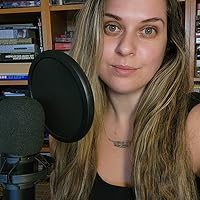
A professional writer for more than forty years, Yarbro has sold over eighty books, more than seventy works of short fiction, and more than three dozen essays, introductions, and reviews. She also composes serious music. Her first professional writing - in 1961-1962 - was as a playwright for a now long-defunct children's theater company. By the mid-60s she had switched to writing stories and hasn't stopped yet.
After leaving college in 1963 and until she became a full-time writer in 1970, she worked as a demographic cartographer, and still often drafts maps for her books, and occasionally for the books of other writers.
She has a large reference library with books on a wide range of subjects, everything from food and fashion to weapons and trade routes to religion and law. She is constantly adding to it as part of her on-going fascination with history and culture; she reads incessantly, searching for interesting people and places that might provide fodder for stories.
In 1997 the Transylvanian Society of Dracula bestowed a literary knighthood on Yarbro, and in 2003 the World Horror Association presented her with a Grand Master award. In 2006 the International Horror Guild enrolled her among their Living Legends, the first woman to be so honored; the Horror Writers Association gave her a Life Achievement Award in 2009. In 2014 she won a Life Achievement Award from the World Fantasy Convention.
A skeptical occultist for forty years, she has studied everything from alchemy to zoomancy, and in the late 1970s worked occasionally as a professional tarot card reader and palmist at the Magic Cellar in San Francisco.
She has two domestic accomplishments: she is a good cook and an experienced seamstress. The rest is catch-as-catch-can.
Divorced, she lives in the San Francisco Bay Area - with two cats: the irrepressible Butterscotch and Crumpet, the Gang of Two. When not busy writing, she enjoys the symphony or opera.
Her Saint-Germain series is now the longest vampire series ever. The books range widely over time and place, and were not published in historical order. They are numbered in published order.
Known pseudonyms include Vanessa Pryor, Quinn Fawcett, T.C.F. Hopkins, Trystam Kith, Camille Gabor.
I read this upon publication, in 1978, and I wish I could convey what a radical, ground-breaking book it was for its time. First, it's post-apocalyptic, but the apocalypse is ecological, where every other book in the genre before that was nuke, nuke, nuke. (As a futurist, she may end up being right, too.) Second, there's a woman protagonist who can and does function alone through most of the book, and she carries a weapon and is good with it. I know people younger than I can't imagine a world in which these are revolutionary bits of characterization, almost unpublishably radical, but back then, they were. I'm still giving an extra star for that.
It's dark, yes, as other reviewers say, and not hopeful at all. Survival is a Hobbesian struggle.
It is not just Philip K. Dick but I have a fondness for writers with Berkeley connections. It helps that I walked around that city connecting with the deep genre history. Those three words are something I associate with Chelsea Quinn Yarbo. She wouldn’t remember me but in 2014 I was on a panel about writing vampire fiction. At the time I had only my Chinese vampire novel Hunting the Moon Tribe, and CQY had written the longest-running vampire series ever. Since there are many multi-book Vampire series that is an accomplishment. (30 plus titles in the Saint-Germain series)
I was excited to sit next to her. I knew the honors she had piled up. I didn’t know that the Transylvanian Society of Dracula existed until they gave her a literary knighthood. In 2003 the World Horror Association declared her a Grand Master award, three years later the International Horror Guild named her a Living Legends, and another three years the HWA gave her a Life Achievement Award in 2009. She had to wait five years before she got a Lifetime Achievement Award from the World Fantasy Convention.
I have always respected her work and output. I read many of her books before I started doing reviews. So this is the first time on this blog we have gotten down CQY style. With my reading leaning mostly towards Science Fiction, I had made the mistake of typecasting this author as an author of historical vampire fiction. My bad.
I was led to this novel by the anthology The Future is Female Vol 2. Edited by Lisa Yazsek. That book features a prequel to this novel, I love the story and ecological collapse novels are one of my serious nightmares. (I wrote my own – Ring of Fire from Deadite Press) In my podcast interview with Lisa, she compared False Dawn to one of my all-time favorite novels John Brunner’s The Sheep Look Up. SOLD.
That novel is so bleak I have had people curse me out for recommending it to them. It is great but That novel can make Cormac McCarthy feel like Disney. The thing is I like novels that are as Spinal Tap put it “Blacker than black.” This is bleaker than bleak and Yarbo in my opinion earned her Living Legend and horror grand master with this insanely grim ecological apocalypse novel alone. Not for the light-hearted. If you don’t want the grimness ruined/spoiled take my word for it track down this novel and come back for some commentary. Again if you don’t like bleak novels this one is not for you. That is how amazing novels like this end up with angry one-star reviews.
False Dawn takes place a few decades after society collapsed from a series of pollution-related birth mutations. At the same time, ecological pressures begin to poison folks and everything falls apart. We follow Thea, a survivor who was pretty young when it all went down so all she knows is survival.
One of the great features of this novel is there is no sense ever that people are coming together to rebuild, or even put together a small community. People are fucked, they will stay fucked, and if you are lucky you might get a few weeks hiding in a house eating canned foods or hunting skinny, dying animals who are fewer and fewer in between. Hope is not a thing.
In the bleakest Meet-cute in the history of stories, Thea runs into a former pirate who is running away from his old gang with his gang-greening cut-off arm pinned to his jacket.
“She stood in the doorway looking down at him. “Why’d you keep it?” He drew in a breath. “They were looking for a man with one arm. So I pinned this to my jacket. It’s going bad-I can’t use it much longer. He paused a moment, then finished, “I can’t get any further without help.”
Evan is a bit older, and was a parent who lost a wife and mutated baby before escaping Europe with the hopes that America was better off. At some point, he headed west and started a pirate gang trying to survive in the re-wilded California. This makes False Dawn a very California book. A depopulated California has become a harsh island of survival and outside of rumors the rest of the world might as well be Mars.
I have read many books set after the end of the world as we know it, more than any other False Dawn captures the suffering, and tortured battle for survival in this world. The horrors are also greater for a reader like me because outside of the random canned food the other thing they are eating, are the animals who are also slowly starving to death. Eating and hunting animals is a huge part of survival in this world so that adds a bleakness for this 30-year vegan. Dogs are also fighting for survival and not even close to man’s best friend anymore. There is something so gross about that loss of relationship, the novel doesn’t focus on that but the feeling is clear.
The first time we see any evidence of humans working together is not a cheery one either.
“Poor Bastards,” Evan muttered as he moved closer to the road. His eyes dwelled for a moment on the cart with the children, then he turned away. Even in the years when he lead the Pirates, he got used to the terrible deformities that were appearing more and more in the diminishing number of live births of the few surviving men and women. These children in the carts were no exception: Only one looked close to normal, all the other seven had defects ranging from a few extra fingers on each hand to hideously stunted bodies, to limbless trunks, to hornlike growth on lead-colored skin. Evan saw that two of the women were pregnant, and wondered, as he had done before, what could drive them to bear children with the hopelessly testimony of children riding in the cart.”
There is no going on for the human race. This cold reality hangs over the novel and makes this end-of-the-world novel extra dark. The bodies of the children who have the unfortunate luck of being born to carry the sins of the dark times when everyone thought they could have everything. Thea as a character doesn’t exactly feel sorry for herself, this life is all she has ever known. Evan her traveling partner remembers when all went bad in the early 80s twenty years earlier. Thea is a victim of Rape, has never known love so as she and Evan survive together and they develop feelings she has no context for the closeness he desires. Thankfully he respects that throughout the story. Their travels have ups and downs even after trying on a dress one - this is one of Thea’s first light-hearted moments of joy we see and it is short-lived as CQY reminds us where we are in the next paragraph.
“The Bathroom was filthy, as Thea had thought it might be. Years of excrement clung to the toilet bowl and the smell, deadened by the cold, still hit Thea like a muffling blanket as she opened the door.”
On their travels they avoid the Pirates, even if Evan had been one of them it only serves to remind them of the cruelty. There is a weird aside when Thea and Evan find a strange cult of survivor monks. Who wants them to marry, Evan despite loving Thea tries to stand up to the monks. “You must not do this, Father. In your compassion” – he spat the word- “You cannot do this. She has been raped. That is the mark of a brutal man, not the devil.” An expression of pity came into the Monk’s eyes. “So she has deceived you, my son. Her words of honey have led you into error. There is no rape, my son there is only the sin of Eve.”
We learn at this time that Evan was married. That he had children. He had guilt about it.
“But there’s lots of deformed kids,” Thea said reasonably, not quite understanding. She had never seen families who, if they had children at all, did not have at least one child who had not turned out right. Even in her controlled environment where each of the pregnancies had been tended with precision and care, her brother Davey had not been normal. For a moment she could see him again as she had last seen him, nine years old, lying in his bed and crying as he flailed his spidery arms about, futilely trying to grasp something, anything, with his limp bony hands.”
Even as the monks torture them for refusing to bow to their survival cult, Evan tortures himself with the memory. It is a powerful character moment because it is then that Evan figures out that Thea has never loved. She doesn’t know the world as it was. The monks and the pirates end up killing each other. Our heroes are more than ready to let them fight, but escaping means losing everything they had to survive. Including their precious crossbows. They start again from nothing surviving keeps them from having to confront Evan’s growing feelings. That is until they find a home where they can eat, build a fire, and take a bath. For months they settle in a play homemaker. Evan reads to her novels from the past world and they try to make love. It is a challenge at first but Evan is teaching her for a moment to live like it was but that prompts Thea to question.
“It was a waste.” His voice was harsh. “A whole city died because too damn many people lived there. They all wanted things. Another car. Television. Wash-after-one-wearing clothes. Freezers full of food. Everyone wanted that.” He stopped long enough to finish the brandy in the glass and pour more. “It wasn’t their fault, though it wasn’t. No one told them the truth.No. Not the truth Truth. Truth.” He wagged a finger at her – “Doesn’t win elections. Or sell papers Truth isn’t popular. So they died. Suddenly he stopped. So we’re like goths living in the ruins. The dark ages comes again.”
In the very end, there is still no hope but Evan and Thea find love and are willing to stay together. It makes for a nice romance surrounded by this super bleak novel. False Dawn is incredible, up there with the most powerful of post-apocalypse novels. A real gem of ecological horror and Speculative warning. We should be happy this world never came to be but Yarbo does an amazing job painting a dark classic. I loved it.
Third read (2022): Still holds up; still one of my favorite post-apocalypse novels. ___________________
I was reminded of my "Yarbro" phase when I read my GR friend Chris' review of Hyacinths recently (a work I'd never heard of, which is not surprising - Yarbro is a prolific writer).
I came across the author as a teen-ager and keen on vampire novels, and le Comte de Saint-Germain is one of the better bloodsuckers in the literature. I acquired the early Saint-Germain novels like Blood Games and Hôtel Transylvania and became a fan of the author's.
I haven't read False Dawn in decades but I still have the used, hardcover 1978 edition and still remember it as one of the bleakest, most disturbing and best dystopias I've ever read. I reread the novel sometime in the '90s and it held up.
Highly recommended. [NB: There is a brutal rape described; fair warning to readers.]
This was a pretty fun read with a lot of relevance to our modern day times. This book is a dystopian eco-horror written in 1978 that takes place in 2012. It's freaky how spot on some things are.
I'm so confused by the reviews that say this was boring. It's anything but boring. The book starts out with a pretty brutal scene in Chapter 2 that pretty much affects the FMC and makes it incredibly hard for her to trust the MMC. The characters are realistic. It's a dystopian novel that has very little context of how or what happened. We are given snippets of information here and there about the current state of the world: release of chemicals that causes the environment to be poisoned (trees, crops, animals, etc), illnesses like mutations, birth defects, and lepers, as well as, gangs of military/religious survivalists running around killing like they're midwest vikings in vans and fortresses.
I really loved the two main characters. They were rough around the edges, and they simply tolerated each other, but then end up falling in-love.
The cover is amazing, but it's kind of funny no one read the synopsis and kept thinking this is a werewolf novel.
If you like eco-horror/dystopian novels, I highly recommend this book.
Cover is a little misleading. No werewolves on motorcycles here! Basically, it's a dystopian love story. Well written. Ending was a little disappointing. Overall, a good read.
As one of my first post-apocalyptic novels, this book was great! Not long enough to create an intense back story or world. But a very good story is you're into this kind of read. It does make me want to read more post-apocalyptic books. These characters go through some tough times.
Il principale filone post-catastrofica mostra il rinascere di barbarici embrioni di società: penso alle dickiane “Cronache del dopobomba”, alla “Costa dei barbari” di Robinson, “Sempre la valle” di UKLG, “La spedizione degli Angeli” di Wilson, o (per uscire da una California evidentemente sotto i riflettori..) il classico “Cantico per Leibowitz”. Un filone secondario mostra invece il lento spegnersi di ogni traccia di vita, dove i superstiti si organizzano solo per saccheggiare meglio ciò che resta del mondo di prima, accelerandone così ulteriormente l’entropia: a questo filone, lanciato forse da “Gomorra e dintorni” di Disch e riportato alla fama recentemente da “La strada” di McCarthy, appartiene questo romanzo; che è interessante perché l’apocalisse è dovuta all’inquinamento, come si temeva nei ‘70, anziché al nucleare come nei ’50 e poi di nuovo negli ’80; i mutanti ci sono comunque e sono come sempre perseguitati, ma sono dovuti a un virus (la catastrofe, mai chiaramente ddescritta, deve essere stata molteplice). Abbastanza pubblicata anche da noi in quegli anni per i suoi racconti neri, la Yarbro ci dà qui un romanzo con una delle copertine più truci di Urania almeno fino a quel momento (perché realistica), perfettamente aderente alla scena di apertura. Si tratta però di una copertina-shock un po’ fuorviante, come quella della “Ragione dei granchi”: se il romanzo ebbe un certo successo per la crudezza della rappresentazione post-catastrofe, cannibalismo incluso, è anche vero che le avventure dei due superstiti in una California flagellata da inquinamento, mutazioni e orde di predoni sono originali soprattutto perché la protagonista femminile è particolarmente autonoma per la fantascienza dell’epoca; al punto da NON volere una relazione con il protagonista maschile nonché suo salvatore. Sia le ragioni “negative” sia quelle “positive” per quel po’ di successo che il romanzo ebbe a suo tempo sono ormai sbiadite perché diventate normali, ma il libro resta molto godibile: basta non illudersi che sia “come avrebbe dovuto essere la Strada di McCarthy” come dice un isolato, entusiastico lettore su Goodreads. Certo, se non fossero state tagliate una cinquantina di pagine, riducendolo a 166 sparute facciate, sarebbe meglio (chi l’ha letto in originale parla di scene con bambini, ma qui non ce n’è traccia). Buona comunque la traduzione di Riccardo Valla, anche se un “cougar” diventa “un gatto selvatico” e viene offerta una curiosa colazione a base di “latte evaporato”; tra le righe emergono modi di dire: “i Vigilanti tornarono per una vendetta” (di cui non avevano motivo) sarà da “with a vengeance”, cioè con molto più accanimento di prima; “in ogni camper c’era il guidatore e un uomo con una doppietta”: anche se nel contesto le doppiette ci stanno bene, è probabilmente da “riding shotgun”, cioè viaggiare con qualcuno per fargli da scorta.
One of the best post apocalyptic books I have ever read. I have read a lot of the popular apocalypse books like The Road but honestly those suck compared to this. This book does a great job at depicting survival in its rawest form and the brutality humans can inflict on one another with a bit of a sci-fi twist. The bad guys in this book know as the pirates gave major Mad Max vibes. Also this is the first time in a book I actually liked the romance. Overall a greatly underrated post apocalyptic novel.
Meh. I bought with in a lot of her vampire books, and thus felt like I should read it. Maybe after reading so many I am oversaturated, but the constant theme of the emotionally damaged woman with the strange new man who is thoughtfully holding back gets wearisome. In this case, the timeline of action seems unrealistic, as if the writer decided 700 pages wasn't going to work out after all. Post-apocalyptic setting is unique in some ways. The edition I read was published in 1979, and had a few typos that didn't effect the reading.
Three stars is generous. This is an apocalyptic story. The world has gone bad and broken down into gang warfare as the highest governmental level. The worst of these are the pirates, followed closely by a group of religious zealots, and lone people who are crazy. The good guys are insular and seek only to preserve what little they have left rather than rebuild. Two people, a boy-girl couple with intimacy issues must find their way.
The book's plusses: 1) The characters are well-defined and consistent in their behaviors. They grow as the story progresses. 2) The plot proceeds in linear fashion and builds to a climax. Most readers would want to know what happens next, and the goal is usually clear. 3) The menaces are truly frightening and not easily overcome.
The books flaws: 1) The cause for the world's altered state is only alluded to for most of the book. Other reviews I have read want to give Yarbro credit because her apocalypse wasn't triggered by nuclear disaster, but rather by ecological reasons. Using nuclear holocaust was a popular apocalypse trigger in the 1950s and early 1960s, and had a popular resurgence in the 1980s during the Reagan years. However, in the 1970s, the reason most (especially liberal leaning people) feared the world would be going bad was due to pollution. Yarbro deserves no originality points for thus attributing societal collapse being due to pollution. She is write in step with her time. Moreover, her causes are so vague and unconvincing as to be of no help whatsoever to giving this book any intellectual heft. 2) The character's romantic relationship was not built or motivated. It just sprang up because of authorial plot needs. That's a shame really, because this could have really been a really decent love story otherwise. 3) The protagonists' goal is not a lofty one. It's merely survival. It would have been nicer to see higher stakes.
Finishing this book was more of a chore than a pleasure, but I can see how Yarbro might do better, later, with other material. 2.5 stars.
Pros about this book: Post-apocalyptic setting is revolutionary for its time of publication (1970s). Has some very nice desolation scenes, the bleakness of which reminded me a lot of Frazetta paintings. This would be a good companion for anyone who read the Dark Tower series or played any of the Fallout Games, if only for the Con part of my review.
Cons about this book: Did not age well after publication (vinyl record albums and hippie vans now seem dated in 2015). Where is my plot? If False Dawn had been stylized in a way like Chet Williamson or Stephen King, it would have been far more gripping. As it is, there is no real conclusion to this story, it has no sequel (unless I'm wrong) and I finished feeling disappointed.
dnf @ page 38/chapter 3. initially bought this in 2016 for the amazing cover, not even knowing who the author was at the time. quaranreading has forced me to actually go thru books i own (what a weird concept), and now i know that CQY is a pretty big deal in the sci-fi/horror genre so the timing seemed perfect! unfortunately this just was not working for me. i really liked the plot & concept of it, but the writing seemed a little choppy and the characters flat. i’ll still be seeking out other works of hers though, especially the Saint-Germain series.
Loved this story! In an apocalyptic world, meaning not just wars but damaged ecosystems, people and animals have to evolve to survive. But not fast enough. Some experimentation was done, but there was no cure...this is a tough world and honestly...I would hate to have to survive it..i would rather have zombies! I love the characters because in the end good vs bad never mattered.
Don't pass up this book. The very depressing, dystopian background aside, this is an engaging story about pain, love, and understanding that will stand the test of time. The book centers on two people who have been dealt heavy hands in their struggle to keep living. The characters are strong, believable, and the author gives them a life that is hard to forget.
I remember reading this when I was young and how it made an impression on me at the time. I read it again now that I am older. This short novel still has an effect, it leaves a bittersweet melancholy that lingers after the last pages have been read.
I had to rate this right in the middle. Love this author. Loved the plot. Loved the writing. This is not a book I will be able to read again. The title, False Dawn, is completely appropriate. Engaging and realistic post-apocalyptic vision. No candy coating.
The action is immediate and the interesting subtleties about the world and the characters is revealed in such an interesting way. I'm really enjoying this so far.
It’s early in the 21st century in the aftermath of some great cataclysm in Southern California. It’s not exactly clear what happened, but it hardly matters to those surviving in the wreckage. Their thoughts don’t extend beyond the moment, and are mostly consumed with animalistic needs for food and shelter. We meet our heroine Thea in media res, loading a quarrel into her homemade crossbow and firing on a pack of marauders. She manages to escape them, and eventually links up with a mysterious man with a wounded arm. They set off into the desolate countryside, looking for nothing more than some peace, quiet, a bit of food and comfort. They find mercy at several waypoints, but they endure much more hardship than downtime. They encounter a cannibalistic woman living in the hills, fanatical members of an ultrareligious sect, and all manner of mutant creepy crawlies. Thea and her travelling partner Evan, may in fact be mutants themselves, in the early stages of their transformation; that’s no small thing, as—in many such SF stories—the “normals” despise the “mutes” and are bent on exterminating them. Thankfully, though, the book doesn’t belabor the point, and we don’t get that postapocalyptic sermon about tolerance from some Atticus Finch of the nuclear wasteland. “False Dawn” is a well-written tale of postapocalyptic survival. It doesn’t really break new ground, but earns points for style, conviction, and even poignancy where cliché usually rules the day. Author Chelsea Yarbro does a very good job of not just building sympathy for her wayward travelers, but developing an ambivalent rapport between them. There are moments of tenderness, but no unrealistic declarations of love or attempts to turn the story into a torrid romance. There frankly isn’t time—or energy among the weary survivors of the cataclysm—for love. Yarboro also has a deft hand at describing nature. Whether it’s a dense forest whose thickets haven’t quite yielded to nuclear fallout or volcanic ash, or snowcapped mountains, her painterly descriptions are evocative and effective. Her sense of place is equally strong when it comes to interiors, the gemutlich cabins that have somehow survived the savagery and the dank cellars where canned goods are stacked. It's a solid book, perhaps on a par with Through Darkest America by Neal Barret Jr., if not a shade or two better. It also strikes a fine balance between more literary, lyrical SF on the one hand, and the pulpier more entertainment-driven stuff that proliferated in the 80s on the other. You’re not going to get Bradbury’s floridity or Turtledove’s paratrooping alternate history conquistadors, but a measured synthesis that avoids such egregious missteps that will ruin the suspension of disbelief. If and when things fall apart for us—and we appear to be closer than ever—it could very well end up looking like this. Only much, much worse, and probably without the mutations, or at least advantageous ones. Recommended.
What ever savant aura points I have will be declining in the negative here! Do not expect an expert literary review from me. I'm just a girl who picked this book up on a whim. Now, I am book cover shallow! If it catches my attention, I want it. Reading the blurb us unnecessary when the cover is fiyah! Even though I did read the book’s blurb and looked at the 1978 hardcover dj, yes! I thought exactly what any escapism, romantasy, paranormal romance, dark romance, smut, and booktok girlie reader would think: I read 208 pages and not a single werewolf or his pickle showed up. Still, though the book was outside my range and genre, I was pleasantly surprised. Please note that I include spoilers and will severely impact your reading experience. Stop here and know I recommend you take the journey I took. Keep going if you already experienced it and like to read what others say.
Thea Sophia Harman has only known a world where babies are born deformed, pollution and government environmental policies have altered and mutated all forms of life, violence is the default setting for most, and the struggle to survive is based on selfish; uncivilized; violent; and chaotic competition. The plot drives on her hope of reaching this nirvana place where mutants can live amongst each other and in peace. During her travels she meets Evan Montague, an ex-pirate who was unanimously fired from his toppest leading position a la typical cult and gang rites: betrayal and death. Our meet-cute encounter is one where Evan has his arm pinned to his sleeve because his frenemy cut his arm off and left him for death. Evan instantly recognized that accompanying Thea means his survival while his arm regenerates (yes, he is a mutant and so is she). This duo faced her rape, giant raccoons, man eating spiders, ravenous dogs, a religious cult, an insane cannibalistic woman, extreme winter weather, and dangerous geography all while avoiding pirates and other dangerous mutants. But one thing Thea did not count on is the slow burn of slow burns, fr! Evan was patient and, honestly, I did, of course ship them, but was not the driving force of our story. They were too busy trying to work with each other and dealing with each other’s peeves and nuances, that their mutualism turned into friendship, companionship, and love. Suddenly, their bickering seemed the language of a married couple where most of the time he gives into her whims just to avoid an argument or to just make her happy (pulling from my own experience. You can make of this what you want, idc. It’s MY review). Anyway, eventually they elevate their relationship in the bedroom. A near death experience and an unknown existential crisis help them realize that what ever they face, they rather face it together. The ending is abrupt and leaves it open to the reader’s interpretation. It is as bleak as the tone of the story. I am thinking of keeping this book as a shelf trophy if not for the story, then for the sigma cover alone.
This entire review has been hidden because of spoilers.
Feelings about the book: - This book is a weird one, I can see why the reviews and ratings for it are varied. I could have easily given this 2 stars. But I didn't, because I quite liked it. True, there are better books out there, but Chelsea Quinn Yarbro did enough for me to be quite fond of this book now.
Premise/Plot: - The story follows Thea, a strong and resourceful young woman traveling across a ruined America trying to avoid trouble. Trouble comes in the form of pirates hunting down mutant humans.
- Thea quickly comes across the ex-leader of these pirates - Evan. Who was due to die because of his mutant status. Together, they try to keep one step ahead of the pirates whilst dealing with other citizens trying to survive. Some are friendly, most are not.
- Early in the book, the pair try to get to a so-called safe community called Gold Lake. It is a common trope in this genre. One that I like too, as we have adventures along the way.
Themes: - Survival, trust, hope, environmental catastrophe, violence, dehumanisation, history and more
Characters: - Thea and Evan are the protagonists. Evan is around 47 and Thea 27. In this world, Evan had lived a normal life before everything went to shit. Whilst Thea did not, she doesn’t know how things were in the normal sense. Which makes for an interesting dynamic at times. Both are written quite well.
Pros: - I really liked the ending, it was satisfying for me. Especially given my investment in the characters
- The front cover is exquisite
- Yarbro balances the plot and pacing well. Tbh adventure plots lend well to pacing so it's not a surprise
Cons: - It lacks depth, plus it doesn't stand out in a crowded field
- Thea seems so inexperienced once she teams up with Evan. Even though she had survived for so long
Quotes: ‘Her legs were splayed wide and anchored with ropes; legs and belly were bloody, there were heavy bruises on her face and breasts, and she had been branded with a large ‘M’ for mutant.’
‘Health was as suspicious now as obvious deformity. She did not want to consider what the Pirates would do to Thea herself, genetically altered as she was.’
‘She sank into the steaming water, the unfamiliar warmth feeling almost evil. She had been cold for so long that now it hurt to be warm: this was a forbidden pleasure.’
‘We can’t go, love, because if the rain falling here is poisoned, the rain falling there and everywhere else is poisoned too.’
"Before there was Mad Max (1979) dir. George Miller there was Chelsea Quinn Yarbro’s False Dawn (1978)… In 1972 she published her brutal and terrifying short story “False Dawn” in Thomas N. Scortia’s anthology Strange Bedfellows (1972). A few years later the work was deemed important enough to be included in Pamela Sargent’s famous anthology Women [...]"
To be fair, I only read the short story (which I believe ended up being roughly the first chapter of the full-length book later on). I'm interested in reading the whole novel, but I think it might be triggering considering the short story was getting pretty close to that point (TW: rape). It's well-written, but I need more of a plot to figure out how I really feel about the story (hopefully when I get around to reading the full-length novel there will be more plot).
I almost DNFed this book after the but ended up seeing it through to the end. The dynamic between the two main characters was well done, as was the description of their resourcefulness as they travelled. However, the ending was disappointing. I wish the author had . I wish I hadn't finished it.
This really hit me - a beautifully written post-apocalyptic SF novel clearly written with a deep knowledge of the landscape and history of its setting. It is shocking, violent and heartbreaking - possibly the best novel of its kind I have read, and better for me than 'The Road', which is nevertheless, also great. Has more of a 'genre' feel but that's not a criticism - it feels like the last Mad Max in terms of pacing, but far, far bleaker. Very impressive for 1978.
I'm abandoning this book. This is my favorite genre and I like the concepts and ideas, but dear God the typos! Multiple per page, and some so egregious that it's clear this didn't get even a basic proofread. The word "Arid" was used in place of "and", words were broken up like "thought fully", a character's name was spelled differently in its multiple uses on the same page. Just, wow. I can't.