

What do you think?

Speaking of Siva
'To the utterly at-one with Siva
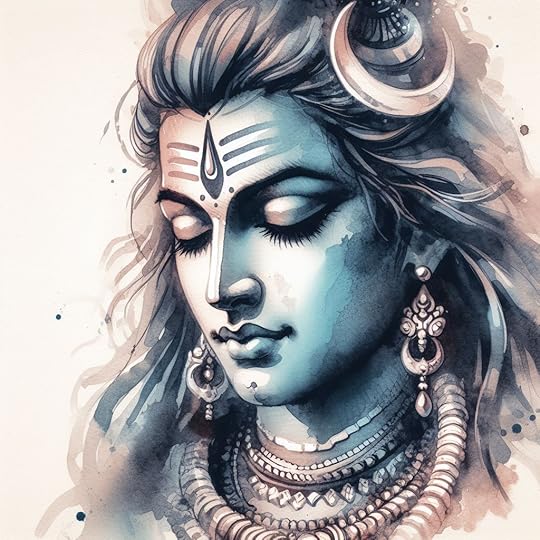
there's no dawn.' Meditative, deeply personal poems to the god Siva, from four major Hindu saints. Introducing Little Black 80 books for Penguin's 80th birthday. Little Black Classics celebrate the huge range and diversity of Penguin Classics, with books from around the world and across many centuries. They take us from a balloon ride over Victorian London to a garden of blossom in Japan, from Tierra del Fuego to 16th-century California and the Russian steppe. Here are stories lyrical and savage; poems epic and intimate; essays satirical and inspirational; and ideas that have shaped the lives of millions. Mahadeviyakka (10th century), Basavaa, Devara Dasimayya and Allama Prabhu (12th century).
there's no dawn.' Meditative, deeply personal poems to the god Siva, from four major Hindu saints. Introducing Little Black 80 books for Penguin's 80th birthday. Little Black Classics celebrate the huge range and diversity of Penguin Classics, with books from around the world and across many centuries. They take us from a balloon ride over Victorian London to a garden of blossom in Japan, from Tierra del Fuego to 16th-century California and the Russian steppe. Here are stories lyrical and savage; poems epic and intimate; essays satirical and inspirational; and ideas that have shaped the lives of millions. Mahadeviyakka (10th century), Basavaa, Devara Dasimayya and Allama Prabhu (12th century).
59 pages, Kindle Edition
First published January 1, 2015
About the author
A.K. Ramanujan
50 books103 followersRamanujan was an Indian poet, scholar and author, a philologist, folklorist, translator, poet and playwright. His academic research ranged across five languages: Tamil, Kannada, Telugu, Sanskrit, and English. He published works on both classical and modern variants of these literature and also argued strongly for giving local, non-standard dialects their due.
He was called "Indo-Anglian harbingers of literary modernism". Several disciplinary areas are enriched with A.K.Ramanujan`s aesthetic and theoretical contributions. His free thinking context and his individuality which he attributes to Euro-American culture gives rise to the "universal testaments of law". A classical kind of context-sensitive theme is also found in his cultural essays especially in his writings about Indian folklore and classic poetry. He worked for non-Sanskritic Indian literature and his popular work in sociolinguistics and literature unfolds his creativity in the most striking way. English Poetry most popularly knows him for his advance guard approach.
He was called "Indo-Anglian harbingers of literary modernism". Several disciplinary areas are enriched with A.K.Ramanujan`s aesthetic and theoretical contributions. His free thinking context and his individuality which he attributes to Euro-American culture gives rise to the "universal testaments of law". A classical kind of context-sensitive theme is also found in his cultural essays especially in his writings about Indian folklore and classic poetry. He worked for non-Sanskritic Indian literature and his popular work in sociolinguistics and literature unfolds his creativity in the most striking way. English Poetry most popularly knows him for his advance guard approach.
Ratings & Reviews
Friends & Following
Create a free account to discover what your friends think of this book!
Community Reviews
Displaying 1 - 30 of 104 reviews

September 6, 2016
I like some of the poems in here but after a while the edition grew very stale. It’s devotional to a fault. I don’t mind religious allegory in poems, far from it, but too much of it and even I grow bored.
The first saint begins with lamenting the meaning of life. The speaker is completely lost; he has no meaning to consider or goal to achieve. He just floats through life with no real purpose. Is this a vision of all life? An endless quest for something more, something that never delivers. There are strong elements of self-depreciation. This didn’t feel like a universal message but one man’s woe and dissatisfaction at life. Worthlessness, helplessness and frailness are what his voice evokes. He wants direction and purpose not silence form his god. In this he displays one of the hardest challenges for a man of faith. How long can one continue in devotion and be met with silence? How long can one continue to believe without proof? How long can man wait in the dark?
The second saint answers these questions. If man cannot accept that he is not alone, and that he has god at his side, then he becomes an endless roamer. For the saint, man needs to give himself over to a greater power. It’s a strong message, one told without the stylistic qualities of effective poetry. I tis is simple to a fault. I suppose the poet wanted to make the argument bare and raw, though it lacks any real power and emotion.
"What does it matter
If the fox roams
All over the Jambu island?
Will he ever stand amazed
In meditation of the Lord?
Does it matter if he wanders
All over the globe
And bathes in a million sacred rivers?"
Okay so there’s some extended metaphor, but I can’t connect to the poem. Perhaps because my sceptical nature depreciates the didactic stance here, one can appreciate nature without walking with god. Look at the Romantics, look at Shelley. The third saint goes on to explain how god is in everything; he is in love and he is in sex: he is the essence of life. The fourth brings out more of the same sentimentality. By this point I’d grown very tired. I was glad to finish it.
Penguin Little Black Classic- 79
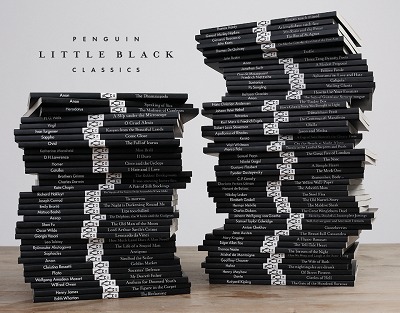
The Little Black Classic Collection by penguin looks like it contains lots of hidden gems. I couldn’t help it; they looked so good that I went and bought them all. I shall post a short review after reading each one. No doubt it will take me several months to get through all of them! Hopefully I will find some classic authors, from across the ages, that I may not have come across had I not bought this collection.
The first saint begins with lamenting the meaning of life. The speaker is completely lost; he has no meaning to consider or goal to achieve. He just floats through life with no real purpose. Is this a vision of all life? An endless quest for something more, something that never delivers. There are strong elements of self-depreciation. This didn’t feel like a universal message but one man’s woe and dissatisfaction at life. Worthlessness, helplessness and frailness are what his voice evokes. He wants direction and purpose not silence form his god. In this he displays one of the hardest challenges for a man of faith. How long can one continue in devotion and be met with silence? How long can one continue to believe without proof? How long can man wait in the dark?
The second saint answers these questions. If man cannot accept that he is not alone, and that he has god at his side, then he becomes an endless roamer. For the saint, man needs to give himself over to a greater power. It’s a strong message, one told without the stylistic qualities of effective poetry. I tis is simple to a fault. I suppose the poet wanted to make the argument bare and raw, though it lacks any real power and emotion.
"What does it matter
If the fox roams
All over the Jambu island?
Will he ever stand amazed
In meditation of the Lord?
Does it matter if he wanders
All over the globe
And bathes in a million sacred rivers?"
Okay so there’s some extended metaphor, but I can’t connect to the poem. Perhaps because my sceptical nature depreciates the didactic stance here, one can appreciate nature without walking with god. Look at the Romantics, look at Shelley. The third saint goes on to explain how god is in everything; he is in love and he is in sex: he is the essence of life. The fourth brings out more of the same sentimentality. By this point I’d grown very tired. I was glad to finish it.
Penguin Little Black Classic- 79
The Little Black Classic Collection by penguin looks like it contains lots of hidden gems. I couldn’t help it; they looked so good that I went and bought them all. I shall post a short review after reading each one. No doubt it will take me several months to get through all of them! Hopefully I will find some classic authors, from across the ages, that I may not have come across had I not bought this collection.

July 25, 2015
A pilgrim who's not one with you,
Ramanatha,
roams the world
like a circus man.
(Devara Dasimayya)
It is hard to make a judgement on poetry when language is very simple and the idiom highly symbolic, and when the past is unfamiliar to the modern reader like a foreign country. But we get into a foreign country, try to understand it, learn about it, and there comes a time when a lot of things that initially confused us start making sense.
But enough of the abstruse. The problem is simple: four medieval poets squeezed into a small volume that is perhaps suited to sample only one of them. It is not possible to get a half decent idea of the philosophical thought and aesthetic sensibilities they represented, especially when I did not come across anything that guaranteed the veracity of translations. All I could figure out was that these are devotional poems in praise of Lord Shiva. The purpose is but one: to praise God and to express our love for Him.
Mahadeviyakka (1130-1160), a female poet of the unitarian Bhakti movement of medieval India impressed me most. The movement took momentum about the same time as Sufism was taking root in northwestern and central India, which may account for the striking similarities of language and imagery in Bhakti poems and Sufi lyrics. This mutual influence was later symbolised in Kabir's eclecticism.
Here are two vachanas (impromptu poems meant for singing) of Mahadeviyakka that have come down to us. The first makes a point about the worthlessness of mundane existence and the second one resembles in its thought to wahdat al-wujood (Unity of Being) in basic Sufi doctrine.
"Why do I need this dummy
of a dying world
illusion's chamberpot,
hasty passions' whorehouse,
this crackpot
and leaky basement?
Finger may squeeze the fig
to feel it, yet not choose
to eat it.
Take me, flaws and all,
O Lord
white as jasmine."
----------
"When I didn't know myself
where were you?
Like the colour in the gold,
you were in me.
I saw in you,
lord white as jasmine,
the paradox of your being
in me
without showing a limb."
The selection is culled from a bigger Penguin anthology of the same name. I plan to read it some time soon to get a better understanding of our four poets.
I am giving it three stars because I don't know how else to rate it. Those stars are for the poems not this particular booklet.
January 2016.
Ramanatha,
roams the world
like a circus man.
(Devara Dasimayya)
It is hard to make a judgement on poetry when language is very simple and the idiom highly symbolic, and when the past is unfamiliar to the modern reader like a foreign country. But we get into a foreign country, try to understand it, learn about it, and there comes a time when a lot of things that initially confused us start making sense.
But enough of the abstruse. The problem is simple: four medieval poets squeezed into a small volume that is perhaps suited to sample only one of them. It is not possible to get a half decent idea of the philosophical thought and aesthetic sensibilities they represented, especially when I did not come across anything that guaranteed the veracity of translations. All I could figure out was that these are devotional poems in praise of Lord Shiva. The purpose is but one: to praise God and to express our love for Him.
Mahadeviyakka (1130-1160), a female poet of the unitarian Bhakti movement of medieval India impressed me most. The movement took momentum about the same time as Sufism was taking root in northwestern and central India, which may account for the striking similarities of language and imagery in Bhakti poems and Sufi lyrics. This mutual influence was later symbolised in Kabir's eclecticism.
Here are two vachanas (impromptu poems meant for singing) of Mahadeviyakka that have come down to us. The first makes a point about the worthlessness of mundane existence and the second one resembles in its thought to wahdat al-wujood (Unity of Being) in basic Sufi doctrine.
"Why do I need this dummy
of a dying world
illusion's chamberpot,
hasty passions' whorehouse,
this crackpot
and leaky basement?
Finger may squeeze the fig
to feel it, yet not choose
to eat it.
Take me, flaws and all,
O Lord
white as jasmine."
----------
"When I didn't know myself
where were you?
Like the colour in the gold,
you were in me.
I saw in you,
lord white as jasmine,
the paradox of your being
in me
without showing a limb."
The selection is culled from a bigger Penguin anthology of the same name. I plan to read it some time soon to get a better understanding of our four poets.
I am giving it three stars because I don't know how else to rate it. Those stars are for the poems not this particular booklet.
January 2016.

January 19, 2018
This was one of those Little Black Classics where at least the tiniest amount of background information would have been of immense help. Instead, you have to do the research on your own. Speaking of Śiva is a selection of vacanas (free-verse sayings) from the Veerashaiva movement, dedicated to Śiva, the supreme god.
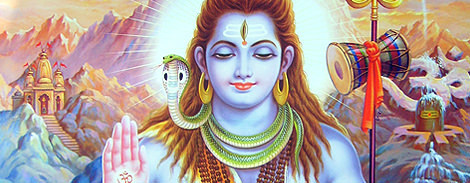
So this book features writing by four major saints who lived between the 10th and the 12th century. The poems are intense in their devotion and I found them very difficult to understand without fully grasping what kind of belief system provides the background.
"O lord white as jasmine
if an ant should love you
and praise you,
will he not grow
to demon powers?"
The idea behind vacanas, this specific form of poetry, is beautiful. Literally translated it means "what is said" and they disregard all kinds of stylistic devices to embrace a pure and intuitive approach allowing them to speak from the heart directly. They were also considered counter-culture in their period of time, with the poets questioning gender for example:
"Suppose you cut a tall bamboo in two;
make the bottom piece a woman,
the headpiece a man;
rub them together till they kindle:
tell me now,
the fire that's born,
is it male or female,
O Rāmanātha?"
It's a shame, because there definitely is a lot to them, but this Little Black Classic just throws the phrases in your face without giving you any context and for somebody who isn't schooled on the subject of Hinduism, there was little to nothing I could take away from this book on its own. Turns out it's derived from a more extensive volume with the same name, which does feature introductions and explanations, so it'll most likely serve as a much more appropriate starting point.
In 2015 Penguin introduced the Little Black Classics series to celebrate Penguin's 80th birthday. Including little stories from "around the world and across many centuries" as the publisher describes, I have been intrigued to read those for a long time, before finally having started. I hope to sooner or later read and review all of them!
So this book features writing by four major saints who lived between the 10th and the 12th century. The poems are intense in their devotion and I found them very difficult to understand without fully grasping what kind of belief system provides the background.
"O lord white as jasmine
if an ant should love you
and praise you,
will he not grow
to demon powers?"
The idea behind vacanas, this specific form of poetry, is beautiful. Literally translated it means "what is said" and they disregard all kinds of stylistic devices to embrace a pure and intuitive approach allowing them to speak from the heart directly. They were also considered counter-culture in their period of time, with the poets questioning gender for example:
"Suppose you cut a tall bamboo in two;
make the bottom piece a woman,
the headpiece a man;
rub them together till they kindle:
tell me now,
the fire that's born,
is it male or female,
O Rāmanātha?"
It's a shame, because there definitely is a lot to them, but this Little Black Classic just throws the phrases in your face without giving you any context and for somebody who isn't schooled on the subject of Hinduism, there was little to nothing I could take away from this book on its own. Turns out it's derived from a more extensive volume with the same name, which does feature introductions and explanations, so it'll most likely serve as a much more appropriate starting point.
In 2015 Penguin introduced the Little Black Classics series to celebrate Penguin's 80th birthday. Including little stories from "around the world and across many centuries" as the publisher describes, I have been intrigued to read those for a long time, before finally having started. I hope to sooner or later read and review all of them!

June 8, 2020
The rich
will make temples for Siva.
What shall I,
a poor man,
do?
My legs are pillars,
the body the shrine,
the head a cupola
of gold.
Listen, O Lord of the meeting rivers,
things standing shall fall,
but the moving ever shall stay.
***
Suppose you cut a tall bamboo
in two;
make the bottom piece a woman,
the headpiece a man;
rub them together
till they kindle:
tell me now,
the life that's born,
is it male or female,
O Ramanatha?
***
When I didn't know myself
where were you?
Like the colour in the gold,
you were in me.
I saw in you,
lord white as jasmine,
the paradox of your being
in me
without showing a limb.
***
If mountains shiver in the cold
with what
will they wrap them?
If space goes naked
with what
shall they clothe it?
If the lord's men became worldlings
where will I find the metaphor,
O Lord of Caves.
***
Who can know green grass flames
seeds of stone
reflections of water
smell of the wind
the sap of fire
the taste of sunshine on the tongue
and the lights in oneself
except your men?
will make temples for Siva.
What shall I,
a poor man,
do?
My legs are pillars,
the body the shrine,
the head a cupola
of gold.
Listen, O Lord of the meeting rivers,
things standing shall fall,
but the moving ever shall stay.
***
Suppose you cut a tall bamboo
in two;
make the bottom piece a woman,
the headpiece a man;
rub them together
till they kindle:
tell me now,
the life that's born,
is it male or female,
O Ramanatha?
***
When I didn't know myself
where were you?
Like the colour in the gold,
you were in me.
I saw in you,
lord white as jasmine,
the paradox of your being
in me
without showing a limb.
***
If mountains shiver in the cold
with what
will they wrap them?
If space goes naked
with what
shall they clothe it?
If the lord's men became worldlings
where will I find the metaphor,
O Lord of Caves.
***
Who can know green grass flames
seeds of stone
reflections of water
smell of the wind
the sap of fire
the taste of sunshine on the tongue
and the lights in oneself
except your men?

November 28, 2018
These are small devotional poems written by four saints, dedicated to the god Siva. I didn’t find this out from Penguin; I had to do some digging on my own to help me better understand the verses Penguin so rudely launched at me without explanation.
The poems themselves felt very emotive and lyrical, yet heavy in their religious piety. There was something quite disengaging and sour about them which I couldn’t quite comprehend.
Call it a lack of context, or a personal distaste for poetry, but these Little Black Classics are completely grating on me now. This was number 79; almost there.
The poems themselves felt very emotive and lyrical, yet heavy in their religious piety. There was something quite disengaging and sour about them which I couldn’t quite comprehend.
Call it a lack of context, or a personal distaste for poetry, but these Little Black Classics are completely grating on me now. This was number 79; almost there.


November 23, 2019
I am sure that a lot was lost here in translation, and on top of that the poetry was very religious in theme. This is something I never really like in the first place, but it also became slightly boring even in this short collection of poems.
I think this was not for me.
~Little Black Classics #79~
Find this and other reviews on my blog https://www.urlphantomhive.com
I think this was not for me.
~Little Black Classics #79~
Find this and other reviews on my blog https://www.urlphantomhive.com

January 31, 2017
THE PENULTIMATE EDITION OF THE LITTLE BLACK CLASSICS
One more to go before the original 80 are done and dusted. Now this one is a bit of a stinker...
I really wanted to like this, but it doesn't work, this is a translation that does not gell, it's stale.
Re-write please.
One more to go before the original 80 are done and dusted. Now this one is a bit of a stinker...
I really wanted to like this, but it doesn't work, this is a translation that does not gell, it's stale.
Re-write please.
July 2, 2023
“When I didn't know myself
where were you?
Like the colour in the gold,
you were in me.
I saw in you,
lord white as jasmine,
the paradox of your being
in me
without showing a limb.”
where were you?
Like the colour in the gold,
you were in me.
I saw in you,
lord white as jasmine,
the paradox of your being
in me
without showing a limb.”

February 3, 2019
Mistica purissima, super appagante.
July 22, 2024
How can the unwounded know the pain of the wounded?

December 30, 2020
Look here, dear fellow;
I wear these men's clothes
only for you.
Sometimes I am man,
Sometimes I am woman.
O lord of the meeting rivers
I'll make wars for you
but I'll be your devotees's bride.
#
When I read this work, such gems of poetry from my homeland, it fills me with an unparallel joy of the rainbow pride.
I wear these men's clothes
only for you.
Sometimes I am man,
Sometimes I am woman.
O lord of the meeting rivers
I'll make wars for you
but I'll be your devotees's bride.
#
When I read this work, such gems of poetry from my homeland, it fills me with an unparallel joy of the rainbow pride.

February 18, 2025
Hands down this is one of the most beautifully crafted pieces of poetry written about Lord Shiva. The poems felt so soothing to read as it has such a smooth flow to it. There were some indirect sexual references but overall it felt so mystical, devotional, reverent and lyrical
Here are some of the lines that i loved:
Basavanna:
“How can I tell you anything
when it is risen high
over my head
lord lord
listen to my cries”
“Why, why did you bring me to birth,
wretch in this world,
exile from the other”
“Love of money is relentless”
“My legs are pillars,
the body the shrine,
the head a cupola
of gold”
“Things standing shall fall,
but the moving ever shall stay”
Devara dasimayya:
“the world its life,
the wind its pillar,
arranged the lotus and the moon,
and covered it all with folds
of sky”
“A piligrim who’s not one with you,
Ramanatha,
roams the world
like a circus man”
“his front yard
is the true Benares”
“Suppose you cut a tall bamboo in two;
make the bottom piece a woman, the headpiece a man; rub them together till they kindle:
tell me now,
the fire that's born, is it male or female,
O Ramanatha?”
Mahadeviyakka:
“Illusion has troubled body as shadow
troubled life as a heart
troubled heart as a memory
troubled memory as awareness.”
“How can the unwounded
know the pain
of the wounded?”
Here are some of the lines that i loved:
Basavanna:
“How can I tell you anything
when it is risen high
over my head
lord lord
listen to my cries”
“Why, why did you bring me to birth,
wretch in this world,
exile from the other”
“Love of money is relentless”
“My legs are pillars,
the body the shrine,
the head a cupola
of gold”
“Things standing shall fall,
but the moving ever shall stay”
Devara dasimayya:
“the world its life,
the wind its pillar,
arranged the lotus and the moon,
and covered it all with folds
of sky”
“A piligrim who’s not one with you,
Ramanatha,
roams the world
like a circus man”
“his front yard
is the true Benares”
“Suppose you cut a tall bamboo in two;
make the bottom piece a woman, the headpiece a man; rub them together till they kindle:
tell me now,
the fire that's born, is it male or female,
O Ramanatha?”
Mahadeviyakka:
“Illusion has troubled body as shadow
troubled life as a heart
troubled heart as a memory
troubled memory as awareness.”
“How can the unwounded
know the pain
of the wounded?”
This entire review has been hidden because of spoilers.
Read
August 2, 2022I feel like I would do well to learn more about the general topic before properly giving any fully formed opinion, but that being said the poetry itself was nice, there was some cool imagery, etc.; yet in the edition itself it felt as though there was something that should be there - something that would probably usually come in the form of an introduction, but I suppose it being one of those small editions, they couldn't really do that.
February 2, 2022
First time reading Hindu poetry, it was good.
January 3, 2024
poetry about sex riddles? yes please

December 29, 2024
Weird and interesting, which is how I often feel about devotional mystic writing

May 29, 2019
'Four medieval Hindu saints approach sex and death through riddle and enigma in this mystical, devotional poetry.'
Basavanna
Basava, a Kanna Brahmin shaivite, is a 12th-century philosopher. In this piece, he expresses his vanquished sense of belonging. He begs Siva to bind him as a slave so he will not have to merge with the world he views as despicable and degenerate. (Nauseating read)
Devara Dasimaiyya
Devar Dasimaiyya, a 11th-century Kannada poet, dedicates his Vachanas to Ramanatha, i.e. Rama's god Siva. In this piece, he talks about the beauty of creation. He talks about revering the fire that created all that is reality and talks about the fire in humans who procreate. (Amusing read)
Mahadeviyakka
Akka Mahadevi, a 12th-century Kannada poet, views Para Siva as her husband, which is known to be the 'madhurya' form of devotion. In this piece, she claims that of all illusions, Para Siva's illusion is the inescapable one. After realizing Para Siva, her frustration with domestic life drives her to love him with a furious passion and finds comfort in it. (Delusional read)
Allama Prabhu
Allama Prabhu, a 12th-century Kannada poet, alludes to Siva as Guheshvara (lord of caves) as he is believed to reside in the cave of every one's heart. He talks about the insignificant deaths of those who do not acquaint themselves with the glory of Siva. He prays to his Lord to give meaning to his death, as he seeks for the light in the darkness. (Uninspiring read)
Basavanna
Basava, a Kanna Brahmin shaivite, is a 12th-century philosopher. In this piece, he expresses his vanquished sense of belonging. He begs Siva to bind him as a slave so he will not have to merge with the world he views as despicable and degenerate. (Nauseating read)
Devara Dasimaiyya
Devar Dasimaiyya, a 11th-century Kannada poet, dedicates his Vachanas to Ramanatha, i.e. Rama's god Siva. In this piece, he talks about the beauty of creation. He talks about revering the fire that created all that is reality and talks about the fire in humans who procreate. (Amusing read)
Mahadeviyakka
Akka Mahadevi, a 12th-century Kannada poet, views Para Siva as her husband, which is known to be the 'madhurya' form of devotion. In this piece, she claims that of all illusions, Para Siva's illusion is the inescapable one. After realizing Para Siva, her frustration with domestic life drives her to love him with a furious passion and finds comfort in it. (Delusional read)
Allama Prabhu
Allama Prabhu, a 12th-century Kannada poet, alludes to Siva as Guheshvara (lord of caves) as he is believed to reside in the cave of every one's heart. He talks about the insignificant deaths of those who do not acquaint themselves with the glory of Siva. He prays to his Lord to give meaning to his death, as he seeks for the light in the darkness. (Uninspiring read)

December 28, 2015
Muy hermoso. Me vuela la cabeza pensar en estar leyendo cosas tan bellas hechas en el siglo X.
Destaqué muchos poemas bonitos sobre mortalidad, riqueza, pobreza y sexualidad, entre mis favoritos está este del poemario Basavanna:
The rich
will make temples for Siva.
What shall I,
a poor man,
do?
My legs are pillars,
the body the shrine,
the head a cupola
of gold.
Listen, O lord of the meeting rivers,
things standing shall fall,
but the morning ever shall stay.
Destaqué muchos poemas bonitos sobre mortalidad, riqueza, pobreza y sexualidad, entre mis favoritos está este del poemario Basavanna:
The rich
will make temples for Siva.
What shall I,
a poor man,
do?
My legs are pillars,
the body the shrine,
the head a cupola
of gold.
Listen, O lord of the meeting rivers,
things standing shall fall,
but the morning ever shall stay.

May 31, 2016
It's difficult to judge poetry in general and when the poetry is so culturally different it's even harder.

May 18, 2018
Tell me, lord,
don't you have one more
little tree or plant
made just for me?
-Basavanna
don't you have one more
little tree or plant
made just for me?
-Basavanna

February 22, 2022
Śiva, literally 'The Auspicious One', Shiva, the Destroyer (of Evil), Hindu god of Death and Time. One of the Trimurti or trinity with Brahma, the Creator, and Vishnu, the Preserver. These poems are to you.
Basavaņņa (colloquial for Basava or Basaveshwara), whose appellation of Śiva is 'lord of the meeting rivers', writes from a physicality embodying spiritualism, in his devotion to Śiva. Almost extended haiku, yet without their condensed power, perhaps these tiny poems are too short for our sophisticated Western twenty-first century minds, which have been exposed to the beauty of Wordsworth's 'Tintern Abbey' (1798). When you think of the haiku of Bashō (late 17th C.), which swell with evocative imagery, Basavaņņa's short poems seem not to have the structure nor the condensed imagery of the later poet's dense form.
Dēvara Dāsimayya, who refers to Śiva as Rāmanātha (which etymology is uncertain?), writes similar short pieces, but fills them with the universe, with the elemental stuff that makes up all things in the primitive spiritual alchemy of the early Vedic religions of India (1500-900 BCE). We feel the power of the god in his poems, since they physicalise the god's rather than the poet's presence, and question the appellations of 'man' and 'woman' in relation to Self. They are, then, a step up in scale of Basavaņņa's work.
Mahādēviyakka (Akka Mahadevi) pictorialises this scale (the ant to the god, 'You're like milk', p.27), but at the same time conjures the sense of disembodied wonder, a sense of the world being some vast dream, that dream woven by the god of Illusion, turning Dāsimayya's universal presence into an atomised omnipresence, pervading, being, all things at once. This becomes something greater, something cosmic, powerfully expressed in 'It was like a stream' (p.29), subtly evoked in 'the colour in the gold' ('When I didn't know myself', p.30), and evoked through Śakti (Shakti) ('Locks of shining red hair', p.31), the primordial cosmic energy, the dynamic forces that move through the universe. Thus Mahādēviyakka both disembodies Śiva while alluding to him as her husband, in the 'madhura bhava' devotional terms in the later series of poems given here.
Allama Prabhu, who refers to Śiva as 'Lord of Caves', uses synaesthesia ('I saw: heart conceive', p.43; 'Who can know green grass flames', p.50) to create the paradox of experience of Śiva's presence, pulling the mountains into a cloak, clothing space, tasting the dazzle of diamonds, smelling pearls. Prabhu then particularises the manifestations of the god at the human and terrestrial scale through a mixed-sense perception and use of oxymoronic metaphor ('If it rains fire', p.49).
Basavaņņa, Allama Prabhu and Mahādēviyakka were mystic saints and poets of Kannada literature of the 12th century southwestern Indian region of Karnataka, Dēvara Dāsimayya a little earlier. As you progress through these short poems, a sense of being greater than oneself emerges through a growing universalisation of the god Śiva, culminating in a cosmic force present in every image and perception. My favourite are those of Mahādēviyakka, who expresses the sense of Śiva as something all-pervading, regal and metaphorically wedded to the poet, each a part of the other, both physical beings, while part of the unimaginably vast cosmos. Her imagery ties in with my sense of needing a physical manifestation of such an ineffable force and presence, and the essence (as of Buddhism) of the oneness of the god's presence, holding up creation. I also felt that Allama Prabhu's synaesthetic metaphors also expressed this essential dichotomy.
Again, while these poems did not transport me into the glories of love and wonder of Nature which, for example, Wordsworth's 'Tintern Abbey' did, nor blew my aesthetic mind with their structural perfection, as Dylan Thomas's incomparable villanelle 'Do not go gentle into that good night' (1947) must, or Shakespeare's Sonnet 116 ('Let me not to the marriage of true minds', 1609) always does, or Bashō's haiku (1690s), or Wang Wei's spiritual songs (760), all being structurally loose, they did expose me to a sense of wonder for a deity who has always, in the Trimurti, interested me since a child. There is both something exotic in the wonder of such a religion, and something essentially one with all of the other major religions - yet the Hindu pantheon is certainly the most colourful, as many of these poems spoke, some wonderfully.
I shall pursue Indian poetry further as a result.
Basavaņņa (colloquial for Basava or Basaveshwara), whose appellation of Śiva is 'lord of the meeting rivers', writes from a physicality embodying spiritualism, in his devotion to Śiva. Almost extended haiku, yet without their condensed power, perhaps these tiny poems are too short for our sophisticated Western twenty-first century minds, which have been exposed to the beauty of Wordsworth's 'Tintern Abbey' (1798). When you think of the haiku of Bashō (late 17th C.), which swell with evocative imagery, Basavaņņa's short poems seem not to have the structure nor the condensed imagery of the later poet's dense form.
Dēvara Dāsimayya, who refers to Śiva as Rāmanātha (which etymology is uncertain?), writes similar short pieces, but fills them with the universe, with the elemental stuff that makes up all things in the primitive spiritual alchemy of the early Vedic religions of India (1500-900 BCE). We feel the power of the god in his poems, since they physicalise the god's rather than the poet's presence, and question the appellations of 'man' and 'woman' in relation to Self. They are, then, a step up in scale of Basavaņņa's work.
Mahādēviyakka (Akka Mahadevi) pictorialises this scale (the ant to the god, 'You're like milk', p.27), but at the same time conjures the sense of disembodied wonder, a sense of the world being some vast dream, that dream woven by the god of Illusion, turning Dāsimayya's universal presence into an atomised omnipresence, pervading, being, all things at once. This becomes something greater, something cosmic, powerfully expressed in 'It was like a stream' (p.29), subtly evoked in 'the colour in the gold' ('When I didn't know myself', p.30), and evoked through Śakti (Shakti) ('Locks of shining red hair', p.31), the primordial cosmic energy, the dynamic forces that move through the universe. Thus Mahādēviyakka both disembodies Śiva while alluding to him as her husband, in the 'madhura bhava' devotional terms in the later series of poems given here.
Allama Prabhu, who refers to Śiva as 'Lord of Caves', uses synaesthesia ('I saw: heart conceive', p.43; 'Who can know green grass flames', p.50) to create the paradox of experience of Śiva's presence, pulling the mountains into a cloak, clothing space, tasting the dazzle of diamonds, smelling pearls. Prabhu then particularises the manifestations of the god at the human and terrestrial scale through a mixed-sense perception and use of oxymoronic metaphor ('If it rains fire', p.49).
Basavaņņa, Allama Prabhu and Mahādēviyakka were mystic saints and poets of Kannada literature of the 12th century southwestern Indian region of Karnataka, Dēvara Dāsimayya a little earlier. As you progress through these short poems, a sense of being greater than oneself emerges through a growing universalisation of the god Śiva, culminating in a cosmic force present in every image and perception. My favourite are those of Mahādēviyakka, who expresses the sense of Śiva as something all-pervading, regal and metaphorically wedded to the poet, each a part of the other, both physical beings, while part of the unimaginably vast cosmos. Her imagery ties in with my sense of needing a physical manifestation of such an ineffable force and presence, and the essence (as of Buddhism) of the oneness of the god's presence, holding up creation. I also felt that Allama Prabhu's synaesthetic metaphors also expressed this essential dichotomy.
Again, while these poems did not transport me into the glories of love and wonder of Nature which, for example, Wordsworth's 'Tintern Abbey' did, nor blew my aesthetic mind with their structural perfection, as Dylan Thomas's incomparable villanelle 'Do not go gentle into that good night' (1947) must, or Shakespeare's Sonnet 116 ('Let me not to the marriage of true minds', 1609) always does, or Bashō's haiku (1690s), or Wang Wei's spiritual songs (760), all being structurally loose, they did expose me to a sense of wonder for a deity who has always, in the Trimurti, interested me since a child. There is both something exotic in the wonder of such a religion, and something essentially one with all of the other major religions - yet the Hindu pantheon is certainly the most colourful, as many of these poems spoke, some wonderfully.
I shall pursue Indian poetry further as a result.

November 19, 2017
Speaking of Siva is a collection of poems by A.K.Ramanujan called Vacana.
Vacana is an active approach, stands in opposition to both the Sruti (which is heard) and the Smrti (which is remembered). He mentions that heart of vacana is devotion to God (hear a particular form of God: Siva).
.
.
Does it matter how long
A rock soaks in the water;
Will it ever grow soft?
Does it matter how long
I’ve spent in worship,
When the heart is fickle?
Futile as a ghost
I stand guard over hidden gold,
O lord of the meeting rivers...
A snake-charmer and his noseless wife,
Snake in hand, walk carefully
Trying to read omens
For a son’s wedding
But they meet head-on
A noseless woman
And her snake-charming husband,
And cry “The omens are bad!”
His own wife has no nose;
There’s a snake in his hand.
What shall I call such fools
Who do not know themselves,
And see only the others?
O lord of the meeting rivers...
.
.
We all in one way or another believe in something or worship something. It might be funny sometimes for us to see what others believe or worship but if we try deep to understand the reason behind of what made people believe or/and worship we end up respecting them, if does not require to accept what others do but it is very important to respect it. Not all of us can give to whoever we love or care perfect or the most expensive stuff, the method of each person of showing their love is different and varies but it does lower the level or the capacity of the amount of love that they have and that goes same with worshiping. If we look at a rich and a poor man who worship one God, we see that a rich man can afford to feed thousands of people but the poor man might not be able to feed his family in a decent way but the value and the strength or their worship might be same.
Vacana is an active approach, stands in opposition to both the Sruti (which is heard) and the Smrti (which is remembered). He mentions that heart of vacana is devotion to God (hear a particular form of God: Siva).
.
.
Does it matter how long
A rock soaks in the water;
Will it ever grow soft?
Does it matter how long
I’ve spent in worship,
When the heart is fickle?
Futile as a ghost
I stand guard over hidden gold,
O lord of the meeting rivers...
A snake-charmer and his noseless wife,
Snake in hand, walk carefully
Trying to read omens
For a son’s wedding
But they meet head-on
A noseless woman
And her snake-charming husband,
And cry “The omens are bad!”
His own wife has no nose;
There’s a snake in his hand.
What shall I call such fools
Who do not know themselves,
And see only the others?
O lord of the meeting rivers...
.
.
We all in one way or another believe in something or worship something. It might be funny sometimes for us to see what others believe or worship but if we try deep to understand the reason behind of what made people believe or/and worship we end up respecting them, if does not require to accept what others do but it is very important to respect it. Not all of us can give to whoever we love or care perfect or the most expensive stuff, the method of each person of showing their love is different and varies but it does lower the level or the capacity of the amount of love that they have and that goes same with worshiping. If we look at a rich and a poor man who worship one God, we see that a rich man can afford to feed thousands of people but the poor man might not be able to feed his family in a decent way but the value and the strength or their worship might be same.

May 11, 2024
Based on the divine poetry or vaachanas of saints of the Virashaiva tradition, Basavanna, Dasimayya, Allamaprabhu and Mahadeviakka whose poetry runs across their divine experience and emotions ranging from bhakta phase to Maheshvara, prasadi, pranalingi, sarana and finally aikya
Gods gods there are so many there’s no place left for a foot
There is only one god . He is our Lord of the meeting rivers (Basavanna)
They plunge wherever they see water
They circumambulate every tree they see
How can they know you O Lord
Who adores waters that run dry and trees that wither ( Basavanna)
The Lord of the meeting rivers Kudalasangama becomes his chosen god l, every vacana by him bears this in his signature line
Will he ever stand amazed in meditation of the Lord
Does it matter if he wanders all over the globe and bathes in a million sacred rivers
A pilgrim who is not one with you Ramanatha
Roams the world like a circus man ( Dasimayya)
Every vachana by him is dedicated to Ramanatha, Siva worshipped by Rama or one who is Ramas Lord
You are the forest you are the green trees in the forest
You are the bird and beast playing in and out of all the trees
O Lord as white as jasmine filling and filled by all
Why don’t you show me your face ( Mahadeviakka)
Here Mahadeviakka addresses the firm of Siva of her birthplace at Shimoga as Mallikarjuna translated as Lord white as jasmine or Arjuna Lord of goddess Mallika . She falls in love with Cennamallikarjuna and took his name for a signature in all her vacanas
Gods gods there are so many there’s no place left for a foot
There is only one god . He is our Lord of the meeting rivers (Basavanna)
They plunge wherever they see water
They circumambulate every tree they see
How can they know you O Lord
Who adores waters that run dry and trees that wither ( Basavanna)
The Lord of the meeting rivers Kudalasangama becomes his chosen god l, every vacana by him bears this in his signature line
Will he ever stand amazed in meditation of the Lord
Does it matter if he wanders all over the globe and bathes in a million sacred rivers
A pilgrim who is not one with you Ramanatha
Roams the world like a circus man ( Dasimayya)
Every vachana by him is dedicated to Ramanatha, Siva worshipped by Rama or one who is Ramas Lord
You are the forest you are the green trees in the forest
You are the bird and beast playing in and out of all the trees
O Lord as white as jasmine filling and filled by all
Why don’t you show me your face ( Mahadeviakka)
Here Mahadeviakka addresses the firm of Siva of her birthplace at Shimoga as Mallikarjuna translated as Lord white as jasmine or Arjuna Lord of goddess Mallika . She falls in love with Cennamallikarjuna and took his name for a signature in all her vacanas
May 17, 2024
EN: I recommend this book to any religious person! Even though, from a religious point of view, Hinduism and Christianity differ greatly, one can observe, through these poems, the deep inspiration that Hinduism received from Jewish merchants who traveled through India and beyond. The writings remind me both of the Psalms and the writings of St. Paul.
P.S. I have this opinion based on what Benjamin Walker said in "Hindu World". Christian writings (1st-5th centuries) are much older than Hindu ones (6th-10th centuries), and Hindu religious ideology has gradually changed over time, most likely drawing inspiration from other sources.*
RO: Recomand această carte oricărei persoane religioase! Chiar dacă, din punct de vedere religios, Hinduismul și Creștinismul diferă foarte mult, se poate observa, prin aceste poeme, inspirația adâncă pe care Hinduismul a primit-o de la evreii comercianți care au călătorit prin India și mai departe. Cele scrise îmi amintesc atât de Psalmii, cât și de cele scrise de către Sf. Apostol Petru.
P.S. Am această opinie pe baza celor spuse de Benjamin Walker în "Hindu World". Scrierile creștine (sec. I-V) sunt mult mai vechi decât cele hinduiste (sec. VI-X), iar ideologia religioasă hindusă s-a schimbat treptat în timp, inspirându-se cel mai probabil din alte surse.*
P.S. I have this opinion based on what Benjamin Walker said in "Hindu World". Christian writings (1st-5th centuries) are much older than Hindu ones (6th-10th centuries), and Hindu religious ideology has gradually changed over time, most likely drawing inspiration from other sources.*
RO: Recomand această carte oricărei persoane religioase! Chiar dacă, din punct de vedere religios, Hinduismul și Creștinismul diferă foarte mult, se poate observa, prin aceste poeme, inspirația adâncă pe care Hinduismul a primit-o de la evreii comercianți care au călătorit prin India și mai departe. Cele scrise îmi amintesc atât de Psalmii, cât și de cele scrise de către Sf. Apostol Petru.
P.S. Am această opinie pe baza celor spuse de Benjamin Walker în "Hindu World". Scrierile creștine (sec. I-V) sunt mult mai vechi decât cele hinduiste (sec. VI-X), iar ideologia religioasă hindusă s-a schimbat treptat în timp, inspirându-se cel mai probabil din alte surse.*
November 27, 2024
The two star is largely due to the way Penguin chose to present this work rather than for the content, form or style of the poems.
I feel I don’t have enough information to properly rate the four devotional poems included here, largely because Penguin chose not to provide any supplementary or contextual material, which feels essential when dealing with such short works. The poems are simple in language and image but clearly imbued with symbolism that without the vital context is lost resulting in an overall superficial ‘telling not showing’ read.
That said, I enjoyed the sense of duality woven throughout the poems, as well as the competing imagery from stanza to stanza, which created an almost frenzied confusion. This encouraged a rapid pace of reading that felt well-suited to the poems’ themes—part confusion, part an attempt to grasp the thoughts of the gods. I was particularly drawn to the reflections on gender, which conveyed a refreshing sense of positive curiosity.
I feel I don’t have enough information to properly rate the four devotional poems included here, largely because Penguin chose not to provide any supplementary or contextual material, which feels essential when dealing with such short works. The poems are simple in language and image but clearly imbued with symbolism that without the vital context is lost resulting in an overall superficial ‘telling not showing’ read.
That said, I enjoyed the sense of duality woven throughout the poems, as well as the competing imagery from stanza to stanza, which created an almost frenzied confusion. This encouraged a rapid pace of reading that felt well-suited to the poems’ themes—part confusion, part an attempt to grasp the thoughts of the gods. I was particularly drawn to the reflections on gender, which conveyed a refreshing sense of positive curiosity.

May 6, 2026
These short prayers devoted to Śiva were composed by four different saints. Allam Prabhu, Basavaṇṇa, and Mahādēviyakka lived in 12th-century Karnataka, while Dēvara Dāsimayya was born in Mudanuru in the mid-10th century. Each addresses Śiva through a different name: Lord of the Meeting Rivers, Rāmanāta, Lord white as jasmine, Lord of Caves. Through these many invocations, they celebrate the immense and paradoxical god who creates, protects, transforms, and destroys the universe. The poems are deeply poetic, filled with images drawn from nature and the elements, reflecting a religion that feels both intimate and beautiful. Reading them, I was struck by a profound sense of peace and serenity.
https://redheadwithabrain.ch/index.ph...
https://redheadwithabrain.ch/index.ph...

August 14, 2026
The low rating is for this particular collection, and not the content.
This collection features devotional poems from four Medieval Hindu saints, and as someone not very familiar with the religious context, I did not understand much of what the poems discussed.
As other reviews point out, a little introduction or context would have greatly helped and improved our understanding.
These poems are taken from a larger collection, which does feature the necessary context and explanations - so I am really keen to read that and understand more.
Really disappointed in the overall quality of the Penguin little classics - so much value could have been gained from a more careful curation.
This collection features devotional poems from four Medieval Hindu saints, and as someone not very familiar with the religious context, I did not understand much of what the poems discussed.
As other reviews point out, a little introduction or context would have greatly helped and improved our understanding.
These poems are taken from a larger collection, which does feature the necessary context and explanations - so I am really keen to read that and understand more.
Really disappointed in the overall quality of the Penguin little classics - so much value could have been gained from a more careful curation.
June 11, 2021
Some nice moments in the poems but they are far too centred on Hinduism and religion for me to find much worth in them. Unlike Taoist poems that reflect on nature and existence, these poems reflect only on worship and adoration to a god which lacks influence on me as a 21st century atheist. However, it is still a good insight into how hindus in history have seen life, transcendence and existence. It’s worth the read but don’t expect to be able to relate to it very much unless you’re an adherent of Hinduism.
Displaying 1 - 30 of 104 reviews