“Montalbán does for Barcelona what Chandler did for Los Angeles—he exposes the criminal power relationships beneath the façade of democracy.”—Guardian
When the son of a rich financier is murdered, Carvalho is called upon to investigate his mysterious death. In his quest for the killer, Carvalho has to infiltrate the world of Satanism and religious sects. Torn between two women—his on-off partner Charo and her eternal hesitations, and the enigmatic Yes, a lover from his youth, the professional and personal merge, and a devastating betrayal leaves Carvalho fighting for his life.
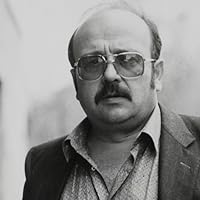
Manuel Vázquez Montalbán was born in Barcelona in 1939. He was a journalist, novelist, and creator of Pepe Carvalho, a fast-living, gourmet private detective. He died in October 2003.
Manuel Vázquez Montalbán was a prolific Spanish writer: journalist, novelist, poet, essayist, anthologue, prologist, humourist, critic, as well as a gastronome and a FC Barcelona supporter.
He studied Philosophy at Universidad Autònoma de Barcelona and was also a member of the Unified Socialist Party of Catalonia. For many years, he contributed columns and articles to the Madrid-based daily newspaper El País.
He died in Bangkok, Thailand, while returning to his home country from a speaking tour of Australia. His last book, La aznaridad, was published posthumously.
Πάνε πολλά χρόνια απ' την τελευταία φορά που είχα διαβάσει Μονταλμπάν (ίσως επειδή πολλά απ' τα βιβλία του έχουν πλέον εξαντληθεί). Από μια φιλική βιβλιοθήκη δανείστηκα αυτό, και η επιστροφή στον Πέπε Καρβάλιο, στον Μπισκουτέρ, στην Τσάρο, στη Βαρκελώνη, ήταν περίπου σαν την επιστροφή σε μιαν αγαπημένη πόλη, όπου έζησες για χρόνια. Άλλωστε και το βιβλίο ξεκινά με τον Καρβάλιο να επιστρέφει στην αγαπημένη του πόλη μετά από επτά χρόνια. Τα υπόλοιπα; Απολαυστικές επισημάνσεις για την πολιτική, τη θρησκεία, την οικονομία - υπό το (καταλανικό) πρίσμα του τέλους της προηγούμενης χιλιετίας. Χωρίς ίχνος αντικειμενικότητας, λατρεύω τη σειρά με τον Καρβάλιο.
Con questo volume l'autore spagnolo Manuel Vázquez Montalbán aveva scritto già 22 libri. E il nome di Pepe Carvalho ottenne circa 1,5 milioni di copie vendute. Si può dire che lo scrittore ha preso le cose con filosofia. In "L'uomo della mia vita" c'è meno azione che nelle prime uscite. C'è un aspetto più distante che nel principio, ed è una sorta di ripensamento del personaggio: ci sono momenti in cui i satelliti spia e le compagnie di sicurezza private minacciano di annullare a vita il detective. Con questo volume l’idea del ritorno ha fatto esaminare l'intera strategia del ciclo: da questa prospettiva, fu una storia che ha posto delle difficoltà, evidenziate dal personaggio Charo che a causa del tempo trascorso dal proprio iniziò non era più tanto giovane. Cosa che avrebbe condizionato la struttura del romanzo: tuttavia lo scrittore ha immaginato un'altra storia d'amore in cui il personaggio Yes riappare, alla volta diventando un elemento base per una fiction di spionaggio.
In questo libro l'aspetto di Pepe Carvalho in un certo senso è quello del pensionato. L'uomo che sta invecchiando: dopo aver verificato che i propri resoconti sono in una situazione precaria, si ricongiunge con la sua città, cambiata a seguito dei Giochi Olimpici. Allo stesso tempo, un intrigo di sette e nazionalismi si sviluppa davanti ai suoi occhi. Come ha spiegato lo scrittore Vazquez Montalban: "È un po' una diagnosi del fine millennio, che fondamentalmente è un grande mercato per i nuovi nazionalismi e nuove religioni. Ogni giorno v'è una nuova religione, con ragioni sempre più oscure, ad esempio. Ogni giorno vediamo che Benetton ha inventato un nuova religione per lanciare una linea di abiti nuovi. Senza dubbio è opportunismo, ma le vecchie religioni sono così antiche che in fondo si spera di vederne una nuova con Sharon Stone a mo' di papa!" [...] Carvalho si è fatto vecchio ed era inevitabile che venisse fatta una revisione del passato: la storia si muove nella città di Barcellona ed è un ripasso del periodo che fu una spia della CIA. Il personaggio ritorna con l'intenzione d’illuminarsi la vita in modo che avrebbe avuto una vecchiaia più dignitosa, ma viene coinvolto in un tentativo di servizio informativo da parte della Generalitat; lungo la fiction sorge e si congiunge una storia d'amore importante con un’altra figura del passato. Anche se il romanzo assomma profondamente gente come Jordi Pujol e Josep Tarradellas, Vazquez Montalban si difende perché non ha voluto scrivere un lavoro in chiave: più che altro, lungo la stesura scritta ci sono un certo numero di caratteri possibili, ma nessuna rappresentazione lo è in particolare. La cosa magri può essere più un invito a chiunque, che leggendo il libro voglia identificare i personaggi. ... La storia è ambientata durante il nazionalismo di fine del secolo. Vázquez Montalbán afferma che "Carvalho è un granchio", ma sembra muoversi come un pesce fuori dall'acqua. Prende posizioni lontane da tutto e prova simpatia per il nazionalismo oppresso; in ogni caso sul nazionalismo un giorno qualsiasi emerge un esecutivo, quale sua partita sarà il denaro: tale progettazione sul nazionalismo sarebbe stato un esecutivo per la disperazione dei nazionalisti di sempre.
Secondo Vázquez Montalbán in questo libro la religiosità e i nazionalismi centrati sono una nuova setta neo-catara. E il medesimo catalanismo sorge alla fine del millennio come conseguenza della scomparsa delle verità assolute, come anche la minaccia che la globalizzazione comporta. Tuttavia le vicende sono un simbolo della fase finale: in parte, su questo stesso tema si ripeterà il nuovo annuncio del detective Carvalho. Un’uscita che sarebbe potuta esser l'ultima, nella quale il detective farà un suo ritorno e un giro per il globo terrestre, dove rivedrà gli argomenti di una globalizzazione invadente. Concludendo, si può affermare che lo sfondo della storia presenta molta indipendenza e la necessità di costruire un mondo proprio. E su questo libro il personaggio Carvalho ha dimostrato ancora una volta di avere un mondo tutto suo.
"Ο Άντρας της ζωής μου", όντας τυπικά το τελευταίο από μια ντουζίνα βιβλίων με τον Πέπε Καρβάλιο είναι μάλλον όχι και η καλύτερη επιλογή για κάποιον που διαβάζει πρώτη φορά την σειρά, και πόσο μάλλον για κάποιον που διαβάζει πρώτη φορά Μονταλμπάν.
Σύνθετος λόγος, ασύνδετος συχνά, φορτωμένος με δύσκαμπτα συντακτικά και αντισυμβατικές αφηγήσεις που υφίσταντο εσκεμμένα γιατί απλά ο τύπος έτσι γράφει. Είναι βαθύς διανοούμενος, το ξέρει, ίσως το παραξέρει και αυτή η γνώση βγαίνει στο χαρτί με την μορφή των παραπάνω. Πάντως δεν είναι μάλλον αυτό το πρόβλημα του βιβλίου παρά το ότι είναι τοπικό πέρα από κύκνειο άσμα, προβάλλοντας δύο καίρια προβλήματα στον αναγνώστη: Την έλλειψη σύνδεσης με πρόσωπα και καταστάσεις αν είναι μη-καταλανός ή μη-γνώστης της ισπανικής κοινωνικοπολιτικής σκηνής του περασμένου αιώνα αλλά και μια έλλειψη σύνδεσης ακόμα τροπική, λόγω της κεκτημένης ταχύτητας με την οποία έχει γραφτεί εμφανώς το βιβλίο και ίσως θεωρεί παραπάνω πράγματα δεδομένα εκ μέρους του αναγνώστη από όσα χρειάζονταν.
Με απλά λόγια, περιγράφονται σκηνές και τεκταινόμενα της προσπάθειας της καταλανικής ανεξαρτητοποίησης που μπερδεύουν τον αμύητο στην όλη προσπάθεια ανεξαρτησίας τους. Σίγουρα, το να απαιτεί ένα βιβλίο πράγματα από τους αναγνώστες του και δεν τους αντιμετωπίζει ως άβουλα πλάσματα που θέλουν μασημένη τροφή είναι θεμιτό και αναπτύσσει μια σύνδεση που πληρώνει την αναγνωστική εμπειρία. Αν παραγίνεται όμως, καταντά μάλλον φορτικό.
Στα θετικά, η υπαρξιακή χροιά της γραφής και ο επιτηδευμένος σουρεαλισμός είναι υπεύθυνοι για μερικές πολύ όμορφες σκηνές, όπως όλα τα φαξ της Τζες (της έτερης των δύο εραστών του Καρβάλιο) που αποτελούσαν μια λογοτεχνία μέσα στην λογοτεχνία μόνα τους, θα μπορούσαν να είναι μια μίνι νουβέλα-ερωτική εξομολόγηση. Το υπερπλήρες λεξιλόγιο και η μετάφραση με τις διακριτικές σημειώσεις πάνω σε καταλανικές λέξεις και φράσεις, επίσης. Το πως αποτελεί ένα υπαρξιακό νουάρ που ταυτόχρονα τοποθετεί την αστυνομική-εγκληματική πλευρά της ιστορίας στο παρασκήνιο περισσότερες φορές από ότι στο προσκήνιο. Οι φοβερές γαστρονομικές αναφορές και ιδέες που πετάνε μια αθέατη ισπανική κουζίνα προς τον έξω κόσμο.Το μωσαϊκό της Βαρκελώνης των τελών του 20ου αιώνα που είναι τόσο γοητευτικό όσο και μακρινό.
Είναι ένα περίεργα γραμμένο περίεργο βιβλίο ενός περίεργου συγγραφέα με ενδιαφέρον γλωσσικό ύφος, κάποιες φορές διαυγές και νεωτεριστικό, άλλες πνιγμένο στην ασάφεια. Σίγουρα ιδιαίτερο, σίγουρα όχι για όλους.
Metto "bellissimo" ma si piange porcomondo, eccome se si piange. Le informazioni cercatevele altrove. A ripensare a questo libro la testa mi si riempie di tanghi, schitarrate, urla andaluse, cinquedisera, tristi figure, flamenchi, e tutto il ciarpame pi� trito per il dolore ispanico. ma che ispanico. nostro. �Ay Pepe, que duro es esto!
Storia difficile da seguire: la trama si snoda tra spionaggio, nazionalismi europei (si passa dal nazionalismo catalano a quello padano di Bossi) sette religiose, satanismo, sesso, omosessualità.. il tutto condito dal cinismo e dalla disillusione di Pepe Carvalho e da un abbozzo di storia d'amore. Lo stile è sicuramente particolare ed efficace in molti punti, ma l'eccesso di tematiche trattate appesantisce e spesso annoia.
review of Manuel Vázquez Montalbán's The Man of My Life by tENTATIVELY, a cONVENIENCE - January 9, 2016
Yeah, my review is too long for here. If you read this version you won't read the last 1/3rd of it. SO, go here for the full thing: https://www.goodreads.com/story/show/...
I'm 'always' picking on Andre Breton's L'Amour Fou (Mad Love) as a weak example of descriptions of passion but it's been so long since I've read it that I'm really not so sure. The Man of My Life, on the other hand, is about as exemplary a description of passion as I've ever read.. & much more. This is the 3rd bk I've read by Montalbán & my respect for him only grows & grows.
I've been preoccupied for much of my adult life w/ the way standardized call-&-response rituals degrade true emotions by making them requirements rather than true expressions: "'Doesn't she look beautiful?' trumpeted Biscuter, who as usual was crying from his eyes and the tip of his nose. Both of them were staring at Carvalho, offering him or demanding from him an emotional response he did not feel." (p 1) Exactly. Right off the other hand bat Montalbán addresses a subject that I rarely see anyone else tackle.
Ever aware of politics Montalbán sprinkles The Man of My Life w/ Catalan, the language of Northern Spain that was outlawed during the Franco era b/c it was the preferred language of the defeated Republic, & other telling details:
"'Vale, tio, però no et passis de rosca ni de llest o a la primera bajanada, s'ha acabat el bròquil.'*
"*OK, but don't try to get around me or to play games, because if there's any funny business, that's it.
"It was obvious that, for Margalida, absolute truths could be spoken only in Catalan." - pp 85-86
"'I'm Catalan, and I work for the independence of Catalonia. That means that for now I work here; tomorrow it could be somewhere else. It's in my blood. My grandfather on my father's side was killed by Franco's army; my grandmother had to go into exile with a sick husband and four kids. When she came back, the Fascists in her village accused her of being a separatist, and made her life impossible. Castor oil. They killed her dogs. That was a village in what they call the "heartland of Catalonia", where four Fascists, with the help of the Civil Guard, could keep everyone under control. The Catalan language was banned, and you were in trouble if in your Spanish exams at the Balaguer Institute they detected any hints of a Catalan accent. That was my father's experience. Do you get it, Carvalho? Franco was everywhere, but in Catalonia we had a double dose of him: he was against the Reds and against us as Catalans.[']" - p 86
"It was the period when the Catalan language was undergoing a timid revival, and the Franco authorities allowed the play to be put on in church halls. Despite the restrictions, the actors usually managed to insert a few subversive jokes." - p 41
"'We're off to a good start, Carvalho. But anem per feina,* [*Let's get down to business.] and let's not waste time. How is your work as a private detective going?'
"'We're going through a bad patch. Globalization has hit us hard. The multinationals control all the private security business, and one-off detectives like me are seen as anthropological curiosities.[']" - p 11
Of course, multinationals wd want to control all the private security business - that enables a consolidation of control akin to sending Haliburton into Iraq - but how many readers wd think about that?
Montalbán's politics are always very well-informed & detailed. He puzzles out interwoven complexities w/ remarkable facility. As the expression goes, the man does his homework:
"'One pressure group has created it as a deterrent against another. Apparently futuristic deals are on the cards, and the amounts at stake border on the infinite. Precision geo-economic engineering is at work. It all started when the son of one of the most powerful industrialists set up a sect so he could screw as many girls as he wanted, then Papa cut off his money because he didn't like the idea of him being the anti-pope and into sex. The father was Opus Dei, non-hairshirt faction. Pérez i Ruidoms no less. All of a sudden the boy found himself showered with money, said to be from followers and sympathizers, but in fact from the Mata i Delapeu group. You know who they are, they're everywhere, and up to no good at all, if we apply the ten commandments of constructive capitalism to them. They're asset-strippers who've become multimillionaires. They buy failing companies after they have got rid of staff, then rationalise them or sell off what's left: the land, the factories. Nice, clean business fun, don't you think? So the idea makes sense for them. But it turns out that Albert Pérez i Ruidoms, alias Satan, attracts your murder victim, Alexandre Mata i Delapeu, to the sect and to bed. The death of a Lucifer's Witness, apparently in a ritual killing, puts the spotlight on the sect, and the identity of its leader means his father is involved too, and everything he represents. Soon, you mark my words, false accounts will appear — elections for the autonomous parliament are coming up this autumn, and there's a serious chance the nationalists may lose to the left, so any scandal would damage people high up in the autonomous government.'" - pp 19-20
Albert Pérez i Ruidoms explains his version of Satanism: "'Modern-day satanism sees Satan as representing indulgence against abstinence, existence against spiritual distortions, knowledge against hypocritical self-delusion, kindness towards the weak and arrogance towards the powerful, rightful revenge rather than any namby-pamby turning of the other cheek, a sense of responsibility for those who stand up to psychic vampirism. It represents the truth of man as animal" (p 178)
Carvalho, the detective, goes to meet the mother of the murder victim, his client. Montalbán then uses this as an opportunity to build a character profile based on what they're reading: "There were lots of books on her living-room table: The Structure of Reality by David Deutsch, Political Order in Changing Societies by Samuel P. Huntington, The Information Age by Manuel Castells, a copy of Realitat magazine from the Communist Party of Catalonia, publications and pamhlets from Sal Terrae, and In the Same Boat by someone called Sloterdijk." (p 29) Clearly the client is a leftist intellectual.
A recurring theme in the Carvalho novels is Carvalho's culinary expertise: "He did not want to make things difficult for himself by sewing up the thighs round his stuffing, which he completed with a bit of bacon, some more chicken and ham, a sprinkling of breadcrumbs, egg and a truffle, so he stuffed the thighs, added salt and pepper, used a finger to anoint them with oil, then wrapped them in foil to cook them en papillote. At the same time, he cooked onions, added some white wine, chopped boiled eggs, garlic, parsley and the walnuts, and adjusted the sauce with a splash of the cognac the truffles had been preserved in." (pp 32-33)
Carvalho starts receiving some truly extraordinarily passionate faxes from a source unknown. Enter L'Amour Fou!: "You won't think of me as a cook, far from it, but thanks to you I am one now. You've been the man of my life in so many ways!" (p 38) The title of the bk, if not exactly 'explained', is put into a context.
Initially, Carvalho refers to the fax sender as the "Fax Cow", perhaps as a take-off of the expression "Cash Cow": ie: something from wch a plentitude flows. "You're always with me in all my life and all my dreams; my family knows it" (p 39) Eventually his awareness of how profound this expression of love is 'gets the better of him' & he's more respectful of it.
Another regular character in the Carvalho stories is Biscuter, Carvalho's employee:
"'I understand, boss. I wanted to tell you that when I finish the course I'm taking on "Globalisation and Underdevelopment" I'm going to sign up for another one on the Cathars.'
"'On what?'
"'It's a great and ancient religion that defends the poor against the rich and rejects all hierarchies. Besides, the Cathars bathed more often than other Christians, which meant they were cleaner, and you know what a fanatic I am for cleanliness. And they also hated killing animals; whenever they found one in a trap, they would open it, let the animal out, and pay the hunter compensation. What do you make of that?'
"'A religion is still a religion. Tu quoque, Biscuter!'
"'But according to what I've heard, this one hated evil even more than the others. It was like a religious anarchism avant la lettre.[']" - p54
"Tu quoque (/tuːˈkwoʊkwiː/; Latin for, "you also," or the appeal to hypocrisy is an informal logical fallacy that intends to discredit the validity of the opponent's logical argument by asserting the opponent's failure to act consistently in accordance with its conclusion(s)." - online definition
"avant la lettre": before the word was coined - in other words, Cathars were anarchists before the word "anarchism" was coined. This, however, is false b/c any form of Christinanity has a hierarchy at the top of wch is 'God' - thusly disqualifying it as an an-archy, as something w/o a hierarchy or 'rule by'.
"Biscuter had gone on from Cathars to another of his evening classes, possibly English, another lecture on globalisation, or voluntary work for the Zapatistas in Chiapas." - p 131
Carvalho is a passionate man in a way I can totally identify w/:
"'I can't see you and I going to bed together.'
"'Why?'
"'Because you look too healthy to me, like one of those girls who before you've even unzipped your flies have slapped a condom on you. And I demand unprotected sex.'
"That had given her pause for thought.
"'You do it without a condom? What about Aids?'
"'If love is Russian roulette, why shouldn't sex be too? If I have to wear a condom, it feel so distant I can't even get a hard-on.[']" - pp 57-58
Given that sexual excitement, for me at least, is my biological response to the possibility of impregnating I've never understood how guys can enjoy fucking w/ a condom on since the body won't be in the least bit fooled by it, the body knows there's no impregnation forthcoming & loses interest. Why get excited? It's more frustrating than doing push-ups in a strait-jacket.
Montalbán's novels, being as rich w/ reference as they are, 'inevitably' stimulate research for me:
"'I have realized that everybody belongs to one sect or another. And that there are two sorts of sects: the destructive ones, like the satanists, and the constructive ones, like you, the Catholic Church or Opus Dei.'
[..]
"'To be brief. This is not exactly a sect, more a club of friends and followers of Friedrich Hayek. His name will mean nothing to you, but he was one of the outstanding figures of the twentieth century, one of its most lucid ideologists and strategists. In 1997 he got together a number of intellectuals and politicians in Mont Pelerin in Switzerland to draw up the guidelines for the rebuilding of capitalist pride in the face of the onslaught from communism and Keynesianism against the freedom of initiative, man's most precious freedom.[']" - p 65
Let's start w/ the opening statement above by Carvalho in wch Opus Dei is mentioned.
"Opus Dei, formally known as The Prelature of the Holy Cross and Opus Dei (Latin: Praelatura Sanctae Crucis et Operis Dei), is an institution of the Roman Catholic Church that teaches that everyone is called to holiness and that ordinary life is a path to sanctity."
[..]
"Criticism of Opus Dei has centered on allegations of secretiveness, controversial recruiting methods, strict rules governing members, elitism and misogyny, and support of or participation in authoritarian or right-wing governments, especially the Francoist Government of Spain until 1978. The mortification of the flesh practiced by some of its members is also criticized." - https://en.wikipedia.org/wiki/Opus_Dei
Since it seems to me that Carvalho is being ironic & since Montalbán's politics are leftist I suspect that Opus Dei is being referenced here for its "support of or participation in authoritarian or right-wing governments, especially the Francoist Government of Spain until 1978".
Hayek was, indeed, an economist about much can be read online: "If any twentieth-century economist was a Renaissance man, it was Friedrich Hayek. He made fundamental contributions in political theory, psychology, and economics. In a field in which the relevance of ideas often is eclipsed by expansions on an initial theory, many of his contributions are so remarkable that people still read them more than fifty years after they were written. Many graduate economics students today, for example, study his articles from the 1930s and 1940s on economics and knowledge, deriving insights that some of their elders in the economics profession still do not totally understand. It would not be surprising if a substantial minority of economists still read and learn from his articles in the year 2050. In his book Commanding Heights, Daniel Yergin called Hayek the “preeminent” economist of the last half of the twentieth century." ( http://www.econlib.org/library/Enc/bi... ) Since he died in 1992, 5 yrs before The Man of My Life has him get "together a number of intellectuals and politicians in Mont Pelerin in Switzerland to draw up the guidelines for the rebuilding of capitalist pride" that part is fictional.
Montalbán has hitmen come from Sarajevo, a city that was under siege for almost 4 yrs from April 5, 1992 to February 29, 1996 (1,425 days) during the Bosnian War. Since The Man of My Life was written around 4 yrs after this event, I think it's reasonable to deduce that Montalbán's hitmen are a hypothetical byproduct of the brutal destablization of Sarajevo by war.
"Dalmatius, leader of the Sarajevo shock troops, Mohamed Stepanovitch, and Silvia Rossler, both also from Sarajevo. Dalmatius had been hired to kill a particular individual, and had passed the job on to the other two, without knowing who their target was." - p 68
"Carvalho tried to explain to one of the post-Yugoslavs that there should be just enough vermouth to wet the ice for it to perfume the gin and change its aroma. None of them were listening: perhaps they were nostalgic for the Balkans, regretting how little chance they had any more to enjoy killing each other while the great powers looked on and commiserated." - p 187
This is set in Barcelona, where the detective Pepe Carvalho plies his trade, freshly back from a stint in Buenos Aires. The book is more a rumination on the politics of Region Plus and Catalan nationalism and various groups for and against the -isms that plague Spain (including, of course, Catholicism and Satanism), than a detective novel. Much energy is expended in describing why an economic union of Barcelona, Toulouse and Milan is inimical to the idea of Catalonia (if people can make money in the new regime, why will they bother to agitate for separation from Spain?), and why devil-worship is the new religion to counter Catholicism (which has been tarnished by its association with the depredations of Franco's era). Indeed, Carvalho does little detecting, although by what looks like authorial fiat, he locates one crazy group of anarchists and another, and deduces links among them that perplexed an unsubtle mind like mine. In the midst of all this, he also gorges himself on some of Barcelona's famed cuisine (see here for an example) and on Barcelona's lovely women as well. How a somewhat weary and downbeat sixty-year old gets all those women, I have no idea. Still, they like him, and he proceeds to confound the various politicos with his smart-alecky humour, before settling the case with his own idea of justice.
On the one hand I find these Montalban books unlike any mystery novel I have ever read and on the other so much like mysteries generally. Pepe Carvalho is a unique character who has a twisted political career, a deep love of food and an anarchic stance towards his role as a detective. He has the usual hangers on...the bright but slow witted police detective, the loving but not quite perfect woman, the odd assistant...this novel is set on the eve of the milleniumn and is filled with fascinating reflections on sects and stateless nations...the combination of releigion and economics...a tour of end of times literature as well as a strong meditation on the nature of love, youth and age...
Tras despotricar largo y tendido contra los capitalistas salvajes y el capitalismo en general, contra las sectas religiosas y la religión en general, y contra el nacionalismo catalán y el nacionalismo en general, la trama criminal de la penúltima novela de Carvalho y última del milenio anterior pierde, por ser benévolo, casi totalmente el interés.
Το πρώτο βιβλίο του Μονταλμπάν που διάβασα και είναι και το τελευταίο του. Ίσως για αυτό βγάζει μια θλίψη και στεναχώρια. Ίσως κουράσουν τα κεφάλαια με τις αναλύσεις περί του καταλανικού εθνικισμού, όπου νομίζεις ότι διαβάζεις βιβλίο πολιτικής ανάλυσης του συγκεκριμένου ζητήματος.
The best Montalban I have read. Great and interesting structure. As rich as Eco's Foucault's Pendulum in uncovering the plots of fanatics, as well as exploring Catalan nationalism.
A escasos meses de la llegada del nuevo milenio, Manuel Vázquez Montalbán sitúa al detective Pepe Carvalho en el corazón de una Barcelona dominada por el postureo y las peleas ocultas de las clases altas. En El hombre de mi vida, la historia arranca de manera lineal cuando obligan al protagonista a colaborar en la creación de un servicio secreto de inteligencia catalán, justo cuando el presidente del Gobierno autonómico está contra las cuerdas. Sin embargo, todo estalla con el asesinato de un joven rico a manos de alguien de su propio entorno, un crimen que arrastra a Carvalho por un submundo oscuro de clubes privados muy exclusivos, trampas entre empresas y hasta una extraña secta donde los poderosos se divierten. Lo más interesante del relato es ver cómo la fatiga y la edad pesan en el detective, quien muestra más desinterés que nunca por resolver el crimen y prefiere limitarse a observar con cinismo la realidad. Montalbán aprovecha este cansancio para lanzar una crítica divertidísima y muy seria contra la hipocresía de la burguesía catalana y el agotamiento de la política de siempre. Para colmo, Carvalho recibe unos faxes misteriosos de una mujer anónima que le obsesionan, mientras intenta buscar paz en sus famosas recetas de cocina con Biscuter y en sus noches quemando libros en Vallvidrera. Es una novela cruda, incómoda y muy pegada a los despachos del poder que prepara de forma genial el final de la saga.
No he passat de la plana 100. És un Carvalho, un Vázquez Montalbán, pero crepuscular, on el Manuel ho contempla tot amb desesperança i un punt de cinisme. La trama comença sense començar, i no saps de què va la investigació fons ben entrat el llibre. Així i tot, hi ha un embolic de sectes i grups de poder que fa difícil de seguir i acaba cansant, perquè s'embarca en divagacions que fan de mal llegir. A la fí, me n'he cansat.
El final de la década le sentó bien a Vázquez Montalbán. Novela escrita antes que el doble ‘Milenio’, leída un cuarto de siglo después de su publicación no hace más que subrayar su carácter atemporal. Con mucho humor, lanza una crítica descarnada al nacionalismo catalán y su carácter reaccionario. Algunos ‘descamisados’ harían bien en leerla…
A medida que Pepe evoluciona y es más consciente de su propia humanidad y límites, amores distintos se le afanan. La historia casi es accesoria pues la complejidad de sus propias reflexiones alrededor de la vida, la lealtad y el capitalismo salvaje con todos sus disfraces se impone cruda y lúcida.
Two concurrent plots one political/sects other personal/romantic that to me went unresolved. Good aspect was reading about locations and food in Barcelona that we just visited