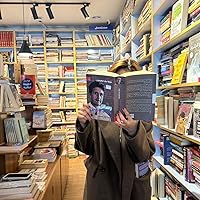
De ex-chirurg Fredrik woont op een eiland, met als enige gezelschap zijn hond en kat. Een geheim uit het verleden is de aanleiding voor deze zelfverkozen eenzaamheid. Op een morgen ziet hij een vrouw op het ijs. Het is Harriet, de vrouw die hij bijna veertig jaar geleden verliet zonder iets te zeggen. Ze heeft niet lang meer te leven en vraagt hem een oude belofte na te komen: haar meenemen naar een vennetje in het bos, waar ze ooit zouden gaan zwemmen als ze getrouwd waren. Dit is het begin van een bevreemdende reis, die Fredrik voor nog meer verrassingen zet. Hij wordt geconfronteerd met de dochter van wie hij niet eerder gehoord had. De reis door het winterse Zweden wordt ook een reis door zijn eigen leven. Hij moet onder ogen zien wie hij werkelijk is en verantwoording nemen voor de catastrofe die hij ooit veroorzaakte.
Henning Mankell was an internationally known Swedish crime writer, children's author and playwright. He was best known for his literary character Kurt Wallander.
Mankell split his time between Sweden and Mozambique. He was married to Eva Bergman, Swedish director and daughter of Ingmar Bergman.
I'm again thankful to Eileen for suggesting a good book to me! Thank you, Eileen!
It is not mystery that draws here but rather the setting. I live in Sweden. I can verify that the details are just right.
Before rating and reviewing, I sat back and thought what do I think of this? I rate a book by my gut reaction. On closing the book my overall gut response was that I liked it--a lot. Therefore, four stars is what I have given it. The next step is to figure out why I have reacted as I have. I don’t chalk up the good and bad points of a book first! Figuring out why a book is good or bad is the second step, never the first! I can say in one sentence what makes this book special for me. It draws an accurate description of Sweden shortly after the millennia. This is when the story is set. Today, this is now a good twenty years ago. Where is it set? In the environs of the Stockholm archipelago and in Jämtland and Hälsingland of northern Sweden.
The story circles around a surgeon who having made an error has drawn himself back from society. Guilt weighs him down. A past love affair as well as the difficulties of immigrants living in Sweden and foster care are additional themes. The focus on Italian shoes is best viewed as a metaphor, but if you’ve owned high quality Italian shoes, you’ll recognize how wonderful they are! Shod in good shoes, you need not give a moment’s thought to your feet.
The author captures very well nature and “the feel of life” where the story unfolds. The characters behave as Swedes do and did behave at the turn of 21st century. The details are right. A story set in contemporary times wouldn’t be quite the same. Foster care and the immigrant situation change with the decades, but how one looks upon family, holiday celebrations and life on the islands and in the sparsely populated forests of the North ring true still today. Having lived in different countries (the US, Sweden, Belgium and France) one becomes very aware of cultural differences. The Swedish author Henning Mankell has succeeded in pining down Swedish ways.
There are aspects of the story that irritate me, but in fact, even these reflect common Swedish attitudes. I didn’t like how the cat and dog are not referred to by name. There is a coldness shown toward them that irritates me. Swedish society does not look at pets with the warmth and benevolence that you see in France, for example. The American view of pets is also different. In America cats and dogs are frequently simply what a family is "expected -to-have". My point is this, the author draws events as they would roll out in Sweden.
Another thing that put me off were ants being allowed to invade the living area of a home. Clearly, the monstrous ant hill is intended as a metaphor, but I find this too exaggerated, too over-the-top! It’s too fantastical. It just would not happen.
Good and bad things happen in the story. I like the balance of the two.
Many acclaim the beauty of a starry night sky. There is also beauty in silence. The author recognizes this.
For me the book is worth four stars, despite various plot events that I find bizarre.
Sean Barrett reads the audiobook. Quite a few places in Sweden are incorrectly pronounced. Couldn’t he have found out how to say them correctly? Otherwise, the narration is very good. English words are easily understood. He pauses in the right places. I gave the narration four stars anyhow, despite the incorrect Swedish.
Here is something interesting to consider. Henning Markell was born in Stockholm on February 3, 1948. He was abandoned by his mother, along with his two siblings. They moved in with their father, a judge, living in Sveg, Jämtland, a county of northern Sweden. The author sets the story in places he has lived himself. Knowing the circumstances of the author’s own life has you reflecting on how he draws the story.
O sueco Henning Mankell (1945 - 2015) é um dos meus escritores preferidos, acompanho de uma forma contínua os seus magníficos livros policiais, com destaque óbvio para os protagonizados por Kurt Wallander. A sua longa ligação a Moçambique onde foi Director do Teatro Avenida em Maputo e o seu envolvimento em inúmeras “causas humanitárias” no continente africano, com destaque para “SOS Children´s Villages” e “Save the Children”, colocaram-no na vertente pessoal, num patamar de relevo inquestionável. A edição em Portugal de “Sapatos Italianos”, originalmente publicado em 2006, que não sendo um livro policial enquadra-se numa novela de cariz introspectivo, numa viagem às profundezas da alma humana, da solidão, do arrependimento e do remorso , mas também da esperança. Logo na primeira página do livro Mankell escreve - “A vida é um frágil ramo suspenso sobre um precipício” – e é nesse contexto, da fragilidade das relações humanas, que ficamos a conhecer Fredrik Welin, uma pessoa atormentada, inicialmente, por uma infância sem afecto, sobretudo, por parte da mãe e depois por um acontecimento trágico, no exercício da sua profissão de médico-cirurgião, que motiva a sua auto-reclusão numa pequena ilha situada no Mar Báltico – “Cometi um erro. E recusei-me a aceitar as consequências.” A minúscula ilha – uma herança dos avós - é para Fredrik Welin um espaço limitado e claustrofóbico, em que tem exclusivamente por companhia diária a presença de um cão e uma gata a que se junta as visitas regulares do hipocondríaco carteiro Jansson. A evolução da história da "Sapatos Italianos" decorre de acontecimentos completamente inesperados para Fredrik Welin, que lhe permitem reavivar as suas memórias traumáticas e saldar contas com o passado – para que de uma vez por todas possa recuperar a sua capacidade de viver sem se esconder da realidade. Henning Mankell constrói a narrativa do livro decompondo-a em quatros andamentos - Gelo, A Floresta, O Mar e o Solstício de Inverno – e exerce um domínio absoluto no ritmo narrativo e mantém como habitualmente uma capacidade descritiva excepcional. No entanto, até por razões profissionais, o que me surpreende de uma forma subtil são as preocupações ambientais e climatéricas que Mankell evidencia em toda a narrativa. Welin escreve um “diário de uma vida que perdeu o rumo”, mas que serve prioritariamente para nos “lembrar” das alterações climatéricas que estão a ocorrer naquela zona do planeta Terra – apenas, alguns exemplos: a espessura do gelo, a mudança de folhagem das árvores, a direcção do vento, a presença das aves migratórias, o solstício de Verão e de Inverno, a duração dos dias, as estações do ano, o frio/calor… O sueco Henning Mankellescreve um magnífico livro, que nos desassossega e asfixia numa narrativa específica daquelas latitudes e daqueles ambientes. Numa frase resumo: “Encontrava-me nas profundezas das melancólicas florestas do norte da Suécia.”
Em virtude dum grave erro profissional, Fredrik Welin isolou-se numa ilha gelada do arquipélago de Estocolmo. Cada dia de Fredrik começa exatamente da mesma forma: sai do casebre que habita empunhando um pesado machado, abre uma brecha no gelo e mergulha despido nas águas geladas da ilha. É esse o ponto alto do seu dia que, além disso, é equiparável a um bocejo contínuo: troca umas frases com um carteiro hipocondríaco, escrevinha num diário, lê algumas páginas dum livro sobre a introdução da batata na Suécia, trata parcamente dos seus dois animais de companhia e … pouco mais. A sua vida na ilha obedece a uma rotina sempre igual, sem surpresas, até àquele dia em que vê caminhar na sua direção alguém que ele deixara para trás, algures num passado remoto…
Em qualquer percurso de vida constam desafios aos quais é impossível virar costas por tempo indeterminado. Quando pensamos que já lhes escapámos de vez, na verdade e sem o sabermos, estamos apenas a reunir forças para realmente os enfrentar. Os desafios são como os bumerangues — retornam sempre. Vai um mergulho gelado?!… 😜
راستش من به عنوان رمان جنایی خوندمش ولی اصلا جنایی نبود.🙆♂️ زندگی حوصله سر بر یه پزشک بازنشسته داخل یه جزیره تنها. تازه پایانشم بازه.🤬 البته تکنیک رمان نویسیش قویه واسه همین میشه تحملش کرد اما در کل ارزششو نداره. خلاصه که: Don't waste your time with this
Caution: This is NOT a happy book. But an engrossing book, it is indeed.
First, we meet Fredrik Welin. He lives on an isolated island in the north of Sweden. He is trained as a doctor but has not practiced in 12 years. He is 66 years old. The first thing we learn about him is that he takes a dip into the water under the ice on a daily basis. The water is so cold it burns.
"Every day I jump down into my black hole in order to get the feeling that I’m still alive."
From the publisher
When an unexpected visitor alters his life completely, thus begins an eccentric, elegiac journey—one that shows Mankell at the very height of his powers as a novelist.
A deeply human tale of loss and redemption, Italian Shoes is a testament to the unpredictability of life, which breeds hope even in the face of tragedy.
This book is full of surprises and I do not want to reveal any of them.
I recommend to any mystery lover or a reader who enjoys delving into the psyche of the protaganist.
For the life of me, I don’t understand all the rave reviews this book has received. It only took me two days to read, and after a slew of verbose, florid and over used adjective laden novels, I was initially drawn in by the author’s sparse writing style, but, that wasn’t enough to make the novel.
It could have been such an interesting story but eventually became far too ridicules and unbelievable. Every chapter ended with another implausible scenario to the point that my finishing the book was simply curiosity to see how it would end. The characters were far too self absorbed and banal and I kept waiting for someone to actually have a bit of depth. The protagonist has spent years alone on an island, with that much time alone, you would have thought he spent at least a little time in his own depth, guess not. And the final nail in my criticism; the night the one arm woman spent the night and his actions. Really? This guy is that stupid and insensitive after what he’s recently been through with the women who have appeared in his life?
I admire protagonists who go through the morbid rehashing of their lives, those who pause and look at their role and the outcome and the influence they’ve had on others, but this? No, this reads like a cheap script for a Hollywood movie geared towards the Nicholas Sparks crowd who wants a slightly darker change.
The Boston Globe calls Henning Mankell the "master of atmosphere." This sense of atmosphere is what keeps me reading his Kurt Wallander mysteries, set in Sweden. This book, Italian Shoes, is not a Kurt Wallander mystery; however, it contains many of the elements of the Wallander series: a wounded main character who is lost in his own past failings; a landscape as cold and barren as the main character's life; and a parade of secondary characters as eccentric as they are deeply developed. Also, the book, while not a traditional mystery, gets at the mystery of why a man would hide himself away on an ice-locked island and how he manages to shake himself out of his isolation.
This main character, Fredrik Welin, is not one bit likable. He even kicks his beloved dog on occasion and leaves his old, ailing cat out in the cold. But he is interesting. As the revelations about his past life unfold with each new character's appearance, the plot becomes deeper and more engrossing.
Welin's story cannot have a happy ending, but it does have a resolution that leaves him open to life and what it has to offer.
Tinha algumas expectativas para esta leitura, mas não me satisfez.
Não gostei da escrita, composta maioritariamente de frases curtas descrevendo factos inconsequentes, a fazer-me lembrar Camus n' O Estrangeiro e também Murakami (eu sei, há muita gente que gosta, mas eu não...). Safam-se algumas breves descrições da natureza e observações filosóficas, mas não chegou.
Também não me interessei pela história e não gostei dos personagens.
Houve ainda vários outros aspectos que me incomodaram, mas não me vou alongar, simplesmente para mim este livro não foi uma boa experiência.
I had some expectations for this reading, but they weren’t fulfilled.
I didn't like the writing, mostly made up of short phrases describing irrelevant facts, reminding me of Camus' The Stranger and also of Murakami (I know lots of people like them, but I don't...). There are some good descriptions of nature and philosophical observations, but it wasn't enough.
I also didn't care about the story nor the characters.
There were several other aspects that bothered me, but I won't dwell into those, this simply was not a good reading experience for me.
Not a mystery, for once! After distrastrously amputating the wrong arm of a patient, former surgen Fredik Welin hides himself out in his grandparents' old house on an isolated island in Sweden's outer archipelago. During the winter, just to remind himself he is still living, he cuts open a hole in the ice and drops down naked into the freezing water below. Life has had little meaning for him the last 12 years since his great catastrophe as a surgeon, but all that changes when one winter morning, he spots an old woman with a walker out on the ice of his island. It is Harriet, the lover he abandoned decades ago and she has come wanting him to keep a simple promise he made before leaving her: to show her a forest pool he last saw as a boy with his father many years ago. The appearance of Harriet in his life stirs up a number of complicated issues for Welin and he comes to the realization that he has hidden from his problems long enough. It is a story about love and sadness, life and death, not the easiest read but about making something of your life before it is too late.
This entire review has been hidden because of spoilers.
Een bijzonder verhaal...Fredrik die 12 jaar alleen op zijn eiland woont en zijn demonen en jeugdtrauma's probeert te ontvluchten. Hij zit in een impasse...totdat z'n vroegere jeugdliefde over het ijs naar hem toe komt. Samen maken ze een roadtrip...waarbij Fredrik verschillende mensen, waaronder z'n dochter, ontmoet en langzamerhand z'n demonen en jeugdtrauma's onder ogen ziet. Hij krijgt weer zin in het leven. Eenvoudig... maar weergaloos mooi geschreven verhaal!! Ik ga zeker meer van Henning Mankell lezen!
Henning Mankell is known for his Kurt Wallander crime novels, so even though I knew this wasn't one of them, I still expected it to be a thriller of sorts. There is a man who lives alone on an isolated island, separated from the society, until, one day, someone from his past visits him and sets off a chain of events.
You too would think this would be a thriller, right?
But no, it's a typical tale of an old uninteresting man, looking back on his uninteresting life. A bunch of characters are introduced, all quirky and acting in various bizarre and confusing ways that pushes this laboured plot forward. Women are particularly mysterious, and act in the most irrational ways. Because women, who can really understand them, am I right?
The only thing I found authentic and believable in this whole story was the main character's guilt over the medical error which effectively ended his surgical career.
All in all, not my kind of thing. Twee characters, lots of things whose only purpose is to be symbolic (an anthill in the middle of the room, for example), and generic cliched conclusions.
This was such a weird book. Felt very meandering and pointless and strangely plotted but like the kind of book that you could picture some really highbrow literary person saying was sooooooo amazing and had all these hidden themes and meanings but an average reader ( like me) would be totally baffled by...
Ich musste die ganze Zeit über an Benedict Wells' Zitat: “Das Gegengift zu Einsamkeit ist nicht das wahllose Zusammensein mit irgendwelchen Leuten. Das Gegengift zu Einsamkeit ist Geborgenheit.” denken.
Last book I read by the author was the end-of his character Wallender. I had dust smotes in my eyes at the end (note - must vacuum and dust more). Thought this may have been the author’s very last work as it portends death in a visceral way. But no he lived longer. Now managed to pick up three works from the author at local charity shop.
Frederik Welen lives on a remote Island after making a mistake as a Surgeon, with an old cat and dog as company. Oh and of course a growing anthill in his lounge that is rising up the table side and consuming the table cloth.
An old girlfriend arrives and things take off. Whilst the landscape and story are bleak there comes a form of redemption.
The descriptions of impending doom are superb. One reminds me of lying in bed as a nine or ten year old and thinking about death and grappling with the concept of eternity as you do at that age (not):
‘I’m not afraid of death. What I think is horrific is the fact I shall have be dead for so long.’
‘Before I die, I must know why I’ve lived.’
I remembered her once saying that life was like your shoes. You couldn’t simply expect or imagine that your shoes would fit perfectly. Shoes that pinched your feet were a fact of life.
I recall thinking: This person who is now dead is someone who in reality has never existed. Death wipes out everything that has lived. Death leaves no trace, apart from the things I’ve always found so difficult to cope with. Love, emotions.
I experienced an increasing fear that I myself was approaching the end. I was afraid of the humiliations in store for me, and hoped I would be granted a gentle death, one which spared me from having to lie in bed for a long time before I reached the shore.
‘Dog, bone, sorrow.’
Mankell is an absolute master. I have two more books in my stash to read. Including…wait for it… a Wallender prequel.
"أنا وأنتَ, قالت آرييت. أنا وأنت, وها هي القصة انتهت." - من الأدب السويدي, يُحكى بأن رجل كبير بالسن بعمر الستة والستين مُتقاعد كان يمارس مهنة الطب, يعيش بجزيرة شبه نائية عن العالم بعد ترك مهنة الطب, عاش مع كلبته وقطه, وهناك ساعي البريد الشخصية التي جعلتني أضحك عدة مرات, وفي يوم من الأيام ظهرت تلك المرأة الطاعنة بالسن وتأخذ الأحداث في سياق آخر, من هدوء وعُزلة, إلى الماضي وذكرياته ومستقبله وما يحويه من مفاجآت. - كان ودي أتكلم عن كل الشخصيات لكن لا أود أن أحرق الأحداث؛ فالقارئ سيكتشفها بنفسه - أبدع الكاتب "هنينغ مانكل" في تطرقه إلى مواضيع عديدة, تارة يأخذنا في رحلة عن الطقس والمناخ, وتارة عن الجغرافيا والتاريخ, وتارة عن السياسة وزعماء الدول وتارة في الطب والعلوم, وتارة أخرى في صنع الأحذية وكان من أهم النقاط في هذه الرواية قرأت لنفس الكاتب رواية "سر النار" لكن هذه الرواية لامستني طال الزمن أو قصر, كل ساق سيُسقى بما سقى وهنا البطل كان هارب من ماضيه وكان دافن هذا الماضي في قبر مُعتم إلى أن جاء شخص ونبّش في تلك الحفرة المعتمة وأخرج كل مافيها "-وصلنا حتى هذه النقطة -كنا قد وصلنا حتى هذه النقطة ليس أبعد من ذلك. ولكن حتى هذه النقطة"
⭐️رواية شتوية بامتياز ومن توصياتي لكم وتحديداً مع تغيّر الجو, والترجمة جميلة جداً
A disgraced former doctor living a lonely life on a small island, frozen in winter, finds an appearance by former girlfriend from 40 years earlier begins to change his life. Very well written, moving story with real depth.
«Вона колись розповідала, що життя людини таке, як її ставлення до свого взуття. Даремно вірити чи переконувати себе в тому, що воно пасує до ноги. Реальність у тому, що взуття муляє.»
Я не очікувала від цієї історії геть нічого. Навіть хибно думала, що це трилер. А потім був холод (привіт «Терор»!), самотність і тягар рішень, що привели героя до добровільної ізоляції. А також привид з минулого, що змусить сплатити борг за власні вчинки. Давненько книга не западала мені в серце з перших сторінок ♥♥♥
What I knew of Henning Mankell prior to reading this novel is limited to a Greek TV interview (parts 1, 2, and 3 here – the interview itself is in English, so feel free to watch) and also the various essays he’s published related to his activism in Mozambique and Palestine. To a certain extent, therefore, as I read I was comparing the protagonist & narrator of Italian Shoes to the author himself. This is not to say that the novel is autobiographical, but there are specific themes in Italian Shoes that I recognized as being rooted in Mankell’s life history. I would characterize this book as a very readable novel of introspection, in which a elderly man ponders his past and tries to come to term with himself, after a decade or so of living in isolation in a remote part of cold and wintry Sweden. The retired physican Welin has only his immediate surrounds for company. His daily routine, as well as his mood and temperament, follows the seasonal changes in the landscape and the weather. The very presence of other human beings disturbs him profoundly. Other moving life forms are barely tolerated. It seems he takes a stronger liking to dead creatures & to insects, than to his own pets. And when the pets themselves die or disappear, it’s only then that he is able to express some concern for their existence (or not). Fortunately the narrator is a man of little words, as the brief notations in his logbook attest, and the reader isn’t assaulted by too heavy a dose of misanthropy. When unexpected events disrupt Welin’s safe routine, he is forced to explain the whos, whys, whens and wherefores of his past. This is achieved in a factual and direct exposition so the timeline is easy to follow. Despite the ever-increasing eccentricity of the characters that enter the scene and move the story forward, the narrative follows a natural progression, and is presented in a laconic, straightforward manner. Welin is a retired doctor, this matter-of-fact narrative is typical of his persona. It is this terseness that makes the novel readable; the pace progresses quickly, there are no drawn out meditations, convoluted flashbacks, or lengthy discussions between the characters slowing down an understanding of what is going on. Rather atypical of the detective fiction genre, for which Mankell is best known for. This direct and straightforward exposition reminds me more of American fiction than anything else. Instead of the Scandinavian terrain, this story could easily be transposed to the rugged North American landscape. All the characters could very well be American or Canadian. I’m not saying that there is a lack of “Swedishness” or “Europeanness” to the novel. Loners are a staple of American fiction writing (the characters, as well as the authors themselves) and that's another element in the novel's readability score. Likewise, the mirroring & interaction between the “loner” characters and their (usually remote) natural environment is a device & theme often found in contemporary American literature, more so than in the traditions of European literature. In Italian Shoes Welin discovers he is not the only loner in his immediate family, and that there is some, if not valuable, comfort to be had in the company of strangers. I can't say I was drawn to the protagonist, nor did I find him particularly interesting. To what extent does Welin evolve by the story's end - does he act from the heart or out of necessity, when he realizes he cannot be self-sufficient anymore in his reclusive abode? Welin remains laconic to the end, without revealing his true motivations.
Swedish author Henning Mankell is known for his Kurt Wallander mystery series, books I intend to check out even though I am not a huge fan of the genre. The writing, at times sparse, at times lyrical, always wonderful, pushed this novel from a 4 to a 5 star for me. The very first quote drew me in..."When the shoe fits, you don't think about the foot..." Chuang Chou. The character development is subtle and spot on as you are drawn into the main character's life and come to understand the choices he has made.
I had to find out what the title had to do with a surgeon who chose self-exile on a desolate, northern Swedish island following his amputation of the wrong arm from a patient. I'll leave you with a quote, "You sometimes get the feeling that trees are whispering, flowers murmering, berry bushes humming unknown melodies, and that the wild roses in the crevices behind Grandma's apple tree are playing beautiful tunes on invisible instruments."
مؤلم أن تكون السبب في جعل حياة شخص ما مأساوية وتجهل ذلك. أن تكون السبب في تشكل شخصية هذا الشخص من الترسبات النفسية السلبية التي أنت أحدثتها وأنت غافل كلياً عن كل ذلك. هنا الشخصية الرئيسية طبيب متقاعد في السادسة والستين، يعيش في كوخ في أحد الجزر جنوب السويد منذ 12 عاماً مع قطه وكلبه. لا يوجد زائرين سوى ساعي البريد الذي يزوره ليوصل له الإعلانات التجارية التي تصل لبريده. في حياة هادئة بعيد عن صخب المدينة وفي روتين يومي لهذا الرجل يفاجئ بزيارة أحد ما وتبدأ رحلة الغوص في أعماق نفس الشخصيات التي ستخرج الواحدة تلو الأخرى في الرواية.
لقد وظف هنينغ مانكل الأجواء الشتوية القاسية بشكل جميل تتناسب مع قساوة واقع حياة هذه الشخصيات النفسية.
عنت لي هذه الرواية كثيراً، ربما ستكون عادية للبعض ولكن بالنسبة لي وجدت فيها بعض تساؤلاتي التي مازلت أبحث عن أجوبتها.
Truly wonderful, moving book. I don't want to write much about it because I have the follow-up book that picks up 8 years after the end of this one that I want to jump right into. I loved this book for many reasons. Old man living solitary life on island off Sweden's coast with his dog and cat. The solitary part ends when an old woman appears out on the ice with her walker. Circumstances change slowly at first and then very dramatically. LOVED the book.
ITALIAN SHOES by Henning Mankell goes to prove, once again, that a really good writer is a really good writer, regardless of the genre, styling, or setting of the book. Exploring the themes of estrangement, loss, fear and isolation ITALIAN SHOES isn't a crime fiction novel, it's a poignant, beautiful, sad, uplifting and evocative look at a man, his life, his mistakes and his redemption.
Frederick Welin is sixty-six years old, a former surgeon who has spent the last 12 years of his life, purposely exiled to the island home that his grandparents left him. He has carved out a life with his dog, his cat, and occasional visits from Jansson the postman. Woken just before dawn on a dark December morning, the sound of the "ice singing" evokes memories of his past - his father, his grandparents, his island, his professional and personal mistakes.
In a strange way he's not surprised then, when early in the New Year his past comes back to him in the form of a little old lady on a walker, making painful slow progress across the ice towards him. He had loved Harriet Hörnfeldt intensely, and he'd abandoned her abruptly in 1966. Dying of cancer, she has come looking for him. She wants answers, she wants Frederick to finally make good on a promise he made all those years ago. She wants to see the pool in the middle of the northern forest, where he talked of one joyous day with his father.
A road journey, in a beat up old car, in the harshest weather in decades, follows. Unsure if he can even find the pond, the two embark not just on a quest for the place, but also, in a touchingly clumsy manner, some understanding of how they both got to where they are now jointly and separately in their lives. They argue and bicker, rescue abandoned dogs, leave behind Frederick's own pets in a mildly distracting way, but find the pool. Frederick nearly loses his own life on the ice in the pond, Harriet saves him, they move on in the journey, to somebody, somewhere... but more would be telling too much.
ITALIAN SHOES is a moving, tightly drawn portrait of a couple of people who could seem, on the face of it, emotionally shut down and withdrawn. What Mankell does is draw you into the lives and thoughts of Frederick mostly, and Harriet to a slightly lesser degree as Frederick is forced to consider his past and how he wants his future to be. What Mankell has done is written a central character who it is really easy to dislike, and yet... A profoundly self-centred man, Frederick's life has been an odd combination of bravado and running away. He's a faithless lover, a haphazard animal owner, a brilliant surgeon whose arrogance led him to make a profound mistake - which he ran away from. A snoop, a bad-tempered man, a loner who regards the world with suspicion there's an awful lot to dislike about Frederick, and yet, Frederick is very human and his slow, hesitant steps to redemption, recompense, are profoundly touching in the main because of their simple humanity.
Quiet, intense, low key almost ITALIAN SHOES is a beautiful, glorious tale of confrontation, human frailty and redemption.
Com este livro, conheci um novo autor que consegue expressar emoções e fazer chegar essas mesmas emoções a quem tiver oportunidade de o ler.
É um livro que fala ao coração sobretudo acerca de solidão. Um livro que nos transporta ao futuro, permite-nos ver um pouco das consequências quando nos desligamos e não enfrentamos as realidades. Fala do que é envelhecer e não ter nada por que viver. Também fala de reencontros. . . e encontros.
Fala do amor a animais, mas também da sua perda. Fala de isolamento. Fala também de orgulho. . . orgulho ferido também.
Fala do que um homem sem objectivos de vida faz no seu dia-a-dia, coisas como, anotar a meteorologia, a chegada de correio, o crescimento de um formigueiro (dento da sua própria casa) e a chegada de correio num diário. Consertar coisas sem acerto, comer, passear ao longo da ilha isolada onde escolheu recolher-se. Abrigar-se.
Um dia, tudo isso muda com a chegada de uma mulher que com ela traz uma promessa por ele feita à espera de ser cumprida. Essa promessa permite-lhe viajar ao passado e ser saudosista de tempos que já não voltam, tempos passados com familiares. . . Tudo muda com esta mulher que lhe dá a conhecer outra mulher. Estas duas mulheres dão-lhe a conhecer uma outra, que nunca foi esquecida e a razão maioritária para ele se ter refugiado numa ilha de ninguém. . .
Uma história sobre pessoas. Uma história sobre relacionamentos. Uma história de amor. . . e NÃO amor-próprio.
Para reflectirmos sobre, o que somos, o que fomos e para onde vamos. . .
BREAKING NEWS JAN 2011: Brannagh and Hopkins are filming this book.
Product Description Once a successful surgeon, Frederick Welin now lives in self-imposed exile on an island in the Swedish archipelago. Nearly twelve years have passed since he was disgraced for attempting to cover up a tragic mishap on the operating table. One morning in the depths of winter, he sees a hunched figure struggling towards him across the ice. His past is about to catch up with him. The figure approaching in the freezing cold is Harriet, the only woman he has ever loved, the woman he abandoned in order to go and study in America forty years earlier. She has sought him out in the hope that he will honour a promise made many years ago. Now in the late stages of a terminal illness, she wants to visit a small lake in northern Sweden, a place Welin's father took him once as a boy. He upholds his pledge and drives her to this beautiful pool hidden deep in the forest. On the journey through the desolate snow-covered landscape, Welin reflects on his impoverished childhood and the woman he later left behind. However, once there Welin discovers that Harriet has left the biggest surprise until last. "Italian Shoes" is as compelling as it is disturbing. Through his anti-hero Welin, Mankell tackles ageing and death with sensitivity and acuity, and as with the critically acclaimed Depths, delivers a moving tour-de-force on the frailty of mankind.
El primer libro que leo del autor y me gustó. Está muy bien escrito, y transmite efectivamente el ambiente a menudo hostil, una isla fría cubierta de nieve donde nunca me hubiera imaginado vivir, pero ahí me traslade con este libro… El autor maneja muy bien la atmosfera que crea y ese ambiente climático que influye para mi directamente en la historia y los personajes, hasta lo sentís mientras lo lees Los personajes van teniendo una marcada evolución dentro de la historia en el tiempo. Una novela intimista., donde hay replanteos y nuevos tiempos Por lo que surge de la historia los personajes no están muy con contacto con las tecnologías lo que hace mucho más rico todo lo que refiere a las relaciones entre ellos, su sentir… mucho espacio para, pensar, caminar, y relacionarse, me pareció muy interesante ese aspecto
I read this for my book group. It tells the story of Fredrik Welin, a disgraced surgeon, who lives alone on a small island. He imagines that his life will go on, unchanging, with only the visits of a hypochondriac postman to remind him of the outside world, and only his dog, and cat, for company, when a woman appears on the ice. She is the woman he once left behind, many years ago, and now she has come to ask him to take her to the pool, he once promised to visit with her. That was before he disappeared, without contacting her. Now, Harriet is dying and she is here to drag him back into life.
This is the strange tale of an odd, unlikeable set of characters. Fredrik has to confront his past, but he has several unpleasant character traits, which make you wonder why on Earth Harriet wanted to see him again. This could have been moving – but it wasn’t.
كتاب الأحذية الإيطالية للكاتب هنينغ مانكل مناسب لأيامنا الحالية، أيام باردة يلفها الصمت. بدأت بقراءته قبل أيام؛ ختمته للتو. الرواية جميلة وتستحق القراءة. يحكي الكتاب قصة طبيب جراح عجوز يعيش وحيداً في جزيرة منعزلاً عن معالم الحياة، غارق في الصمت والرتابة، هارباً من ماضي يؤرق مضجعه. يغرق نفسه في بحيرة متجمدة كل يوم بالرغم من أن درجة الحرارة تحت الصفر، الأرض صقيع، والرياح تزأر، فقط ليتأكد بأنه على قيد الحياة.
في أحد الأيام لمح ظل امرأة عجوز قادمة لزيارة جزيرته المهجورة لسنوات بعكازها الرباعي؛ ثم بعد ذلك تغيرت حياته للأبد.
فريدريك العجوز هرب من الحياة، من البشر، هرع للعزلة خوفاً من المواجهة، نسجت الوحدة حياته، كبلته وسجنته. وبعد سنوات عادت أشباح الماضي تطارده، تذكره بأهمية التكفير عن أخطاءه.
يجب أن نعتذر لمن أسأنا لهم حتى وإن فات الأوان لذلك.
Audible Plus 9 hours 58 min. Narrated by Henry Strozier (A+)
Life on a small Swedish island. Self-imposed isolation. Unexpected family. Memories. Dealing with mortality, others and your own. Oh yes, and the importance of good fitting shoes. A great listen. Thank you, Chrissie, for your own great review.
This book produced a number of vivid and often bizarre images for me. Here is a list of the most memorable: the desolate island seascape; the cold white of the bitter winter; the living room with the ant hill slowly consuming the table cloth; Jansson, the hypochondriac postman with the hydrocopter and his many layers of clothes; Fredrik chopping a hole in the ice and bathing in the icy sea water just to remind himself that he is alive; the appearance of Harriet after 37 years, standing with her walker on the ice, looking at Fredrik; Fredrik frantically hauling Harriet into his cabin when she collapses on the ice; Fredrik and Harriet on their quest to visit the forest pool of Fredrik's youth; Harriet making her way to the center of the frozen pool with her walker, then improbably rescuing Fredrik after he falls through the ice; their time in the back seat of a car parked on a logging road, so different from the experiences of youth; Fredrik's first glimpse of Louise in her pink dressing gown and high heeled shoes, emerging from her caravan in the woods; the snow covered outdoor boxing ring in the woods; Giaconelli's workshop in the abandoned village; Fredrik, Louise, and Harriet sleeping in the caravan's one bed, Sima running at Fredrik with a samurai sword, calling him a pedophile; the successful Mid-Summer party in honor of Harriet, the tender care given Harriet by Fredrik and Louise; a do-it-yourself cremation.
The expected movie version of Italian Shoes will have a lot of images to choose from when translating this book to film. I look forward to seeing the directors version of them.
I've read many of Mankell's novels, but hadn't been aware of this two-book series, Italian Shoes and After the Fire, that have nothing to do with Wallender crimes, or politics in faraway places. In Italian Shoes, we meet Frederik Welin, a Swedish surgeon, and first-person narrator, who, after a catastrophic mistake in the operating room, retreated to a remote island in a Swedish archipelago he inherited from his maternal grandparents. For the past twelve years, he's lived alone there, with his cat and dog, and in winter, he cuts a hole in the ice over the frozen sea and submerges himself, perhaps as a visceral reminder that he's still alive. And then one day, on that frozen ice, appears Harriet, the woman he'd loved and abandoned four decades before. He'd never again been in touch. She is ill and has come to hold him to a promise he made when they'd been in love. That promise is the start of a journey for him, that will begin to break up the ice in his heart. Elegiac, atmospheric, and compelled by expected and unexpected deaths, the emotionally-limited Welin is a sympathetic and fascinating character. I'll be reading After the Fire next.