Jump to ratings and reviews
Rate this book

Falkner

Rate this book
Falkner, published in 1837, is the last novel by Mary Shelley;and as we see from her letter she had been passing through a period of ill-health and depression while writing it, this may account for less spontaneity in the style, which is decidedly more stilted ; but, here again, we feel that we are admitted to some of the circle which Mary had encountered in the stirring times of her life, and there is undoubted imagination with some fine descriptive passages. The opening chapter introduces a little deserted child in a picturesque Cornish village. Her parents had died there in apartments, one after the other, the husband having married a governess against the wishes of his relations ; consequently, the wife was first neglected on her husband's death ; and on her own sudden death, a few months later, the child was simply left to the care of the poor people of the village a dreamy, poetic little thing, whose one pleasure was to stroll in the twilight to the village churchyard and be with her mamma. Here she was found by Falkner, the principal character of the romance, who had selected this very spot to end a ruined existence ; in which attempt he was frustrated by the child jogging his arm to move him from her mother's grave. His life being thus saved by the child's instrumentality, he naturally became interested in her. He is allowed to look through the few remaining papers of the parents. Among these he finds an unfinished letter of the wife, evidently addressed to a lady he had known, and also indications who the parents were. He was much moved, and offered to relieve the poor people of the child and to restore her to her relations.

197 pages, Kindle Edition

First published January 1, 1837

19 people are currently reading
353 people want to read

About the author

Mary Wollstonecraft Shelley

2,344 books8,554 followers
Mary Shelley (née Mary Wollstonecraft Godwin, often known as Mary Wollstonecraft Shelley) was an English novelist, short story writer, dramatist, essayist, biographer, travel writer, and editor of the works of her husband, Romantic poet and philosopher Percy Bysshe Shelley. She was the daughter of the political philosopher William Godwin and the writer, philosopher, and feminist Mary Wollstonecraft.

Mary Shelley was taken seriously as a writer in her own lifetime, though reviewers often missed the political edge to her novels. After her death, however, she was chiefly remembered only as the wife of Percy Bysshe Shelley and as the author of Frankenstein. It was not until 1989, when Emily Sunstein published her prizewinning biography Mary Shelley: Romance and Reality, that a full-length scholarly biography analyzing all of Shelley's letters, journals, and works within their historical context was published.

The well-meaning attempts of Mary Shelley's son and daughter-in-law to "Victorianise" her memory through the censoring of letters and biographical material contributed to a perception of Mary Shelley as a more conventional, less reformist figure than her works suggest. Her own timid omissions from Percy Shelley's works and her quiet avoidance of public controversy in the later years of her life added to this impression.

The eclipse of Mary Shelley's reputation as a novelist and biographer meant that, until the last thirty years, most of her works remained out of print, obstructing a larger view of her achievement. She was seen as a one-novel author, if that. In recent decades, however, the republication of almost all her writings has stimulated a new recognition of its value. Her voracious reading habits and intensive study, revealed in her journals and letters and reflected in her works, is now better appreciated. Shelley's recognition of herself as an author has also been recognized; after Percy's death, she wrote about her authorial ambitions: "I think that I can maintain myself, and there is something inspiriting in the idea". Scholars now consider Mary Shelley to be a major Romantic figure, significant for her literary achievement and her political voice as a woman and a liberal.

Ratings & Reviews

What do you think?
Rate this book

Friends & Following

Create a free account to discover what your friends think of this book!

Community Reviews

5 stars
15 (20%)
4 stars
25 (33%)
3 stars
21 (28%)
2 stars
11 (14%)
1 star
2 (2%)
Displaying 1 - 16 of 16 reviews
Profile Image for Scott.
Author 13 books24 followers
July 29, 2014
I found this one of Shelley's most satisfying reads. I previously gave 5 stars to Perkin Warbeck, but that was more like a 4.5 because it got bogged down in so much summary. This is fresh and vivid. I don't know why the introduction refers to this as a "period piece," although the last two pages have summary of what the remainder of Falkner's life was like, there's no indication that the story isn't as modern and up-to-date as it could be in 1838. Frankenstein, on the other hand, had incomplete years given starting with 17s, establishing that book as being set before the turn of the eighteenth to nineteenth centuries. From a powerful opening in which orphaned Elizabeth Raby, a little girl, grabs the hand of John (or Rupert) Falkner during his suicide attempt, pulling him down onto her mother's grave and telling him not to step on it again, to the years of devotion to one another, to the chance meeting with Gerard Neville setting the action in motion to the point of voyages north and a long stay in prison, this vivid novel deserves to be revered as a classic. I would rate it as high as Frankenstein and The Last Man as being among her best work. The scene in Oswi Raby's study is particularly vivid in atmosphere and setting, as well as characterization. Shelley keeps the characters pretty tight (being a work of pure fiction rather than historical fiction gives her more leeway, but Valperga is certainly less sprawling than Perkin Warbeck) and each one has a personality. The Falkners go through several servants because of their peripatetic lifestyle, and each one is as different from the other as one could possibly imagine--the stern, serious Englishwoman Miss Jervis, the avuncular Vasili who bonds with Elizabeth, the vacuous Thompson who inadvertently creates trouble, etc. I also like that no one in the book has a villainous motive--people do bad things out of concern for their own interests, but it's never out of malice, and always from a desire to do right, or at least, in the case of James Osborne, to not do bad.

Shelley's commentaries on class issues seem quite bold, almost to the point of giving the book the feel of a period piece in which the author comments on an earlier form of the culture by pointing out its absurd dogmas. Shelley here is playing cultural critic in a way I am not accustomed to seeing in nineteenth century novelists other than Shelley. The progressive-mindedness of Mrs. Raby (as in Elizabeth aunt, not her mother, neither of whom Shelley provides with first names), the treatment of Gerard's desire for a gentlemanly duel treated as foolhardy are just two of the examples of Shelley being far ahead of her time. The somewhat florid beauty of her writing may hide this, but Elizabeth is a character of the twentieth century stifled by the mores of the nineteenth. It is as though neither she nor Shelley truly understand the restrictions put on female independence at the time, kowtowing to it on a strictly intellectual basis while fervently disagreeing. For example, Elizabeth sees no reason why she can't take care of herself traveling alone in America in spite of the warnings from all around her; although she is eventually talked out of going, it is really only because she gets good reason not to do so, not that she is ever really convinced that she cannot handle herself. I think Shelley, who spent much of her life as a single (widowed) mother believes Elizabeth correct. The introduction states that Percy Jr. and his wife tried to portray her as more conservative to make her more respectable, but all that really seems to have done is make her books less read and harder to find when they should be as revered as those of any of the other unforgotten novelists of her time.


Profile Image for ~ Cheryl ~.
352 reviews8 followers
November 2, 2017
I'll use this novel as an illustration of what makes or breaks a book, at least for me.


A story whose subject or plotline isn’t of especial interest to you, but is WELL TOLD, draws you in, sometimes even captivates you.

On the other hand, a storyline or subject that piques your interest, but told in an awkward or unimaginative way….. the whole thing gets downgraded to a mediocre experience at best.

Falkner, unfortunately, was the latter.

I was interested in the plot from the start. For one thing, any story that begins with an orphan --- count me in. If this young orphan is alone in a cemetery visiting the parents’ graves? Even better. Now add a strange man who arrives in this small town, driven by guilt and anguish, intent on taking his own life; he finds a shadowy corner of said graveyard, prepares to apply the fatal blow to his own body … only to be surprised by the orphan, who stays his hand.

Yup! I’m all in.

But after reading this book, my opinion is that Mary Shelley was a great *idea* person, but not a particularly talented writer. Quite good at dreaming up a story, but executing it … not so much.

I read Frankenstein a few years back, and remember really liking the plot, and more so, the big ideas, the elements that made up the story. But I remember being fatigued by the needlessly wordy passages, the repetition. Falkner was a similar experience for me. The plot, (while perhaps a bit contrived), explored parental and filial relationships; noble duty overcoming societal dictates; themes of hopelessness and redemption, loyalty, mercy and revenge, forgiveness, and the power of selfless and genuine love. I knew it was going somewhere good, if only Shelley would get out of her own way and tell the darn story already!

The first roughly half of the book is written in an eye-crossingly bland style, which consists almost entirely of plain. linear. narrative.
and loooong descriptions of characters’ appearances, feelings, and motives.
Despite my incipient interest in the fates of these people, I nearly gave up reading… when around 45%, I suddenly encountered a wonderfully written chapter. At this point, the story picked up some speed. The writing continued, at turns, dull and somewhat engaging. But there was some well-written dialogue, and interesting parallels in later scenes to earlier events.

The whole of the story follows Falkner – the man at the beginning bent on suicide – his relationship with the orphan girl, the reasons for his anguish, and the outcome. Falkner’s story involves other people from his past and present who play key roles. There’s certainly enough here that, in the hands of a capable screenwriter, would make a thoroughly enjoyable tv mini-series. But the story as written, requires a person to really flex their reading muscles and push through.

So, in the end, I’d say it was a good story, but only a so-so read.


Falkner is a deceptively simple story, yet it has a lot to say. It made me think, but not feel. A good reading experience makes me do both, to some degree. Good storytelling seems to make all the difference.


.
Profile Image for Emily.
880 reviews32 followers
June 8, 2024
Kidnapping people is fine.

This what a very early proto-feminist looks like. She looks like perfection. A beautiful, angelic child whose sweet countenance delights all who lay eyes upon her. Born to privilege, now an orphan, cast asunder but still as sweet, joyful, calm, passive, cheering all with her bright eye and charming manner. Elizabeth. This book actually has two sublimely perfect women in it. One of them is so passive, she's dead. Their lives are intertwined in ways brought about by less perfect, but still boring people. Intertwined in convoluted paths through a series of coincidences that seem utterly implausible until you know what Mary Shelley was actually about. She had already invented horror. She was going farther. She was going farther than anyone could possibly envision. Falkner was her favorite novel she'd ever written. She knew what she was doing. She was trolling us beyond our wildest imaginings.

Falkner is Brandon Sanderson Stormlight Archives fan fiction.

Shelley was writing fic, disguised, for a series that wouldn't be published for another two hundred years.

"Her voice was always attuned to cheerfulness." "...a living, active spirit, for ever manifesting itself in some new form. It attuned the voice." "Long habits of intimacy formed..." "a story of oppression without form." That's dullform, and Falkner is about the insipidness of mateform in a story of the ten cities after the Recreance but before the current novels. That's why all the coincidences keep happening. It's bound to happen with such a small remnant population of Listeners. Shelley changes the names of the cities to European capitols because she wrote for money, but that's what's happening. That's also why all the characters are sort of boring and wooden. It's what the Listeners are. Even Venli, who's going to be instrumental in getting the Fused out of Urithuru, probably.

So, caution, spoilers, Elizabeth gets born to the Raby's but Mr. Raby has been disinherited because he converted from Catholicism to Anglicanism, so they move to a seaside town and both parents die of consumption, but Elizabeth stays with the woman who rents out seaside cottages and isn't worldly enough to put an ad in the newspaper about this orphan she's saddled with, and then Mr. Falkner shows up to commit suicide but Elizabeth jumps on top of him because he's trying to shoot himself on her mother's grave and she doesn't want it despoiled because she's a fastidious little kid, and she's so beautiful that Falkner decides to adopt her, even though he could write to Grandpa Raby and hand her over, but if he's not going to shoot himself he needs a project, so he convinces himself that the Raby family already rejected her so he takes her and they spend a decade traveling Europe until she grows old enough to have inklings of puberty and sets her eye on a moody youth named Neville but nothing comes of it, and Falkner decides that active suicide is too much so he's going to KILL HIMSELF BY FIGHTING IN THE GREEK REVOLUTION and die there and Elizabeth begs him not to but he says its fine and leaves her in a tourist cottage on a Greek island while he tries to go get himself killed in the Greek revolutionary army but it doesn't work, he just gets super-sick and they have to go back to England, and Neville turns up at the house of Lady Cecil, Elizabeth's only friend who she met traveling, and Neville's into her, but Falkner can't allow it, so he gives them his memoir about how he was in love with Neville's mom but she married this jerk so he kidnapped her and she ended up dead but it totally wasn't his fault, SHE JUST HAPPENED TO DROWN WHILE HE WAS ABDUCTING HER. Elizabeth and Neville decide that this dead mom isn't Falkner's fault at all, and Falkner sees it's not his fault either, even though he's been trying to shoot himself and fighting Greek wars because he thought he was guilty up to now; but Neville's dad decided that Falkner is guilty, and calls the law, who imprison him like a common criminal who committed an abduction that ended in the death of the abductee, instead of dueling LIKE GENTLEMAN. So everybody except Daddy Neville is all butthurt that Falkner has to go to prison like a common criminal and not a wealthy person, but the great thing about prison is that Falkner has the best room and Elizabeth can visit him everyday. Elizabeth almost goes to America to find the guy who helped Falkner do the kidnapping so he can be a witness at the trial but that guy turns up in England and Falkner impresses the jury by his handsomeness and good bearing so he's exonerated and Elizabeth and Neville get married and Falkner can live with them because Neville doesn't mind that Falkner abducted his mom and made her dead.

Elizabeth and Neville both love Shakespeare and talk about him like he's some sort of indie writer that no one's ever heard of before. Elizabeth would do well to remember Cordelia's, "You are my father and I love you a normal and appropriate amount," speech. I was very afraid that this book was going to go the way of Mathilda. What the fuck was wrong with Mary Shelley and William Godwin's relationship? I do think that Shelley is looking on women as paragons and examples of perfection as metaphor and instruction, and not invoking the cautionary tale of the time when she was seventeen and ran off to France with Percy Bysshe Shelley and got disowned and everyone died. I can see where she wishes her life was more like this weird-ass novel.
Profile Image for Stoney.
127 reviews
Read
December 30, 2025
Wanting to be a hater because this was such a slow, sometimes dragging book, but honestly this is a pretty good illustration of the transformation of guilt to grief. Good job Mary Shelley, I’m sorry I doubted your sparkle.
Profile Image for Wanda.
648 reviews
Want to read
January 19, 2021
19 JAN 2021 - a recommendation through Laura. Many Thanks.
Profile Image for Steve R.
1,055 reviews65 followers
November 20, 2019
An exceedingly melodramatic story from 1837 of love, desire, noble sentiment, extreme filial piety, suicidal urges and actions, extreme close-mindedness and prejudice, a tragic seaside night, an extended incarceration, a murder trial, travels throughout Europe and America, craven weakness of spirit, noble self-sacrifice and moral righteousness. One could almost hear the violins playing as the lead characters look into the eyes of one another and the ominous low-sounding piano chords as dark times and unresolved dilemmas overwhelmed them, and see the brilliant sunshine as the clouds parted during their final walk together through the woods.

This was the age of Goethe's Werther, of Berlioz' Symphonie Fantastique of Goya's paintings, especially The Sleep of Reason Produces Monsters. If a character in this story was to have a positive feeling, it had to be sublime; if they were to feel bad, they had to enter the depths of darkest despair. Shelley never pulls an adjectival punch when it comes to describing the excessive emotions of her characters: they wear their hearts not only on their sleeves, but on every other conceivable part of their attire.

Moral dilemmas most often provide the crux of the situations upon which the plot turns. Shelley quotes Alfieri's observation that 'There is no struggle so vehement as when an upright, but passionate, heart is divided between inclination and duty.' What one wants to do is not always easily reconciled with that which one must do. Whether Alithea would wait for Falkner or marry Neville, whether Elizabeth would act on her feelings for Gerard or stay true to Falkner, Alithea's conflict between her maternal responsibilities to her children and her romantic feelings for Falkner, Mrs. Raby's conflicting feelings for her family and for Elizabeth, Falkner's suicidal urges as opposed to his strong sense of concern for Elizabeth's welfare and finally, Gerard's sense of duty to the memory of his mother as opposed to his desire to be with Elizabeth: all these issues provide ample space for Shelley to explore her theme of how exactly a good person can act in a truly moral manner in a sadly imperfect world which does so much to frustrate such endeavours.

The writer's ability to sketch her characters is very well developed. The title character, in less than a page, is described as exhibiting 'freedom, command of manner,self-possession, energy, vigour' and being 'sinewy, strong, upright, tall, handsome' and possessing 'piercing eyes, a forehead lined more from passion than from thought, a variable physiognomy' who seems all-in-all to exhibit one 'more sinned than sinned against'. Such richness of detail is applied to virtually all the major and most of the minor characters of the story.

Unfortunately, abundant coincidences are quite artificaly utilized to tie together the various travels and life patterns of the main characters. The number of times the hero and the heroine (neither of these is the title character) happen to run into one another throughout both Europe and England is quite unbelievable, and the manner in which a key witness for the case upon which the entire story turns is found is most unexpected. Still, the facts of the plot were of minor importance for Shelley compared to the both the exigencies of her moral questions and, of paramount importance, the purity of the emotions of her characters.

For it is as a emotional roller coaster that this novel must have been read which it was first published and still must be read today. Unfortunately, I really don't care that much for romantic comedies or even romantic dramas as either a valuable use of screen time or my reading hours. They always seem to require an uplifting musical score to cover up the fact that no characters are as purely good or as unblemished morally as the lovers in the stories they are presenting.

Still, an enjoyable read.
Profile Image for Mila.Irene.
4 reviews1 follower
February 21, 2019
Falkner è l’ultimo romanzo di Mary Shelley datato 1837, pubblicato in Italia col titolo “Il segreto di Falkner” nel 2017 grazie alla magistrale traduzione di Elena Tregnaghi per Edizioni della Sera nella collana “I grandi inediti”.
La vicenda si sviluppa attorno all’ancestrale conflitto tra Amore e Odio, dove l’amore tocca le varie sfumature di sentimento filiale, genitoriale, romantico e platonico, mentre l’odio si dipana attraverso il rimorso, la vendetta, il tradimento e il dolore.
Se qualcuno pensa sia impossibile riuscire in un’unica opera a sviscerare a tal punto l’animo umano dovrà ricredersi perché la penna della Shelley è riuscita a condensare in poco più di 500 pagine tutta la miscela di emozioni umane sopra menzionate dividendole e rimescolandole nei tre personaggi principali _Elizabeth, Falkner e Neville_ che da soli potrebbero reggere le fila dell’intera opera.
La narrazione nasce infatti dall’incontro di Elizabeth fanciulla con Falkner, che tentando di liberarsi del proprio dolore con l’atto estremo del suicidio viene salvato in extremis da colei che poi si rivelerà un’anima intellettualmente affine; tra i due si svilupperanno reciproci sentimenti di gratitudine e dipendenza.
Le loro esistenze si incroceranno con Neville e finiranno per intrecciarsi, saldate da un evento tragico accaduto molti anni prima ma che ha ripercussioni sul presente dei personaggi, al punto da non lasciar loro tregua.
Elizabeth, eroina della vicenda, si troverà a fronteggiare una dolorosa verità che colpisce duramente gli uomini della sua vita; amarli entrambi non sembra possibile ma è proprio qui che entra in gioco la maestria della Shelley, che ci mostra come spesso una realtà possa avere più sfaccettature, più punti di vista, diverse angolazioni e non sempre la via più logica si dimostra esatta.
È proprio la questione della Giustizia che volge un ruolo predominante nell’opera di Mary Shelley, ribaltando la concezione comune che prevede la vendetta, la punizione come unica via di uscita dai torti subiti e troppo spesso non considera la possibilità di perdono, di comprensione, di compassione umana; perché non sempre è possibile additare un reale colpevole e talvolta il dolore va affrontato con altri mezzi, ad esempio con l’amore.
Abbiamo dovuto attendere 180 anni per leggere questo romanzo in italiano, ma alla fine della lettura, una volta abbandonati i personaggi nel loro mondo fittizio, il lettore si renderà conto che al di là della piacevole storia narrata c’è molto altro su cui meditare; in questo caso è valsa la pena di attendere.
Profile Image for xchiarap.
31 reviews7 followers
April 25, 2022
Il segreto di Falkner è l’ultimo romanzo scritto da Mary Shelley, da lei stessa considerato il suo capolavoro. Molti lo considerano superiore a Frankenstein, il primo romanzo della stessa autrice. Io credo che i due non vadano comparati, anche e soprattutto se si pensa che la famosa storia da tutti conosciuta del dottor Frankenstein e del suo mostro è stata scritta da Mary solo a 19 anni ed è il suo primo vero tentativo di scrittura. Nonostante questo non si può che notare che Falkner sia ovviamente a livello superiore rispetto la storia e le tecniche di scrittura, in questo romanzo possiamo vedere una Mary più matura e sicura di sè. Non nego che per me all’inizio sia stato piuttosto difficile entrare nella storia e sentirla come appartenente a Mary Shelley, sia perché piuttosto diversa rispetto alle altre ma anche perché di solito sono abituata a leggerla in lingua originale. Nonostante questo devo dire che la traduttrice Elena Tregnaghi ha fatto sicuramente un ottimo lavoro e che è riuscita nel difficile lavoro di trasmettere ciò che davvero l’autrice cercava di dire nella sua scrittura originale, anche grazie alle numerose note esplicative.
Profile Image for Brontë.
20 reviews9 followers
August 20, 2022
I cannot sympathise with Falkner the way Shelley does, but this is an interesting book in its view of guilt and redemption. Shelley's criticism of the prison system is also notable.
306 reviews2 followers
January 23, 2024
Too cumbersome and somehow boring. I couldn't finish it.
Profile Image for Keith.
942 reviews13 followers
November 23, 2025
In her seventh novel, Mary Wollstonecraft Shelley argued that she created the best work of her career. Best remembered nowadays for her debut novel Frankenstein (1818), this self-assessment comes as a surprise to most modern readers. Falkner (1837) is a good book, but I find it to be lacking the rich, three-dimensional characterization that I most appreciate in novels. However, Mary Shelley’s priorities and preferences in her storytelling were never centered around realistic plotting or well-rounded characters. As Charlotte Gordon (2022), in her short biography of Mary Shelley, writes:
“Mary Shelley did not judge her books for their ‘realistic’ qualities. She cared about politics, philosophy, and human rights, and judged her books, and all books for that matter, on their ethical standards. If one adheres to these criteria, then Mary Shelley is right; Falkner is her best work, as it is in this novel that she gives full voice to many of her most radical ideas and the female characters enjoy their greatest triumphs.” (p. 106).


******************************************************************************

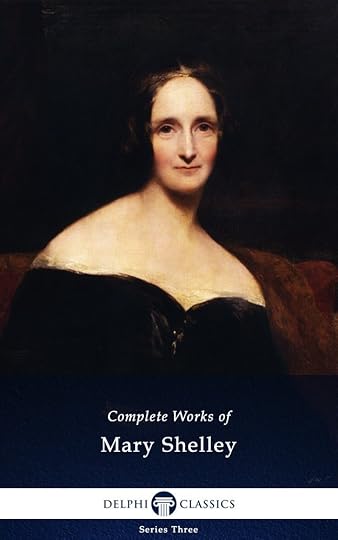
[Image: Book Cover]

Citation:
Shelley, M. (2015). Falkner. In Complete Works of Mary Shelley (Kindle Edition, pp. 3021-3546). Delphi Classics. https://www.amazon.com/gp/product/B00....

Title: Falkner
Author(s): Mary Wollstonecraft Shelley (1797-1851)
Year: 1837
Genre: Fiction - Novel
Length: 526 pages
Date(s) read: 10/25/25 - 10/28/25
Book 226 in 2025
******************************************************************************
Displaying 1 - 16 of 16 reviews

Can't find what you're looking for?

Get help and learn more about the design.