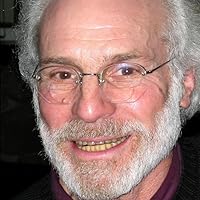
Kay Ryan-"a classic American poet" (John Freeman)-is acclaimed for her highly intelligible, deeply insightful poems. Erratic Facts is her first new collection since the Pulitzer Prize-winning The Best of It, and it is animated with her signature swift, lucid, lyrical style.At once witty and melancholy, playful and heartfelt, Ryan examines enormous subjects-existence, consciousness, love, loss-in compact poems that have immensely powerful resonance. Sly rhymes and strong cadences lend remarkable musicality to her incisive wisdom. While these pieces are composed of the same brevity and vitality that has characterized her singular voice over the course of more than 20 years, her mind is sharper than ever, her imagination more eccentric and daring. Erratic Facts solidifies Ryan’s place at the pinnacle of American poetry, and proves that she will remain among the leading innovators in literary history.
Born in California in 1945 and acknowledged as one of the most original voices in the contemporary landscape, Kay Ryan is the author of several books of poetry, including Flamingo Watching (2006), The Niagara River (2005), and Say Uncle (2000). Her book The Best of It: New and Selected Poems (2010) won the Pulitzer Prize for Poetry.
Ryan's tightly compressed, rhythmically dense poetry is often compared to that of Emily Dickinson and Marianne Moore; however, Ryan’s often barbed wit and unique facility with “recombinant” rhyme has earned her the status of one of the great living American poets, and led to her appointment as U.S. Poet Laureate in 2008. She held the position for two terms, using the appointment to champion community colleges like the one in Marin County, California where she and her partner Carol Adair taught for over thirty years. In an interview with the Washington City Paper at the end of tenure, Ryan called herself a “whistle-blower” who “advocated for much underpraised and underfunded community colleges across the nation.”
Ryan’s surprising laureateship capped years of outsider-status in the poetry world. Her quizzical, philosophical, often mordant poetry is a product of years of thought. Ryan has said that her poems do not start with imagery or sound, but rather develop “the way an oyster does, with an aggravation.” Critic Meghan O’Rourke has written of her work: “Each poem twists around and back upon its argument like a river retracing its path; they are didactic in spirit, but a bedrock wit supports them.” “Sharks’ Teeth” displays that meandering approach to her subject matter, which, Ryan says, “gives my poems a coolness. I can touch things that are very hot because I’ve given them some distance.”
Kay Ryan is the recipient of several major awards, including fellowships from the National Endowment for the Arts, the Ingram Merrill Foundation, and the Guggenheim Foundation. She has received the Union League Poetry Prize and the Maurice English Poetry Award, as well as the Ruth Lilly Poetry Prize. Since 2006 she has served as a Chancellor of the Academy of American Poets.
It's trite to compare Ryan's work to physical craft but it's still like little carvings with intricate details you don't always notice the first time around. These poems feel like she's completely mastered her style -- chock full of inimitable internal rhymes -- and deployed it in the service of explicating loss, a theme that's appeared in her work before but never to this extent. Ryan's a pretty private writer in a lot of ways yet this collection is intensely personal, especially near the end. It's a powerful piece of carpentry that tries to carve something out of an impossible subject. Highlights: Fizz, Fool's Errands, Venice, Almost.
I like Ryan's haiku-esque sensibility: her poems are longer than haiku, but she uses consistently short line lengths and internal rhymes to achieve a haiku's sense of breath-brief transience, structure, and formal discipline. If you haven't read Ryan before, you might wonder whether her use of the same formal constraints again and again gets boring over time, but strangely it doesn't, no more than Basho's repeated use of the 5-7-5 form does.
In poems so short, so exposed, it'd be difficult to hide any fact-fudging, any unearned pretension -- poems shaped like these seem almost constitutionally unable to hide a lie any more than a clearly written mathematical proof can, and this sets the terms for an intensely honest meeting of minds between the writer and the reader. In fact, I read an interview with Ryan in Poets & Writers magazine last year where she tells of how she discarded a seemingly perfectly good poem she wrote about trees when she realized she had gotten one of her facts about botany wrong: you've got to respect such rigorous fidelity to an external standard. But this anecdote also tells you something else about Ryan's poems: how tightly wedded to a single felicitous concept or idea each poem is, such that the poem could be argued to fall apart if the concept does.
Ryan writes poems about concepts drawn from science -- say, the chirality of molecules ("Imagine an / inversion as / simple as socks: / putting your hand / into the toe of / yourself and / pulling") or the mitosis of cells ("there's no sense / that it hurts, but / why wouldn't it.... In / which event / an organism's / asked to... put out / the burning tent / and stay inside") -- with a remarkable purity of attention: there are no self-conscious declarations here of the "Look at me, looking at things!" kind, just the things themselves.
But Ryan also observes ordinary real-world things with glorious precision, down to the nanosecond, the nanometer:
The first trickle of water down a dry ditch stretches like the paw of a cat, slightly tucked at the front....
Ryan slows down mundane moments, stretching them out like taffy, delicately, without letting them snap, until they are filled with wonder again. But her poetic gift also lets her do the reverse with seemingly equal facility -- that is, speed up time, as in "Blast," a poem about an explosion:
...This must have happened many times before, we must suppose. Almost a pulse if we could speed it up...
It's a truly gifted mind that can see a pulse in an explosion -- that is, see a pattern in what seems at first to be an egregious, once-in-a-lifetime catastrophe -- just as clearly as it can see unique happenings worthy of celebration or mourning in every recurrence of a frequent periodical event. I think this is how Ryan earns the license to play fast and loose with abstractions the way she does -- because in each generality she sees a particularity, with color, personality, and emotional texture:
Even a pin set on a memory table falls through.
A bare wood kitchen table with square legs kicked yellow and blue from painted chairs pushed in for thirty years...
It was taking longer than usual for me to start connecting with the little poetic diamond shards collected here, but about 1/3 of the way in the captivating admixture of wit, wryness, & endlessly unexpected images & turns of phrase I've come to expect from Ryan's work sparkled as brightly as ever. Always a pleasure.
We are held / as in a carton / if someone / loves us. / It's a pity / only loss / proves this"
Ryan's an original, but as I was reading this I kept thinking about why I associate her often with Dickinson -- both write very succinct poems and have a strong penchant for assertive, declarative sentences that can sound like homilies. But really their similarities end right about there -- Dickinson is much more dramatic ("I felt a funeral in my brain," or "Dare you see the soul at the white heat?" I can't imagine such drama from Ryan.) Ryan is decidedly much more at a remove in her poems, almost clinical, making her homilies much more homely. At her best, she's very wise but understated; at her worst, she's more wise-guy than wise. But all in all, I really enjoy almost anything Ryan writes -- she's thinking deeply but not in an ostentatious theory-meets-poetry type of way that usually gets the lion's share of critical attention. Who else can come up with a quiet, profound little gem like the following:
“The First of Never,” by Kay Ryan
Never dawns as though it were a day and rises.
Our day-sense says a day can be out-waited. So we wait.
That’s the only kind of time we’ve ever known:
it should be getting late; she should be getting home.
Given her short poems, her work is something easily readable in a few days or less.
Along with Richard Wilbur, I consider her the best American poet writing today. The short, pithy nature of the poems understate their immense intellect, wit, power, and beauty.
A joy to read, but I must admit, I found this book not up to what I enjoyed in her previous collections. Her best work, in my opinion, were the poems in Say Uncle and The Niagara River.
One of the things I love about Ryan's poems is that they're so compressed you can read them multiple times in a row and pick up some new thing each time and just keep doing that indefinitely. It's the way she plays with context and content, and her deep, occult rhymes.
Here I also loved the tricky line breaks of "Breather." Which is saying something when one of your signature moves is writing poems so narrow you could print them on a bookmark without any trouble.
Other favorites in this collection: On the Nature of Understanding; Putting Things in Proportion; Playacting; Nightingale Floor; Fool's Errands; Bunched Cloths; Musical Chairs; Almost; Memory Table.
3.5 rounded up for the rhymes, with a special shoutout to the glaciers/erasure rhyme in the title poem.
still chewing on a lot of these but without a doubt some of the most carefully lyrical poetry i’ve ever read—the rhymes are so gentle and yet punctuate the flow of the poem.
Say when rain cannot make you more wet or a certain thought can’t deepen and yet you think it again: you have lost count. A larger amount is no longer a larger amount. .. (of “All Your Horses”)
really a treasure trove of inspiration :) makes me want to just focus on sound, also draw from more quoted text and/or pair poetry with quoted text
Good stuff: Now that I've read it all once, I'm set to go through and read these poems over and over. Maybe I'll memorize some, I bet they'll be fun to recite to myself, and supposedly it's good for the old brain to get that kind of exercise. Anyway, Kay Ryan is great, and I'm glad I came across this on the featured poetry shelf in the Worthington Public Library.
I stumbled across this collection at the MLA, and I picked it up because the first several poems simply grabbed me. I’ve been challenging myself to read more collections of poetry, so that’s something I sometimes do: pick up a volume and see if it talks to me. As a result, I don’t read any poetry that I don’t already like a lot. There’s so much of it in the world that it seems silly to spend time on something that doesn’t talk to you.
I’d never heard of Kay Ryan, but, as it turns out, I’m hardly making some deep discovery. She’s won a Pulitzer and been the U.S. Poet Laureate, so there’s really nowhere up to go from there. That’s the nature of 21st Century American poetry, I guess – even the stars are obscure. (That makes the broad acknowledgement of Mary Oliver’s death so startling; most of us simply don’t know our poets.)
Ryan’s poems are all short. She works with a line-length well less than a breath, and her work has a zen koan quality to it. She boils her insights down to such an essence that we’ve swallowed them whole before we quite realize it. There’s a meditative quality in the work, but there’s also a lot of humor. She’s taking her ideas and her poetry seriously, but she doesn’t seem to be taking the idea of poetry too seriously.
Most of my favorites are the very first ones. Consider, for instance, “New Rooms”
The mind must set itself up wherever it goes and it would be most convenient to impose its old rooms—just tack them up like an interior tent. Oh but the new holes aren’t where the windows went.
I love the brevity of this one, but I love as well the way it lingers. I think that feeling, the sense that, after a major change in my life or world, I want to get back to a familiar rhythm. Instead, as she says, “the new holes aren’t where the windows went.” That tight, slanted-truth seems almost worthy of Emily Dickinson, a truth that we recognize as truth only after she says it.
Another that prompted me to pick this up is “On The Nature of Understanding”
Say you hoped to tame something wild and stayed calm and inched up day by day. Or even not tame it but meet it half way. Things went along. You made progress, understanding it would be a lengthy process, sensing changes in your hair and nails. So it’s strange when it attacks: you thought you had a deal.
That too seems to capture a truth I’d almost already known. I have that sense of getting locked within myself in the midst of a new project, a new attempt at understanding. Just because I set myself the task of coming to understand a thing, it doesn’t mean that I will succeed. Ryan reminds me that understanding has to be a conversation, a dialogue, and one of the great potential errors is to assume that which the other is saying.
I can’t help having read this in the context of another book I picked up at the MLA, Lee McIntyre’s Post Truth, a study of the way we have reached a point of such contested sense about what it means for something to be “true” in Trump’s America. I see here a playful response to that uncertainty. Read within the moment, Ryan is showing how the mind pushes toward knowledge and then pulls away nearly as fast. The title poem isn’t one of my particular favorites, but its title suggests just that point: we necessarily perceive the world with expectations, but those expectations – in their erratic application to the world as it is – often lead us into error.
She gets at that same sound-of-one-hand-clapping insight with an excerpt from “Trench Like That.”
The question is does the sea go exactly back after a ship passes. Is a trench like that an event or not…
That image simply works for me. I’ve often wondered at the strangeness of doing a thing that leaves no trace (something I did just yesterday when an hour of shoveling snow seemed to matter not at all to the additional half inch that had fallen behind me as I worked). I feel Ryan posing a question, and I feel compelled to answer it even as I know I can’t.
Other favorites include “Token Loss,” “All Your Horses,” and “Why Explain the Precise By Way of the Less Precise.”
I’m going to stick this one on the shelf and, given the bite-sized conundrums it offers so widely, I expect I’ll pull it down again every so often.
I'm on record as being a fan of minimalist poetry. Just desserts here. Kay Ryan is a minimalist's minimalist. And she packs a Pulitzer to boot (and, as we all know, THOSE boots are made for walking).
Like Twiggy, Ryan's poems are short, thin affairs, with lines typically expiring after two or three (most four) words. Pithy. Almost cute. With a twist like certain drinks. If you're thinking "one-trick pony," I ain't saying a word.
Still, clever is as clever does. I can share a few poems that gave me some enjoyment of a sort. Ready, set, here-you-go:
Ship in a Bottle
It seems impossible-- not just a ship in a bottle but wind and sea. The ship starts to struggle--an emergency of the too realized we realize. We can get it out but not without spilling its world. A hammer tap and they're free. Which death will it be, little sailors?
Yes, more going on than meets the eye, which, I suppose, is KR's hallmark. And lucky her--no one even cares that her line breaks come on articles and conjunctions that are about as important as... me. En autre...
Token Loss
To the dragon any loss is total. His rest is disrupted if a single jewel encrusted goblet has been stolen. The circle of himself in the nest of his gold has been broken. No loss is token.
What? You want more?
Musical Chairs
Only the one is musical, actually. the others are ordinary, mostly from the kitchen. Not a peep of music out of them as they are taken from rotation. Mum chairs, tuneless racks, dumbsticks, next to the escalating operatic ravishments of banishment sung to the children by the one chair absent.
As you might imagine, 63 pages of that goes quickly. But I found myself browsing in other books to break it up, and I think Kay owes me thanks for that. Her small work is better in small doses.
These poems are very quiet, inwardly facing. Still with the surprise little twist at the end, but these do not have the tension of the poems in Niagara River. Without the tension, the little twist is often flat, no zing. Others are wonderful quiet little gems.
TOKEN LOSS To the dragon any loss is total. His rest is disrupted if a single jewel encrusted goblet has been stolen. The circle of himself in the nest of his gold has been broken. No loss is token.
FOOL'S ERRANDS A thing cannot be delivered enough times: this is the rule of dogs for whom there are no fool’s errands. To loop out and come back is good all alone. It’s gravy to carry a ball or a bone.
This is Kay Ryan at her best. She has virtually invented a new kind of poetry that allows us to see through the veil of the commonplace into the nature of consciousness. These illuminating "little" poems resonate with the lucidity of neuroscience and the emotional impact of a life lived deep. It takes a capacious understanding of human nature to capture such complex insights in such informal and seemingly simple ways.
The one-page lead poem, "New Rooms," is worth the entire cost of this book. I'm having trouble reshelving this book. I don't want to leave this world.
Like looking over stones a friend collected on her many hikes, these lean poems read like quickly scribbled field notes that are too personal to be clearly understood. Simultaneously guarded and generous, they add up to a kind of messy intimacy like feeling puzzled with a stranger instead of alone.
"When water is so hard to tread, it seems purposely hurtful that this is so often said dismissively."
I haven't felt the need to memorize a poem in a long time, but Kay Ray awoke that dormant part of me. There are so many beautiful little poems in here. I think I'll keep it by the bedside for a while, so I can read a couple before bed.
If you liked this, make sure to follow me on Goodreads for more reviews!
Kay Ryan is just fantastic. I love her short, tightly compressed lines that stutter step gracefully toward revelations large and small, spiritual and mundane. She is like a modern-day Emily Dickinson but with a less imposing inner austerity.
Many (not all) things in life follow a normal distribution, which is the backdrop of one of my favorite autoaphorisms: "95% of everything is crap." (Admittedly, I need to gussy this one up). This in turn is a variant of the empirical rule, which states that, in a set of elements that are in fact normally distributed, roughly 68% of those elements fall within one standard deviation of the mean; roughly 95% within two standard deviations of the mean; and roughly 99.7% within three standard deviations. My critical theory aesthetic: everything can't be good. In fact, most isn't.
To continue: life is short. Opportunity cost is a real thing. One must pick and choose wisely.
Last week I was making the rounds of the bookstores in Boulder, Colorado, and stumbled upon Erratic Facts in Trident Books. To my shame, I was unfamiliar with Kay Ryan; but due to an editorial or business decision to place WINNER OF THE PULITZER PRIZE on the cover, I quickly deduced that this book might be a candidate for my 5% threshold. The dust jacket blurb also stated that Ryan served two terms as U.S. Poet Laureate and is a MacArthur fellow. Even further, an epigrammic factoid defined erratic as “(n) Geol. A boulder or the like carried by glacial ice and deposited some distance from its place of origin”. What? Erratic a noun? Intelligence, originality, and creativity crammed into a tight little box. This was something worth reading.
And, it was a used book in great condition. Low risk, high reward.
Hypothesis confirmed: Erratic Facts is an objectively great collection of poetry. (What poetry actually is remains an open debate, as is its importance, asked and answered spectacularly by Dana Gioia thirty years ago; but I digress). While I remain unfamiliar with the rest of Ryan’s work, I am a big fan of this volume. I will quickly rectify my ryanunbekanntheit.
Ryan’s poems are not only erratics but also hard, clear icicles, like a prism unexpectedly turning general topics into arrays of color and meaning. Appearing as little linguistic columns, with line breaks that don’t follow a formal structure, the poems in the aggregate nevertheless take on a mantle of formality. Order from disorder: analogous to the emergent properties of a complex system.
Although the individual poems lack a precise formal structure or meter, they exhibit strong assonance and rhyme. Consider the first poem, “New Rooms”:
The mind must set itself up wherever it goes and it would be most convenient to impose its old rooms—just tack them up like an interior tent. Oh but the new holes aren’t where the windows went.
It works on several levels. What appears as a stoic column hides a peculiar rhythm (must/just, goes/impose, convenient/tent/went) that “delights the customer,” to use a business term. It brings a smiling joy. And the concision belies a profundity, an elegant amuse bouche that is a precursor to the philosophical main course. This is poetry, proverb, and philosophy combined. And we’re just on the first page.
Several other poems exhibit a delightful, almost Seussian singsong, especially in the final two phrases (“An Instrument With Keys,” “All You Did,” “Why It Is Hard To Start,” “Burning Text” to name a few).
Facts ends with its eponymous jewel, which I’ll leave to the reader. Ryan’s art transcends critical explication. What more could I say that Ryan hasn’t already?
I had not read Kay Ryan’s work before. She writes dense little bits of idea, with rhyme and image singing out. The ideas are playful often, salvation as bubbles of hope (not soap), and the menace in Venice for someone with sensory sensitivity, or the “Musical Chairs” observation that “only the one is musical, actually”. Often an unusual insight, sometimes from a technical fragment.
Having read Sharon Olds immediately before this, who paints scenes from her life with her words, these feel a little like shiny bits of glass, where I may occasionally see a glimpse of the poet, but just a bit of humor, or sadness. A fondness for animals, a thoughtful attention. And a little bit to wonder about.
This didn't resonate with me the way The Best of It did. Perhaps that book sets unrealistic expectations, as The Best of It is, as the title suggests, a collection of the best of Kay Ryan's work and the winner of a Pulitzer Prize. Ryan's trademark style is here, but her phrasing and what imagery there is just didn't capture me the same way. I think Kay Ryan's writing style, when done well, really packs a punch. I was a bit uninspired by most of the poems in Erratic Facts although I continue to admire Ryan's style and have appreciation for how deceptively simple it often seems. My favorite poem was "Velvet":
Along with Billy Collins and Mary Oliver, Ryan is my favorite living poet-- and truly, I can think of no writer who has done more to impress on me the beauty of economy. Each of her poems is a tiny, perfectly sculpted riddle where every word packs a whallop, both in terms of meaning and rhythm; they seem so simple, to the point that it's hard to resist devouring them by the dozens, yet nearly every poem in this collection made me stop and re-read it, second-guessing all my assumptions about it. I'd probably give a slight edge to 'Say Uncle' or 'The Best of It,' but this is without a doubt peak-level work from a true master.
The mind must set itself up wherever it goes and it would be most convenient to impose its old rooms -- just tack them up like an interior tent. Oh but the new holes aren't where the window went.
This collection is like a cross between Ali Smith and David Markson. We are presented with the musings of common items or events, or else a (supposed) random thought from the author. But what Ryan does through wordplay and shifting perspectives is quite remarkable. We are able to see things in a new light. And while it doesn't occur in every piece, there are a handful of poems that surpass the others to become profound. Whimsical. Thoughtful. Observant.
So, I'm trying to "get" poetry which I'm very bad at getting. I started with this and I liked a fair number of the poems and I was clueless about the rest. That, of course, isn't the fault of the poet, but a fault I claim. I really need a cheat sheet to have by my side that explains each poem so I can fully enjoy it and then enjoy it even more because I will then feel free to add my own interpretations. Without the notes I always worry I'm just not getting it. So, I will read them all again. And again. And I will hope I will get more with every reading.
Though Ryan is one of my favorite poets, this collection doesn’t feel like one of her major works. Most of the collection is just alright, but there are still a few gems scattered throughout and this book definitely still has the Kay Ryan DNA, with her short lines, internal rhyme, and clever wordplay. Ryan had recently lost her wife to cancer when writing this book, and a lot of the best poems here strike me as a response to this, dealing with love, heartbreak, and loss (i.e, Still Start, Album, Party Ship, and Eggs). 3.5/5
I expected a lot more from this book, considering how many awards the author has received. But I feel like she has won acclaim for being vague and mysterious, for hiding her meaning behind word puzzles, instead of trying to connect with the reader and communicate her ideas. In my opinion, good writing always does the latter. I did enjoy her use of internal rhyme, but most of the time I felt her lines were too choppy and disjointed for any train of thought to be easily followed.
(4.5) A very well-composed tasting menu, plate after plate of momentary meals, expertly crafted--the best ones you turn into two or three bites, the less successful ones you follow with a sip of wine. A feat insomuch as there is rarely any indulgence to deviate from the form, nearly every poem fitting on a single page, often with plenty of white space, but never feeling like a self-conscious scrap or a chopped-up witticism. True poems throughout--but chew your food all the same.
The first third was definitely stronger than the rest (except for the last and title poem). I enjoyed it--spent my time reading it leisurely, going back and rereading every time I opened it, etc. The poems are accessible and meaningful, but I'm quite glad to have borrowed my copy rather than paying for it.