Jump to ratings and reviews
Rate this book
Rate this book
The story of a pivotal president who watched over our westward expansion and solidified the dream of Jacksonian democracy

James K. Polk was a shrewd and decisive commander in chief, the youngest president elected to guide the still-young nation, who served as Speaker of the House and governor of Tennessee before taking office in 1845. Considered a natural successor to Andrew Jackson, "Young Hickory" miraculously revived his floundering political career by riding a wave of public sentiment in favor of annexing the Republic of Texas to the Union.
Shortly after his inauguration, he settled the disputed Oregon boundary and by 1846 had declared war on Mexico in hopes of annexing California. The considerably smaller American army never lost a battle. At home, however, Polk suffered a political firestorm of antiwar attacks from many fronts. Despite his tremendous accomplishments, he left office an extremely unpopular man, on whom stress had taken such a physical toll that he died within three months of departing Washington. Fellow Tennessean John Seigenthaler traces the life of this president who, as Truman noted, "said what he intended to do and did it."

188 pages, Hardcover

First published February 1, 2003

49 people are currently reading
623 people want to read

About the author

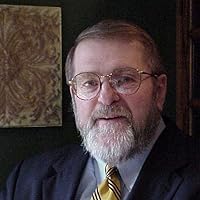
John Seigenthaler

11 books9 followers
John Seigenthaler’s journalistic and political legacy includes four decades as a reporter, editor and publisher at the Nashville Tennessean and a concurrent nine years as the founding editorial director of USA Today. Two times during his newspaper tenure, he took leaves of absence to serve as an aide to Robert F. Kennedy, who was his close friend.
Upon retiring from the two newspapers in 1991, Seigenthaler founded the First Amendment Center, the nation’s foremost institution devoted to education, debate and dialogue about free expression, and remains intimately involved with its programs and forums.
In 1960, he took a leave from the Tennessean to work with Robert Kennedy on his brother’s presidential campaign, later becoming Robert Kennedy’s administrative assistant in the Kennedy Justice Department. When authorities in the Deep South signaled they were going to put up massive resistance to the civil rights protests of the Freedom Riders, the president and his attorney general sent Seigenthaler to Alabama as their personal representative to try to defuse the situation.
On May 20, 1961, Seigenthaler met the Riders’ bus as it reached Montgomery’s bus station. So did hundreds of white rioters who, with police absent from the scene, set upon the Riders. Seigenthaler was beaten as he tried to protect a young Freedom Rider, and he was left unconscious on the pavement for more than 20 minutes before police officers finally took him to the hospital.
The late historian David Halberstam, who was a reporter with the Tennessean at the time, wrote that Seigenthaler’s beating was a pivotal moment for Robert Kennedy, for whom politics was personal. The incident marked the beginning of RFK's strong support for civil rights.

Ratings & Reviews

What do you think?
Rate this book

Friends & Following

Create a free account to discover what your friends think of this book!

Community Reviews

5 stars
211 (24%)
4 stars
312 (35%)
3 stars
280 (32%)
2 stars
54 (6%)
1 star
10 (1%)
Displaying 1 - 30 of 81 reviews
Profile Image for Bill Kerwin.
Author 2 books84.3k followers
January 27, 2020

Harry Truman put Polk on his list of the eight greatest presidents. "He said exactly what he was going to do," Truman remarked, "and he did it.”

You may argue with Truman’s estimate, but not with his facts. Early in Polk's administration (which he pledged would be one term), the new president set down his goals for the next four years: 1) lower the tariffs, 2) re-establish an independent treasury, 3) add Britain’s Oregon to U.S. territory, and 4) acquire California from Mexico.

This was an ambitious program for the forty-nine year old president. His own Democratic party was riddled with jealousies, he was thoroughly detested by the Whigs (and returned the compliment), and neither the British nor the Mexicans were eager to relinquish their territories, but Polk worked tirelessly, and by the end of his presidency he had accomplished all four of his goals.

As John Seigenthaler demonstrates in this forthright and effective biography, if Polk was a great president, it was not because of an expansive intellect or a transformational vision. He was an intelligent but unimaginatively practical man, a dyed-in-the-wool Democrat devoted to Jacksonian democracy, determined to make its program succeed.

His methods were sometimes dubious (he undoubtedly provoked Mexico into war), he was implacable in his hatreds (particularly of Whigs), and his intensity was unrelieved by any touch of humor. Yet he succeeded because he labored almost without ceasing, immersed in the largest issues and smallest details of government. No visits, no parties, no vacations for Polk (unless his health absolutely required it). No recreation at all, unless you count the rare horseback ride, the occasional walk to church.

Historian Arthur Schlesinger, Jr., compared him to Truman:
Neither Polk nor Truman was one of those creative presidents who make the nation look at new things in a new way. . . . But both had the intelligence and courage to accept the challenge of history. . . . it forced them, not into personal greatness, but into the performance of great things.
Great things demand great effort, and Polk toiled away right up to President Zachary Taylor’s inauguration on March 5, 1849. The fifty-two-year-old Polk then returned to his native Tennessee, and it was there he fell ill (probably from cholera). Eighty-seven days after Taylor's inauguration he was dead.
Profile Image for robin friedman.
1,948 reviews414 followers
June 3, 2024
America's First Dark Horse President

The American Presidents series, edited by the late Arthur Schlesinger Jr. is performing an outstanding service in its short biographical volumes, written by scholars, about each of the Presidents of the United States. This volume of the series, by John Seigenthaler, the founding editorial director of USA today, is devoted to the 11th President, James K. Polk, (1795 -- 1849). Seigenthaler's book does not measure up to some others in the series due to its failure to come to grips with the troubling issues of Polk's presidency. Yet, it does present a good portrait of a too-little known president and his accomplishments.

At the age of 17, young Polk endured a painful operation without anesthetic on his urinary tract which this book describes in excruciating detail. Seigenthaler suggests, reasonably enough, that undergoing and bouncing back from this dreadful procedure gave Polk the strength, drive, and will that he showed in the political arena for the rest of his life. Throughout his life, Polk was a committed, highly partisan Democrat and an ally of his fellow Tennesean, Andrew Jackson. Polk served in the State Legislature of Tennessee, and in the House of Representatives, where he rose to become Speaker of the House. He served one term as Governor of Tenessee and then was defeated in two successive bids for reelection. His political career appeared over.

In 1844, following Polk's unsuccessful bid for the governorship, Andrew Jackson supported Polk for the Vice-presidential spot on a ticket to be headed by Martin Van Buren. Van Buren, however, opposed the immediate annexation of Texas, which caused Jackson to withdraw his support and the convention to look elsewhere. Ultimately, the convention settled on the dark horse, Polk. Polk pledged to serve only a single term and he went on to defeat Henry Clay in the 1844 election.

Although a Jackson protege, Polk said "I intend to be myself president" (p.104) and he did so. If nothing else, he was a strong-willed and decisive leader who would brook no obstacles in achieving the goals he set for himself. At the outset of his Administration, Polk committed to four large goals: 1. lowering the tariff, 2. creating an independent Treasury, 3 acquiring Oregon from the British, and 4. acquiring California from Mexico. Polk achieved each of these goals in a single four-year term.

Much deserves to be admired in Polk's determination and accomplishment. Seigenthaler is taken with Polk the president if not with Polk the man. The trouble with Seigenthaler's account is that it gives too much space to Polk's life before he reached the presidency and too little space to taking a close, measured look at Polk's accomplishment as president, including his shortcomings. Seigenthaler is not a hero-worshipper of Polk, but he looks at his accomplishments far too uncritically. Polk almost led the United States into a war with Great Britain and he did led the country into a war with Mexico. With respect to Britain and the Oregon territory, Seigenthaler does not make clear that it was Polk who had to back down substantially from the war slogan "54-40 or fight." For all the sabre rattling, the dispute was settled under terms the British had proposed.

Much more serious is Seigenthaler's treatment of the Mexican War. Polk fomented this conflict and many people during Polk's time and since, including Congressman Abraham Lincoln, were distressed at the United States's role in provoking what appeared to be an unjust and unnecessary war which was pressed largely by those favoring the expansion of slavery. The reader sees too little of the war in Seigenthaler's telling, of its cruelty, of the domestic opposition, and of the questionable circumstances under which Polk accepted the treaty of peace. Simply put, the Mexican War was not one of the finest hours of the United States.

In his recent learned study of the United States between 1815 and 1848, "What Hath God Wrought", the historian Daniel Walker Howe is, in the company of many scholars, deeply critical of the expansionist Mexican War and of the manner in which Polk waged it. But Howe observes that "in the long run of history" the seizure of California from Mexico worked for "the general interests of mankind." Howe concludes that "God moves in mysterious ways and He is certainly capable of bringing good out of evil." (p. 811)

Seigenthaler's book lacks a certain critical perspective in examining Polk, especially the Mexican War. He emphasizes Polk's ability to know what he wanted to do (an important achievement indeed) and to act to realize what he wanted. But he lets Polk off too quickly and too easily. A degree of reflection on the Mexican War, and recognition of its difficulty and questionable moral character would have been welcome and necessary in assessing the presidency of James K. Polk.

Robin Friedman
Profile Image for Jim.
1,453 reviews95 followers
October 16, 2025
I've been trying to read biographies of all the US presidents since I was a kid in elementary school, when I read bios ( for kids) of George Washington, Abraham Lincoln, and Teddy Roosevelt. Since then, I've read bios of almost all the presidents ( and, of course, I've read any number of books on Washington, Lincoln, and some others). Now, I have finished a bio of our 11th president, James K. Polk, a book in the excellent American Presidents series edited by Arthur M. Schlesinger, Jr. ( published in 2003). Polk was the first "dark horse" candidate when he was nominated by the Democratic Party for President in the 1844 presidential election. He was also the first--and, so far, the only-- Speaker of the House to become president. He was a one-term president--because he promised to serve only one term and he did. But that one term of his was one of the most consequential terms in American history.
Polk was an expansionist, befitting a man who was a protege of Andrew Jackson. He was determined to annex the Republic of Texas to the USA and gain California as well. He wanted to settle the Oregon issue with Britain and bring as much of the Northwest as he could into the Union. His predecessor, John Tyler, brought Texas into the Union as the 28th state, with Polk's help in getting House and Senate approval of the Texas annexation treaty resolution. Polk was able to gain the Oregon Territory from Britain without a war. But to gain California, Polk provoked a war with Mexico by sending US troops into the disputed territory between the Nueces River and the Rio Grande. In the Mexican-American War of 1846-1848, Polk was most fortunate to have two outstanding generals--Zachary Taylor and Winfield Scott--win the war for him. Victory was won at a cost of almost 13,000 dead, 11,000 of them from disease, accidents, and noncombat causes, and more than 1,700 from battle wounds.
Author John Seigenthaler is very sympathetic toward Polk and the imperialistic concept of "Manifest Destiny," the idea that the United States was destined to dominate North America. I feel that Polk was an aggressor and the Mexican War was unjustified. The war aroused a powerful dissent against what was called "Mr. Polk's War." A young congressman from Illinois, Abraham Lincoln, spoke out against the war, as did many others, especially in the North. It was feared that the Southerner Polk would bring new slave states into the Union as a result of the war. As it was, the conquest of California and so much other Western land greatly exacerbated the slavery issue and pushed the nation much closer to civil war, which occurred thirteen years after the conclusion of the Mexican War.
A final point about Polk--no president was more of a workaholic than the eleventh president. When he finished his presidency ( General Zachary Taylor was elected president in 1848), he was worn out and appeared much older than his fifty-three years. He was ill during his long trip home with his wife Sarah to Nashville...He died just three months after leaving office. Polk's is the shortest retirement of any US President.
Now, to find a biography of Millard Fillmore or Franklin Pierce.
Profile Image for Vicki Gibson.
234 reviews10 followers
March 30, 2018
James K. Polk: The American Presidents Series: The 11th President, 1845-1849 by John Seigenthaler was the next book in my personal presidential biographies challenge. (Reading at least one biography of each president, in order.) As I mentioned in my last presidential biography review, this continues my wanderings through the 1837-1861 desert of US presidents (Martin Van Buren through James Buchanan).

As always, before selecting this particular biography I checked Stephen Floyd's My Journey Through the Best Presidential Biographies website for his recommendations, but I just couldn't bring myself to read a 468-page book on James K. Polk. My fallback selection is usually a book from The American Presidents Series edited by Arthur Schlesinger Jr. The best thing about the books in this series is that they are short - in this case, a mere 188 pages - but that also happens to be the worst thing about the series. I know I'm missing a lot of substantive detail. That said, it's James K. Polk for goodness sake! Just give me the highlights! And that's exactly what this book does.

Here's what I learned about James Knox Polk (JKP)...

His mother was a Presbyterian but his father, a deist, refused to affirm his Christian faith at JKP's baptism so the Presbyterian minister refused to baptize the child. (Scandalous!) While JKP did attend church throughout his life, probably due to his wife's influence, religion did not hold a place of importance. Religion was definitely secondary to politics for JKP.
As president, he rarely referred to God in his diary or suggested that he prayed for guidance or heavenly intervention in his life - not even during the war with Mexico. On one occasion, after an angry argument with a preacher, he did "thank God" for the constitutional wall between the government and religion... He died a nonpracticing Methodist who ardently believed in Jefferson's wall of separation between church and state.
At 17, he was diagnosed with urinary stones and underwent major surgery to remove the stones. This, at a time before general anesthesia and antisepsis to prevent infection.
By modern standards, the operation was a "terrifying procedure." It occurred "under whatever sedation [was] obtainable from brandy." Jim's legs were "held high in the air, and being restrained by straps and assistants, the operation was done as quickly as possible. The procedure was to cut into the perineum (the area immediately behind the scrotum and in front of the anus) with a knife and thence through the prostate into the bladder with a gorget, a pointed, sharp instrument designed for this purpose." The stones were then removed with forceps or a scoop... there can be little doubt that the operation left him unable to father a child.
Yikes!

JKP is one of only seven attorneys who became POTUS that argued cases before the Supreme Court. JKP won his SCOTUS case.

JKP married Sarah Childress in 1824 and his father's wedding gift to the newlyweds was a slave boy named Elias who remained with them throughout JKP's life. JKP owned slaves throughout his life. When he died, he left all the slaves to his wife with the instructions that they should be freed upon her death, but Lincoln emancipated the slaves long before Sarah's death 42 years later.

JKP was Andrew Jackson's protégé and natural successor, nicknamed "Young Hickory."
To Polk, all politics was fiscal, deeply rooted in the early struggle between federalism and republicanism; Hamilton and Jefferson; the wealthy elite and the common man.
Elected to the House of Representatives, he eventually became Speaker of the House (1835-1839). He was the first Speaker to openly promote a president's agenda and he is still the only Speaker of the House of Representatives to ever become POTUS.

After serving in the House, JKP returned to Tennessee and served one term (1839-1841) as the governor. He ran for a second term but was defeated by only 3243 votes. Two years later, he ran again and was defeated by 3833 votes.

At the Democratic convention of 1844 Polk managed to win the party's presidential nomination on the 9th ballot in large part because he was one of the few candidates in favor of annexing Texas. JKP won the presidential election becoming the first POTUS to lose his home state. As part of his campaign strategy, JKP promised, if he won, he would not run for reelection. He kept that campaign promise. At the time, he was the youngest POTUS ever elected. He was 49 years old.

JKP had four very specific goals as POTUS:
1) Lower the tariff from 32% to 25%.
2) Re-establish the independent treasury (which survived until 1913 when it was replaced by the Federal Reserve System).
3) Acquire the Oregon Territory from the British (which encompassed all of Oregon, Washington, and parts of Wyoming and Idaho).
4) Acquire California and New Mexico Territories from Mexico.

In the first 18 months of his presidency, JKP accomplished three of his four goals. In June 1846 he acquired the Oregon Territory, in July 1846 he lowered the tariff, and in August 1846 came Congress passed his Constitutional Treasury bill. Accomplishing his fourth and final goal was more difficult. It required going to war with Mexico.
The war ignited in April 1846 with a flourish of national patriotic fervor and public enthusiasm, an overwhelming "declaration of war" vote in both houses of Congress, and a rush of volunteers to join the army. Then, after a series of smashing military victories inside Mexico, the war dragged on for almost two years, casualties mounting, costs accelerating until Whig opposition in Congress, once a murmur, ultimately became an orchestrated chorus.
In the end (1848), Mexico gave up all claims on the California and New Mexico Territories and gave clear title to the land north of the Rio Grande - more than 500,000 square miles in return for $5 million plus taking on the assumption of the $3 million in US citizens' claims against Mexico.

JKP left office on March 4, 1849. His trip home to Tennesee took a month. Six weeks after arriving home he died at the age of 53 of an intestinal illness.
Presidential greatness is a term of elusive and elastic definition. It generally is conceded that presidents who combine a mesmeric personality with dynamic performance in times of crisis are accorded the honorific. Their actions merge with their images to project an aura of public confidence, appreciation, and affection. Polk suffers because historians instinctively measure his accomplishments, which were substantial, alongside his presidential personality, which was anal. They discover in his diary a quixotic human whose writings and thought processes range from vanilla to venomous. As a result, they often describe him in derisive terms.
That said...
A little more than a century later, Harry Truman published his list of eight great presidents and listed Polk, chronologically, behind Washington, Jefferson, and Jackson. "A great president," said the thirty-third chief magistrate of the eleventh. "He said exactly what he was going to do and he did it."
Arthur Schlesigner Jr said of JKP:
Neither Polk nor Truman was one of those creative presidents who make the nation look at new things in a new way... But both had the intelligence and courage to accept the challenge of history... it forced them, not into personal greatness, but into the performance of great things.
As far as this book goes, it gave me exactly what I wanted - a good summary of our 11th president. Next up: Zachary Taylor.
119 reviews2 followers
September 8, 2020
More analytical about his contributions than previous ones in the series. Polk is the bright spot in the midst of do-nothing presidents between Jackson and Lincoln. I appreciated the insight about his legalistic religious upbringing and his potential sterility from a lithotomy. He isn’t appreciated or well-liked, but Polk achieved what he set out to achieve as president and oversaw the expansion of the US into what we have today. The last lines say it all: “He did great things. That is a powerful epitaph.”
Profile Image for Steven Bryant.
29 reviews
February 16, 2025
I didn’t know much about James Polk prior to reading this book. I see now why historians tend to rank him higher than expected. He completed everything he set out to do and also expanded the US from coast to coast. I have a newfound impression of him, and that’s why these books can be cool! Even if they drag on
Profile Image for Martha.
439 reviews2 followers
January 14, 2019
Seemed to be well researched. A fairly short read for a presidential bio. I would like to read more about him & his relationship with Andrew Jackson. 3.5 stars
Profile Image for Jennifer.
676 reviews106 followers
June 4, 2010
Although James Knox Polk led a rather uninteresting and uninspiring life, John Seigenthaler does an exceptional job making this biography a very interesting, compelling read. He presents a very balanced view of the politics of the time and gives James Polk gracious treatment as many historians have not. Mr. Seigenthaler packs in plenty of detail into this 150-page book yet does not depart from the big picture. His writing style is very readable and has a clarity that I especially enjoyed (he made a lot of different happenings of that era understandable to me).

The most notable thing about James Polk, in my opinion, was his commitment to the goals that he set for himself. What he planned to do he did. At the outset of his presidency he set four goals for himself: lower the tariff, create an independent treasury, acquire the Oregon Territory, and acquire California. He did all of these things and then some. Although his life was somewhat short, he accomplished much. I did not, however, enjoy reading about the pathways that he took to accomplish his goals. He was very pragmatic and was not afraid to stoop to deception and manipulation to get what he wanted.

Overall, I enjoyed this book and thank Mr. Seigenthaler for the work and effort he put into making this a pleasurable biography.
55 reviews1 follower
January 19, 2008
While reading Blood and Thunder: A Tale of the American West last year, I learned a bit more about President James K. Polk, and always wanted to pick up a biography about him. This was exactly what I had in mind - not too dense and academic, just a nice overall look at his life and his service in government in 160 or so pages. The one criticism I might have is that the war against Mexico and the acquisition of California and New Mexico is covered a bit too quickly, thankfully I had the background from Blood and Thunder. It also serves as a nice introduction to the other power players in early 19th century American politics - Jackson, Clay, Calhoun, etc.

In the end, it was interesting to see how successful Polk was with all the obstacles (both political and personal) standing in his way. He was a very contrary man, both willing to welcome former enemies into the White House, to try to do business with them, but all the while hating it and trying to remove popular (and useful) opposition personalities like General Winifred Scott from power. Interesting presidency, complex man.
Profile Image for Vali Benson.
Author 1 book63 followers
December 10, 2021
The riveting story of the 11th President of the United States as told by one of the finest all-time story tellers. Brilliantly researched and beautifully conveyed by the revered John Seigenthaler. Great details capture the tumultuous times of James Knox Polk as the United States heads towards its tragic tipping point. Highly recommended for fans of American history and American Civil War scholars.
Profile Image for Doreen Petersen.
779 reviews143 followers
October 21, 2015
Although I didn't really think much of Polk as a president this book was extremely well written and I would recommend it to all.
5,870 reviews146 followers
January 9, 2019
James K. Polk is the eleventh book in The American Presidents series – a biographical series chronicling the Presidents of the United States. John Seigenthaler wrote this particular instalment and edited by Arthur M. Schlesinger, Jr.

James Knox Polk was the eleventh president of the United States (1845–1849). He previously was speaker of the House of Representatives (1835–1839) and governor of Tennessee (1839–1841). A protégé of Andrew Jackson, he was a member of the Democratic Party and an advocate of Jacksonian democracy.

During Polk's presidency, the United States expanded significantly with the annexation of the Republic of Texas, the Oregon Territory, and the Mexican Cession following the American victory in the Mexican–American War.

Seigenthaler offers a solid portrait, albeit rather cursory, of an unlikable man who achieved extraordinary things. He agrees with those who rate this dour, partisan, grudge holding, one-term president a success. Polk took office in 1845 with four aims in mind: to lower the tariff, take federal deposits away from private banks, wrest the Oregon territory from joint possession with Great Britain, and make California an American territory.

In achieving everything he sought, Polk was more successful than most presidents were. National sentiment favored him. He was politically skillful and by declaring that he would serve for only one term, Polk freed himself to push ahead without his eyes on re-election.

However, Seigenthaler fails to evaluate the consequences of Polk's successes. His first three goals were reasonably uncontroversial, their effects specific and contained. However, his last – to take California from Mexico – ended in war with that nation, ostensibly over Texas. The war brought Texas, California and the entire Southwest into American possession.

It also cost Mexico half its territory. More consequentially, it heightened national tensions over slavery and set in motion the bitter events that culminated in civil war. To be sure, those events lie beyond the biography of a man who died long before the Civil War began. However, a presidency takes on meaning from its context and consequences.

In the end, this biography nicely paints a four-year term, but leaves us wanting an assessment of its significance within the longer span of history.

All in all, James K. Polk is a wonderfully written biography of the eleventh president and it was a rather good continuation to what would hopefully be a wonderful series of presidential biographies, which I plan to read in the very near future.
Profile Image for Scott Pearson.
860 reviews42 followers
September 28, 2023
US President James Polk (1845-1849) elicits strong opinions from those aware of his record. They either love him for his effectiveness and performance or hate him for his difficult personality and the Mexican War. So-called “Young Hickory,” styling himself after “Old Hickory” Andrew Jackson, Polk set out to be a one-term president and to accomplish four specific goals outlined in his inaugural. He accomplished all of them and died a few months after leaving the presidency. In this book, fellow Tennessean John Seigenthaler describes the events of his life and presidency in a short biography.

This book brings readers back to a prior era, when Whigs and Democrats battled for power and at the beginning of when slavery became the dominant national issue. Like now, American politics was deeply polarizing. Henry Clay, whom Polk defeated, proposed the “American System” for internal improvements. Polk instead sought to extend the country coast-to-coast in a fulfillment of “Manifest Destiny.” Seigenthaler describes and illustrates all of these historical with eloquence and discernment.

To accomplish two goals, Polk acquired both Oregon Territory from the British and the American Southwest forcibly from Mexico. For another goal, he also reduced a tariff against Northern industry. Finally, he disbanded the National Bank and instituted an economic system that stayed in place until the Great Depression. His supporters point to this efficient track record of success to support his case for the upper tier of presidents. Seigenthaler tends to stick to this narrative and not become sidetracked by negative critiques of the president.

However, Polk kept a personal diary full of his vision about the day’s affairs. Many a historian has lambasted this diary. It’s full of personality quirks and pettiness that do not put him in a great light. Seigenthaler generally stays away from the diary as a dominant source and instead focuses on Polk’s accomplishments. As such, this account positions Seigenthaler as more of an apologist than a critic. Polk’s admirers in his (and my) home state of Tennessee can thus appreciate this friendly account. Love Polk or hate Polk, Seigenthaler lays it out in this accessible, short, and carefully worded volume.

Profile Image for James.
350 reviews3 followers
May 10, 2021
I just finished reading James K. Polk by John Seigenthaler. This is a book for serious history buffs. President Polk, IMHO was a "near great" President, in the same pantheon as Harry S. Truman, Donald Trump, Andrew Jackson, and John Adams. He was not "great" in the tradition of George Washington, Abraham Lincoln, Theodore Roosevelt or Ronald Reagan. He was definitely not in the cellar inhabited by Franklin Pierce, James Buchanan, Millard Fillmore Franklin D. Roosevelt or Richard Nixon.

Speaking of James Buchanan, he looms rather large in this book. He was Polk's Secretary of State. The book concludes that Polk was largely his own Secretary of State since Buchanan appears to play the role of incompetent buffoon much as he did later as President.

Seigenthaler concludes that Polk ranks as a "near great" for the reason that he was clear on what he intended to accomplish and largely executed the punchlist. These included the creation of an independent treasury, the annexation of California and what is now New Mexico, the confirmation of Texas's permanency in the Union, and (partially) the annexation of the "Oregon Country", an area jointly administered with Great Britain including present-day Washington, Oregon, Idaho, and part of Montana (the book mistakenly referred to that as part of Wyoming, but in fact it was Montana west of the Continental Divide). Why do I put Donald Trump in this list? He also was clear about his agenda and largely accomplished what he set out to do. His character flaws of course detracted from his legacy. History will decide where he stands.

I was selectively recommend this book. As the author points out, unlike Jackson President Polk was colorless and humorless. The author honestly points that he was blatantly partisan. While the book is not a "hagiography" it is clear that he admires the subject. Nothing wrong with that.
Profile Image for Fred Kohn.
1,382 reviews27 followers
October 1, 2025
I read this book immediately following reading the book on John Tyler from this same series. They were both just kind of average for me; I gave them three stars. In neither case did I find anything memorable enough to write down in my notes. Although Polk is ranked rather highly by historians as far as presidents go, there was nothing in this book that really grabbed my attention. Perhaps this is because only about 50 pages of this book was devoted to the time Polk spent as president.

One cool thing about reading the Tyler book and the Polk book in succession was how they were linked together historically. So both books mentioned the Wilmot proviso and the explosion on the USS Princeton. I don’t know that these details are as likely to stick in my head as much as the grisly description of the 19th century surgical procedure the young adolescent Polk underwent for bladder stones with no anesthetic except for brandy. If nothing else, these brief biographies do carry you back in time.

A fascinating thing about this book was the many references to Polk's diary, which surely must be an invaluable resource for Polk historians. I don’t know if I will ever be enough of a Polk enthusiast to ever read his diary, though. I would probably not recognize many of the names, but of course with the internet this isn’t necessarily a problem. If I ever got that interested in Polk I would likely read the book on him from the American Presidency Series first.
Profile Image for Bill.
48 reviews
June 15, 2019
I’ve read a number of the “American Presidents” series. John Seigenthaler’s biography of James K. Polk reaffirms my conclusion that the quality of the individual titles in this series are quite uneven. Having read other, more in depth biographies of Polk, I can say with some certainty that this author’s love for his home state of Tennessee colors his view of one of the Volunteer State’s favorite sons.

The book adequately covers most of the key events in Polk’s less than exciting formative years and offers a decent foundation for understanding his presidency and, unlike some other Goodreads reviewers, I found the book quite readable. What I found lacking was a critical analysis of why a task driven, success oriented chief executive failed in his relationships with Generals Taylor and Scott. Seigenthaler’s very brief mention of John C. Fremont and Polk’s complicated relationship with Fremont’s father-in-law (Thomas Hart Benton) almost seemed to be an avoidance tactic. He also glosses over the details of Polk’s final instructions regarding his slaves to paint a slightly better picture than the naked truth.

All in all, this isn’t a bad book, but it’s certainly not a great one. If you really want to know about the fascinating Polk Presidency, you’ll need to read more than this single volume.
Profile Image for Jenny.
963 reviews22 followers
June 26, 2023
On my quest to read a biography on every president, I am now on #11, James K. Polk. I decided to read this one, rather than one of the 400-page ones I found on the Presidential Biographies blog, and I'm not sure if it was a great decision. On the one hand, this book was terribly dull. There is a significant chance that the 400-pager would be dull. But on the other hand, this book seemed very all over the place, so I'm afraid I did not learn much. I did learn that Polk was a surprise candidate (his goal was to be vice president) and went into his term of office agreeing to only be one term, which is true to what he did (and I think would have done, had he not died shortly after his presidency). I also learned that he was a workaholic, so he did accomplish the four main goals of his presidency (lower the tariff, admit Texas to the Union, create an independent treasury, acquire California from Mexico and acquire Oregon from the British). Oregon and California were not admitted to the union during his term, but his hard work ensured that they were admitted to the union soon after (and I guess Oregon county was admitted to the Union during his presidency, but not as a state). I learned that his wife was much more gregarious and had an open-door policy at the White House once a week for people to come and talk to the president about whatever they wanted. Those days are sure over!
Profile Image for Shawn Thrasher.
2,025 reviews50 followers
April 21, 2025
Polk's standing has dropped over the years, and he's not ranked in the top 20 presidents anymore. If this book were written in 2025, I think more attention would have been paid to his slave holding; it's almost an afterthought - but truly, slaveholding defined those southern Presidents of the antebellum period to a huge extent (afterall, their views on slavery ended up causing the civil war, regardless of the poisonous Lost Cause). He did free his slaves on his death - well, he freed them after his wife's death, which didn't happen until after Abraham Lincoln freed them. So that check in the positive column doesn't really count. It's interesting, though, to think about what the country would look like without Polk: a republic of Texas, Mexico benefitting from the California gold rush, Oregon and Washington a part of Canada (or their own countries). In the stream of time, we are all stones of some sort, and Polk was a big one - remove him, and things look awfully different today, and who really knows for better or for worse. Does that make him top 20? You could say this about any president. Seigenthaler's book doesn't prove it to me.
Profile Image for Ocean G.
Author 11 books62 followers
May 22, 2018
Pleasantly surprised by how prolific and successful a president he was. He was no Jefferson or Lincoln, but definitely better than the presidents before and after him. He incorporated California and Oregon territories (which had sort of been incorporated already, but the Brits were jointly in charge), and annexed Texas, which caused a war. Still, he accomplished things, which is more than can be said of the other presidents during this time.

Extremely interesting the manner in which he was finally given the nomination.
Truman's quote about Polk (and also Kennedy's) also very interesting.
Polk apparently instituted a real "big block of cheese day", which Jackson gets credit for but didn't really do.
Marx has a racist quote in here too (p. 147)
30 reviews
October 30, 2020
The structure of each biography changes along with the new author. Seigenthaler, a Tennessean, obviously has an affection for both Polk and Jackson, but tends to write more about the people that surrounded Polk and preceded him than about Polk himself. The major accomplishments are laid out very matter of fact, as though inevitable, and many major events and Polk achievements are told as small vignettes within chapters  whereas extensive time is dedicated to how Jackson and Van Buren laid the groundwork for a Polk candidacy that was considered the first "dark horse" candidate. Over half the book really isn't about Polk. 
This entire review has been hidden because of spoilers.
26 reviews
October 2, 2025
This was a nice sweeping and broad overview of Polk’s rise as a member of the house, governor of Tennessee and America’s first dark horse presidential candidate. This gives a broad look over what Polk does in office and hits major events. This is definitely not a definitive all encompassing biography. This is a good start for those interested in Polk. The only critique I have is the constant references to the Vietnam war. I understand why Seigenthaler referenced it so often due to when this book was written as well as his time being an assistant to Robert Kennedy but the constant references do get repetitive. Overall not bad but not great.
Profile Image for Dianna.
114 reviews1 follower
May 5, 2022
Polk is an overlooked president who was one of the most productive. His secret was focus--he outlined the four things he was going to achieve when he first took office and then he did them. He left copious notes in his diary which have been parsed over and his character judged, but one has to wonder: if he had not died immediately after his term in office, how would he have crafted his own legacy?
596 reviews3 followers
September 12, 2023
Too much of this short book was spent on the political season that resulted in Polk's election -- as much or nearly as much, I believe as his entire presidency. Similarly the discussion of his presidency reads more like a gossip column in many parts (who Polk likes, who he doesn't, what they think of him, etc.) Couple that, with Polk being a person I found difficult to like, and it took me nearly a month to get through this one. Glad I did so I don't have to revisit it again.
Profile Image for Darcee.
248 reviews1 follower
October 27, 2024
This was a short but cumbersome to read biography of James Polk. I do not know if it was the writer's writing style, or that Polk was just not a very interesting President. He did however, accomplish significant things during his term. He brought back the national bank for the gov't, which eventually became the Federal Reserve, and he orchestrated expansion to the west with the addition of Texas, the Oregon Territory, and California. He died shortly after leaving office.
877 reviews19 followers
February 5, 2017
Once again an author in the American Presidents series manages to dig deep and find some semblance of character in a basically boring, mean-spirited person, who is arguably a successful president. He was on Hoover's short list because he set four clear goals and achieved them. The author's vivid descriptions and light writing style save this president from oblivion.
Profile Image for Zach.
696 reviews1 follower
March 1, 2020
This book infers Polk is highly under rated but I am walking away not seeing it. Yes he expanded our borders with the Oregon territory and partially responsible for Texas but he was not a likeable man and slave owner Presidents set a poor example. He only accelerated the coming of the civil war and he prolonged the Mexican American war.

Overall decent book.
Profile Image for Mark Singer.
101 reviews
December 13, 2022
I started reading presidential biographies in my retirement. Initially I was going to read one on each president (in order), but enjoyed them so much I quickly expanded to 2-4 per president.
I find these short form books from The American President Series to be a good summaries to read after finishing the longer, more in depth biographies.
Author 2 books2 followers
June 9, 2024
i learned a lot about a president whom I knew nothing about before. The book was a pretty easy read, as in not bogged down in excruciating detail, but you do get a lot of information and historical context. Interesting juxtaposition to the book I just finished about Kate Chase and her father, Salmon P. Chase.
33 reviews
September 20, 2024
One of the least known president’s but one who contributed to the westward expansion of the US. The book is well written but if a little too detailed. I would have preferred a much shorter and more concise read. Nevertheless I enjoyed reading the book, however, I should add that having visited the Heritage and the Tennessee State House last year did so of whet my appetite to read the book.
Profile Image for Tim.
35 reviews9 followers
July 21, 2018
A competent and concise biography of one of America's near great presidents. There are odd redundancies here and there in the telling of the story, but on the whole it's a useful introduction to the life of a pivotal figure.
Displaying 1 - 30 of 81 reviews

Can't find what you're looking for?

Get help and learn more about the design.