As the Los Angeles Times noted in its profile of the author, "few writers have mined the [genre of ethnic literature] as shrewdly or transcended its limits quite so stunningly as Don Lee."Harking "back to the timeless concerns of fate, chance, the mystery of the human heart" (Stuart Dybek), these interconnected stories "are utterly contemporary,...but grounded in the depth of beautiful prose and intriguing storylines" (Asian Week). They paint a novelistic portrait of the fictional town of Rosarita Bay, California, and a diverse cast of complex and moving characters. "Nothing short of wonderful...surprising and wild with life" (Robert Boswell), Yellow "proves that wondering about whether you're a real American is as American as a big bowl of kimchi" (New York Times Book Review).
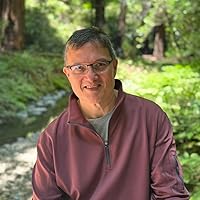
Don Lee's most recent book, the story collection The Partition, was published by Akashic Books and longlisted for The Story Prize. He is also the author of the collection Yellow and the novels Country of Origin, Wrack and Ruin, The Collective, and Lonesome Lies Before Us. He has received a Guggenheim Fellowship, a Baker Artist Award, an American Book Award, the Asian/Pacific American Award for Literature, and the Sue Kaufman Prize for First Fiction. He lives near Baltimore with his wife, the writer Jane Delury.
Interesting to me to see how unlike the others my reaction to this one is. I read the first two stories and part of the third, and quit because by then I felt I had a fair basis to conclude the rest would continue in the same vein: poor characterization, amateur writing at turns, boring and drawn-out themes punctuated with the odd bit of melodrama, and, at least in the two stories I finished, really terrible ending lines that smelled like teenagers' first drafts.
I felt personally disappointed that this was not better, though I know this is unfair. I want to read good stories by first-generation (or 1.5 - I like that this category exists) Asian writers who can recount experiences I relate to, and who can do it without embarrassing me with poor writing. Still looking, I guess.
I read this short story collection in college and have had fond memories of it ever since. Last night my boyfriend asked me to read to him while he undertook a long, complex kitchen project--baozi, actually, which it just occurred to me is pretty fitting--and I decided I really wanted to read him The Price of Eggs in China, which is the first story in Yellow and quite possibly my favorite short story in the world. Reading it five years later, the story was just as fresh, funny, thought-provoking, and meaningful as the first time. The other stories are good too, but I appreciate the first one in particular for how it deals with art and love.
I read the short story called "The Lone Night Cantina." the main character Evelyn was fascinating. my Asian American Studies class talked about how Evelyn (an Asian woman who quits her Silicon Valley job and dyes her hair blonde to seduce a cowboy in a bar called lone night cantina) is racially constructed. but tbh I still think the core of Evelyn's character is that of a lonely woman, while her Asian identity is at the peripheral. race isn't everything yk. sometimes it's about being human. (though obviously race affects the interactions you have and connections you make.) hmmm maybe I should write my essay using intersectionality... hm. idk. I have an essay due on friday and I've put off thinking about the prompt but this review has the gears in my brain again. hm. finally, the references to Patsy Cline unlocked some insane nostalgia to when I volunteered at a rehab center and an old lady with dementia would have me play "Crazy" at each visit. high school man
This is a fresh, entertaining, and thought-provoking collection of inter-related short stories, probably preparing for a novel to come(?). Its greatest strength is the way it reveals subtleties of Asian-American experience, things many Asian Americans know but struggle to express, things that might not have occurred to many others but that everyone comes to understand. Like a lot of Asian American literature, it strives to provide A-A heroes, which are altogether absent from almost all film and most writing. However, I didn't actually like most of the characters. None were presented as "perfect," but the collection as a whole pushed the A-A hero so much that it began to seem forced. It ultimately left me with the impression that the unheroic sides of characters were being were being concealed from me. Even the horrible sides of certain characters were heroically horrible. I guess there were just too many heroes in one story.
Whatever your reaction, Yellow is food for thought and discussion. The style is wonderful and the crafting of the stories is masterful.
This is an excellent collection of short stories with great three dimensional characters tied together both by their Asian heritage and their shared connection to the imaginary town of Rosarita Bay. Lee does a great job of depicting the challenges second and third generation Asian Americans face while at the same time telling fascinating stories. I really enjoyed this book, and I love how the book ties together the stories in the last piece.
The linked stories in this short story collection are set in the fictional NoCal coastal town of Rosarita Bay and focus on the everyday lives of Asian American protagonists. Though the characters come from specific cultural experiences and orientations, they are eminently relatable, psychologically rich and complex in their fears, emotions, and desires as they engage and interact in a predominantly liberal white community. The characters are varied and textured in their backgrounds - a surfer/owner of a sushi restaurant, an attorney, a master woodworker, an operator of a boat touring company, contemporary poets, a school teacher.
My favorite story in the collection is probably "Casual Water" - a tale about two adolescent hapa brothers, who are abandoned first by their homesick mother, who returns to the Phillipines to take care of a sick relative and never returns to her sons, and later by their white father who aspires to tour the professional golf circuit and bails on raising his children - all on the cusp of the older brother's departure to college. A story of family fractured, absentee parents, sacrifice, grief and loss. Other stories in the collection are similarly provocative in their exploration of familial and romantic relationships and highlighting the inner worlds of solitary, introspective characters navigating opening the heart to let in human connection.
Short stories are not my favorite because I often feel by their conclusion that I was left hanging with a big "And so?" - but their chief asset is that they're able to "hook" you in more immediately than many novels w/ their languidly-paced openings. This collection conforms to the above description in that all of the stories engaged me almost immediately, and all of the endings left me with a big "Whuh?" I do think short stories can be done well; I'm a huge Lorrie Moore & Dan Chaon fan, neither of whom believes in spelling things out w/ easy resolutions - I feel like all of Don Lee's stories in this collection needed to go one step further by their close to feel truly satisfying. And I agree w/ numerous reviewers that although the writing flows nicely for the most part, once in a while the soapboxing of Asian American issues (all of which I care about, as an AA myself) comes out in a less-than-seamless way. Still, I have almost no attention span left these days, yet never had trouble diving into this book, and am always thrilled to see a good writer give voice to issues that so many of us Asian Americans live with day to day.
I have a new appreciation for this book ever since I moved to Silicon Valley, California. The characters in this book all seem a little bit adrift or quirky, living in a fictional town based upon the area called Half-Moon Bay. This collection of short stories has always been one of my favorites.
Even though these are short stories, he has a way of writing so superbly you have no choice but to care about these characters and relate to them in some way.
Some of Yellow's short stories and their characters are just plain magnificent—good, like so dang good; however, there are some stories that fall flat which is quite a bummer.
Superb short stories, all set in a fictional Santa Cruz, CA. Don Lee is a first generation South Korean writer which adds a fascinating cultural mix throughout each story.
A unique set of vignettes that really made me think about my own chip on my shoulder as a second-gen. I appreciated the diversity of personalities, backgrounds, and motives of each of the characters
It's amazing to me that the first story was even a Pushcart winner. How Don Lee got to publish a collection of mediocrity astounds me. With stories that are flat and half-fleshed out, they are ultimately drafts that require a lot more work than it took for him to even get to teaching at a grad/undergrad university level.
Take a look at this quote for example, cluttered with so many adjectives: puzzling, mysterious, peevishly, pointed. All of these instances where the adjectives stand could've been expanded, but, unfortunately, create a muddy run-on that lessens the impact of the punch at the end of the sentence. Lee doesn't care for economics, no, with a story that runs for 20 or so pages, with shallow dialogue that gives no flesh nor blood to the characters.
Initially, I picked this up because Elaine Hsieh Chou had mentioned it in an interview about her novel, 𝘋𝘪𝘴𝘰𝘳𝘪𝘦𝘯𝘵𝘢𝘵𝘪𝘰𝘯. I think this was a good reference in seeing Asian-on-Asian antagonism and conflict for character-development research, but, it just goes to show that bad writing follows bad writing.
The writing putters around themes of art and love, but the moments provided felt cheap and stale. His characters were written as predicaments, not people. And chairs at the MoMA?? Really??? ICFF, sure. But the MoMA?
Either there are no editors left in the world. Or writers aren't doing their job.
Now that I finally forced myself through what seems to be the young adult version of this book, I can finally take a breather and review it. First thing's first: I really, really, tend to dislike short stories. I put up with them when I had to read them for class, sure, but generally, I stay away from them. But Yellow was something else. To think, the short stories were actually connected with each other in some way! Since it takes place in an imaginary port town in California, it really threaded all of the characters together. Instead of feeling like a hodgepodge of stories that are loosely connected simply because they're all about Asian-American stories, I actually felt like there was something to get excited about. The stories themselves were also very human -- that's really the only word I can think of to describe it. Lee doesn't rely on weird imagery and hugely distant narratives to tie his stories together. He tells the stories of these people with voices you can actually relate to and hear in your head (assuming you're an Asian-American and are put into the situations the characters get into, which, admittedly, can be surprisingly common).
The stories simply tell themselves. I read it so quickly that I didn't realize it had gone by; it was as if I was just talking to an old friend, reliving each other's memories in the form of gossip or just talking over coffee. What's phenomenal was that the ending was extremely well-done. One of those endings where you can't help but feel satisfied with the time you took to read this book. Sadly, I don't get enough of those -- lately, I've been reading books that I can't wait to just put down and be done with. Thank goodness that Lee's compilation of short stories sated a hunger for good Asian-American literature that I've had for such a long time.
The Price of Eggs in China: Dean Kaneshiro is a chair maker who is dating Caroline Yip (Oriental Hair Poet No. 1) and is making a chair for Marcella Ahn (Oriental Hair Poet No. 2). Caroline is paranoid and convinced that Marcella is out to get her, and requested Dean to make a chair for her on purpose to make her jealous. Caroline and Marcella both published poems on Asian themes, and while Marcella’s was praised and acclaimed, Caroline’s was received more negatively. Dean ends up setting fire in his studio to quell Caroline’s fears. She publishes another poetry book that is received better. Some time later Dean and Caroline have a baby, Anna. Dean brings the completed chair to Marcella and Caroline’s poems, asking her if the poems are good; Marcella says no, but he knows she thinks it was good. Dean still doesn’t know if Marcella actually stalked Caroline. He won’t ask about that, and she won’t ask about the fire; the truth doesn’t matter; the price of love is costly. Voir Dire: Hank Low Kwon is a public defender who is defending a man who, high on cocaine, beat his girlfriend’s son to death. Hank knows this guy is guilty but as a public defender has to do his job. The guy ends up sentenced, but to a lower degree than he thinks. Hank thinks about what the implications are and what good his job is if it’s letting killers go free. Hank’s (white) girlfriend, Molly, is pregnant, and he doesn’t know if he wants a baby considering all the circumstances. His ex-wife, Allison, and him mostly fought because he wanted a baby and she didn’t. Now he’s conflicted. Molly decides she wants this baby. Hank feels like he’s being crushed. Widowers: Alan and Emily meet on a boat where he is a fisherman and she is dumping her husband’s ashes into the water. Her husband was a fisherman who drowned, probably falling in after doing a handstand on the rail (he was a gymnast). She is young, younger than him. She is a Korean adoptee who got pregnant at 15/16, lost the baby, and married the guy. Alan lost his wife to a medical condition two decades ago. They get together. Alan has never been able to find significant love after his wife, Reiko, died. Emily is leaving for LA in a few weeks. They have a moment where they connect; he sees Reiko in Emily. The Lone Night Cantina: Annie Yung meets Joe Konki at the Lone Night Cantina bar, and they get together. Everything is fine until he tells her that he found his ex-wife with another man at their house, and he beat the guy so bad he got put in jail for 6 months. After 15 years, when his wife dies, he found out he was the beneficiary. He wonders if she still loved him. Annie is a little taken aback by this news and leaves. She wants to drive forever. The Possible Husband: Duncan Roh has had ~4 women every year since he was 14; he’s 41 now. We meet Sunny in the winter, Esther in the spring, Ariel in the summer, and Lily in the fall. Only Lily stands out. They’re just friends—they haven’t started dating or anything; she won’t let him, but he wants to get to know her. He wants her to teach him how to paint. He goes surfing. He wants to tell her how beautiful the colors are. Domo Arigato: Eugene Kim and Nikki Keliher find a bar called Flashbacks in Tokyo. They went to college together, lost contact; he got married and had kids, but they found each other again. Nikki’s family is with them. Eugene feels a connection to Japan even though he’s Korean. It is a little awkward. Later they break up. Now he is with his blasian wife Janet, who he thinks that maybe she is the right one for him, since she understands him racially. Maybe what Nikki’s dad said was right, that the hatreds of countries/race can’t be ignored. Yellow: Danny Kim is Asian but looks confusing. Is he Eurasian? Mixed? He was born in 1954 in Rosarita Bay. HIs parents were immigrants. Growing up he was ashamed of his heritage. He wanted to be American, not Korean. He finds the boxing room at the YMCA and starts training. He goes into competition. One Hispanic guy calls him “yellow.” Danny head butts him and gives him a nosebleed. | He goes to UCLA. He has sex with a girl, but feels cheated by the experience. He falls in love with another girl, Jenny, who is white. Some random Asian guy calls him “banana” in passing—yellow on the outside, white on the inside. At a bar he gets rejected, most likely because he’s Asian; he realizes that people will reject him because of his race. Danny goes to Jenny’s for Thanksgiving; one of her relatives thinks he is Vietnamese and/or FOB. Danny’s brother and sister, Eugene and Lily, love the food at home. They’re not ashamed. Eugene has a girlfriend, Nikki. Danny gets in a fight with Jenny about race, they break up, and he gets into a car accident. | He goes to Harvard Business School. He marries a Korean woman, the first Asian he’s been with. He is more aware of racism, even the subtle kind. Everyone is white at the top. | They have a son. They try to match each other, be a good wife and husband. One day, Danny stands up against a woman who believes in the hardworking Asian stereotype. On their drive home they see Sheridan, who is drunk driving, and gets into an accident; Sheridan is acting crazy; Danny head butts him. | Later, he returns home for his sister’s wedding—Lily and Duncan Roh. He sees his son’s face as he dances with a girl his age at the wedding. Danny is proud to see that his son resembles him.
I liked this one kind of. I thought there could be a little more. A lot of the characters felt similar, and tell me why all the women were thin, erratic, and somewhat one-dimensional? It felt like all the women were simply to aid the men, who is always the main character (even with the bar story) in their journey of realizing things. As a male author, I think that was one area that Don Lee couldn't get right. Still, the themes of racism (mostly subtle but poignant) are scattered throughout and culminate mostly to be directly addressed in Yellow, the title story. A lot of these stories are kind of connected, like Danny's siblings being characters in other stories. But I still wonder what the point of this book was. To point out racism? Maybe this is me, the choir, reading the preached story, but it seemed a little off in some way. And rather than write a fully fleshed out novel, the author elected to write many short stories, which I see is the easy way out. It was an easy read, certainly nothing difficult about it, but somewhat unsatisfying.
This entire review has been hidden because of spoilers.
This book was a revelation for me--not for its storylines, which I neverless appreciated, the quaint, delightful fact that background characters reappear as protagonists in later stories, which was lovely, but simply because I have never read short stories that have so many Asian American characters. These were people around me in my childhood; men with names like Alan Fujitani, Annie Yung and Duncan Roh. Daniel Kim even reminds me of my sister in some ways. The characters' preferences and experiences situate them so firmly in American life that I was unable to look away. My Japanese mother made us listen to Bob Dylan and Linda Ronstadt growing up, and my grandmother, second generation herself, has every single one of Patsy Cline's records. I have little to say when people ask if I spoke Japanese growing up or am good at making sushi. (Answer: not really) But I never really realized how commonly Asian Americans of all generations are so quickly associated with the old country, or how much that association veils our real lived experience, until the character Annie Yung turned up Emmylou Harris on her car radio, dressed herself up in boots and western gear, and headed for the closest thing to a local saloon. That's me. (sans the wishful southern drawl and cowboy boots)
Interesting read. I enjoyed getting into the stories and how they effortlessly surprised me by acting as a commentary or reflection on what life is like as an Asian-American or someone of such decent. The stories I felt were varied in their viewpoints, lessons, and inspiration which kept me reading.
I was rather slow on the uptake that many of the characters in each story were all interconnected in the small (fictional?) town of Rosarita Bay. However it became difficult to ignore when reading the final story of this work. I would say it was the best and had the most depth of them all. A very fitting close to many of the other stories presented.
I also give Lee a lot of credit making all these short stories interconnected loosely through their characters, but in such a subtle way I forgot when opening the book to the next tale. This instills a re-read value to the complete work. I will most certainly have to revisit now that I've read through them all consecutively and pay more attention to what connects the characters across each story to one another.
This entire review has been hidden because of spoilers.
I graduated on to short stories. While I was reading this I got the distinct feeling that I had read it before and forgotten about it. The reason I picked it up (again perhaps) was because Don Lee was an associate professor at Macalester College which is in Saint Paul, not too far from here. None of the stories were too earth-shattering, but they were well-written and easy to read. The only complaint I guess I would have is that sometimes the writing was a little too transparent, like he was announcing what he was trying to get across, but there's only one story that sticks out in my mind that does this and it was the first one. In general, it's a good collection of short stories. The characters and settings are well drawn.
I enjoyed these short stories, which were small vignettes centered around the Asian-American characters in a fictional Bay Area town. They very accurately captured what it feels like to be a 2nd, 3rd, or 4th generation Asian citizen of the states, and the kind of isolation it can mean between first and second gen.
My favorite short story, and the longest story in the collection is "Yellow". This story is nothing short of amazing, and if I were rating that short story on its own, I'd rate it 5 stars, without question. I am almost definitely biased, but no other story or writer has ever captured the feelings I've had growing up in the states with such grace.
Worth it for that story alone. But the fact that there are several other good stories makes it even better.
Pretty neutral on this one. I appreciate the skill/research/possibly just ingrained know-how that went into this - every story, it seemed, involved intense description of fairly niche hobbies. I found that some of the most interesting stuff, since the racial themes I expected were so subtle in most of them that I nearly forgot about it (then again, I'm not Asian-American myself, so I can forgive that). Also, a lot of the female characters seemed mentally unstable - a common weakness for male writers, I've noticed. The titular story, the longest and the last one in this particular anthology, was my favorite. I liked that it incorporated characters from some of the other stories (although I assume it was written first). Sly move, Don Lee. Quite sly.
Decently good short story collection that was interesting but not mind-blowing. I found the writing to be lyrical and pleasant, but the characters to be a bit bland/repetitive. I found myself confusing some of them with each other. I also didn't really like the inconsistency in that some of the stories intertwined but others didn't. I think it would have been better if either all of them were connected or none of them were. Also, a lot of the stories would build up to something exciting happening and then skip over it entirely straight to the aftermath, which kinda felt like a cop-out to me. Like, "eh, this scene is gonna be difficult to write, so how about I just skip it?" I dunno. Worth a read, anyway. I liked it overall.
"Winesburg Ohio" goes to northern California--every story connects somehow to the same small town on the coast. Most are about relationships not going well. Heartbreak from the male perspective. Along the way, details about surfing, boxing, master craftsmanship, like this passage about making furniture:
"Dean aimed for perfection with each chair. With the first kerf of his dozuki saw, with the initial chip of the chisel, he was committed to the truth of the cut. Tradition dictated that any errors could not be repaired, but had to remain untouched to remind the woodworker of his humble nature."
That story and a few others were five stars. Glad I have Lee's latest novel on hand.
I'm not usually drawn to books of short stories. It always seemed to me that it would be hard to inject the proper amount of dynamism into a character/characters that are going to last less than a hundred pages. However, I really liked the stories in this book; I just thought the authors did such a thorough job of drawing out these characters. Almost all of the stories drew me in immediately; Voir Dire being the most interesting, I thought.
One of the best Asian American novel. Series of very interesting lives. As an Asian American, I found the stories very authentic. The author has captured the Asian American experience just right in its tone and subtlety from variety of angles. I wished the stories were much longer. Felt like the author has left a lot of good stories on the table. I think this book, further developed, has the potential to be something like Franzen's Freedom. Highly recommend.
Not just a perfunctory exploration of the variegated Asian-American experience, the stories in here aspire to and often achieve an integrity of shape, so you find yourself at an appropriate ending that you don't want to reach because you want to keep reading--the exact quality that makes short stories so satisfying to read. Worth a sit-down at your local library/bookstore
Nice collection of related stories - through crossover characters and/or the fictional town of Rosarita Bay, CA - that deal with Asian and Asian-American characters whose challenges and exploits could be those of anyone. Lee writes directly without being dull and without being flowery or poetic. A good read for Asian-Americans and anyone who's experienced life.